This summer, Unearthing Futures / Desenterrando Futuros brings together six artists working in adobe, tracing the material from ancestral building tradition to radical contemporary art practice.
A couple years ago, I went up to Chimayó on a spring weekend to help some friends with the enjarre (refinishing) of an old adobe building on their land. The little house had stood for who knows how long—a hundred years, at least—and had spent the last couple decades uninhabited and unmaintained. Its walls were cracked and crumbling, the ceiling sagged in places, and the whole thing had sunk into the ground enough that the doorway was too low to pass through without stooping over. There were about a dozen of us working together, mixing and slinging mud onto the walls. Even so, the work was grueling—not least because the whole process works best during the hottest part of the day, when the plaster can dry fastest. By the end of the day we were dead on our feet, and our reward of cold beers and bowls of posole tasted like heaven.
When properly cared for, an adobe building like this can stand forever. The care part is necessary, though: left unchecked, anything made of earth, water, and fiber will dry out and disintegrate after too much time in the unrelenting Southwestern sun. “Some of the oldest buildings on Earth are made of earth, have outlived generations, and require the care of generations to maintain them,” says Santino Gonzales, a New Mexico–born artist now based in Oakland. “[In adobe,] I see structures that are going to outlive me.”
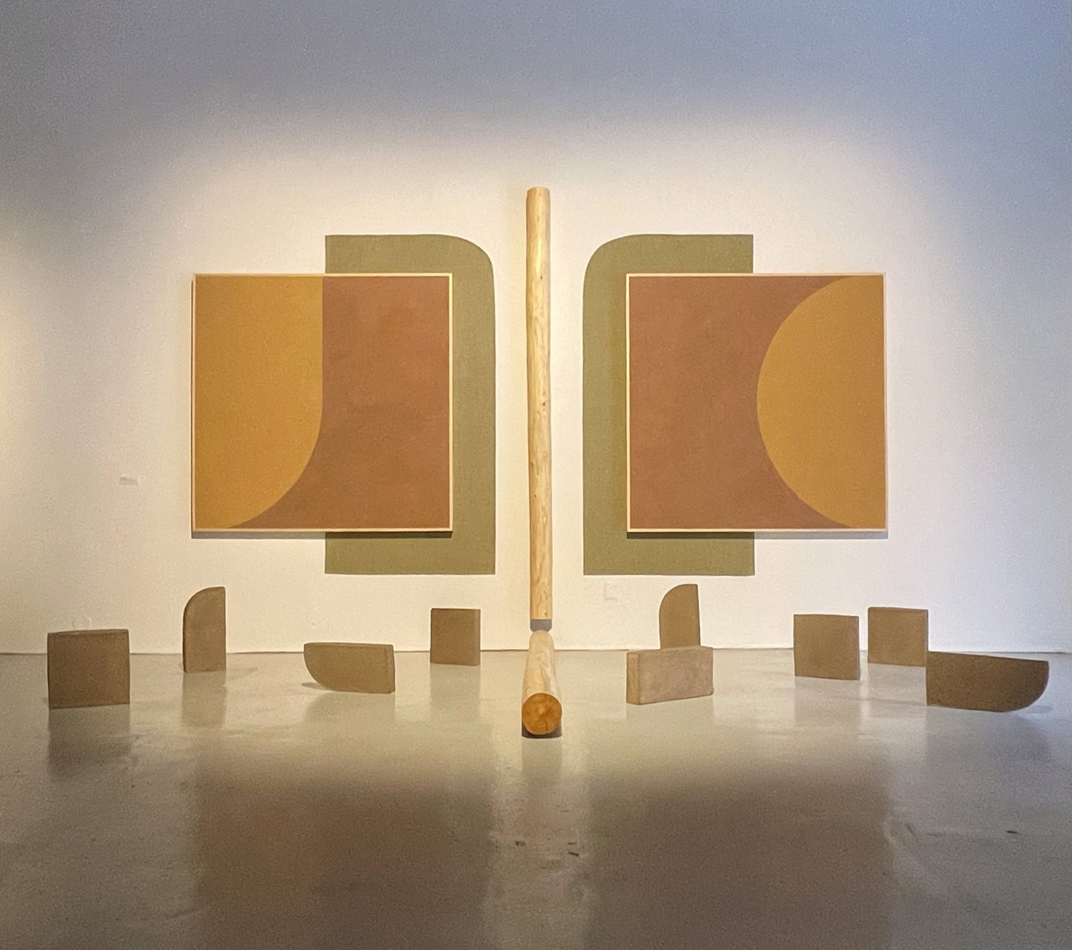
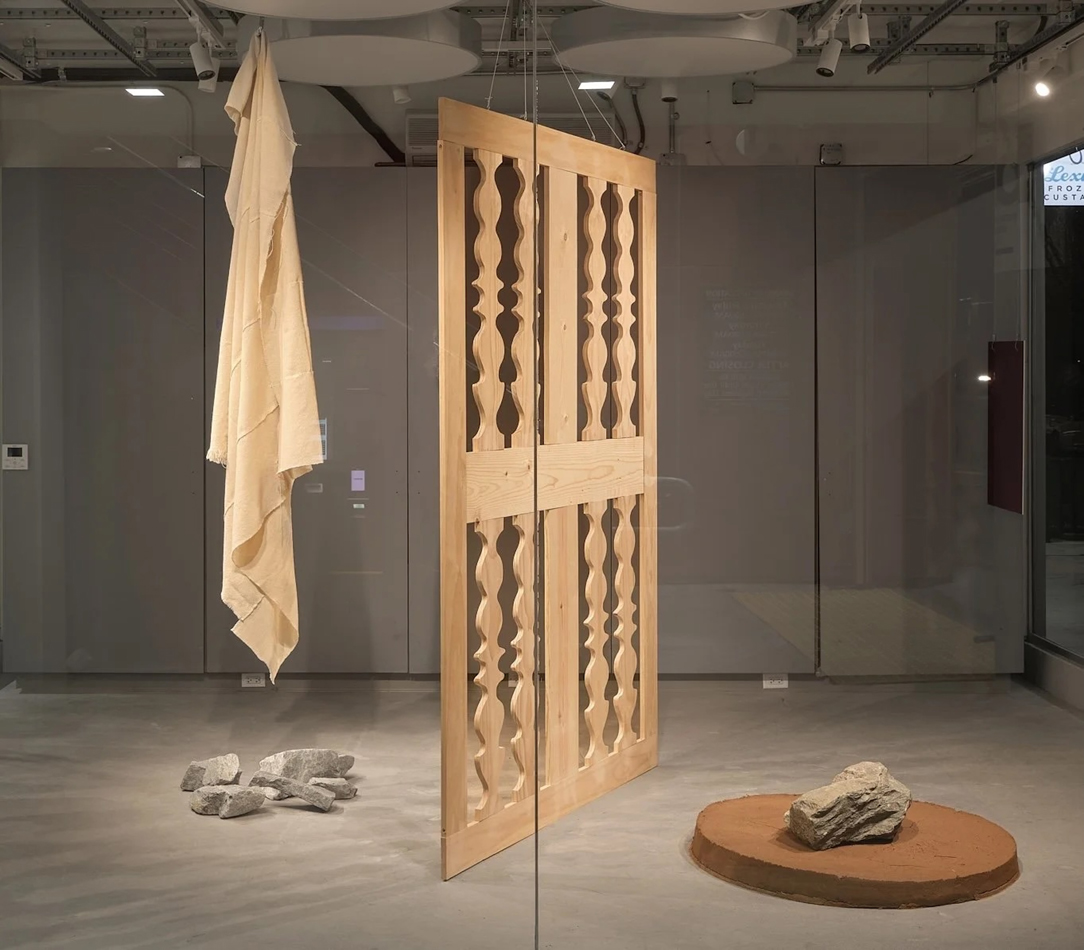
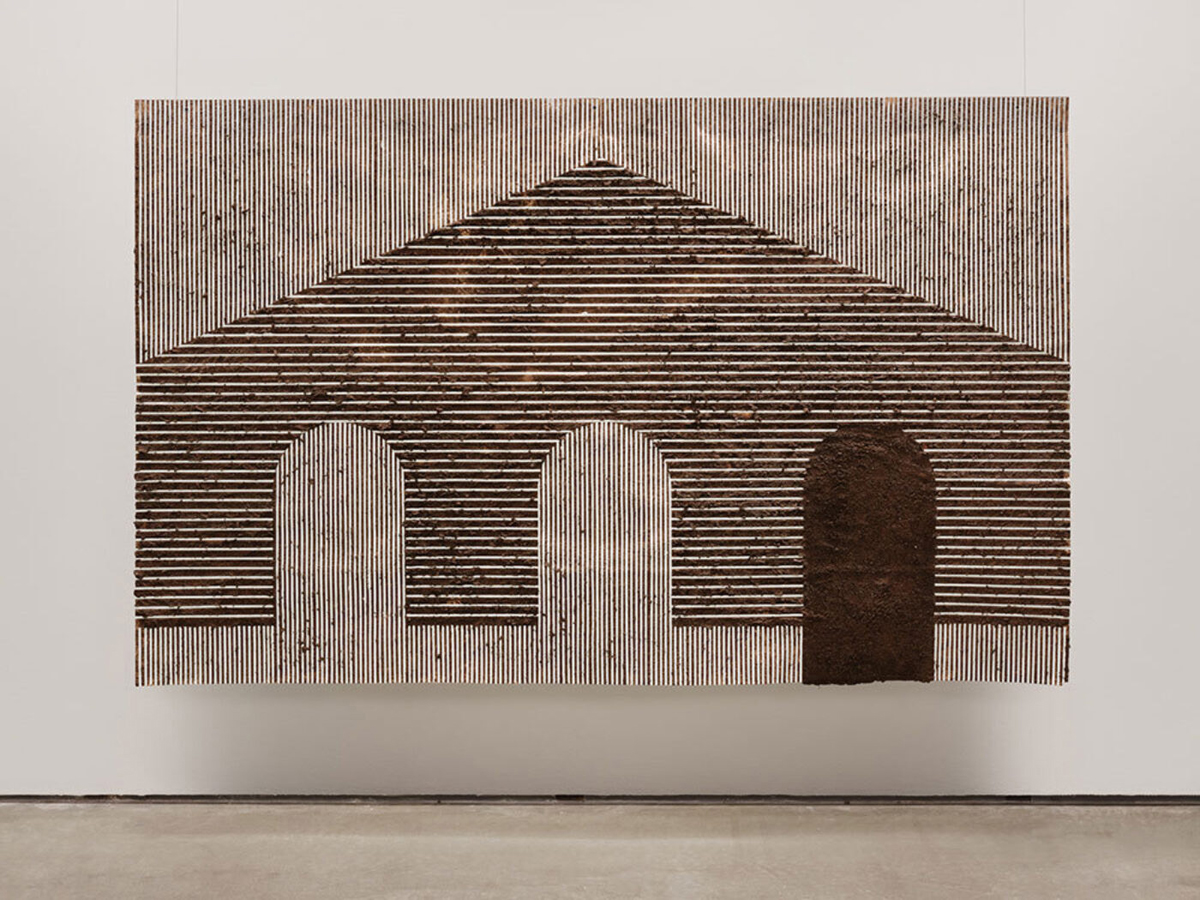
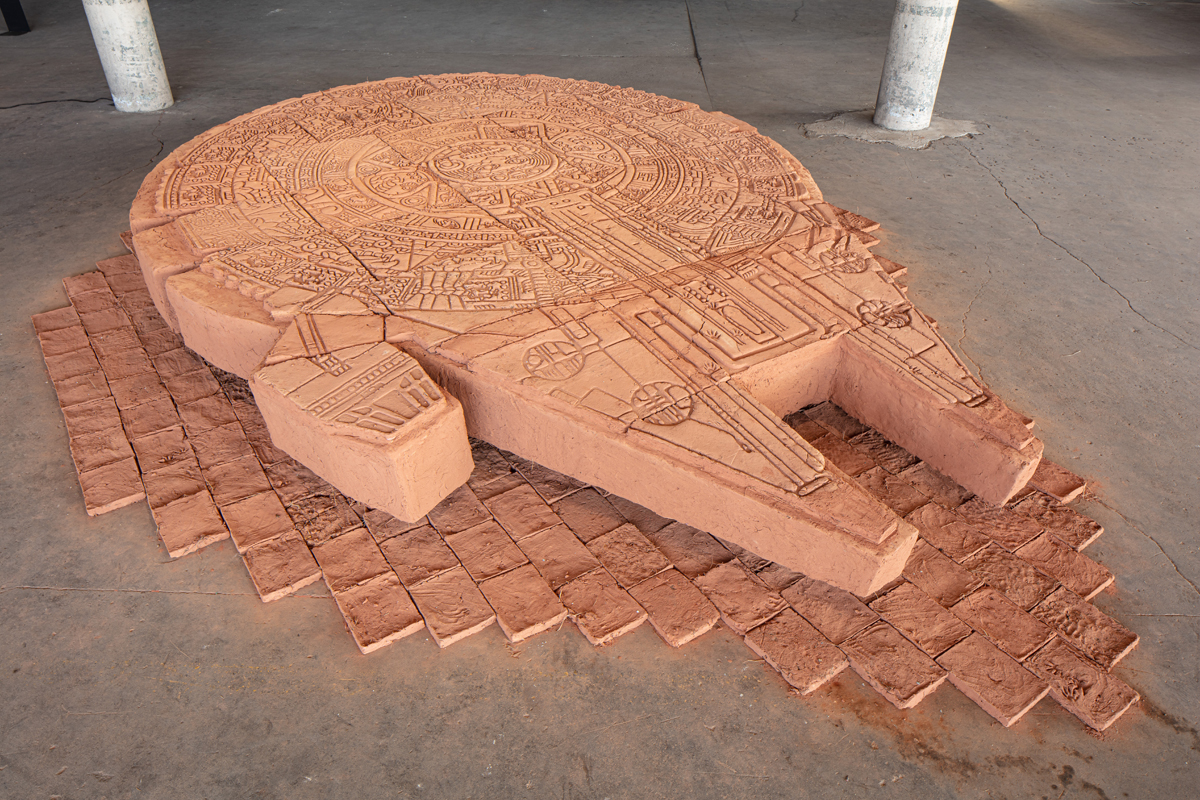
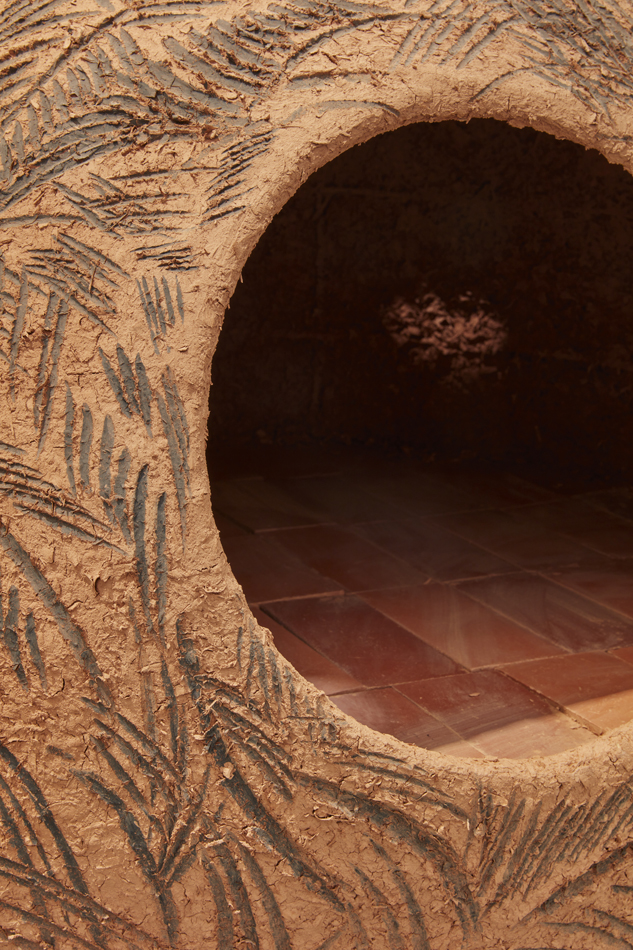
Gonzales is one of the six artists making work with adobe for Unearthing Futures / Desenterrando Futuros, an upcoming joint exhibition presented by the Harwood Museum of Art in Taos, New Mexico, and the Fort Garland Museum and Cultural Center in Fort Garland, Colorado. The other artists are Gabriel Chaile, rafa esparza, Joanna Keane Lopez, Ronald Rael, and Christine Howard Sandoval.
Adobe’s embodiments as both historical earthen architecture and contemporary art practice come together in this show, which extends beyond the museum through a road trip app featuring about thirty historical and contemporary adobe sites across New Mexico and Southern Colorado—some of them carefully maintained, some of them not. In the interactive map, developed in collaboration with the computer science department at the University of Colorado Boulder, buildings and artworks alike foreground adobe’s embodied memory and its potential for permanence. This simple material reminds us of our pasts and the traditions that have helped us survive, while also pointing towards a future where what we’re doing and making now is—maybe, hopefully—still preserved by the hands of those generations who will come after us.
This still-used technology of dirt and water and fiber is roughly 10,000 years old, and has appeared worldwide under different names and architectural traditions. “Adobe is a material that carries both human memory and deep geological time,” says Nicole Dial-Kay, curator of exhibitions and collections at the Harwood. “Adobe endures not through permanence but through renewal, through ceremony and care, cycles of reciprocity. There’s a lot for us to learn from… looking backwards, and forwards.”
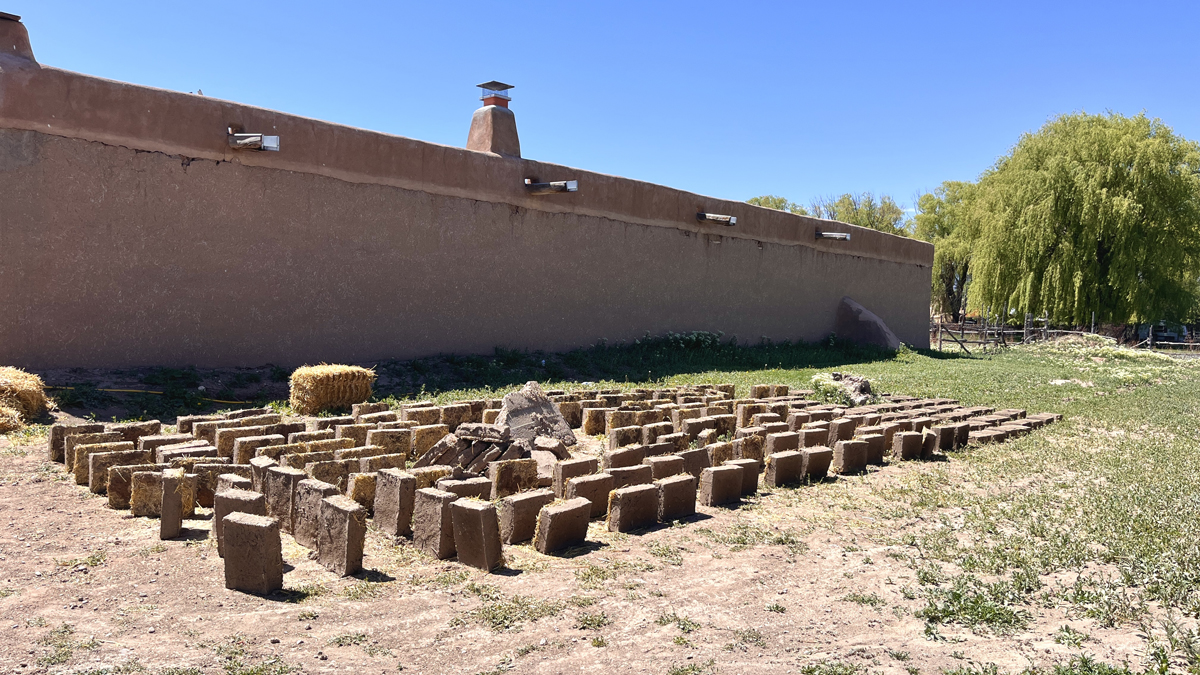
The adobe buildings that have endured through the centuries in the Southwest are but a fraction of what used to be here. During New Mexico’s campaign for statehood in the early 20th century, a lot of old adobes were torn down by the territorial government in the interest of making the place “American enough” (read: white enough) to deserve its star on the flag. After statehood, though, it became clear that the old adobes were a part of the exotic charm that had drawn so many adventurous tourists from the East.
The Spanish Pueblo Revival architectural style—an amalgam of traditional Pueblo adobe construction and Spanish architectural elements such as wooden corbels and trim—arose in the 1920s to drive tourist appeal. Our modern addition to the adobe architectural canon has been, of course, stucco—faster and cheaper than real adobe, whether plastered over old structures or built into new homes often sneeringly called “Santa Fe Style.”
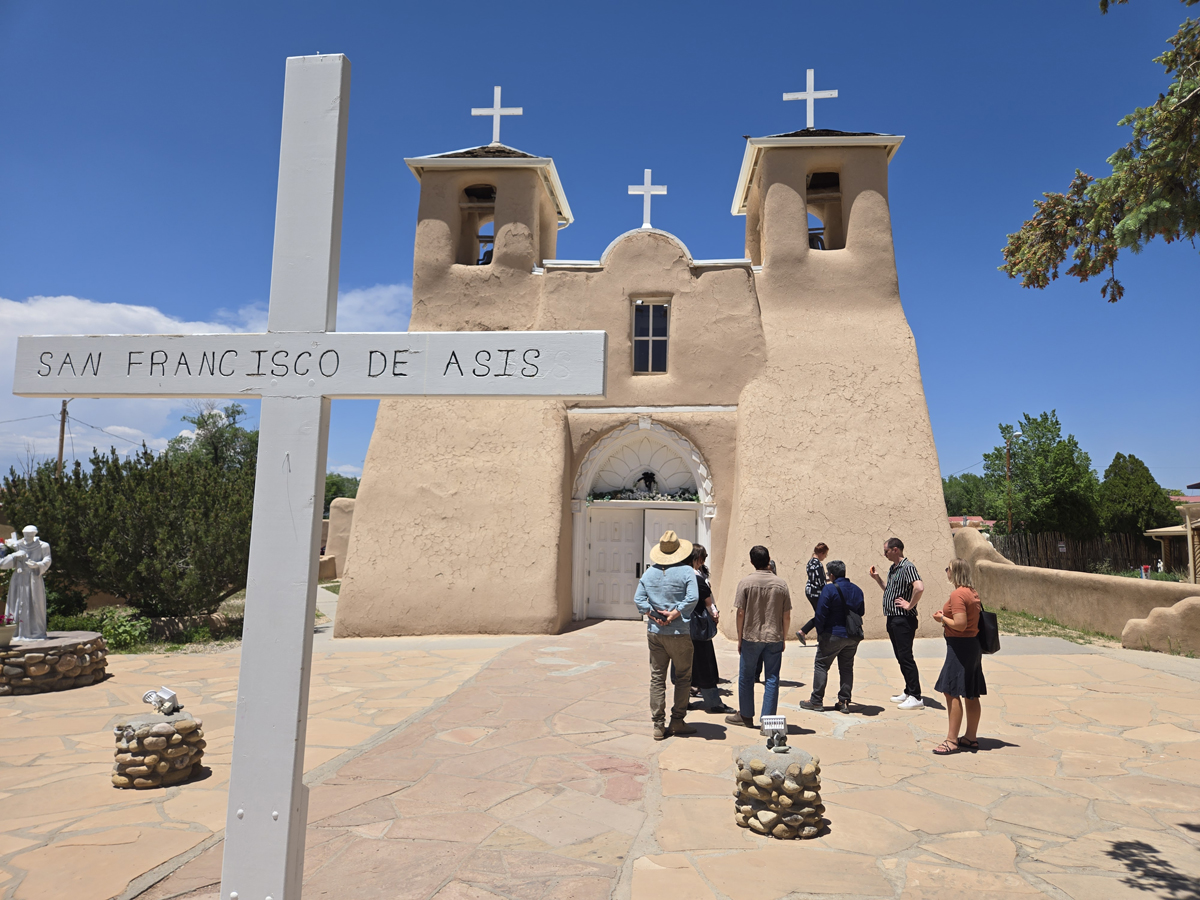
But the old adobes that remain are largely here because of that care and reciprocity that Dial-Kay speaks about, perhaps best exemplified by the process/event of the annual enjarre that takes place at some traditional adobe churches and historical sites. Guadalupe Tafoya, the historian and archivist at the San Francisco de Asís Church in Los Ranchos de Taos and one of the guest curators for Unearthing Futures, helps to organize the annual enjarre at the church.
Adobe endures not through permanence but through renewal, through ceremony and care, cycles of reciprocity.
“We get together two weeks of the year, in June and July, and we work on maintaining the adobe,” says Tafoya of the process. “We take down the skin of the adobe, and do general care and maintenance. It’s hard work, but it’s very spiritual work as well. It’s a time when the community really gets together.”
Tafoya’s curated gallery at the Harwood, called Rising from the Earth, Kissed by the Sun: The San Francisco de Asís Church, will feature artwork from church members, many of whom are generational practitioners of traditional New Mexican arts like bulto carving and retablo painting. “I want to expose their talents, and this seems like a good place to do that,” Tafoya says of the members of her parish.
“A lot of them were exhibiting in banks and non-artistic spaces, or small galleries. So I thought this was a great opportunity to show the talents of the people of Los Ranchos de Taos—from paintings to wood carvings to rustic arts. Fine art, folk art, found art.”
The building that houses the Harwood is a different example of adobe’s history in New Mexico. Its earliest documentation is an 1861 purchase by Smith H. Simpson, a captain in the Army during the Territorial Period and the right-hand man of Kit Carson. After his death, Simpson’s family sold the place to Burt and Lucy Harwood in 1916, and its life as an art museum began shortly after. When the modernist architect John Gaw Meem redesigned the place in the 1930s, he sought to update the traditional adobe building in the emerging Spanish Pueblo Revival style. “And then, of course, it all got stuccoed over,” says Dial-Kay.
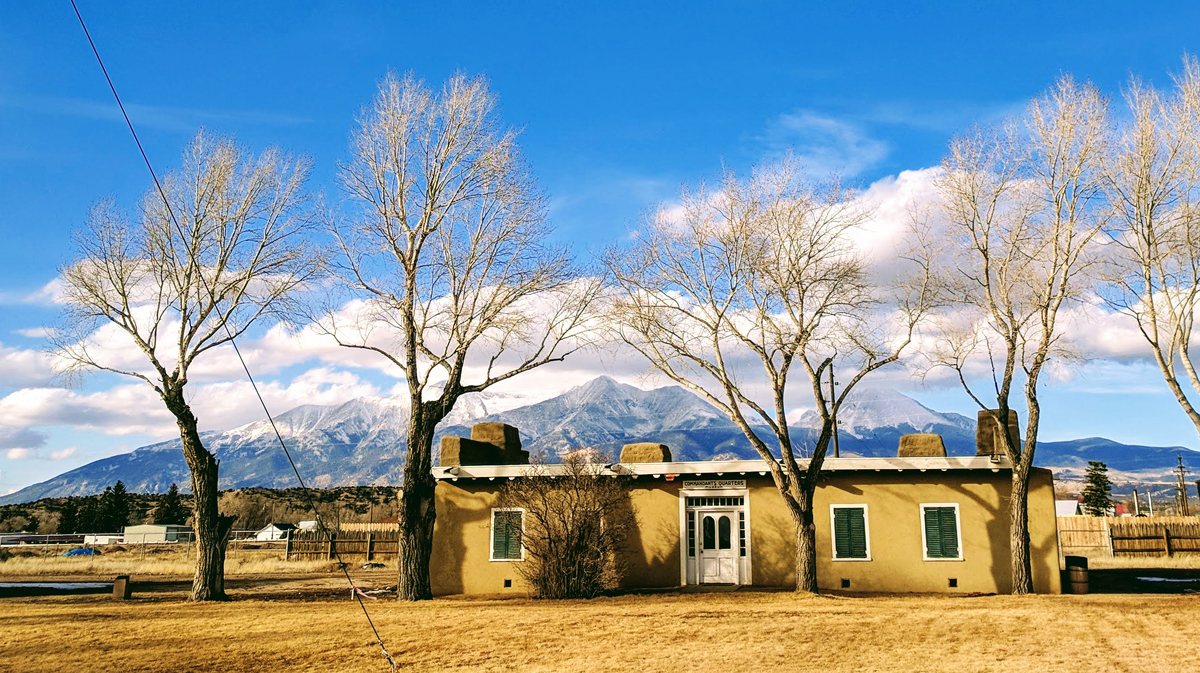
The show’s other primary site is the Fort Garland Museum and Cultural Center. Housed in some of the original adobe buildings of the fort constructed by the U.S. Army in 1858, it has something of a parallel story to that of the Harwood. On what was once the northern edge of the Spanish empire, the fort was built to protect white settlers from the local Ute tribes. It operated for about twenty-five years and housed Kit Carson in his final years as well as the Buffalo Soldiers of the 9th Cavalry Regiment.
“At this point, it’s been a museum far longer than it was ever a fort,” says Eric J. Carpio, the director of the Fort Garland Museum. Carpio’s tenure at the museum has seen the removal of an exhibition glorifying Carson, as well as the commissioning of new artworks that address the fort’s historical role in the genocide and enslavement of the local Indigenous people.
Ronald Rael, an internationally exhibited artist with deep roots in the San Luis Valley and its adobe practices, contributes an installation at the site of the old Indian Agency building in Conejos, Colorado, about fifty miles from Fort Garland. “It’s the site where Indigenous slavery has been best documented in the States,” says Rael. Lafayette Head, the Indian Agent stationed there in the immediate aftermath of the Civil War, was tasked with documenting all the slaves in the area in 1865—and he came back with a list of 149 names, all of captive Native people. Rael says, “I exhumed the earth and, along with everything I found in that exhumation, I reconstituted that soil as adobes again, and [by carving the names into the bricks] memorialized the 149 who are on that list.”
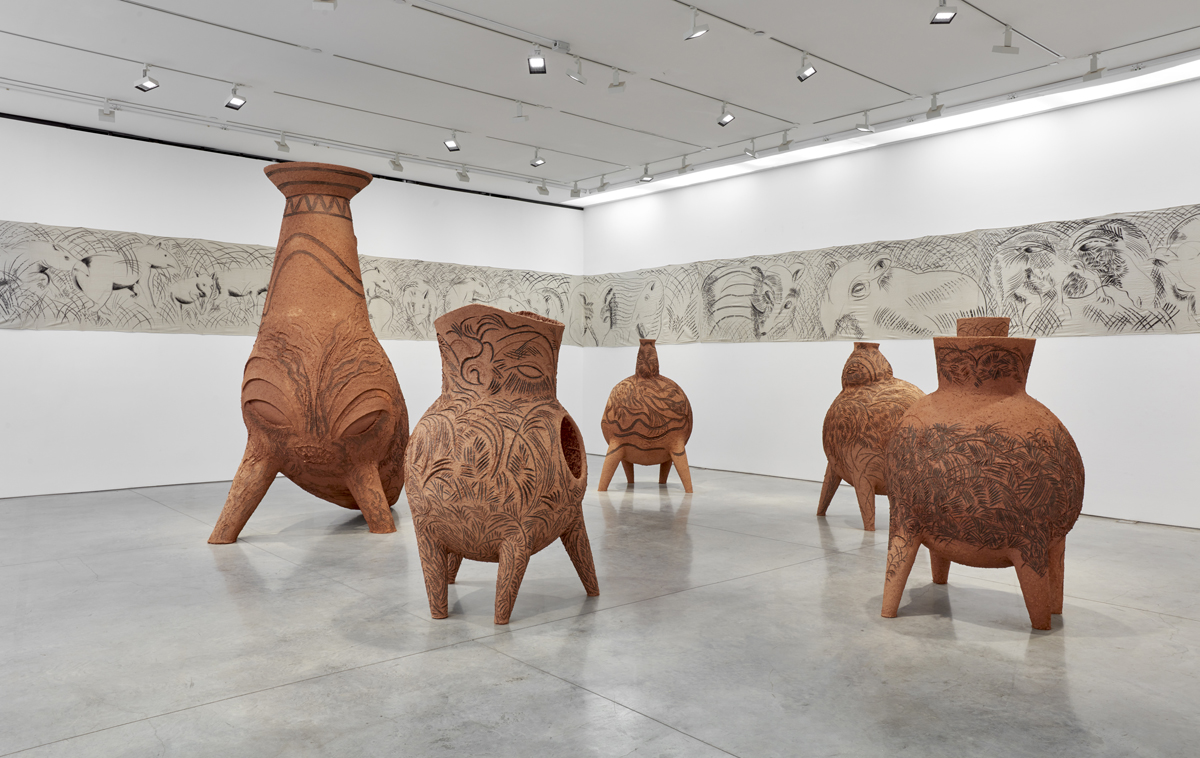
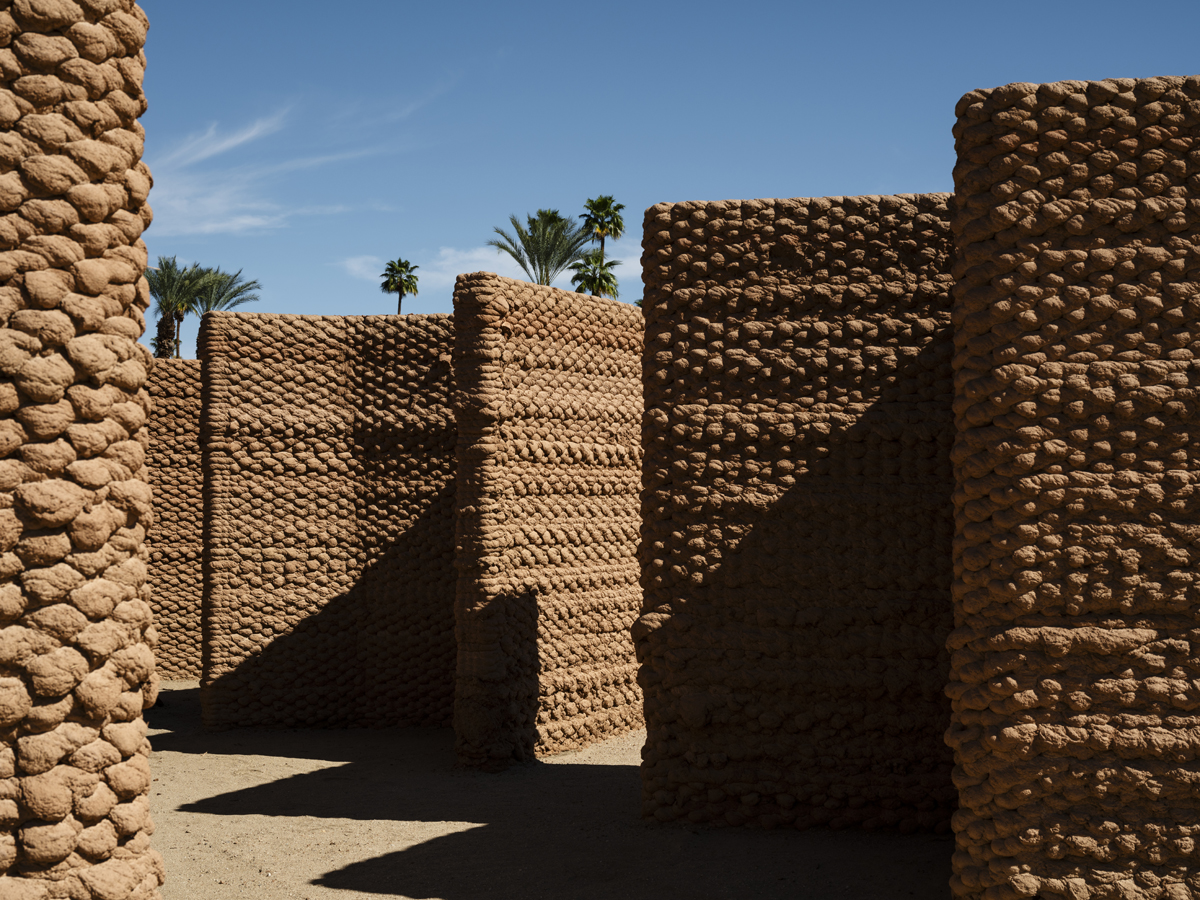
Rael’s installation at the Harwood, called Liminal, will feature the mingling of old and new technologies that he’s most known for—3D-printed adobe. He describes a “series of spaces that will… redefine the threshold between… interior and exterior. The museum itself is constructed of adobe, but it’s [part of] this lineage of adobe that got covered with cement in the ’40s and ’50s. Robotic adobe is also not traditional in the sense of Northern New Mexico architecture, so it’s this movement between past, present, and future.”
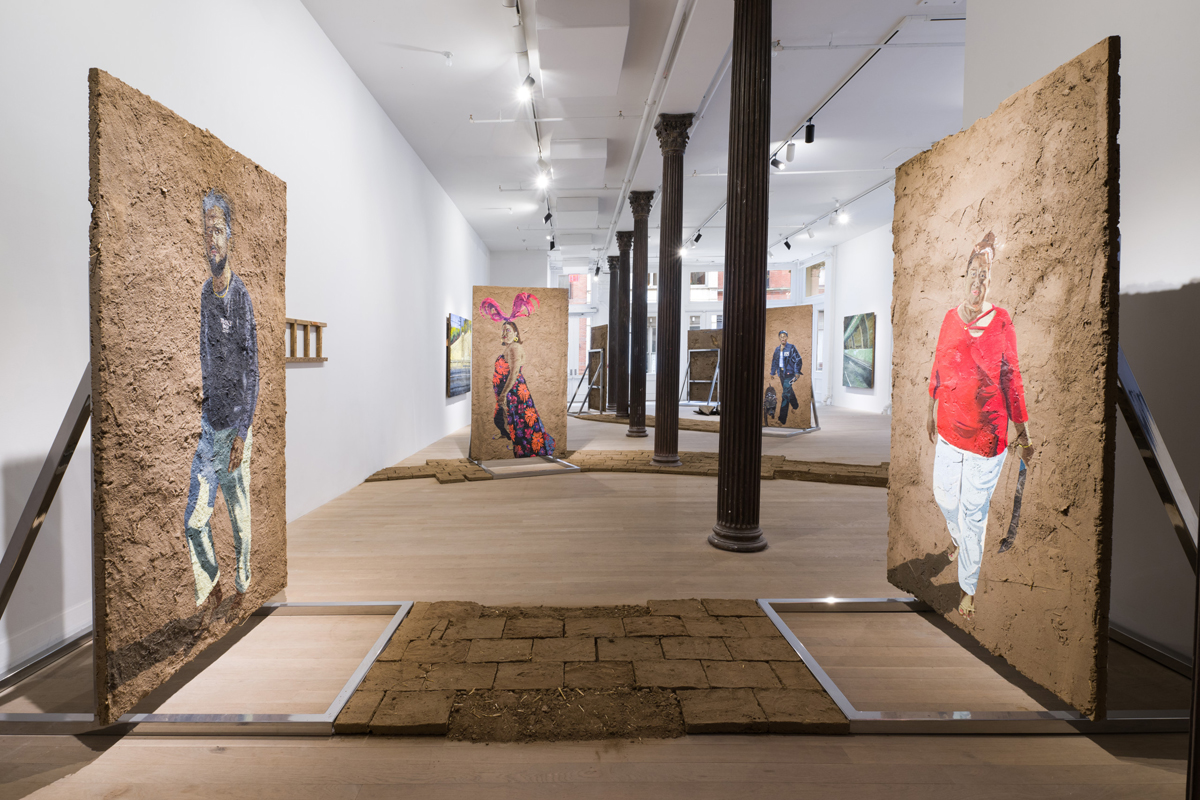
Los Angeles–based artist rafa esparza, while rooted in a traditional adobe practice himself, also points to the futurity possible within the material. With the help of dozens of hired adoberos, esparza is constructing a Nubian vault inside a gallery in the Harwood. The ancient architectural technique requires no timber, not even as supports during the construction of the vault—only mud bricks, and some precise measurements to construct an arched roof with just the right amount of tension to support itself. The work illustrates a speculative future world that successfully resists the violence and speed of extractive industry with the slowness of community, labor, and care—a new world, quite literally born in the shell of the old.
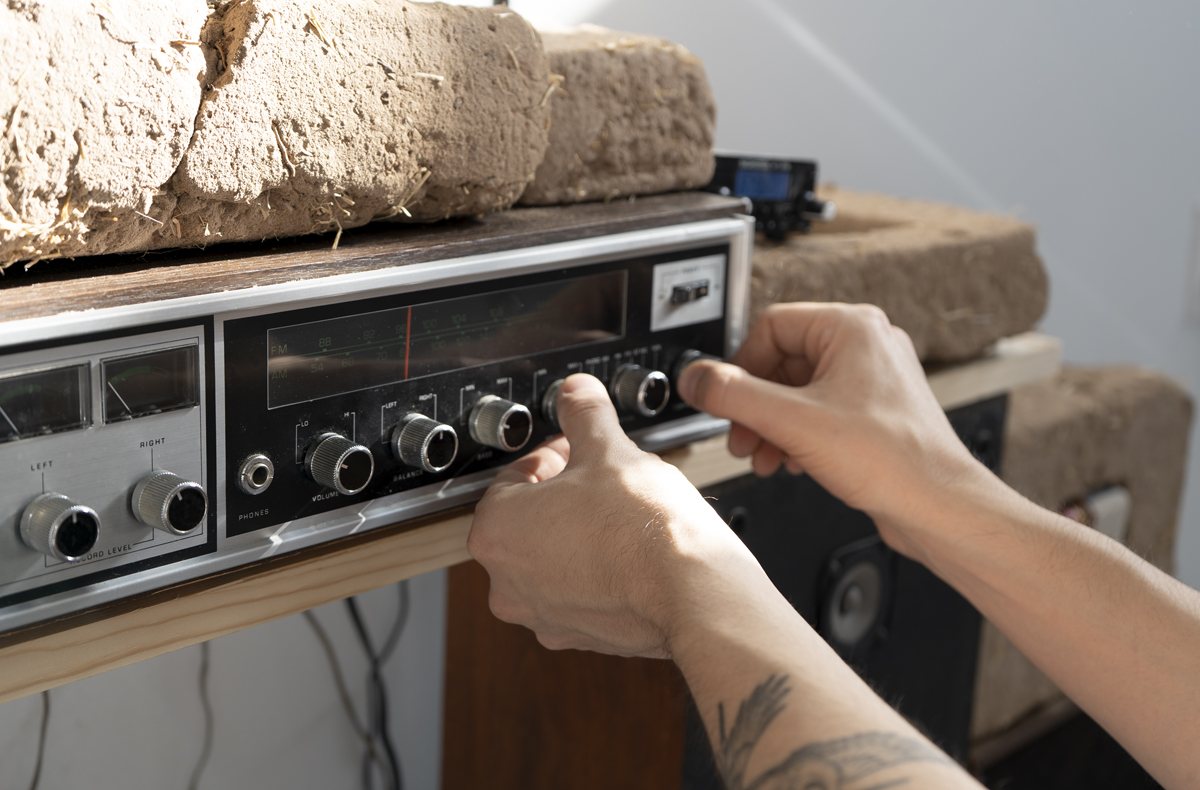
Gonzales, too, has used adobe bricks as one of his primary media over the years. Originally from Los Lunas, a traditionally agricultural village just south of Albuquerque, Gonzales debuts several installations in Unearthing Futures that incorporate not only the organic material of earth, but also sound—specifically, radio waves. “Adobe Radio is a sound installation that also functions as a pirate radio station, where I’ve taken recorded sounds of home, like the backyard at my house and the sounds of sandhill cranes, voicemails from mom, and sampled songs from the past, and started rebroadcasting them from home,” Gonzales says. “[I like] thinking about how the electromagnetic waves can carry the signals basically into space. So like, stories of the everyday, the domestic, as a sign of life.”
Citing the Very Large Array, a radio satellite dish field in Southern New Mexico, and the movie Contact (1997) as sources of his fascination with UFOlogy and the ongoing search for intelligent life in the universe, Gonzales integrates the domestic and familiar with the utterly unfamiliar. He’s animated by the belief that the humble and tender moments of our lives deserve projection into space and time more than the dominant flashpoints of capital-H History.
If you’ve spent much time in New Mexico or Southern Colorado, or even just driven through, you’ve likely seen the ruins of adobe buildings slowly melting back into the earth from which they were constructed. This is what happens to adobes that don’t have enjarradoras like Tafoya, or communities of parishioners, or artists and architects like esparza, Rael, and Gonzales, to care for them. Unearthing Futures offers a glimpse of a future in which these cycles of care and preservation are prioritized, so that we can bring our history and all our relations along with us into that strange new place.
Unearthing Futures / Desenterrando Futuros runs from June 27, 2026, to February 28, 2027, at the Harwood Museum. Fort Garland’s passage of the show opens June 28, 2026, with the same closing date. Many of the featured adobe sites around New Mexico and Colorado have been on view since before you or I were born, and will remain so indefinitely—if we take care of them.