In a moment of increasing disconnection despite amplified communication, Santino Gonzales tunes back into a sense of wonder.
Santino Gonzales opens his backpack and pulls out three editions of UFO Magazine from 1987 in protective sleeves. He flips to a sticky-noted page and reads to me from the text. “On June 16, 1963, state highway mechanic Paul Villa apparently enjoyed an edifying, unforgettable close encounter…”
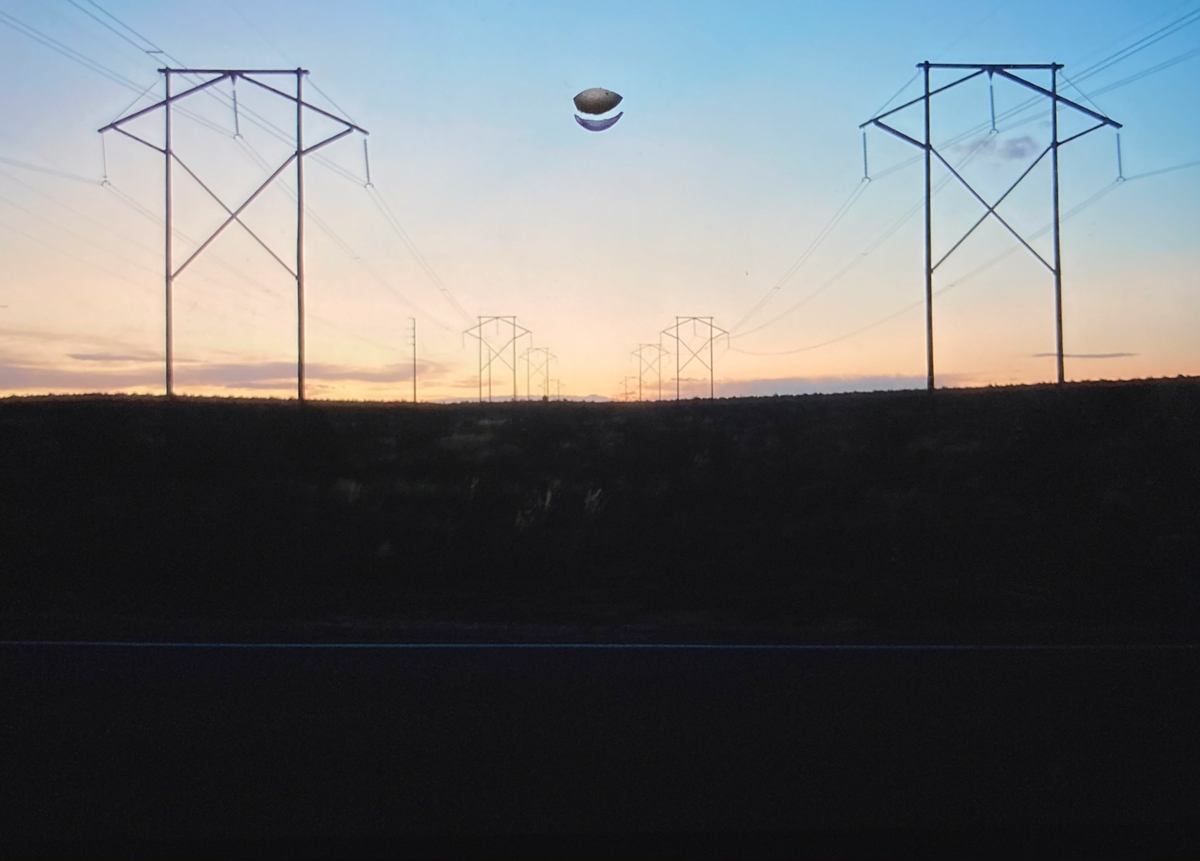
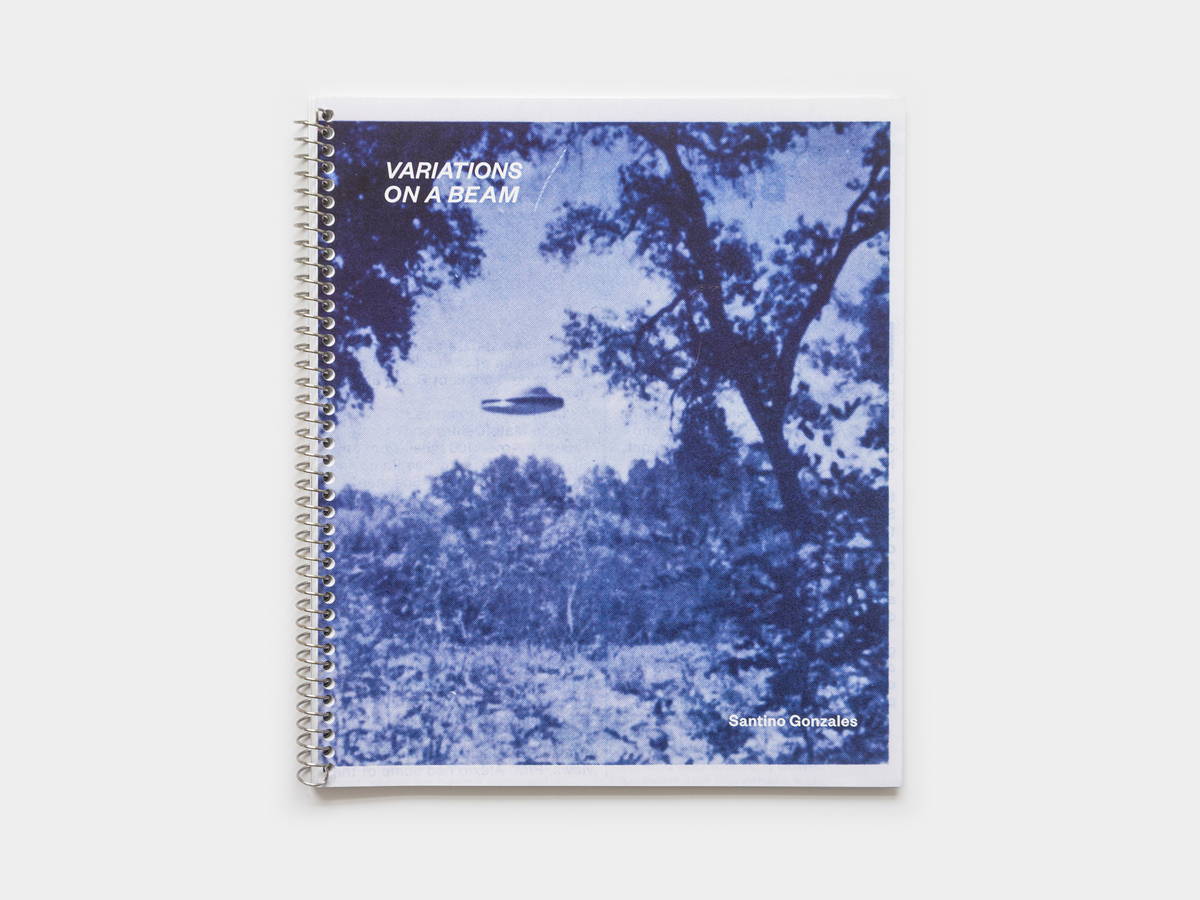
Accompanying this story is an image, a kind of mystery, a communication from the past. This grainy, black-and-white picture of a disc flying through the cottonwoods was taken in Gonzales’s hometown of Los Lunas, New Mexico, where his intimate connection with UFOs began. He remembers staying with his grandmother in the last years of her life, listening to the radio together as they fell asleep. “As we would both drift out, her regular radio station would switch over into the late hour. At that time it was late-night paranormal radio, Coast to Coast […] It was bubbling around me and there was just this curiosity. It was kind of just around in the air.” Gonzales describes how since childhood, he’s always taken time to look up at the New Mexico sky with its mysterious light. That early feeling of wonder never left.
Inspired to move beyond painting and ceramics by his mentors at the University of New Mexico, Gonzales began exploring expansive forms that more clearly communicate the feeling of lights in the sky and echoes through the radio. Gonzales’s work primarily takes two seemingly juxtaposed forms, audio wave transmissions and adobe construction, but trying to break down his practice by material seems inadequate. It’s more about teasing something deep from the mysterious sum of the parts. For example, he has created a crop circle with his father (a brief history of crop circles, 2021) and used an aeolian harp made from an adobe mold to listen to the landscape (adobe harp, 2025). Gonzales understands his work to be an exploration of connection—the reaching out, the hoping. Just like many in the UFO community, Gonzales tries over and over to capture an experience so personal and fleeting, it can’t really be seen straight on.
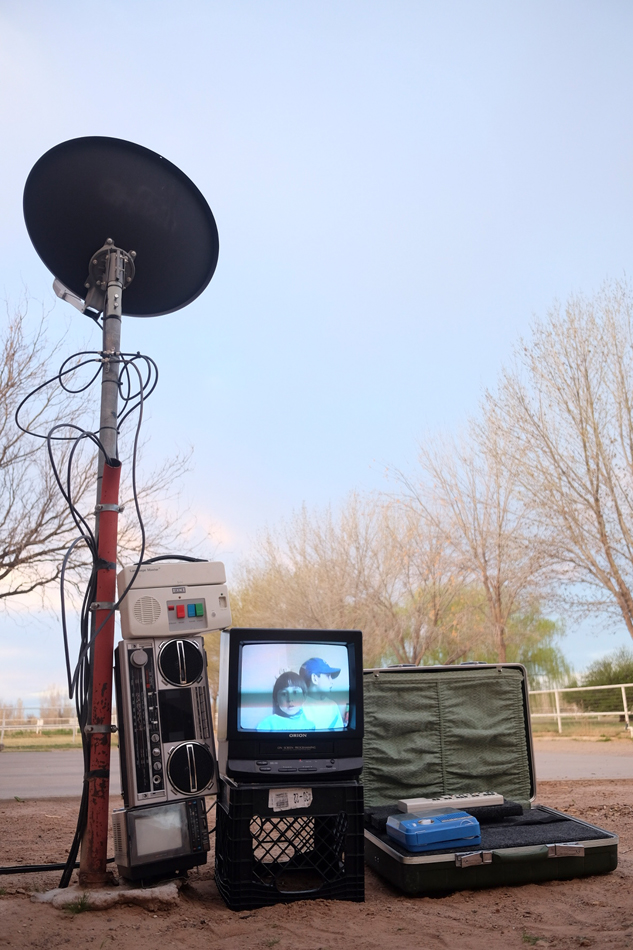
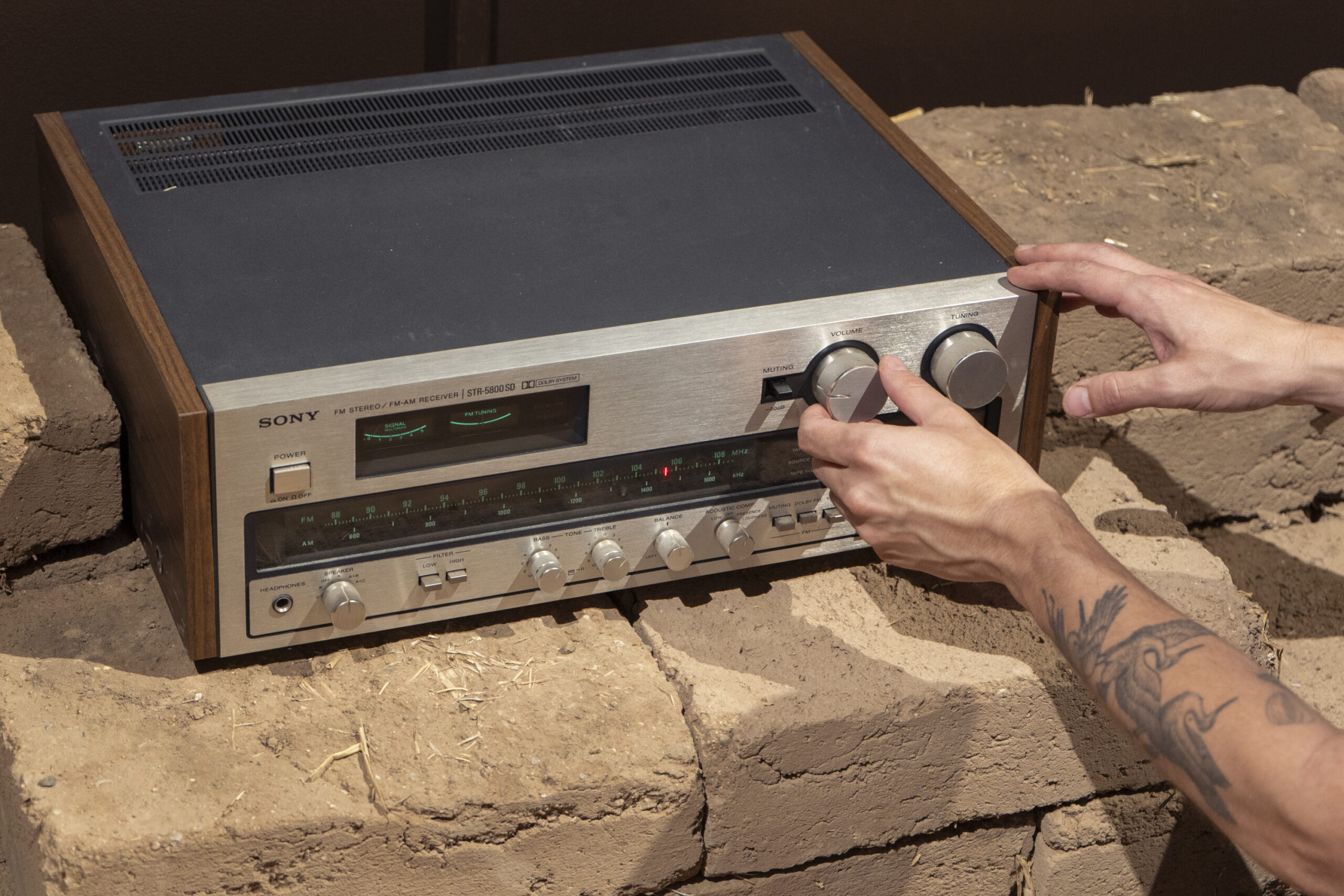
In describing his 2020 piece evening star, made from adobe bricks, a cathode ray tube TV, and an emergency antenna, Gonzales says, “Oftentimes it’s about sending a signal and not knowing if it’s gonna be received; it’s about just the gesture of blasting something out there, waving a big hand in the sky, kind of like a lighthouse in the desert. What would it look like if we were able to beam something up ourselves?” Gonzales captures the light emanating from his evening star in a short film overlaid with his own music and brief text. Short phrases like “mouthful of tangerines” and “when we got home, all the TVs were on” invoke a personal version of the Voyager Golden Record—a hope to transmit the blurry memory of a life to someone out there who might remember it. It’s an optimistic archive.
It’s about sending a signal and not knowing if it’s gonna be received; it’s… waving a big hand in the sky, kind of like a lighthouse in the desert.
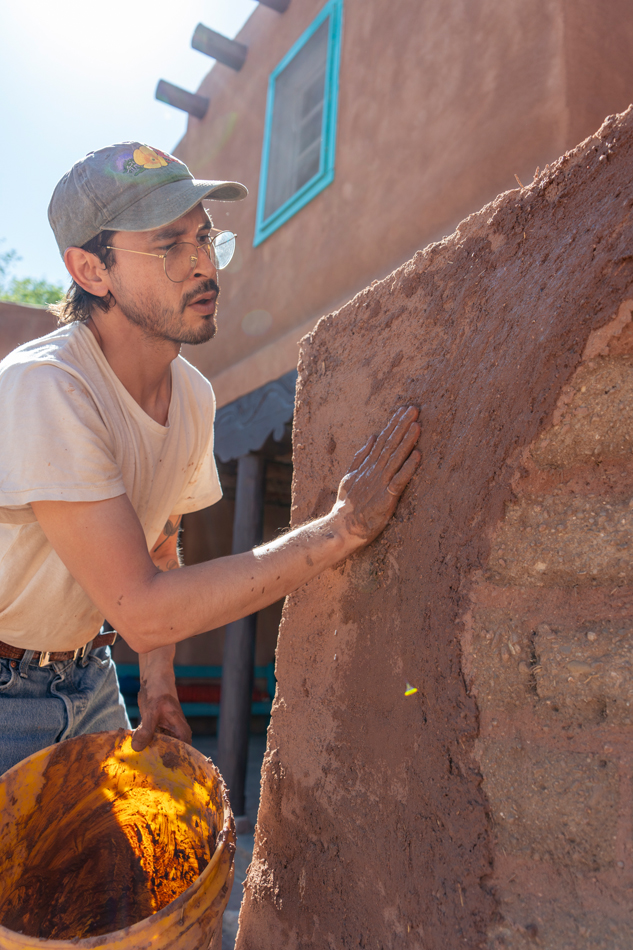
When I meet with Gonzales, he is deep in the installation process. His clothes are dusted with drying adobe; in the corner of the room are piles of adobe bricks, Polaroid photographs, and flyers advertising “ADOBE RADIO” complete with perforated tabs reading (844) 918-DIRT. His Disc series, new site-specific works installed at the Fort Garland Museum and Harwood Museum of Art for the group exhibition Unearthing Futures / Desanterrando Futuros (June 27, 2026–February 28, 2027) consists of huge vertical walls of adobe bricks with a smoothed circular impression, created by the artist with the help of his loved ones. Gonzales explains that these works engage directly with the complex historical use of long-range transmission, imagining applications for the technology beyond military ones. “I was making a piece that was inspired by the VLA [Very Large Array] but also… sound mirrors to detect enemy aircraft, but reinterpreting them as a mode of listening to our ancestors… and dedicating it to my Nana.”
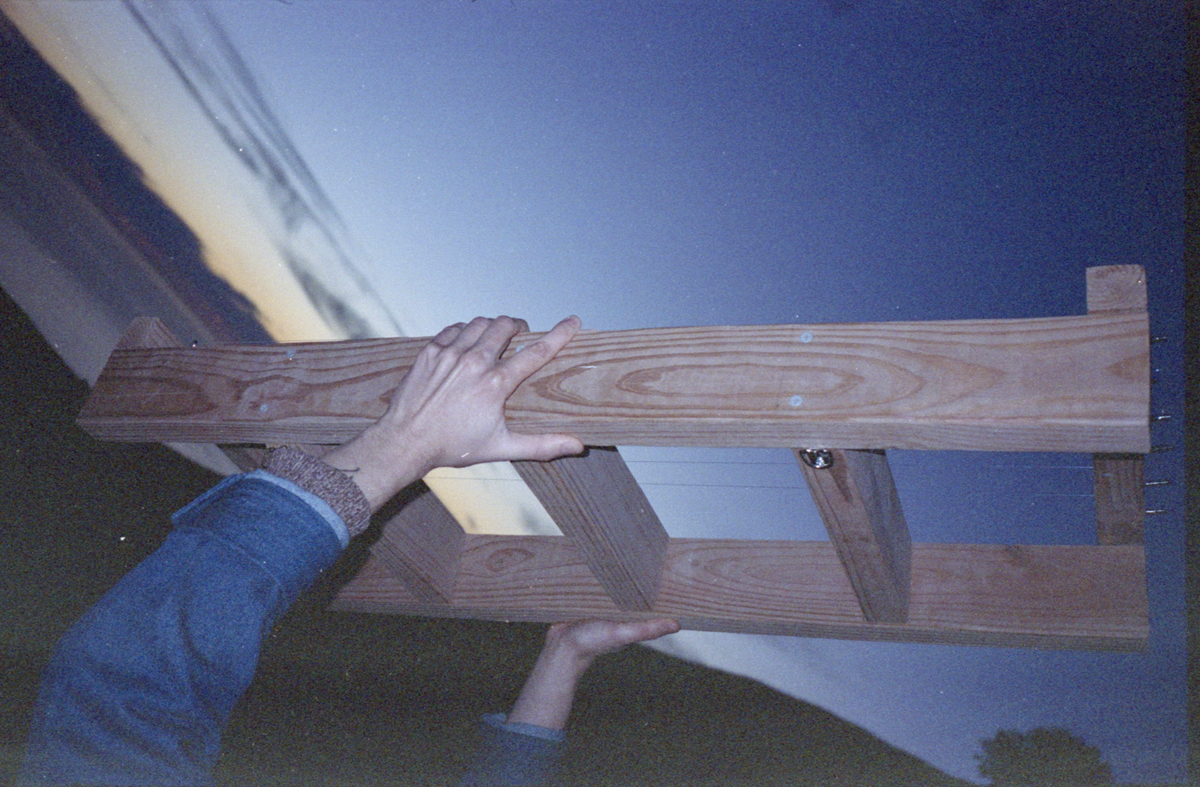
Rather than capturing the faint sound of approaching planes, Gonzales uses this adobe technology to hear “the whisper… the echo of the environment, the birds and the wind. And then maybe too, [the piece] also looks like that mystery, that thing that we’ve seen that we don’t understand.”
In our conversations, Gonzales is clear he is not a “truther” in the conventional sense. He is not interested in solving any particular mystery through his UFO exploration. For Gonzales, things we don’t understand allow us room for mystery, for wonder. In turn, surrendering to wonder lets us imagine a world beyond the one we live in now. His work asks: How could we listen more? How can we be more open to what others (humans, grass, mud, aliens, wind) are telling us? How can we capture the fleeting mystery of being here, together?
“I’m constantly inspired and in awe [of] the beauty of everyday life, like the magnificence of a voicemail from a family member that you haven’t heard from, or the beauty of seeing a loved one for the first time in a long time and giving them a hug, or just catching a sunset with your brothers,” he says. “Honestly, those are beautiful things. I’m trying to find ways of translating those experiences into the artwork, and I’m hoping that in living them as I’m making the thing, a piece of that gets imbued into the work. […] It’s all in the mud; we’re all there.”

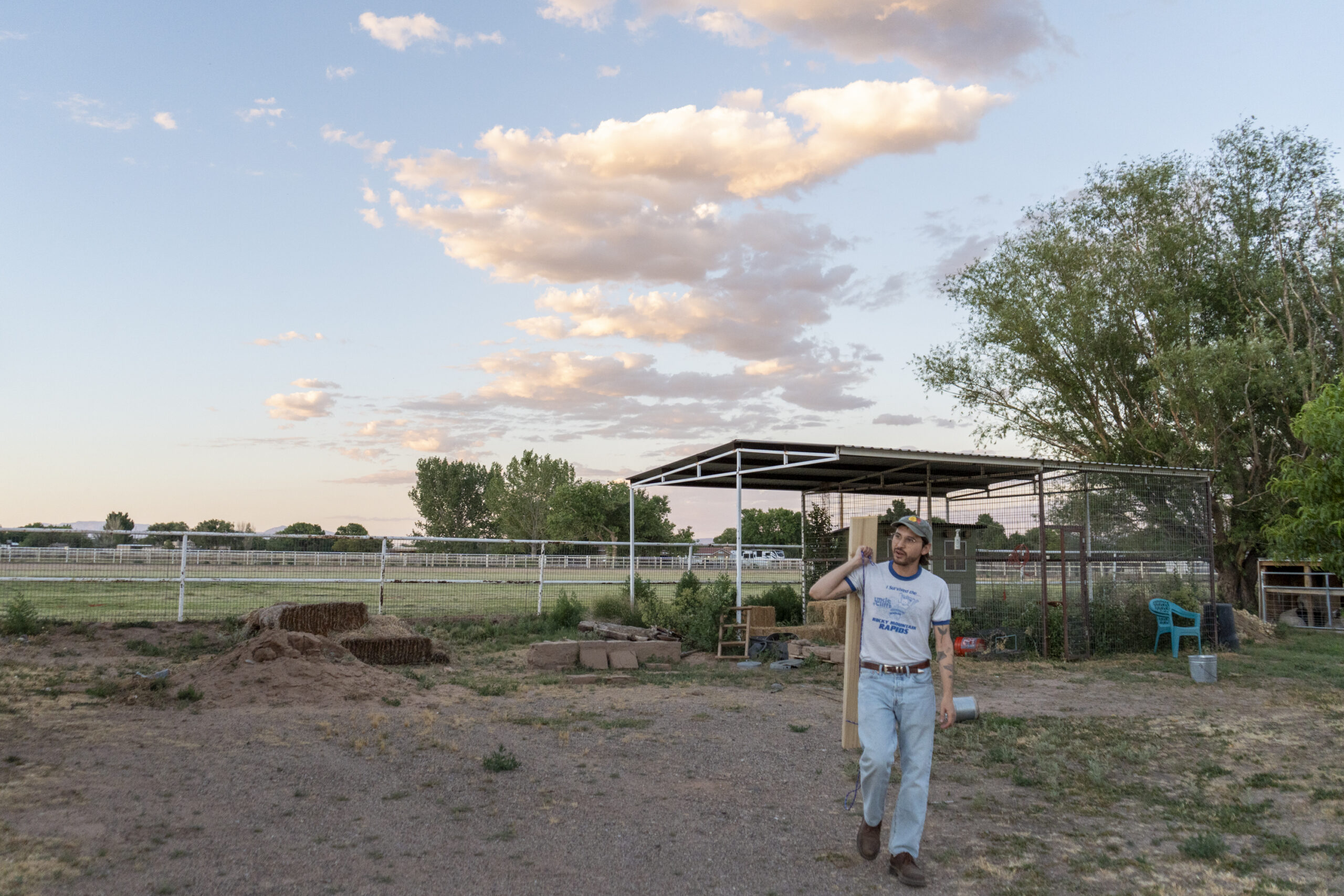

Unearthing Futures. Photo: Sam Soon.