Curated by Fawn Douglas, Tooveep offers contemporary Indigenous perspectives on place and history during the United States’ 250th year. On view through March 6, 2027.
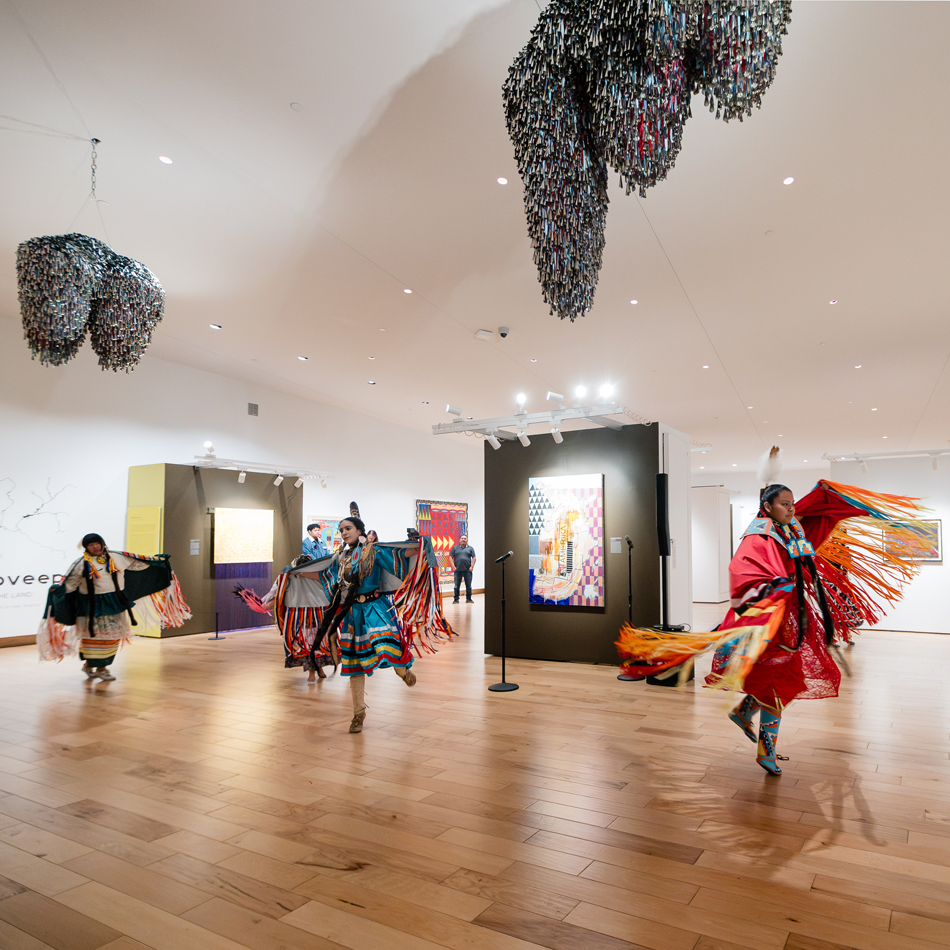
Tooveep (The Land)
October 17, 2026–March 6, 2027
Southern Utah Museum of Art, Cedar City
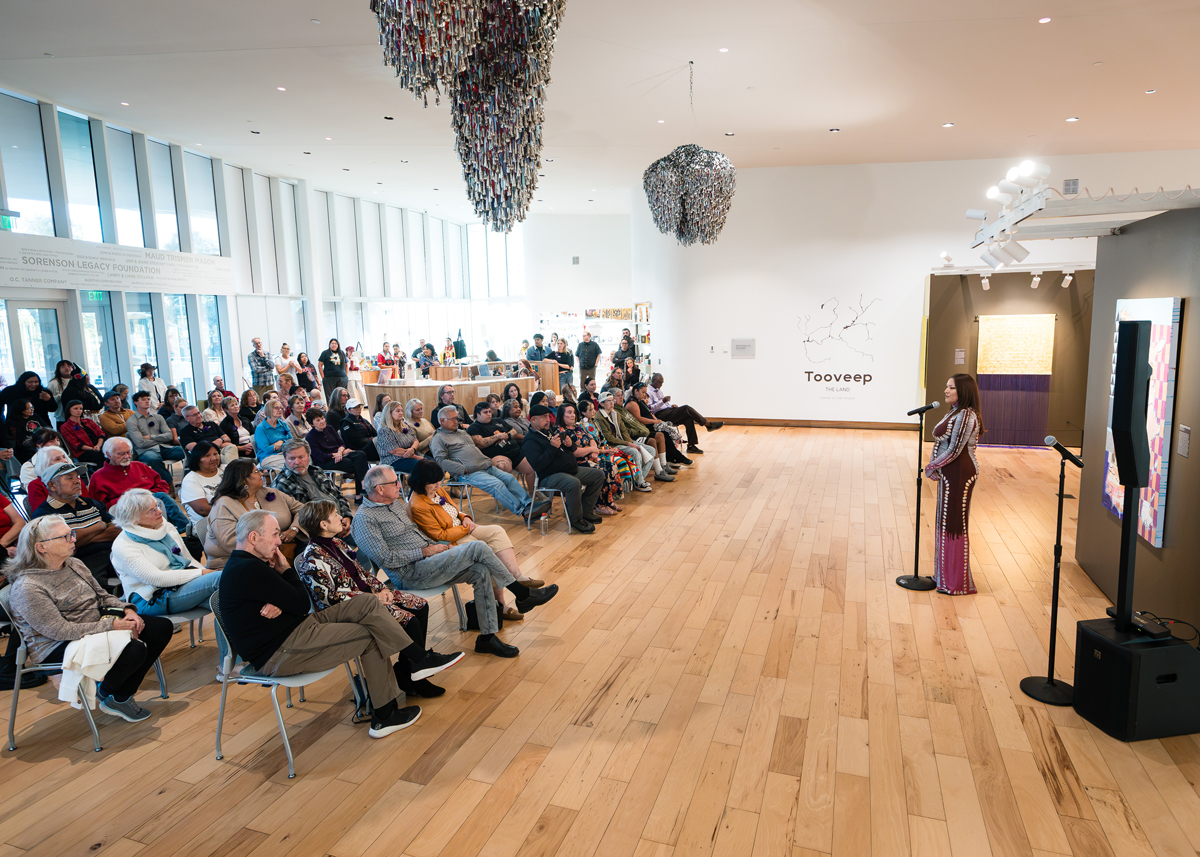
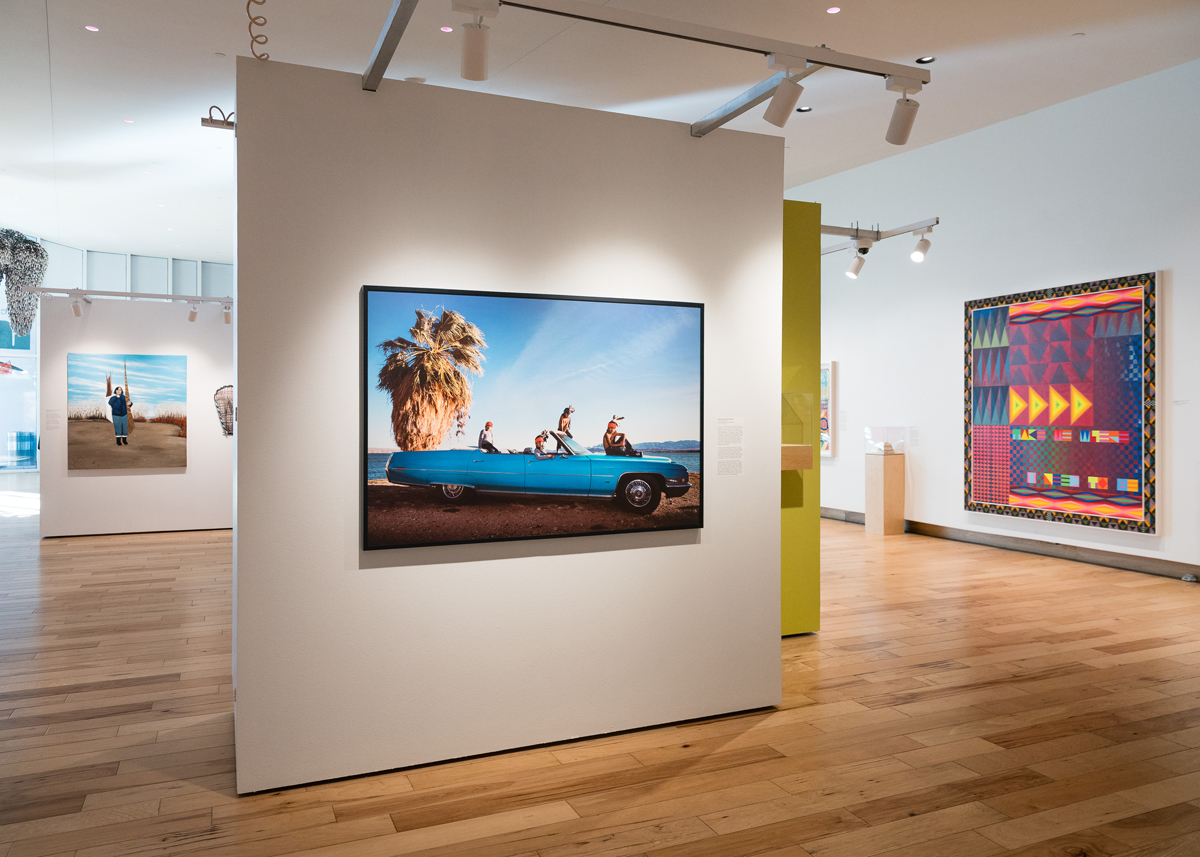
Named after the Southern Paiute word for “the land” or “the earth,” Southern Utah Museum of Art’s new exhibition, Tooveep (The Land) (open through March 6, 2027), brings together works by twenty-four North American Indigenous artists that reflect the enduring relationship between people and place. During this year of America’s semiquincentennial, the show offers a visual representation of this land and its first peoples, facilitating a deeper understanding of America’s history and Native America’s place within it through contemporary Indigenous perspectives.
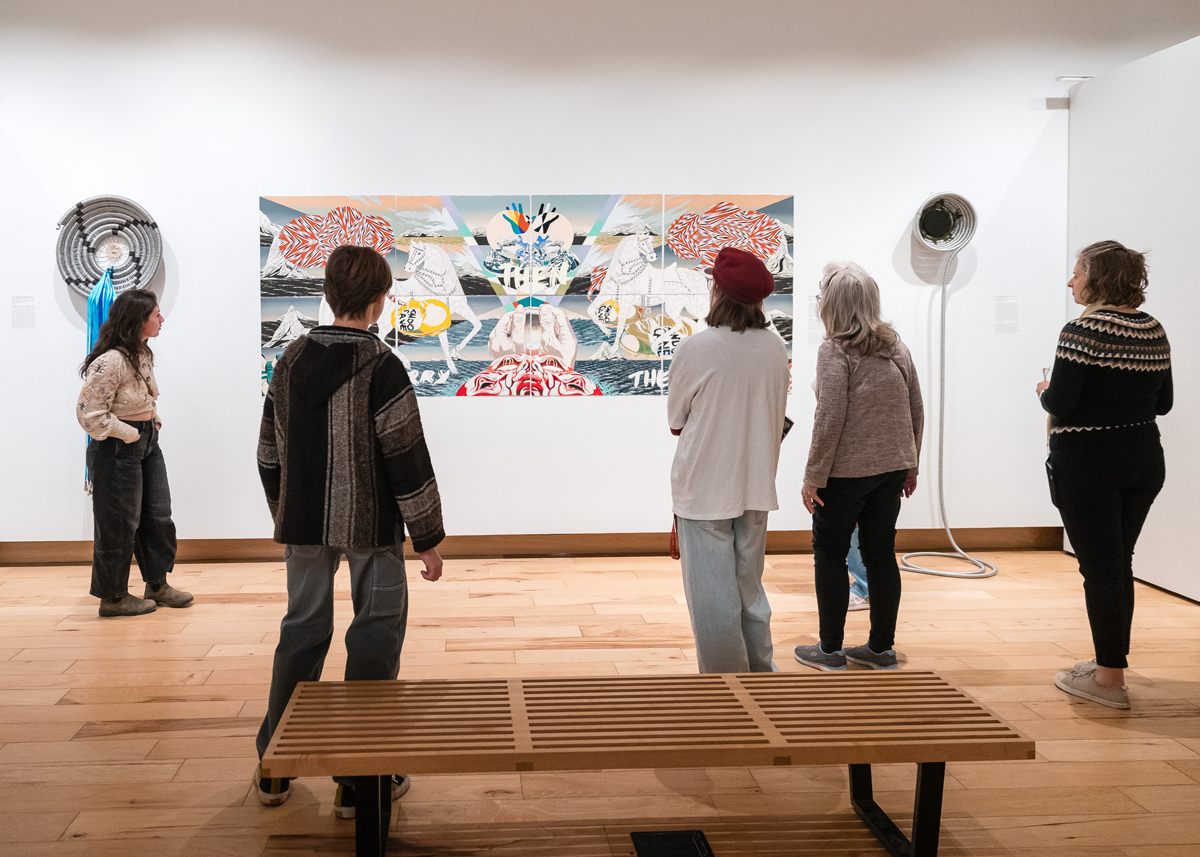
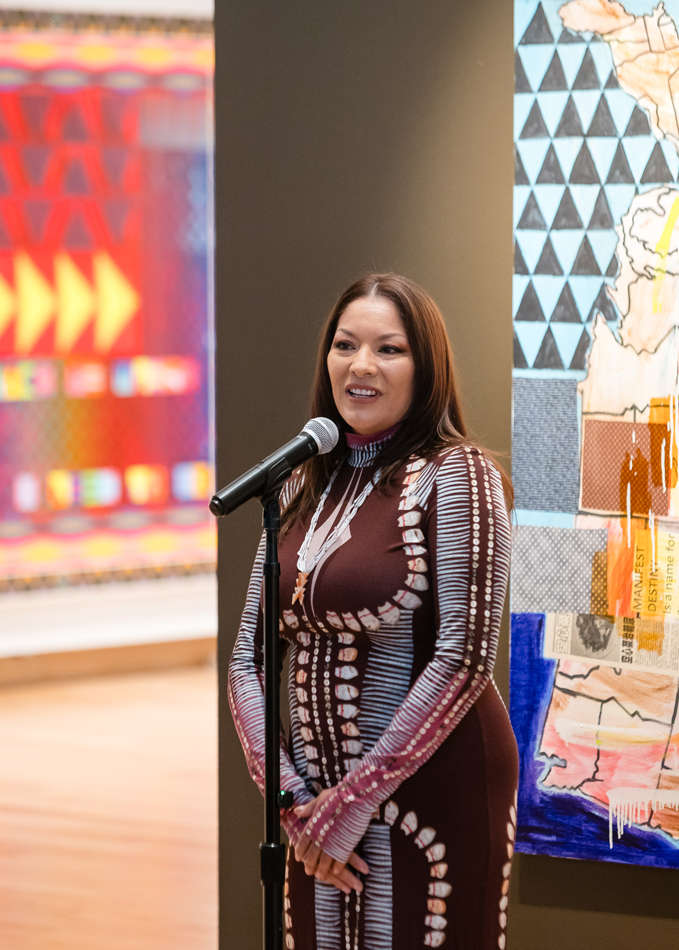
Curated by Fawn Douglas—a citizen of the Las Vegas Paiute Tribe, artivist, and founder of Nuwu Art—the exhibition weaves together the work of regional artists from the Great Basin and Southwest, such as Cara Romero and Jean LaMarr, with artworks by renowned artists from tribal nations across North America, including Kent Monkman and Edgar Heap of Birds, on loan from the Gochman Family Collection. From painting and printmaking, to beadwork and basketry, the featured artworks reflect the various landscapes of Native experience.
Indigenous storytelling, self-determination, and joy are the heart of this exhibition. “I want the audience to have loud ‘Auntie laughs,’” Douglas says. “I want elders to be embraced with the warmth of color and hear the cool trickle of water from clouds hanging above, jingles gently clinking.” Here, the curator refers to two sculptures from Marie Watt’s Sky Dances Light: Revolution series, which immediately greet visitors, framing their experience both visually and conceptually. Made of many metal cones, the pieces reference Pow-wow regalia and the healing power of the Jingle Dance—an apt starting point for an exhibition that celebrates the reparative capacity of artistic connection and expression.
Below Watt’s floating jingles, Jaune Quick-to-See’s Amerika Map depicts the United States on its side as a reminder of its inner turmoil and an invitation to the viewer: “As we take a moment to understand where we stand on the past 250 years,” Douglas proposes, “let’s also decide who we are and how we want to carry ourselves into the next 250 years.”
As the audience explores further, Indigenous joy and intentionality outweigh the history that frequently informs but never overshadows the artists’ powerful storytelling. The baskets of contemporary weavers Everett Pikyavit and Loretta Burden demonstrate the continuity of tradition, as the conduit-wire basketry of Fawn Douglas and the basketry-inspired pieces of Melissa Melero-Moose illuminate the capacity of the medium to hold meaning for modern Indigenous communities. As Louise Nez employs ancestral weaving techniques to tell new stories of the land (with dinosaurs!), Karma Henry superimposes textile patterns on landscapes to forge reconnection to ancestral lands, and Jeffrey Gibson manifests pan-Indigenous patterns in neon colorways to represent the many facets of contemporary Native identities.
Tooveep reflects the strength, humor, and deep cultural ties of Indigenous people, presenting the land not as simply a backdrop, but as collaborator and keeper of stories. This is a celebration of Indigenous people and their art, reflecting the narratives, histories, and profound connections to the lands that hold them—that hold all of us.
sponsored by