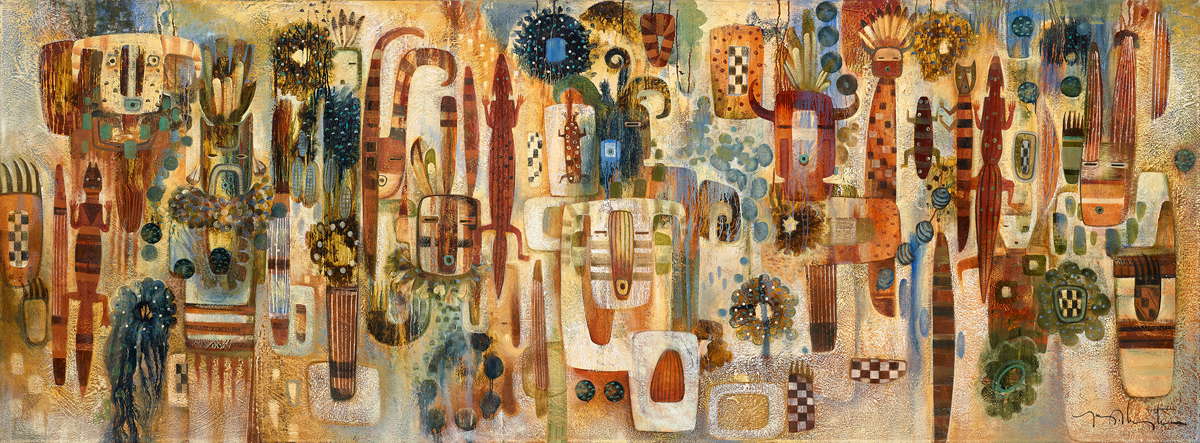
Native Americans exclusively appeared as subjects in William P. Healey’s Western art trove. He tapped Diné artist Tony Abeyta for a sweeping intervention.
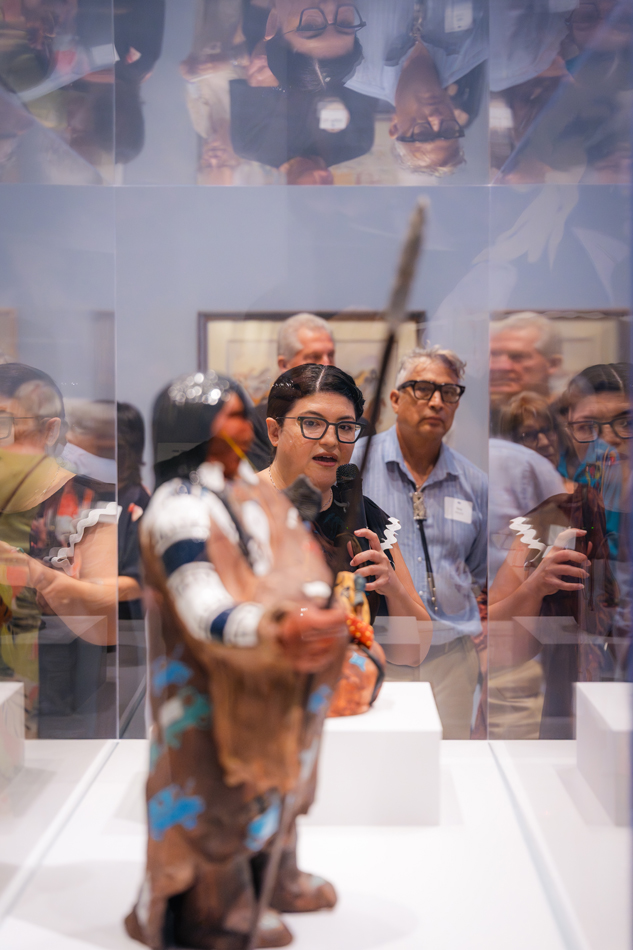
“I had probably hundreds of paintings of Native Americans,” art collector William P. Healey says, “but none by Native Americans.”
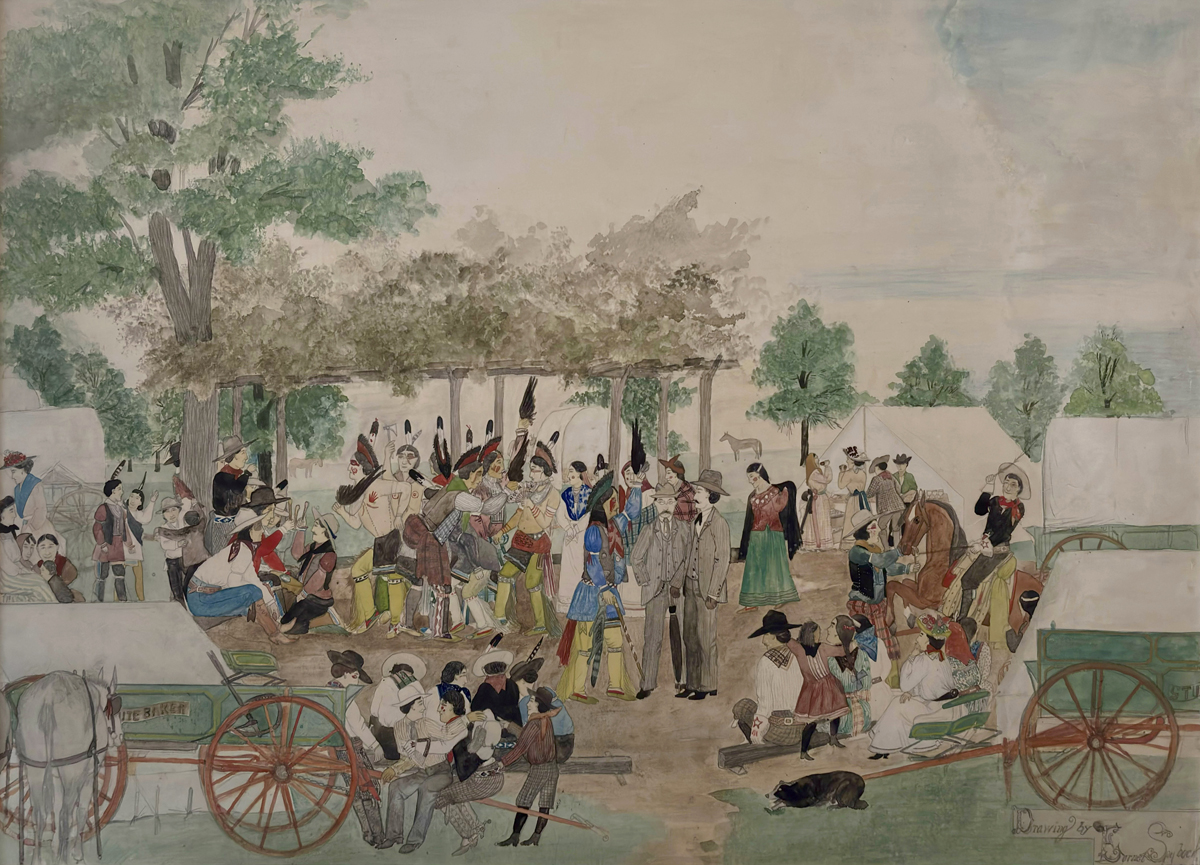
Healey has been a collector of art all his adult life, and for decades his interest had been in art of the American West in the vein of Charles Russell and Frederic Remington, works with a Romanticized view of westward expansion and Indigenous people. All that changed about twelve years ago after Healey saw a long-running exhibition at Phoenix’s Heard Museum about Native American boarding schools and the artists who emerged from them. “I made this decision to switch my collecting emphasis from Western art and to focus on Native American art, the definition being art painted by Native Americans” Healey says.
Although Healey knew generally what he wanted to do, he didn’t know where to begin, and so he called on painter Tony Abeyta (Diné/Navajo) to act as an advisor. Healey had bought some of Abeyta’s paintings and the two had gotten to know each other over the years, through collecting and going to Santa Fe Indian Market together.
Abeyta recalls the works Healey was initially drawn to and the narrative they implied. “They were very romanticized views of what the American West was presumed to be,” he says. Abeyta guided Healey over the next several years in studying Native American history and Native artists. For Abeyta, some of whose works feature in the new exhibition, the history of Native American art and boarding schools is part of his own background. “My father came out of the Santa Fe Indian School,” Abeyta says. “He was there [in] 1936, ‘37, ‘38.” Abeyta eventually began collecting works by his father, Narciso Abeyta, and his father’s peers.
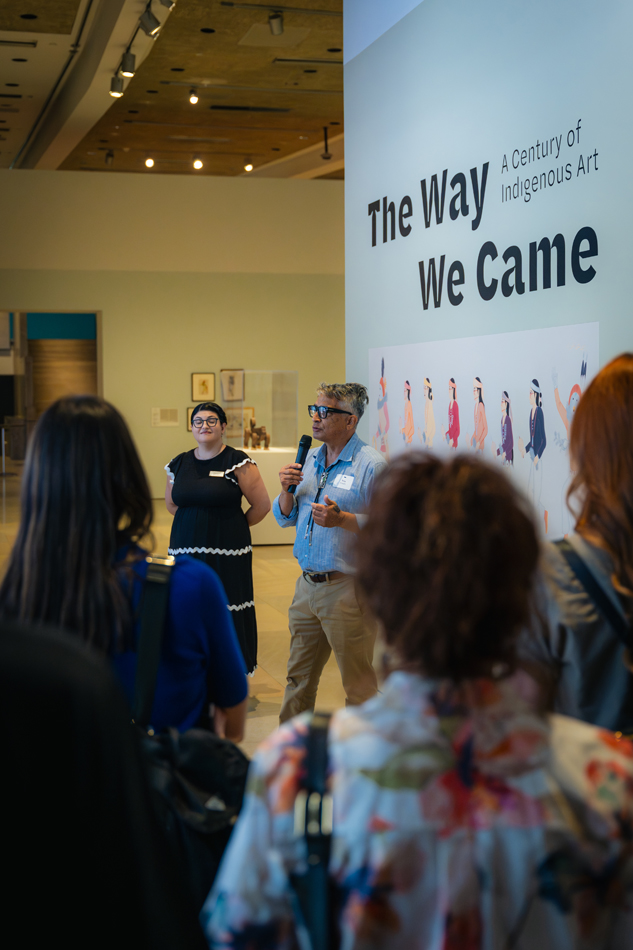
A new exhibition drawn from Healey’s collection at Phoenix Art Museum, The Way We Came: A Century of Indigenous Art from The William P. Healey Collection, includes a number of works by artists who, like Narciso, went through boarding schools. Although these boarding schools were mainly intended, as Abeyta describes them, to be “institutions of assimilation,” they occasionally also fostered their students’ artistic pursuits and sometimes became associated with particular styles or cohorts of artists, such as the group known as the Kiowa Six and their alma mater Bacone College in Oklahoma. What the artists who went through these schools created expresses both the preservation of their respective traditions—traditions that the boarding schools generally sought to extinguish—and their individual responses to the larger movements in contemporaneous American art.
As an artist and a collector who knows Native American art history intimately, Abeyta helped Healey understand what to look for in art and how to build a collection with a narrative. “Every painting was chosen based on, ‘Does it tell a story?’” Abeyta says. “Are these works part of a greater collective of American art?” His goal was to help Healey select works that represented “not only the artists and their prowess, their storytelling,” but also to “round [the collection] out with equity” by including “all different facets of intertribal representations.”
After several years, when Healey had collected about four hundred paintings, he and Abeyta began approaching museums to discern where a gift of the collection would be most appropriate. Healey donated about a hundred of these paintings to the St. Louis Art Museum. He wanted to donate more works to other institutions, and the Phoenix Art Museum presented a natural choice, for its proximity to reservations and for its large collection of art of the Americas. JoAnna Reyes, PAM’s adjunct curator for art of the Americas, acted as lead curator for The Way We Came, with Abeyta as her co-curator. “[Abeyta] was able to introduce some of the big ideas for the collection and how it came together,” Reyes says. “My job is figuring out the narrative. What kind of story can I tell with all these disparate objects?”
I want people to walk away with the idea that attempts to extinguish [Native] culture failed, and art documented it all along the way.
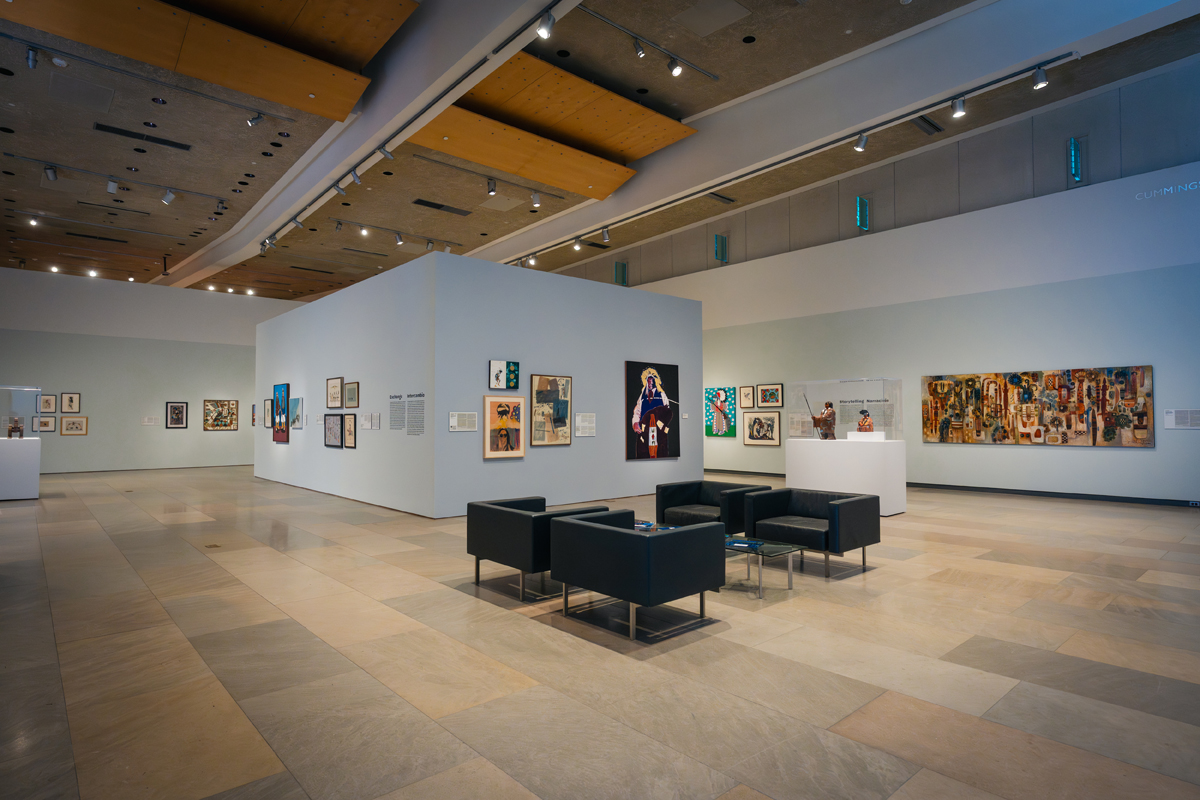
This was no small feat. According to Reyes, the collection comprises some 185 objects (including painting in various media, stoneware, metalwork, wood, hide, and one work consisting of woven paper splints) by artists from across the 20th century, representing twenty-seven different tribal nations. Around seventy of these are currently on display, organized into thematic groupings of exchange, storytelling, and place.
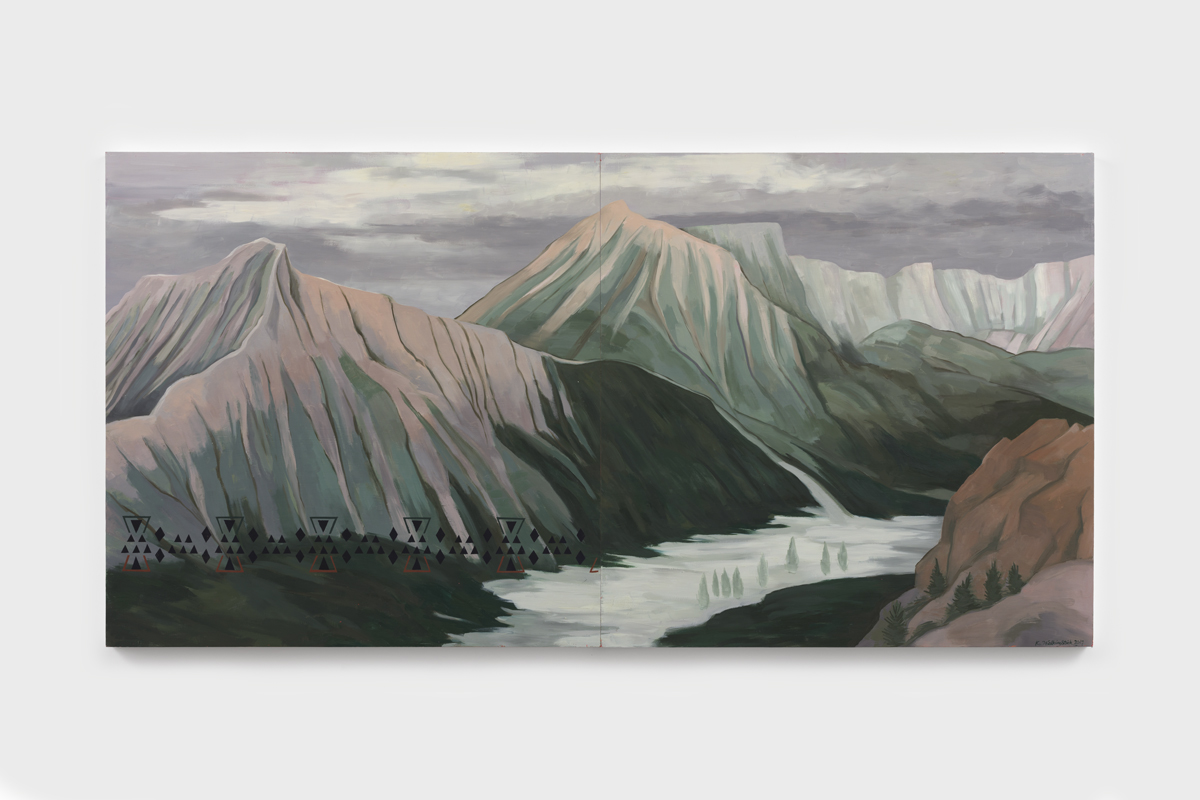
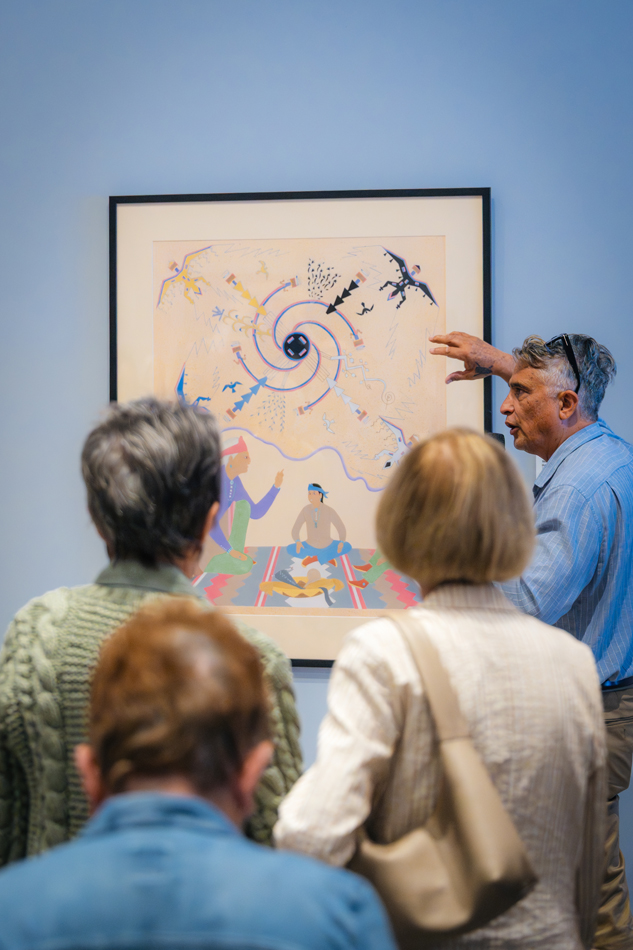
No single style or aesthetic defines the array of works on view, and many challenge conventional categorization. Stephen Mopope’s (Kiowa) Apache Fire Dance (early to mid-20th century), made with pigment on a stretched hide, depicts a group of Chiricahua Apache dancers surrounded by Kiowa spectators, a comment on the forced relocation of these tribes to the same area and the unity in diversity that they sometimes found. There is also Harry Fonseca’s (Nisenan Maidu/Native Hawaiian/Portugues) Coyote Chief with Pink Clouds (ca 1980s), a mixed-media acrylic painting, showing a colorful rendition of the mythological trickster figure Coyote in traditional garb but wearing purple sneakers, defying the distinction of past and present, traditional and modern. Some works, such as Joe Ben Jr.’s (Diné/Navajo) late-20th century sandpainting of the sky, stretch the viewer’s understanding of genre. “I never thought of a sandpainting of the sky as a landscape,” Abeyta says, “but it is a landscape.”
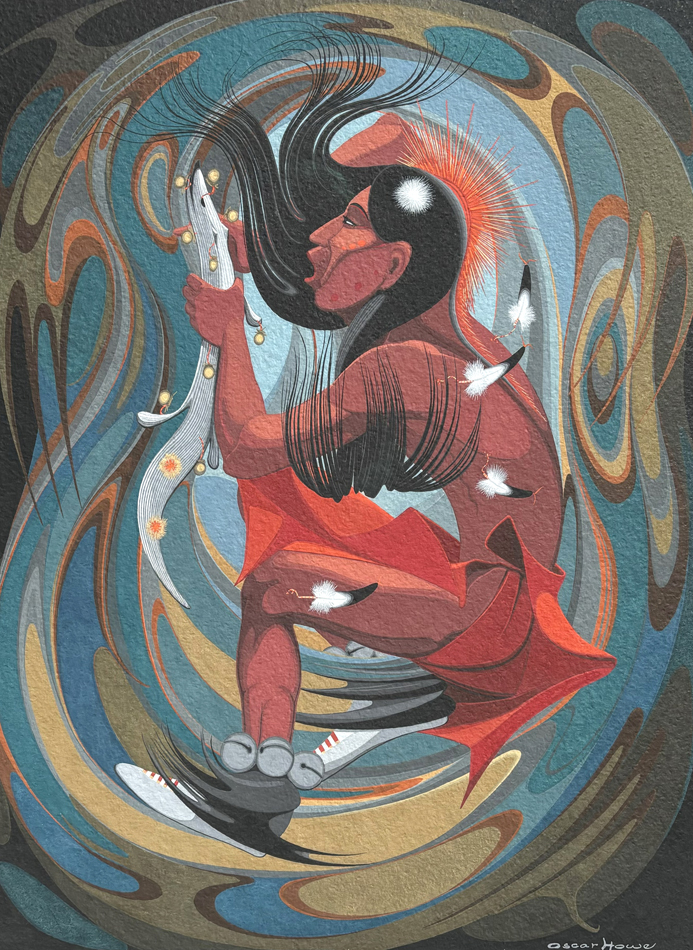
Native American history is long and varied, but the history of Native American art in major museums has only just begun. There are many reasons for this, among them a longstanding false division between American and Native American artists. In 1958, Oscar Howe (some of whose work is on display in The Way We Came) received a rejection from the Philbrook Art Center’s annual competition for Native American artists with the comment that his submission was a “fine painting—but not Indian.” In response, the Dakota Sioux artist wrote a letter, which Reyes describes as “essentially the first manifesto of Native American art,” in which he asserted that “Indian Art can compete with any Art in the world” and criticized institutions for treating Native Americans “like a bunch of sheep, with no right for individualism” and their underlying assumption that “only the White Man knows what is best for [Native Americans].”
For her part, Reyes looks forward to “putting the Healey collection into conversation with the collection of the Americas.” For example, she wants to juxtapose Euroamerican artists who painted New Mexico’s Pueblos with Pueblo artists. Abeyta sounds a similar note, remarking on how Native American artists can be understood as an intrinsic part of the entire American art tradition and of the movements and themes of their respective eras. “Where Grant Wood was painting the Midwest and farmers,” Abeyta says, “an artist like Oscar Howe is painting the Dakota.”
The Way We Came shows, from many perspectives, just that—the way each tribal “we,” and the greater Native we, took shape over a century of art, and how each is part of the larger American we. This is the first exhibition drawing from the Healey collection, with a long future ahead and a rich tradition in evidence.
“I want people to walk away with the idea that attempts to extinguish culture failed,” Abeyta says, “and art documented it all along the way.”