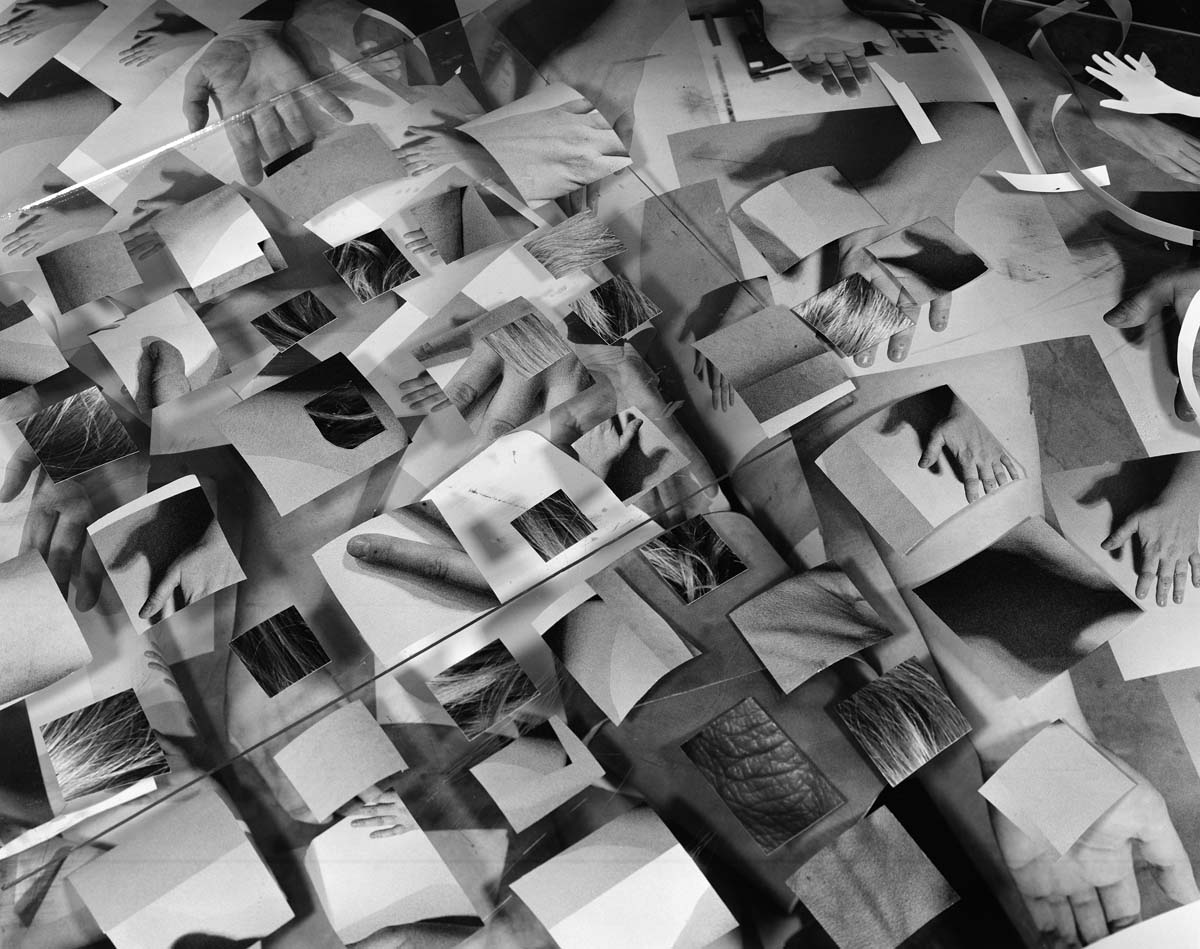
Hayley Krichels cuts up the hair, skin, and fingers of her human suit to imagine a new humanity of fragments.
Albuquerque, New Mexico | hayleykrichels.com | @halliekrickles
To poet Ocean Vuong, the eye is the loneliest organ. Its task is to bear witness to everything but itself or its fellow, seeing all but lacking self-analysis or camaraderie. A tender notion, if absurd, and also a very particular vision of bodily alienation that extends into Albuquerque-based artist Hayley Krichels’s photo-sculptural work. Krichels likens herself to “a creature hiding inside a woman’s body, using this disguise to move inconspicuously through the world and see all the things.” A flâneur’s dream and gender essentialist’s nightmare, Krichels’s characterization of her Invasion of the Body Snatchers-esque being decouples presence from identity, sex from self, and body from experience.
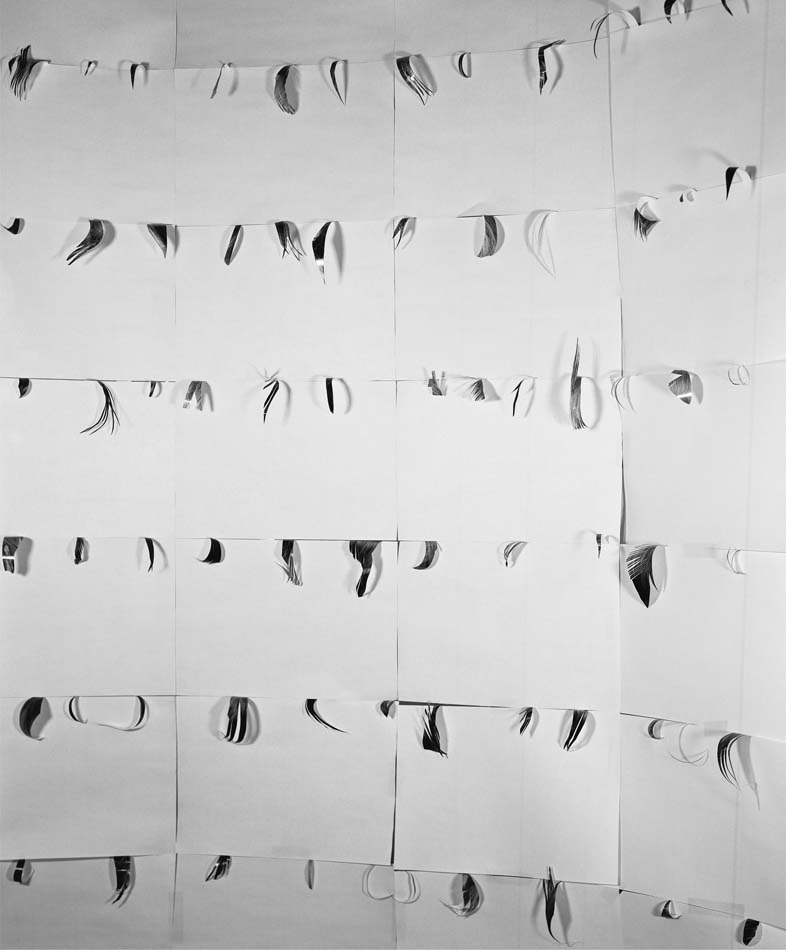
Radical separations like these abound in the artist’s photos of sculptures made from photos, resolving playful alternative human forms. In works like An Accumulation of Rectangles (2026), Krichels layers and reworks close crops of hair, skin, and hands into near-kaleidoscopic patterns. In Am I Doing This Right (Curls) (2026), garlands of yonic curves reveal themselves to be scraps of paper cut from images of slick wet hair, then wedged between blank rectangular pages arranged end-to-end in a puckering grid.
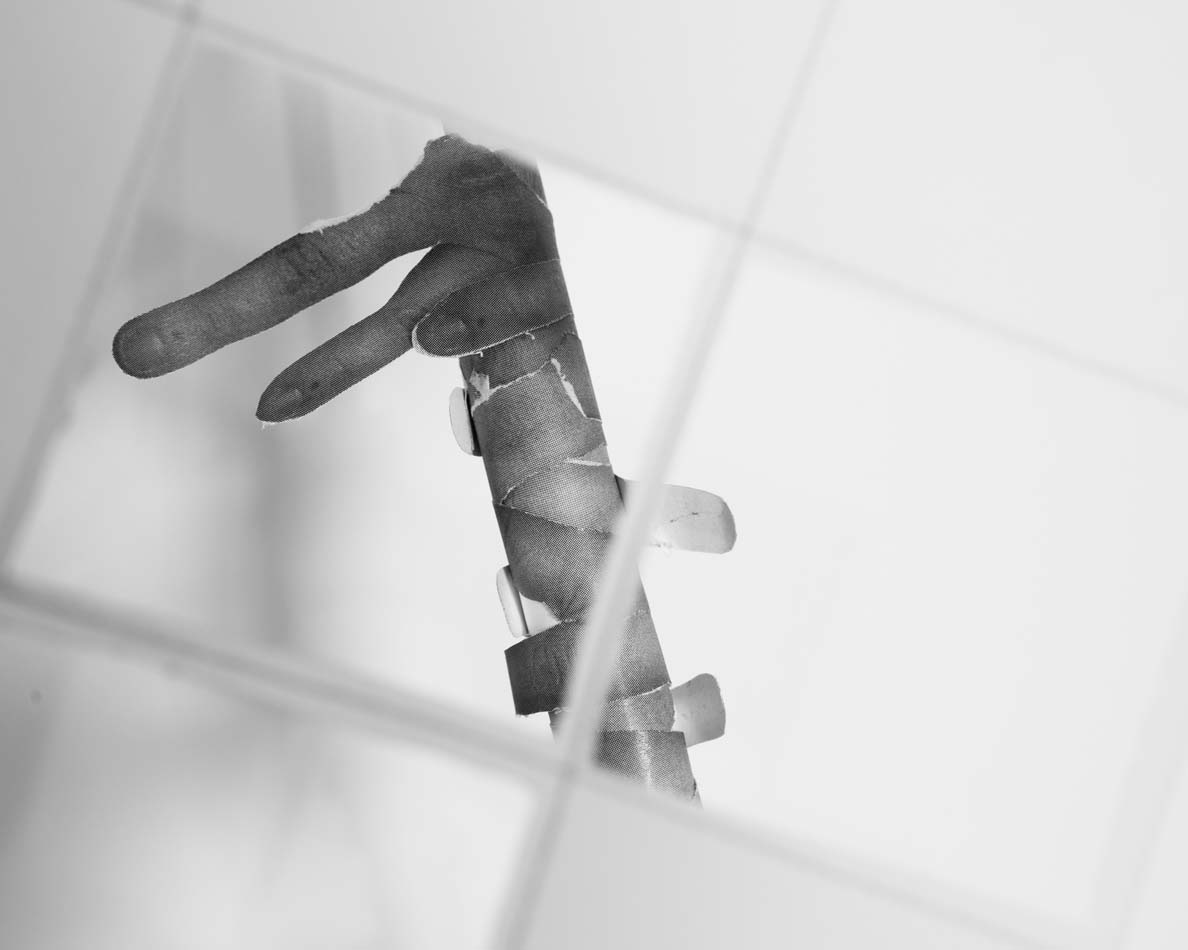
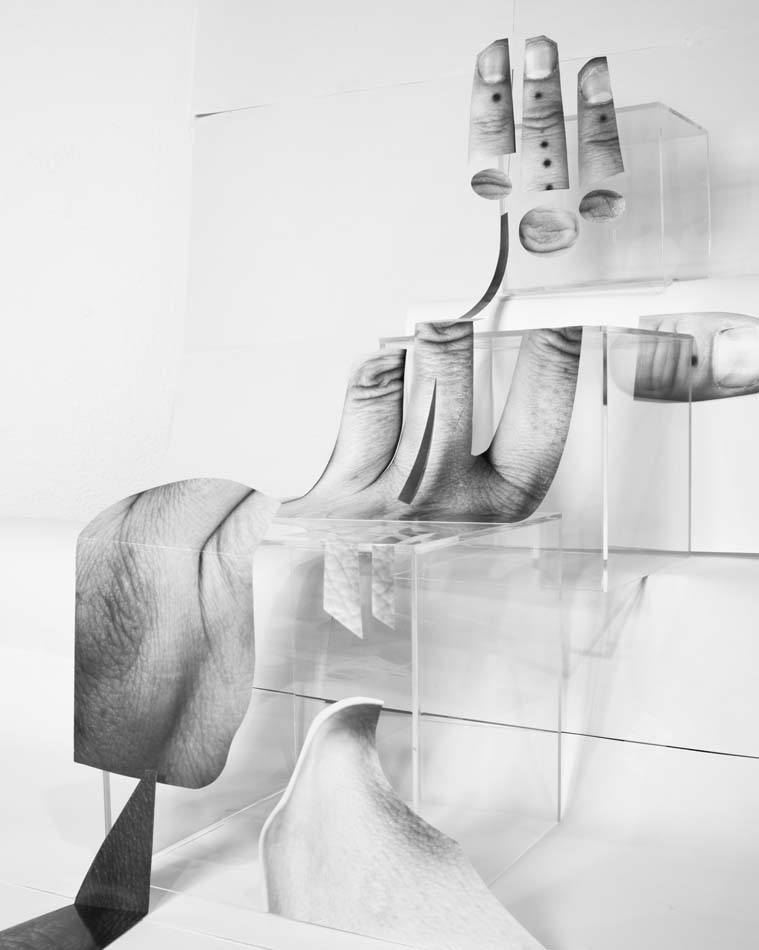
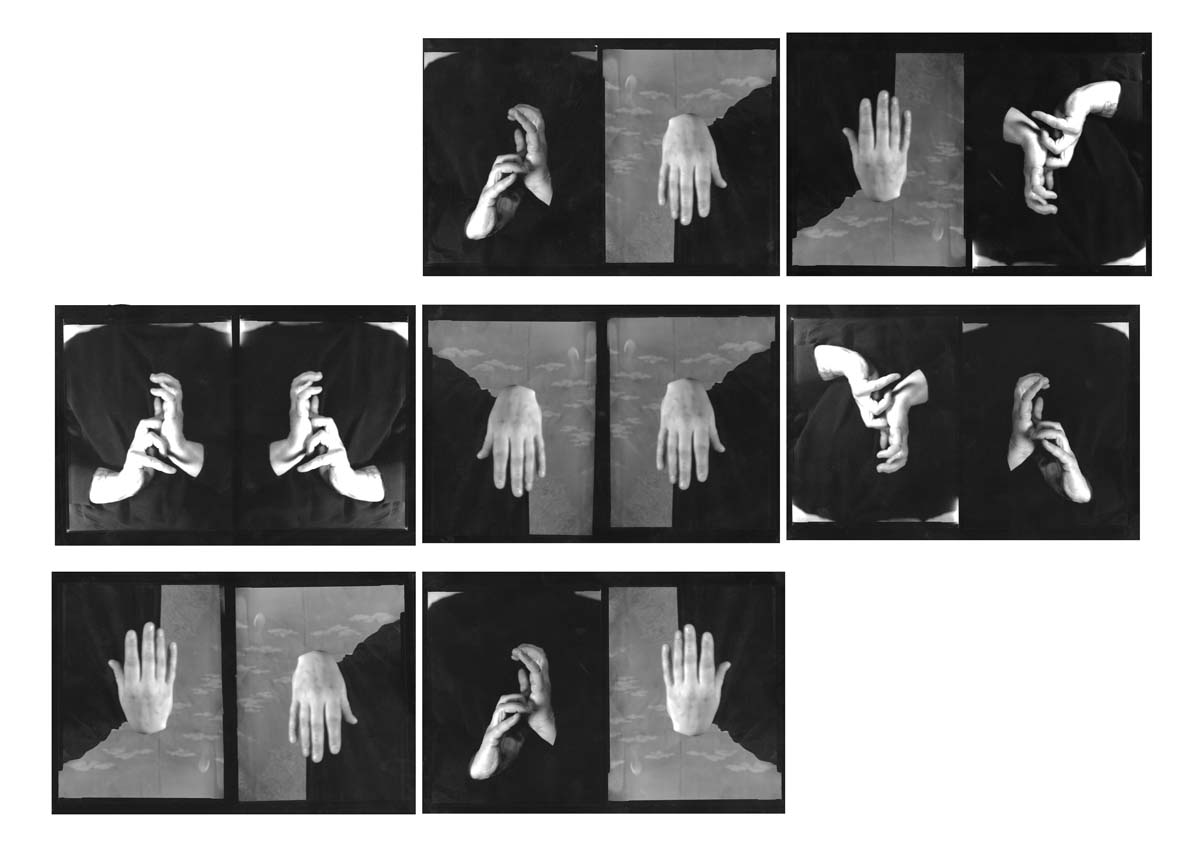
Though Krichels’s work renders the presumed shape of a person much harder to discern, the humanity of her compositions is undeniable. Expressive gestures play an important role here, with works like Contact Sheet Study (2026) and Fingers Like Sausages (2025). Double Jointed or Something (2025) monumentalizes hands through photo-fragments that snake whimsically up stair-stepped lucite blocks. Operating like portraits, these compositions conjure all the charged, mysterious, and even humorous emotions one might look for in a face or body, but with a slight depersonalization that transforms the artist’s body into almost anybody.
Through recursive processes of replication, dissection, and recombination, Krichels creates confounding figurations that remind you just how strange anything can become when you look too long, and how silly. With the camera operating as a disembodied eye shared between the artist and audience, Krichels’s abstractions capture the loneliness, wonder, and absolute bizarreness of having a body.