The Southwest was a central stage for Japanese American incarceration during World War II. In a new exhibition in Santa Fe, descendants cross generational divides to surface submerged histories.
Two U.S. warships have rested on the silty bottom of Pearl Harbor since late 1941, their punctured fuel tanks still sending ribbons of oil to the surface. Growing up in Hawai’i, Lehuauakea—a māhū (nonbinary) artist of Native Hawai’ian and Japanese descent—once visited the Pearl Harbor National Memorial in O’ahu and watched shimmering bubbles stream up.
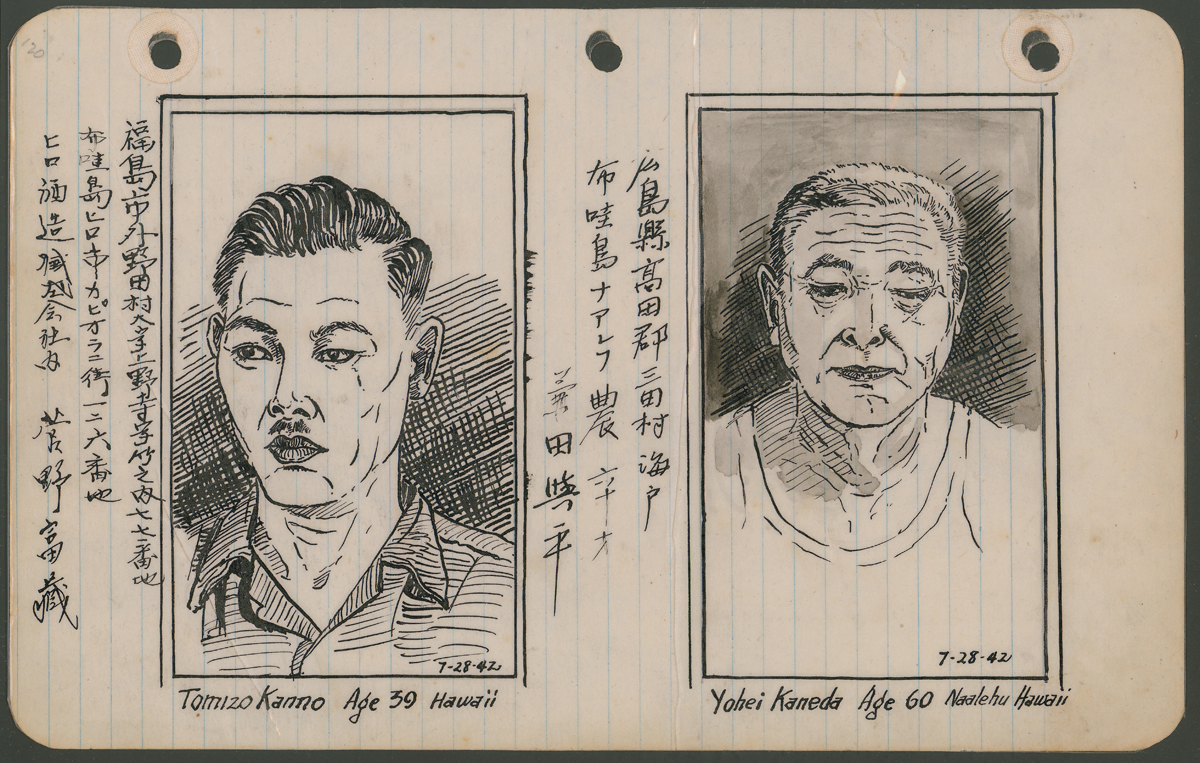
Years later, after moving to Santa Fe, New Mexico, Lehuauakea (they/them) dug through a World War II–era database of Japanese American incarceration camps. They were looking for a relative, Tomizo Kanno, who was arrested in Hawai’i in February 1942.
Just ten weeks after Japan’s attack on Pearl Harbor, Franklin Delano Roosevelt invoked the Alien Enemies Act of 1798 to order the apprehension of Japanese, German, and Italian nationals residing in the U.S. His actions led to the yearslong imprisonment of more than 150,000 people—including, through a concurrent executive order, Americans of Japanese ancestry.
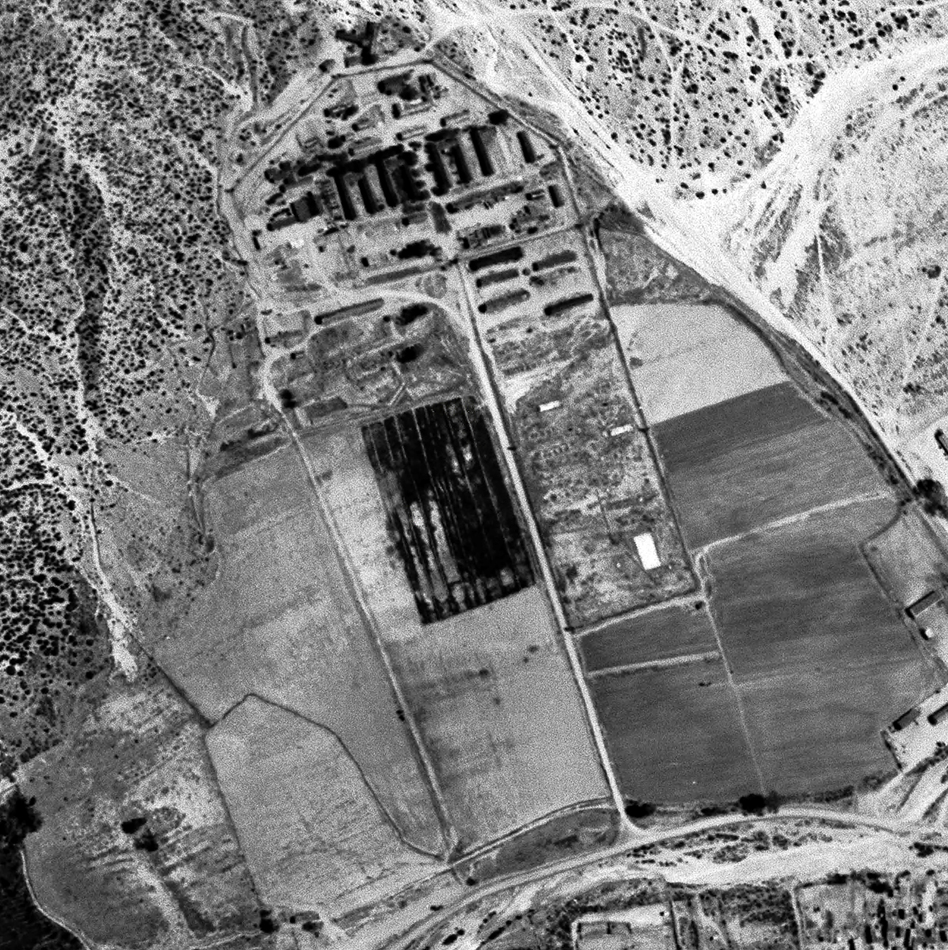
“All I did was plug in my family names… and sure enough, my great-grandfather’s cousin came up,” Lehuauakea says. They learned that Kanno had been a business owner in Hawai’i, and passed through seven camps across the continental U.S. That included two stays at the Santa Fe Internment Camp, which is now a dog park. Lehuauakea can see part of the site from their bedroom window.
The search turned up remarkable ephemera: sketches of Kanno by artist George Hoshida from New Mexico’s Lordsburg Justice Department Camp. “I don’t have photographs of him, but I have this, and they’re quite good sketches too, so it’s akin to a photograph,” they say.
Lehuauakea’s Hawai’ian grandfather and Japanese grandmother helped raise them. Their grandma “didn’t even talk about these things. She was part of a generation growing up right after World War II, [when] you had to prove your Americanness.” Thus, the artist “hadn’t really felt a pull… to talk about my Japanese heritage.”
They felt a new urgency after finding the sketches of Kanno in early 2024: “It just made it feel so much more recent—a close family member of mine had their whole life uprooted.” Lehuauakea found that Kanno returned to the Big Island in 1945, soon after the war and the incarceration program ended, but couldn’t determine whether he had reopened his business.
Blending empathy and imagination, they will attempt to bridge fractures between two nations and four generations.
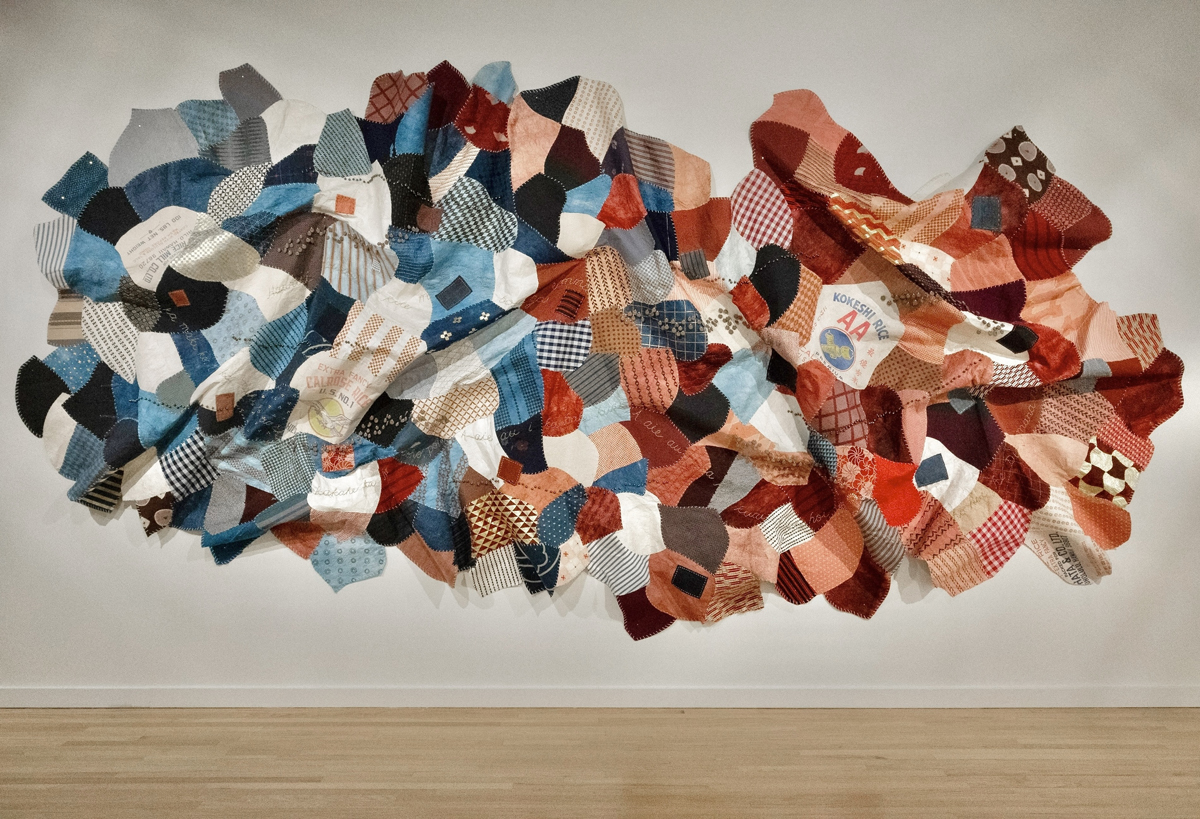
This fall in Santa Fe, Lehuauakea exhibits a seventeen-foot-wide fiber artwork that sprung from this family history. Still Finding My Way Back Home (2025), which debuted at last year’s Hawai’i Triennial, is a hand-stitched quilt combining Japanese textiles and Hawai’ian kapa (barkcloth), overlaid with snippets of Hawai’ian and Japanese plantation songs from the early 20th century. The artist embroidered the lyrics last, sitting on the floor with the tapestry gathered around them, three months pregnant with their son.
The piece appears in the ten-artist exhibition Reclaiming the Future: The Legacy of Japanese American Incarceration (September 5, 2026–May 31, 2027) at New Mexico Museum of Art Vladem Contemporary. Like Lehuauakea, the show’s other collaborators must interpret a brutal history—for which the Southwest was a central stage—in fragments. Blending empathy and imagination, they will attempt to bridge fractures between two nations and four generations.
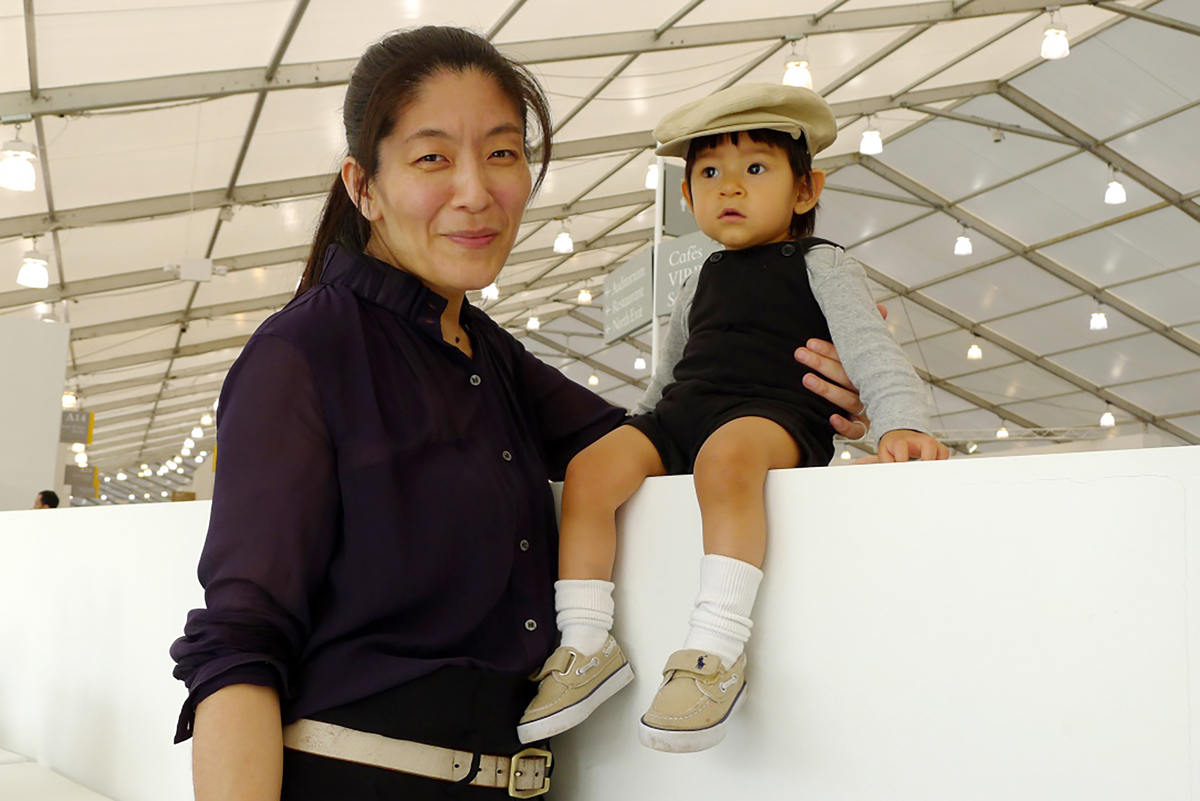
It was a snowy day in February 2021, and Reclaiming the Future curator Machiko Harada was looking for good spots to sled with her son Marcel. She and her family had recently moved to Santa Fe. They stopped at the hilly Frank S. Ortiz Dog Park northwest of downtown, and came upon a bronze placard embedded in a white stone.
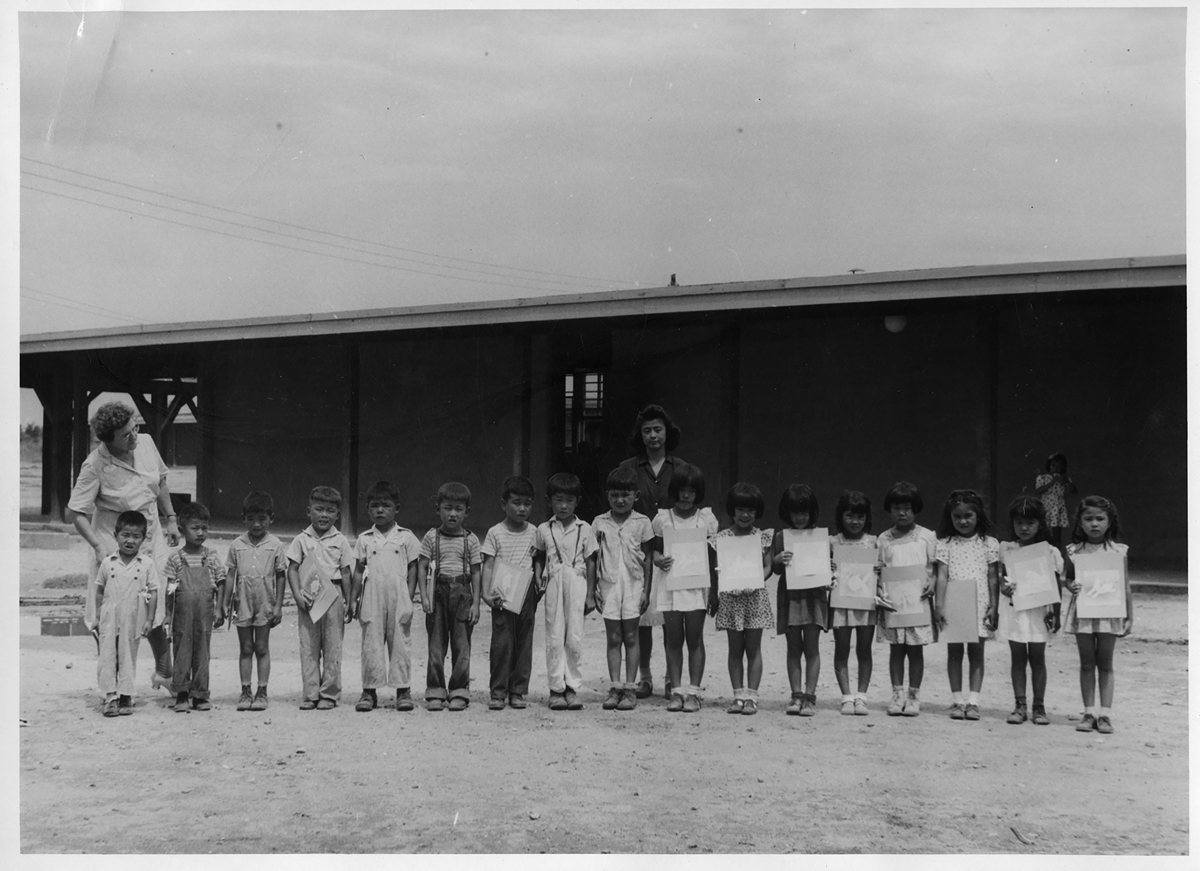
“It was serendipity,” says Harada. “I [had been] learning about the history of the incarcerations. I should have seen the name Santa Fe somewhere, but it was not really clicking before coming here.” Suddenly, she was standing on the former grounds of the largest Department of Justice–led incarceration camp in the nation, which held 4,555 Japanese immigrant men. The placard notes that “no person of Japanese ancestry in the U.S. was ever charged or convicted of espionage.”
Growing up in Japan, all Harada had learned about Japanese American incarceration came from “one or two lines” in a high school textbook. She got a crash course in 2012, two years after moving to New York, when she met Japanese American painter and performance artist Roger Shimomura. Having recently left a curatorial role about two hours from Hiroshima, she felt drawn to this corresponding but unfamiliar passage of nuclear history.
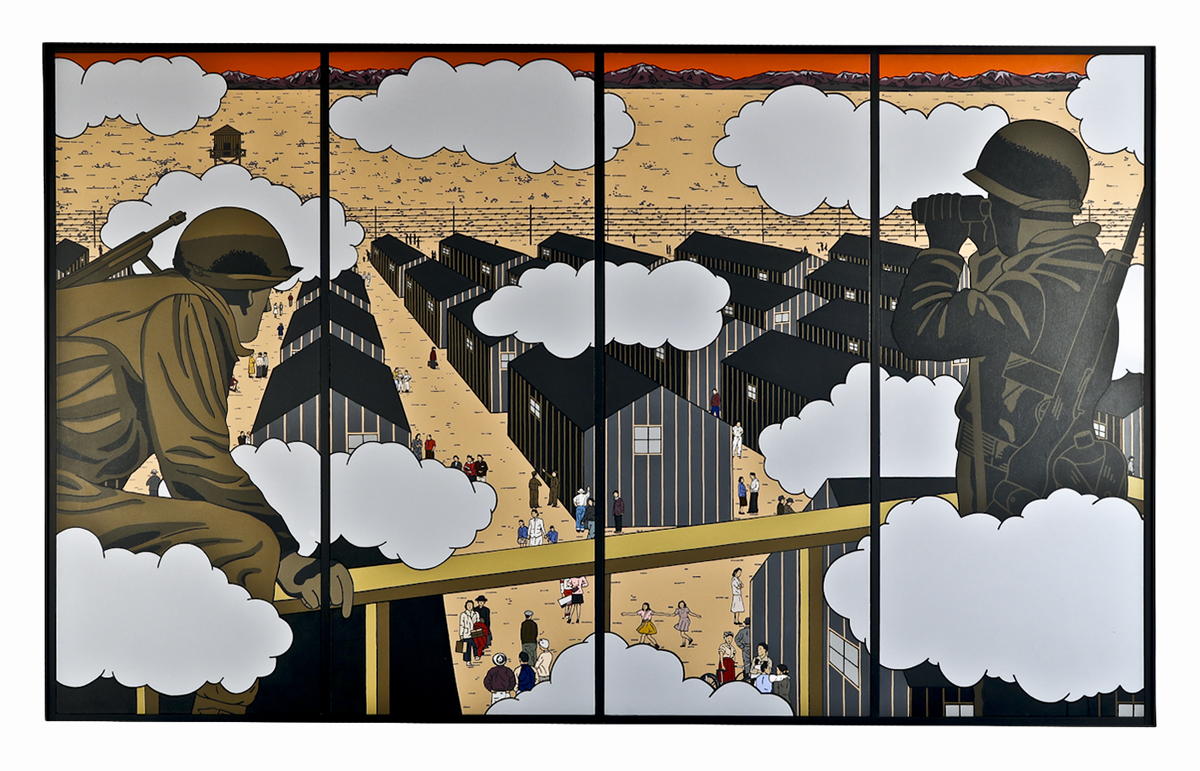
Shimomura, who was incarcerated with his parents and extended family, combines crisp ukiyo-e aesthetics with harrowing scenes of life in the incarceration camps—often riddled with racially charged stereotypes. At first his work felt “a little bit too direct” to Harada, but as she processed the extreme cruelty of this chapter of modern American history, his approach made more sense.
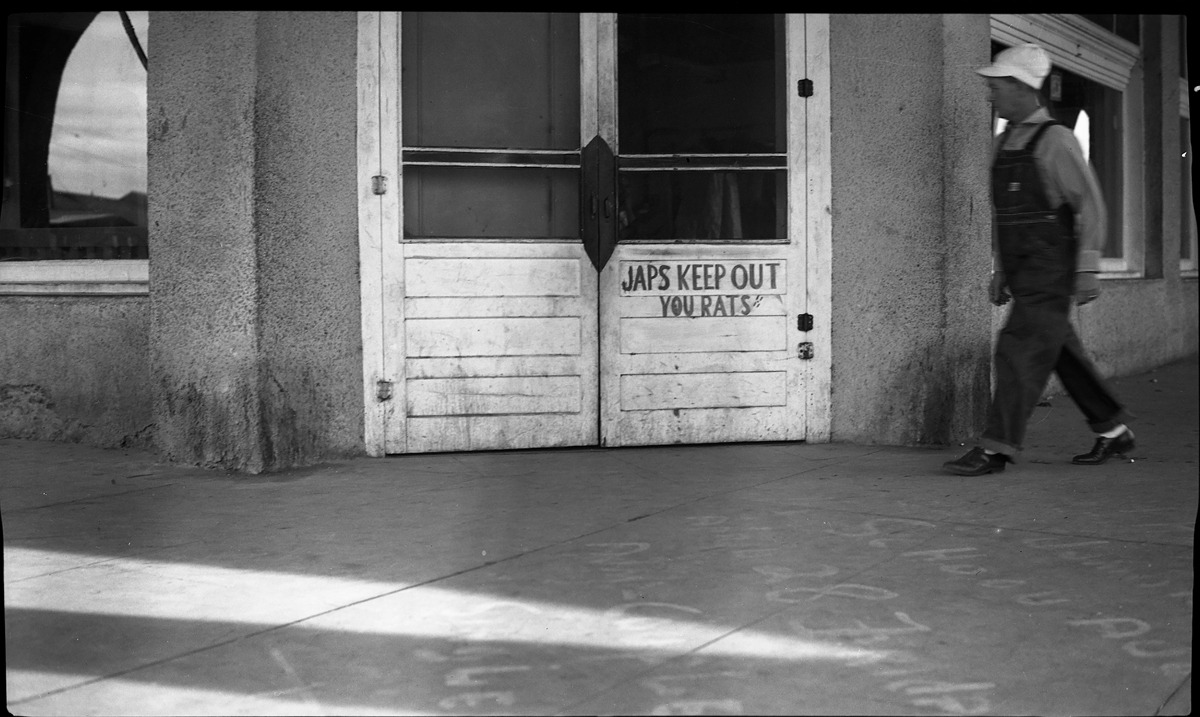
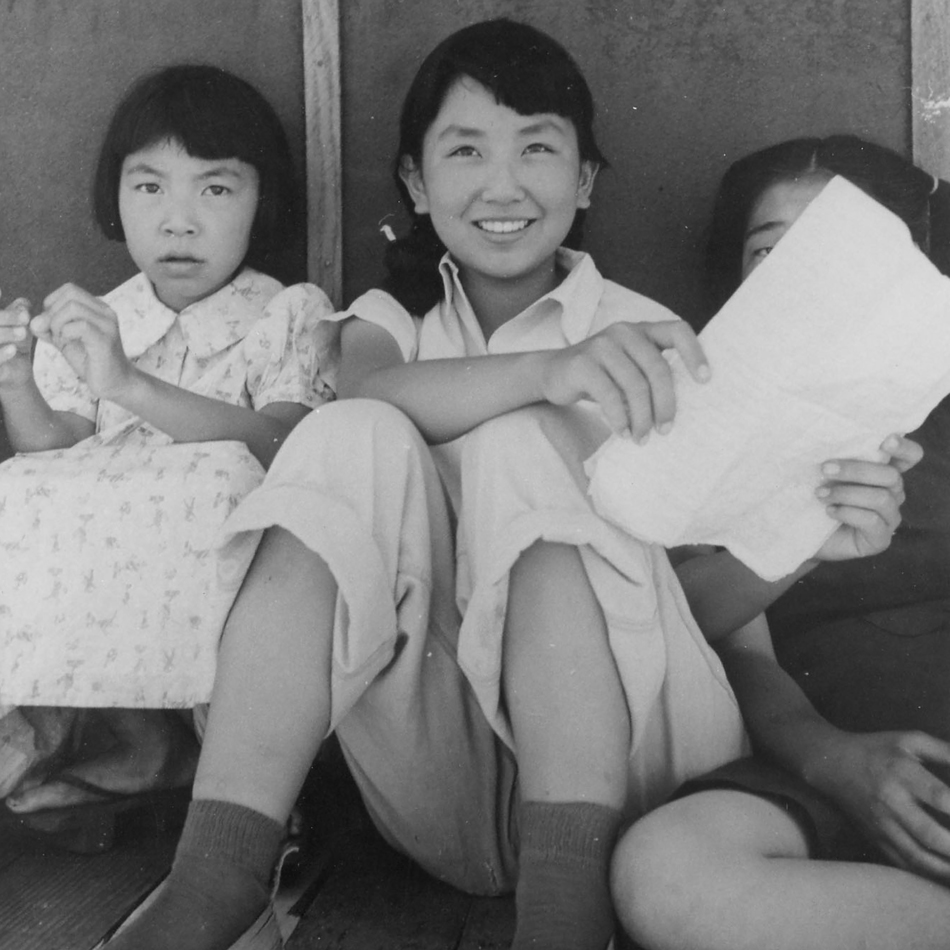
As FDR’s policy took effect, men, women, and children—largely from the West Coast—were first imprisoned in improvised jails (called “assembly centers,” they included manure-caked horse stalls at a California racetrack) and then sent to concentration camps (“relocation centers”) dotting the Southwest and other rural areas.
In the 2025 podcast Burn Order with Rachel Maddow, author Satsuki Ina tells of uniforms that prisoners were forced to wear in noncitizen DOJ camps like the one in Santa Fe. “On the back of the denim jacket were the capital letters ‘EA’ for ‘enemy alien’ and a circle around it in white,” Ina says. “[They] were told that, ‘if you try to escape, this is the bullseye that we’ll use to shoot you.’”
As Harada moved from New York to California and then Washington State, she picked up pieces of this history and researched artists who were exploring it, spurred by fiery national debates over immigration. In 2024, she finally united the network for a curatorial project as part of a fellowship with the online art magazine Hyperallergic. Through an article series and virtual exhibition, she grappled with the intergenerational alienation that such a deep historical rupture propagates.
How does someone who has not experienced war… adequately access these painful memories?
“How does someone who has not experienced war, or the extreme racism that drove the incarceration campaign, adequately access these painful memories?” she wrote, noting that several of the featured artists were “from a generation unfamiliar with war as a lived experience.”
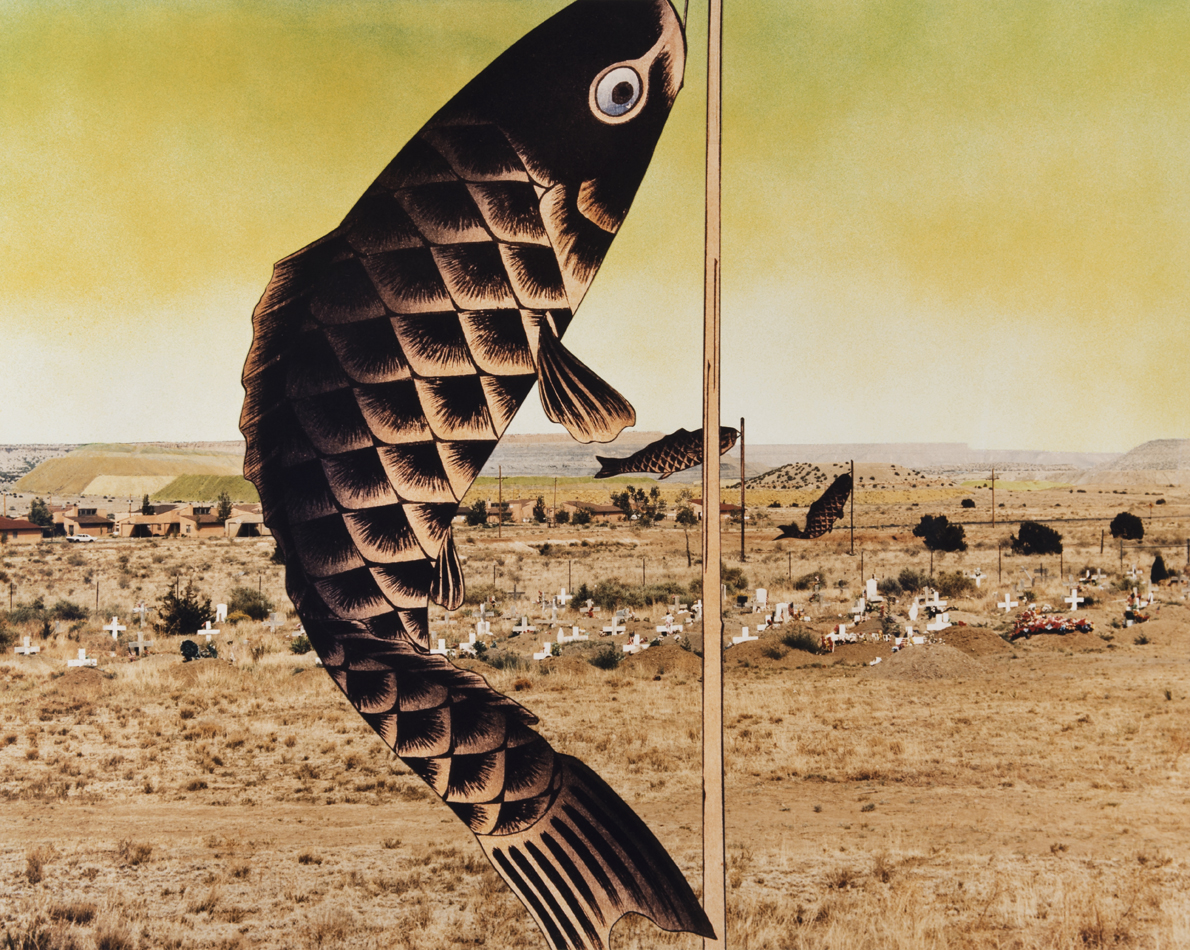
Harada pitched Reclaiming the Future to the New Mexico Museum of Art after the Hyperallergic project, hoping to further develop the concept in a brick-and-mortar exhibition. That includes Berlin-based artist Aisuke Kondo, who traced his great-grandfather’s footsteps at the site of the camp in Topaz, Utah, walking with his cane and matching historical photos to contemporary landscapes. The late photographer Patrick Nagatani lived in Albuquerque and roved the Southwest capturing visual echoes between often-neglected memorials and the crumbling foundations of incarceration camp structures.
The exhibition intersperses direct historical references with abstract works that Harada likens to “stones in a Japanese garden.” She wanted to create “a little variance in looking at things, a space where you can reimagine the past and also imagine a different future.”
Both sides of TT Takemoto’s family were incarcerated: their dad was around five in the “camp era,” and their mother was born not long after her family was released from a camp. Growing up in California in the 1970s and ’80s, Takemoto (they/them) knew nothing of this until their middle school history teacher assigned them a report on the camps. “I’m reading [that] people were incarcerated in horse stalls… and so I’m very outraged and I tell my father, ‘Can you believe this?’” Only then did he inform Takemoto of the family’s direct connection to this history, a moment of extreme upset that they call their “first awakening.”
The family story further cracked open years later, just before Takemoto entered graduate school in 1990. That’s when their maternal grandmother, “Hannah” Hanaye Yasuda, appeared in the book Japanese American Women: Three Generations, 1890-1990 by Mei Nakano. It was published in the wake of the Redress Movement, a grassroots campaign that culminated in the Civil Liberties Act of 1988, which granted surviving victims a formal apology and $20,000 each. “She would carry around this book, and she knew the exact page that she was cited on,” says Takemoto, who recalls her proclaiming, “Look at me, I’m here, I’m called a heroine!”
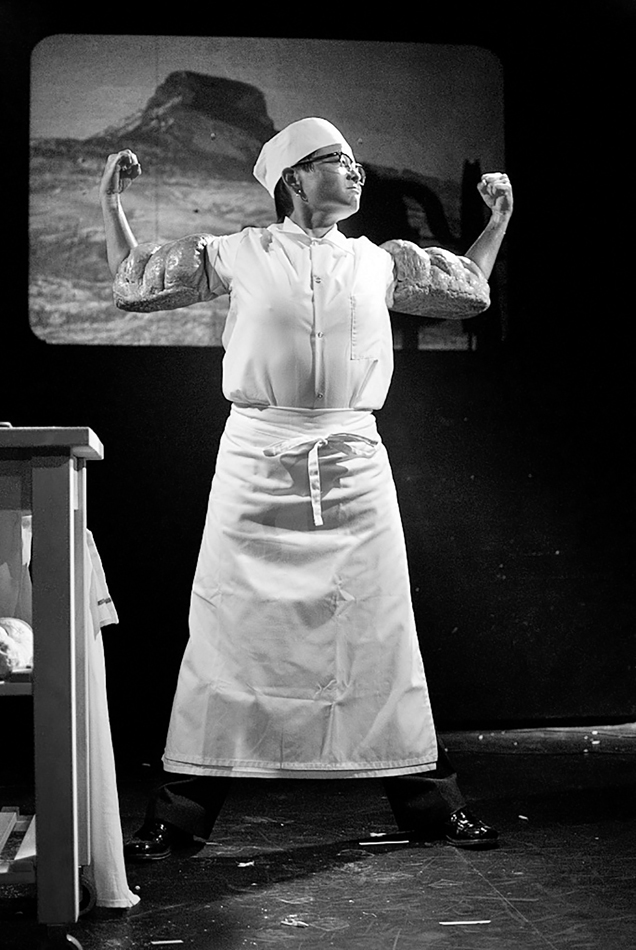
The matter was far from settled for Takemoto, who has explored histories of the camps throughout their career. In Reclaiming the Future, they present three videos and two installation works, including Looking for Jiro (2011), a video in which Takemoto plays Jiro Onuma, a closeted gay man and mess hall worker at the Topaz camp. Dressed in a chef’s uniform and wielding a mop and cooking tools, they dance to a Madonna/ABBA mashup and strike beefcake poses. The performance is intercut with postwar U.S. propaganda advertising newly released “hard-working Japanese Americans” as a labor force.
“It’s a piece about embodying the loneliness and longing and isolation of not just being incarcerated, but being incarcerated as a gay man,” says Takemoto. “They had bachelor’s quarters in the camps, but [Onuma] actually lived in the area… where there were families, so he was in this really normative space.”
Takemoto’s video piece Warning Shot (2016) depicts three conflicting accounts of a killing at Topaz. After military police shot prisoner James Hatsuaki Wakasa, his death was called a justifiable homicide, an accidental fatality, and a second-degree murder by different parties. “I wanted to play out… various points of view,” says Takemoto. That includes a dog: “the only non-political witness. It has the most pathos.”
Warning Shot is an exploration of the Rashomon effect, named for a 1950 film by Akira Kurosawa. It describes a psychological phenomenon in which the same event is given contradictory, yet plausible, interpretations by different individuals. “I love the idea that the entire exhibition can have a kind of Rashomon effect,” says Takemoto, “because you’re showing all of these different perspectives of… [a] traumatic, unjust history.”
Takemoto’s tactics—of mapping the social splintering of human tragedy, and responding with embodied empathy—offer possibilities for understanding history, but also navigating our own era. Takemoto points out that the Redress Movement’s legacy lives on as Japanese American activists fight the Trump administration’s current policies, including a new invocation of the Alien Enemies Act. Now, “conversations around Redress [are that] some of the same sites that were used to incarcerate Japanese Americans are being used to incarcerate Latinx folks,” says Takemoto. “It is absolutely happening. People are… losing their rights.”
Harada deliberately avoided matching the ‘aggressive’ tone of the era.
For Harada, an impetus for Reclaiming the Future was the post-COVID surge in anti-Asian bigotry across the U.S. “Honestly, it feels much worse now,” she says. “It really defined it for me, [that] we have to do this now.” However, she deliberately avoided matching the “aggressive” tone of the era. Harada is in a long process of developing a curatorial framework inspired by the Japanese tea ceremony. “We make the tea ceremony depending on a specific theme or season or guest. All of the utensils—or the art pieces—are related to the theme, and they’re slightly different but somehow connecting.”
In that spirit, she likes the idea of surprising contemporary art audiences with a show that “quietly speaks” through the descendants of people who never surfaced in the history books. Eight decades on from the war’s end, a fuller reckoning is still steeping.