An older name for New Mexico anchors Moira Garcia’s mixed-media mapping of Nahua migration, cosmology, and return.
Santa Fe, New Mexico | moiragarcia.com | @moira.garcia.art
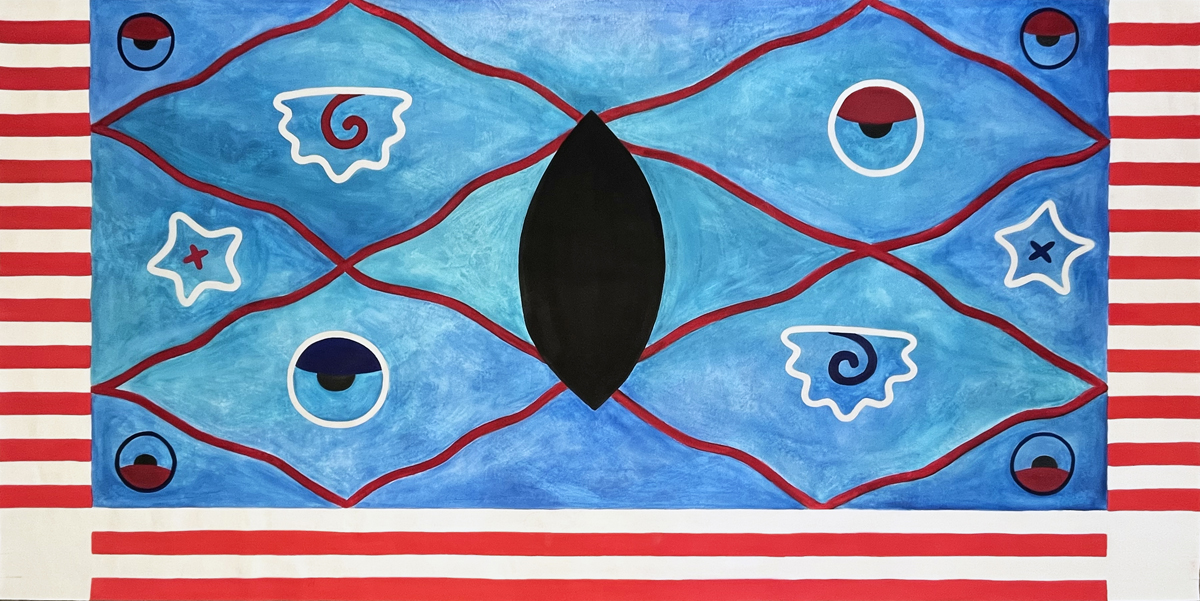
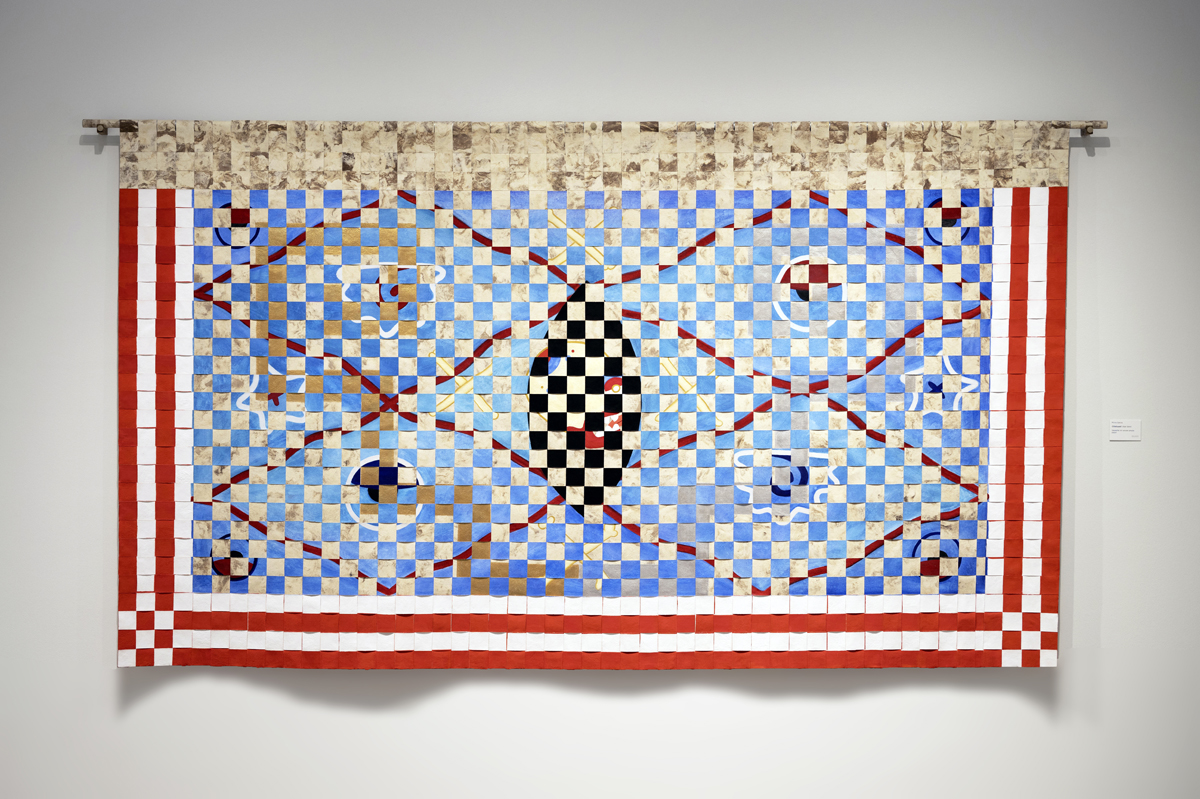
“Based on my study of Nahuatl language and Mesoamerican artistic praxes, I create works that are in conversation with pre-Hispanic legacies,” writes Santa Fe–based artist Moira Garcia. In Citlalcueitl (Star Skirt) (2025), the multidisciplinary Chicana artist, art educator, and native New Mexican converses with the cosmos to map the Nahua origins of the universe, when the goddess Citlalicue, meaning “stars-her-skirt,” birthed an obsidian knife which created new life on Earth.
It is a tale of sacrifice and creation—the inherent duality of existence illustrated by the stepped fret xicalcoliuhqui pattern. Woven with strips of gouache pan amatl, or gouache on amate paper, the deity’s star skirt is made of a bark paper used in Mesoamerican glyphic writing systems that were nearly eradicated through colonization. Garcia works to reanimate such traditions through her own art-making practice.
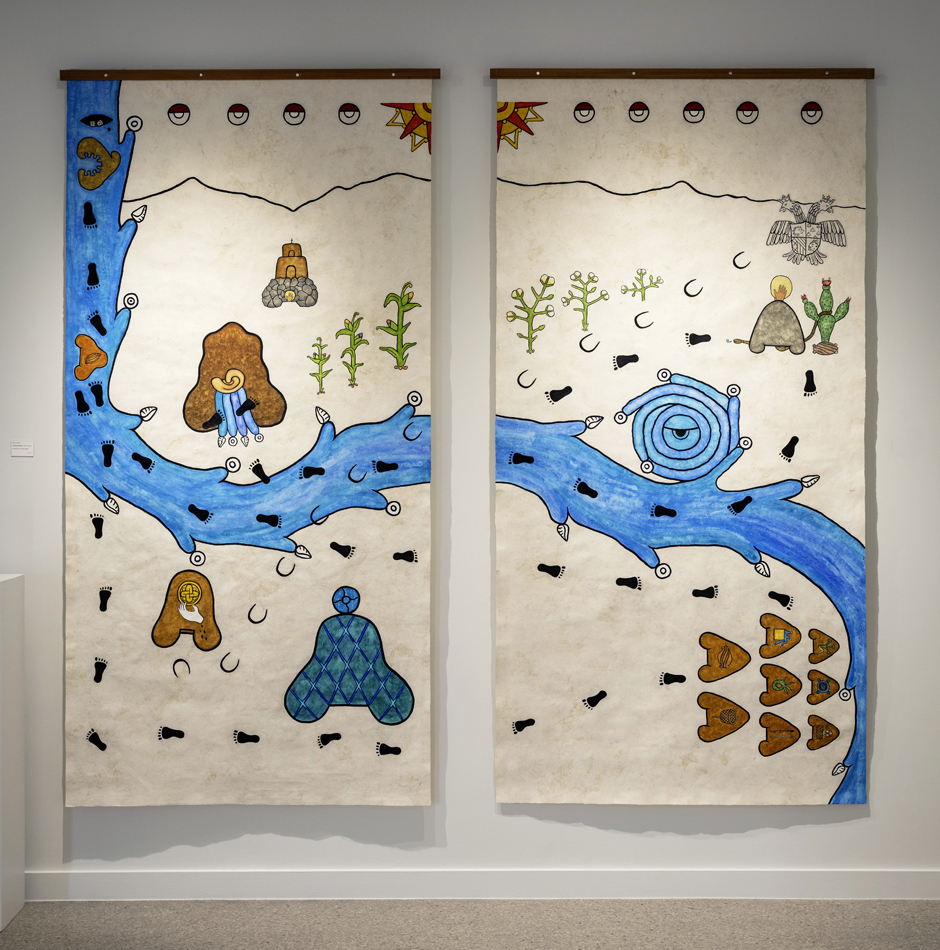
Nahuatl oral history charts a southward odyssey to Tenochtitlan, present-day Mexico City, from the seven caves of Chicomoztoc, the Nahua place of emergence. The continuance of this journey for Indigenous Mexicans who eventually returned to Yancuic Mexico, the Nahuatl name for New Mexico, is chronicled in Garcia’s 2022 cartographic diptych. The amate paper map “reimagines how the 17th-century Nahua settlers of ‘Yancuic Mexico’ may have depicted their history of migration and settlement, as well as their ancestral relationships to the Southwest region and to the ancestral Pueblos.”
Reminiscent of surviving historic Nahua maps like the Codex Xolotl, the Rio Grande and Santa Fe rivers transect each tableau, and the sun beams over the Sangre de Cristo and Sandia mountain ranges, positioning East at the top of each banner. Footprints and hoofprints stretching from toponyms symbolizing Chicomoztoc, Chaco Canyon, Tenochtitlan, and Spain situate Yancuic Mexico as a locus of layered, relational histories converging across spacetime.
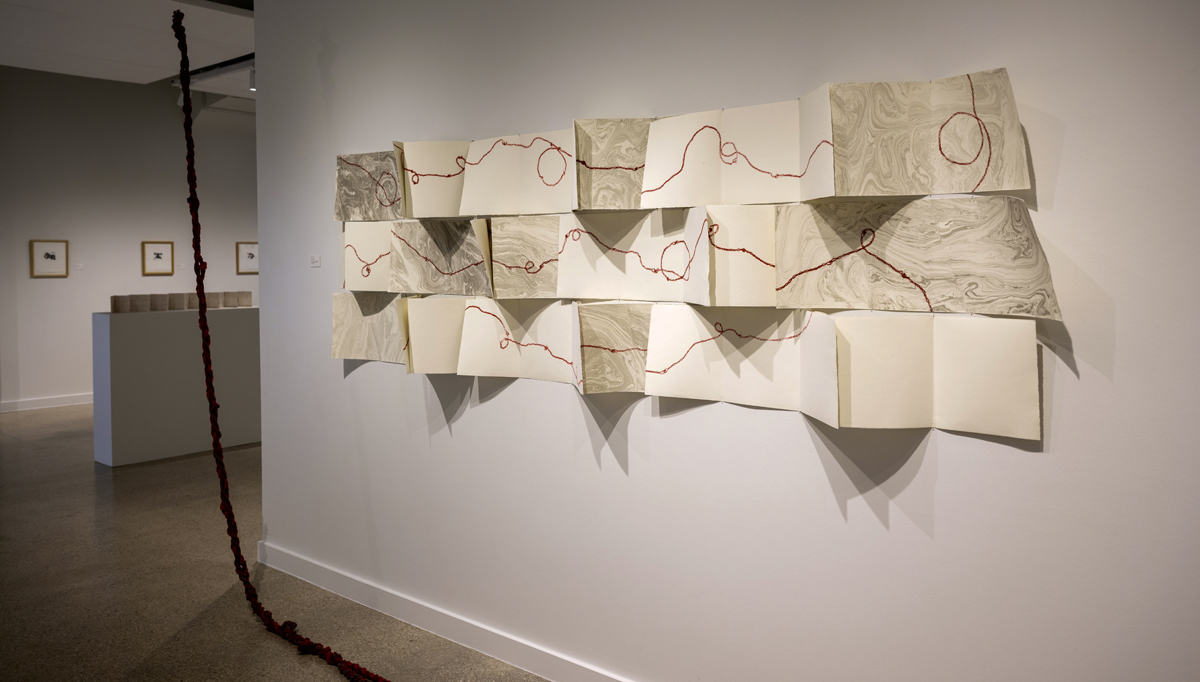
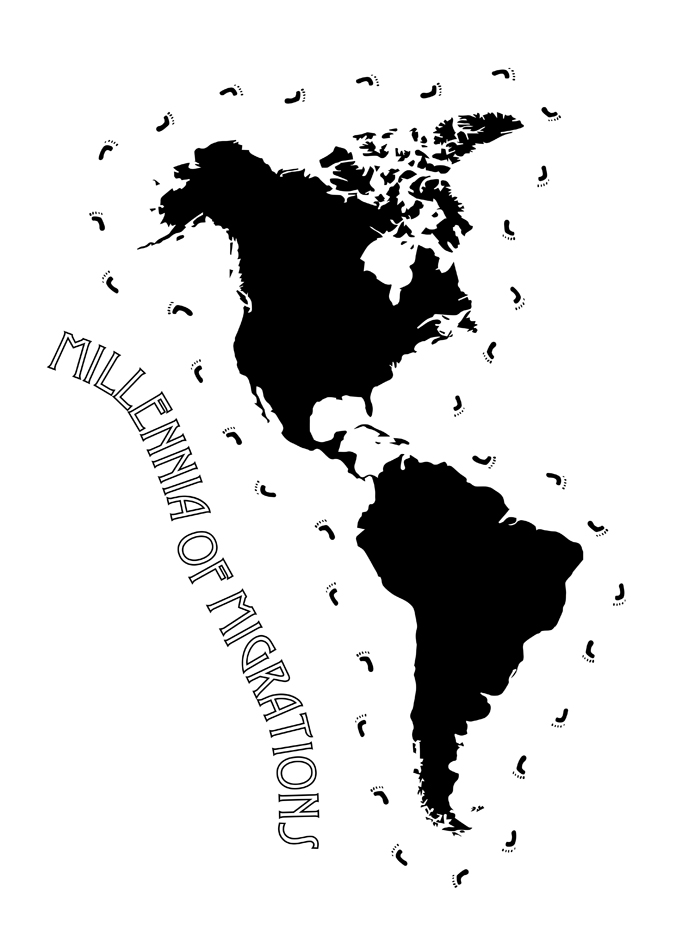
This decolonial atlas provides “visual parallels between the migratory past and the continued border crossings and migrations today.” Spatial representation is not a fixed, nor neutral, practice. Consider how ICE weaponizes geospatial data to target and detain brown communities en masse—a grave irony seeing how their ancestors freely navigated the continent since time immemorial. In this context, the agentic utility of Indigenized cartographies becomes all the more urgent as both a vehicle of expression and a road map for self-determination.