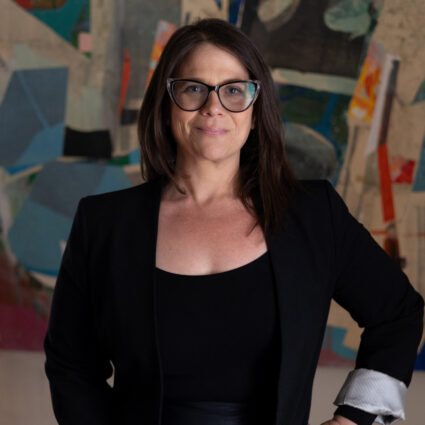
Marisa Sage’s “art is for everyone” mandate might sound “utopian,” but at the helm of New Mexico’s most historically freighted museum, it’s a massive administrative challenge.
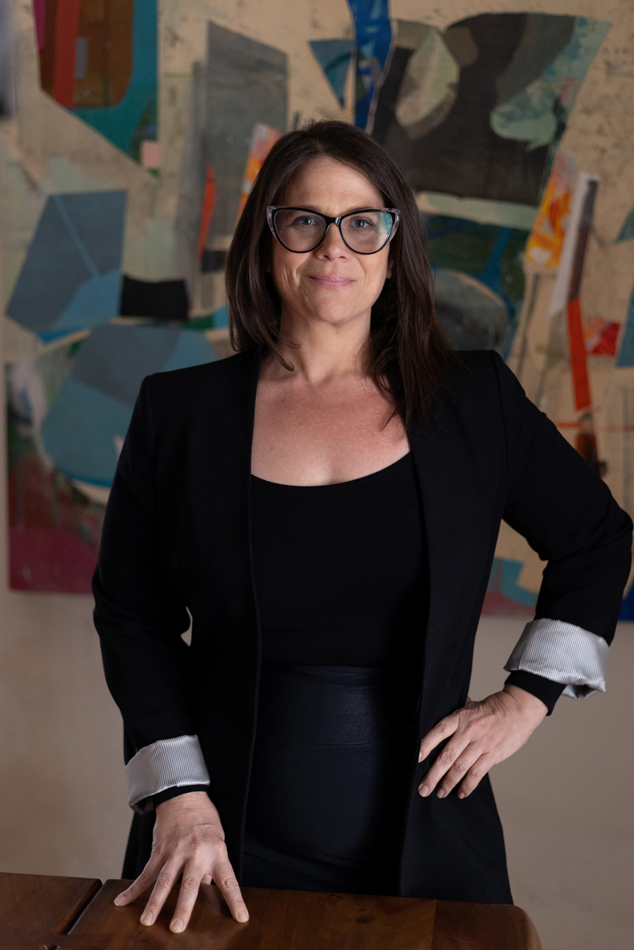
In 1999, Marisa Sage, who is the new executive director of the New Mexico Museum of Art, stepped off a train in Venice and saw fuchsia everywhere. A flood had ravaged the city amid the 48th Venice Biennale, saturating the exhibition’s American pavilion and mixing with loose pink pigments from Ann Hamilton’s immersive installation myein.
“I saw [fuchsia] on the vaporetto, I saw it on people’s shoes, and then I walked into the pavilion and saw it dripping down the walls,” says Sage, who was studying abroad in Italy at the time. Hamilton’s show, which cryptically criticized American systems of power, had permeated the entire city—an “absolute accident.” “There were forces swirling around, things you cannot control,” says Sage. “I was like, ‘What is this? How do I become a part of this?’”
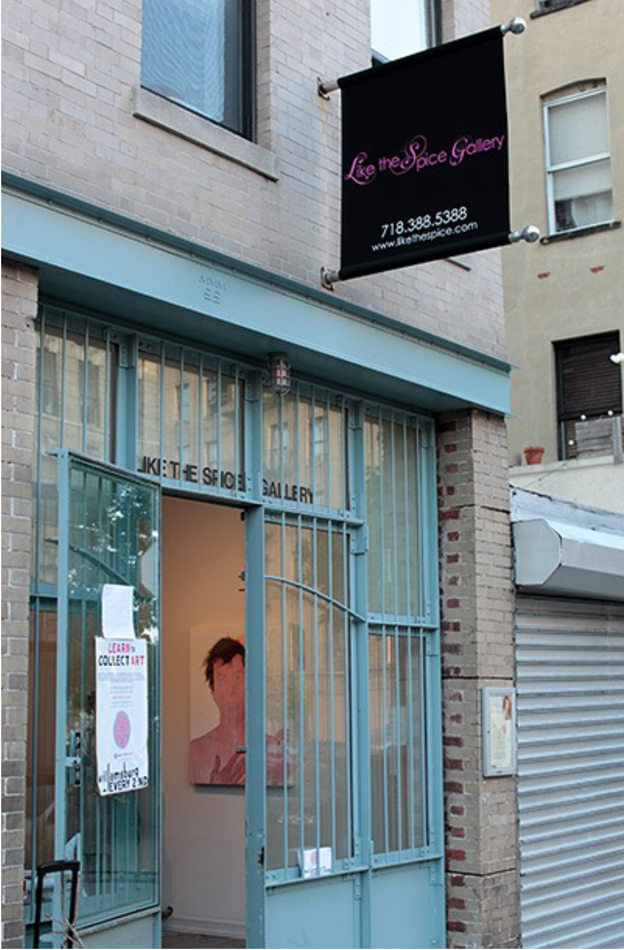
The experience was so powerful that it inspired Sage to pursue curatorial work, a path that eventually led—more than 100 exhibitions later—to Santa Fe’s New Mexico Museum of Art. A New York native, she previously led the University Art Museum at New Mexico State University in Las Cruces, and earlier held posts at the Rema Hort Mann Foundation and Salisbury University Art Galleries, after founding Like the Spice, a contemporary gallery in Williamsburg, Brooklyn.
It is so important for art to tell the full story. Art tells the culture of its time, it holds it in the now.
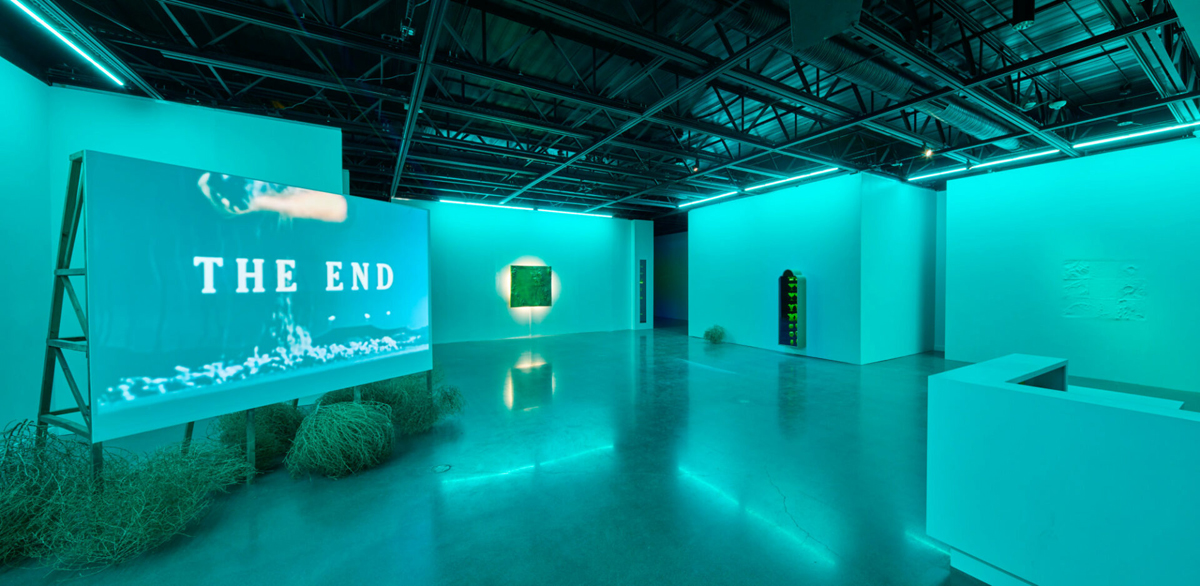
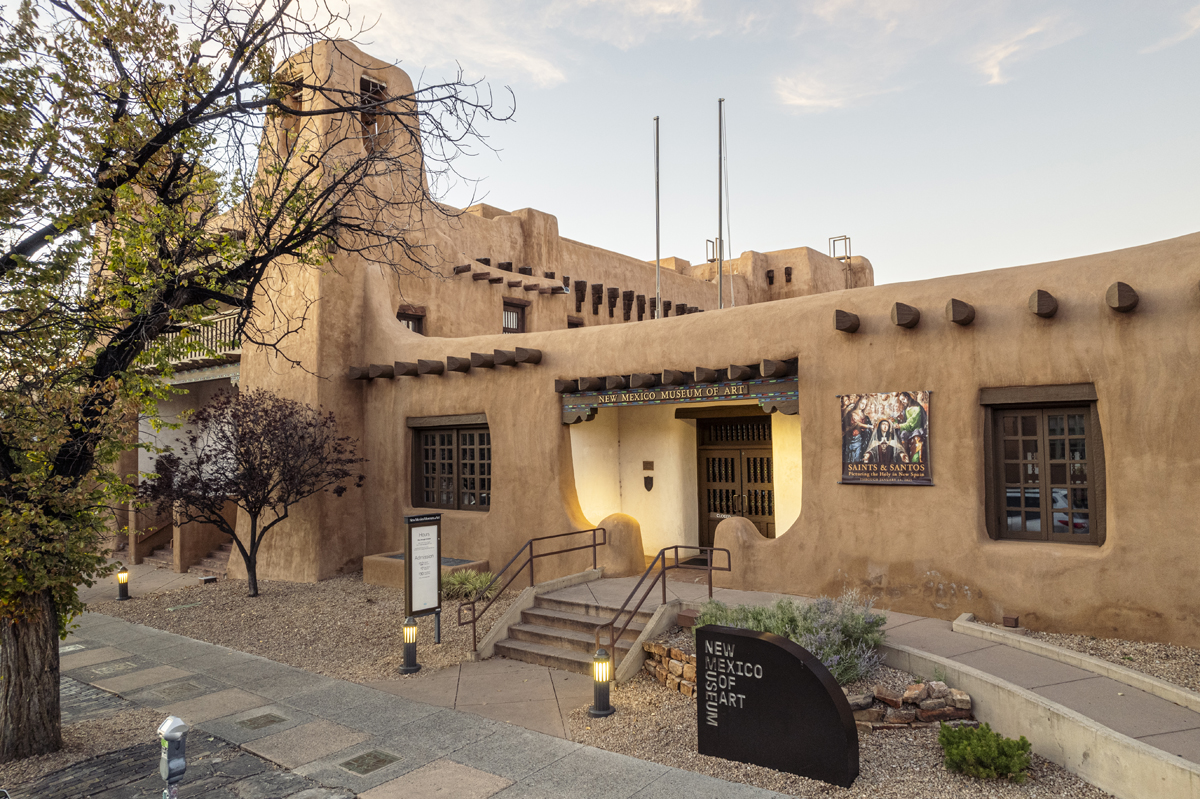
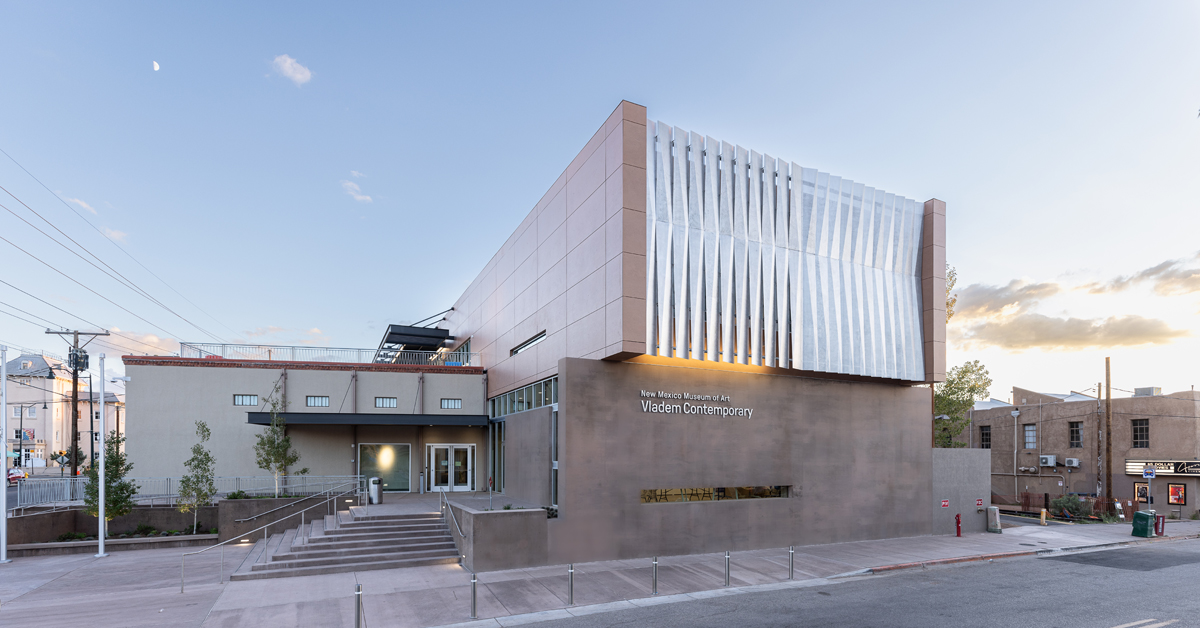
Sage and I met up on Tuesday at La Mama, seven business days into her tenure. I found her staring intensely at her laptop, juggling her personal and work phones—“who am I, the president?” She calls her experience so far a “radical whirlwind,” a reference to the current exhibition Lucy R. Lippard: Notes from the Radical Whirlwind at Vladem Contemporary. She’s joining one of the state’s most symbolically loaded institutions in a transitional era, stewarding both the museum’s 1917 Plaza building and the Vladem, its still-new second site in the Railyard.
For New Mexico audiences, Sage is not arriving as an outsider, but neither does she pretend to be a native authority. In our wide-ranging conversation, she calls herself “a new New Mexican,” “only twelve years old” in the state. Yet she speaks with feeling about the gap between New Mexico’s romantic mythologies and its lived realities: “It’s always talked about mythically and magically outside. And it isn’t until you’re inside that you realize how hard it can be to be from here and to stay here against the odds because you love it.”
That tension—between New Mexico’s legends and the stories its institutions have left out—is central to how she seems to understand the work ahead.
What does the first week of a new directorship actually look like? What are you doing, who are you meeting with, and have any artists already reached out for studio visits?
Santa Fe is small… [and] people obviously knew before I knew. Before they called and told me 100% I had the job, I had dinner requests, I had studio visit requests, I had full-on exhibition proposals sent to me. I have already told a few people that I do not walk on water. I walk on solid ground, and I want to hear what the priorities of my staff are… before I start understanding what everyone else wants and needs and their priorities.
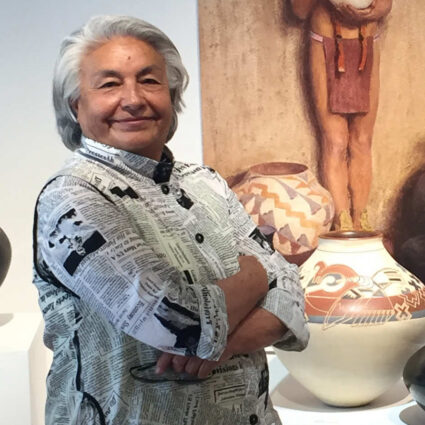
In its early decades, the New Mexico Museum of Art showed New Mexico modernists while also presenting revolutionary Native artists such as Maria Martinez (San Ildefonso Pueblo). How do you understand those cross-cultural beginnings, and did they shape your interest in the job?
Look, I’m a new New Mexican. I’m only twelve years old in this place. Let’s think about the geology of this place… [and] the peoples that have lived here since the beginning of humans. Then take that history [and consider the] magical realism of… the Spanish and the Anglo and the Native just all holding hands and leaping into the 20th century, right? The tricultural story.
It is so important for art to tell the full story. Art tells the culture of its time, it holds it in the now. This is such an incredible place, and it’s always talked about mythically and magically outside. And it isn’t until you’re inside that you realize how hard it can be to be from here and to stay here against the odds because you love it.
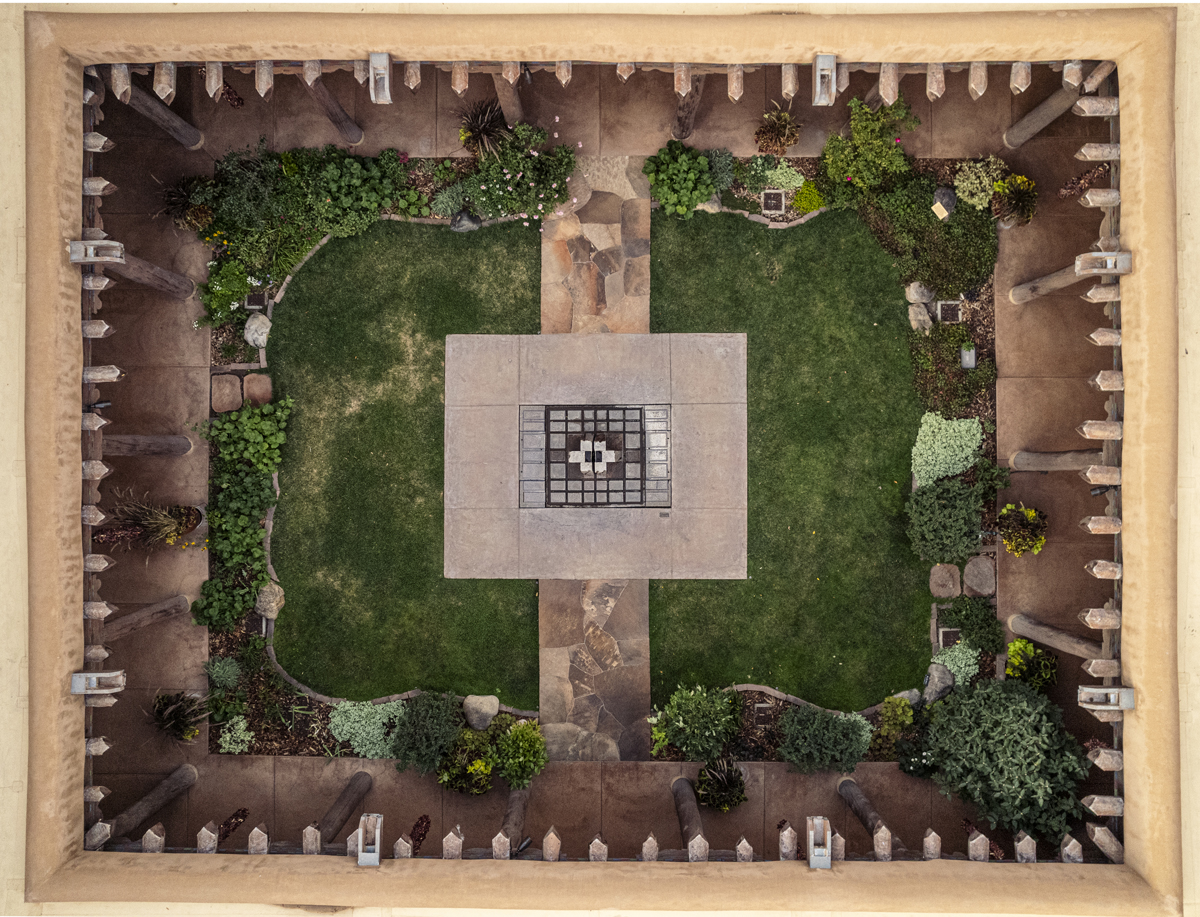
Right—at the same time, the museum helped construct a highly stylized image of New Mexico through founding director Edgar Lee Hewett’s vision, its collecting priorities, even the architecture itself. How do you understand NMMA’s role in forming that mythology, and what responsibility does it have now to examine it more critically?
I think it is very easy for directors, myself included, to imagine that… they’ll stop history, they’ll make history. And maybe sometimes they do, for better or for worse. What I have always tried to do is never be the only voice in the room, so that I can’t be the only one to craft the telling of what’s going on right now. I truthfully believe that if we are not bringing all parts of New Mexico—artists, institutions, the plethora of New Mexico communities—into dialogue with the art museum, which is theirs, then you will perpetuate a colonial mindset. I can only acknowledge the past and also very much recognize it as part of what needs to make us do things the same or different in the future.
When you launched the new University Art Museum facility at New Mexico State University in 2020, you asked your staff, “How do you start a brand new institution?” What did you learn from that process, and do you see any version of that question applying at NMMA?
I learned so much in the pandemic—I mean, we launched the museum a second time online. We had this very myopic idea of what access was. It’s not just, oh, you build a building and people are going to be able to come into it. We were in a rural community—like, how do you make it affordable? How do you make it accessible? How do you go to [the] people? We were able to work with an educator who went out into the community where we could not serve before.
These are all things we can implement at the New Mexico Museum of Art. Our mission is “art is for everyone.” We’re about to go into a period where our strategic plan needs to be redone. We are only two years into the Vladem. When you have the history of a 1917 museum come up against 2023, what does that look like? How do these museums speak to each other? They are two spaces, one museum.
You’ve talked about tying together what’s happening in the Plaza building and at Vladem Contemporary. At NMSU, you often placed historical and contemporary material in dialogue, including around the museum’s major Mexican retablo holdings. Do those projects offer clues to how you’re thinking about NMMA’s collection across two sites?
Definitely. I really do think… if we don’t tell [historical and contemporary] stories simultaneously, we lose the thread. I think people, including myself sometimes, don’t get contemporary art, and they get really intimidated by it, and it’s because it’s not in context. I don’t think that functions for a state museum that’s promising to serve all of New Mexico and tell the New Mexico story. Right now we might feel like we’re on an island alone, but we’re part of the New Mexico Department of Cultural Affairs, which is the largest cultural department in the United States. Think about all the collections. That is an endless resource of thematic support, marketing support, collective collaboration that can really expand our resources, expand our capacity.
Santa Fe has been shaped by waves of gentrification and displacement. You’ve spoken about curating as social practice and about making people feel that “this museum is their museum.” How are you approaching that question in a place like this?
I don’t know yet. I have been coming here for a very long time—since grad school—but I myself have been coming as a tourist, right? I need to get the politics, to understand the dynamics. And then I need to know what’s really unbreakable and what’s perception. I can’t tell you how many people told me at NMSU, there were certain things that just were the way they were. “We tried that.” Okay, cool, when? And [they’re] talking about 1972. What is [different] about these two time periods that we can’t try it again? What I will say is, I think things like that are always solvable. Who aren’t we bringing into the picture right now? I have to know that to be able to fix it.
You grew up in Queens and Long Island and came of age in New York in the 1990s, when the art world felt newly expansive and contentious at once. How did that period shape your sense of what art could do?
I was very lucky, my parents were very cool. If I could bring someone with me, I could go and see anything—my first Armory Show, my first Whitney Biennial… I just was like, oh wow, there are no limits to the way that we tell these stories. I saw Andres Serrano and Chris Ofili’s work; I saw Karen Finley perform a few times, [and] I briefly worked for Carrie Mae Weems when I was an undergrad at Syracuse. [Weems] was “take no bullshit.” I was so young, [and] she wanted meticulous—she was like, “Get it together, girl.” All that stuff that was going on with censorship… first of all, that’s circuitous. It’s happening again, right? But we’re better at it now. Because of that, we learned things that we’re employing now quicker.
I think I got a little too utopian. I still feel like art can make change, no-holds-barred. It’s not soft power. It’s sneaky power. It’s covert power. It helps us see ourselves in things we didn’t imagine we were part of.
You’ve worked across artist-run spaces, commercial galleries, nonprofits, universities, and now a state museum. What has drawn you to public institutions?
I very much believe in state institutions. I chose NMSU because it was a land-grant institution that promised that it would educate every student in New Mexico [who] wanted an education. I am so proud to be leading [NMMA] because it promises to give the art of New Mexico to New Mexicans. Unfortunately, our institutions are struggling right now. There’s very little federal funding, and nonprofits are struggling. It’s our state institutions, bureaucratic as they are, that have the funds to support these things. And they say it’s their charge, and I believe that it’s their charge. I want to be at places that are really truthfully for the people they say they serve… and I believe these are the real change-makers, if they want to be.