At Ballroom Marfa, five Latinx artists scramble Marfa’s mythologies with humor and ferocity. They leave behind a mural, and a challenge.
Los Encuentros
July 4-March 29, 2026
Ballroom Marfa
Behind the wheel in West Texas, slouching towards Minimalism’s Mecca, I see my next exit: Marfa, Texas, or what I call “Art World, U.S.A.” A designer display, crumbling houses, plywood cutouts of old Hollywood stars, and the ghostly Paisano Pass fly by at ninety miles per hour. On Independence Day 2025, spirits from all over met for an evening encounter at Ballroom Marfa for Los Encuentros.
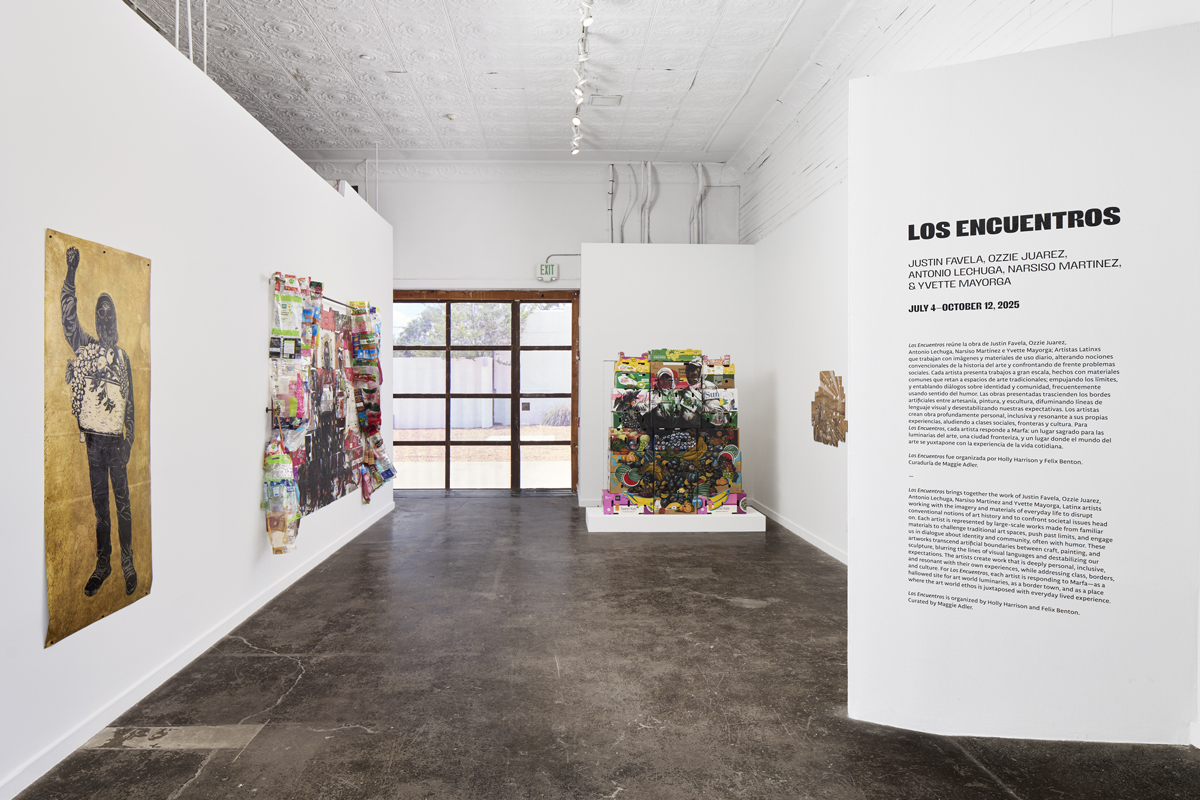
Curator Maggie Adler joined five Latinx artists, from Chicago to Los Angeles, in rural Texas—Justin Favela, Yvette Mayorga, Antonio Lechuga, Narsiso Martinez, and Ozzie Juarez—in an exhibition that unravels an expanse knotted up in Western legend. Welcome to the neighborhood, where border patrol vehicles loom large on the highway.
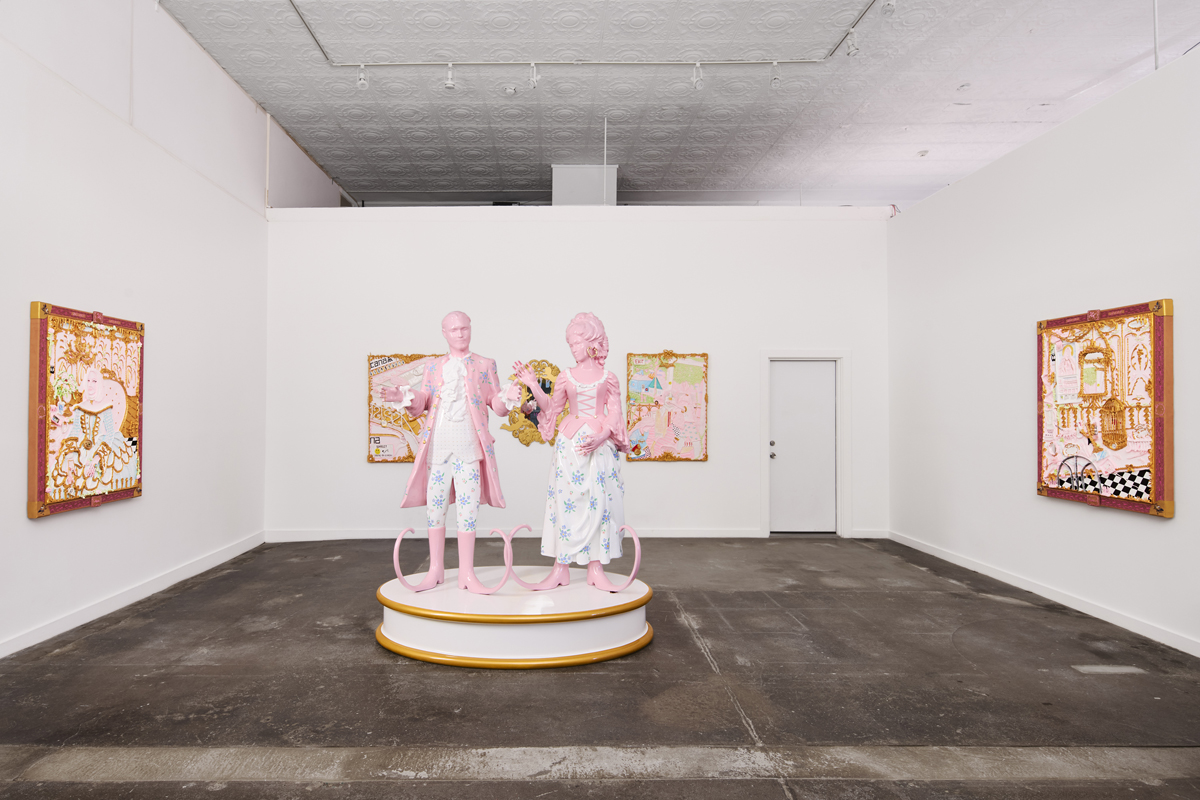
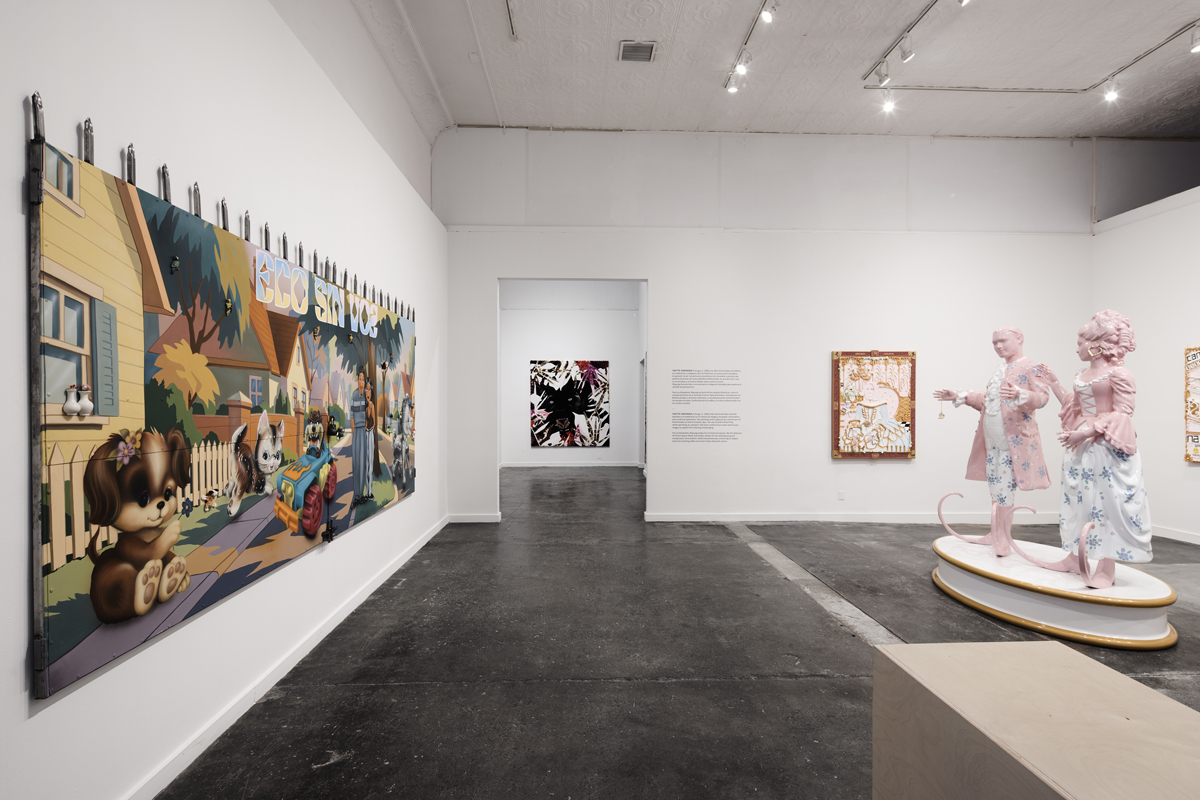
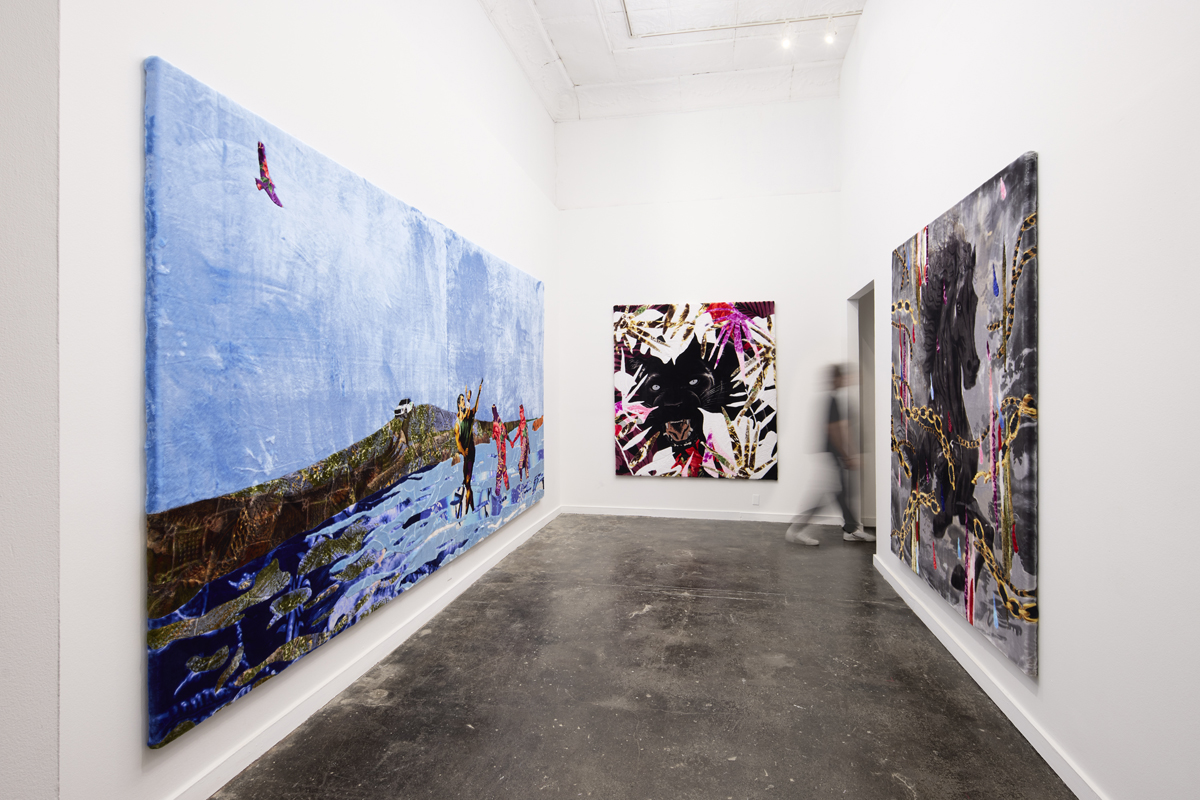
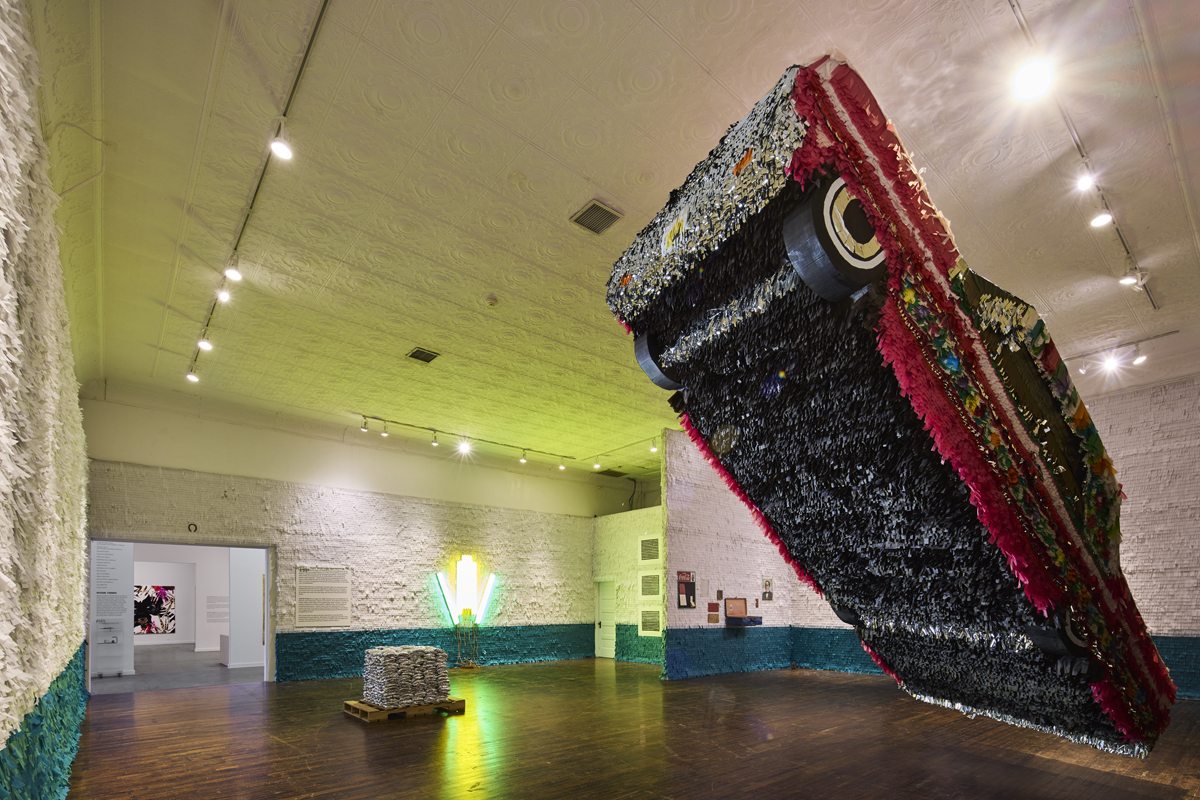
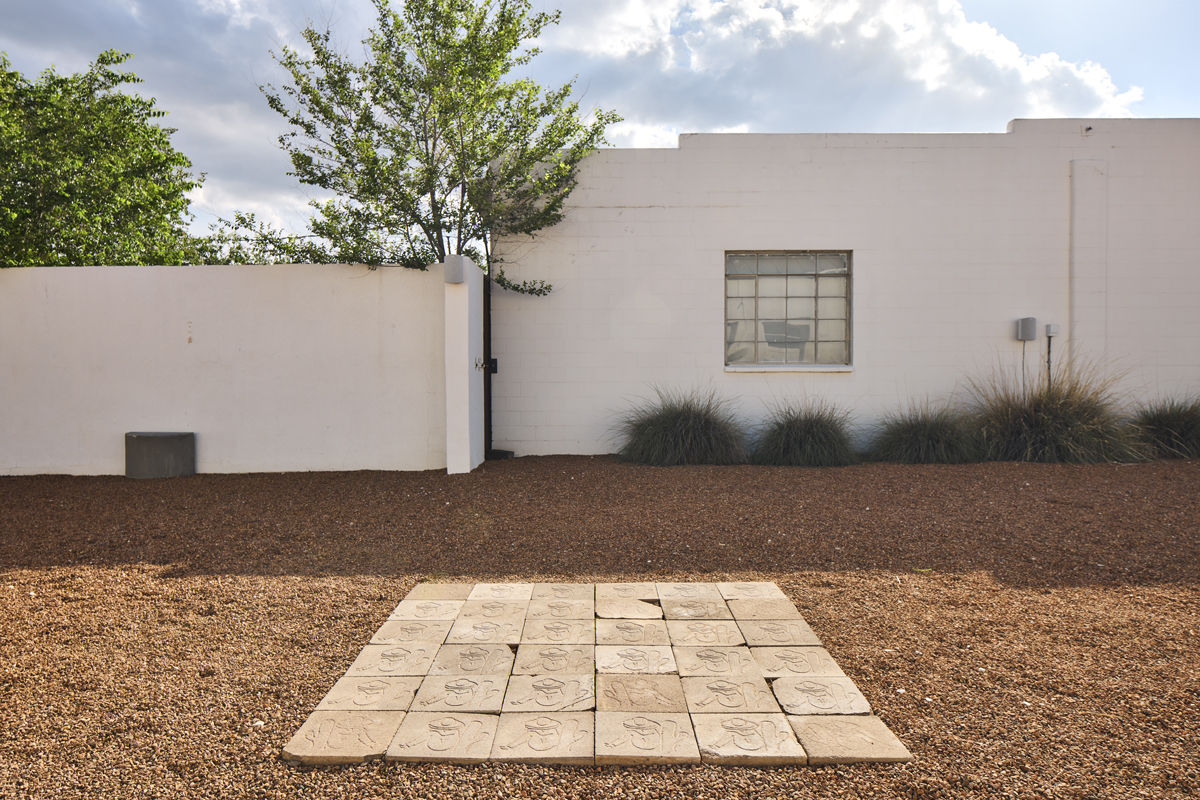
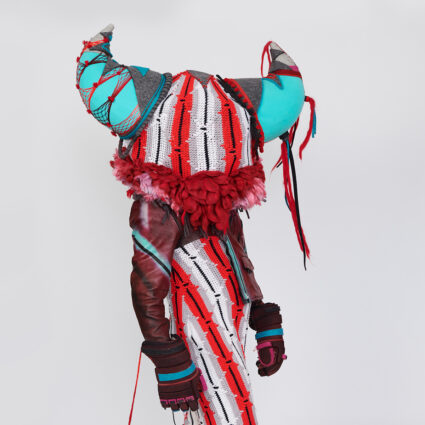
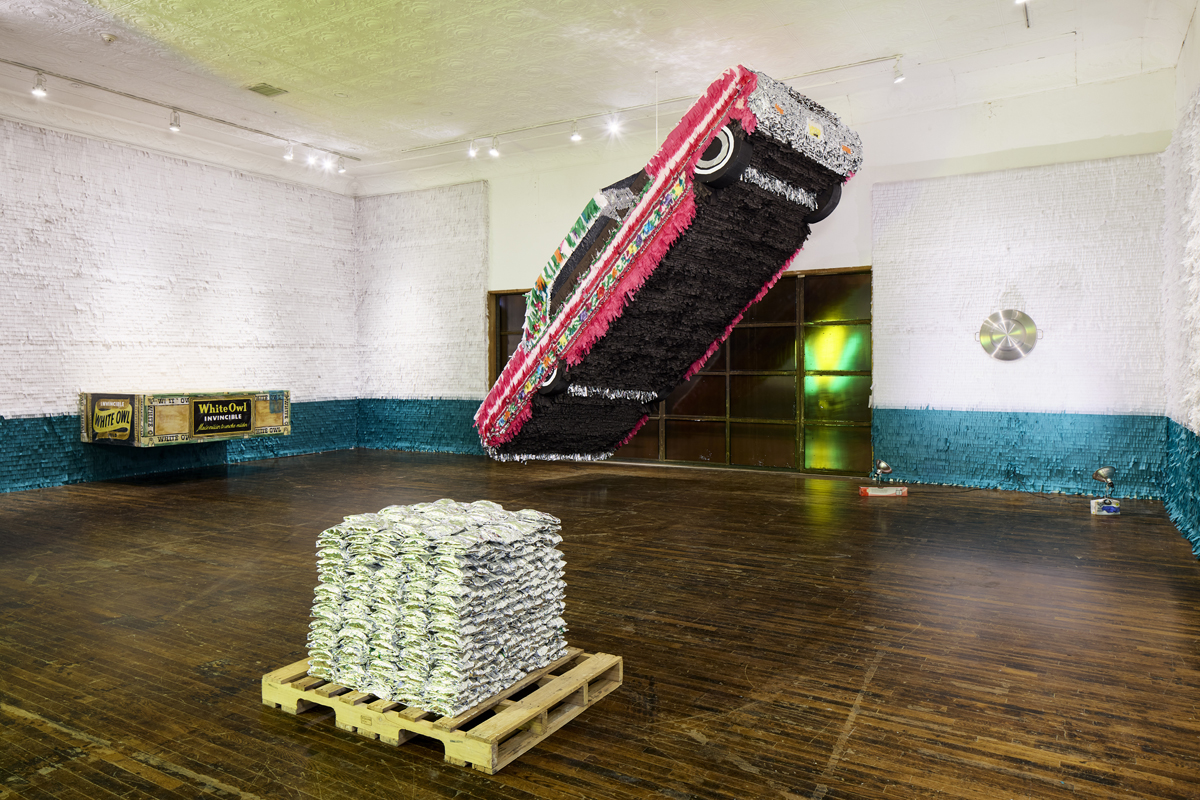
Los Encuentros features piped frosting, cardboard boxes, foil-wrapped tamales, piñatas, cobijas, and children’s toys—a list that might conjure a birthday party. But the exhibition’s sentimental textures are caught up in an animated conversation on labor, land, and how love for one’s icons can grow bittersweet.
Favela tackles Marfa’s institutional mythologies head-on, addressing Donald Judd’s Chinati Foundation in each of his installations, punctuated by a Judd-esque silver cube made out of to-go tamales. Martinez’s mixed-media portraits of field laborers on flattened produce boxes utilize the medium as an act of deference to his subjects. In these works, chimeric forms and couples echo Marfa’s absurd disparities surrounding class and ethnicity. Even when realities feel worlds apart, there is a tenuous border that keeps them tethered.
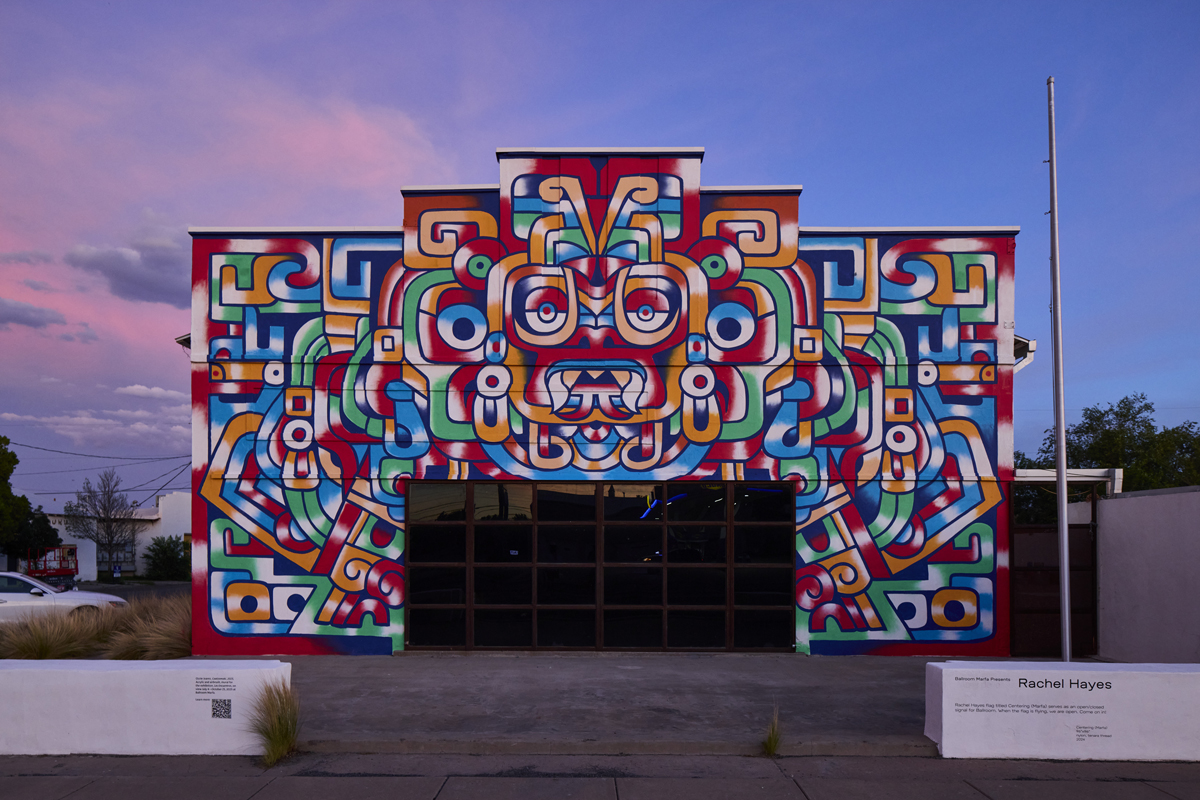
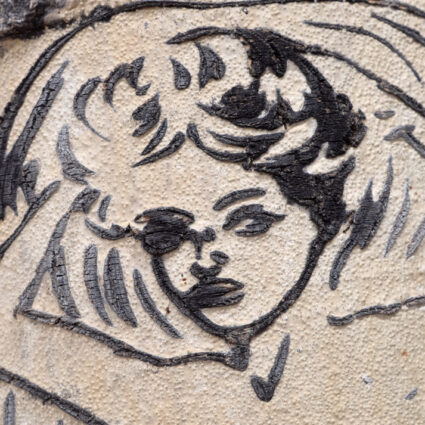
Los Encuentros departs Ballroom on March 29, after a year of elevated ICE-inflicted violence that turned neighborhood streets across Texas into venues of fear. The show drafts a blueprint for what a more accountable community could look like in Marfa and other borderlands towns. Hablamos juntos, with each voice adding a vital layer to the chorus. Long after the show’s departure, Ozzie Juarez’s mural Coatzomaki (2025) will continue overlooking San Antonio Street, a promise of protection.
While art alone cannot extinguish state surveillance, it offers a moment of recognition, a bridge between worlds. Will Ballroom work to deepen trust with Marfa’s Latinx community, fulfilling that promise? Perhaps a reinstatement of their civic-minded “Marfa Dialogues” series, with a sincere commitment to on-the-ground outreach, could be an avenue towards solidarity.