Shaping a wild array of materials, Denver-based sculptor Kate Casanova explores the “post-human” through gut feelings.
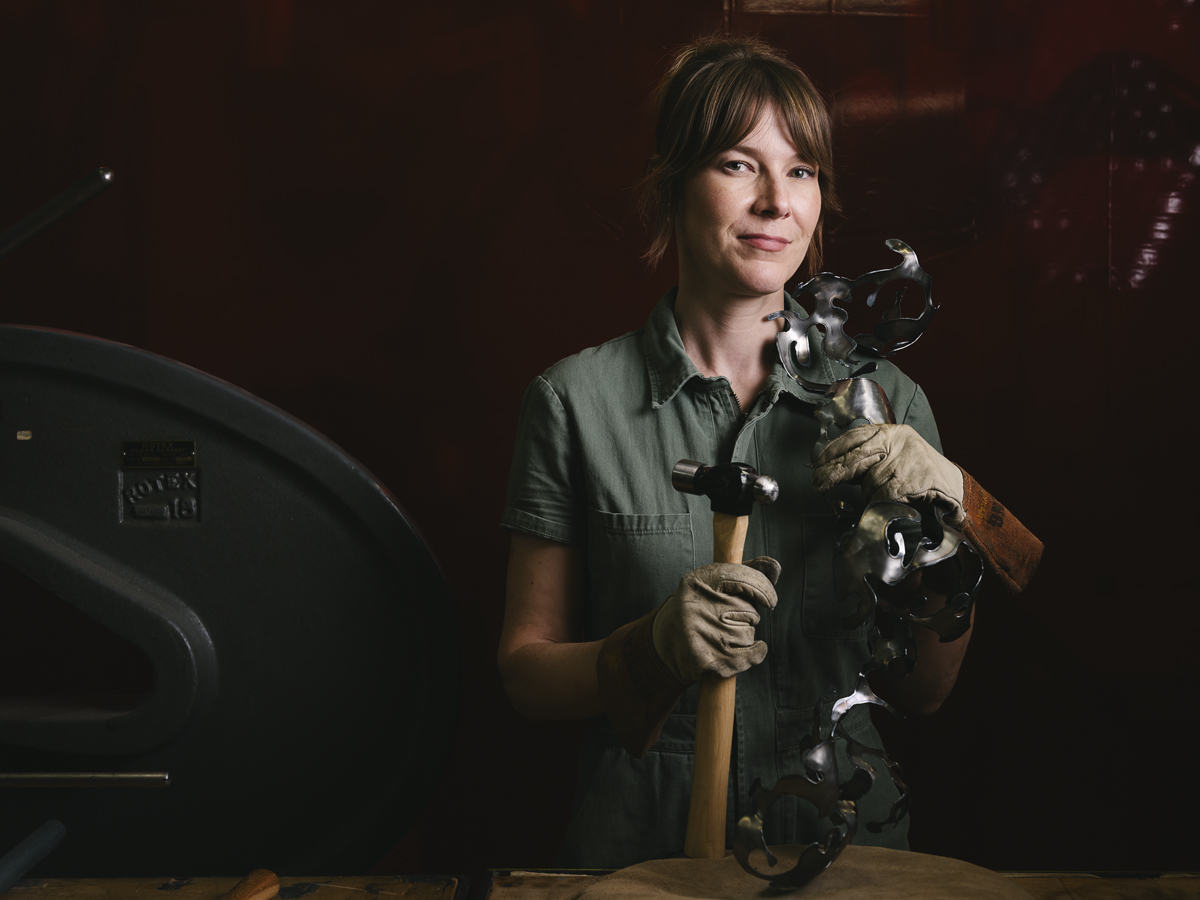
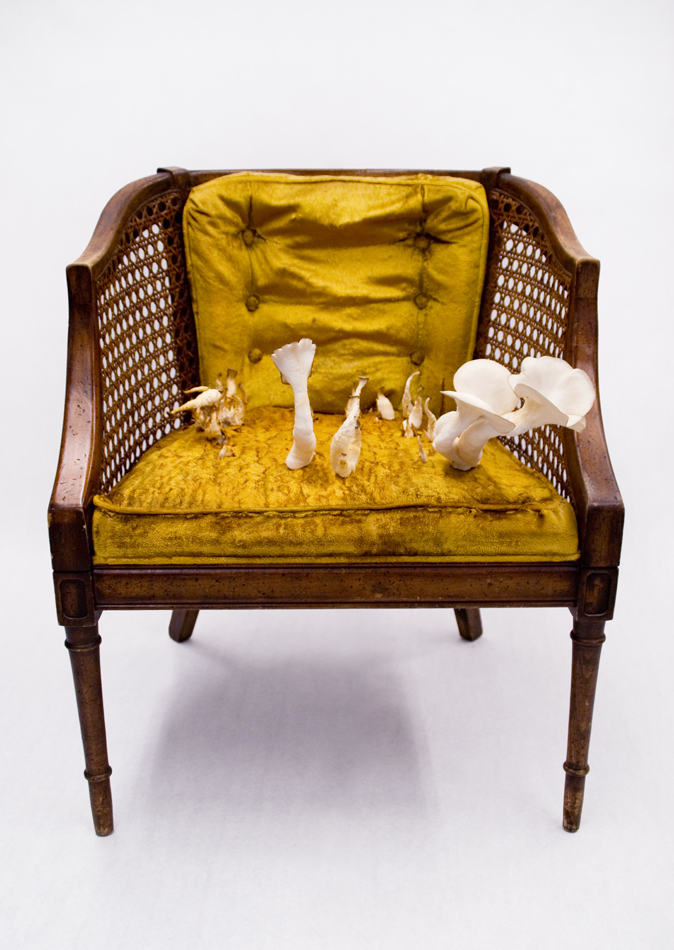
The fungi are back. Albeit, in a new iteration. Almost fifteen years ago, while living in Minneapolis and working on an MFA at the University of Minnesota, artist Kate Casanova earned critical acclaim, and became something of a local art-scene celebrity, for her mushroom-infused sculptures. She’d replace the upholstery in thrift store chairs, and even a 1976 AMC Pacer, with a fungi-growing substrate beneath velvet in order to cultivate Lion’s Mane, Pearl Oyster, and Pink Oyster mushrooms. In these startling works juxtaposing nature and culture, rife with a post-apocalyptic and post-human sensibility, the fungi were “consuming the objects in an act of corporeal transformation,” she says.
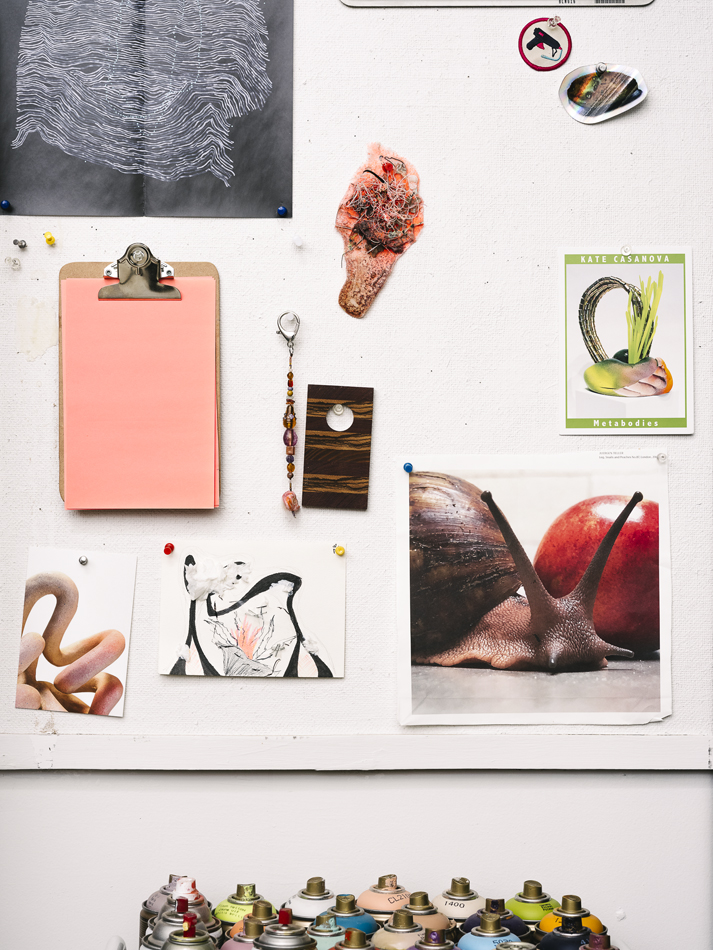
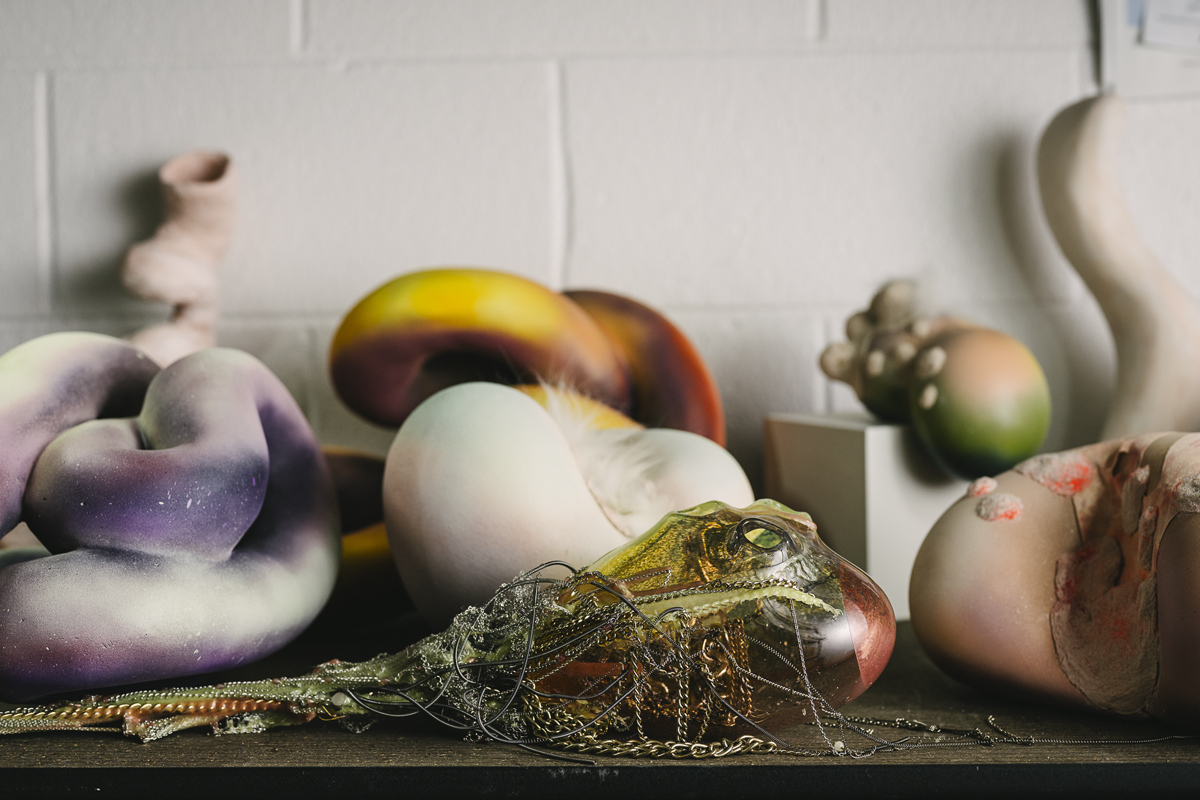
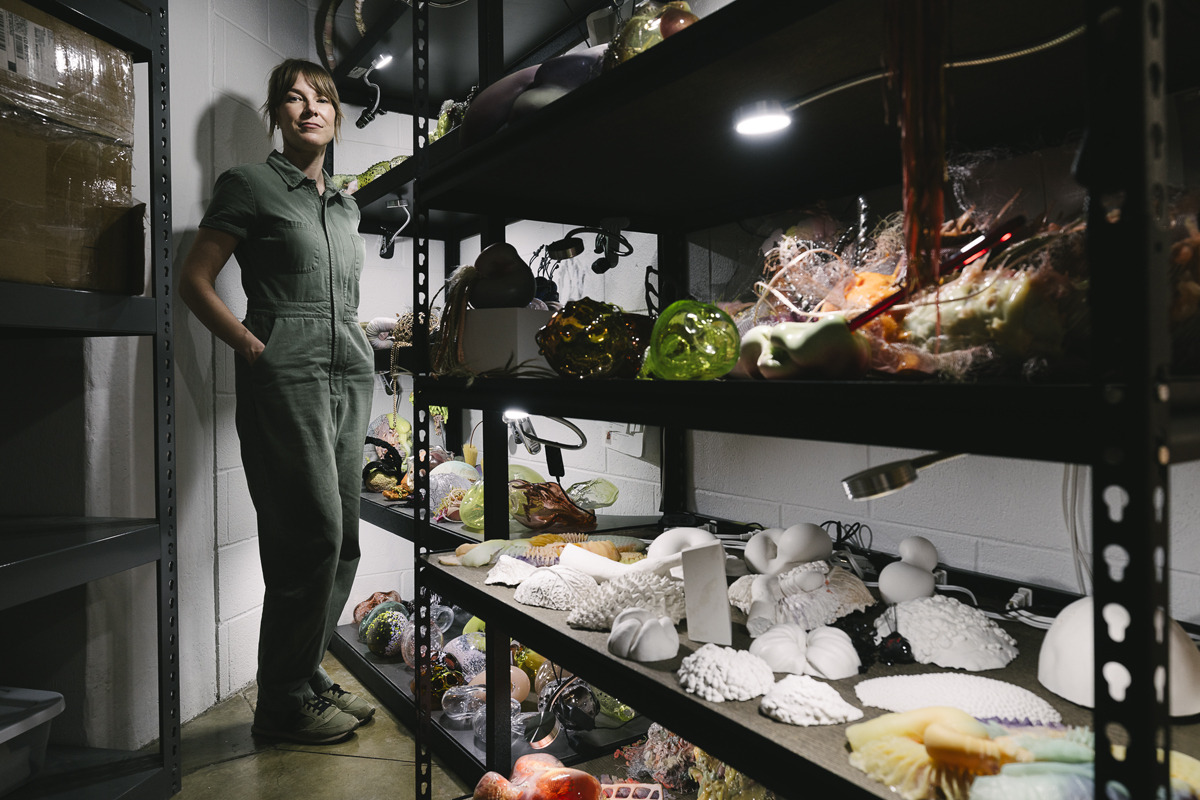
Now professor and director of the School of Art and Art History at the University of Denver, Casanova maintains a large, industrial studio there. Shelves display her library of silicone molds in plastic containers, and bizarre, otherworldly biomorphic forms in various states of completion—recent work through which she investigates her interest in the human/post-human body, “a liminal entity whose boundaries are difficult to locate,” she writes in a research statement.
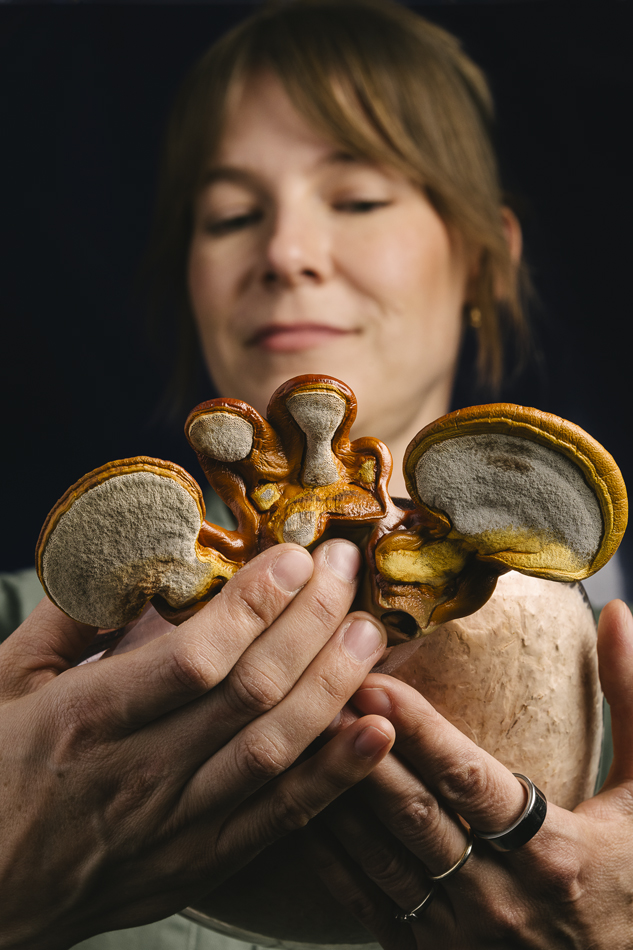
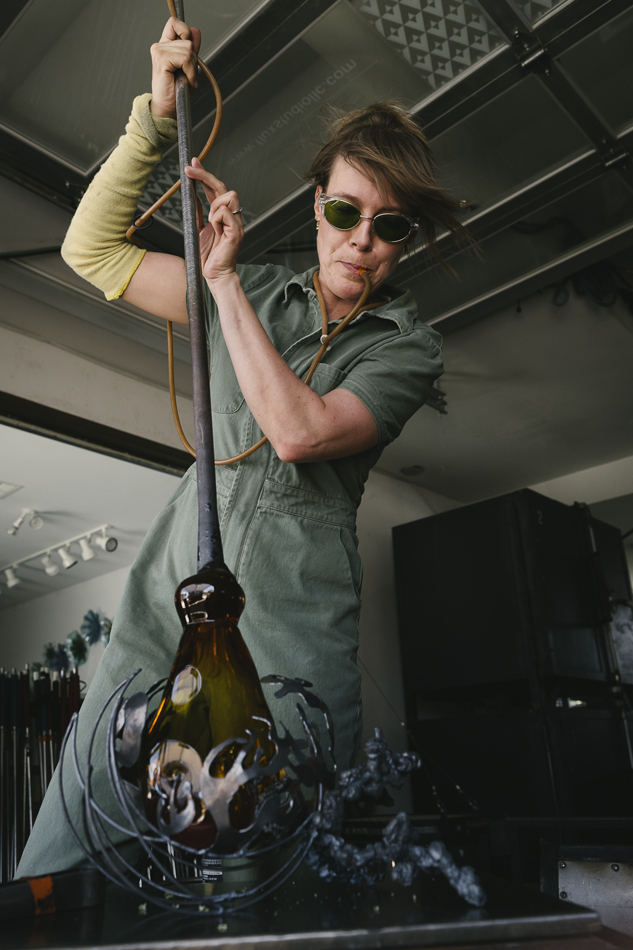
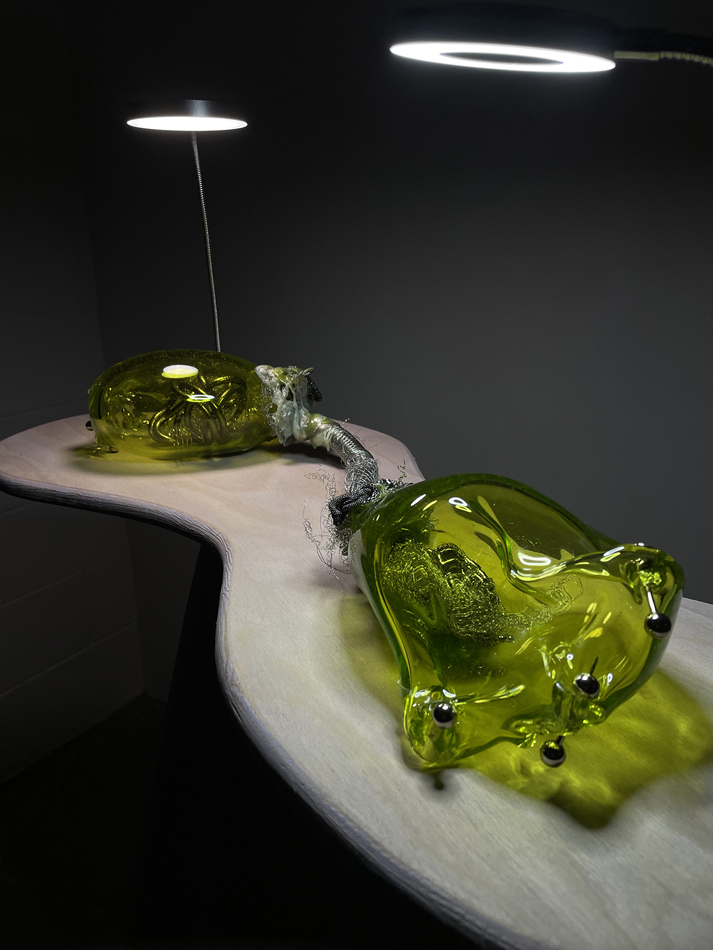
Often, the first thing visitors ask when entering the studio is whether they can touch the objects, “because the forms are so tactile, textural,” she says. “I love that they’re getting a response immediately from their body.” But her studio also contains shelves of jars in which she keeps a colorful palette of glass frit. And in one corner is her mushroom grow chamber covered in plastic, with a humidifier at the base. She holds up a glass piece sprouting mushrooms through its holes. Two years ago, Casanova explains, she “fell in love with glass blowing. It’s such a seductive process, with a huge learning curve, and really challenging. The movement of the glass and being in tune with the material as you’re shaping it—the process is so fun.”
While blowing glass bubbles into metal forms, she took “a reject from that process” and during one of her workshops stuffed the vessel with mushroom culture and other materials students were using, and it grew. “I was astounded at how many spores it put out. I had to blow a new jar for the spores.”
In her artistic practice, Casanova says, “I always come back to things in a new way. I was ahead of the curve with the mushroom art. By the time I was getting burned out with the technical headaches of fungi, other people were starting to work with it, which makes sense; fungi are such fascinating organisms. Now, to come back to it is part of the spiral of studio practice.”

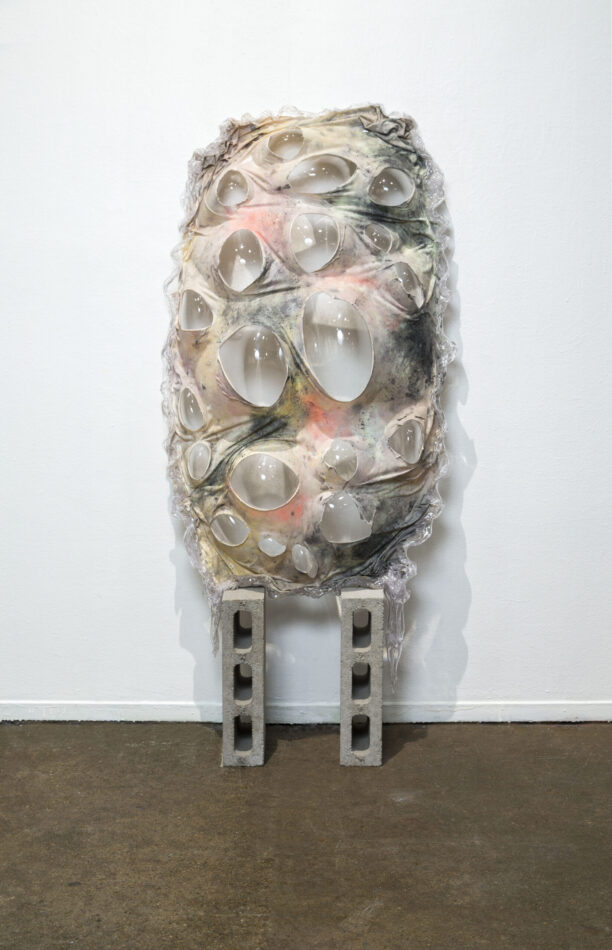
She’s also beginning to spiral away from the term “post-human,” which often appears in her descriptions of prior work, such as the 2021 Deepskin series, in which she combined gelatin bioplastic, artificial nails, eyeshadow, her hair, barbells, chains, a scouring pad, a window screen, thread, tree moss oil, and concrete block into a sculpture “tangled with feelings such as longing, anxiety, desire, and repulsion,” she writes. Her ongoing series Metabodies—colorful blobs of alien creatureliness embodying curves, and oozing extensions and spikes—are constructed of CDs, fake hair, sewing pins, resin, auto glass, expanding foam, plaster, glitter, thermo-formed plastic, tire chains, and zip ties.
The Gut Feeling series, shown as a solo exhibition at Yi Gallery in Brooklyn in 2022, took this work to a new level. Fleshy and visceral, the abstract work—constructed of paper clay, polymer gypsum, vintage fur, fabric, and acrylic paint—visualizes “what it feels like to be a sensing body on the inside,” Casanova says, “because I so often feel like a body turned inside out.”
The bodies we inhabit are so alien. I have no control of what’s going on inside my heart or lungs.
When she uses the term post-human, Casanova isn’t talking about AI or robots. In fact, “it’s a challenging term I’ve steered away from for that reason. There’s a broad range of definitions or disciplines within post-humanism, and one of them is the cyborg strain. I’m less interested in that.” Technology, she adds, “is part of the soup we live in. But it’s just a part.”
Instead, she’s focused on the inner workings of the body as an alien entity. “The bodies we inhabit are so alien,” she explains. “I have no control of what’s going on inside my heart or lungs. Post-humanism is fascinating because it gives us a formal, theoretical language for saying humans are not as in charge as we think. And that’s a useful way for me to think about what is or isn’t human.”
With the rise of AI, Casanova is questioning, anew, what is human, and our relationship to the organic and natural world. Hence, a return to mushrooms. “I’m coming back to things more grounded and tangible,” she says. “I went to a place in my practice where things were abstracted. Now, I’m interested again in what is foundational for us as humans.”