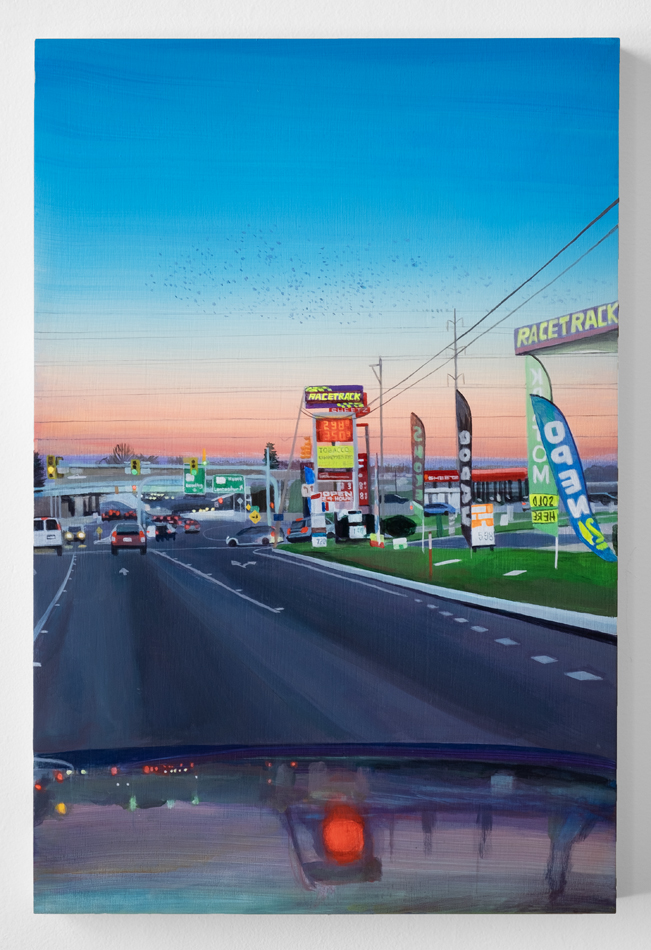
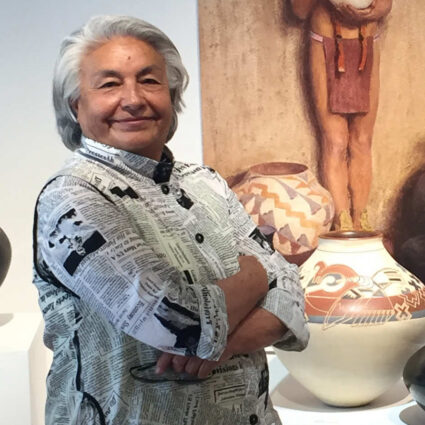
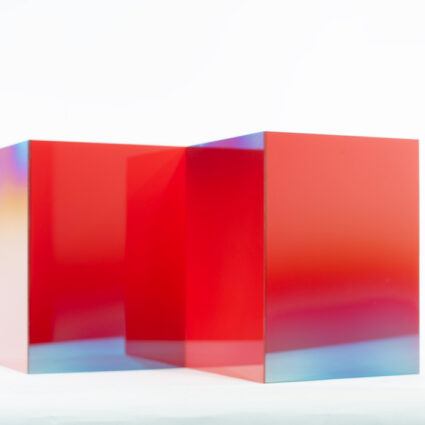
Southwest Contemporary: The Road reconstitutes even the busiest Southwest arteries as byways that tether far-flung places and people.
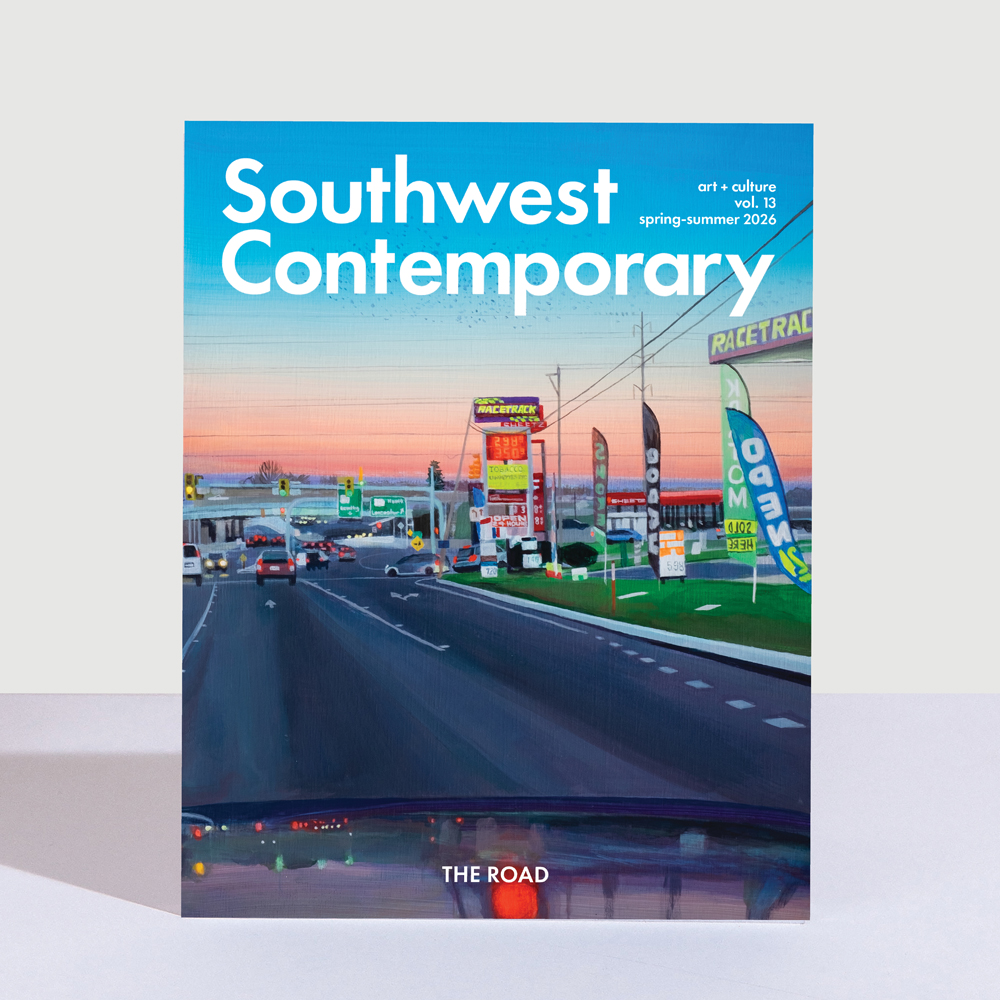
Welcome to Volume 13 of Southwest Contemporary: The Road.
For millennia, humans mostly traveled roads on foot, but these days many of us hardly touch them at all. Roads—and the places surrounding them—can flatten into metaphors if you’re gliding through at eighty miles per hour.
It’s the centennial year of Route 66, a road that splintered four decades ago but runs intact through the American imagination, carrying all sorts of romantic notions of this region. Southwest Contemporary Volume 13: The Road opens on lesser-known terrain: winding footpaths in rural Utah once roamed by a 20th-century sheepherder and artist.
The issue forks many times from there, following routes that span three time zones—from Nevada’s salt flats to a South Texas border town on the Gulf Coast, which are more than 1,700 miles apart. Certain roads wind through multiple stories, including Glorieta Pass in Northern New Mexico, a stretch of I-90 outside Marfa, Texas, Indigenous and Spanish trade networks, and the Mother Road herself (that is, Route 66).
Along the way, Volume 13 follows contemporary and historical artists who travel at a distinctly human pace, treating roads as particular places rather than liminal spaces. They dig into physical and conceptual layers of roads, cracking pockets of deep time or surging toward imagined futures. One artist dissects New Mexico’s 500-mile stretch of Route 66 a mile at a time, another stands up for Earth at a threshold to outer space.
In our features, Laura Neal captures sonic and visceral impressions of the road—and corresponding textures of the Black experience—in Johannes Barfield’s work. Sean J. Patrick Carney observes artists on unconventional archeological surveys, reading historical wagon ruts and more recent human traces for power differentials. Kimberly Suina Melwani chronicles the first leg of Cannupa Hanska Luger’s buffalo-themed road trip and his relational vision for monument-building. And Jordan Eddy visits Marfa, Texas, and other small towns trying to turn the West Texas town’s art-world mythology into a workable economic development model.
We hope this issue reconstitutes even the busiest Southwest arteries as byways that tether far-flung places and people. These stories assign human stakes and moral weight to epic movement.
—Jordan Eddy, editorial director + Natalie Hegert, arts editor