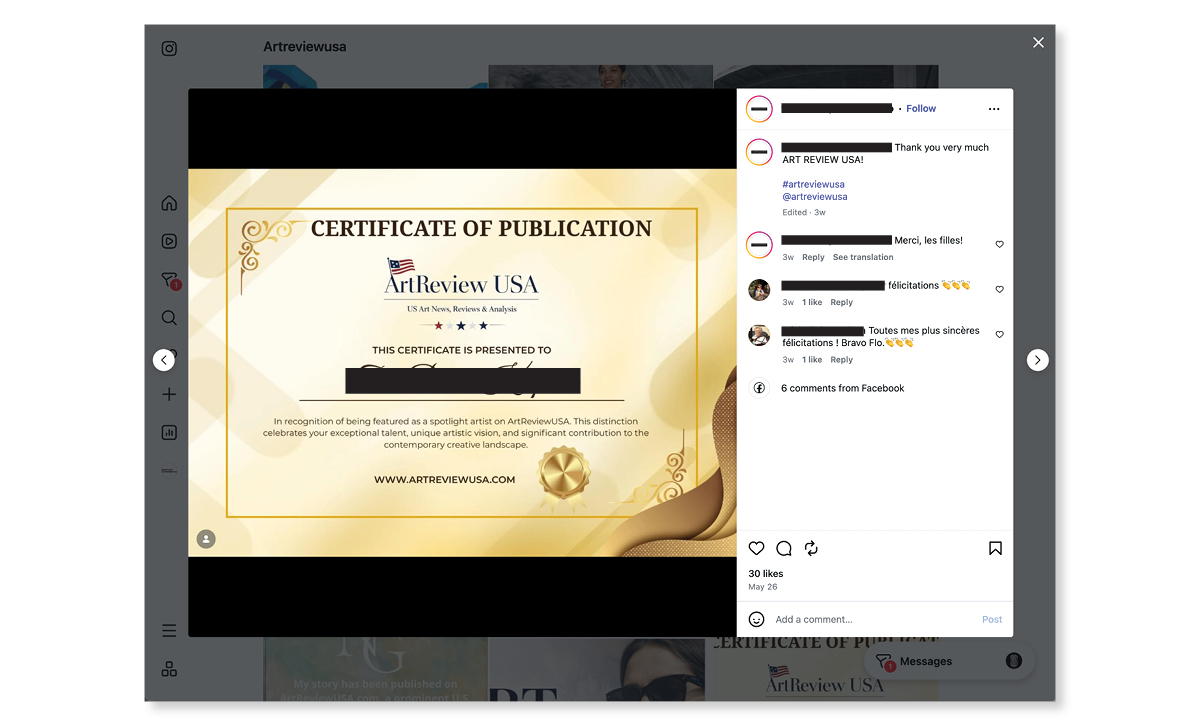
ArtReview USA is a shadowy outlet scavenging content from reputable art publications. It’s a striking example of an AI-driven scam targeting artists.
In a twisted sense, Mary Smith’s first blog post of the day on May 2 is the most gripping art writing we’ve read all year.
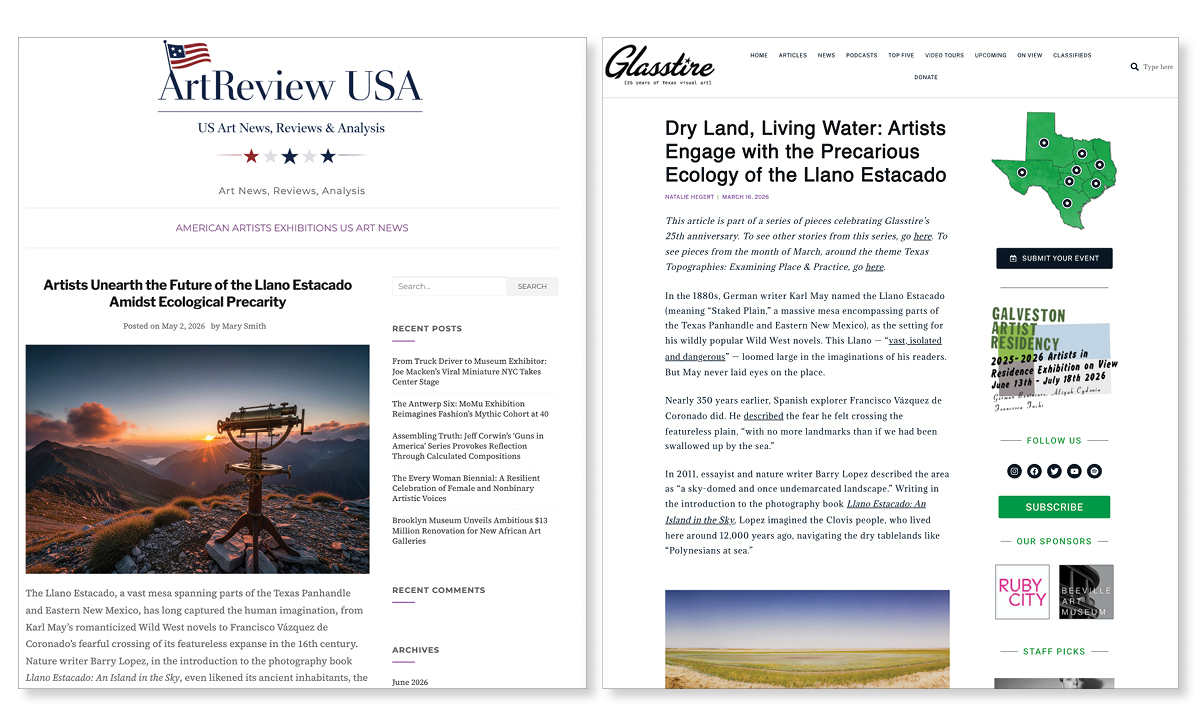
Smith is identified as the news editor of ArtReview USA, and while her story on the creative community of a Southwest subregion is stilted and flabby, it seems to contain real reporting. That’s because it’s an AI–generated rip-off of a recent piece by our arts editor Natalie Hegert for the Texas publication Glasstire.
The post closely tracks Hegert’s article in framing and structure (though can’t hold a candle to its voice and style), and even includes a baffling AI-generated image that doesn’t look anything like the flat tableland landscape of West Texas—the subject of the article.
Hegert, whose name is not attributed to the AI version, reflected on the long arc of the writing process. Her story grew from years of on-the-ground research, connections to the artist community, and experiences of place and ecology. To see it ripped off wholesale induced a stomach-churning feeling that grew as we dug deeper into the site.
We swiftly identified a doppelgänger of another Glasstire story, a clone of a Hyperallergic review, and an ape of a piece from The Art Newspaper—each accompanied by an unrepresentative AI image. All of it is under the banner of a three-starred American flag, part of the site’s bizarro patriotic branding. Our investigation was like a special episode of Black Mirror for contemporary art nerds.
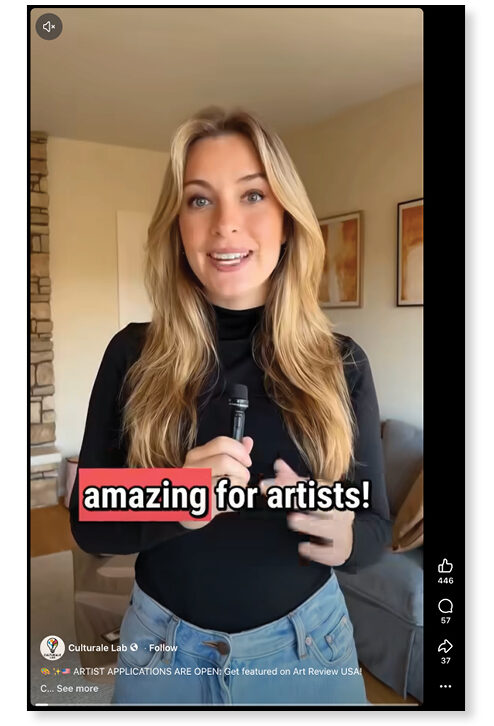
Smith and another editor are currently churning out five or six slop articles every day. Our publisher Lauren Tresp puzzled over the fact that the site doesn’t appear to run ads—What are they even getting out of this?—and then she found an AI-generated Facebook video that revealed the underlying scam. ArtReview USA appears to be tied to a Bulgarian marketing firm that’s asking artists to pay 300 Euros to be profiled on the “prestigious American platform seen by curators and collectors.” The site’s lifted and warped content is meant to lend it art world legitimacy.
It’s all a façade, of course: the platform received 309 visits in May (according to the analytics tool SemRush) and has 1,038 Instagram followers as of this writing. So, why are we spreading the word about the platform? One reason is that some artists seem to be falling for it, and this letter has an excellent shot at beating ArtReview USA in search engine rankings, serving as a potential warning—we hope—for the next artist they approach. Another is that our colleagues and readers deserve to know that journalists’ hard work may have been appropriated by this outlet. (Hegert found the upside-down version of her piece by happenstance, when she Googled the name of an artist who’s featured in the piece.)
More broadly, ArtReview USA is a case study in how easy it is prey on readers using AI tools. This particular platform may have low visibility, but scams like this are easy to build and scale in this era of government-abetted AI accelerationism. Amid an AI policy vacuum, artists are losing out in more ways than one.
There is a bright side. As arts editors rooted in community and dedicated to journalistic rigor, we can usually spot an AI scam when we see one. That’s because we collaborate closely with our writers, directly engage with our subjects, and are bound by our ethics to serve our readers.
Let us be clear: Southwest Contemporary does not publish AI-generated stories. We do not plagiarize other writers or outlets. We do not solicit payment from subjects for editorial coverage. All sponsored content and advertising is clearly labeled as such. And if we ever fail to uphold these commitments or fall prey to an AI scam ourselves, we will correct our errors with full transparency.
ArtReview USA reminds us that AI’s mimicry of humanity and ability to fool us is all too easily accessible to bad actors. But it also reveals that for now, these actors must rely on regurgitated human output to fuel their schemes. AI tools are predictive engines, not human minds that can reason, create, and collaborate. The best protection against the AI onslaught is to stay in community with other humans, so let’s keep sticking together.