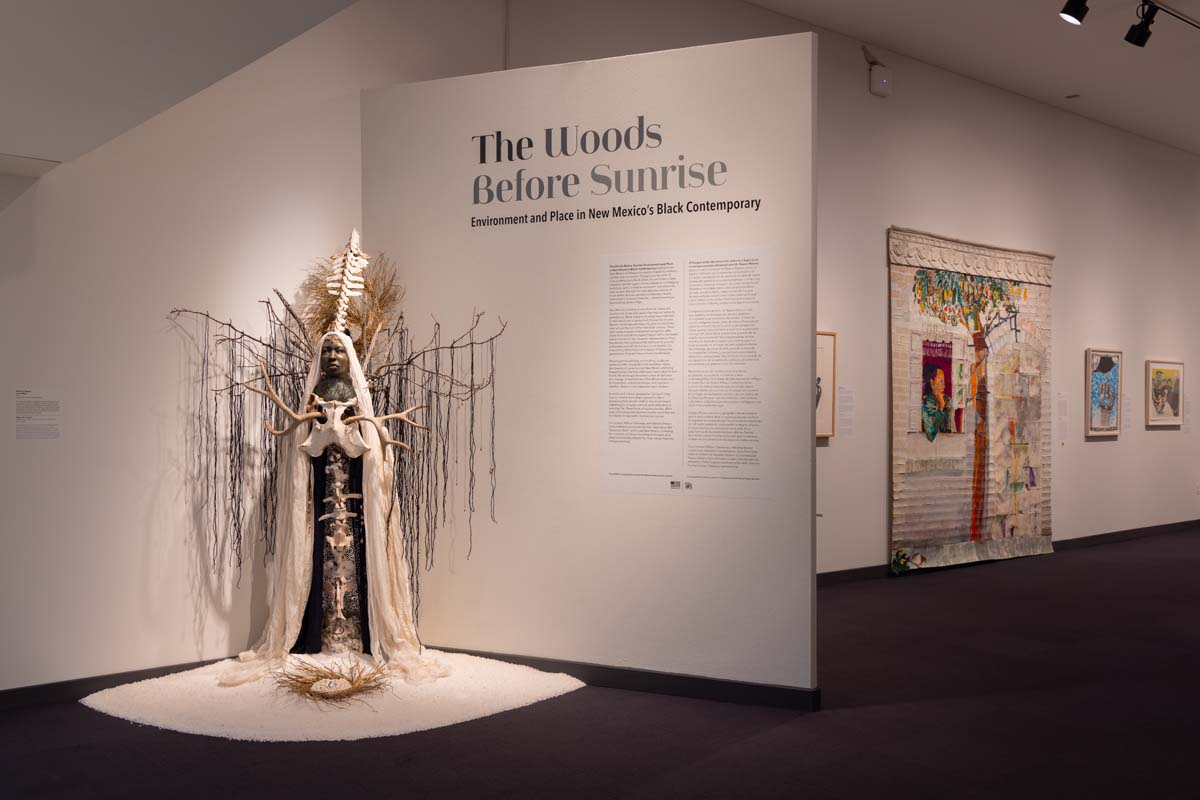
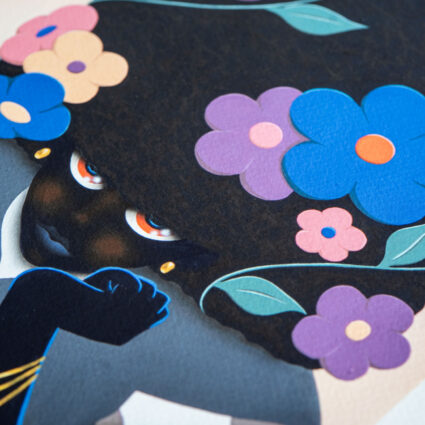
The Woods Before Sunrise gathers nine contemporary Black artists who are making their own new mythology about American landscape and their place within it.
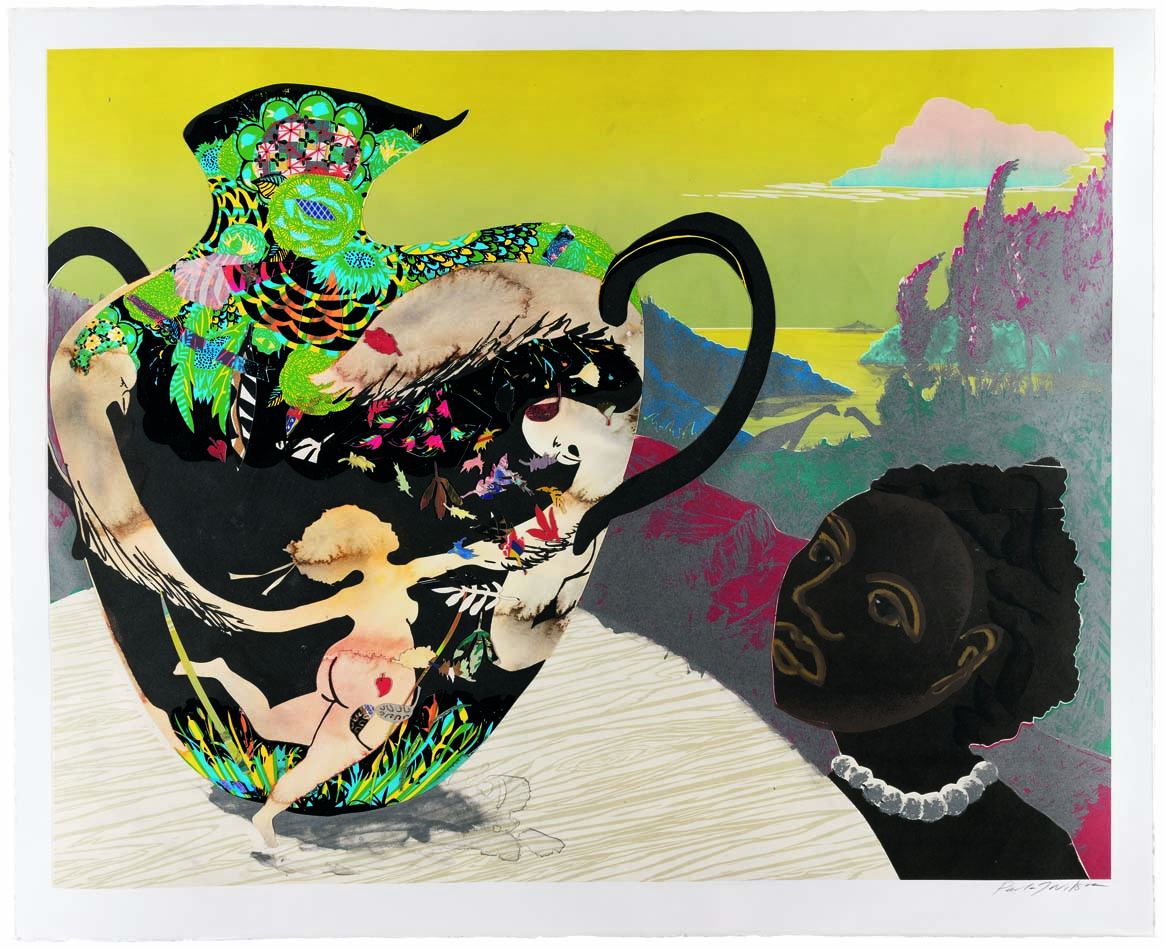
The Woods Before Sunrise: Environment and Place in New Mexico’s Black Contemporary
June 20–October 18, 2026
Albuquerque Museum
It’s hard to overstate the importance of the horizon in the history of American landscape painting. In 19th-century paintings, it often gives the impression of doors thrown open to the viewer’s gaze, as it does in American Progress, the famous 1872 painting by John Gast that depicts a giant, angelic woman drifting westward over the landscape, leading behind her a crowd of covered wagons and steam engines, unspooling telegraph wire as she goes. That wide, expansive line that joins sky and land offers the viewer freedom, unhindered movement, the invitation to roam: go west, young man. Indeed, American landscape painting has always been a tool of crafting mythology, and mythology weaves relationships between people and land. If you think I’m being heavy-handed here, just go look up the painting. It is sometimes called by an alternate title: Manifest Destiny.
In The Woods Before Sunrise: Environment and Place in New Mexico’s Black Contemporary, nine artists engage with mythologies of the land—old, even ancient mythologies, as well as the new ones that they are actively creating.
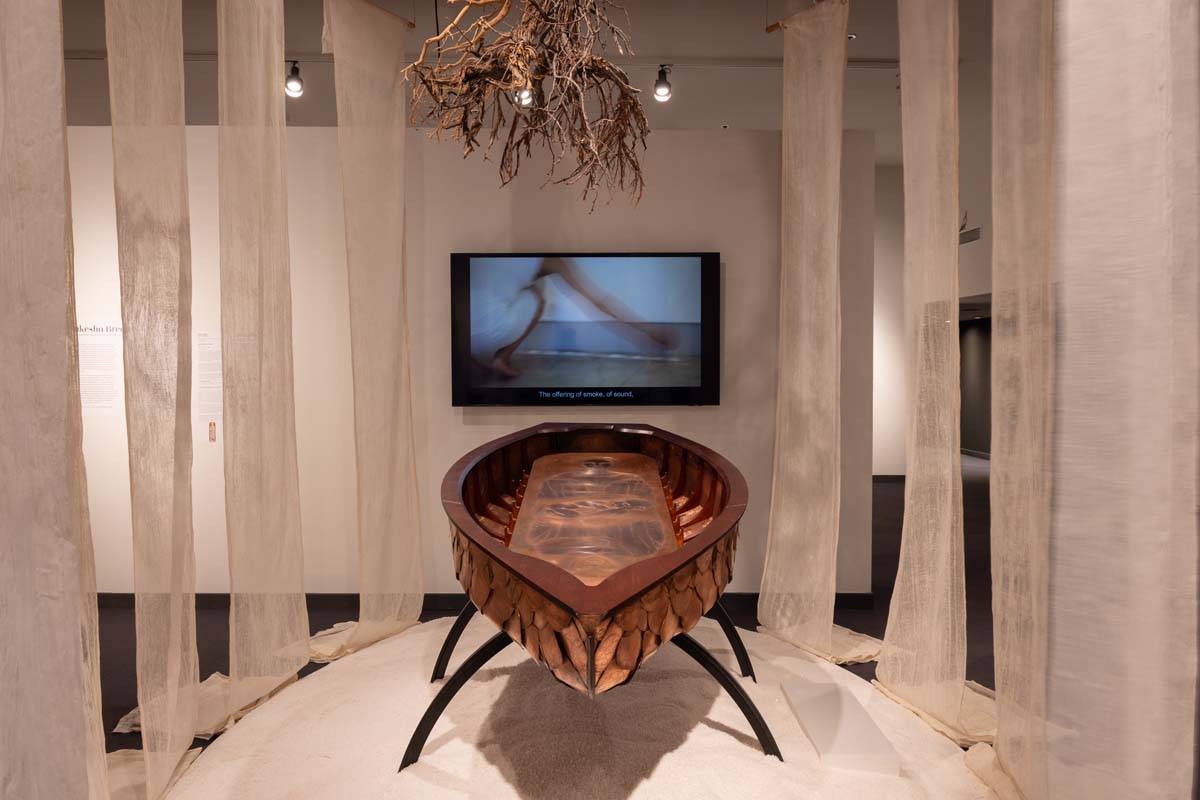
“The outdoors, as it is idealized, is framed as a space of freedom and transcendence. […] The idea of the ‘great outdoors’ is a social construction built through histories of exclusion, erasure, and the systematic removal of bodies that did not fit the white, colonial narrative of the frontier,” writes co-curator and participating artist Nikesha Breeze, invoking the contemporary white liberal mythology of American wilderness in “The Land is Not Neutral,” their introductory essay for the exhibition catalogue. It takes no hard stretch of the imagination to recognize that Black Americans of the African diaspora, for whom the land holds legacies of violent displacement and forced agricultural labor, might not be able to participate in this particular narrative, and instead seek to forge their own ways of relating to place. In their own artwork, the recorded 2021 performance Stages of Tectonic Blackness: Re:turn: Re:Member, Breeze and their artist collaborators enact a ritual—one of return, and of (re)connection to Earth. This ritual, which involves burying and unburying four of their collaborators in soft, black soil, is done with such gravity and care that it does not seem new, but like an established religious custom or spell: each step is prescribed and filled with meaning. As Breeze lovingly lays each participant in the belly of a rowboat and trickles water over their head, you can watch as brows unfurrow, shoulders relax, knots come undone. If you’ve been severed from your own ancient cultural tradition and ritual practice, and if the contemporary dominant culture offers no fitting reprieve, why not create your own? This new ritual—this intentional, labored re-enchanting of the world—is a gift. A renewal of the covenant between Black body and earth, long overdue.
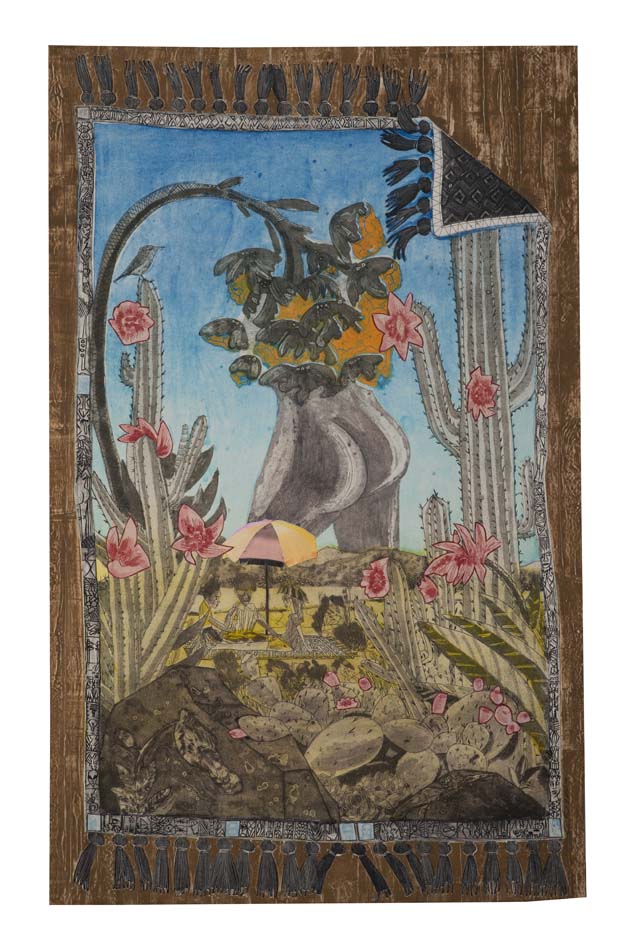
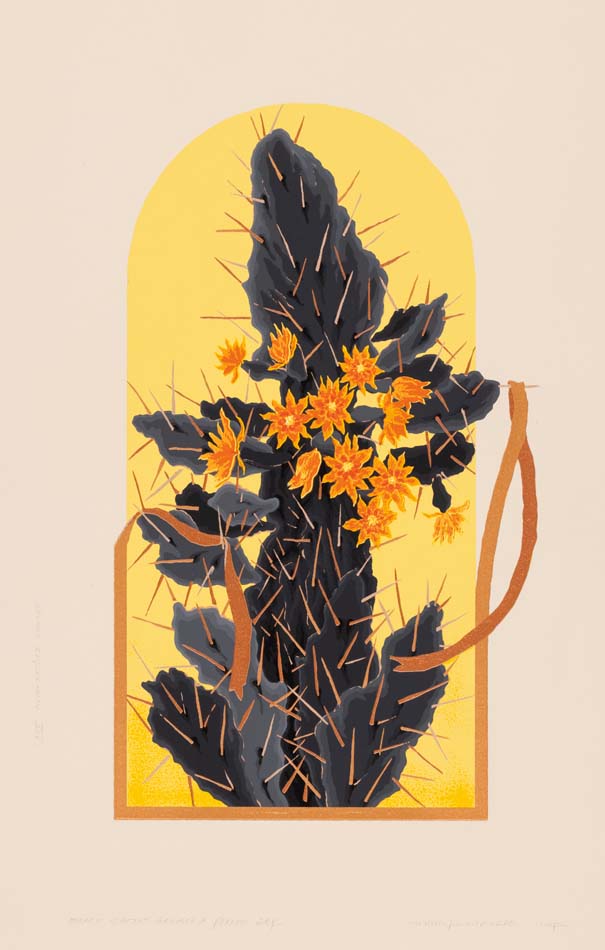
Paula Wilson is another artist in the exhibition whose work creates a new personal relationship with place. Living and working in Carrizozo, New Mexico, Wilson incorporates trompe-l’oeil techniques and visual gags in many of her paintings—in the series Naturalist’s Collection, a couple dozen small paintings decorate one whole wall of the gallery, each of them with a printed-on faux wood frame. The paintings vary wildly: one seems to be a panel from a Japanese folding screen; one is a very close-up and detailed rendering of a moth; one a botanical drawing. The whole display reminds me of the Renaissance-era Wunderkammern—those collections of natural oddities and objets d’art assembled by European scientists and eccentric nobles, a precursor to the modern museum. In this persona of the naturalist—butterfly net in one hand, binoculars in the other—Wilson lays claim to a tradition of what we once called “natural history,” and makes it all her own.
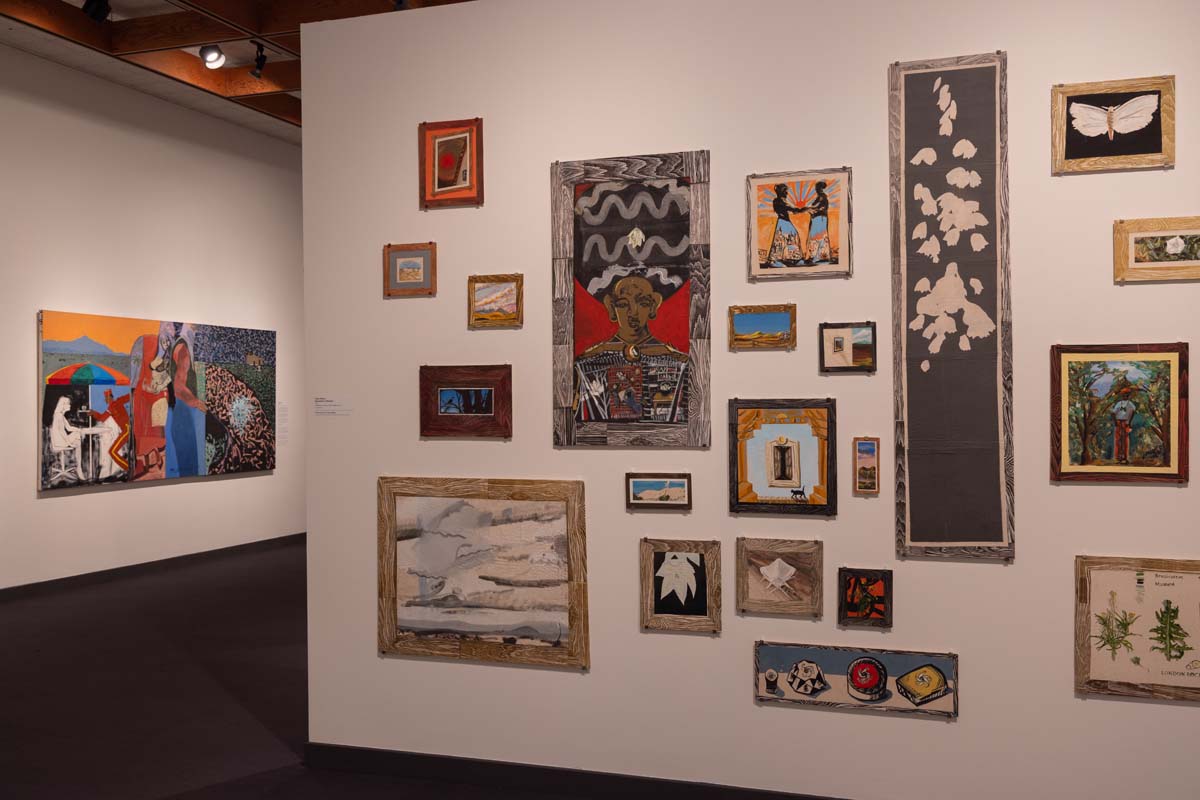
In her painting Living Calendar (2025), Wilson catalogues some of her naturalist’s observations from many years living in the desert of southern New Mexico. It shows a larger-than-life woman dressed in a robe intricately illustrated with sun and moon charts, lists of plants found commonly in New Mexico, and small figures symbolizing the months of the year. At the bottom, a lone journeyer haloed by sunlight trudges up the long incline of the canvas. Like the fool of the tarot, she is only just starting her adventure—she has many people to meet, and many lessons to learn, before all is said and done.
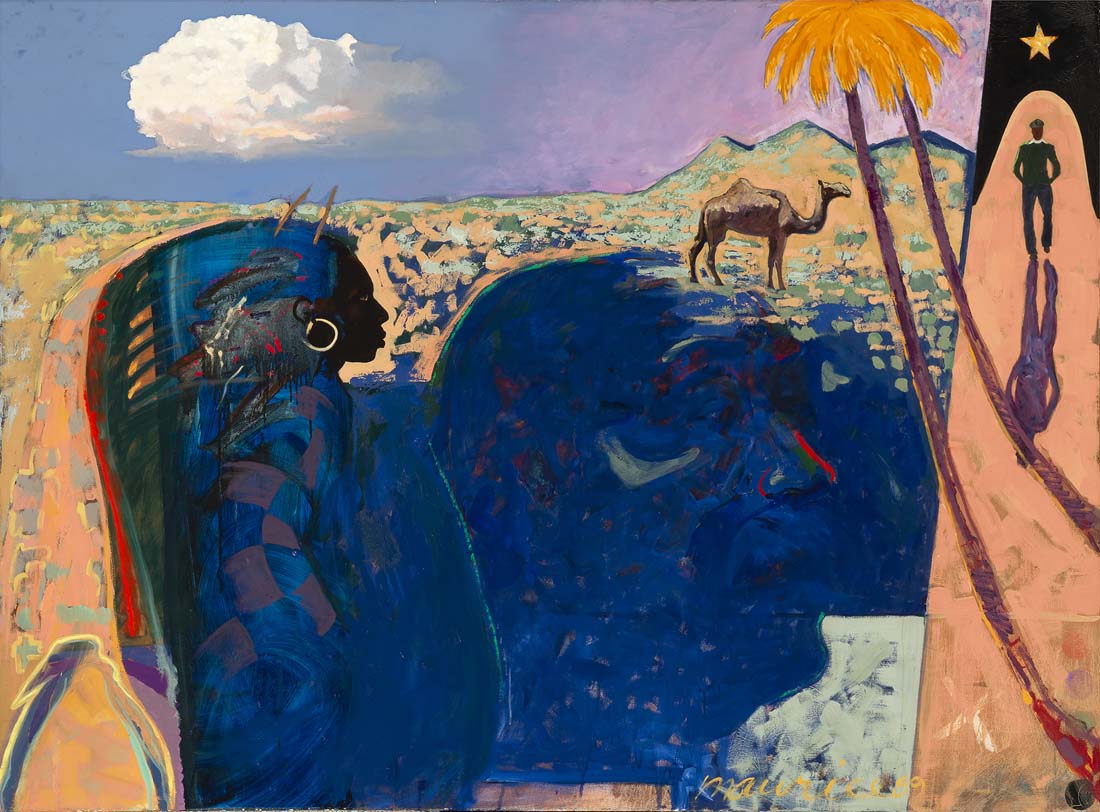
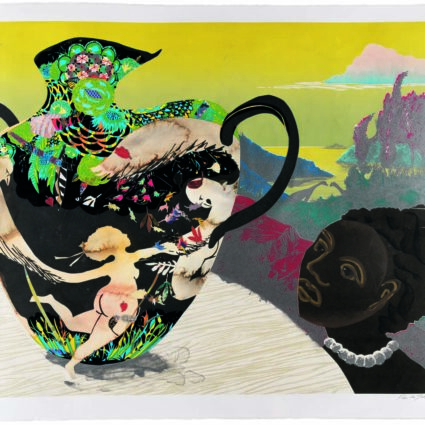
Some ancient and well-trod mythology is here, too. In Rein Whitt-Pritchette’s lushly colored serigraph print Odysseus (1980), the legendary sailor and warrior is a modern Black man, dominating the frame as he strides out towards the viewer, with oars across his shoulders and his eyes hidden in shadow; behind him, the towering clouds of Olympus, and a horizon swallowed by rain. Neptune appears in the show as well, as Neptune Washington, a 1996 lithograph from Ron Adams, late Santa Fe–based artist and former owner of the Hand Graphics print shop. This version of the Roman god of the sea is an old fisherman standing in a boat; before him, a bucket overflows with his bounty of fish. Both figures are clearly in their element: at home in their bodies and their settings, doing what they are best at.
In such a stodgy and storied artistic tradition, what new perspective can be given, what new statement can be made?
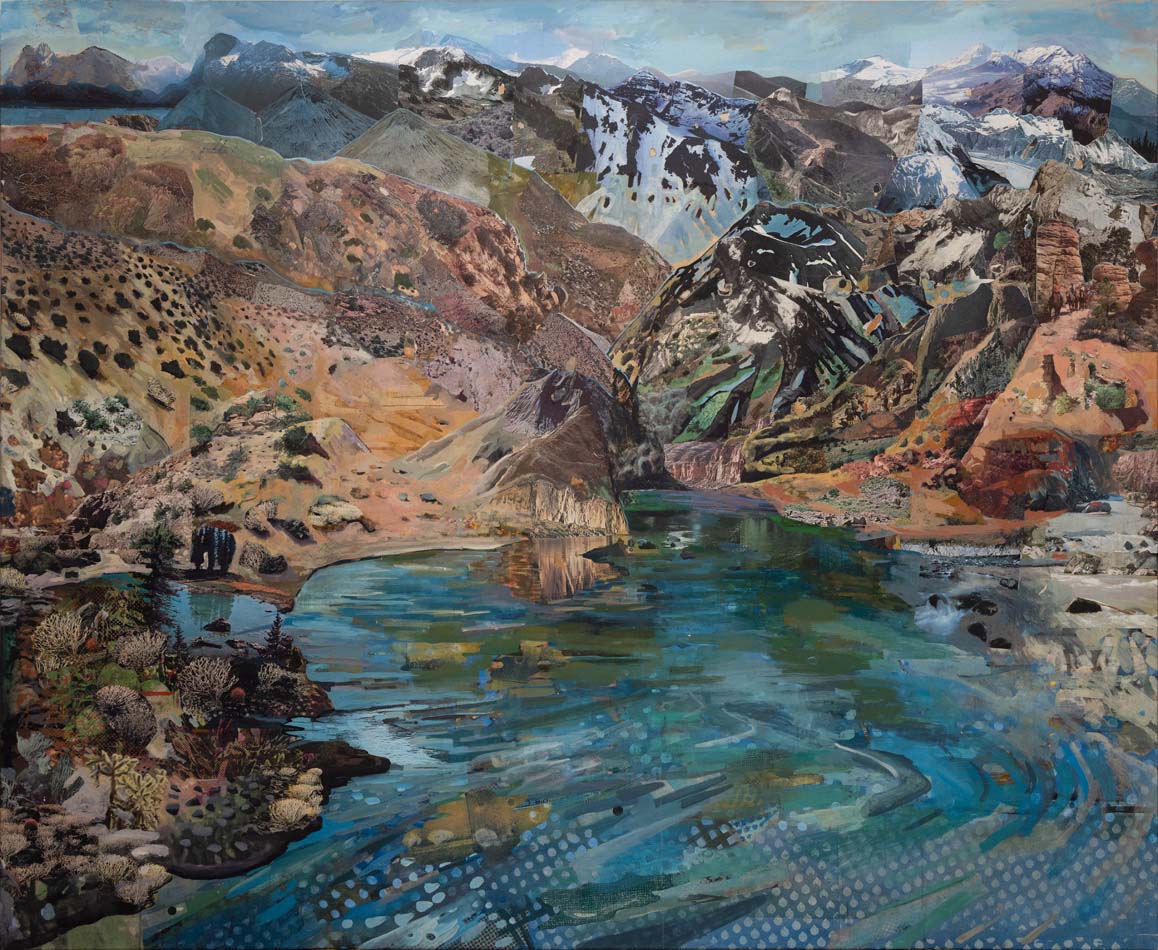
If the horizon is the defining fixture of American landscape painting, then Karsten Creightney has made this trope into a punchline in his mixed painting-and-collage assemblages. In Black Hills (2018), he has assembled a quite convincing landscape painting of the Black Hills of South Dakota out of dozens of cut-and-pasted landscape paintings and photos. In such a stodgy and storied artistic tradition, what new perspective can be given, what new statement can be made? Except that every landscape seen is an already-mediated experience, an amalgam of every other landscape we’ve seen before.
The land is not neutral, Breeze reminds us. It never has been.
The show’s title is taken from a quotation from George Washington Carver: “Nothing is more beautiful than the loveliness of the woods before sunrise.” An agricultural scientist who was born into slavery, who spent his whole career developing and popularizing ways to heal Southern soil that had been ravaged by decades of monocropping cotton, Carver was also a true American myth himself: inventions and pithy sayings have been misattributed to him, and historians and storytellers over the years have spun yarns from the meager documentation of his life. Who can know what the man was actually like? There is nobody alive who remembers. Nobody, that is, except the land itself.