Swelling crowds and violent incidents during the city’s monthly art walk have spurred Phoenix to reconfigure First Fridays in the Roosevelt Row arts district and return the event’s focus to the arts.
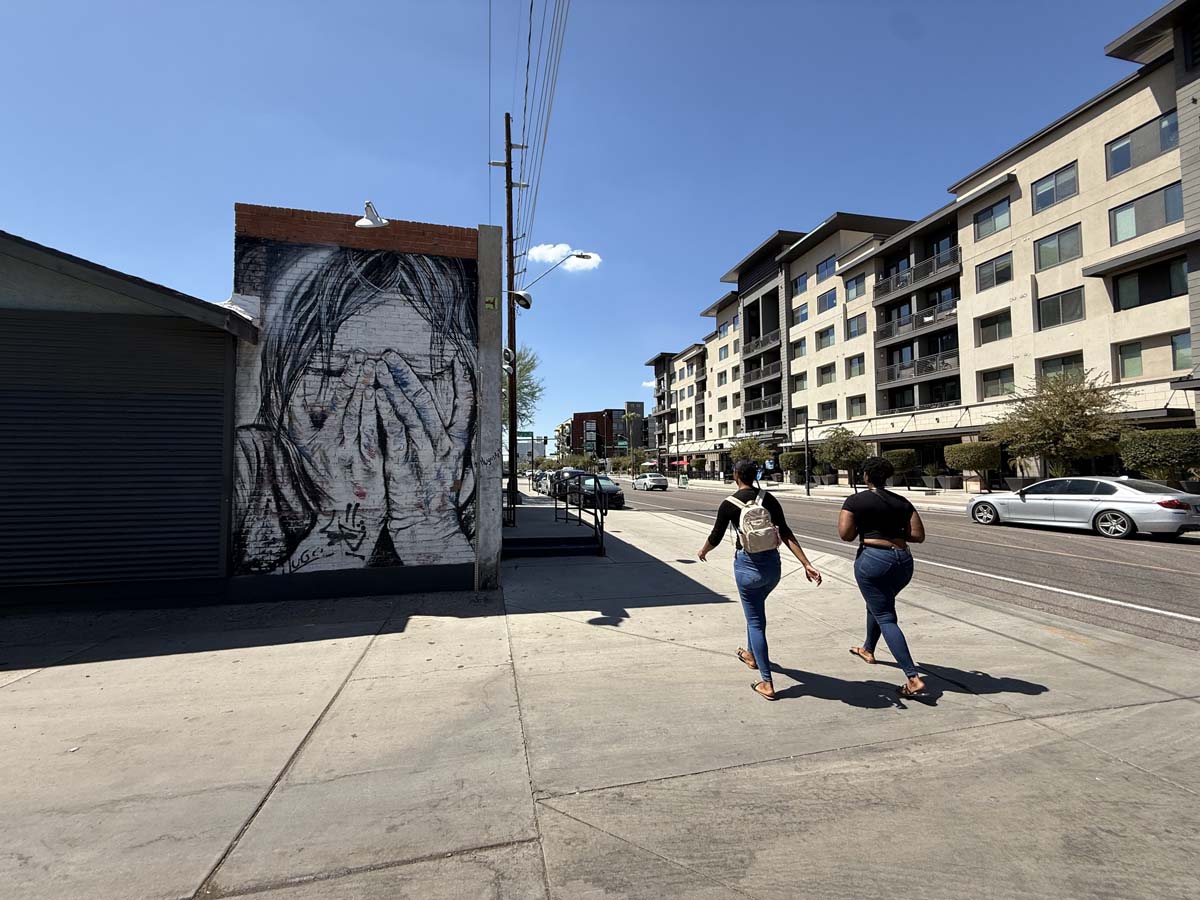
PHOENIX—Phoenix is seeking a reset of First Fridays in Roosevelt Row amid concerns about public safety and the loss of the arts focus that once made the area one of the nation’s top art districts. Recently, the city adopted a new pilot program aimed at addressing those concerns, which has artists and others exploring some big questions—including what makes a vibrant arts scene and who gets to decide.
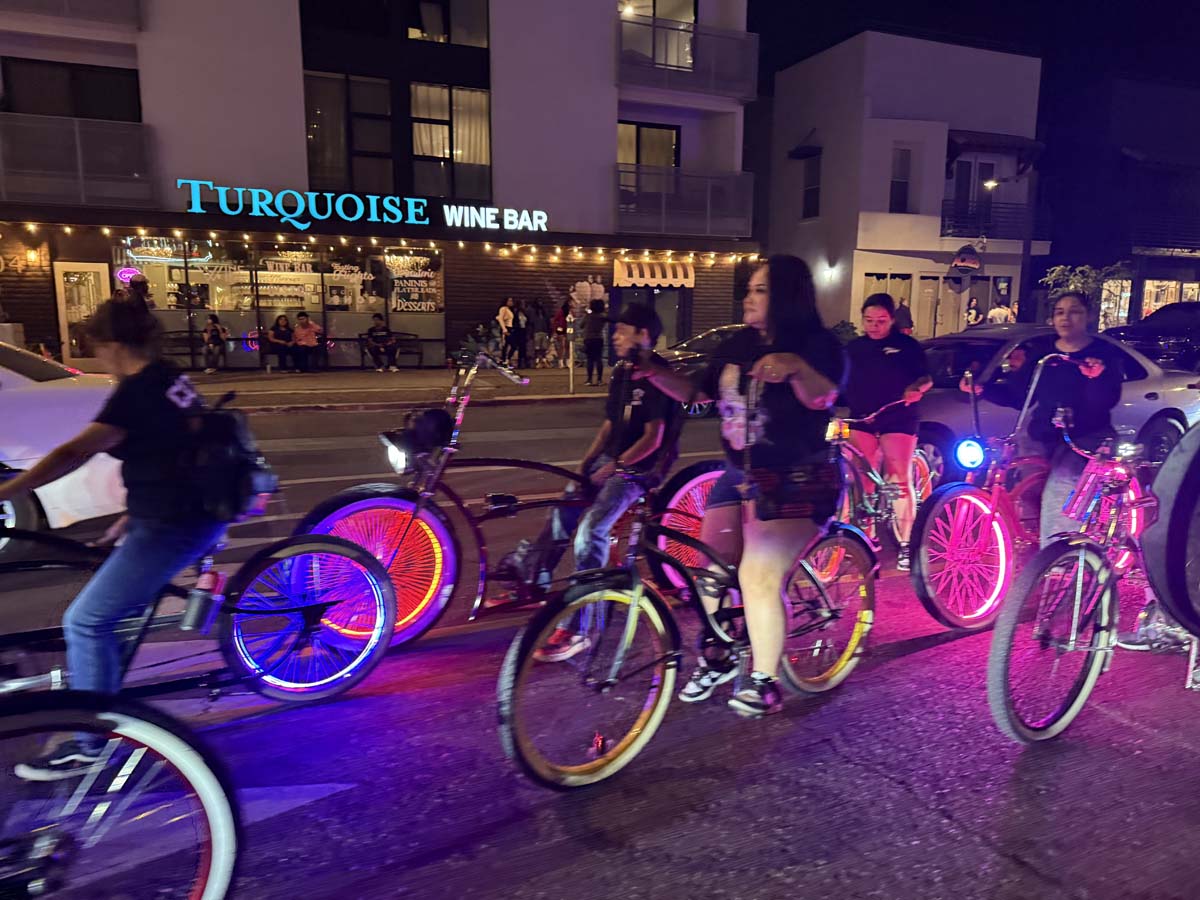
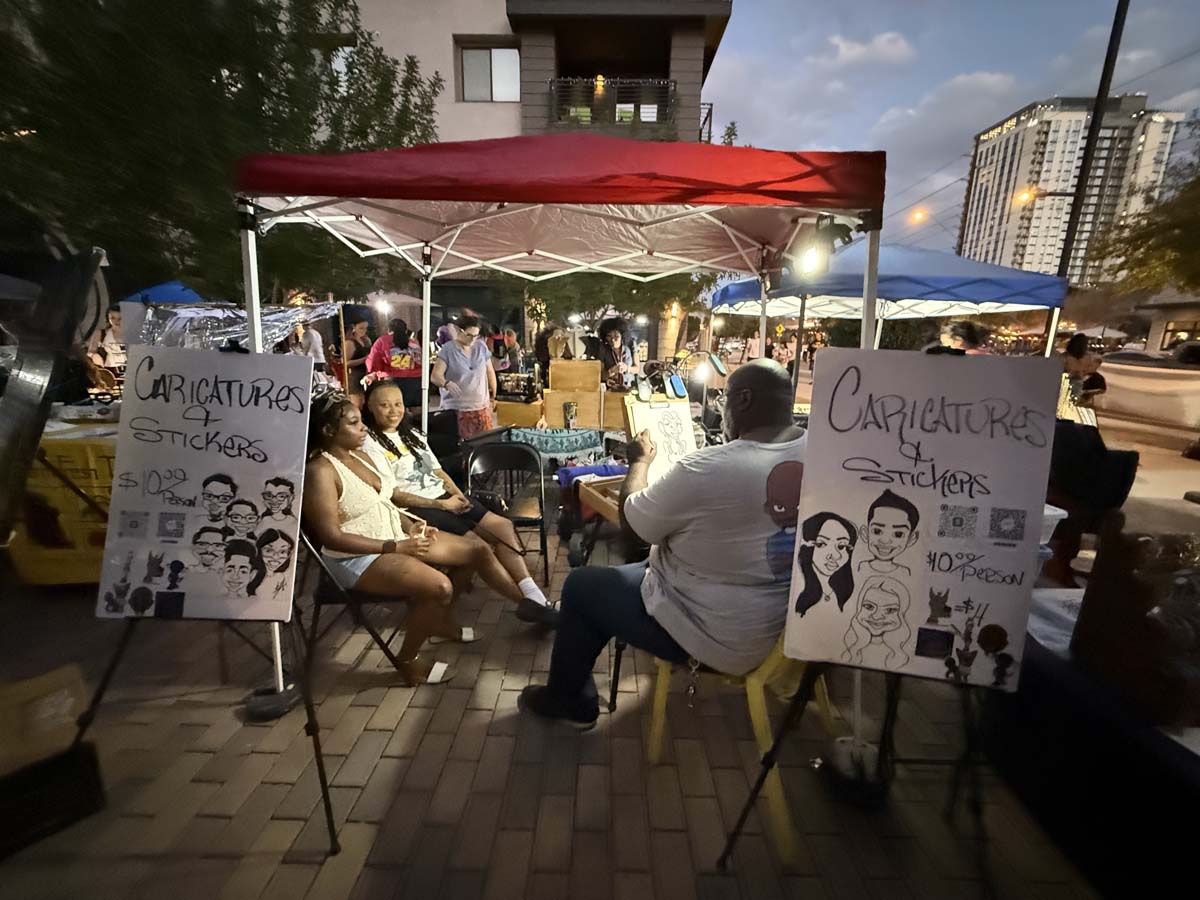
In recent years, First Fridays in Roosevelt Row have centered on an expansive vendor market. But the size of the crowds, which sometimes swelled to 15,000 people, brought some unintended consequences. Reports of violence—from “teen takeovers” to shootings—were on the rise. Some business owners experienced negative impacts from the art walk. And the market intended to highlight local artists got diluted by ready-made, generic goods.
“A few of our members felt so unsafe that they opted to close the gallery early on First Fridays this past spring,” recalls Dean Terasaki, co-president of the Eye Lounge artist collective that exhibits at Modified Arts. It’s one of the few galleries located right on Roosevelt Street, giving its members a front-row view of what’s happening in real time.
“Masses of people were coming down to Roosevelt Row just to hang out on First Fridays, without much interest in looking at the art,” according to Dana Johnson of Alwun House, an alternative creative space on the outskirts of the renowned arts district. “Food trucks didn’t help the local businesses, and a lot of the vendors were selling dumb tchotchkes instead of art.”
In April, the city put a pause on the art market and related street closures that tended to concentrate the First Friday crowds, just as big events including the NCAA semifinals were rolling into town. Then, they left the changes in place. Some community members praised the move, while others decried it, saying the city was essentially cancelling First Fridays. At one point, a local news station erroneously reported that the event was moving to Mesa, then had to walk it back.
“When they shut things down, my circle of friends were all kind of excited because it was an opportunity to hit the reset button,” recalls James B. Hunt, a longtime local artist who typically spends First Fridays riding a bike covered with his small paintings of surreal figures around Roosevelt Row. “We took it to mean we get to play again.”
But the city has something more formal in mind.
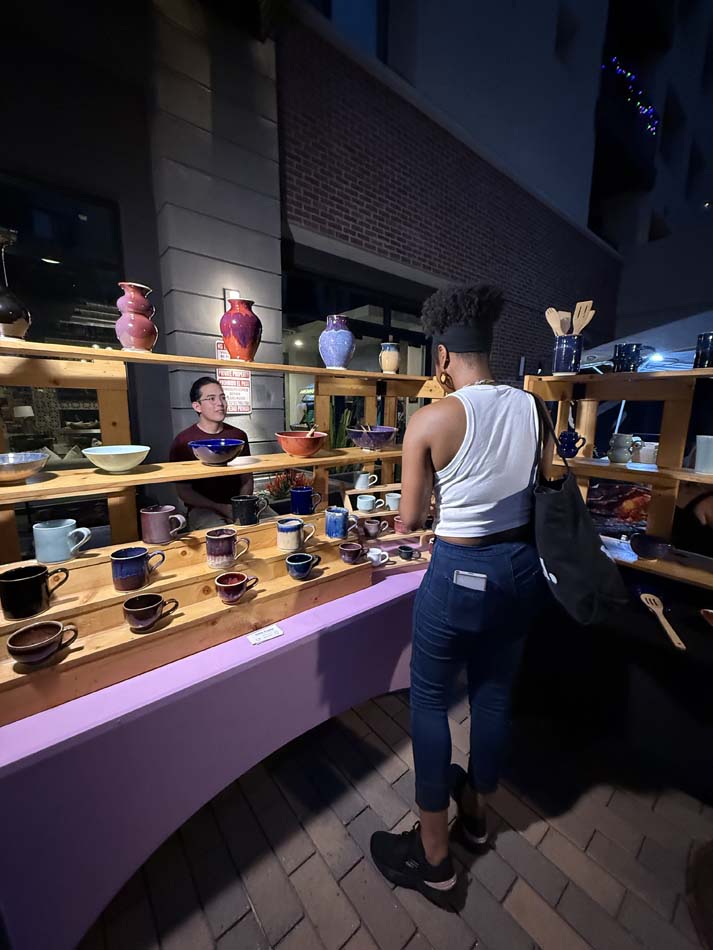
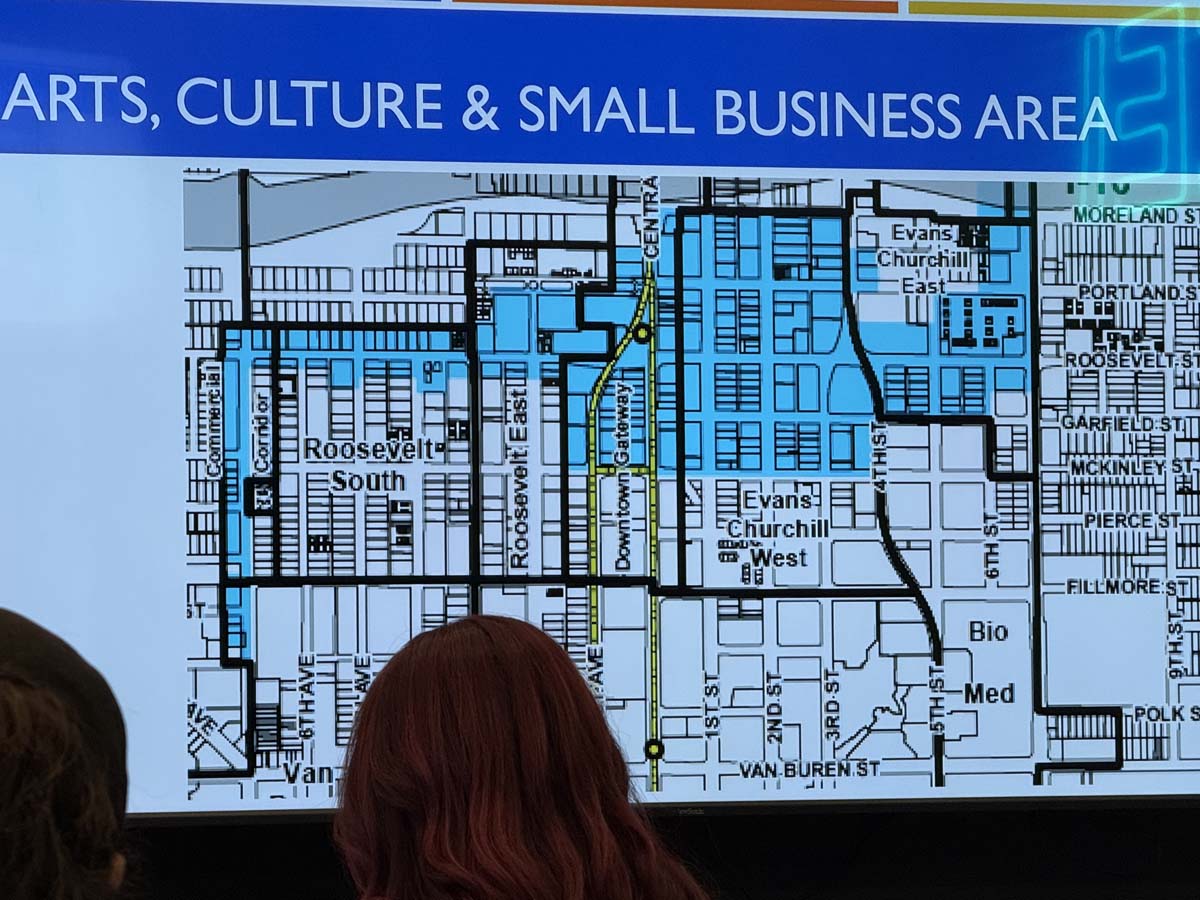
The pilot program, adopted by the city council on September 9, puts a new vendor model in place. Now, brick-and-mortar businesses can apply for permits to have outdoor vendors on site during First Fridays—assuming the vendors sell hand-crafted, locally made art, crafts, or food items. Instead of the Roosevelt Row Community Development Corporation organizing a massive vendor fair, businesses with permits will be curating the vendors on their own properties. That way, there won’t be a vast expanse of tents or the street closures they necessitate.
Today, Terasaki and others are drilling down on the specifics of the plan, which came together largely through a collaboration between Artlink, Downtown Phoenix Inc., and the Roosevelt Row CDC. Their process included a series of “listening sessions,” where they sought input from residents, business owners, and others, according to R.J. Price, chief growth officer for Downtown Phoenix Inc.
Still, it appears the pilot is already presenting some challenges.
“I feel like the city really understands that artists and creative people are the reason First Fridays came about, and they’re trying their best to put arts and culture front and center again,” Terasaki says. “But there are a lot of moving parts to the new permits and the timeline for making this happen by October First Friday seems pretty unrealistic.”
However it rolls out, it’s clear that some people have reservations about the new approach.
Daniel Mills, a resident of the Roosevelt Historic District, recalls his initial First Friday forays as a young teen living in the East Valley. Lately he’s been setting up a table in Roosevelt Row to sell books during the art walk, never worrying about getting a permit or city approval. “I really miss the organic feeling of early First Fridays, when you could find more things that were weird or unexpected,” he says.
Artist and community organizer Cindy Dach has been on the frontline in Roosevelt Row from the beginning. She’s a founding member of the Roosevelt Row CDC, for example, and still serves on its board.
“The original focus of the art walk was studios, because there weren’t a lot of galleries in Phoenix,” Dach explains. After studios in the warehouse district got torn down to make way for sports stadiums, artists moved to other places, including what would become Roosevelt Row.
Some artists bought properties—including Dach and her husband Greg Esser, and photographer Wayne Rainey. Kimber Lanning, who went on to found Local First Arizona, bought the Modified Arts building that’s now home to the Eye Lounge collective. “There were a lot of built homes with landlords that rented to artists at very affordable rates,” recalls Dach. Early on, 60 percent of the area comprised vacant lots.
“Once the city launched light rail, the challenge was how to make the area feel more vibrant and a place people wanted to be,” says Dach. That’s when places like Carly’s Bistro, a longtime staple of Roosevelt Row that closed earlier this year, started doing pop-ups and arts and crafts vendors entered the scene.
“For the first opening at Eye Lounge, about twenty-six people showed up,” recalls Dach. “Today about 22,000 people live within a three-mile radius of Fourth Street and Roosevelt.” Amid the exponential growth and gentrification in the area, most galleries simply didn’t survive—which begs the question of how decision makers hope to bring the art focus back to Roosevelt Row and First Fridays.
Wayne Rainey founded Holga’s and monOrchid, two creative spaces that were mainstays during earlier iterations of Roosevelt Row. But he’s skeptical of efforts to recreate the energy of bygone days, given the dearth of galleries and affordable housing for artists. “Roosevelt Row is an entertainment district, not an art district. First Friday is a scene, not an art walk,” he says. “Art districts are cyclical like anything else, and they have their beginning and their end. It would be great if the next generation grabs the next frontier.”
Catrina Kahler has a different perspective as the president and CEO of Artlink, an Arizona nonprofit whose mission includes connecting art, business, and community. “There are ways to innovate and artists are finding new spaces and showing their work in non-traditional settings.” For Kahler, the vendor pilot program is one of those opportunities. If it’s successful, the city could decide to expand it to other First Friday hubs such as Grand Avenue or the Melrose District.
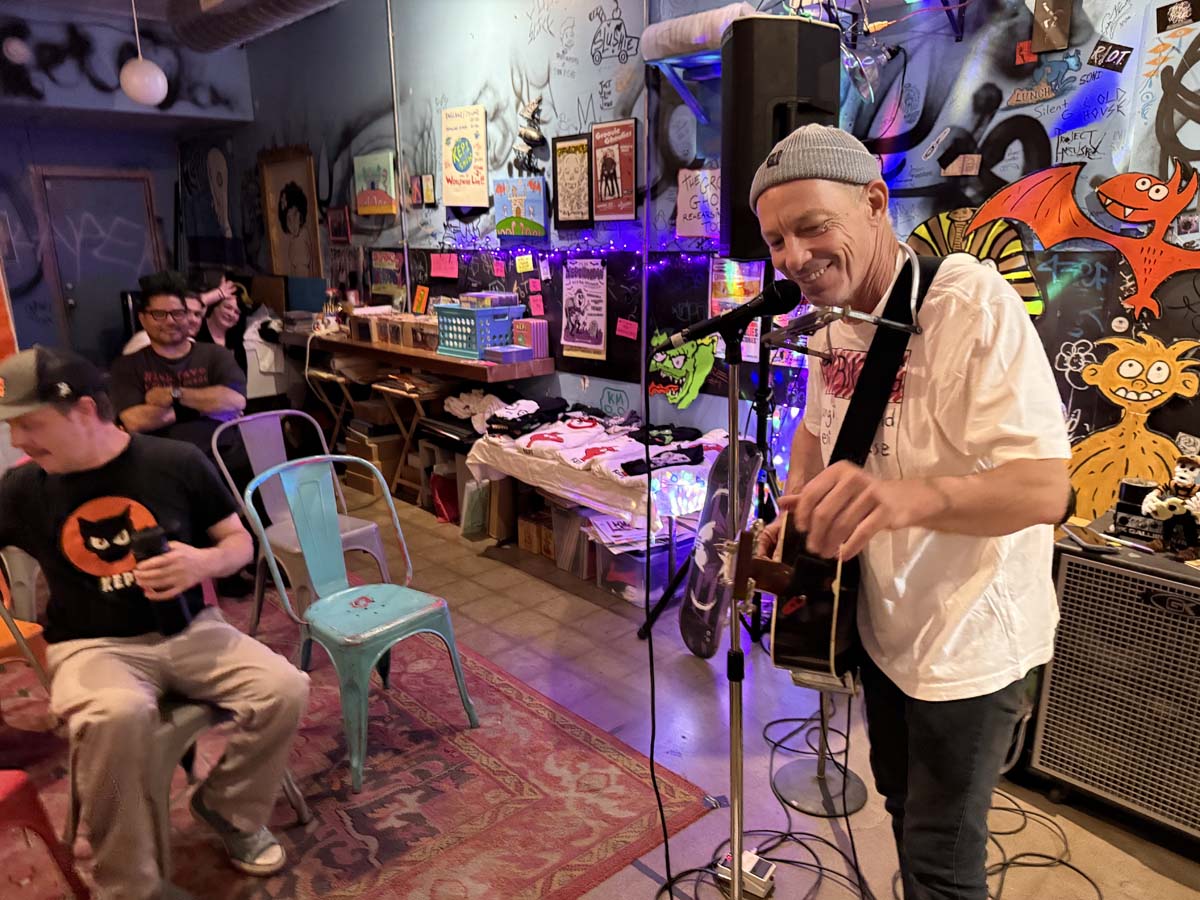
Meanwhile, musician John Logan is doing his own thing inside a 450-foot space in the building where he co-founded Carly’s Bistro. He’s invited bands to perform, and guest curators to present art shows, embracing a DIY energy that’s reminiscent of grassroots Roosevelt Row days. “I always wanted to be a home for the avant-garde, the people out there creating the next new things and be a lighthouse for that.” He’s planning to focus more on visual arts moving forward, and has James B. Hunt (aka NXOEED) lined up for October First Friday. Logan isn’t thinking about whether art vendors will be in place by then, or how the pilot program might evolve. Logan says, “I’m just trying to hold space for art.”