New Mexico’s “Carbon City” celebrates Native arts and traditions, vibrant galleries, and public art, carving its own path beneath the tourist economy’s glare.
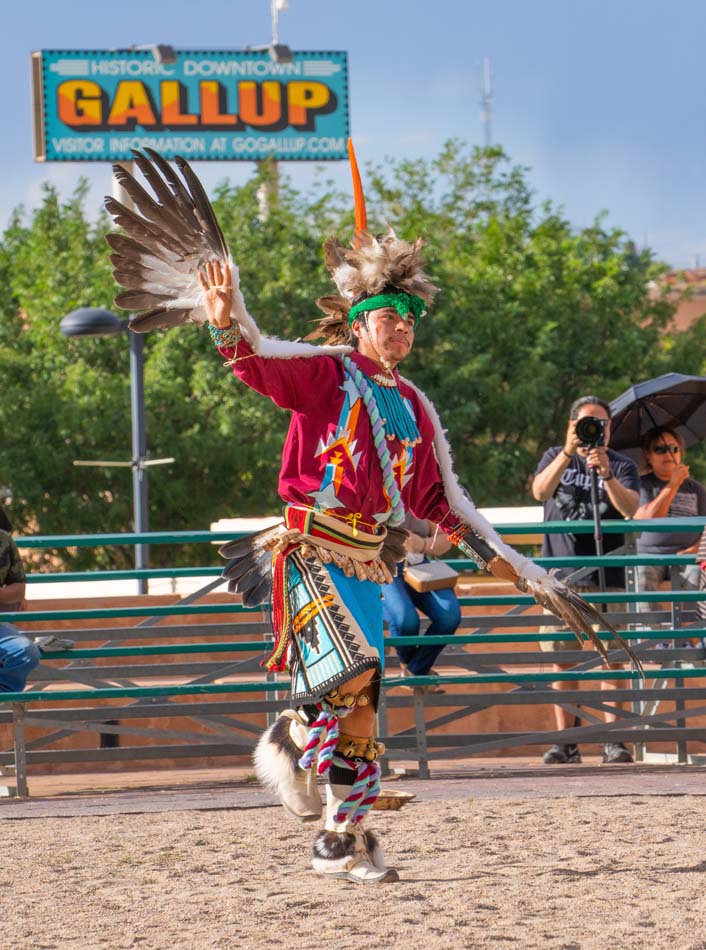
Elevation: 6,515 feet
Population: 21,000
Town Etymology: The town’s name comes from David L. Gallup, the local paymaster for the transcontinental railroad. Workers would say they were “going to Gallup” to collect their wages—and eventually, that phrase stuck.
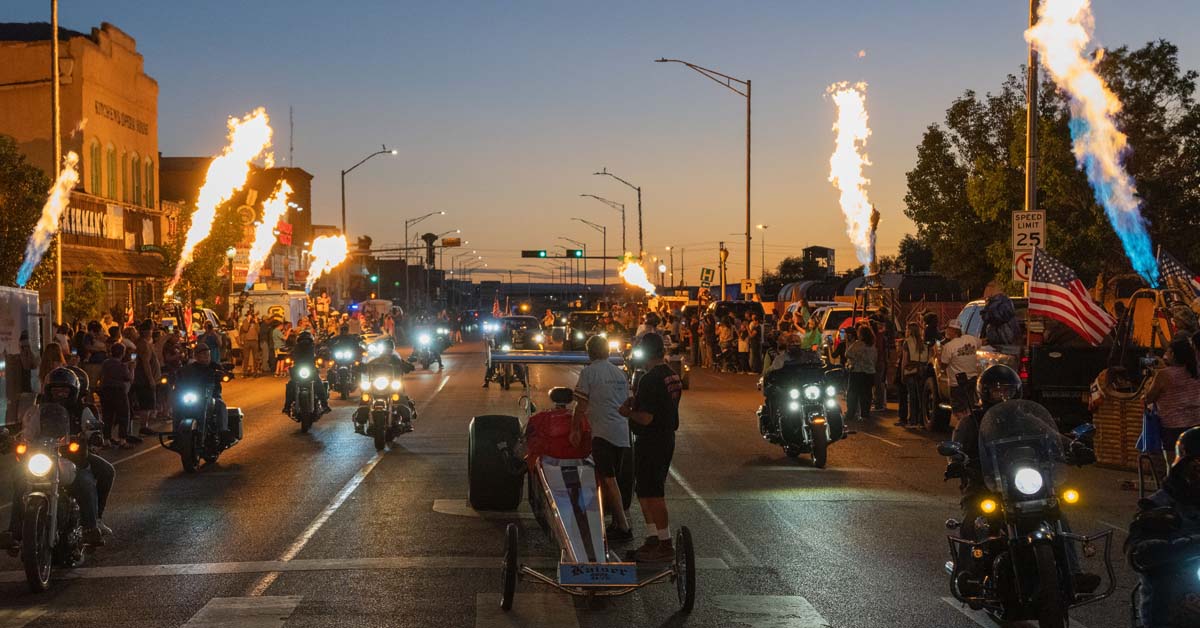
Fun Fact: In late July, Gallup transforms into a scene from the Mad Max movies during Tunnel of Fire, the grand finale of the Route 66 Rides festival. In the evening spectacle, motorcycles and classic cars roar through a vortex created by the ignited burners of hot air balloons.
Cruising historic Route 66 is a surreal experience, opening portals to times and places that feel elsewhere, everywhere, and in-between, all at once. The 100-year-old “Mother Road” is a network of arteries, stretching from Chicago to Santa Monica across the Southwestern U.S., pulsing and occasionally clotting at human-made hubs along the way like roadside motels, diners, and neon remnants.
If the roadway is the circulatory system, then perhaps Gallup, New Mexico—often called “The Heart of Indian Country” and bordering the Navajo Nation—is one of its key Southwest nodes, especially in relation to a midcentury economy that appropriated Native arts and culture through attractions like tipi motels and settler-owned trading posts.
Founded in 1881 as a stop on the Atlantic and Pacific Railroad (partly controlled by the Atchison, Topeka and Santa Fe Railway), Gallup’s origin story is inseparable from extraction and movement. Coal mining fueled its early growth, earning it the nickname “Carbon City” and drawing
a workforce that included many Diné (Navajo) laborers, while the railroad channeled the movement of goods, people, and information across and beyond the region.
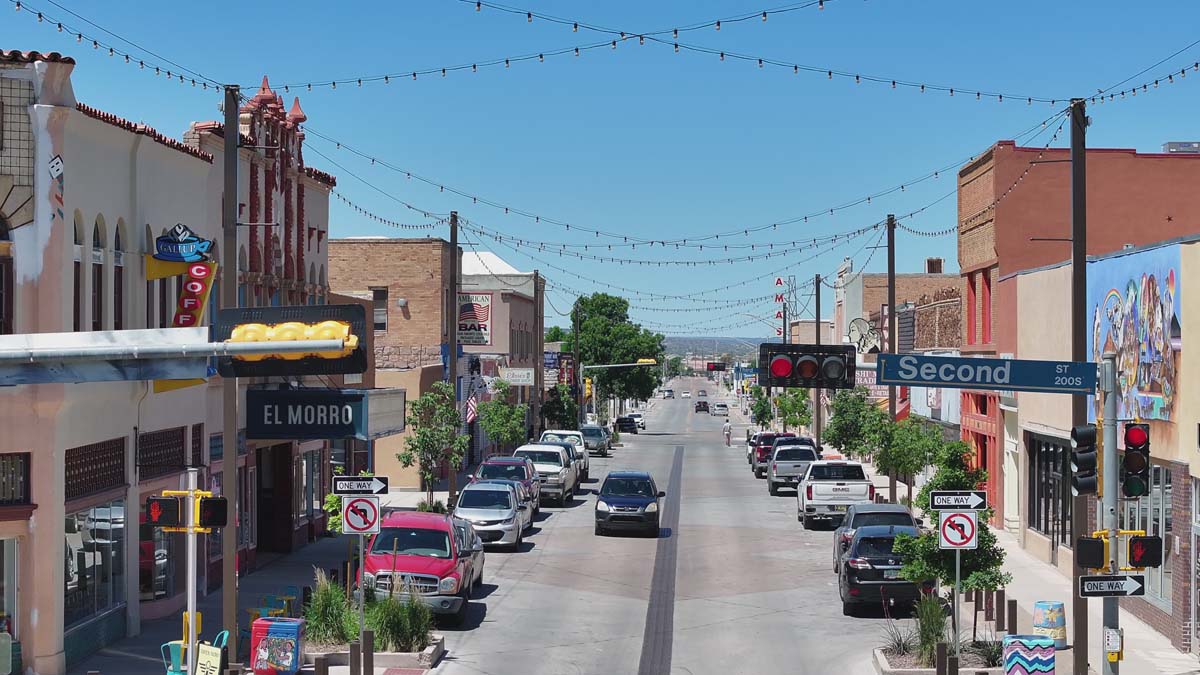
As I drive in along old alignments of Route 66, Gallup announces itself gradually. I take my time navigating into the downtown center, paralleling the railroad. Long a gathering place for Diné, Zuni, Hopi, and Pueblo communities, Gallup’s arts ecosystem reverberates with generational know-how, contemporary creativity, and civic expression. Art in Gallup doesn’t just hang in galleries—it lives on the street and in storefronts, and belongs to the community.
Arts + Culture
Gallup Cultural Center
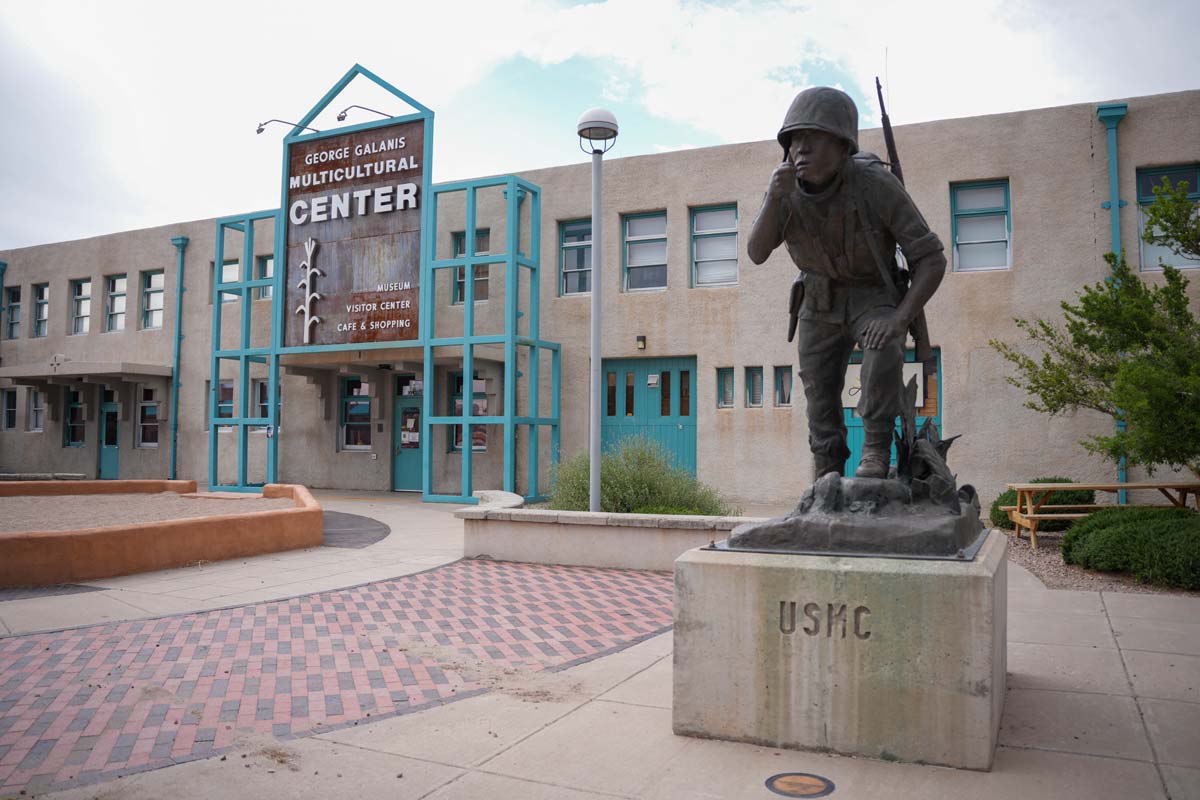
The old Santa Fe Depot now houses the Gallup Cultural Center, which anchors the city’s historical and cultural tapestry. Its galleries hold an overarching survey of regional arts: Acoma polychrome pottery, Hopi baskets, and Diné sand paintings, among other highlights. Particularly compelling is an exhibition dedicated to the Navajo Code Talkers, which pairs archival and firsthand materials with contemporary artworks in memory of the World War II group of Diné men whose service helped secure Allied communications.
I was initially skeptical when I walked into a gallery featuring photos by Edward S. Curtis, an early-20th-century photographer whose westward excursions documented what he called the “vanishing race” of Native Americans, but the center’s work with the Curtis Legacy Foundation’s Descendants Project reframed the work. Through this collaboration, Curtis’s photographs are juxtaposed with contemporary photos and oral histories, allowing descendants to actively drive and reclaim the narrative.
Gallup Arts
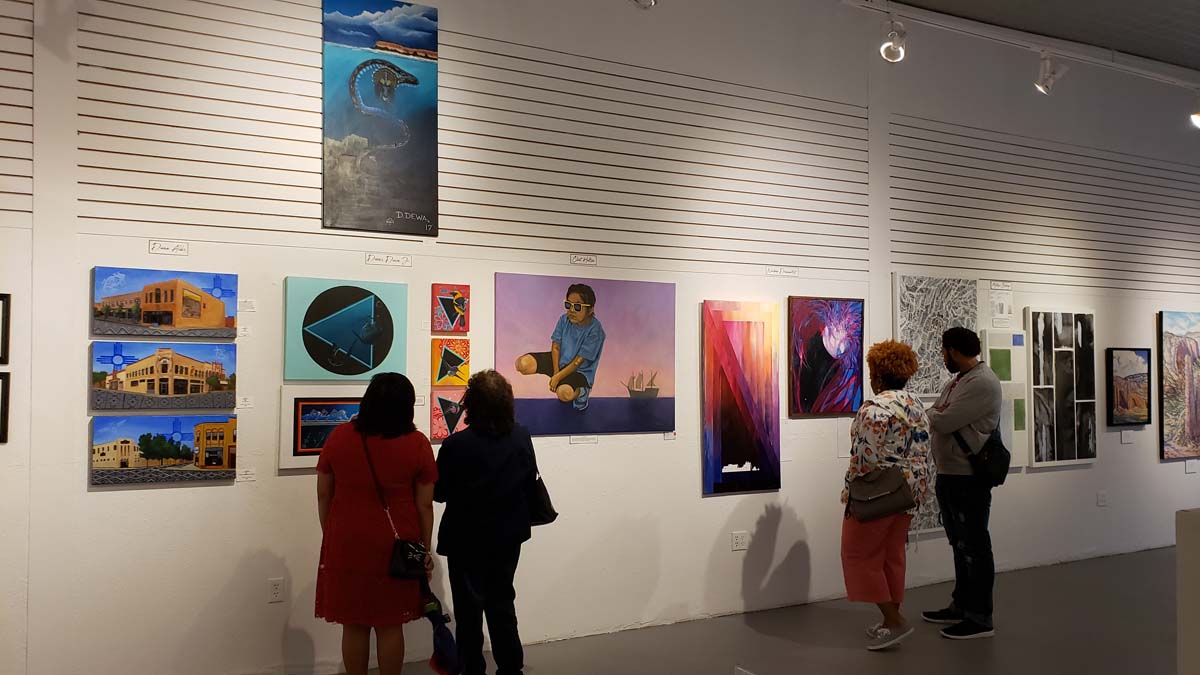
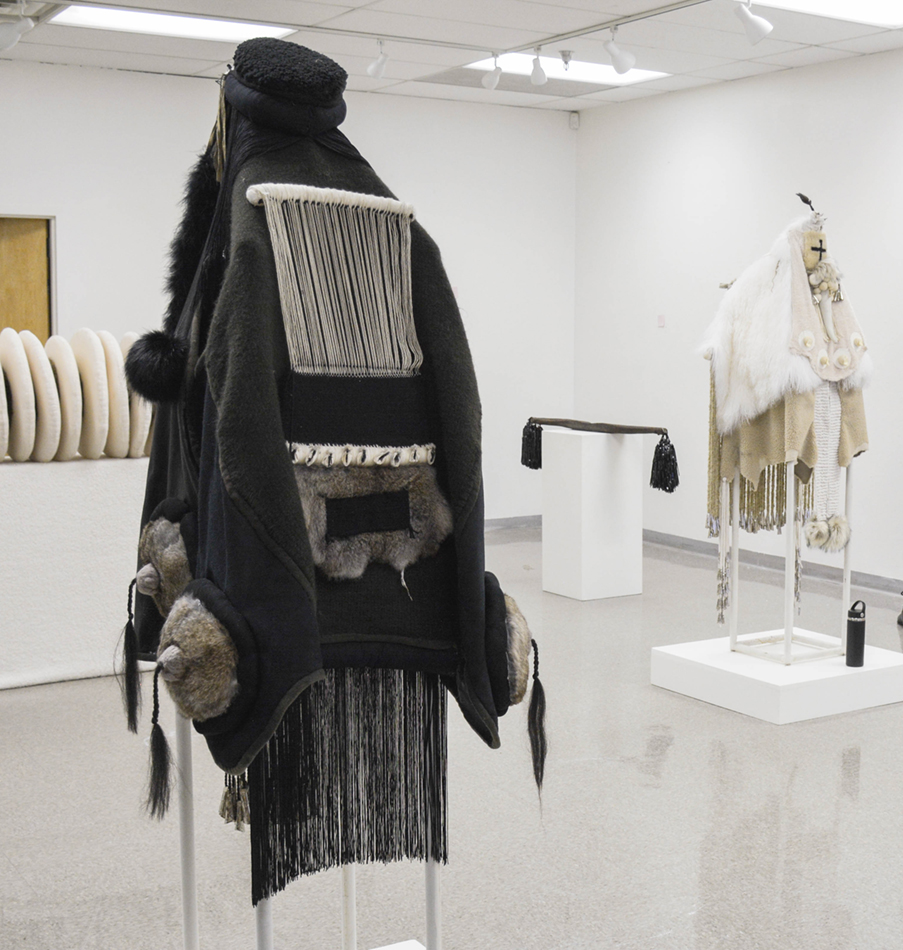
This community-facing arts organization is a crossroads for contemporary creative practice in Gallup and neighboring areas. The nonprofit highlights local and regional artists through rotating exhibitions, artist talks, and workshops. Gallup Arts, and its cornerstone galleries Art123 and Loom Indigenous Art Gallery, are committed to fostering dialogue between artists and audiences, generating space for local voices that might otherwise be overshadowed by the commercialized trading post economy.
Gallup Arts’s initiatives, like the Social Justice Guest Curator Program and Young Artists of McKinley County, increase equity and representation in art and museum spaces, while its recurring events such as ArtsCrawl increase accessibility. The organization’s exhibitions occasionally interrogate the city’s history of appropriation—for example, in Faces of Tradition (2024), guest curator Natalya Nez (Diné) honored Native artists and addressed issues of economic justice in the arts market, placing contemporary art in conversation with the legacies of colonial display and tourism. Gallup Arts is a space where cultural production is both living and self-determined.
Lyndon Tsosie’s House of Stamps
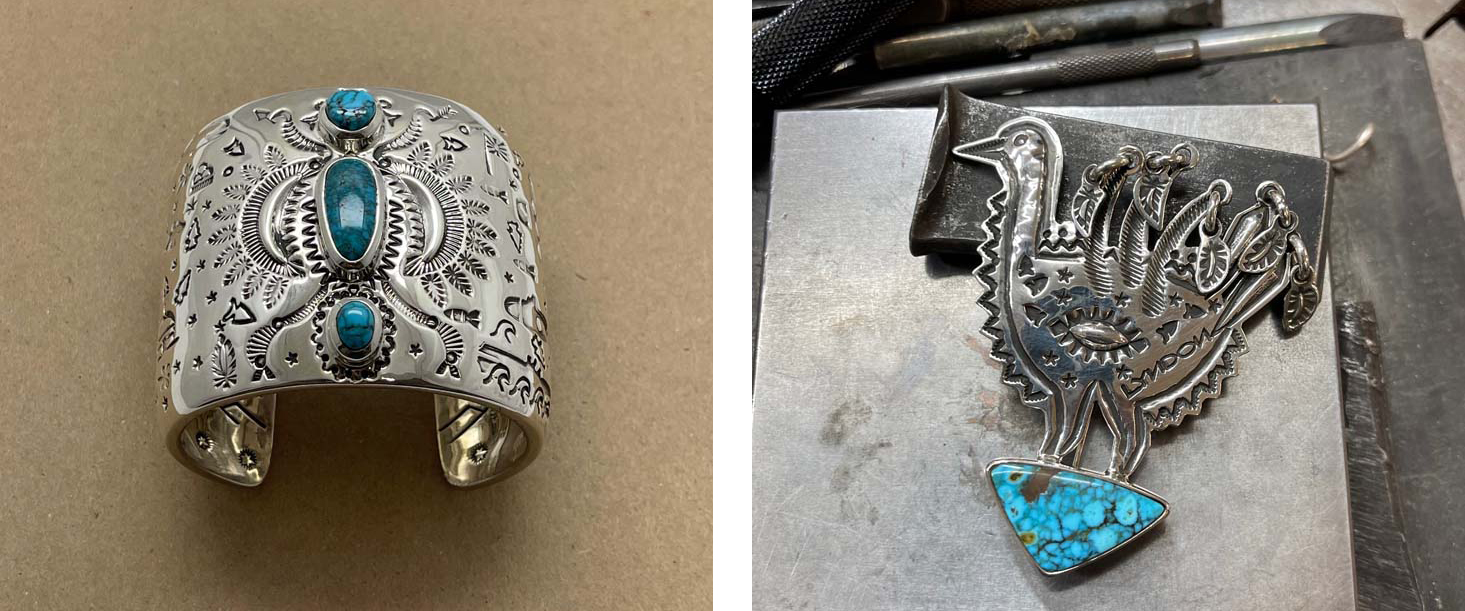
This densely packed workshop feels more like a living archive than a commercial space. It reflects Gallup’s long-standing role as a hub of circulation and exchange, but it also gestures to a Diné history of stamping, which emerged alongside silversmithing in the late 19th century, as both aesthetic practice and assertion of sovereignty.
For generations, Diné silversmiths have stamped intricate designs—evolving first from simple chisels into handheld steel stamps—onto silver: conchos, bracelets, pendants, and more. At House of Stamps, you can find Lyndon Tsosie (Diné) continuing this collective legacy. Stamps are produced and sold here, but Tsosie also extends his practice into mentorship, creating educational opportunities through the Lyndon Foundation to sustain Navajo stamping across multiple generations.
“It’s one of the forefronts of American Indian art,” Tsosie explains about Gallup. “This is where the world comes to buy jewelry. This trade has been happening for 150 years.”
Mural network in downtown Gallup
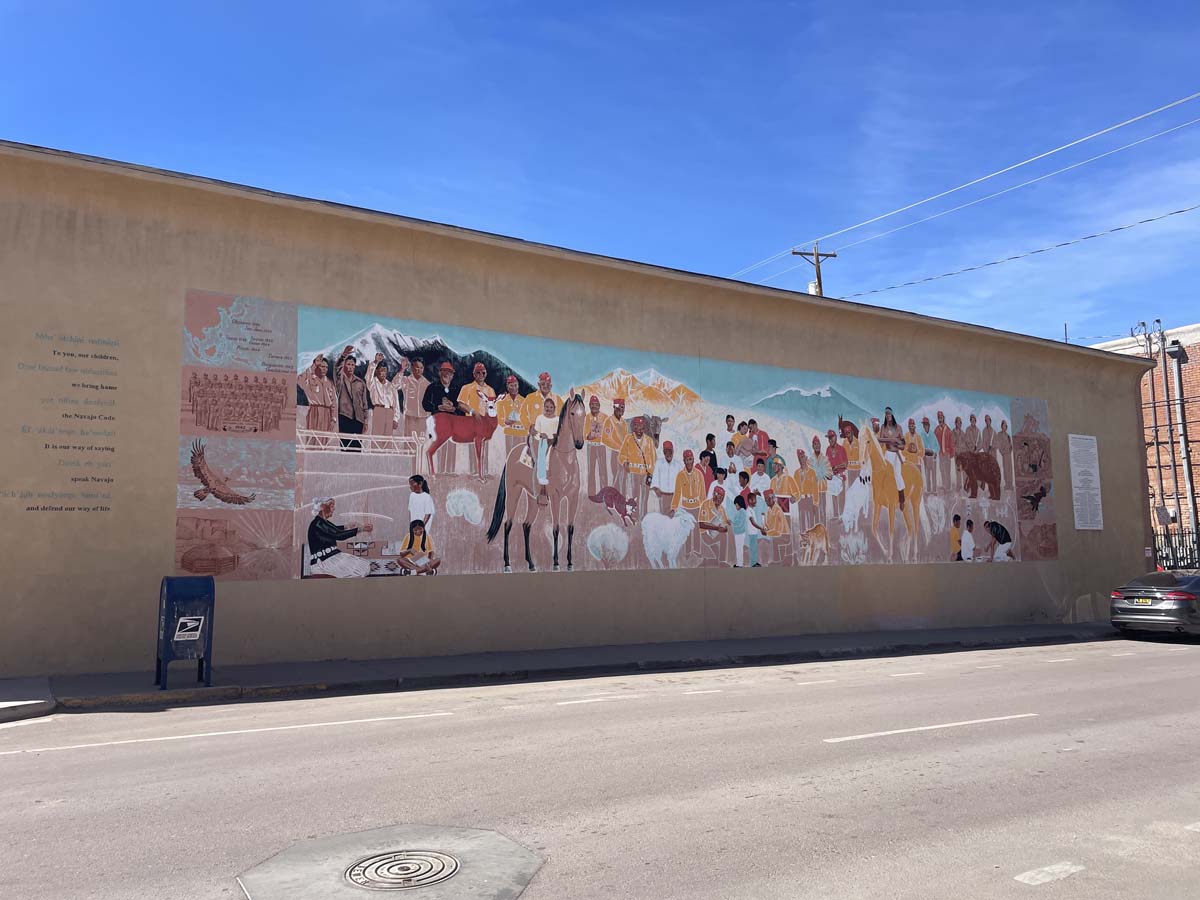
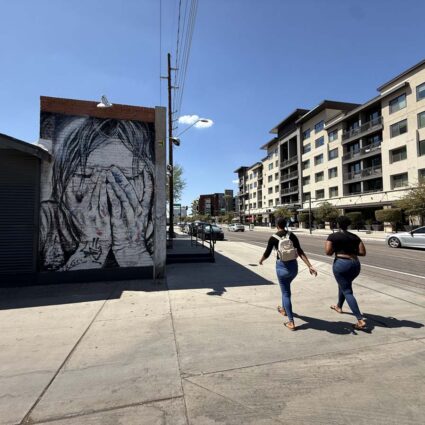
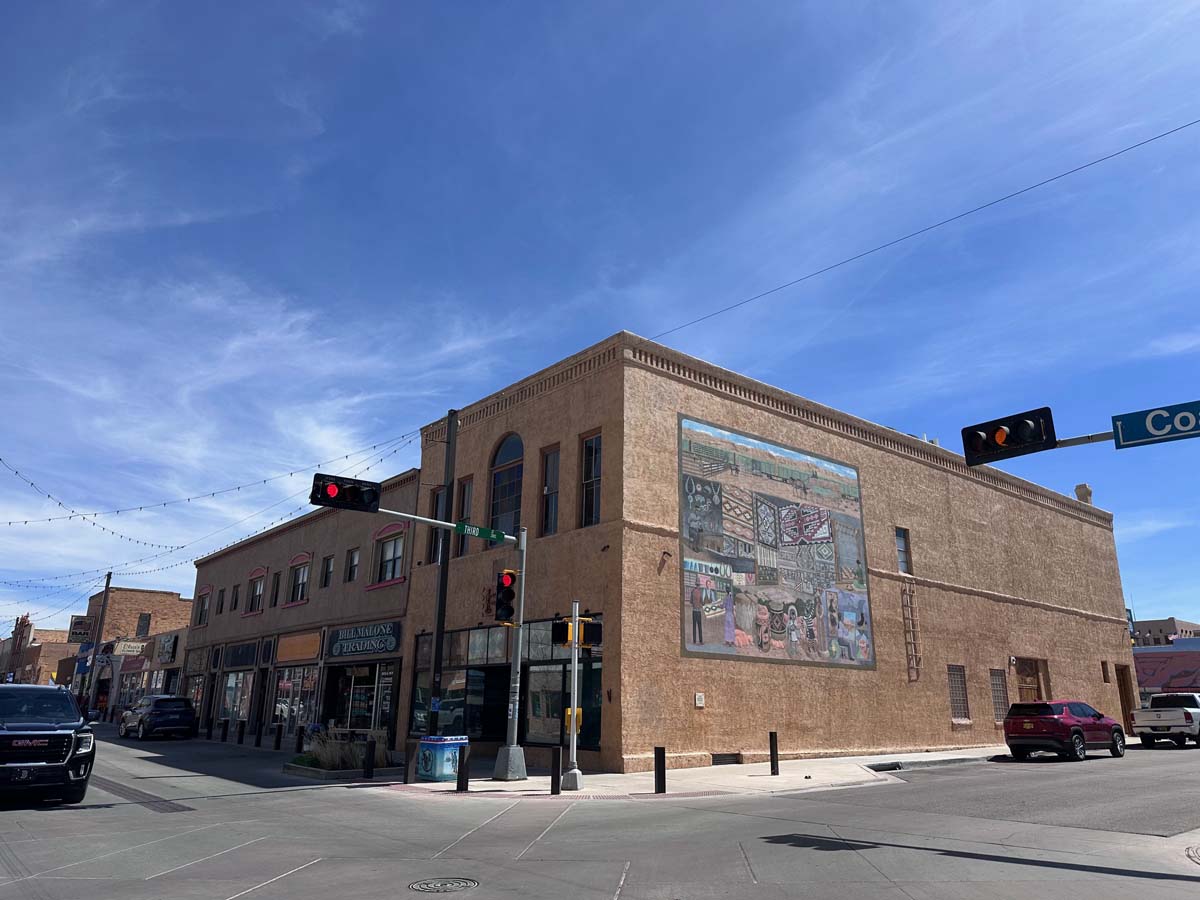
Gallup’s robust mural network transforms the city into a vibrant patchwork of stories. Walking through the downtown, blank stretches of walls are interrupted by colorful narratives that depict local histories or offer celebratory declarations. The artworks function less as isolated pieces and more like a thoughtfully curated, citywide conversation. Try out the Downtown Mural Walking Tour, an online experience sponsored by the City of Gallup, to learn about twenty-four of these numerous public artworks.
One of my favorite images is Chester Khan’s (Diné) Native American Trading Mural (2005), which meditates on Gallup’s trading post history dating back to the late 1800s. The soft, glowing colors and boldly rendered forms drew me in, but, in my opinion, the real power is in the story: a visual testament to how Native artists have navigated the trading post system, celebrating community as it perseveres, adapts, and thrives despite external pressures.
Public artwork isn’t just limited to wall space. You can see more of Gallup Arts’s community-based collaborations through public initiatives like Tiny Art Project (2023), featuring miniature installations that repair blemishes in the built environment, and the Downtown Trash Can Painting Project (2016).
Gallup Inter-Tribal Indian Ceremonial
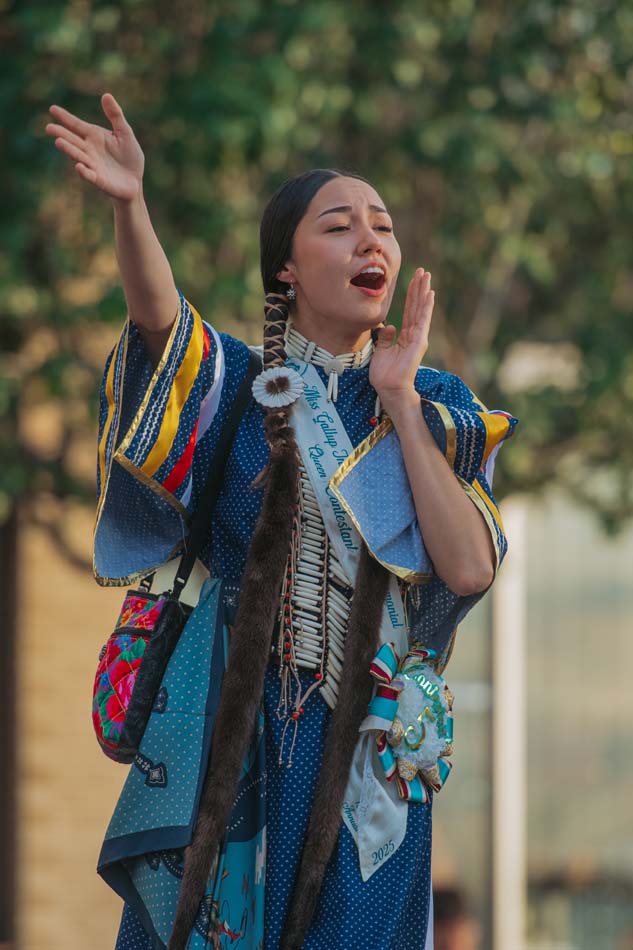
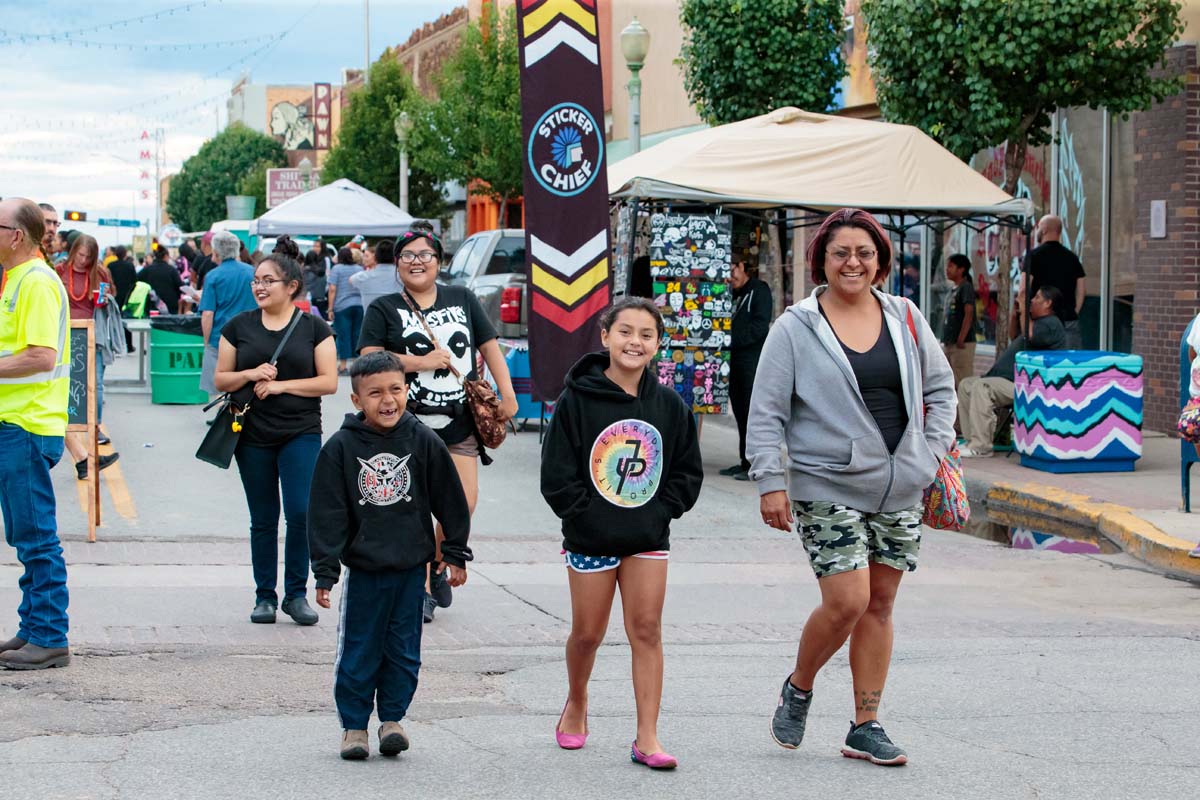
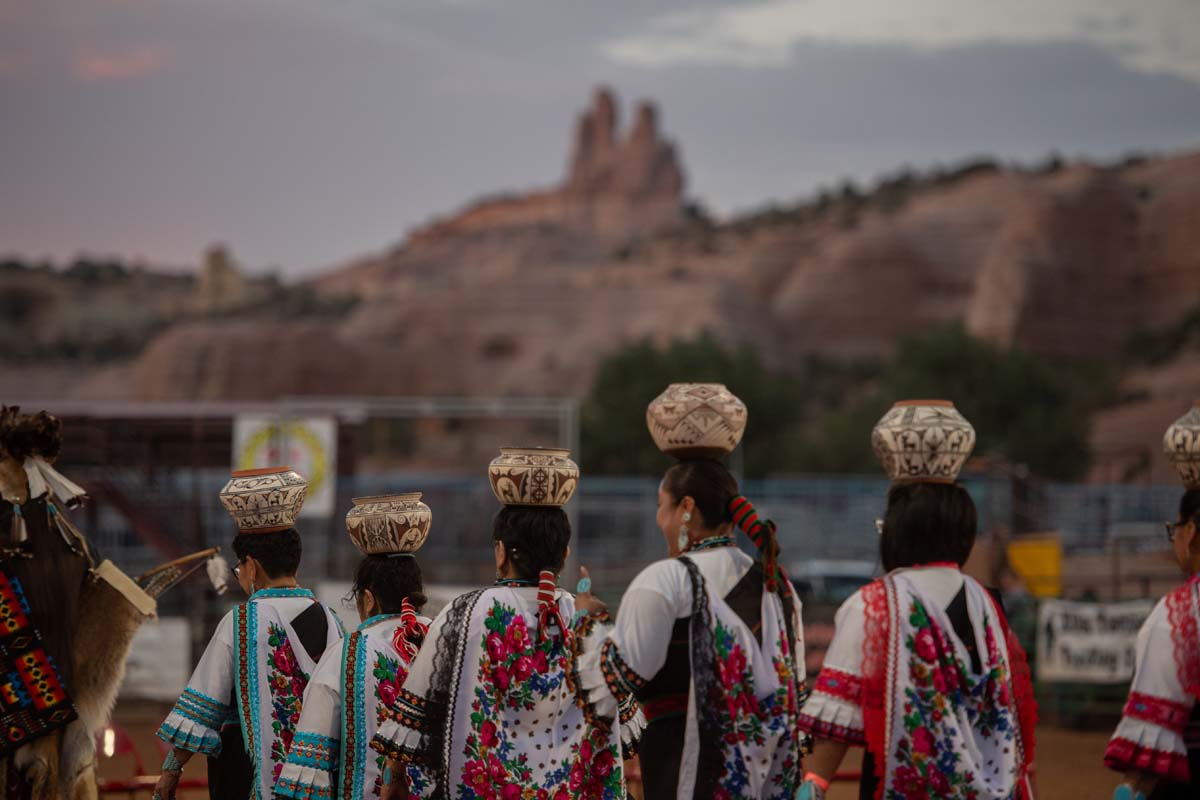
The annual Gallup Inter-Tribal Ceremonial is one of the region’s most significant gatherings, bringing together multiple Native nations through dance, song, parades, and art markets. Beyond its pageantry, the 104-year-old event is a living assertion of culture and continuity. Contemporary practices unfold alongside deeply rooted traditions, emphasizing the ways that Native communities sustain, adapt, and enact cultural identity. The Ceremonial unfolds from late July to early August.
More to explore:
Coal Avenue in downtown Gallup is a nexus for even more arts and cultural sites to visit. Tanner’s Indian Arts is notable for fostering long-standing collaborative relationships with Native artists. Unlike some trading posts that prioritize tourist sales, Tanner’s emphasizes respect and partnership, giving visitors insight into ongoing artistic traditions.
A few blocks east, the nonprofit Zuni Artist Resource Team operates a dynamic center for Zuni makers to display and sell their work. In addition to providing brick-and-mortar and online marketplaces, ZART offers professional development resources to Zuni artists and is in the early stages of establishing a dedicated museum space, the Museum of Zuni Art.
Just southwest of downtown is the UNM-Gallup campus, home to the Ingham-Chapman Gallery. Rotating exhibitions feature student and faculty work in addition to regional artists, and programming encourages reflection and dialogue. The campus also recently debuted the Legacy Gallery, dedicated to highlighting Black histories in New Mexico through archival photographs.
Stay + Rest
El Rancho Hotel
This historic relic harkens back to early-20th-century Hollywood’s obsession with “cowboy and Indian” films. Famous for hosting movie stars like John Wayne, Katharine Hepburn, and Ronald Reagan while they filmed in the area, it now offers a curious mix of old Hollywood glamour and kitschy, rustic Southwest charm—complete with taxidermy, vintage memorabilia, and a rumored speakeasy.
Sustenance
Gallup Coffee Company
A bright, airy coffee shop featuring local roasts, conveniently located in the heart of downtown. Established in 2015 and positioned just a few steps from Gallup Arts and Loom Indigenous Art Gallery, it’s an ideal stop between exhibitions.
Nochi Bakery + Cha’ahh Boba
These businesses share a building, making it easy to pair a fresh pastry with a refreshing milk tea or boba. Nochi Bakery specializes in traditional Filipino desserts and breads, while Cha’ahh Boba offers beverages with inventive flavor twists.
Weaving in Beauty
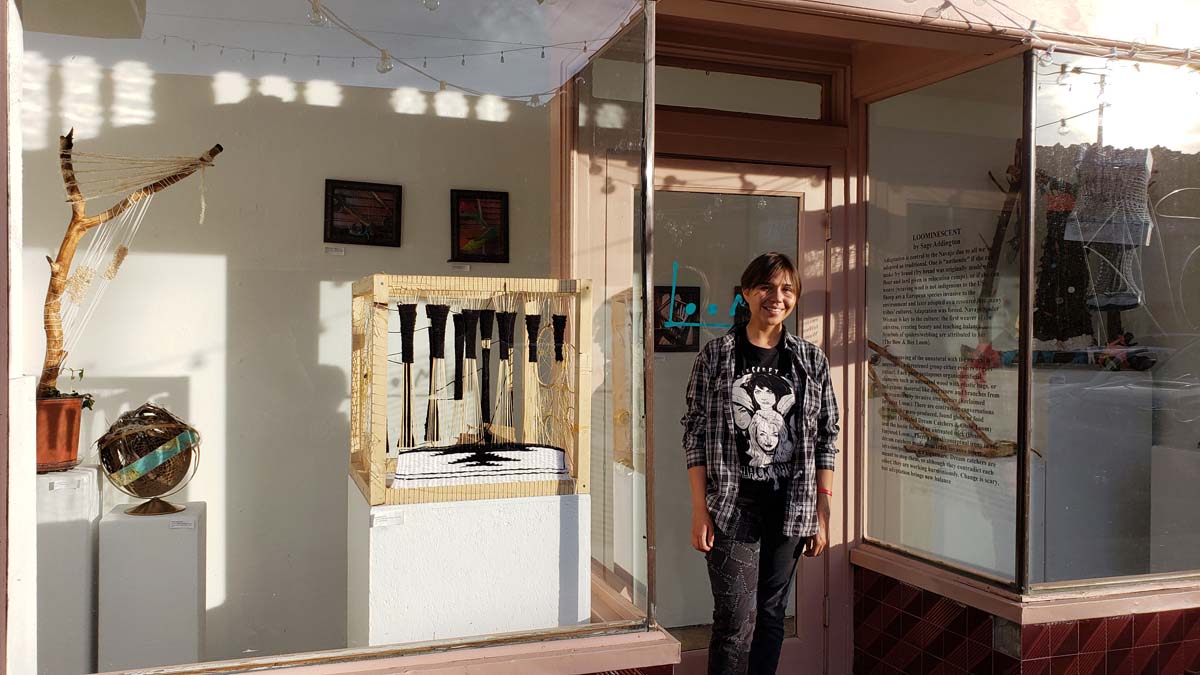
This vibrant, non-Native-owned storefront platforms Indigenous weavers and functions as a community resource through workshops and supplies.
Outdoors
Red Rock Park
A county park that offers easy trails and panoramic views of sandstone formations and the high-desert landscape. Spanning over 600 acres just east of Gallup, the park is defined by dramatic red cliffs formed 280 million years ago, with trail systems that lead to vistas of Church Rock and Pyramid Rock. The park offers a good mix of casual and strenuous hikes, and its museum and campground provide opportunities for sustained engagement beyond the trails.
Unexplained Phenomena
Just off the Route 66 corridor lies the old north-south U.S. Route 666 offshoot, nicknamed the “Devil’s Highway.” Its name emerged from its notoriety as a long, lonely stretch from Gallup, north through Shiprock, to Monticello, Utah. Travelers have told stories of ghost trucks, phantom lights, and shapeshifting skinwalkers. In 2003, then-governor of New Mexico Bill Richardson renamed the highway U.S. Route 491, but the haunting and unnerving myths persist.