Tierras Reimaginadas: Migration at ASU Art Museum centers immigrant voices and reimagines migration across species, cultures, geographies, and time.
Tierras Reimaginadas: Migration
August 23, 2025–August 2, 2026
ASU Art Museum
“To migrate means to dream of the future.
To dream the impossible,
To start anew —
A curiosity to explore.”
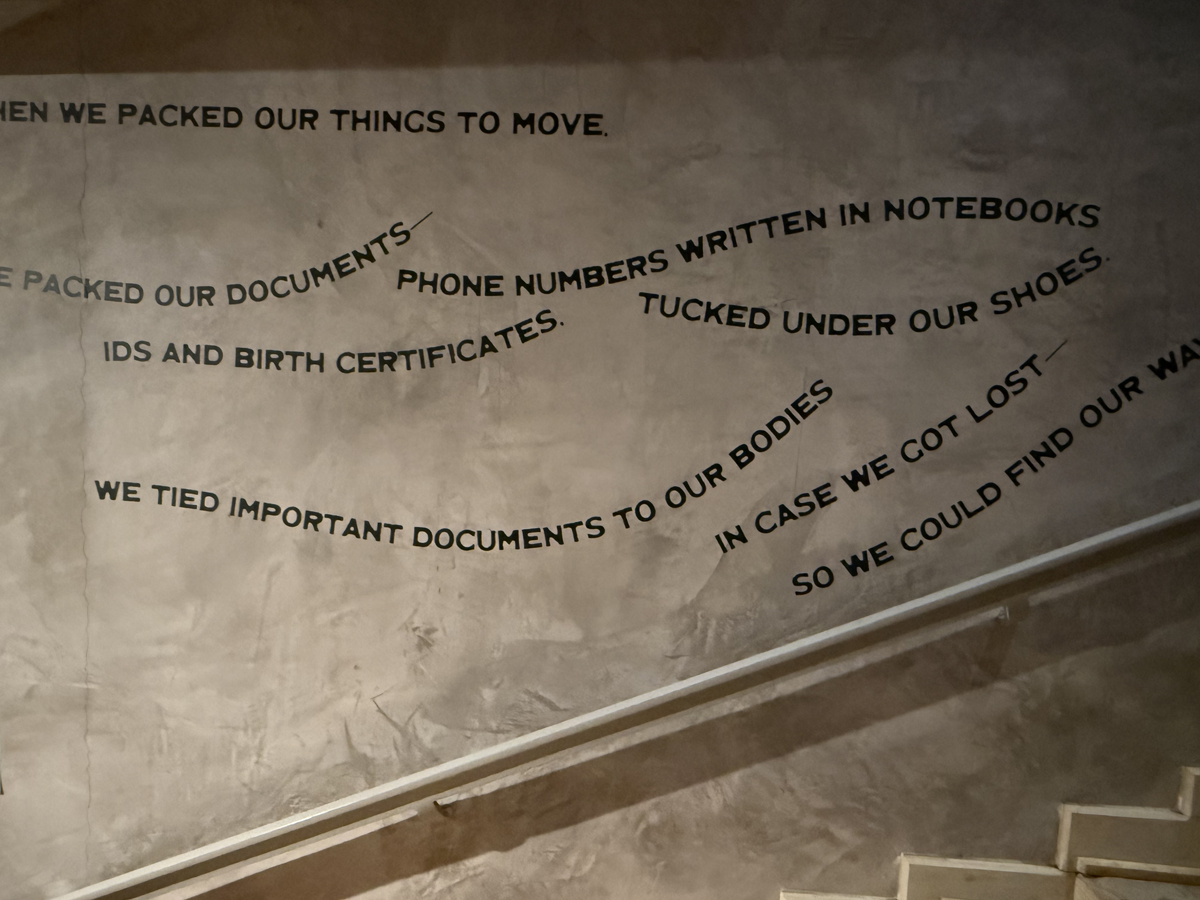
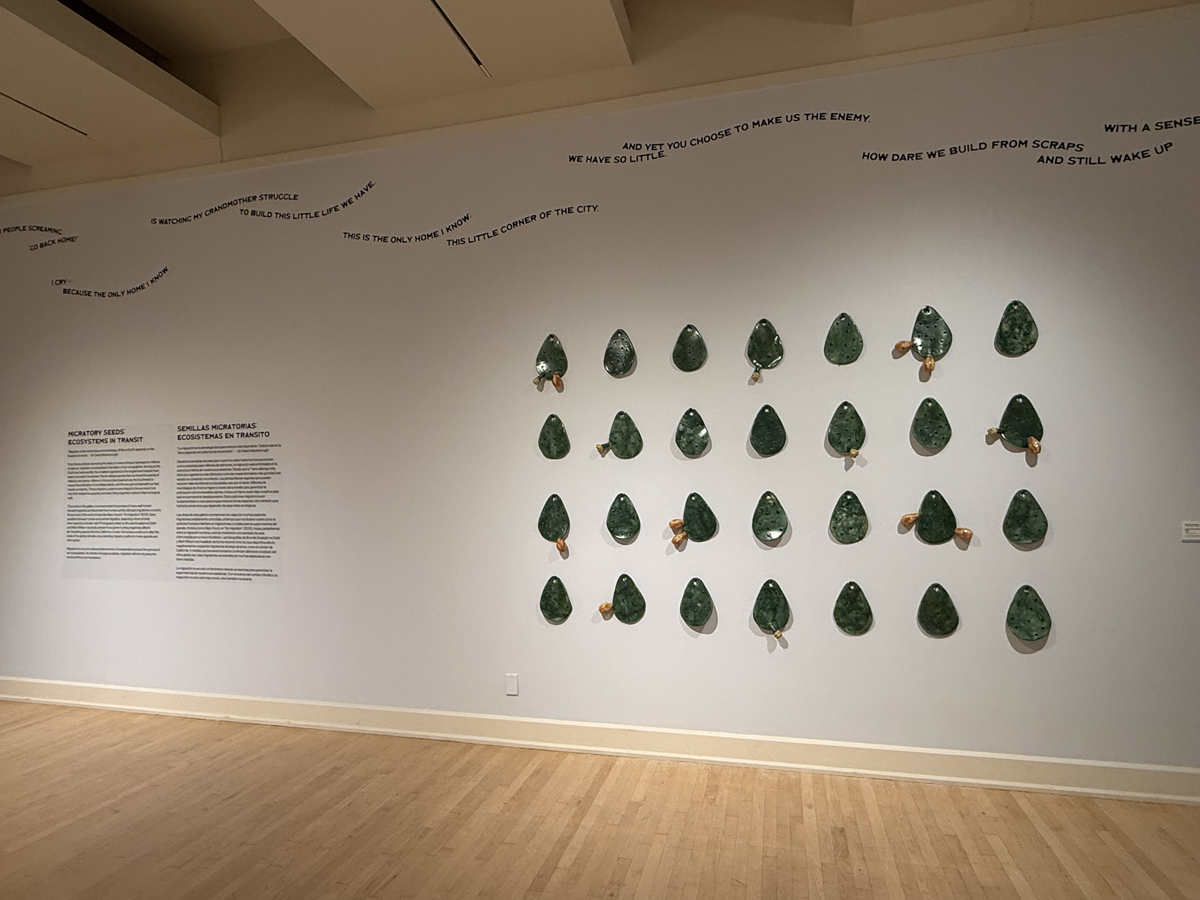
Words penned by poet Yosimar Reyes formed waves of text inside ASU Art Museum in August 2025, where the first iteration of Tierras Reimaginadas: Migration opened just as a cascade of anti-immigrant policies were sweeping the nation.
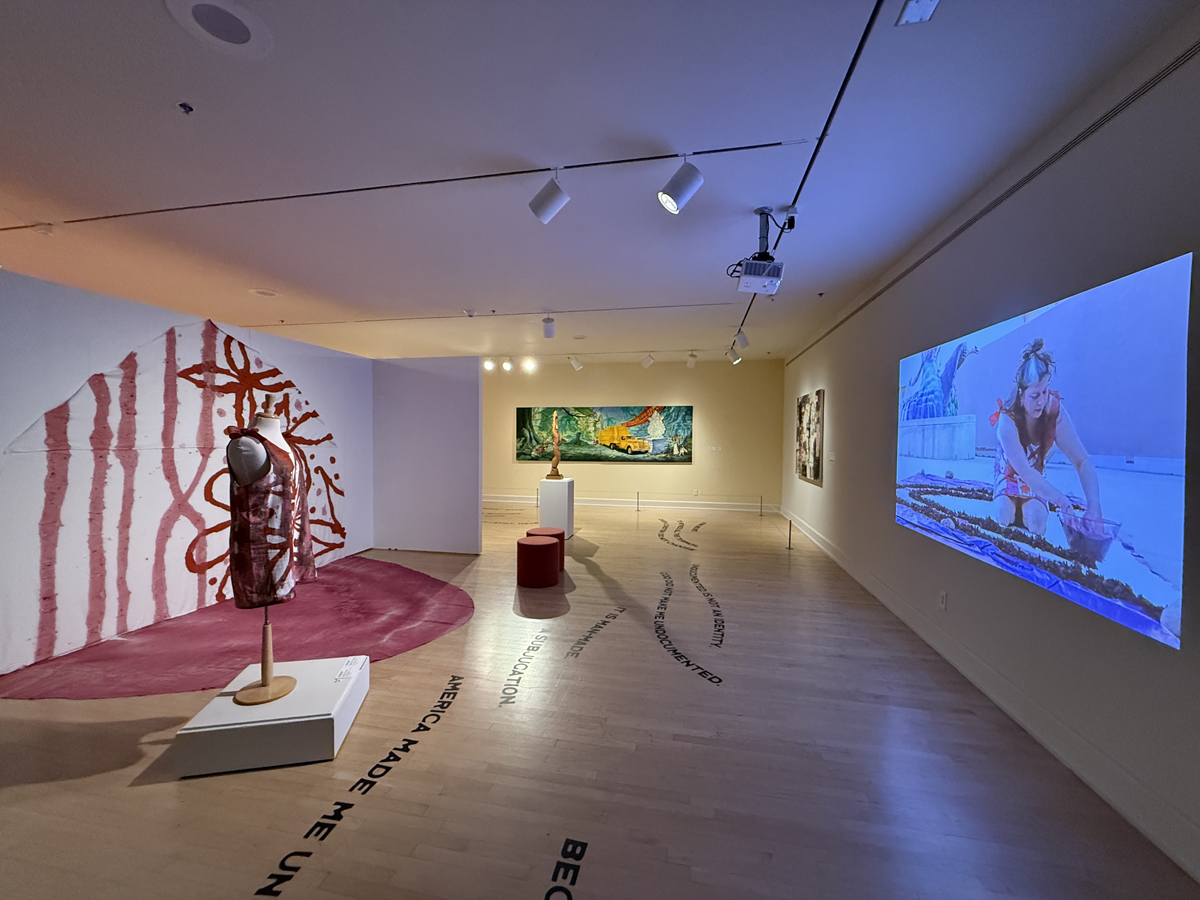
Entering the first gallery space, viewers heard a soundscape of Reyes reading from If I Am Ever Detained, Read This, a series of eight poems written during an artist residency with the museum.
The exhibition has unfolded through two rotations—the last of which is currently on view—both rooted in the idea that “movement across borders, ecosystems, and cultures is necessary for survival and resilience.”
Tierras Reimaginadas: Migration poses a poignant query: “What if we positioned movement not as a crisis, but as the natural, historical, and essential rhythm of life?”
The show’s curators and organizers gathered works by dozens of artists active within the last century to counter the reductive narratives of divisive ideologies. Most recently, of course, we’ve seen the rise of far-right, isolationist viewpoints within mainstream politics.
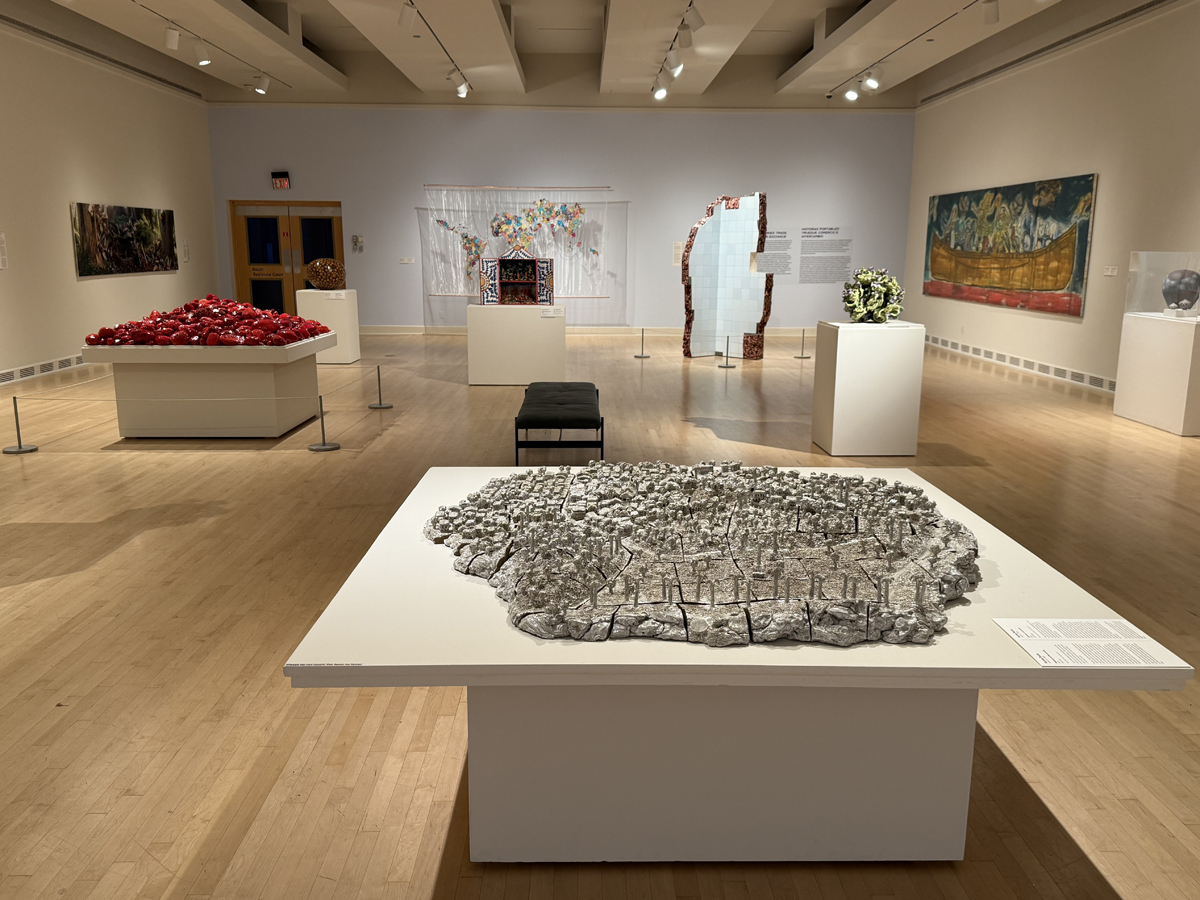
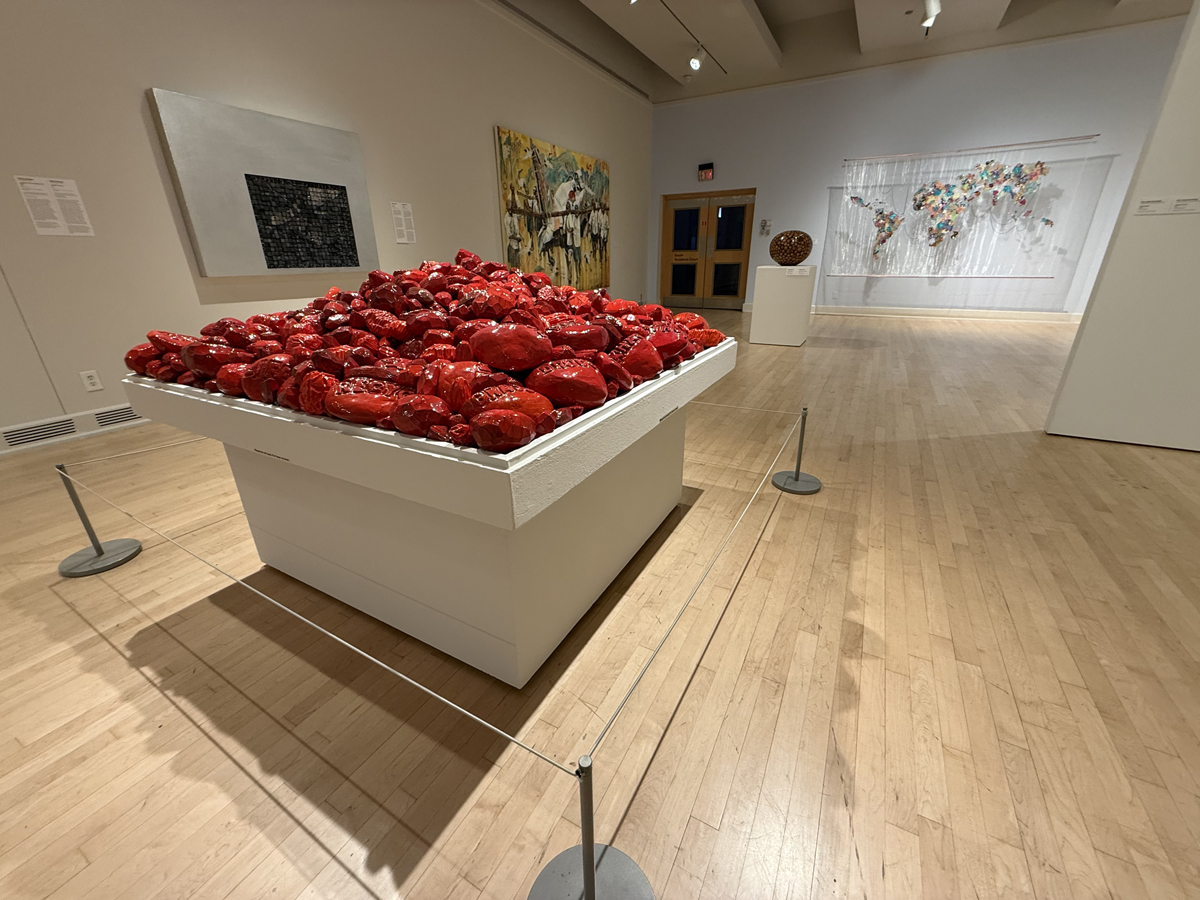
The exhibition presents an expansive vision of migration across species, geographies, cultures, and time. It achieves this in part by grouping works according to five themes that highlight the diversity of migration experiences and impacts including the intersection between voluntary and involuntary movement; trade, commerce, and exchange; ecosystems in transit; ritual, kinship, and chosen families; and the formation of hybrid identities.
Initially, the exhibition meets viewers where most modern-day political rhetoric about migration has been trained: the Southwest borderlands.
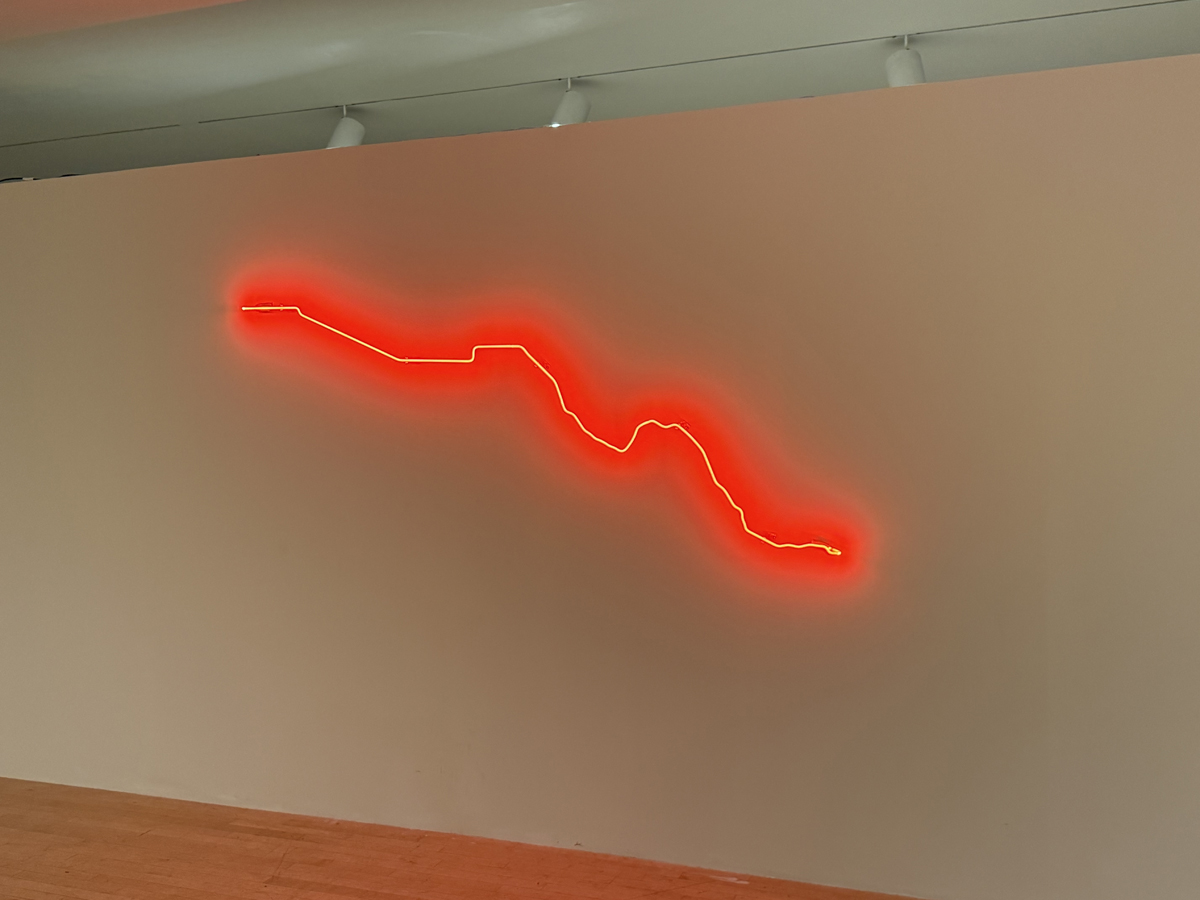
Julio César Morales’s Broken Line (2019), a fire-colored neon line representing the current border between Mexico and the U.S., evokes the region’s complicated history while questioning demarcations that alter the flow of longtime migration patterns.
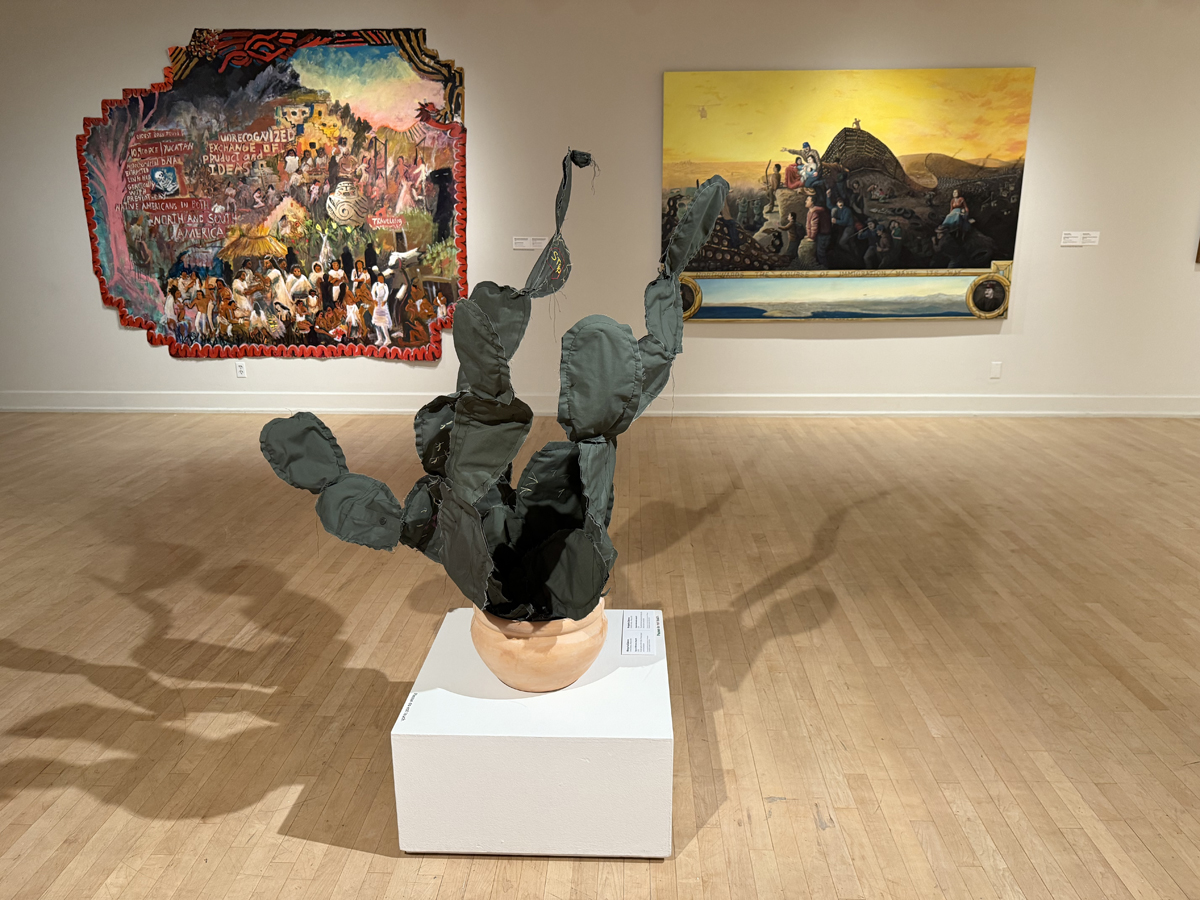
Nearby we see Margarita Cabrera’s Space in Between, Nopal #3, a cactus sculpture created with immigrants, whose words stitched onto olive green fabric from border patrol uniforms relay their hopes and dreams.
From there, the exhibition folds in numerous layers of historical context.
Paintings depicting scenes of migration during the 1930s and ‘40s, for example, are positioned near works by Jaune Quick-to-See Smith (Salish member of the Confederated Salish and Kootenai Nation, Montana) and Armenian American Koren Der Harootian, artists who foreground the realities of displacement, colonialism, and genocide.
Similarly, the curators incorporate art historical perspectives, highlighting the long tradition of artists positioning migration in relation to land, body, culture, and identity.
Video from late Cuban American artist Ana Mendieta’s Gunpowder Works series recalls her iconic “earth-body” works, while four ceramic Pingos by Los Angeles–based artist Frank Romero call to mind his pioneering work in the Chicano art and civil rights movements.
At the same time, the exhibition captures the urgency of the present moment.
An installation by Chicago-based Victoria Martinez, for example, pays tribute to Jocelyn Rojo Carranza, an 11-year-old girl who died by suicide in Texas in 2025 after being bullied about her family’s immigration status.
During the show’s first rotation, Martinez’s installation included a video that ends with a written statement by the artist noting that the work serves as “a portal for collective awareness, calling attention to the treatment of Mexican, Mexican American, immigrant, and migrant communities, particularly youth like Jocelyn, within today’s political climate.”
Numerous prints created through the international Justseeds Artists’ Cooperative in 2012, the year Arizona passed the controversial “show me your papers” law that’s since been largely gutted, feel newly relevant amid current anti-immigrant policies and actions the federal administration is implementing across the U.S.
In the Phoenix metropolitan area, for example, protestors have decried the sale of a warehouse in Surprise that could be used to house thousands of detainees, and armed ICE agents have been positioned at Phoenix Sky Harbor International Airport.
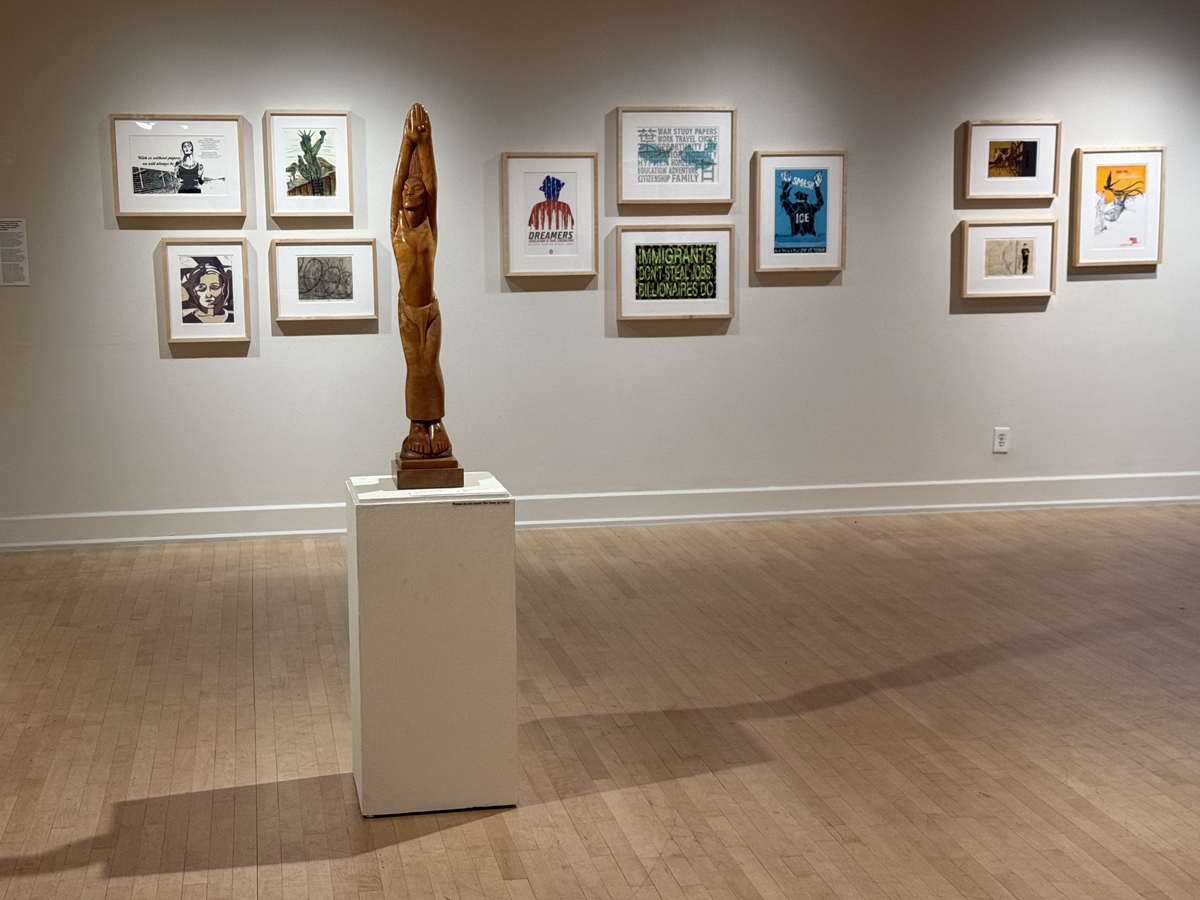
One of the exhibition’s greatest strengths is the way it privileges the voices of immigrants and Native Americans, many based in the Southwest, whose own personal, familial, and cultural histories are reflected in their creative practice.
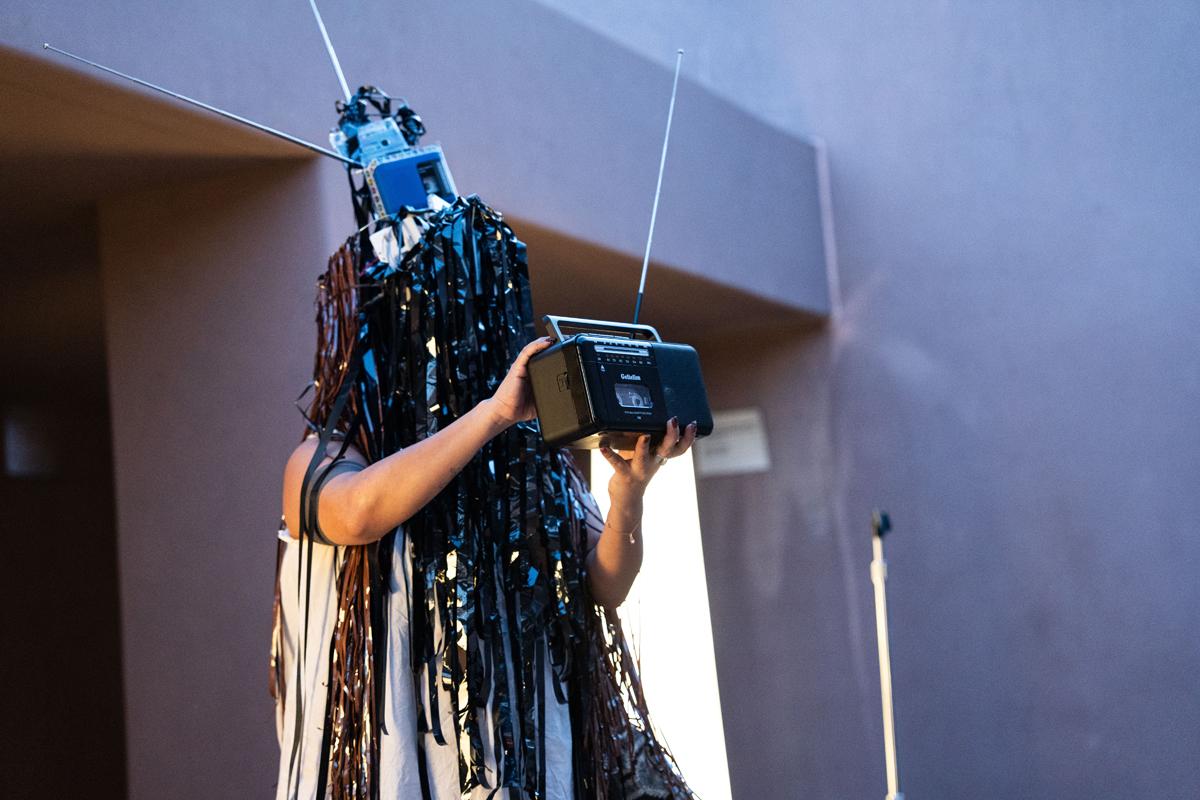
When the museum shifted to the second rotation in February 2026, it presented a performance by Jennif(f)er Tamayo (who uses they/them pronouns), one of three artists in residence for the show (along with Reyes and Martinez). The Columbia-born, California-based poet brought their own voice, and many others, to mygrunt is a total world, a prelude. In the show’s current manifestation, that’s the soundscape visitors hear when they enter the exhibition.
The show also excels at critiquing anthropocentric views of migration through works that center other animals, plants, and minerals, albeit sometimes in the context of human impacts.
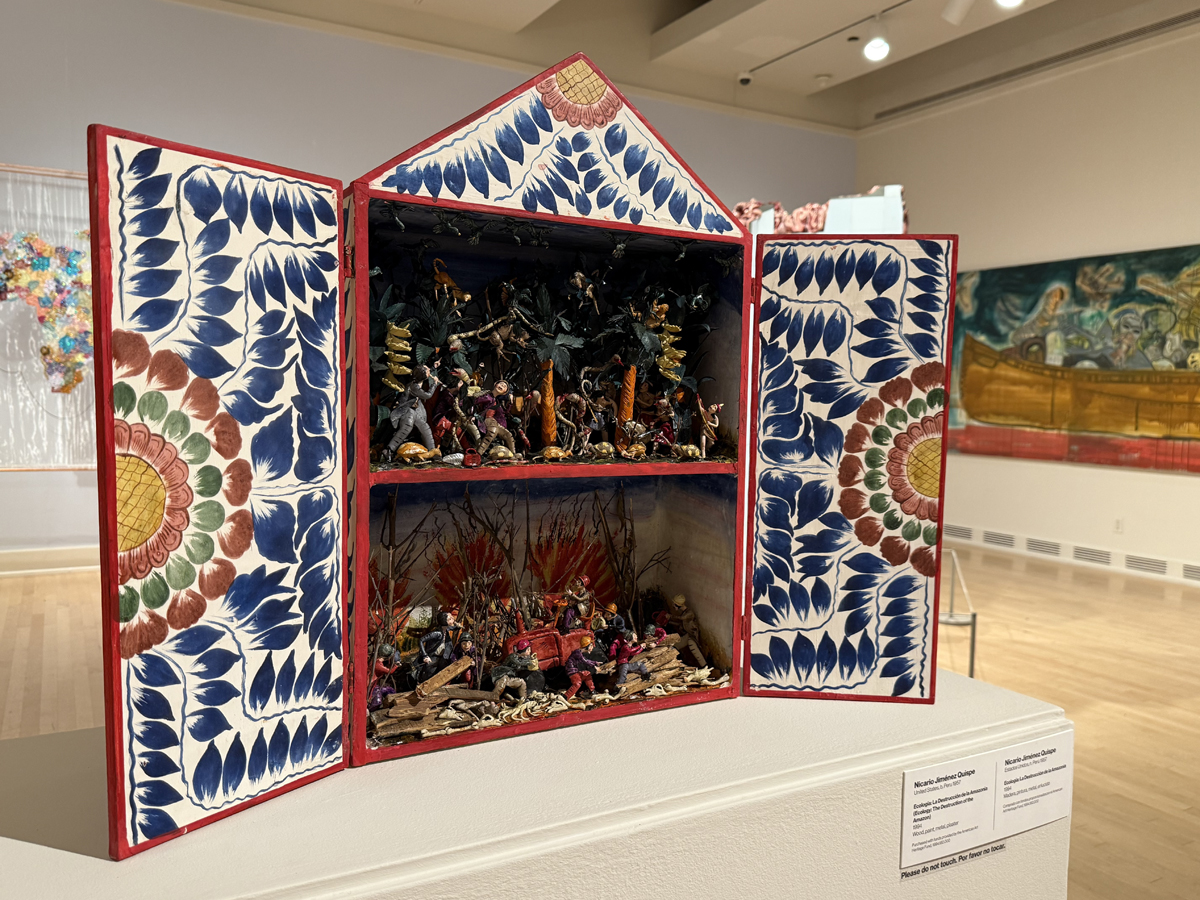
A retablo by Peruvian-born Nicario Jiménez Quispe depicts the destruction of the Amazon, for example, and a mixed-media work by Cannupa Hanska Luger (Mandan/Hidatsa/Arikara/Lakota) portrays a solitary buffalo.
Exhibition organizers and curators have elegantly reframed the dialogue by focusing on migration as movement while countering ideologies that assume animals, plants, and people belong within fixed boundaries.
While illuminating the complexities of historical and contemporary migration, the exhibition broadens the boundaries of migration as an idea, prompting us to be more expansive in our own thinking and care for community.
“What sounds do you associate with liberation?” Tamayo asks in their soundscape. “A hiss. A deep throaty sound. […] To the colonial ear, the grunt is broken noise. Feeling. But what if the grunt is a total world? What if the grunt is an opening?”