Chase a Crooked Shadow, a blockbuster group show in Dallas, yanks a cinematic trope from the nostalgic fog into an equally murky present.
Chase a Crooked Shadow: Film Noir as Contemporary Mirror
April 11–July 18, 2026
The Warehouse Dallas
“Film noir was born from a profound rupture in the American psyche,” reads the first line on the first wall panel within The Warehouse Dallas’s latest exhibition, Chase a Crooked Shadow: Film Noir as Contemporary Mirror.
Not quite qualifying as a genre, film noir—which translates to “dark film” in French—is often defined as a cinematic style or mood that was developed in post-World War II America. Using high-contrast visuals and morally ambiguous plot lines, noir’s blend of detectives, dames, and existential dread gave visual and narrative form to widespread feelings of fear, mistrust, and powerlessness that defined the postwar era.
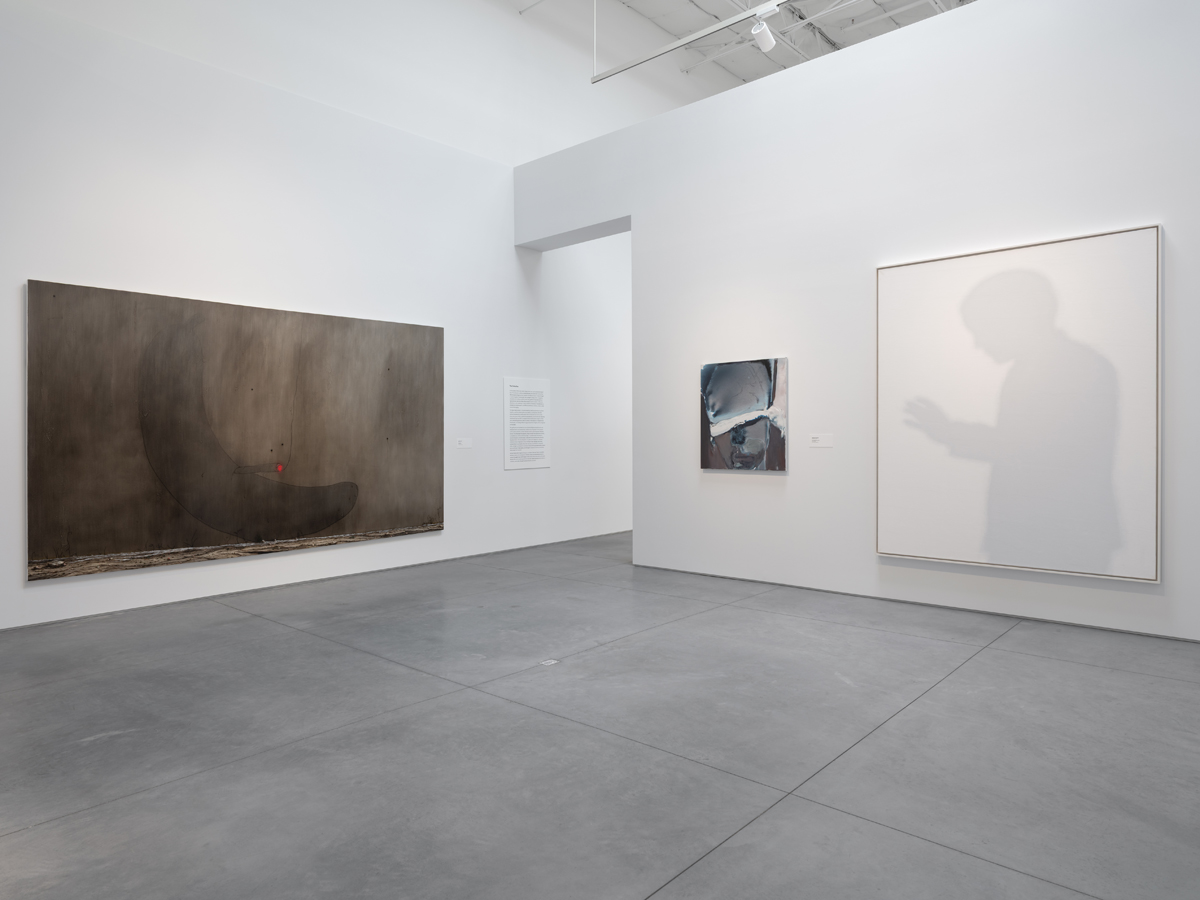
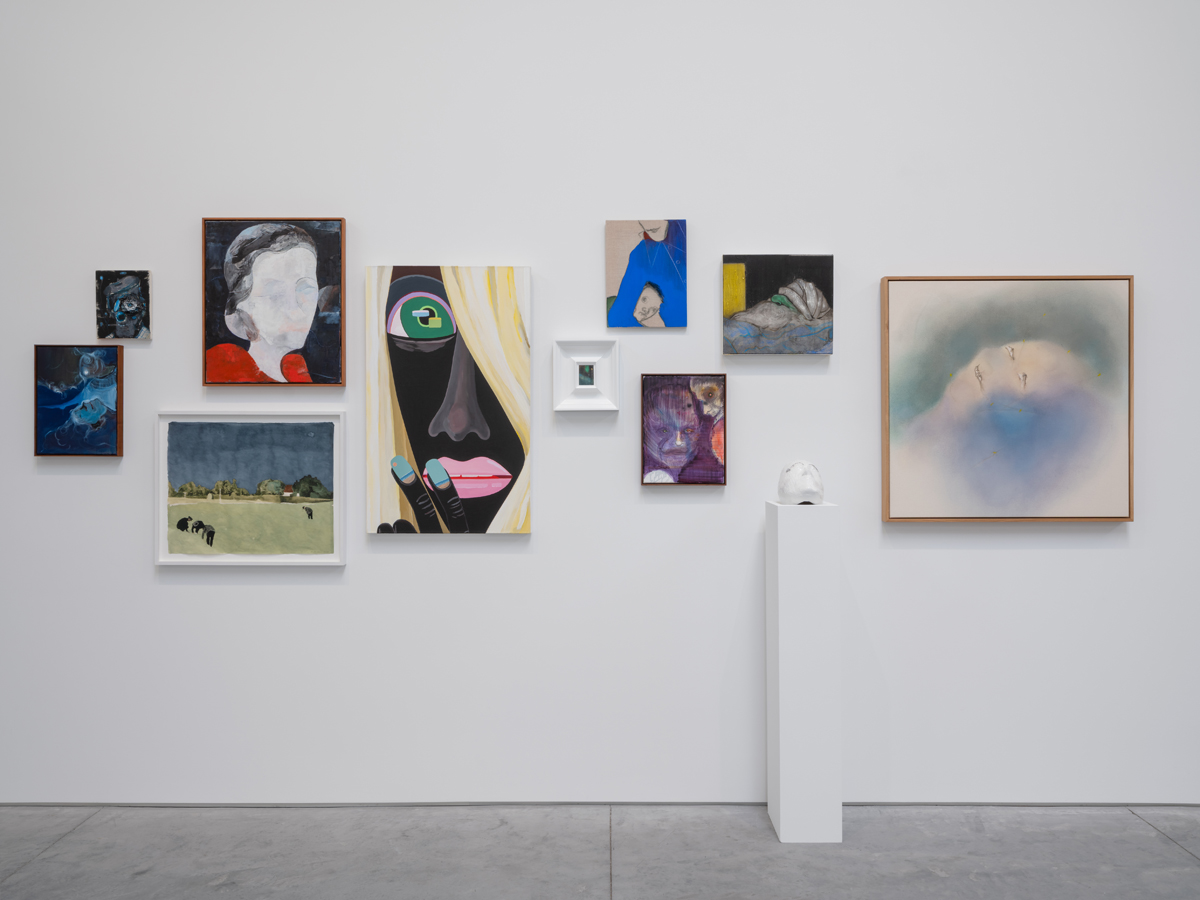
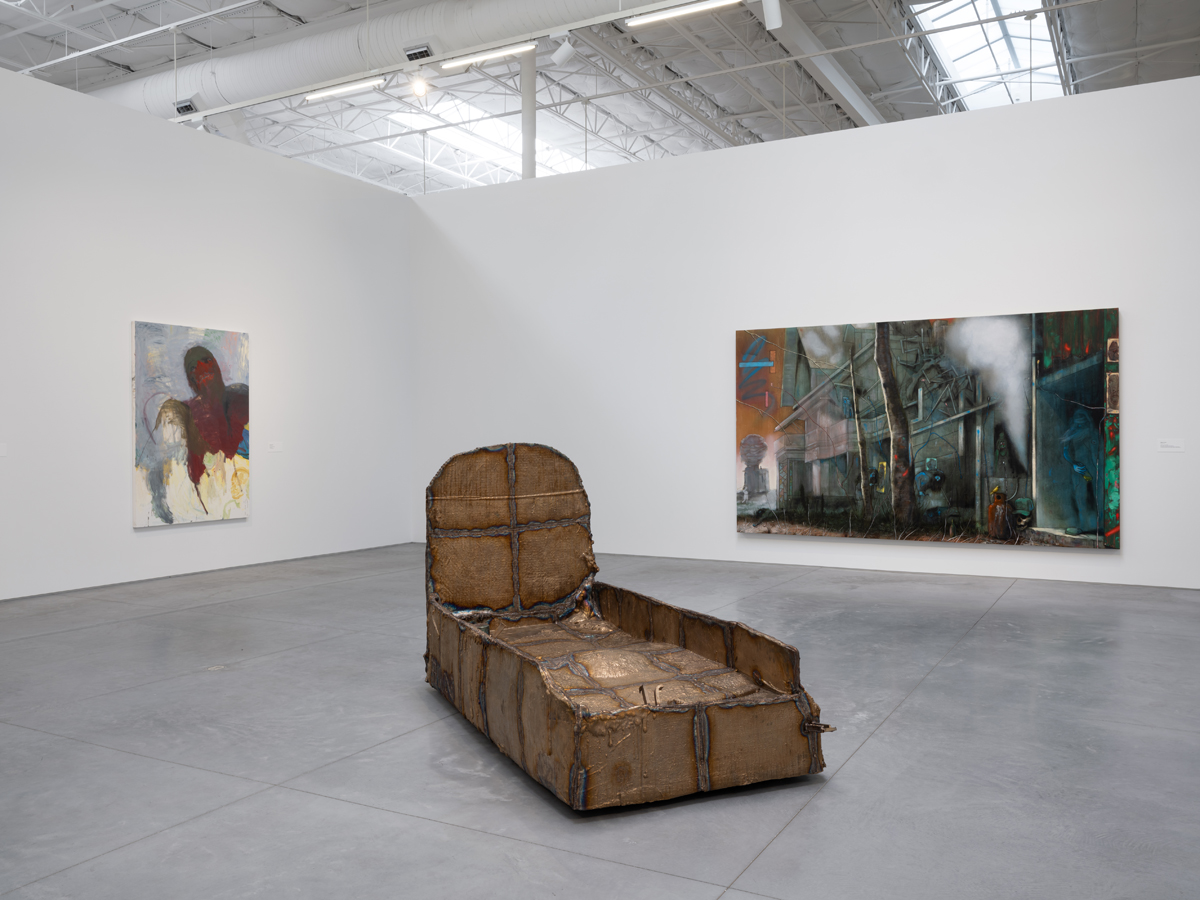
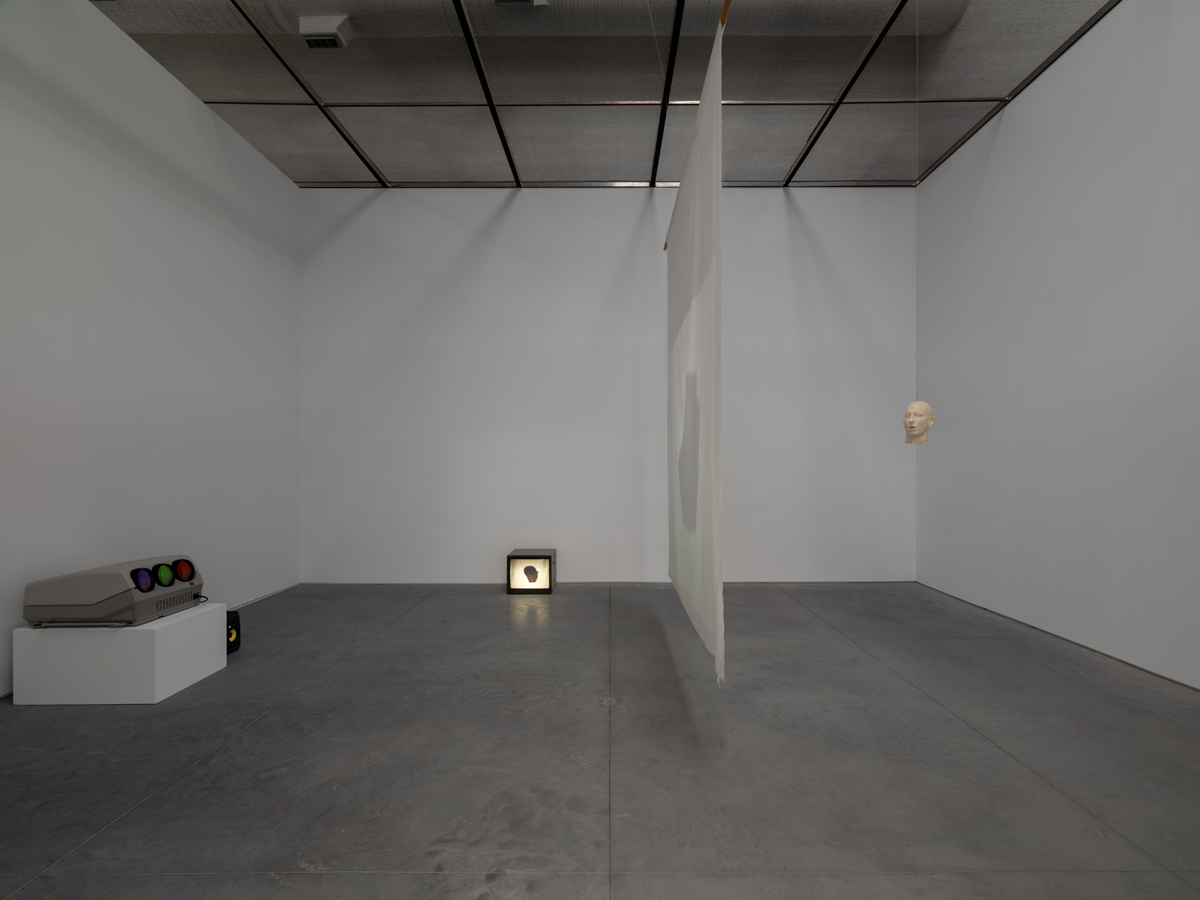
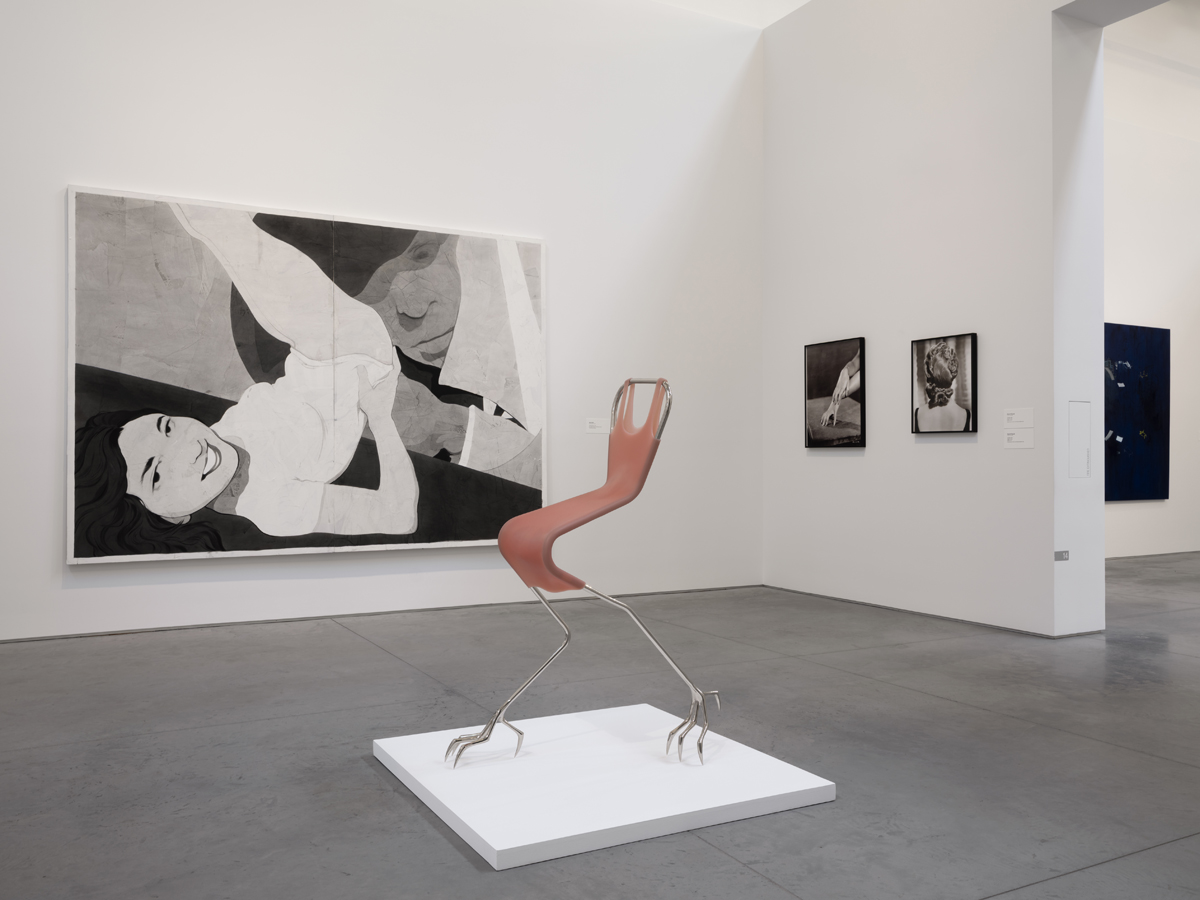
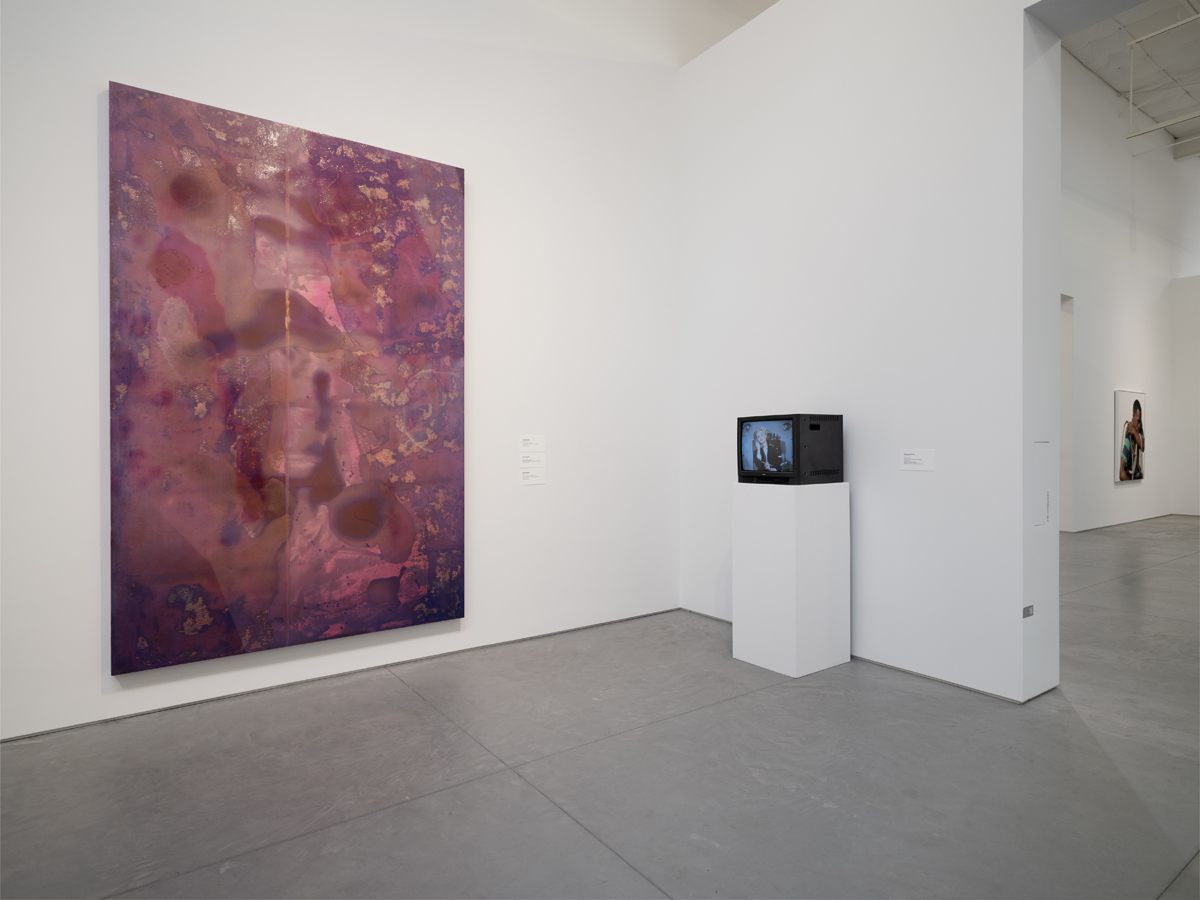
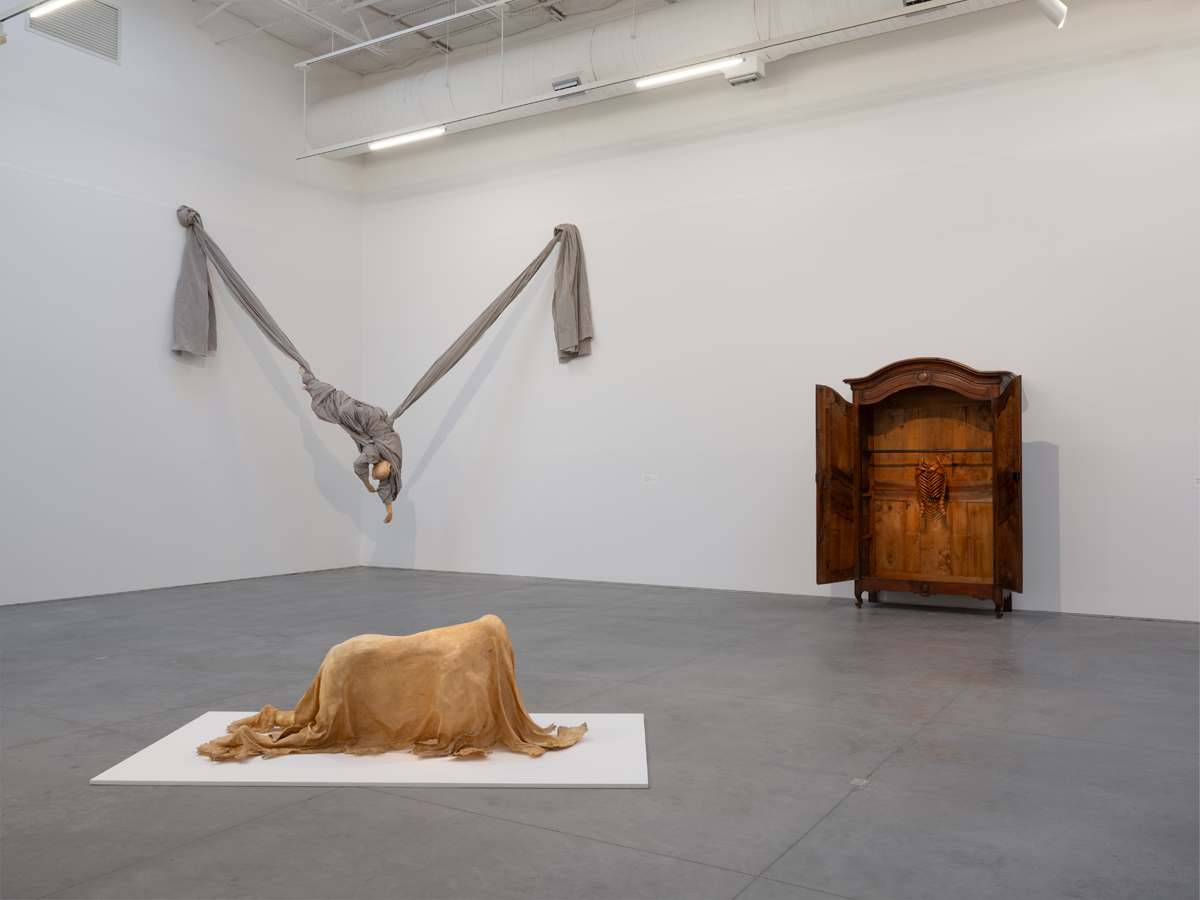
Organized by guest curator Alexandra Terry, head of curatorial affairs and curator of contemporary art at the New Mexico Museum of Art, Chase a Crooked Shadow explores film noir as a visual, psychological, and ethical framework. Featuring over 100 artworks by more than eighty artists (drawn from the nonprofit foundation’s vast collection and other institutions), the exhibition is organized into thematic groupings of various archetypes found within noir, placing them in dialogue with contemporary artworks. The structure of the exhibition situates the societal rupture that birthed film noir not as an isolated incident, but as a continuous wound that persists today.
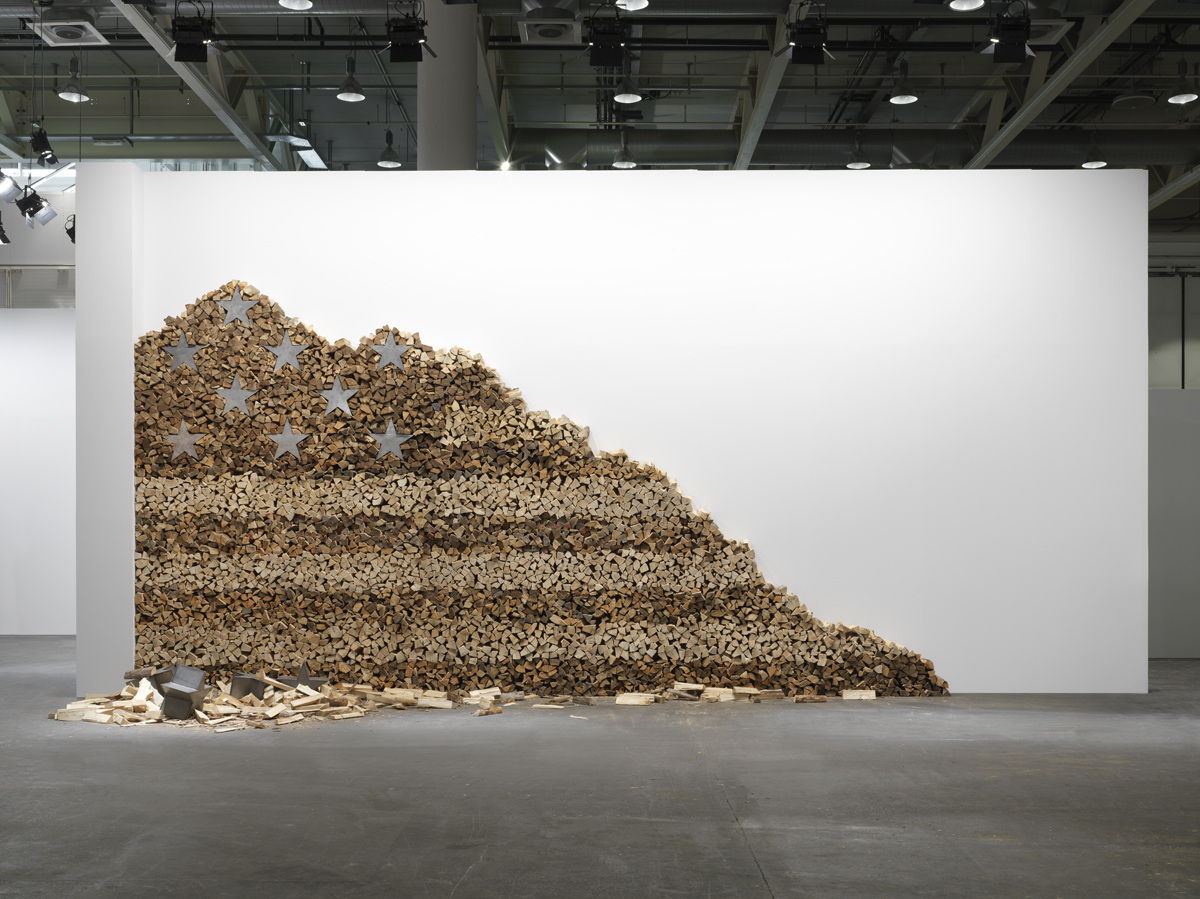
The first gallery I enter sets the tone with the theme “Crisis of the American Dream.” In Danh Vo’s In God We Trust, wooden logs are stacked up against a large wall, depicting the design of the original United States flag. Throughout the run of the exhibition, the sculpture is continually dismantled until the design is unrecognizable, representing the slow decay of national identity and democratic ideals. As suspicion began to seep through the cracks of the once-solid structure of the American national identity, the fantasy of a society governed by stability evaporated.
The inactive yet pervading sense of violence… depicts the ordinary possibility of brutality that exists within the everyday.
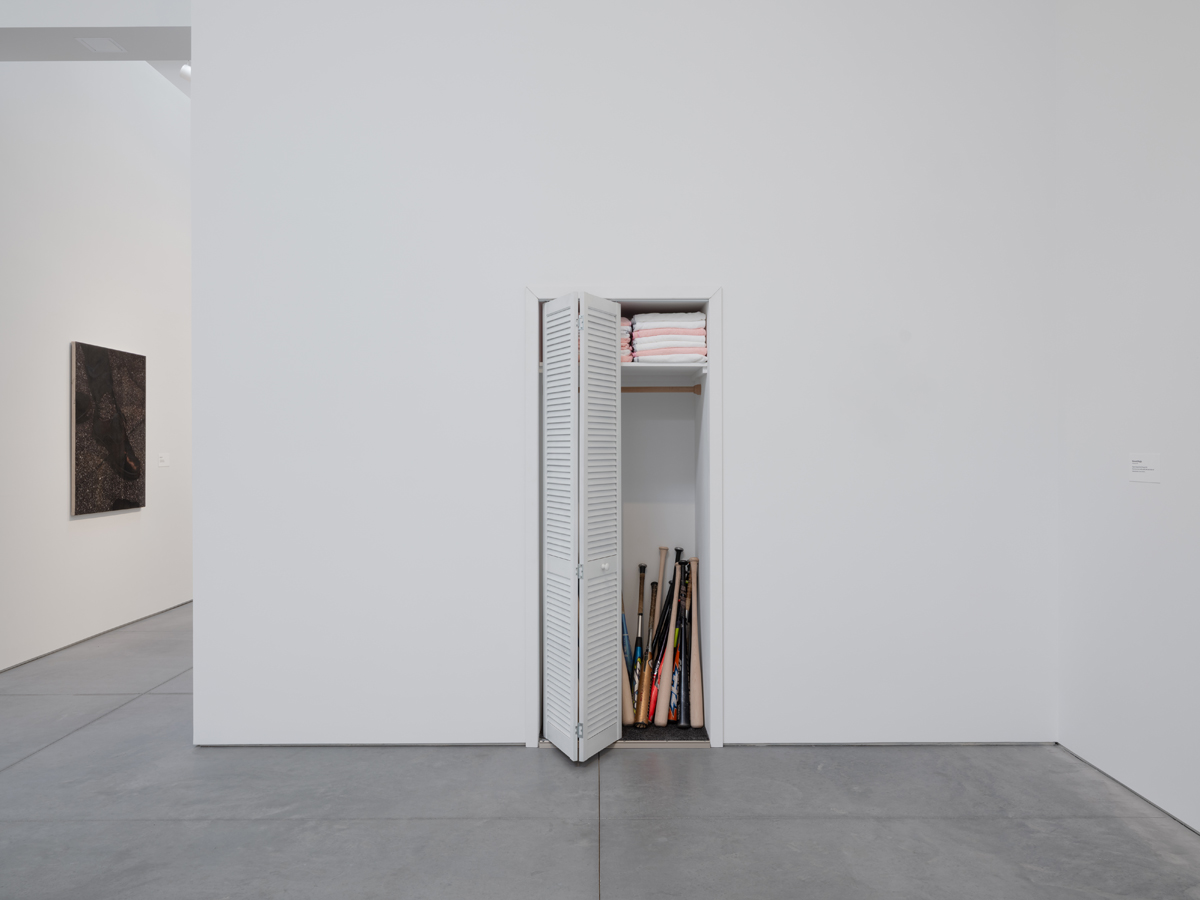
As I venture further into The Warehouse’s winding, maze-like galleries, I reach a section titled “The Criminal & the Scene of the Crime.” Here, violence spawns out of necessity, and the criminal is not always synonymous with the villain. In Diamond Stingily’s Orgasms Happened Here (Chicago), a small closet is installed into the gallery’s wall; louvered doors are cracked open revealing a closet space filled with dozens of baseball bats. The inactive yet pervading sense of violence within the domestic scene depicts the ordinary possibility of brutality that exists within the everyday.
Stingily’s work implies impending violence without depicting it outright, an approach often taken in noir films due to a set of self-censorship guidelines imposed on Hollywood filmmakers from 1934 to 1968 known as the Hays Code. The conservative code consisted of hard “don’ts”—profanity, suggested nudity, illegal drug trade, etc.—and more ambiguous “be carefuls”—depictions of brutality or violence, sympathy to criminals, sex, drug use, etc. Because of these limitations alongside wartime shortages and budget restrictions, filmmakers got creative in their approaches, whether it be through visual cinematography or sneaky subtext. Although the code was meant as a tool to push traditional values and bury the ugly or unjust, the biting irony is that hiding these taboos behind a shadow only further provoked audiences to imagine the twisted horrors they were not permitted to view.
As I dive deeper into the show, around every corner I encounter concepts and tropes that push my understanding of noir and its correlation to the American psyche. The “Psychological Interiority” gallery explores how noir spurred a growth of understanding about the relationship between history and violence, which often resulted in a distorted sense of time and memory–a consistent aspect of noir films often portrayed through flashbacks and time loops. “The Femme Fatale” dives into the seductive and dangerous stock character, placing her within the cultural context of a time when women were gaining more agency outside of the home as men were drafted to fight en masse. Her power and eventual downfall on screen confronts the underlying male fear that the social order was undergoing a destabilizing shift.
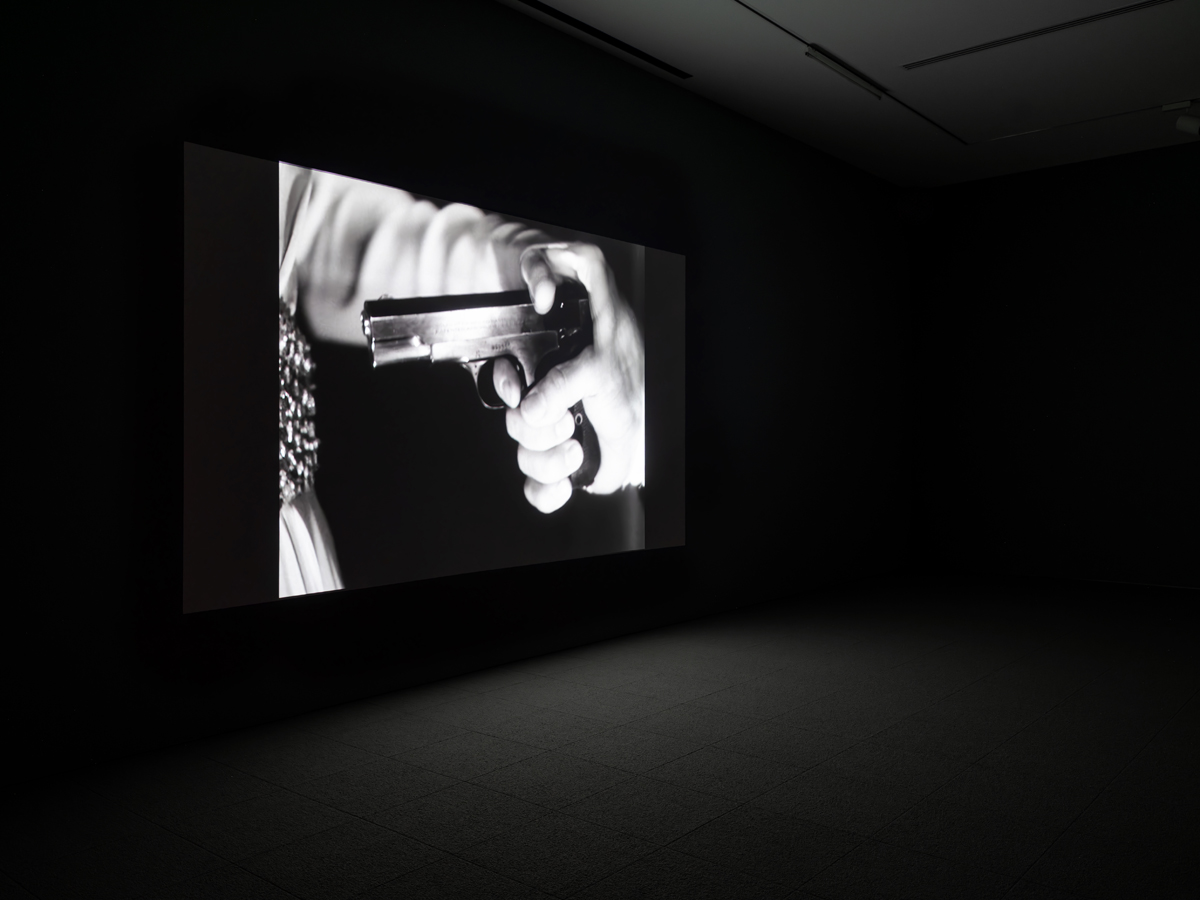
Near the halfway point of the exhibition, Giuseppe Boccassini’s ragtag is projected in a dark room, a fragmentary supercut from more than 300 American noir films produced between the early 1940s and the late ’50s. The result is a mesmeric visual and sonic collage that feels overwhelming like a fever dream or, as the wall text reads, “a looping archive of longing and anxiety.”
Noir is not a thing of the past—we are still living in its shadow… just in a slightly different shade.
Throughout the exhibition, my thoughts keep shifting back to how film noir’s relevancy persists, its narratives and mood continuing to mirror modern anxieties just as they did over eighty years ago. When noir debuted, the looming fear of communism and nuclear warfare stirred doubt and skepticism that had already taken root in the American consciousness. Today, politics are hyper-polarized and defined by widespread mistrust in our democratic system and leaders. Noir is not a thing of the past—we are still living in its shadow as we navigate disillusionment, economic instability, and an overall state of uncertainty that still exists, just in a slightly different shade.
What is most striking about the exhibition is the fact that the majority of the artworks have no direct relationship to film noir. Yet by investigating each piece within the conceptual context of noir and its archetypes, the exhibition frames noir as an ongoing dialogue about navigating and existing within our nuanced social and political realities. This type of curatorial approach bridges time and disciplines, fueling new interpretations of contemporary artwork and allowing them to speak to broader cultural topics.
“Film noir was born from a profound rupture in the American psyche.” I continue to reflect on this postwar “rupture” and the new reality that followed as I navigate the extremist, “post-truth,” increasingly fragile modern political climate. Understanding that reality is more relevant than ever.