Route 66 survives in fragments. In a handmade atlas, Willie Lambert pieces New Mexico’s 500-mile stretch back together.
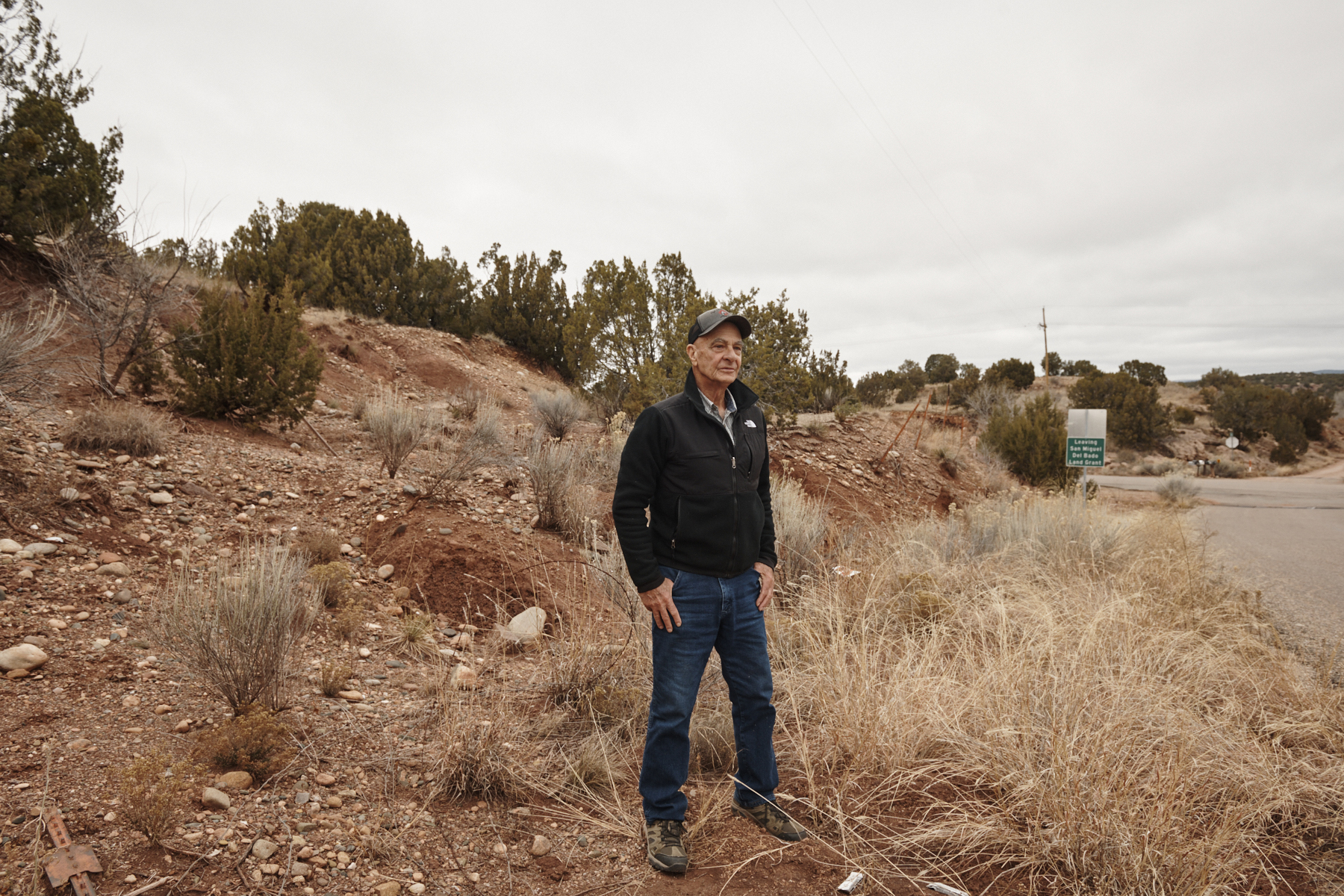
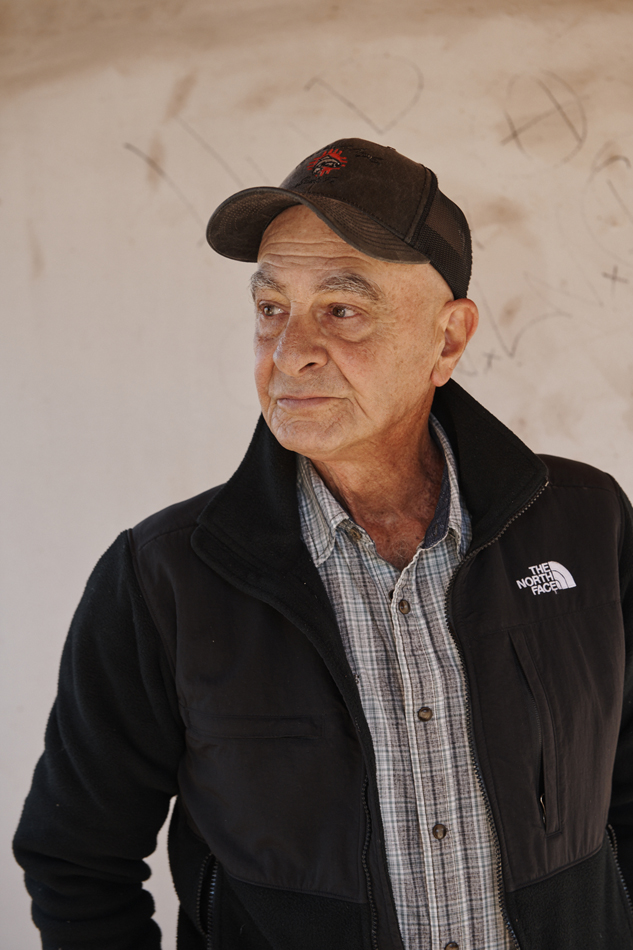
Willie Lambert walks like a seventy-three-year-old sailor. His land legs sway a bit to starboard, but he’s always got a smile and a bad joke at the ready. “I’m leaking oil today, Mister Pete,” he tells me.
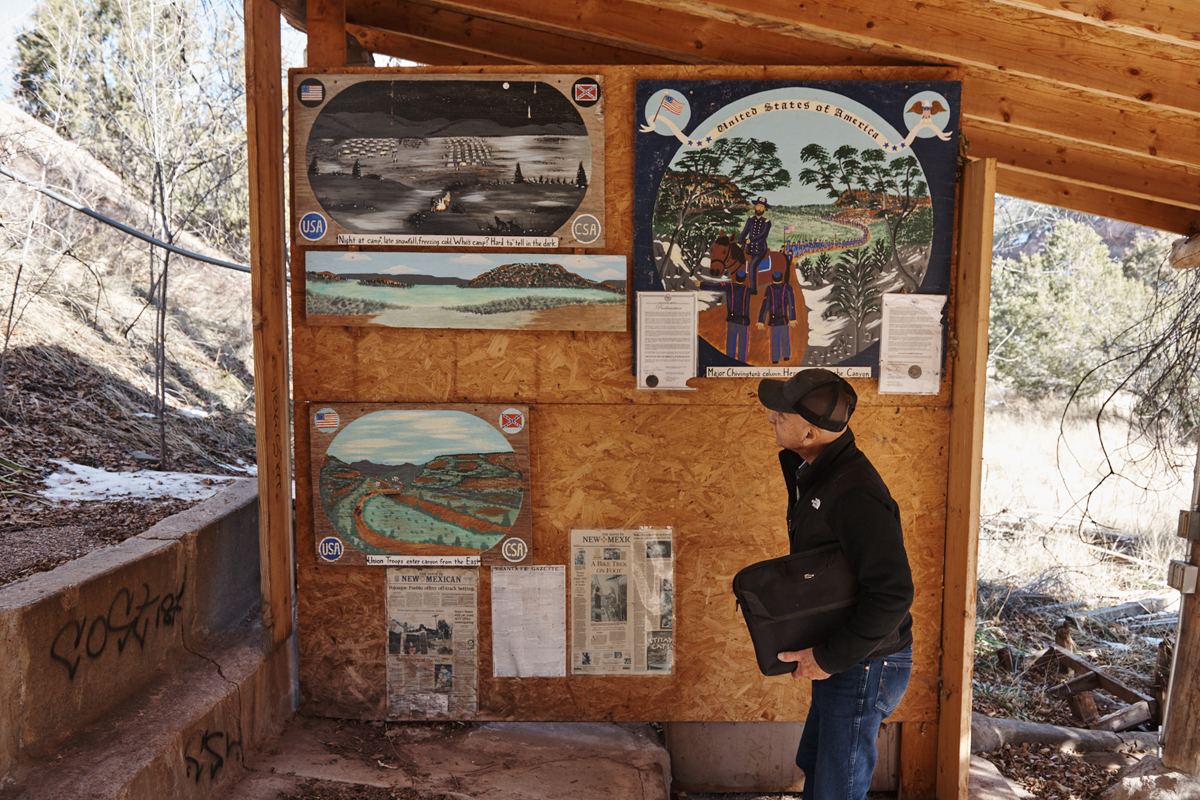
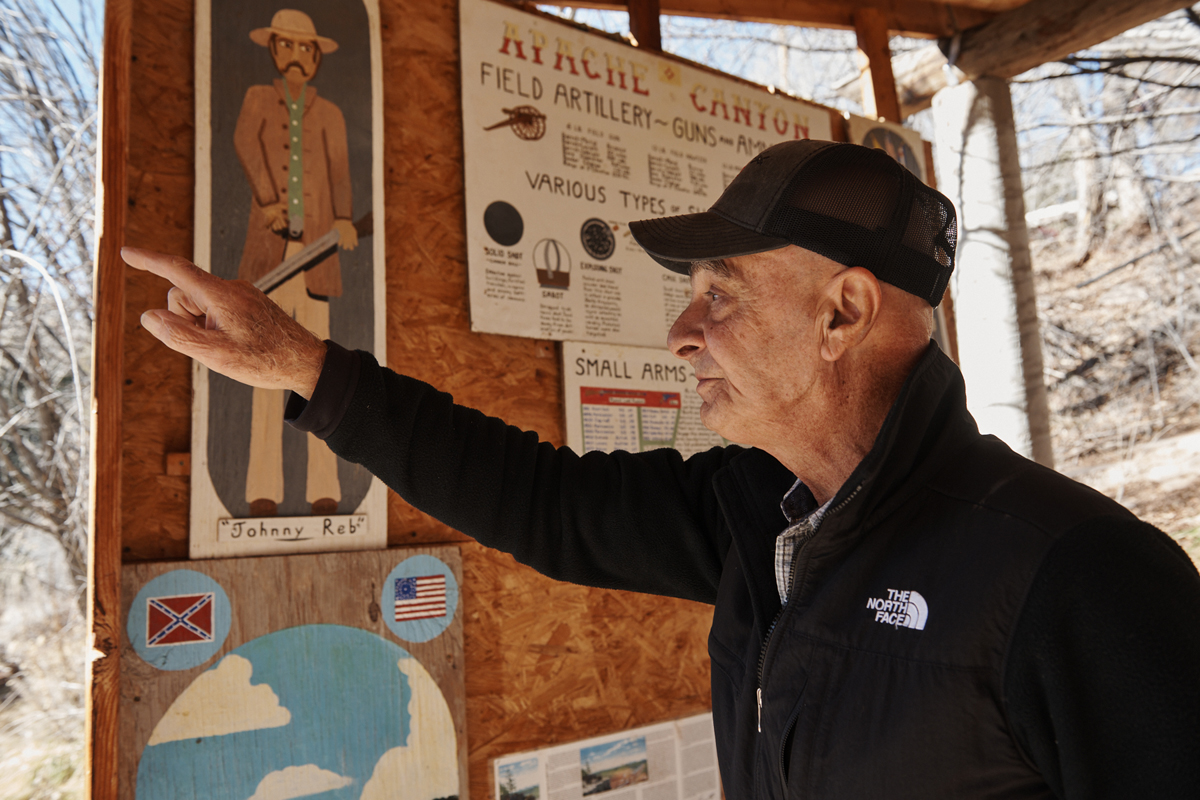
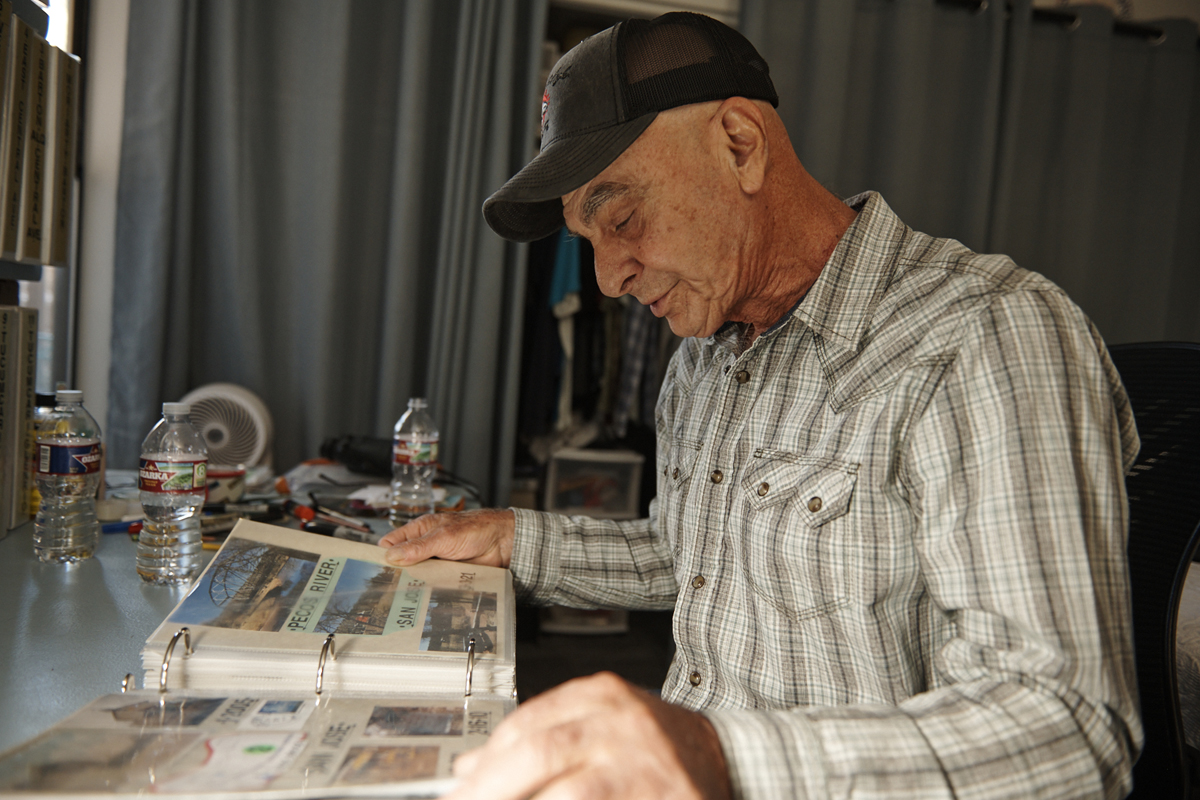
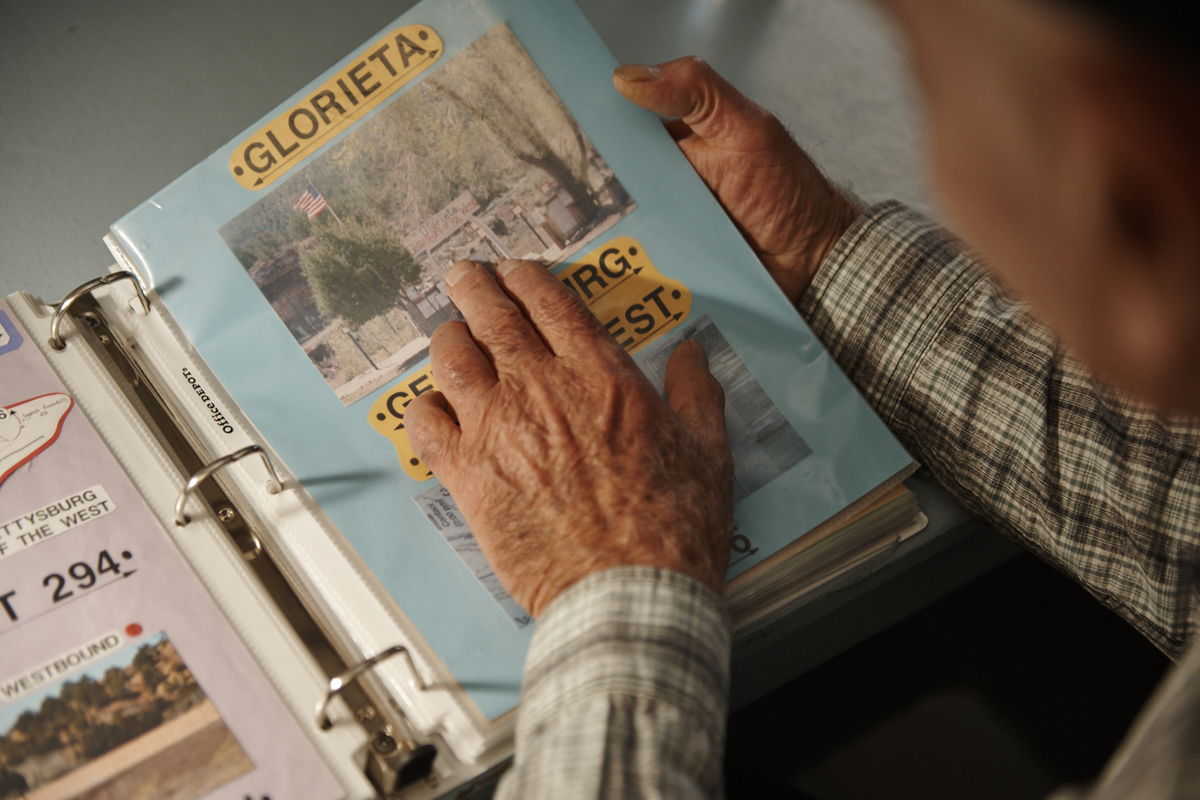
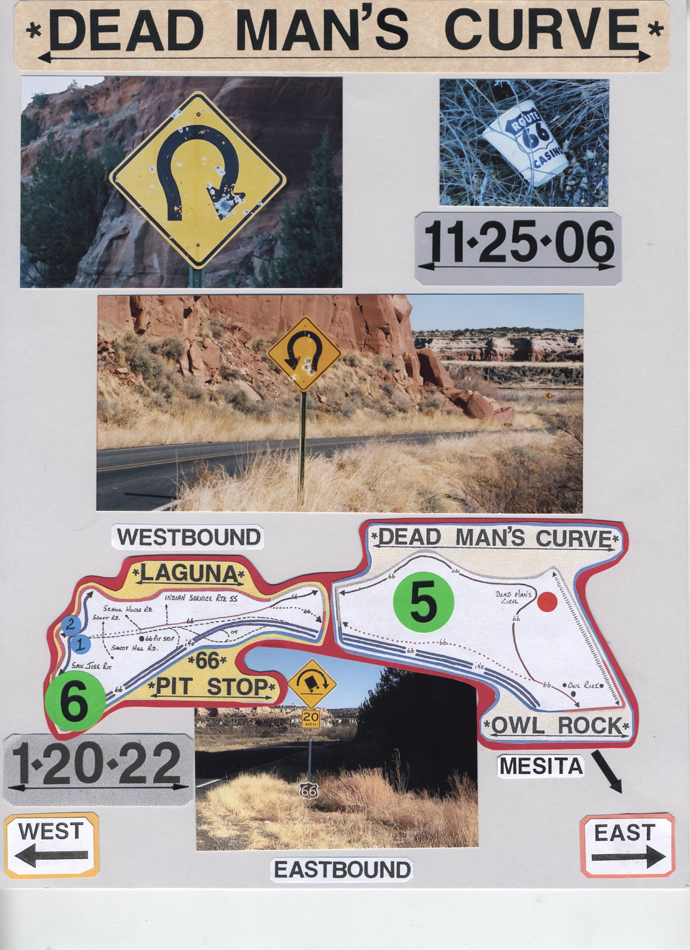
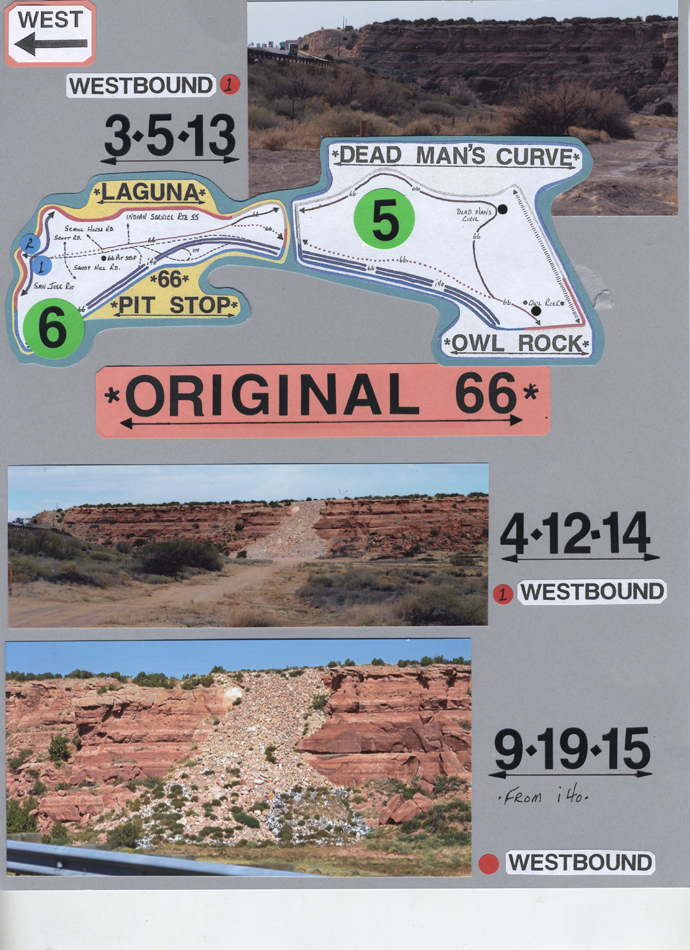
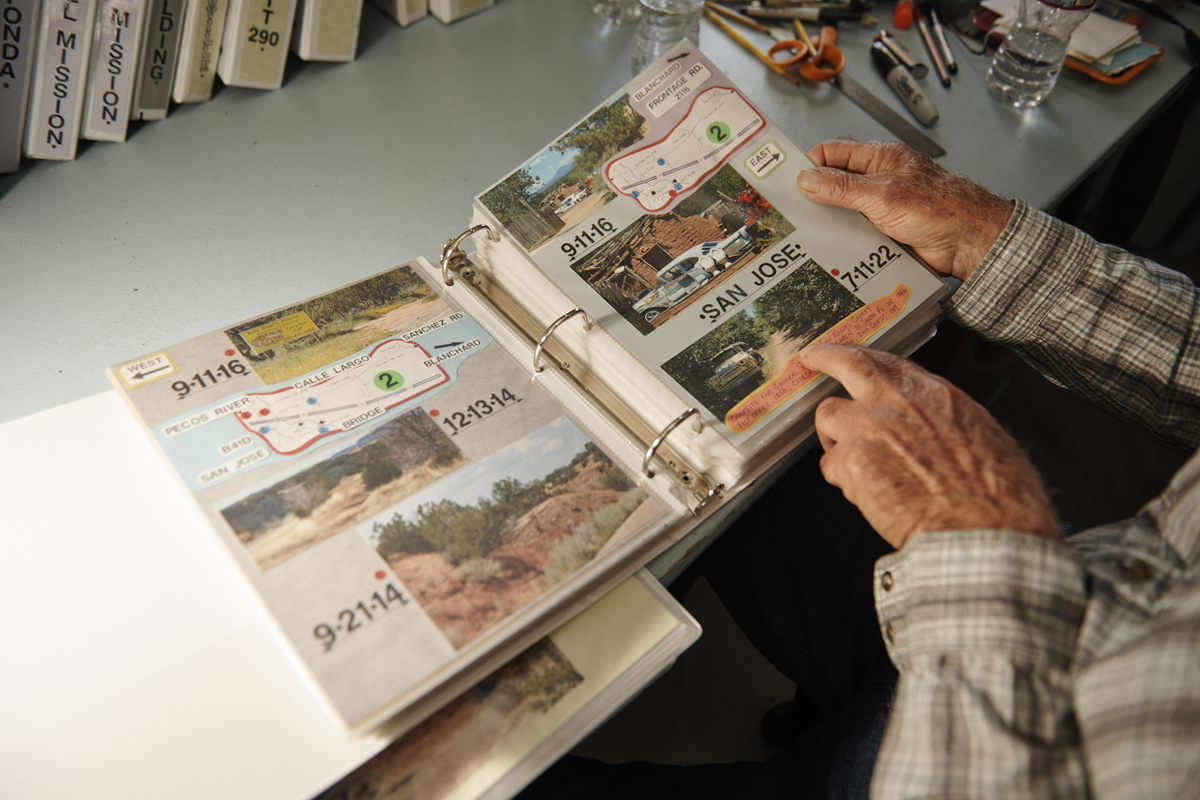
Lambert knows every foot of Route 66—the Mother Road—in New Mexico, and has mapped it by hand. Stored in three-ring binders, his annotated collages are cartography as folk art. If they were destroyed, details known to no others would be wiped clean. His biography is a compendium of expediency for what he calls “adding up to Social Security.”
He’s been a bus driver, railroad worker, National Forest Service employee, blackjack dealer, fly tyer for fishing. The mapping quest began when he obliged his sister’s wish for a Route 66 road trip on her sixty-sixth birthday. He gathered materials and sought out lost segments of the original route, spurs left behind as Route 66 was gradually bypassed by the Interstate system, then officially decommissioned in 1985. Soon he began organizing pop-up displays of his work, an evangelist of 66 to anyone interested.
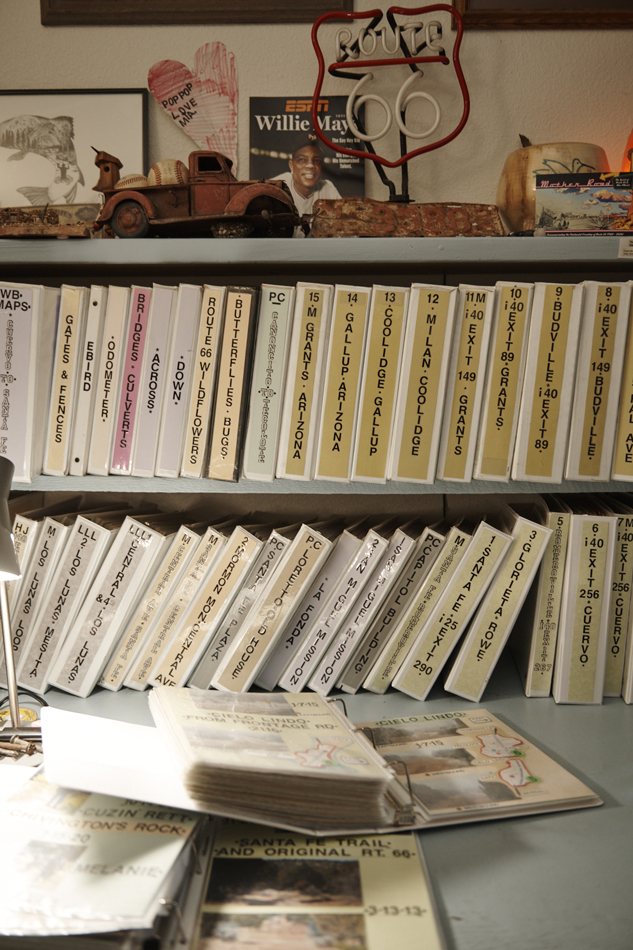
Historian? Without doubt, despite a lack of credentials. Academia would suffocate him; it would educate the wonder out of his soul. Artist? No argument. His drawings are meticulous and stitched together like a tapestry depicting the main vein of the Southwest. There are forty-five binders in all, and thirty-five are dedicated to the maps alone: about 500 sheets organized into ten-mile sections, then subdivided into one-mile segments.
“Every page is a different color, and why not? I like color,” he says. Throughout the binders, maps mingle with ephemera such as postcards, photos, and clippings. Separate artifacts include a crossword puzzle with 643 clues, 3,000 coins in clear sleeves collected from the roadside, sixty-six roadside wildflowers, and a bird list from thirty locations to date.
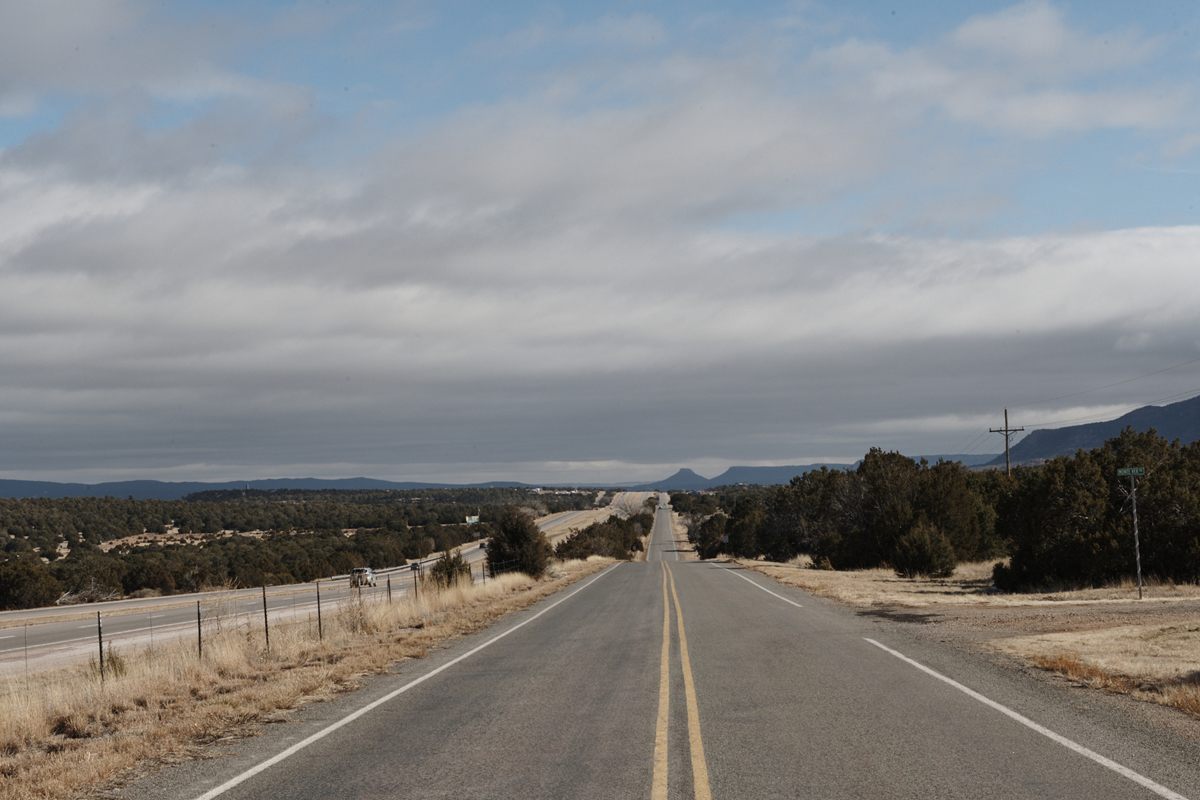
Lambert’s studio is all 500 miles of mountains, declines, desert, arroyos, and straight blacktop. The sun is his atelier lighting. “I work to solve the puzzle of the Road,” he says. “Icons of 66—the Blue Swallow Motel in Tucumcari, La Bajada, neon motels on Central Avenue—are the borders of this jigsaw puzzle. You always put the borders together first and then fill in the pieces. I am after the hidden pieces, the gems.”
One of those gems is La Bajada, which is a short road trip from Lambert’s condo in Santa Fe. “Let’s ride,” says Lambert—after all, he is a road dog. We climb into his meticulously kept Jeep Wrangler. He talks while he drives, can talk your ears off, one ear then the other. We pass a herd of cattle and they watch us ponderously, expecting some excitement. We have the notebook with Lambert’s hand-drawn maps of the road on La Bajada to guide us. “Roads followed game and walking trails in the beginning; you always follow the path of least resistance,” he says.
I see what’s changed on 66. I find out what time has done to it and where it is now. When I find that lost pavement, it is something of my own.
An escarpment above the Middle Rio Grande Basin (a bajada is a steep desert descent), La Bajada tops out on a long, flat mesa, where a barren road lies rutted and in disuse. Headed north, the old ascent was treacherous; going south, the 600-foot descent was terrifying. Our view of Albuquerque to the south, Mount Taylor to the southwest, and the span of volcanic cones and basin-and-range mountains, is glorious on this autumn day.
This section of 66 holds a sweeping history of the Southwest. Spaniards arrived in Santa Fe in 1598 on what were pre-contact Native trails up and over the mesa, most likely from Cochiti Pueblo directly below. Carts and wagons brought immigrants and goods from Mexico along the Camino Real de Tierra Adentro (the Royal Road), the Spanish Empire’s main artery into the far northern province of Santa Fe de Nuevo México. Starting in 1846, U.S. military transports followed the route as New Mexico shifted from Mexican province to U.S. territory. Route 66 became in the early 20th century, and the drive was freedom fueled by the compulsory confidence of a new American century.
What we think of as Route 66 is not, and never has been, static. It has shapeshifted over time, vanishing behind ranch fences, yielding to new pavement. The automobile route over La Bajada was NM Highway 1 from 1909 to 1926, following the Camino Real’s monstrous S-curves. Then Route 66 changed the course and, as Lambert says, “This way avoided the dangerous switchbacks of the old wagon road, but gained more ascent near the top. A trade-off.” It scrambles any conception you may have of a highway in 1926, as it was never paved. “It was an adventure. Think about these people who tried it.”
Albuquerque’s Central Avenue is a famous stretch of 66, but until 1937 it ran from Santa Rosa northwest to Santa Fe, then south to Los Lunas. Central wasn’t part of the route for its first ten years. Why the wayward jog to Santa Fe? “That was the capital; where the road goes, the money goes.”
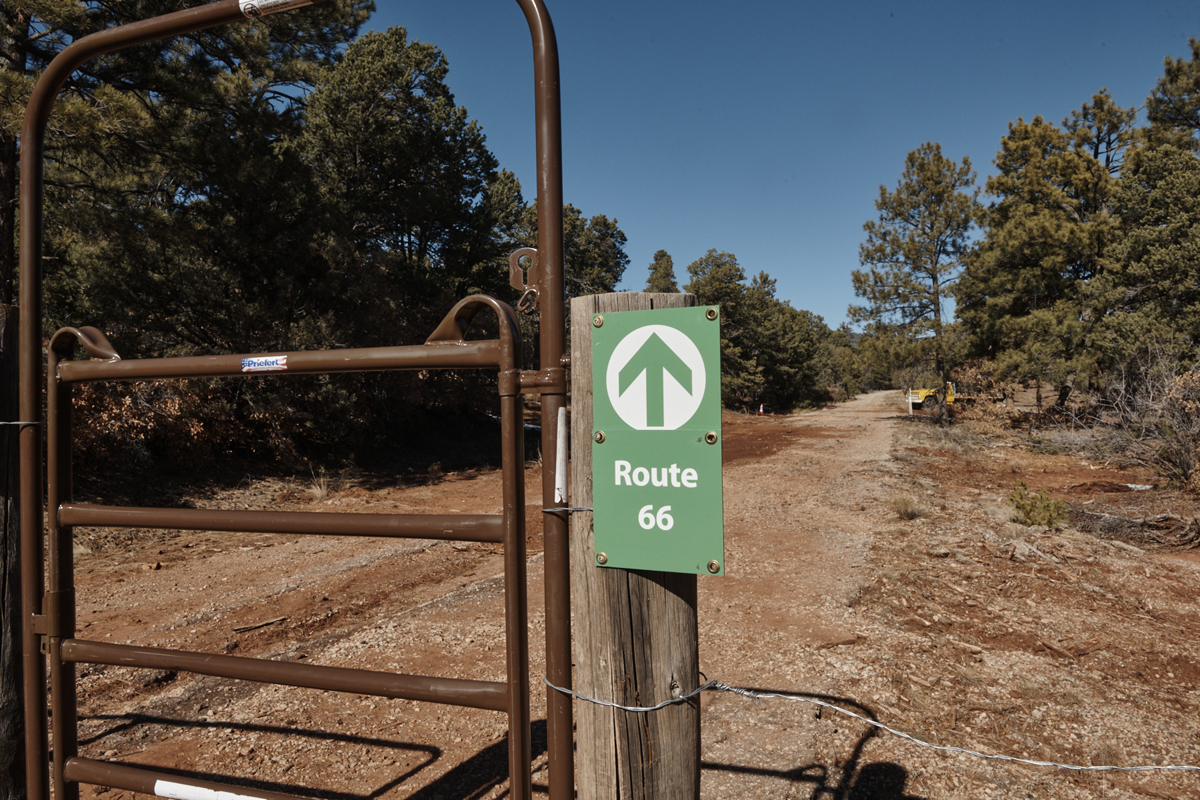
Atop La Bajada, Lambert fills me in on nearby retaining walls built by paid Pueblo volunteers and unpaid prison labor, small concrete pads that once supported rest stops. He points out the original route that runs straight through the middle of a building at HIPICO, an equestrian center spread out below the mesa. He can do the same anywhere along the 500 miles of 66 in New Mexico.
Willie Lambert is a walking-talking-driving encyclopedia who sees the Mother Road with an artist’s eye, and he is a wonder.
“Twenty-seven miles to my grandmother’s house was the farthest I ever was as a kid,” Lambert says. “The open road becomes something special. I see what’s changed on 66. I find out what time has done to it and where it is now. When I find that lost pavement, it is something of my own. I know I done it.” And Lambert continues to find it as he searches for the missing pieces. Parts of the original route are hidden on private land, so his road to find them is thankfully endless, the solution to the puzzle an ongoing endeavor.