In Step After Step at Kimball Art Center, artists leave their studios behind to claim the moving body as a revolutionary artistic method.
Step After Step
May 30–September 14, 2025
Kimball Art Center
For centuries, spiritual pilgrims have walked thousands of miles through rugged terrain, surrendering comfort to purify the mind and body for divine encounters. In the Southwest, hiking through vast landscapes beneath an open sky similarly allows us to commune with the land, and ourselves. Beginning in the 1960s, artists transformed that same impulse into a radical act, stepping out of the studio to reject traditional media and claim the body in motion as an art form. Curated by Nancy Stoaks, Step After Step traces the evolution of walking as method and material, unfolding across the work of thirteen artists.
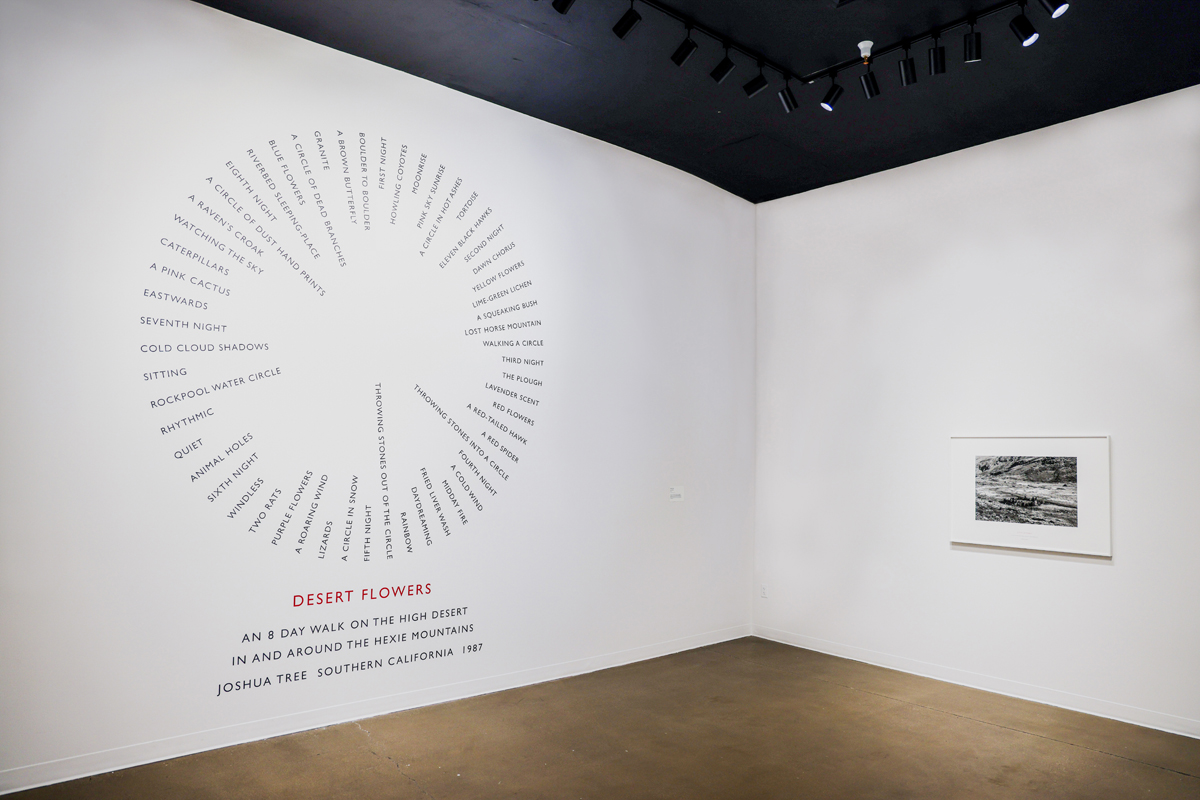
Richard Long’s Desert Flowers (1987) opens the exhibition, a text work that unfurls on the wall like a blossom, with each petal formed of words evoking impressions of an eight-day walk the artist made in the high desert of Southern California. Short phrases, such as lavender scent, a circle of hot ashes, and red spider, transmit physical sensations as though we have joined the artist on his trek.
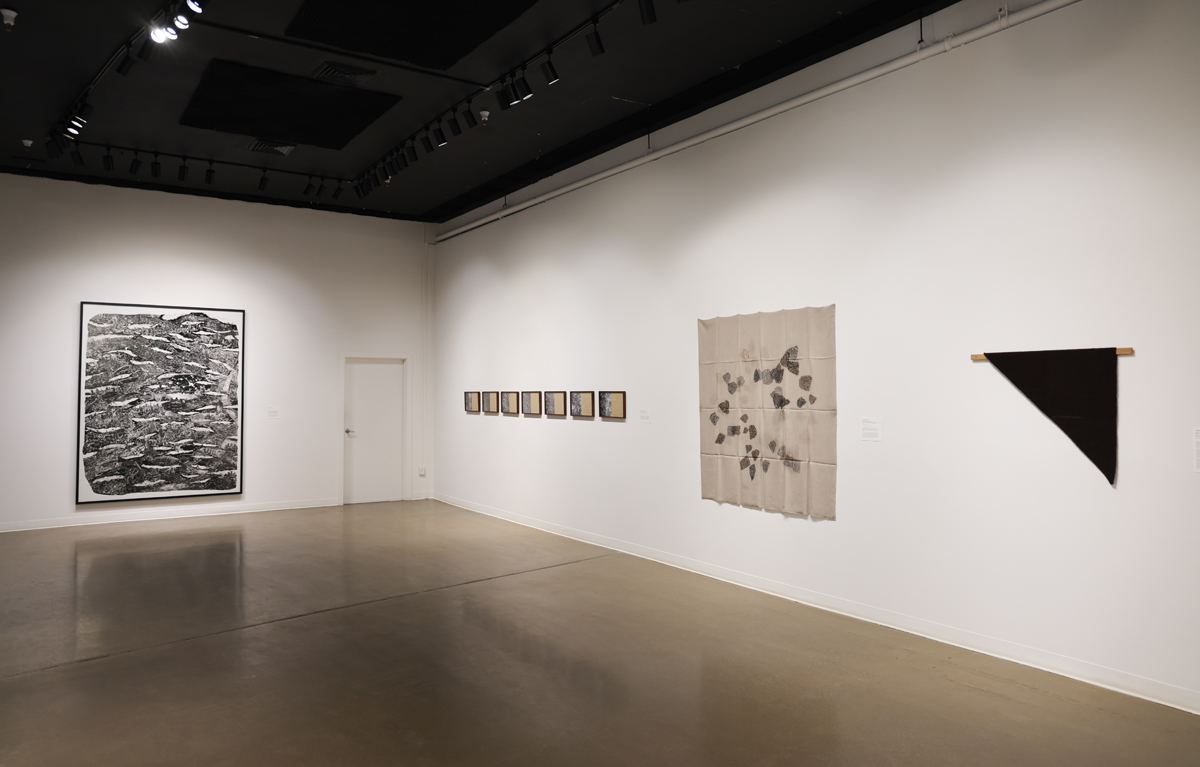
Hendl Helen Mirra’s Walking Commas, 28 June, Cape Breton (2014) is another meditative series, consisting of photographs and field notes captured on her daylong walks quietly marking the traces of time, repetition, and subtle changes in the land, emphasizing presence rather than a faster pace.
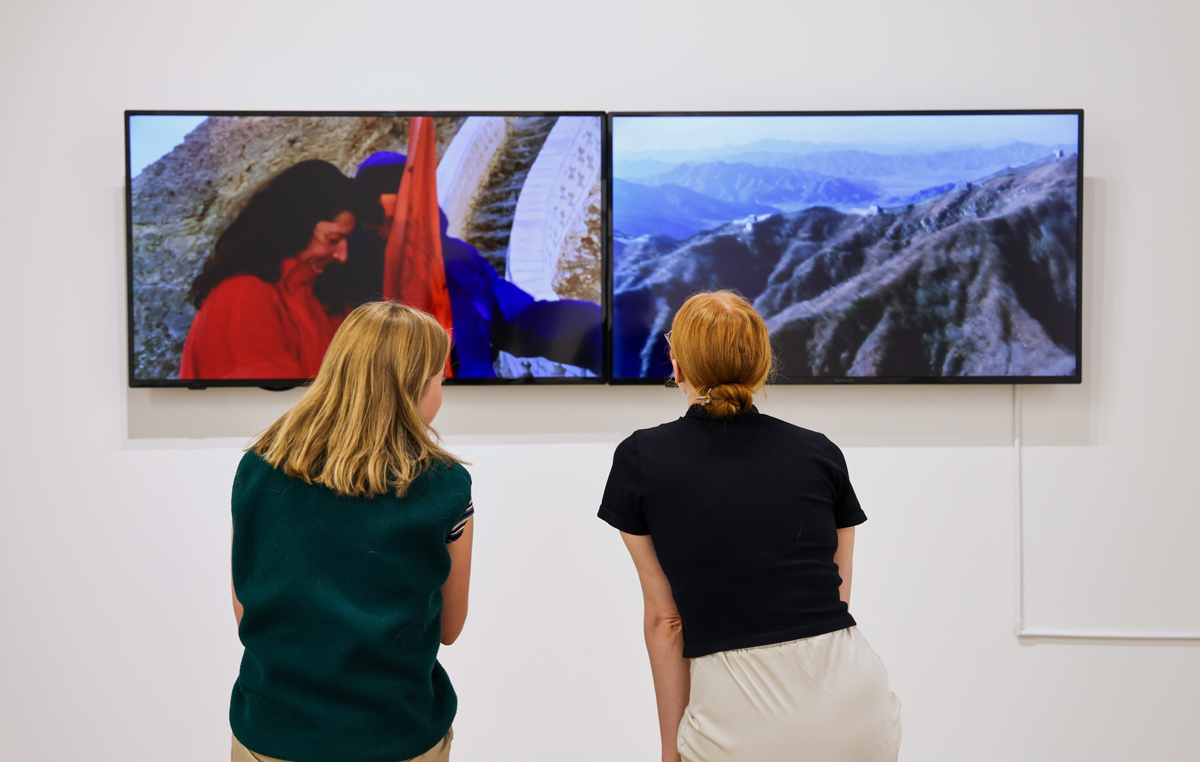
While the more contemplative works offer subtle reflections on presence and process, other video installations of groundbreaking performances included in the exhibition have more visceral impact; these are key works that continue to command attention and shape the discourse. Marina Abramović and Ulay’s The Lovers, Great Wall Walk (1988/2010) features a slow-burning journey of endurance in a ninety-day trek across China, meeting each other in the middle of the Great Wall to irrevocably dissolve their partnership. A segment of Francis Alÿs’s video installation Zapatos magnéticos (1994) finds the artist whistling as he strolls along the streets of Havana in magnetic shoes that collect scraps of metal in an evolving sculpture of a city that slowly exposes its historical and political complexity.
Step After Step ultimately reveals walking not merely as movement, but as a deeply expressive act that can mark fleeting moments, resist social conditioning, and heighten both perception and endurance. For these artists, even the simplest action, putting one foot in front of the other, comes layered with meaning and endless possibility.