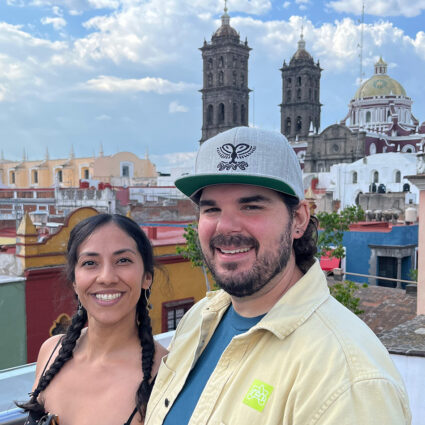
After years of building maze-like monuments to queer love, Texas-based painter Eli Ruhala is at a crossroads in his practice.
The history of art and love has very little to do with art. Art never claimed to be a profession of love, only a depiction. Perhaps the closest art came to caging love’s essence was Marina Abramović and Ulay’s ninety-day traversal of China’s Great Wall; this was, of course, because the art object existed only to cleave the last thread of their romantic relationship. Love enters art only to deliver final judgment. Love’s true entrance into art destabilizes the whole thing—they collapse each other right at the point they meet.
For Eli Ruhala, art and love were inextricable, until very recently. Through two rigorous academic programs, one at the Maryland Institute College of Art, the other at Texas Christian University, he honed a painterly devotion to those around him. For years, Ruhala had dedicated most of his practice to capturing the quotidian life of his romantic partners—now that was over.
By the time of our visit, the artist was both single and out of graduate school. It quickly became apparent that Ruhala was in the midst of significant growing pains—in short, he was post obsession. In the artist’s words: “There’s a time when you’re much more introspective, but then there’s a time to be a part of something; right now I’m in the phase of my life where I hope I can both produce great art and be part of a community again.”
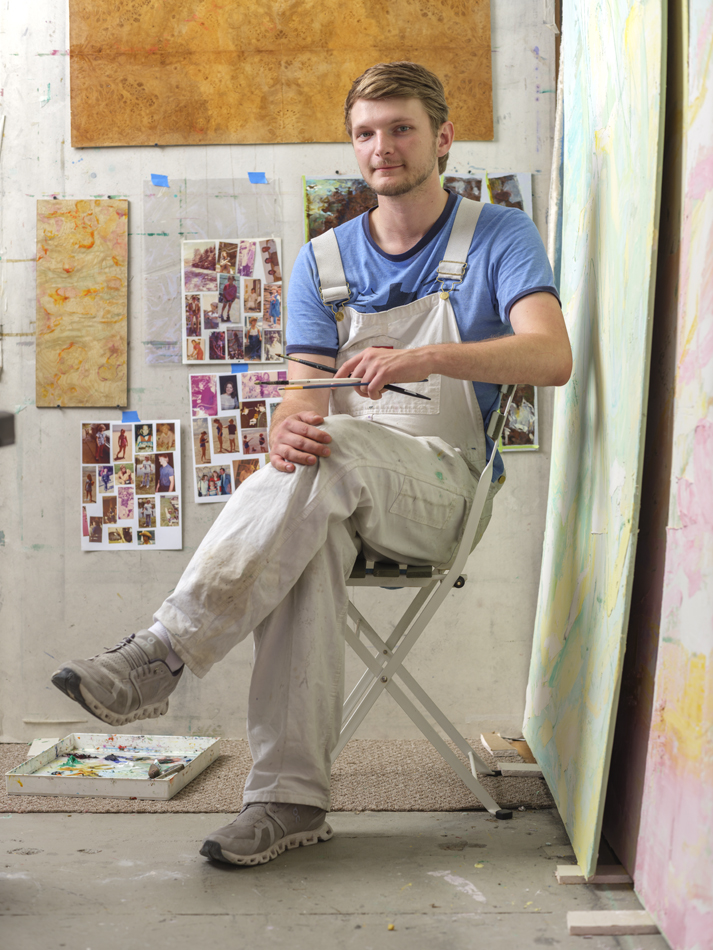
Ruhala moved into his current studio out of necessity. He explains this over his shoulder as we pass through hallways of artist-leased office pods. Within twenty-four hours of vacating his graduate studio at TCU, three years’ worth of art migrated north from Fort Worth to Goldmark Cultural Center in Dallas. Goldmark has become the local shorthand: a rhetorical placeholder for these tenement-style artist complexes. They’re far cries from last century’s historic East Village squats, more suited for commuting hobbyists than skins and psychobillies. Studio buildings like Goldmark arrive on the scene pre-corporatized and sterile, trading exterior style for practicality.
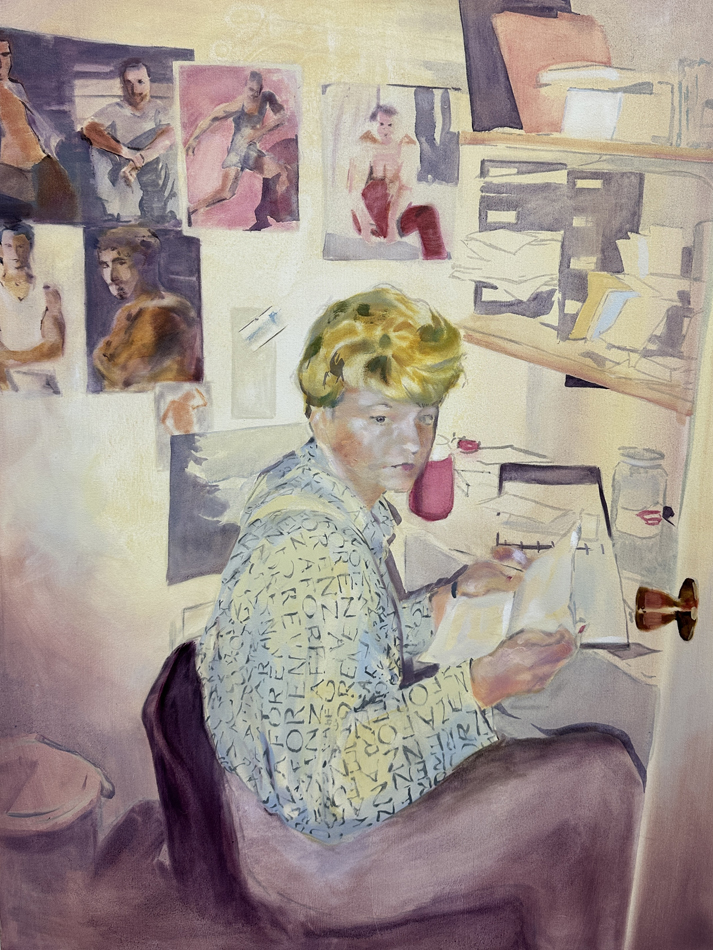
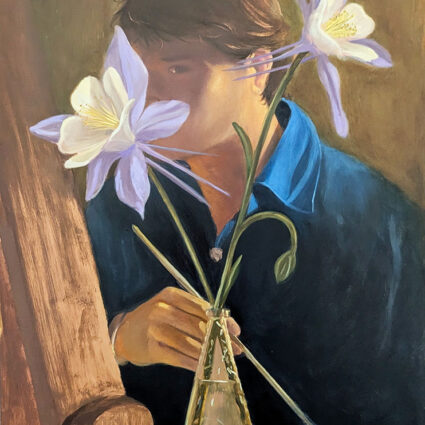
Less than a month after moving in, Ruhala has commandeered more than his share of the south hallway. Outside there are oil paintings of family photos and drywall works dripping in a nostalgia the TCU program beat out of him. One painting, Mom’s Corner (2024), recreates a photograph of the artist’s mother in college. In it she’s sitting at a cluttered desk and turning over her right shoulder to meet the camera’s gaze; her Princess-Di boy cut suggests a lost member of John Hughes’s Brat Pack. Ruhala’s oil paintings fall somewhere between Gustave Courbet’s social realism and Nan Goldin’s photographic voyeurism. We are never explicitly given permission to view these intimate scenes but feel entitled to their subtle honesties. They invite us for dinner but always kick us out before the main course.
I’m incapable right now of making work that satisfies what it is that I want. The only answer I can find is, do more.
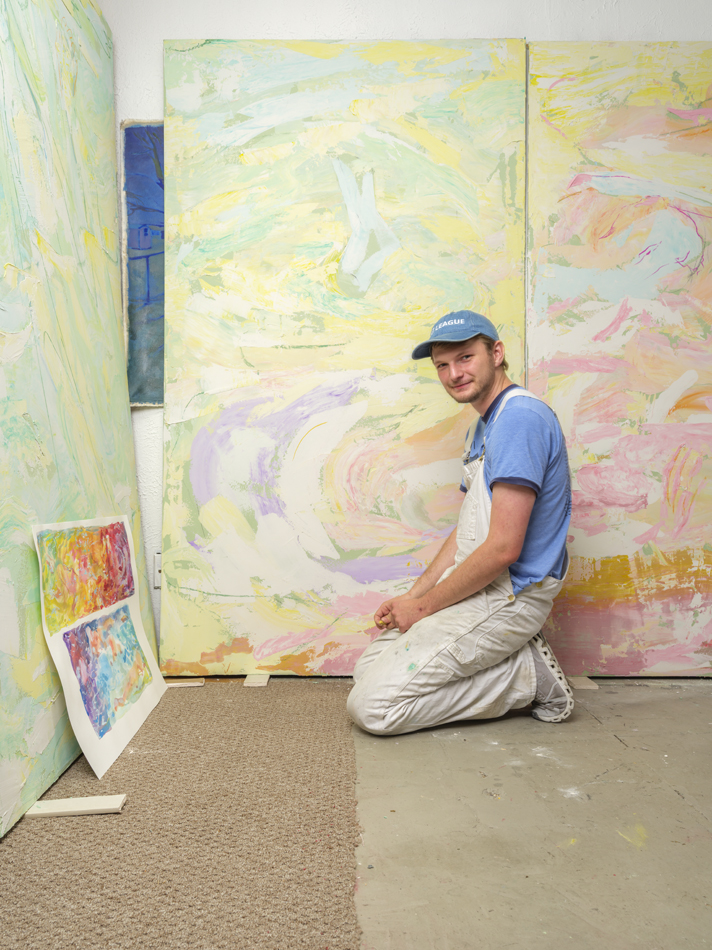
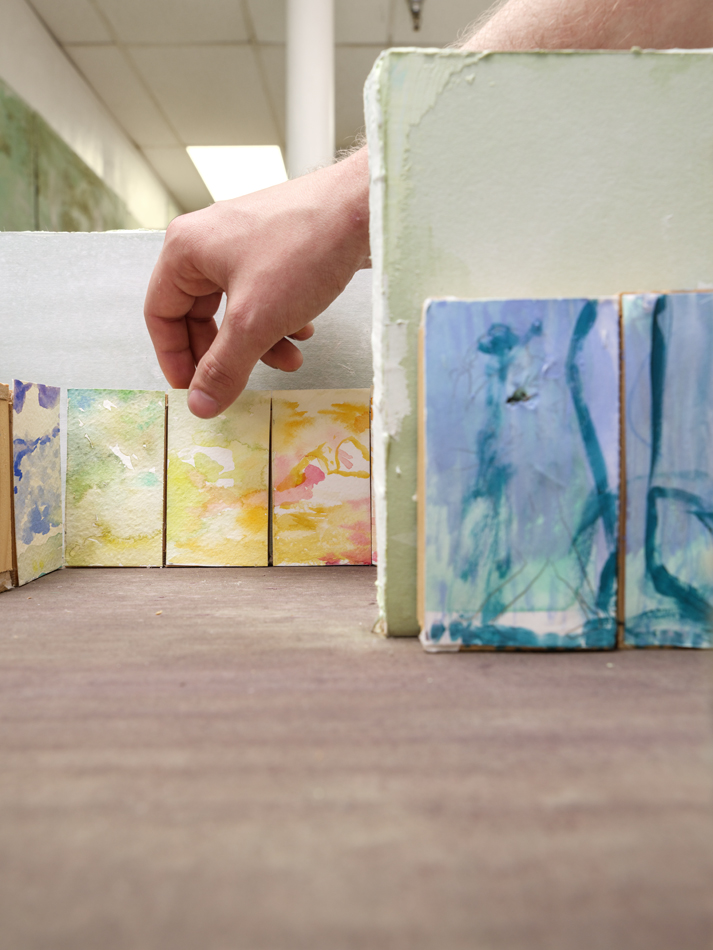
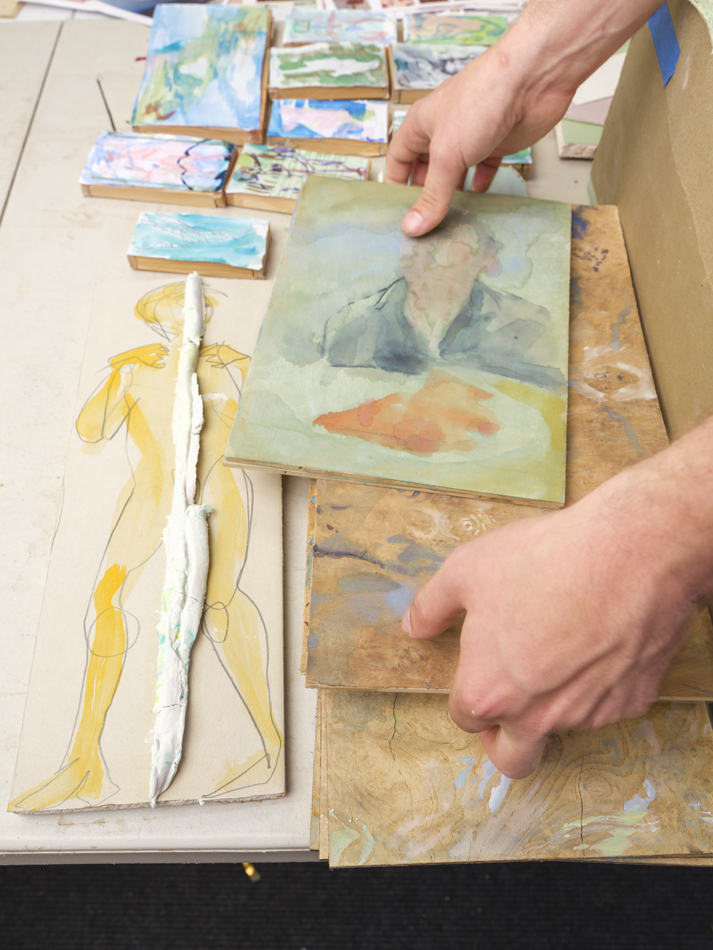
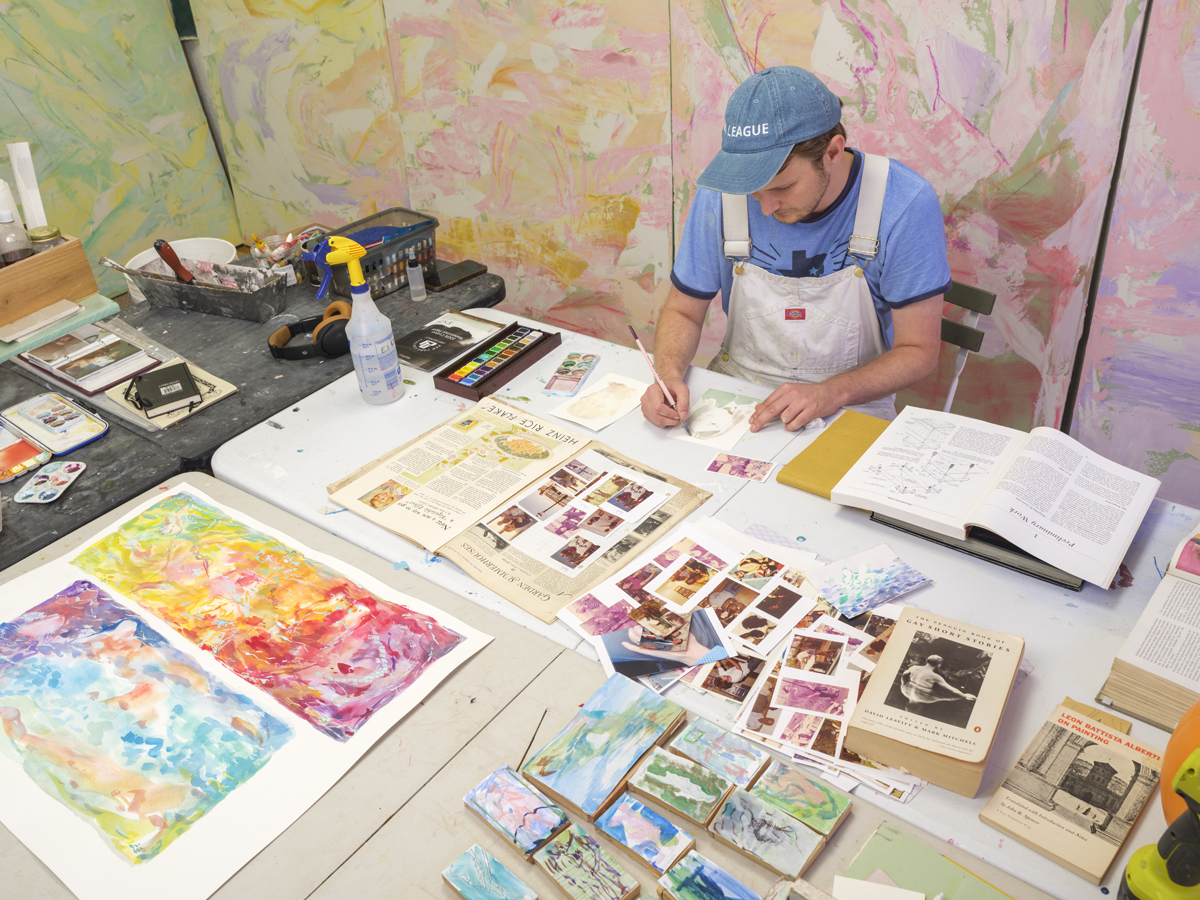
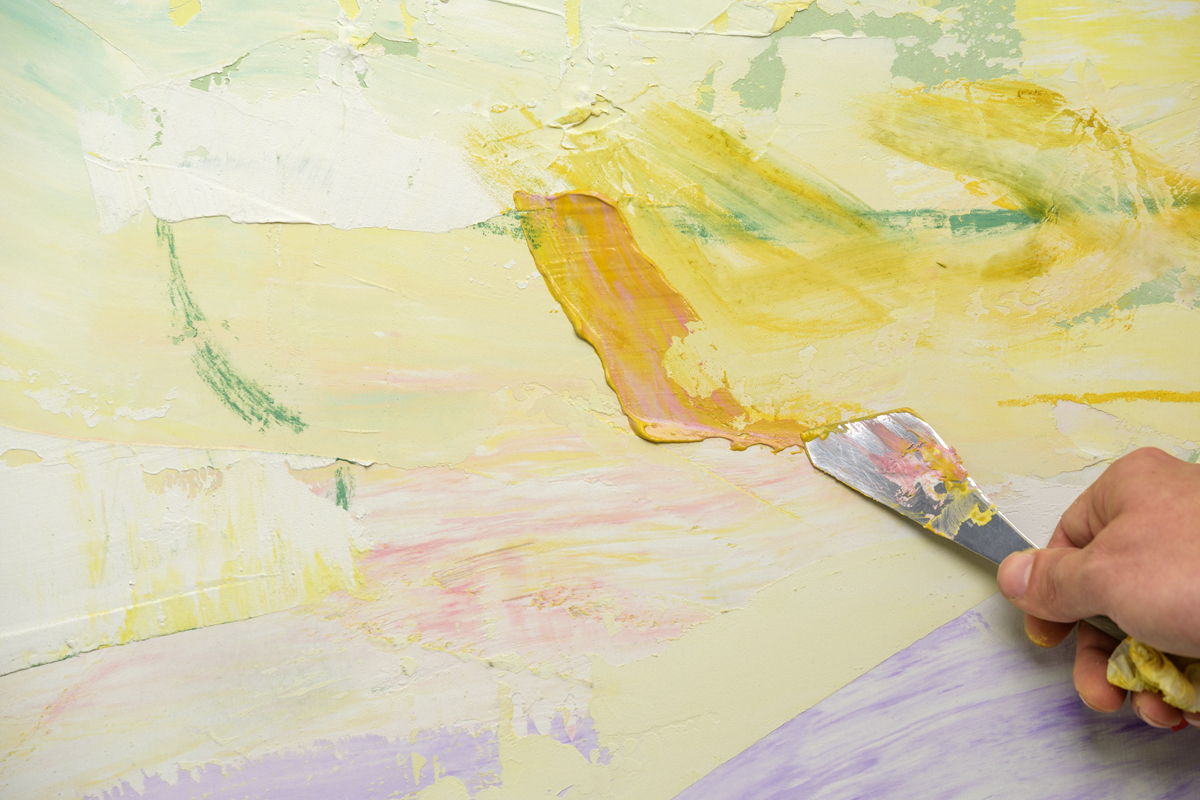
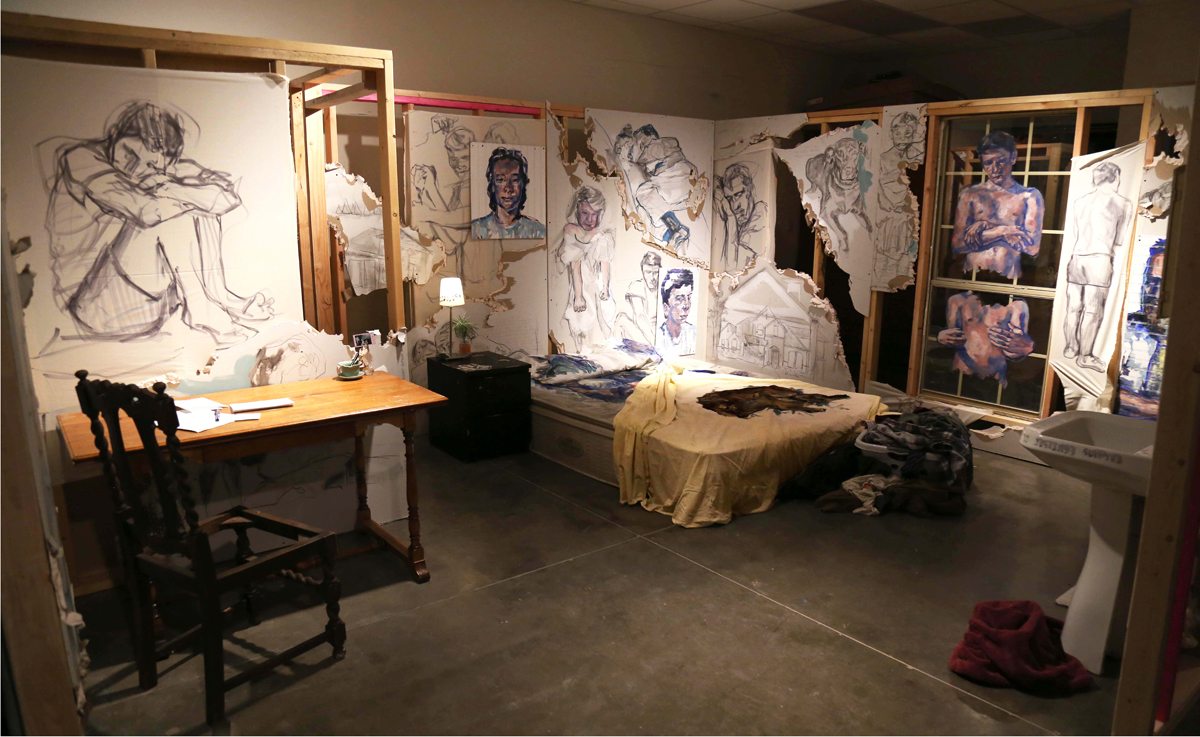
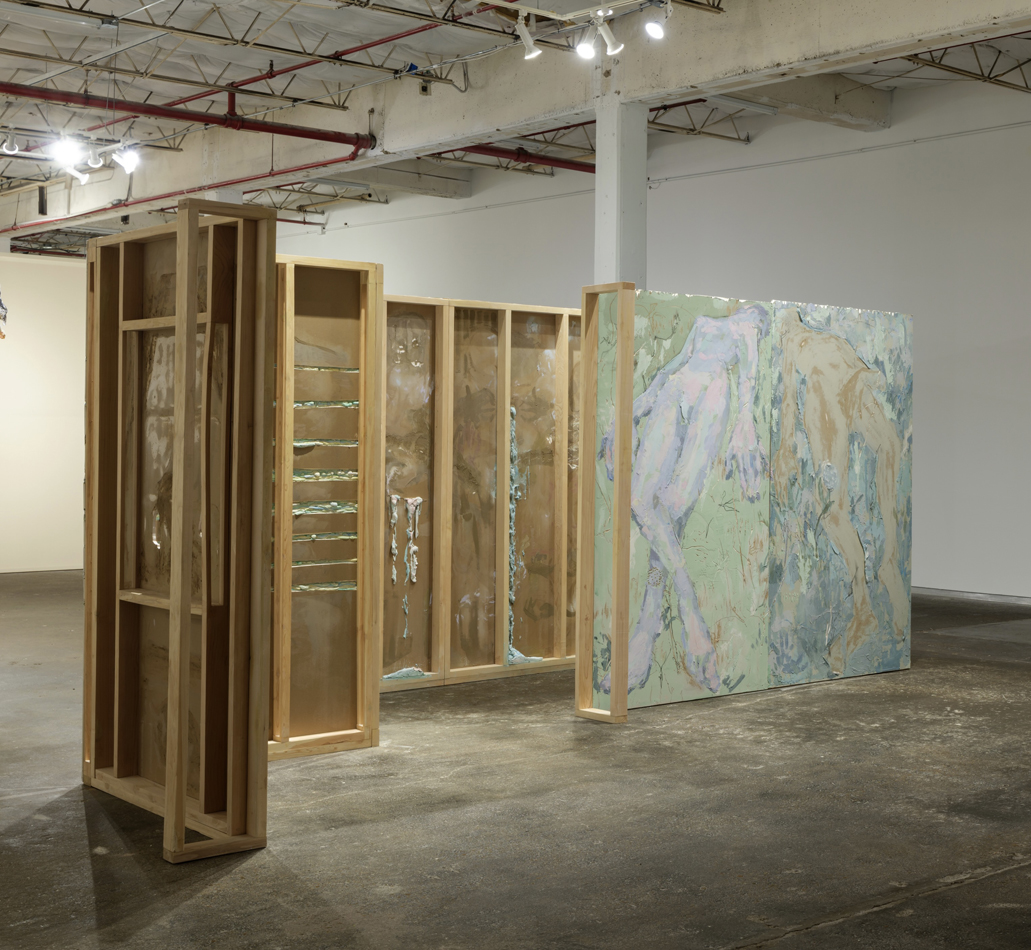
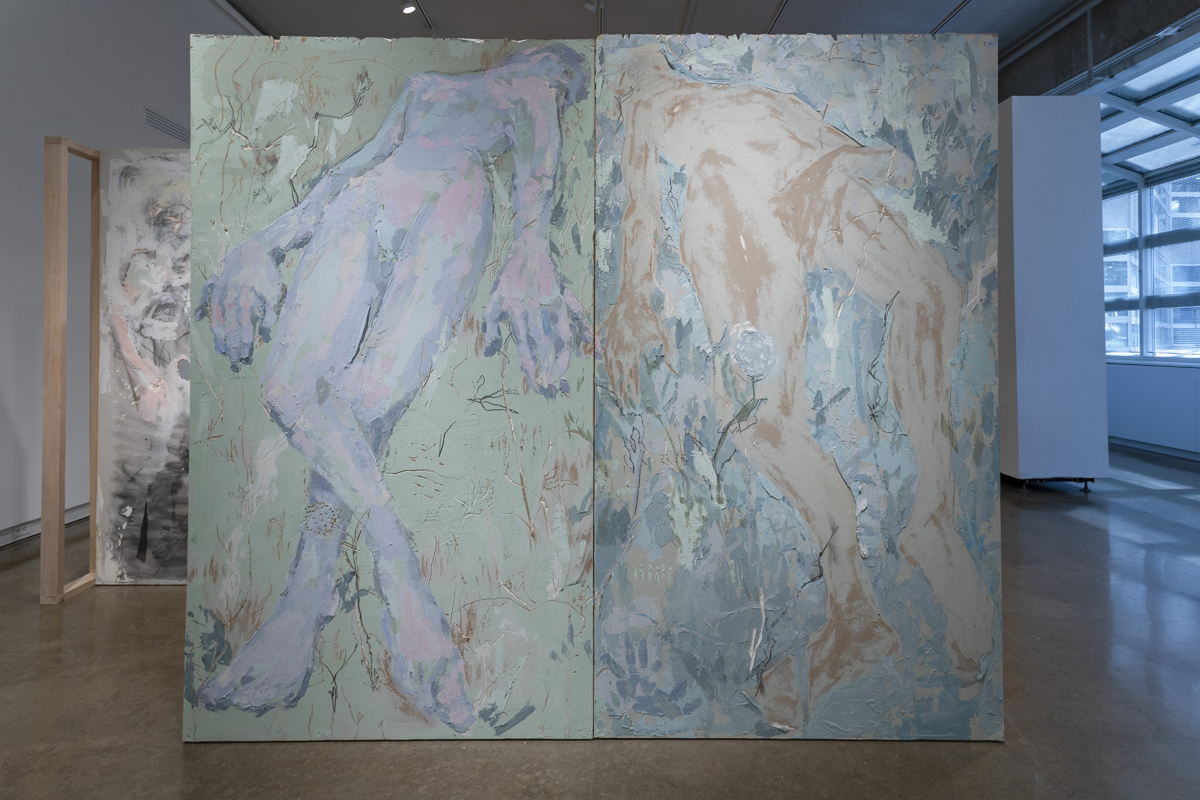
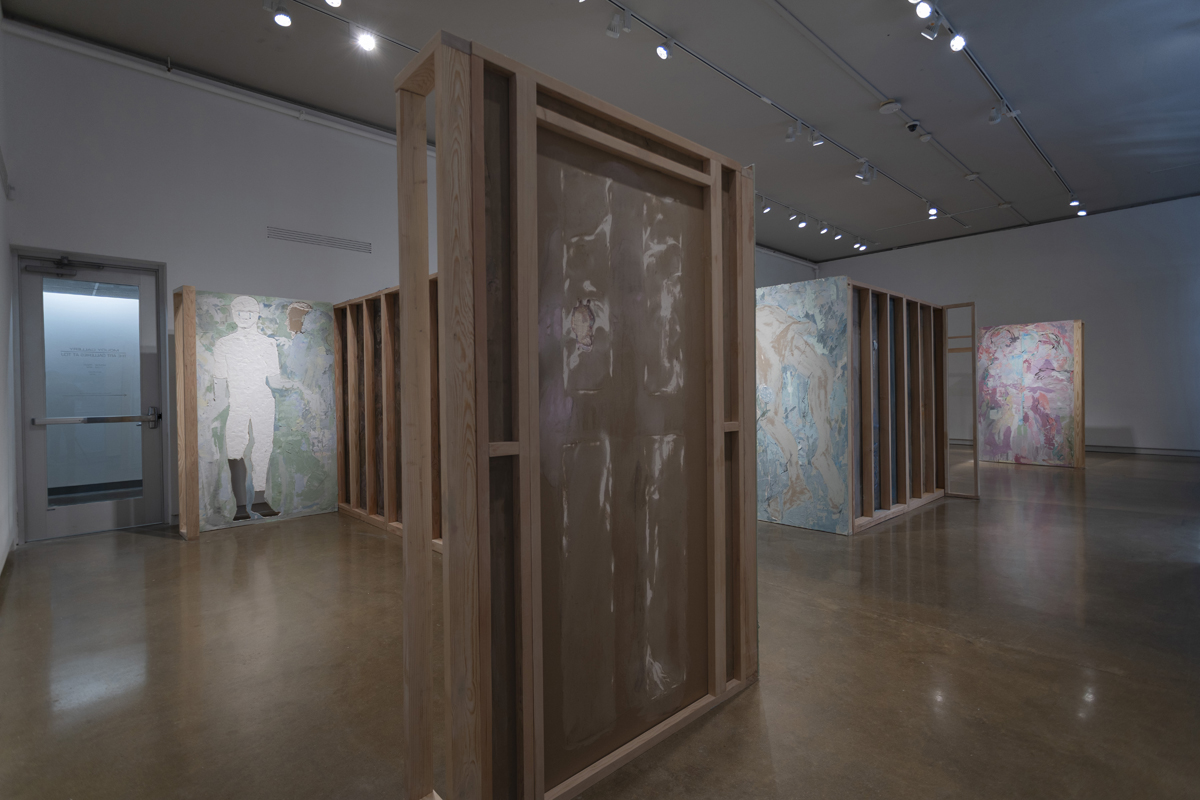
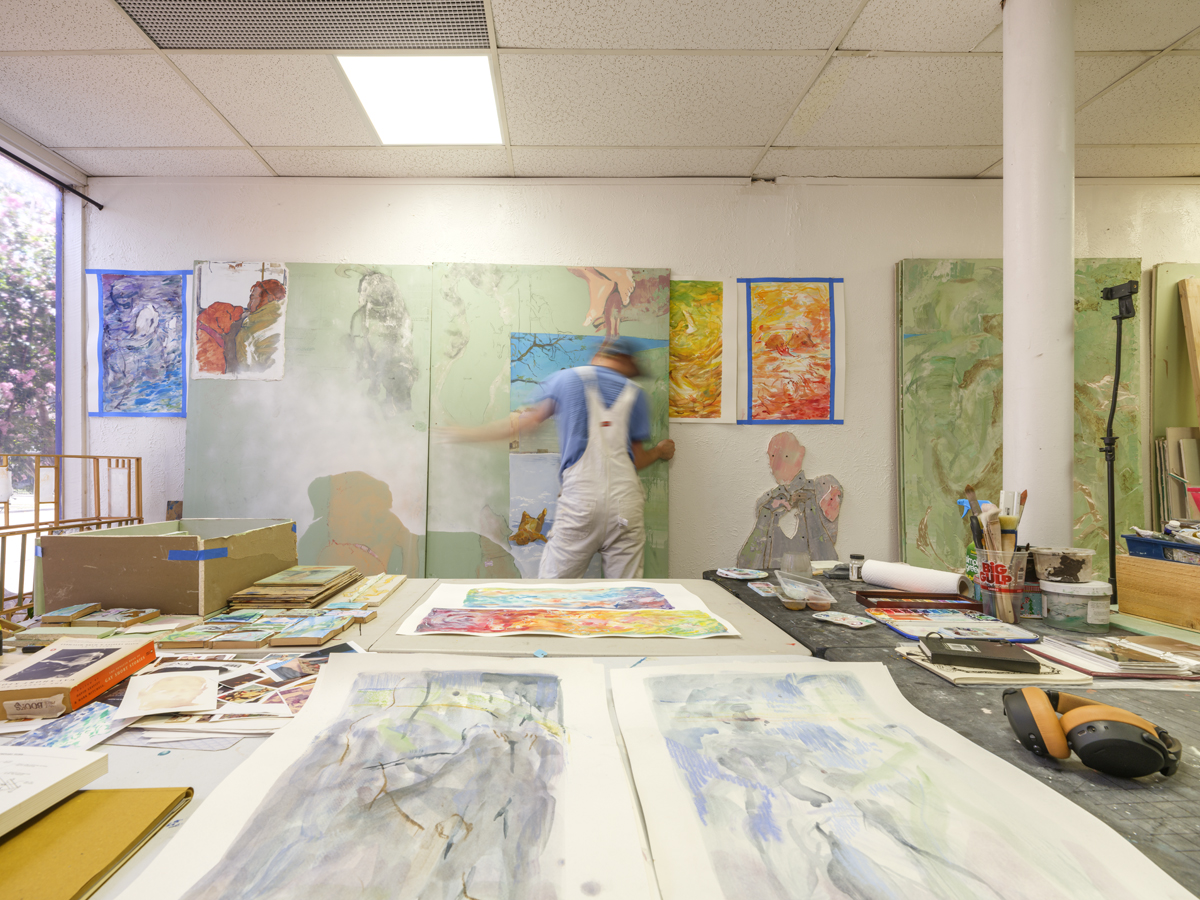
Inside the studio, there are several leaning stacks of makeshift walls and sketches scattered everywhere. These walls, made from sheets of drywall and construction wood, are actually disassembled installations, with hyper-impasto paintings rendered in pastel-colored joint compound on their faces. When set upright, these walls form absurd interiors. Viewers wander through impossible floor plans lined by Ruhala’s monumental figures. Looking around, I recognize work from Dallas Contemporary, Art League Houston, and his thesis exhibition. In his studio, these works are suddenly shy, hiding their faces in unjustified shame.
Ruhala apologizes multiple times for the “mess,” referring self-deprecatingly to the last decade or so of his work. In instances like this, with his warm, if not a little awkward, demeanor, a continuum of sincerity appears between the artist and his art—or at least a natural acumen for sincere imitation. It is something characteristic of younger children, but present in certain adults who resist ego brought on by age. As if, instead of growing up, the artist merely drew himself a bit older every year.
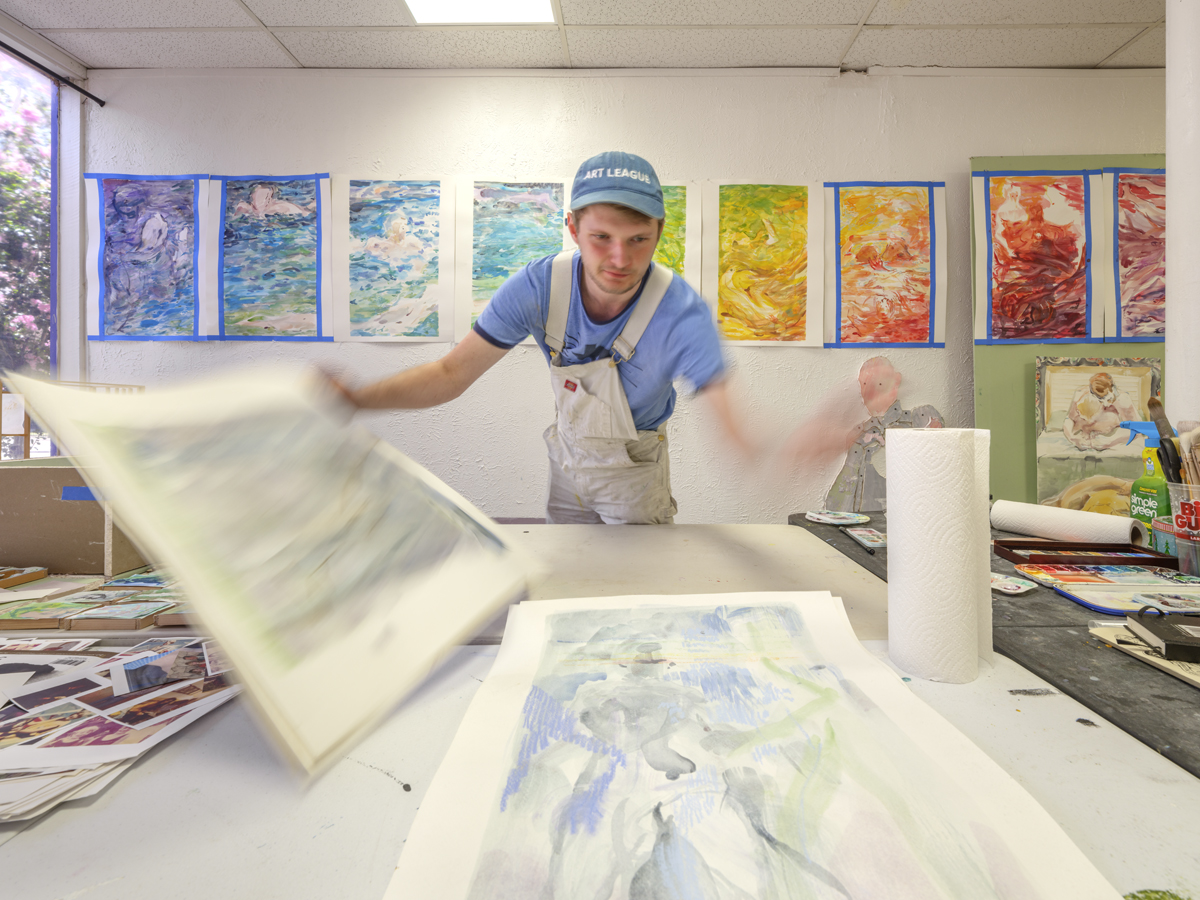
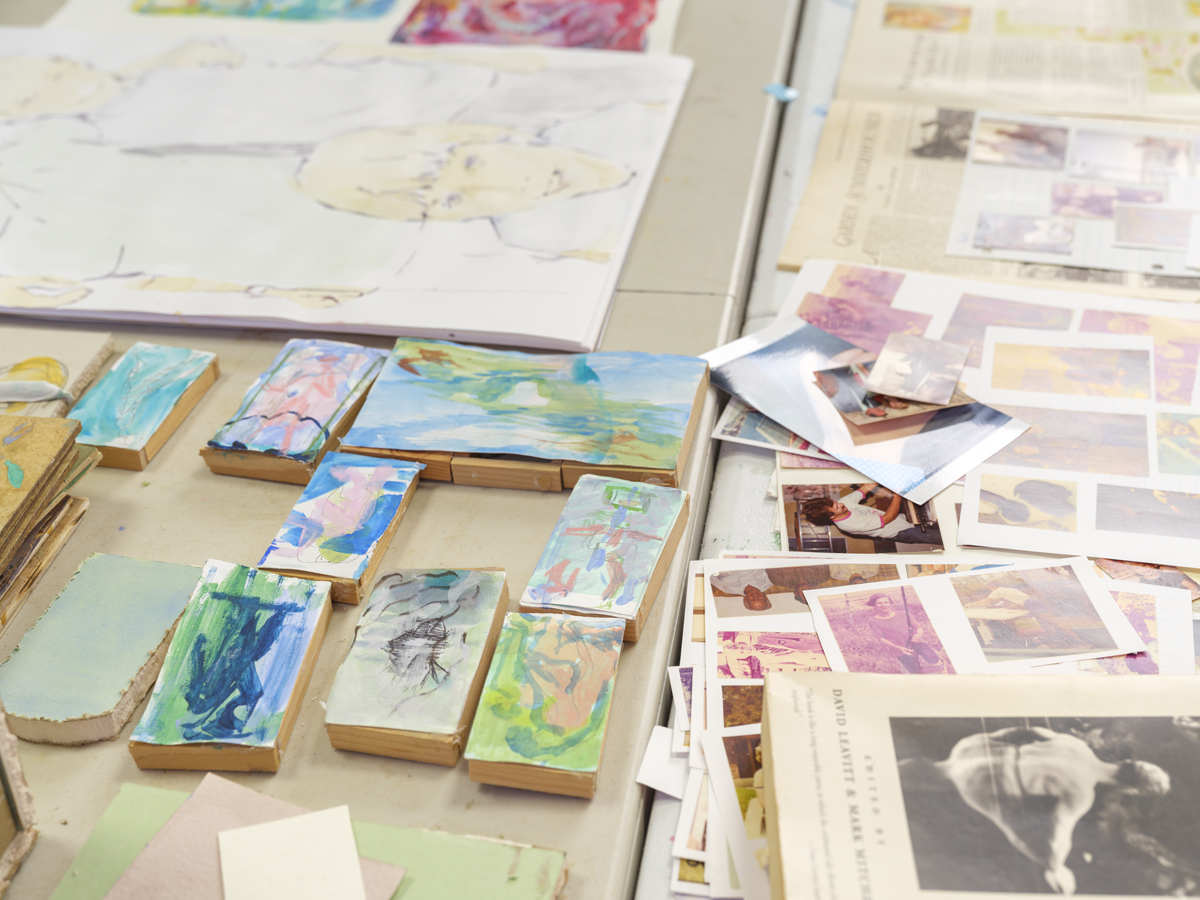
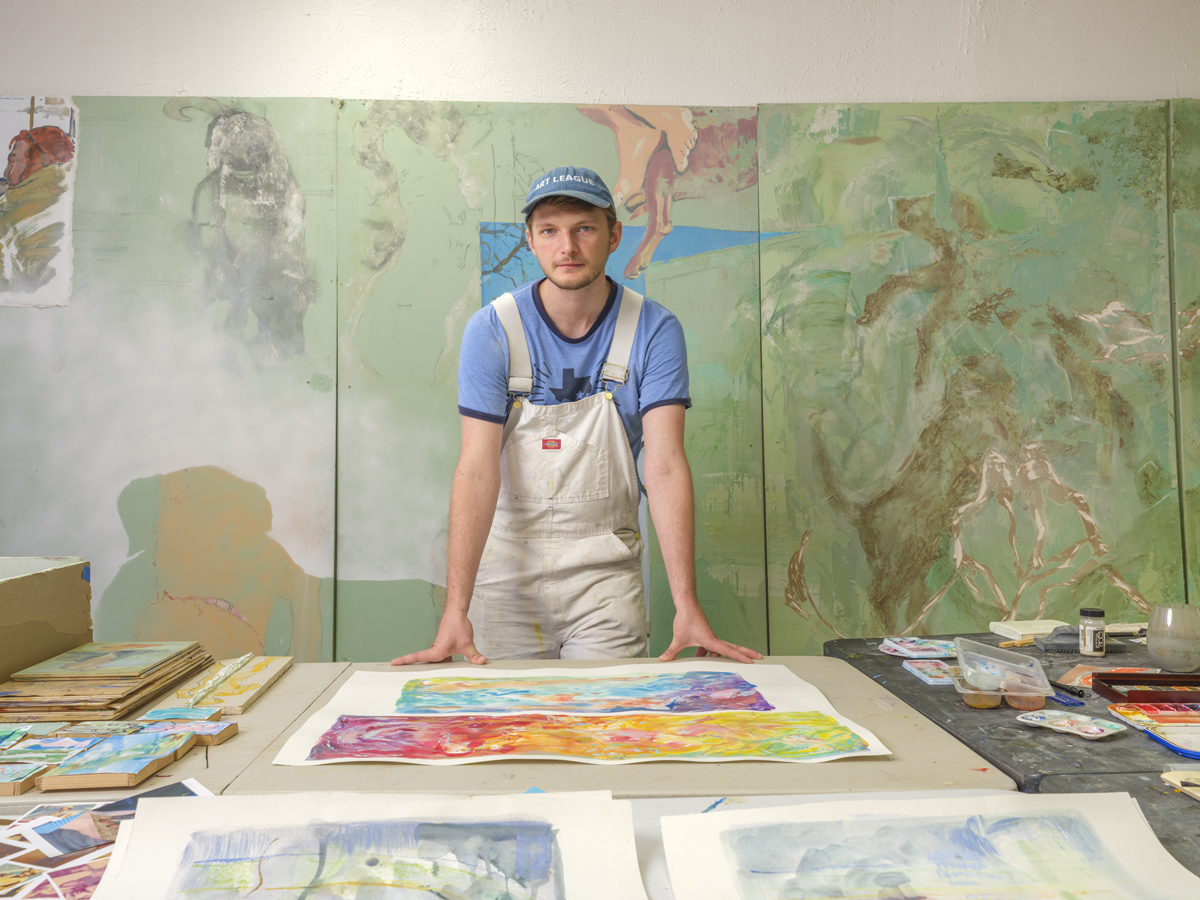
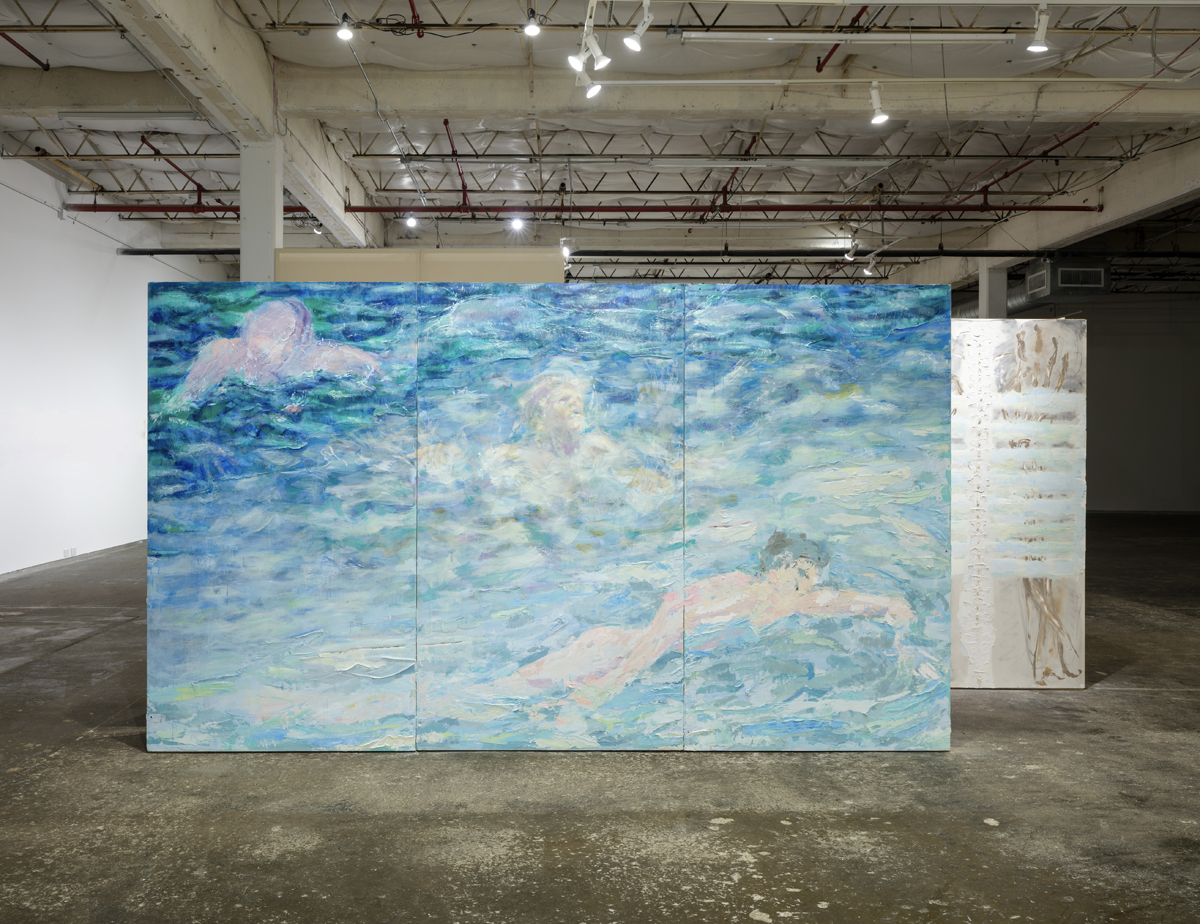
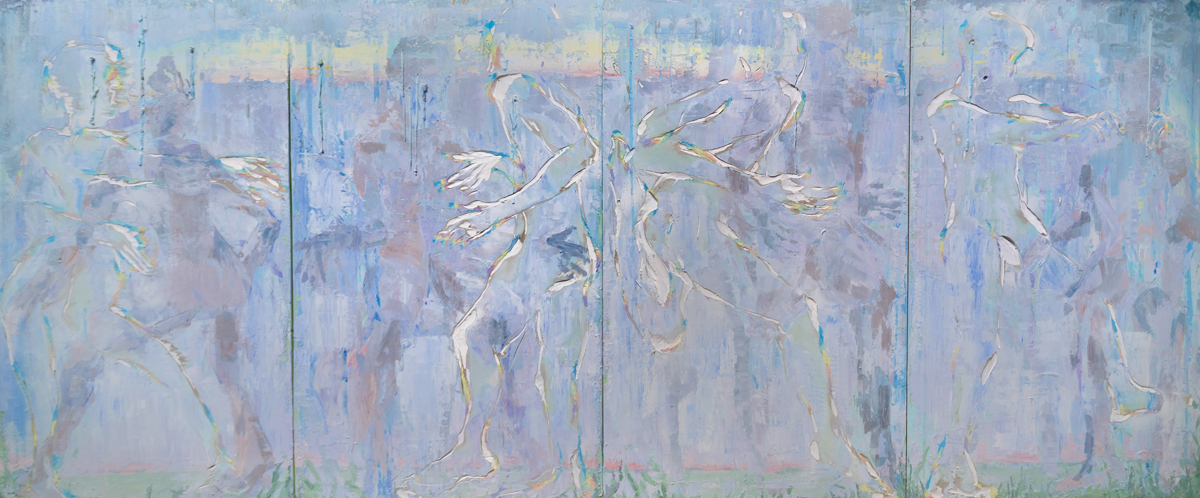
“I’ve been so critical of myself lately,” Ruhala says in response to a question about his current studio practice. “I’m incapable right now of making work that satisfies what it is that I want. The only answer I can find is, do more.” He’s working on a series of wall paintings for an upcoming exhibition at White Columns in New York. These new works depict a continuous, prismatic waterscape with anonymous swimmers (usually thin, queer men like the artist himself) littered across its room-sized length. Three of the nine planned panels are completed, the rest are studies taped to the wall with blue painter’s tape.
Compared to his watercolors of past lovers, most of which are absent from his studio, this new work redirects intimacy into a question of form, pattern, and color. They come from his need for free expression in the wake of constricting realities. “I want people to be more interested in what the figure is doing, instead of how they look,” he says. Like the artist himself, these figures are incognito and turned upstream, struggling against a suddenly vengeful current.