With disarming, familiar objects like coloring books and furniture, Sable Elyse Smith’s Clockwork at The Contemporary Austin exposes how race and the carceral system shape identity.
Sable Elyse Smith: Clockwork
March 6–August 2, 2026
The Contemporary Austin
What’s strange about the term “people of color” is the implication that white people are somehow colorless. In most cases, the term is intended to be inclusive and empowering—and yet, because of the legacies of slavery and segregation, it still suggests that individuals are like pages in coloring books, making race (i.e., color) a kind of smudging, impurifying thing.
In Clockwork at The Contemporary Austin, Sable Elyse Smith untangles the absurdity of this idea through a collection of work spanning the last five years of her career. Across sculpture, video, neon, and works on paper, the New York–based artist contends with the ways both prejudice and privilege imprison young Americans in systems that are fundamentally inequitable, based solely on the color of their skin.
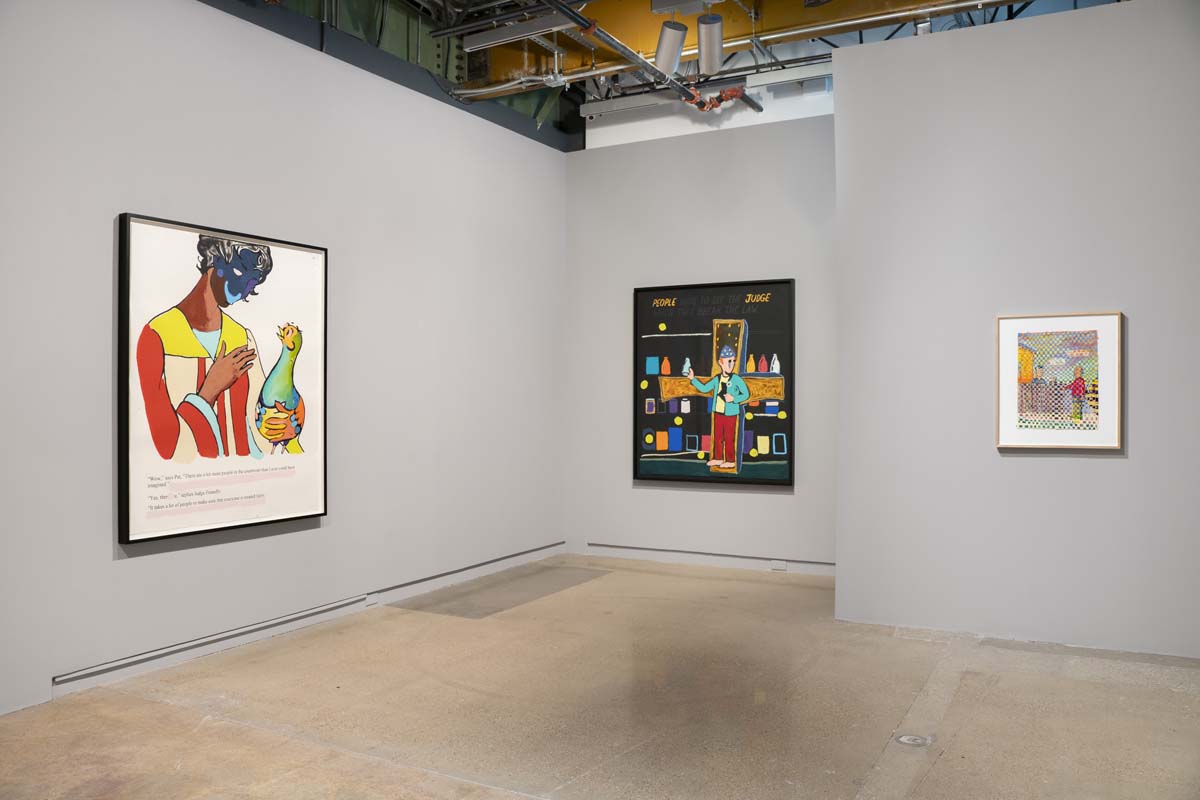
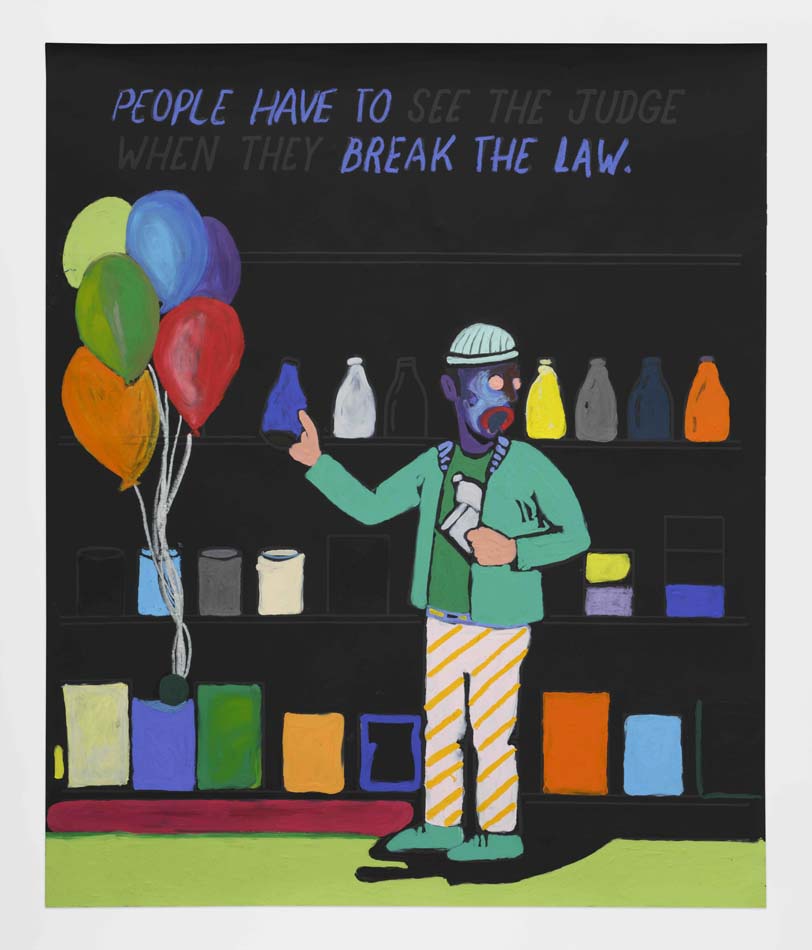
Near the show’s entrance, selections from Smith’s Coloring Book series interrogate the ways prejudice is normalized in our early years. After reproducing pages from a children’s coloring book originally intended to introduce young readers to the criminal court system, Smith uses pastel and oil sticks to color outside the lines, interacting with the book’s dialogue and visual narratives to elucidate how insidious ideas about race undermine people’s rights.
In some installments, such as Coloring Book 128 (2023), Smith toys with the absurdity of the relationship between racism and color, painting “Judge Friendly’s” face various shades of brown, her eyes orange, and her hair purple. In several others, she teases the prejudice out of a question posed by the book, “What 10 things don’t belong in this picture?” by circling and crossing out people of color using globby red paint.
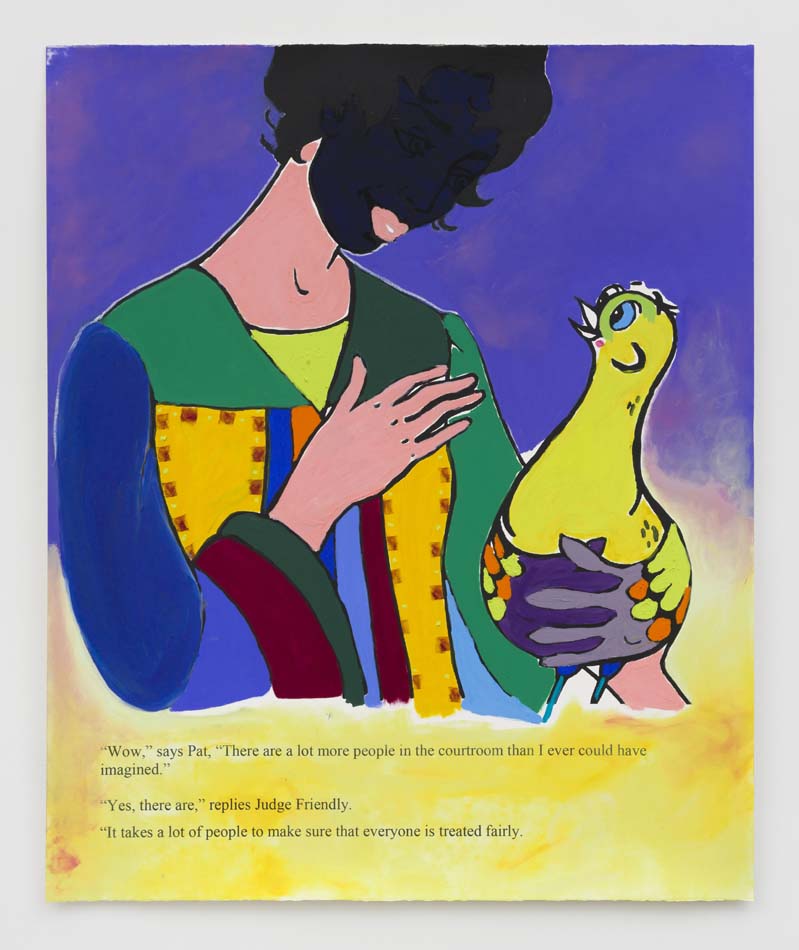
In Coloring Book 123 (2023), Smith paints both the police officer and judge as two-faced, leaning into the tension between occupying positions of power and using that power to pursue justice. At every turn, her Coloring Book series undermines the notion that the criminal court system serves and protects the public without discrimination.
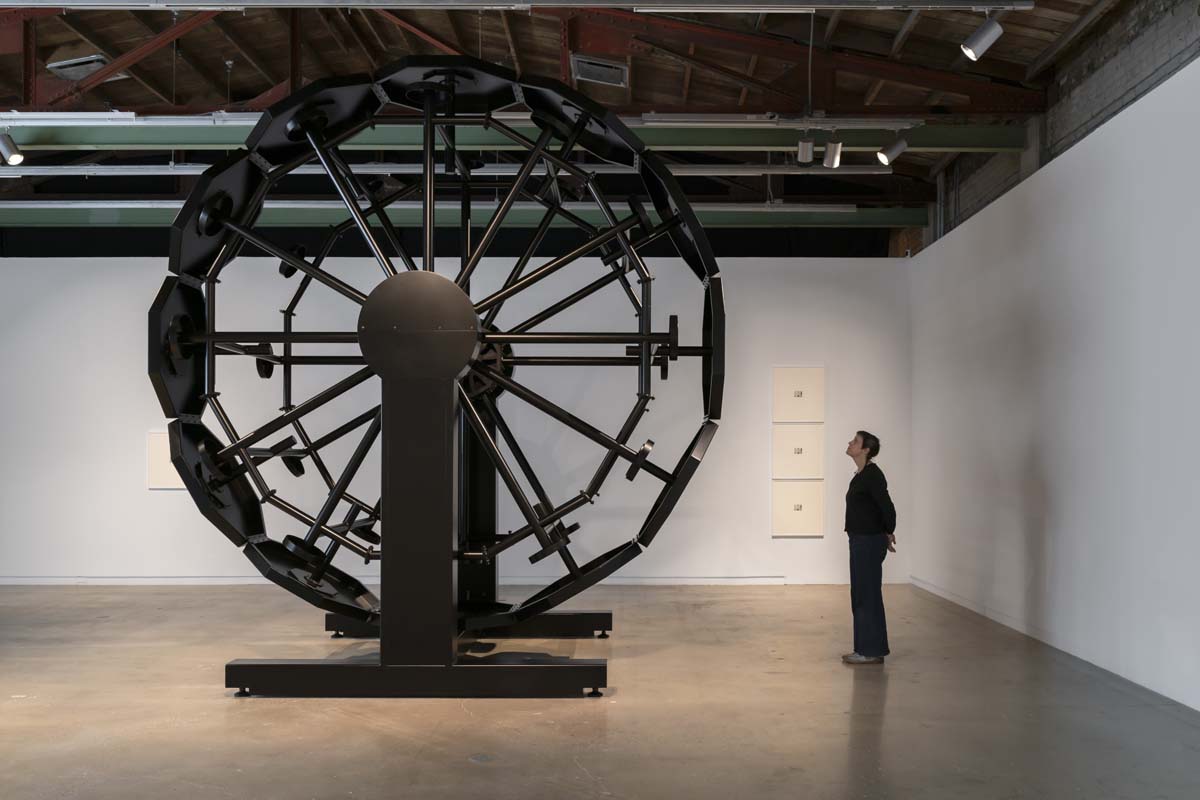
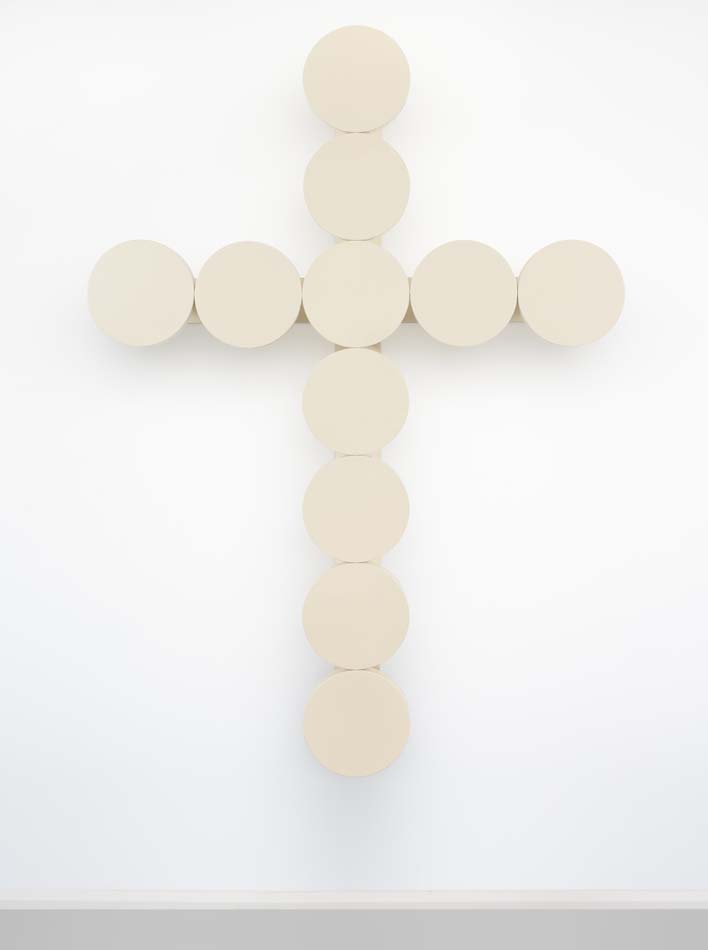
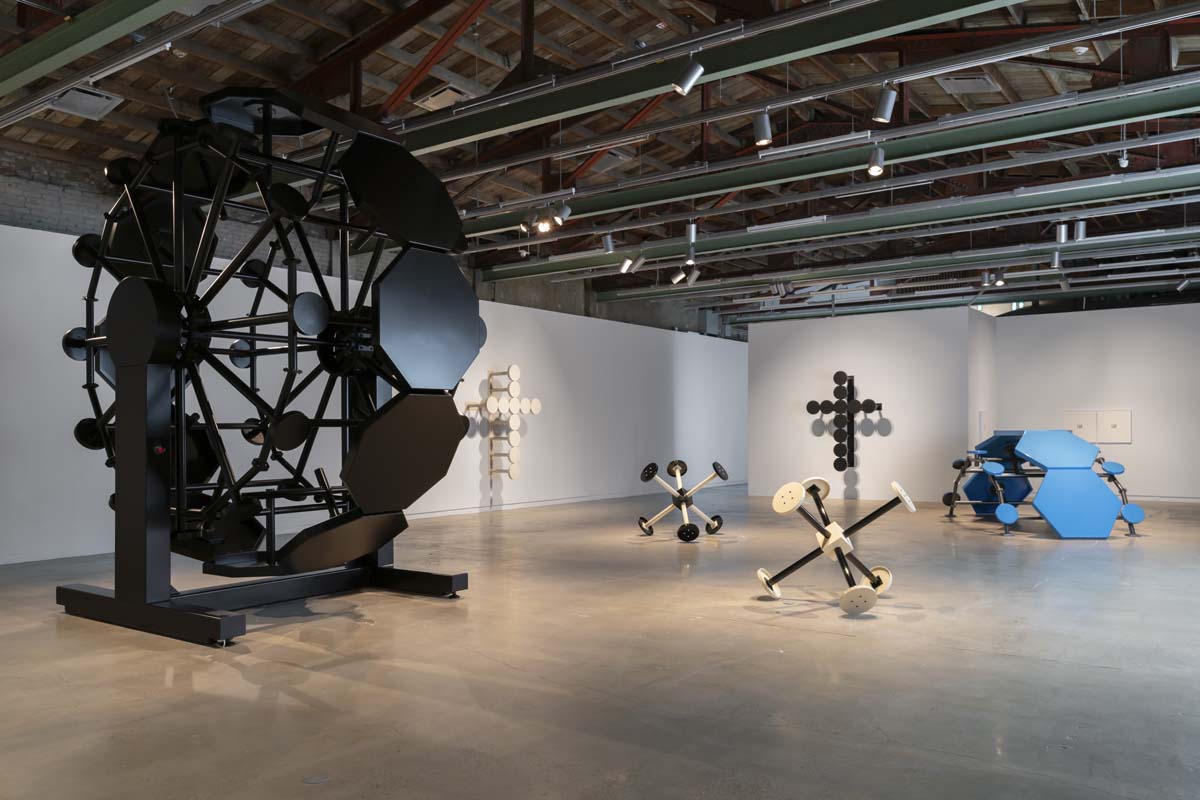
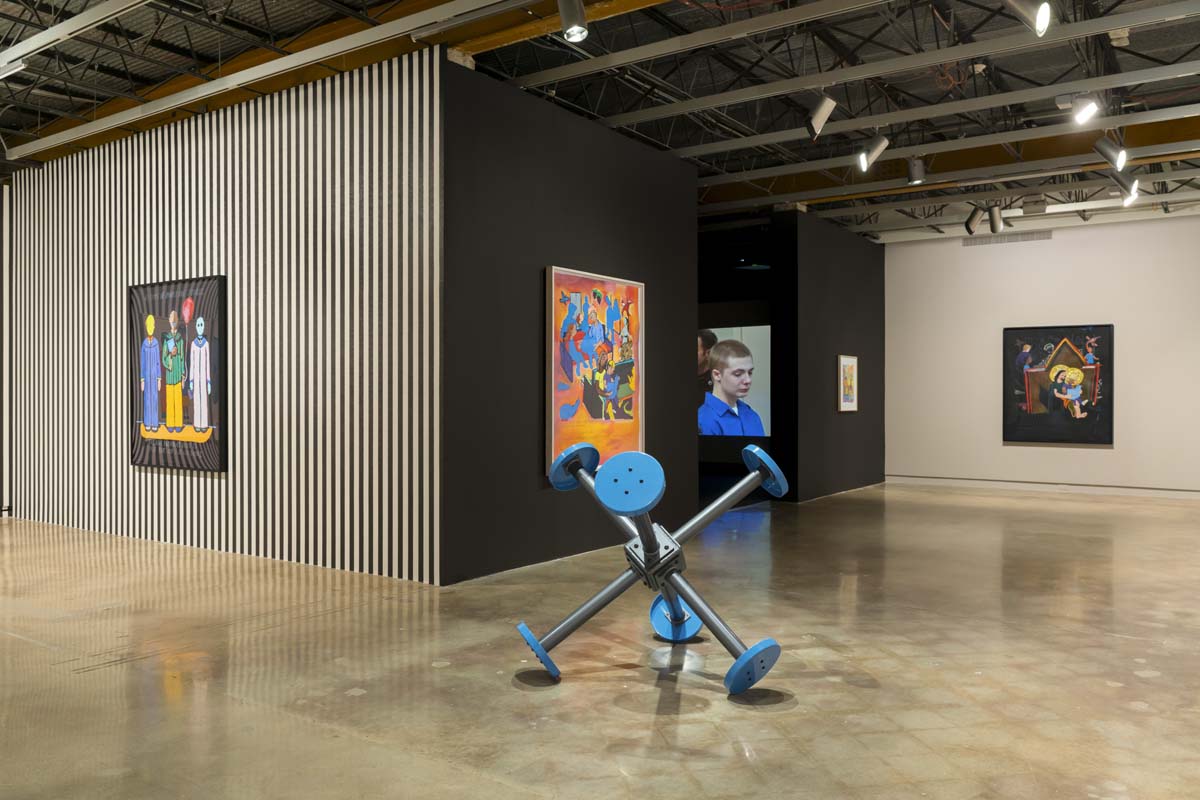
Upstairs, Smith’s series of sculptures crafted from prison tables and chairs betrays how punitive institutions, policies, and practices bleed into our everyday lives. In the center of the room looms A Clockwork (2021), Smith’s massive Ferris wheel, which fuses twelve prison tables together to form a slowly rotating dodecagon. On one hand, the sculpture mourns the revolving door of America’s prison-industrial complex; on the other, it interrogates the prison systems’ inescapable mechanization, implying that, with this carnival ride, getting off isn’t nearly as easy as getting on. Hanging nearby, Vanilla Wafer (2023)—a white cross made from the seats of prison chairs and pinned to the wall—brings to mind the ways both grace and rehabilitation are conditional.
Tucked into a viewing room in the back of the gallery, Smith’s more recent video projects, LAUGH TRACK, OR WHO’S THAT PEEKING IN MY WINDOW (2021) and skin suit (2025), juxtapose dashcam footage of roadside arrests involving white and Black individuals. In one interaction, a white cop lets two drunk college kids off the hook after they apologize profusely. In another, a swarm of officers pins a Black man to the ground, even as he raises his hands in surrender.
While her conceptual work uses familiar objects, symbols, and color to gesture toward the complexities of racism within the carceral state, Smith isn’t afraid to say the quiet part out loud.
With the realities of the carceral system in Texas—home to the highest incarcerated population in the country, by far, and also the largest concentration of ICE detention facilities—as a backdrop, these video works aren’t just difficult to watch; they feel uncomfortably close to home. However, they highlight the ways Smith’s work sharpens rather than softens, as she moves fluidly between abstraction and clear-eyed confrontation. While her conceptual work uses familiar objects, symbols, and color to gesture toward the complexities of racism within the carceral state, Smith isn’t afraid to say the quiet part out loud.
With her neon work, Landscape V (2020), the stakes couldn’t be clearer. In pulsating white letters, underscored by a stark blue line, the artist writes, “Someone smashed the policeman’s radio / And finally silence A black language infinitely / And blue in a decade where it finally means sky.” For Smith, liberation looks and sounds like peace and quiet; it also requires enough time for an idea as simple as the color blue to shift its meaning away from fear or hate toward endless possibility. It’s also clear, in this piece, that the police aren’t necessarily the problem—rather, it is the internalized ideas about race that complicate their policing and implicate the people they abuse and incarcerate.