Run the Code explores technological obsolescence, interactivity, and the limits of software as an artmaking tool, revealing a data-driven approach to conceptual art.
Run The Code: Data-Driven Art Decoded by Thoma Foundation X Blanton Museum of Art
March 8–August 2, 2026
Blanton Museum of Art, Austin
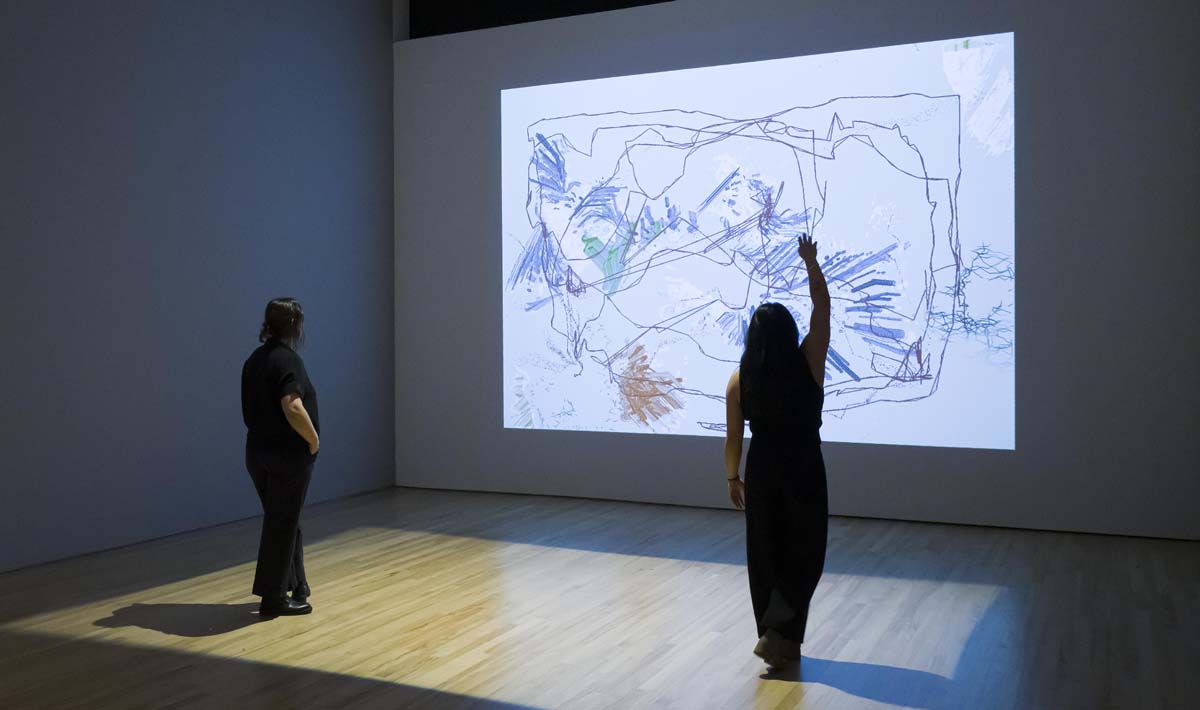
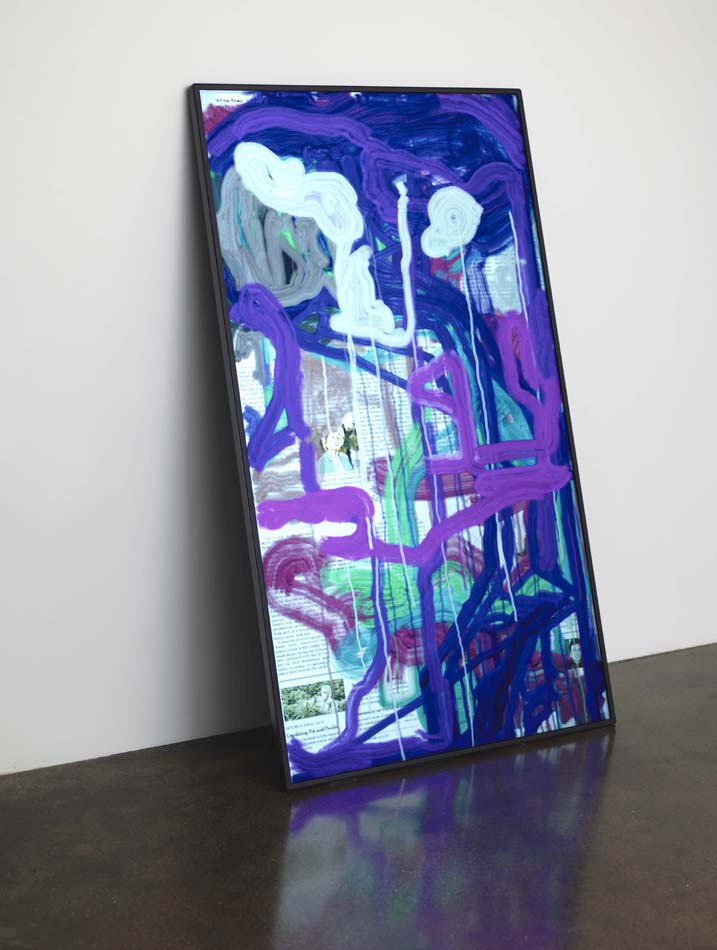
Upon entering, I was skeptical of Run the Code for the simple reason that, for all its high-tech flash, digital art can be disappointing. Projections in a semi-bright room feel a little dead. Interactive pieces that digitize physical presence can be laggy. And when an artwork takes input from visitors, adding strokes based on the location of bodies in the room as in Camille Utterback’s Untitled 5 (2004) (part of this exhibition’s “Interactivity” section), the lines don’t feel as fully there as physical marks do. I still question whether works that “invite the computer to ‘see’ art history anew,” as it’s framed in the wall text for the section “Digital Dialogues with Art History,” are over-anthropomorphizing software. Yet, the artworks included in the show, organized by the Thoma Foundation (the collection supplies all the works on view) in collaboration with the Blanton Museum of Art, illustrate how artists have, over the past twenty-five years, used digital materials to explore human questions and information-age anxieties.
For instance, what fragments of our digital culture and creativity might people of the future rediscover? Daniel Canogar’s Game Over (2014) responds to that question, treating a discarded handheld videogame player like an artifact of technology’s rapid obsolesce. The toy’s faceplate and electronics are laid out on a white shelf, and a projector above plays a custom animation that shows characters like Yoshi from Mario running among the pieces. The development of technology has been a story of rapid moves from one product to another: new charging cables, new displays, etc. Media tied to particular artifacts could become even harder to rediscover as this trend continues, yet these mass-consumed games are the source of many shared stories for 21st-century culture. Canogar’s piece questions whether the fragments can communicate when the tech has been surpassed.
Another piece stands out because in it there’s recognizable human emotion, distorted by the artist’s use of software. To create 100 Special Moments (The Graduate) (2004), Jason Salavon wrote a computer program that averaged the pixels in 100 graduation pictures to create a composite. The result captures the human warmth and elation of these moments, but faintly. It’s possible to see the blurred forms of the graduates’ caps and gowns, big smiles, and supporters standing to either side. But these shared elements of the graduation ritual are made fuzzy enough by the averaging process that it wouldn’t be possible for someone who had never seen one to recreate an accurate graduation scene based on the images. The averaging also makes the graduates anonymous. The resultant image is one of erasure, poignant at a time when graduates face pressure to present a smooth profile that satisfies the algorithms used by gatekeepers to rank candidates for jobs.
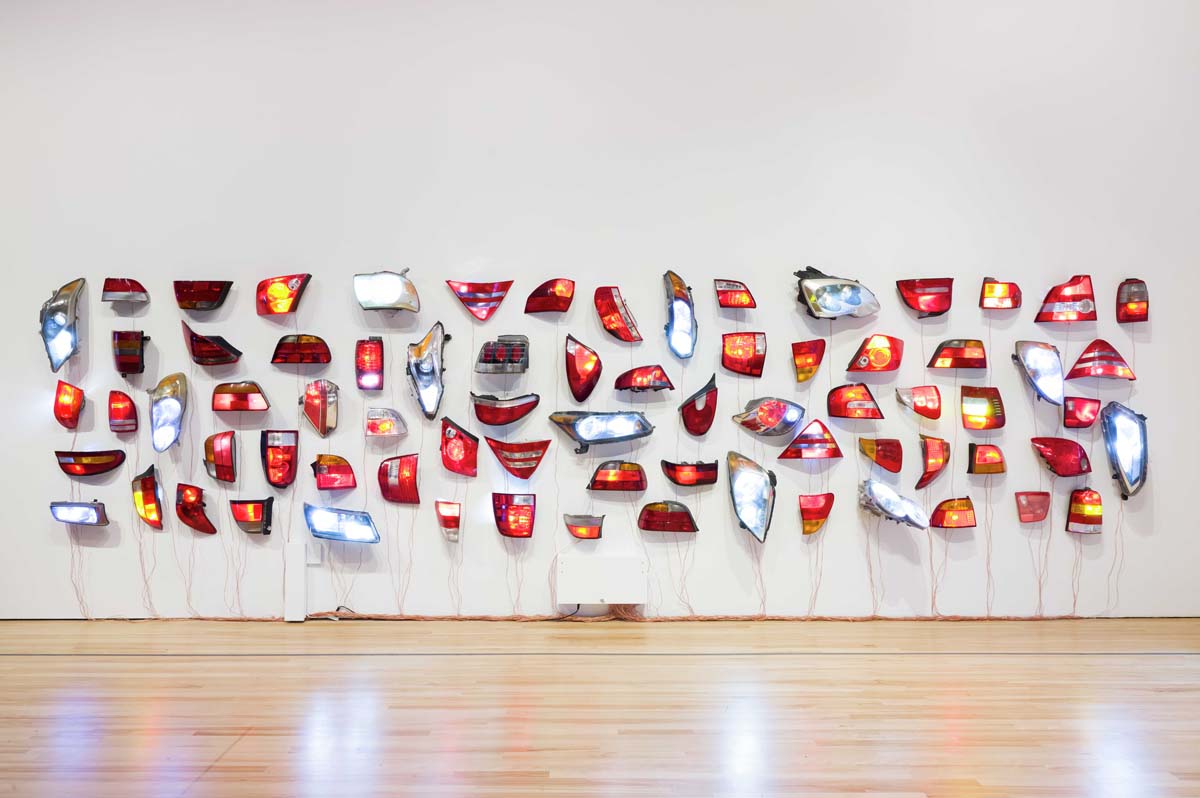
Screens and LED displays dominate the galleries, but Madeline Hollander’s Heads/Tails: Walker & Broadway 4 (2020) is eye-catchingly sculptural. This mosaic of headlights and taillights from cars is programmed to light up in the pattern established by the cars that braked and accelerated at a NYC intersection during a week in early 2020. The lights echo the everyday dance of navigating traffic. (Hollander trained as a choreographer.) As the lights ripple on, the wall-mounted installation replicates the crowd all stopping, all going, improvising their way into movement following the flow and traffic rules. The random element of human behavior is there, contributing to the design alongside the rules of the road.
As AI products built on black-box algorithms dominate today’s technology conversation, control over the output of technology is a key concern for artists.
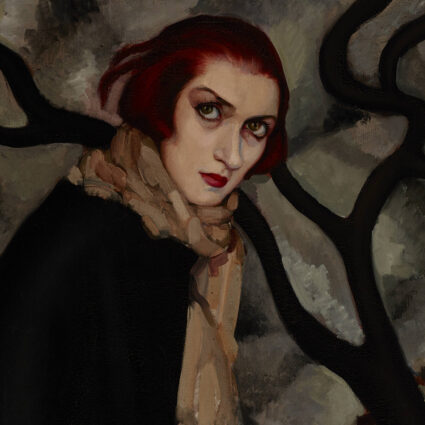
The rules at play across many of the works on view highlight how much digital art that relies on code has in common with conceptual art more broadly. Whereas celebrated conceptual artist Sol Lewitt prescribed that a line of a certain color and weight should be drawn between certain features of a wall, the digital artist decides which data is manipulated and in what way. If digital files of all the art at the Washington D.C. art museum The Phillips Collection is the input, as in Canogar’s Amalgama Phillips (2021), the artist decides how it merges, at what speed, etc. The result, however, is an image or a durational sequence of images. The art is as much the product as the process. And the output, the art, in the case of Amalgama Phillips, is an over-bright mush, where the original paintings are distorted but identifiable, not a compelling new whole.
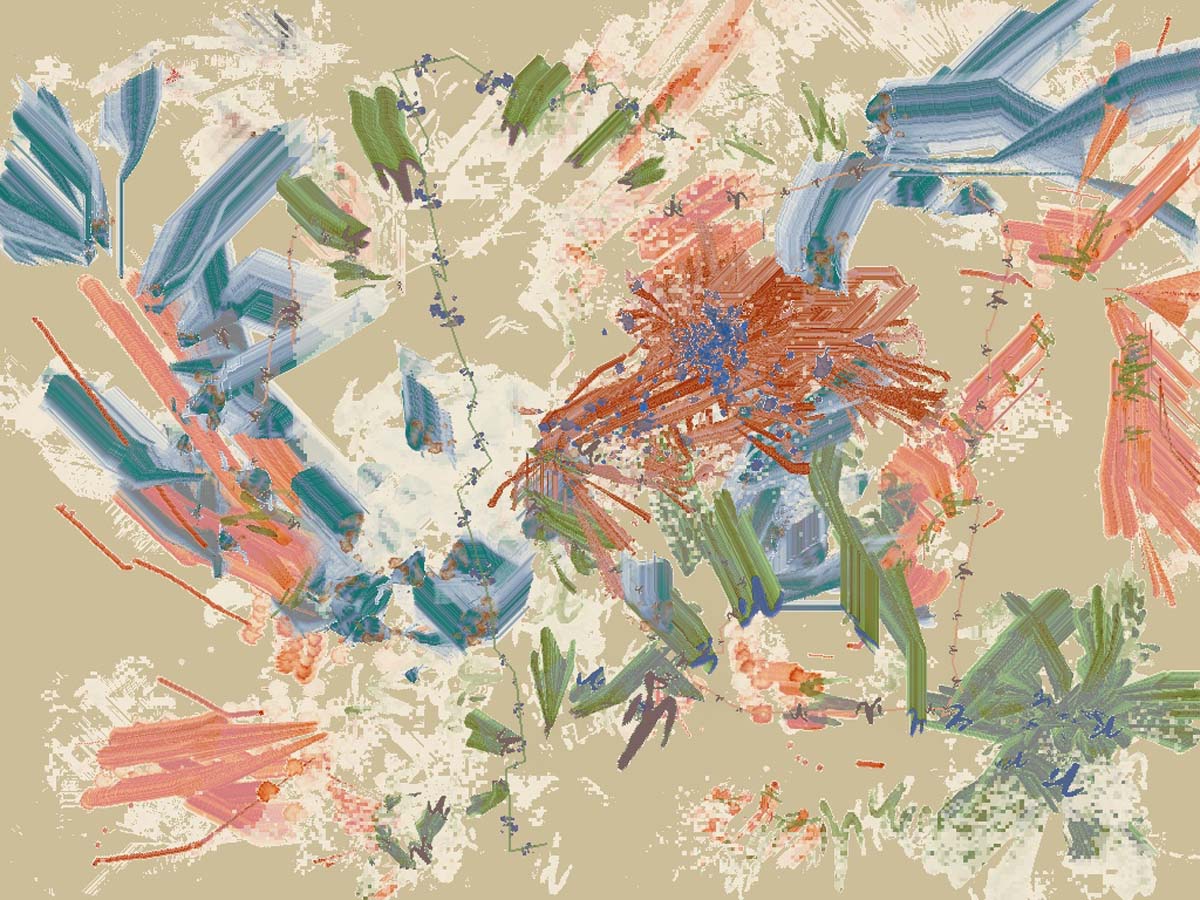
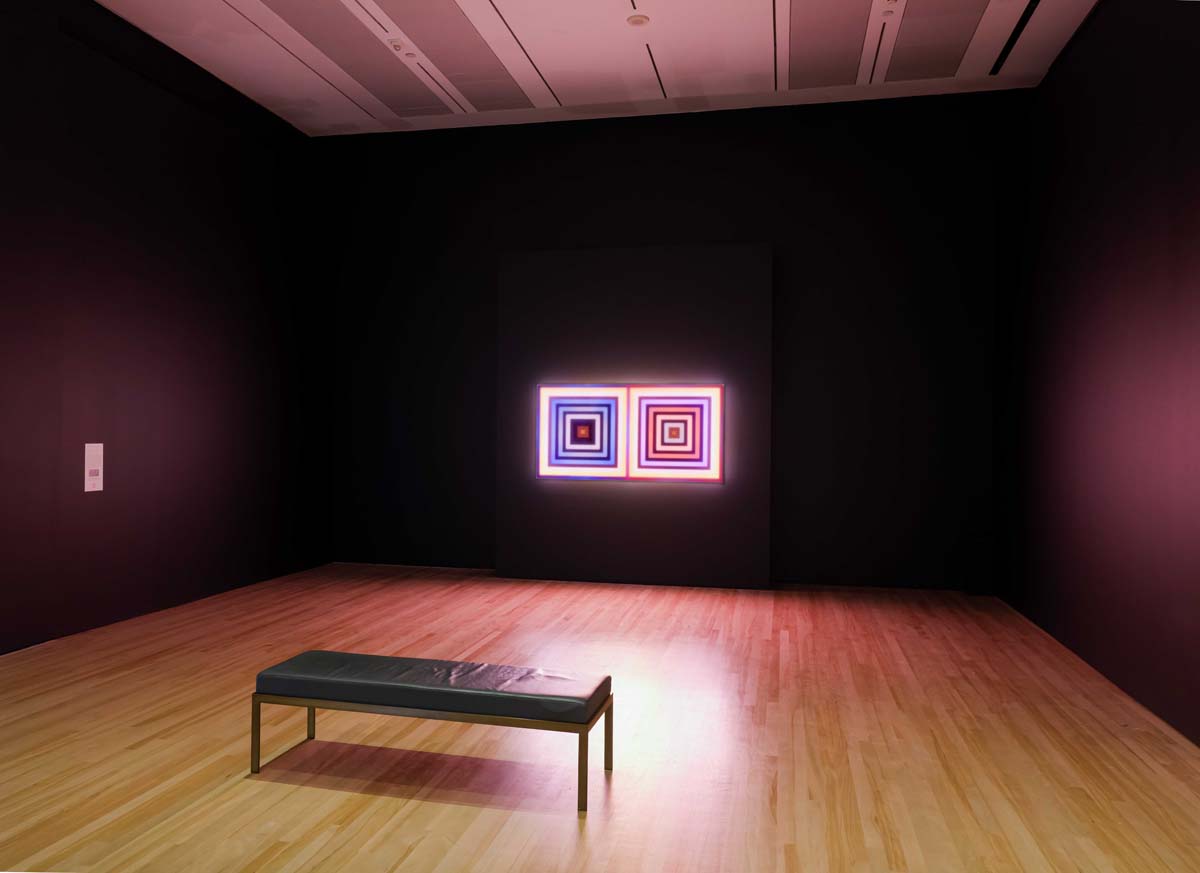
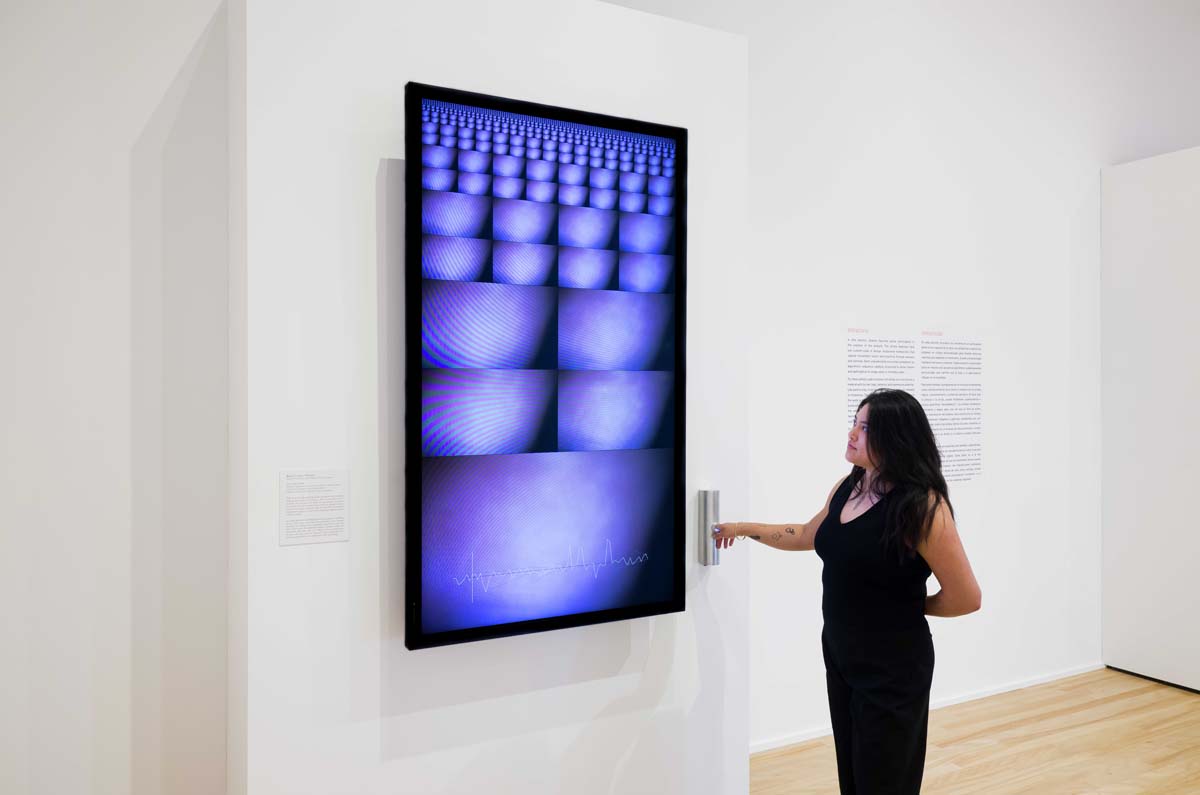
As AI products built on black-box algorithms dominate today’s technology conversation, control over the output of technology is a key concern for artists. Indeed, works that are “produced by a machine or mere mechanical process that operates randomly or automatically without any creative input or intervention from a human author” cannot be copyrighted in the U.S., according to the Congressional Research Service. With this need for control of the output in mind, coding’s rules serve as a kind of material for the artists in this show, most of whom created their work before AI became readily available. While coding rules may at first seem unbending, an element of play and experimentation of creation can come in through artists’ tweaks of these rules, as well as their responses to and incorporation of hallucinations and randomness. Still, an early work in the show, Rafael Lozano-Hemmer’s Method Random 4, (2014), through RANDU software-selected colors, demonstrates that programmed randomness has, in the past, still rendered unadvertised patterns. Software’s programmability offers artists a claim to control over the output of code-based work, yet design failures and glitches limit an artist’s control. On the other hand, however, these same glitches introduce an action-painting-like energy, surprising both creators and viewers.