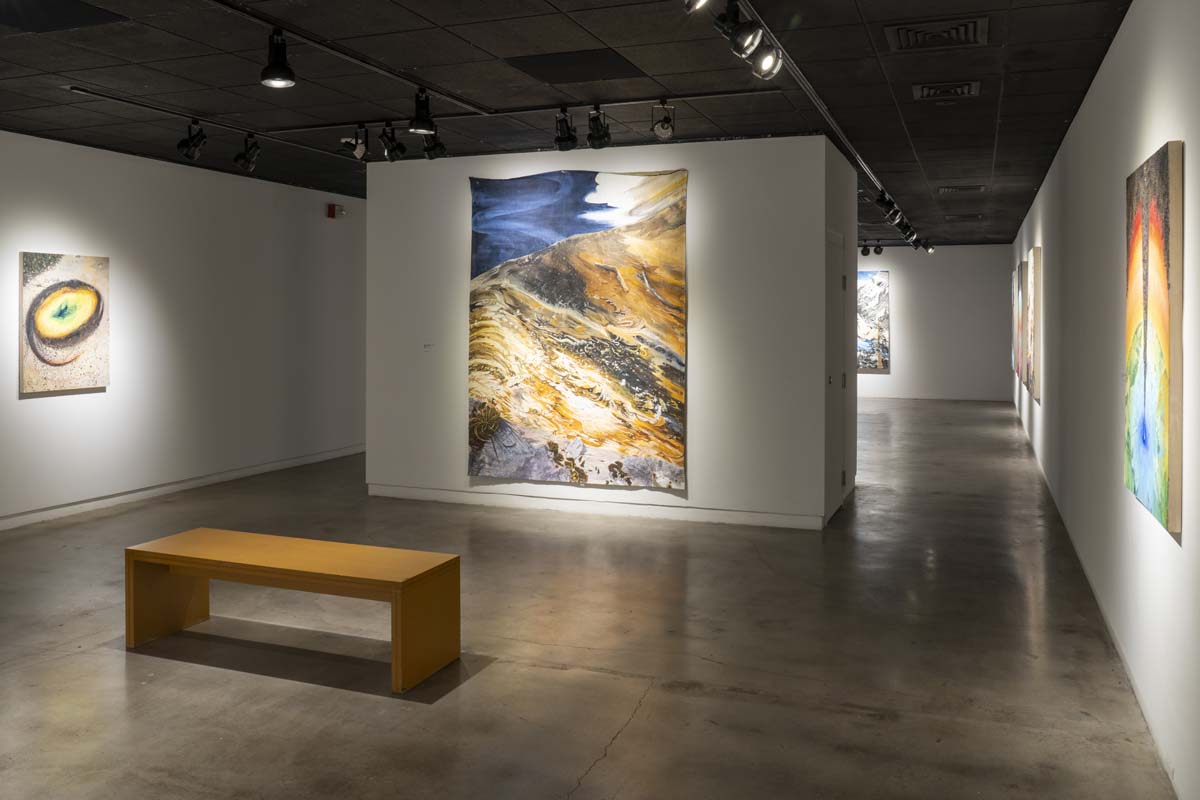
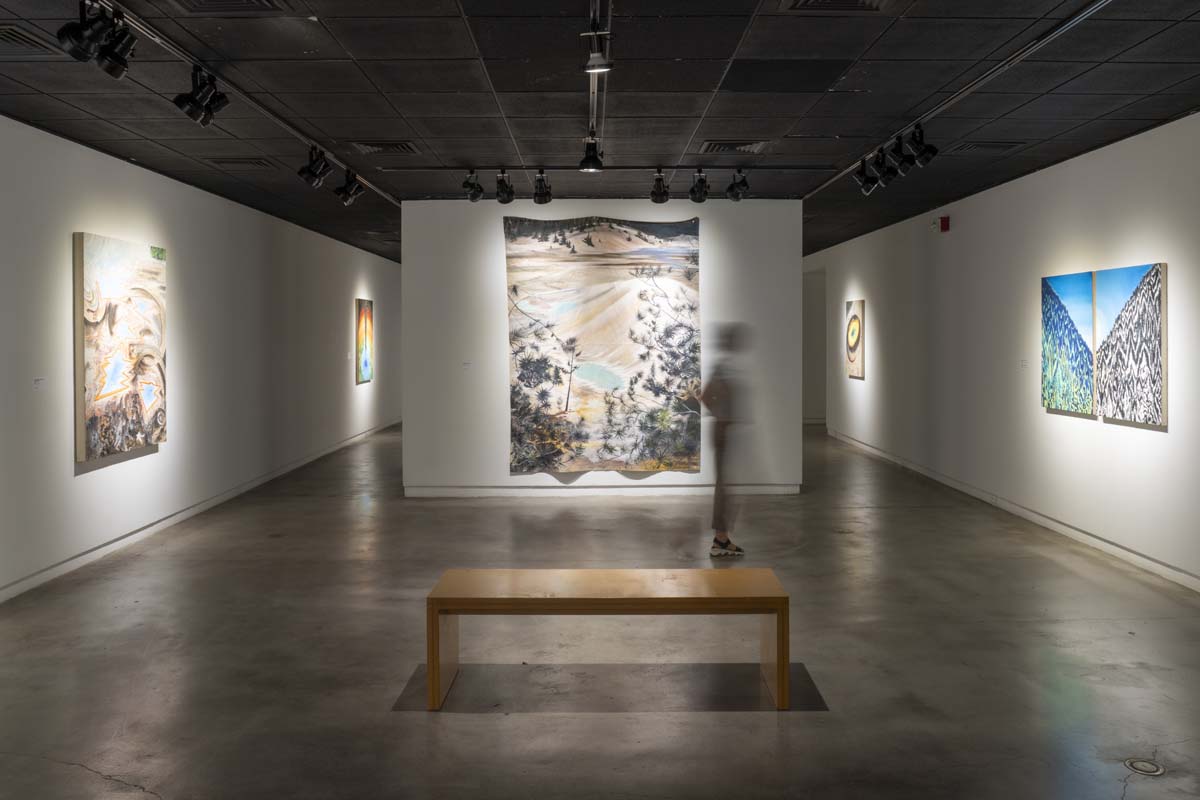
At UMOCA, Eleanor Mahin Thorp turns minerals, mining waste, and paint into wildernesses that are far from unspoiled—rather, they’re charged with agency.
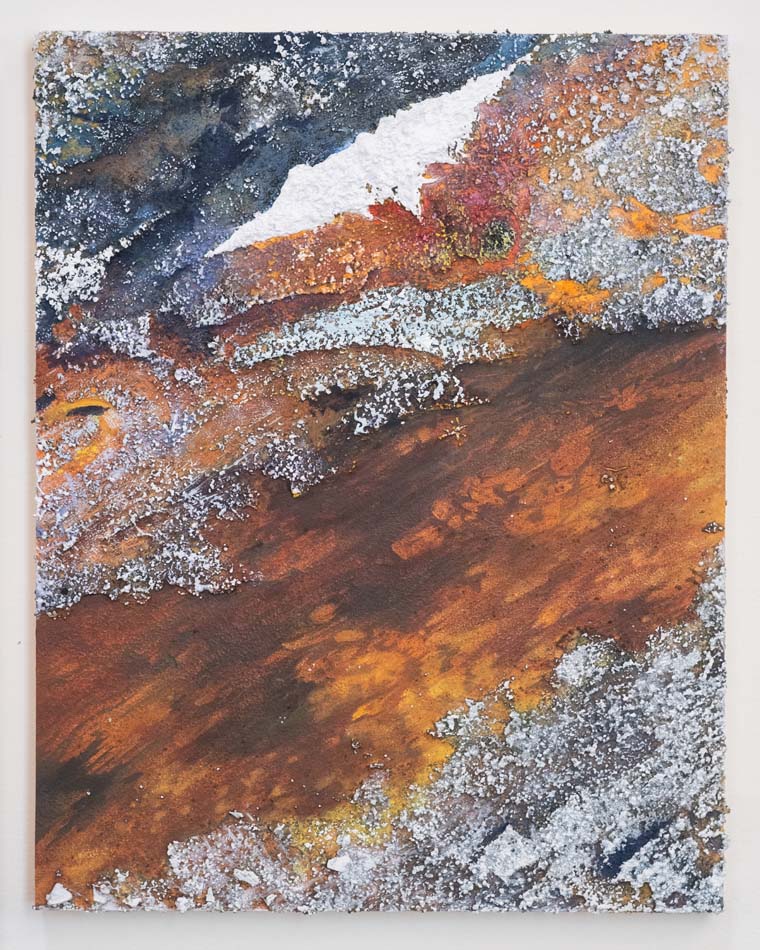
Eleanor Mahin Thorp: Snowtrickle, feldspar, dirt
June 26–September 19, 2026
Utah Museum of Contemporary Art, Salt Lake City
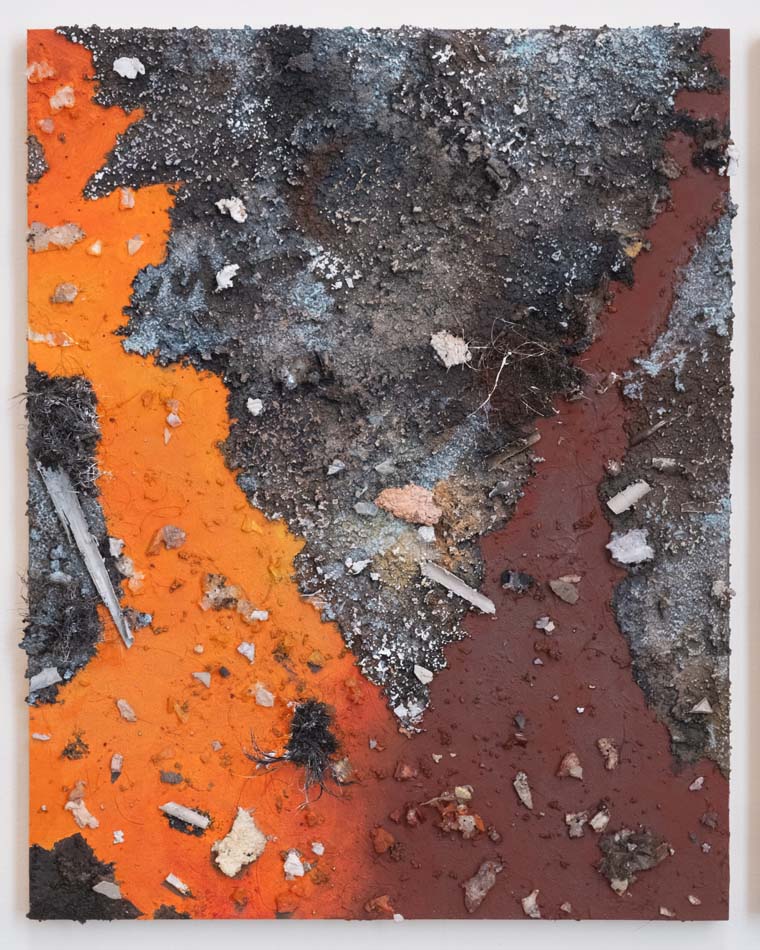
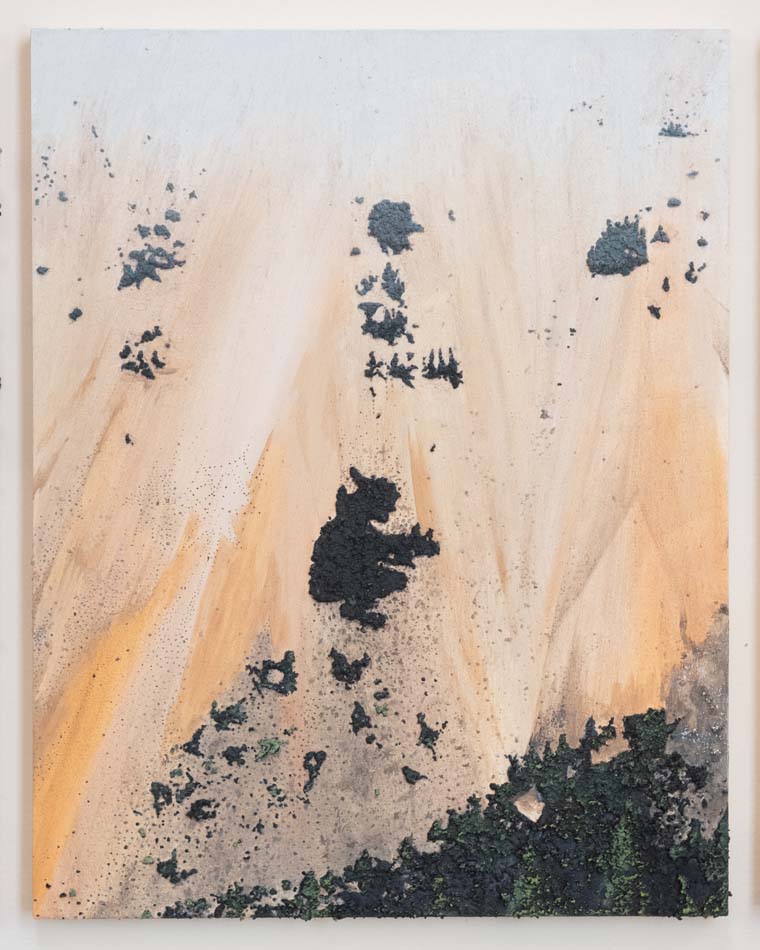
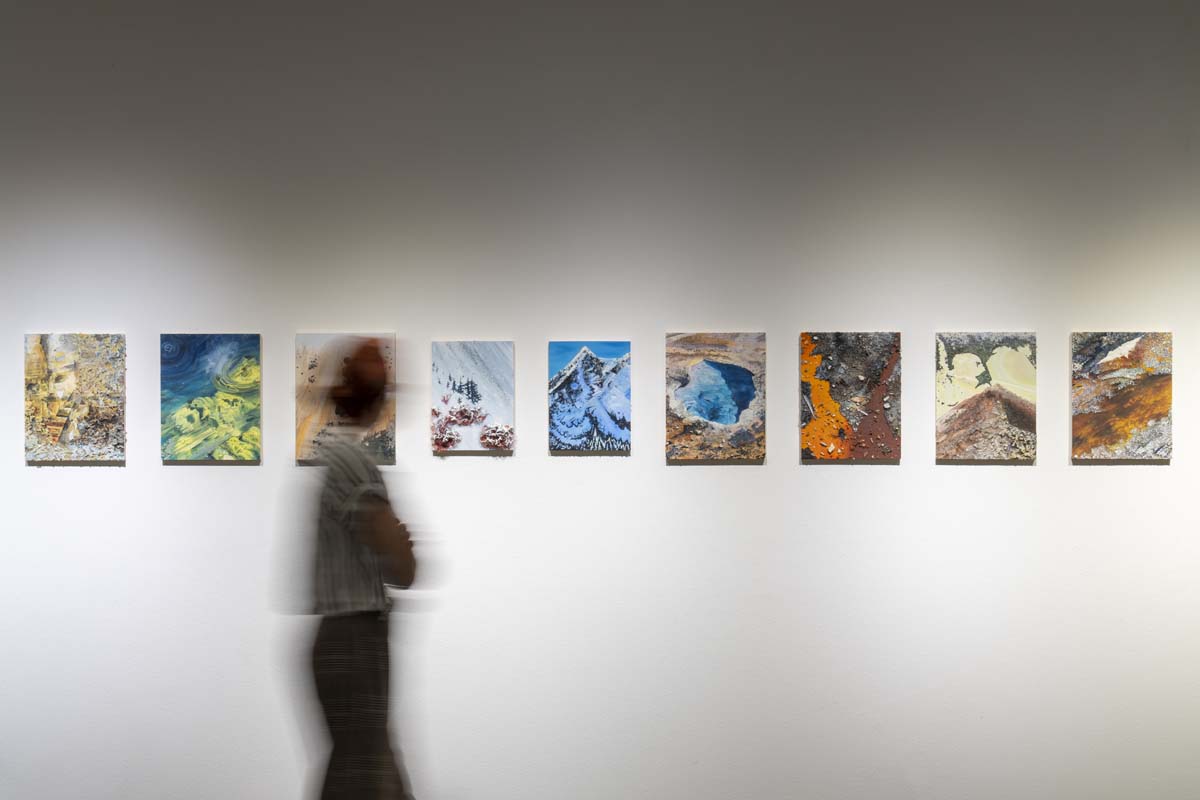
At first glance, Eleanor Mahin Thorp‘s paintings appear to arise from the soil. Muted earthy tones dominate the visual expanse of each painting as if sediment, ash, or minerals had accumulated upon the canvas. As one spends time with the work, however, a connection to geology starts to fade. Vibrant hues pierce through the somber surface. Forms coalesce and dissolve into abstract figures, nearly recognizable yet ultimately unidentifiable. Her most compelling works start to behave like landscape too—layered, fractured, and morphing in ways both seemingly predetermined and autonomous.
The exhibition borrows its title from “For Nothing,” a poem from Gary Snyder’s Turtle Island. Snyder describes the Earth as a flower without an intended recipient. The last line of the poem reduces that terrestrial metaphor to melting snow, feldspar, and dirt.
By a different path, Edward Abbey, in Desert Solitaire, reaches a similar notion. While Snyder emphasizes interconnectedness, Abbey frequently portrays the desert as largely indifferent to human comfort and opposed to encroachment. Thorp’s work recalls Abbey, as it seems she also distrusts landscapes diminished to resources or commodities, but does not long nostalgically for unspoiled wildernesses. The areas depicted in her paintings have already undergone mining, been labeled, littered, and charged with humanity.
All of this is physically incorporated within the art. Thorp develops layer upon layer of pigments, minerals, and various other materials until the final surface bears the weight and texture of stone. For example, in A Sister of Spiteful (2025), copper waste, rock, and roadside plastic combine with oil on a wooden panel. Unlike many artists who utilize industrial processes to create references to mined lands, Thorp incorporates the products of extraction into the very fabric of the painting itself. The painting seems to be a picture as well as a mangled area of terrain.
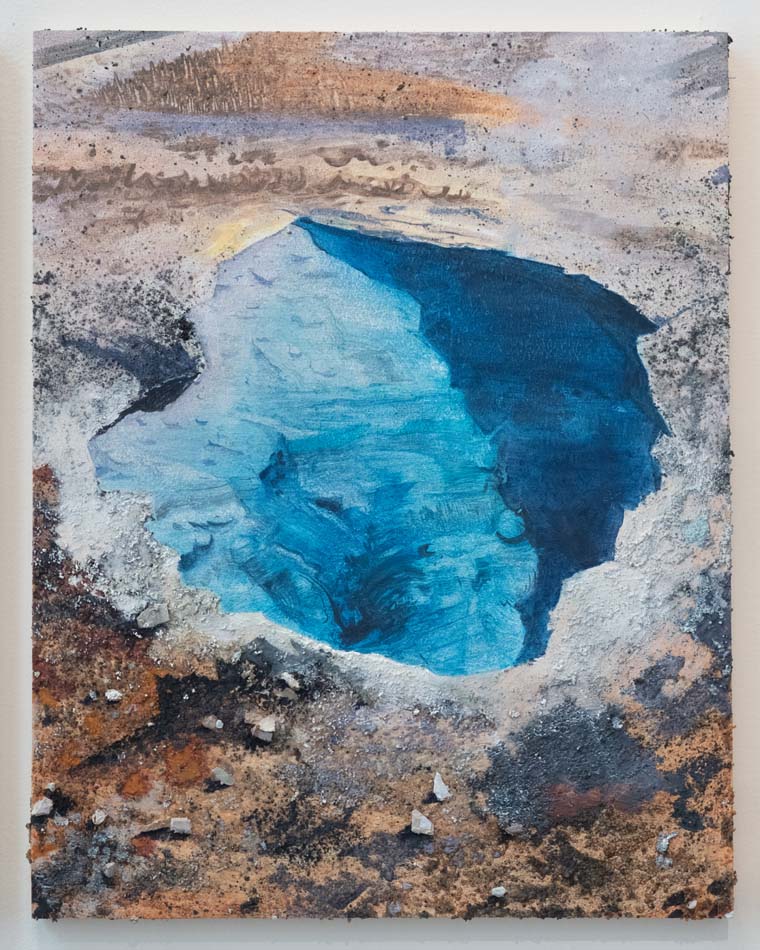
A significant portion of the energy emanating from the show derives from the point at which recognizable geology shifts toward something stranger. Thorp begins with colors and textures representative of the American West but rapidly disrupts them with vibrant sections. An image of a stone face can develop into a map, body, organism, or collection of symbols while maintaining that stone visage.
Thorp connects this way of seeing to Iranian divination traditions passed down through her family, including practices in which images found in stone and other natural materials can be interpreted for indications of the past, present, or future. That background helps explain why geological formations in her work seem less like subject matter and more like collaborators. Stone does not wait for Thorp to provide it with an image; it provides images and potential meanings of its own. She identifies what is already there, then disturbs it until something new emerges.
In doing so, her work challenges Abbey. Abbey defends wilderness based on a clear distinction between the natural world and the machinery threatening it. Thorp draws no such clear distinction. Copper waste, plastic from roadways, paint, rock, and memory occupy the same surface. The land continues to act, but it is no longer pure—if it ever was.
Geological formations in her work seem less like subject matter and more like collaborators.
The exhibition does not consistently connect its themes as well as the individual pieces do. Snyder’s ecological views, Abbey’s notions about wilderness space, Persian divination methods, mining, cultural memories of colonized lands being labeled, and geological agency all contribute to the discussion taking place here. There are instances where these perspectives are placed side by side instead of forming a cohesive argument. The work is most convincing when these tensions are apparent in its components: heavy mineral weight juxtaposed with artificially colored light, stone juxtaposed with plastic, and painted illusion juxtaposed with real detritus. Conversely, the work is less convincing when wall texts need to link objects whose relationships are ambiguous.
I wonder what will happen if Thorp expands the base supports just as she extends their surfaces. Discarded tractor tarps, mining textiles, or industrial plastics can add their own scale, wear, and history to the artwork. Thorp’s paintings seem ready to exceed the neutral rectangular framework provided by a typical panel support. Supports with histories of labor or environmental degradation may further blur distinctions between extraction, land use, and material.
Despite this lack of consensus on a singular interpretation, there is nothing inherently wrong with this ambiguity. Geological surfaces can be archives, resources, habitats, and symbolic presences simultaneously. The most effective works by Thorp resist resolution among these possibilities. Like Snyder’s flower, they do not seem to be created solely for our interpretations. They remain withheld—dense, vividly colored, scarred, and still creating their own images.