“We turn backward to move forward,” explains the collective Hilma’s Ghost. Their work challenges erasure in the art historical canon and foregrounds female, queer, and trans artists.
Hilma’s Ghost: Light as Resistance
March 6, 2026–January 24, 2027
MOCA Tucson
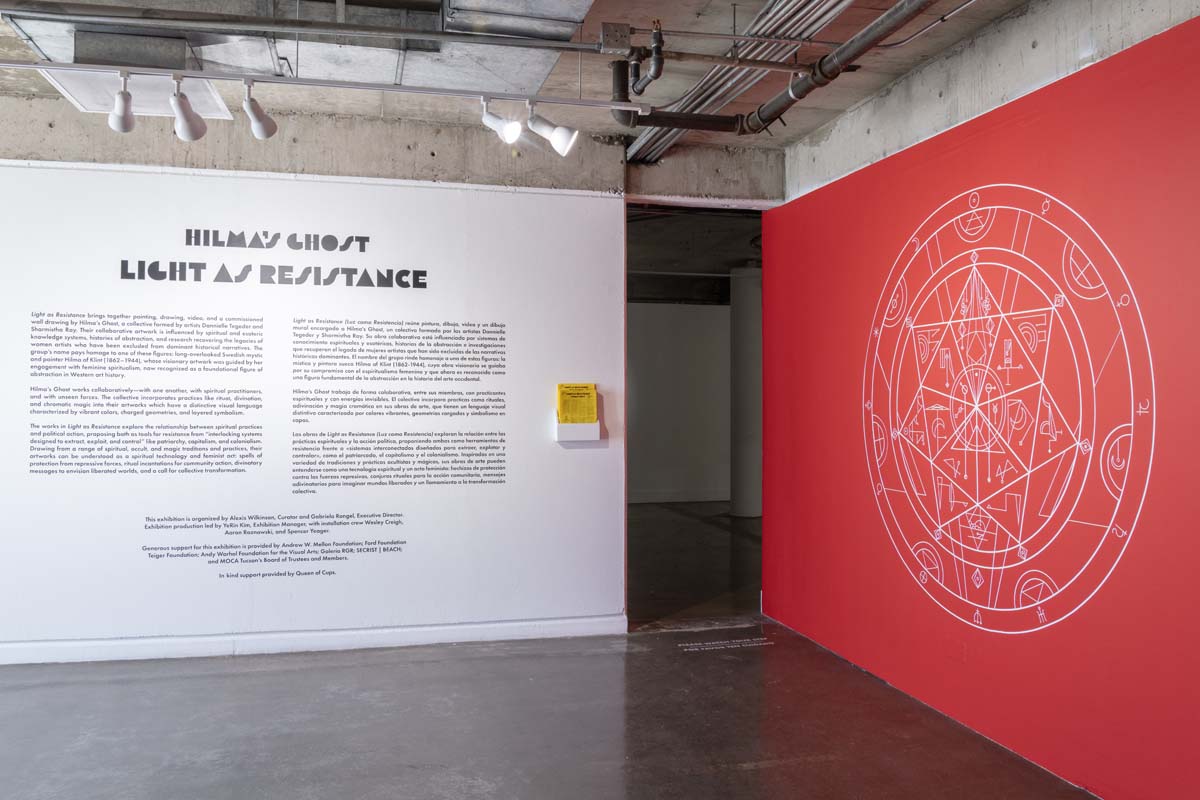
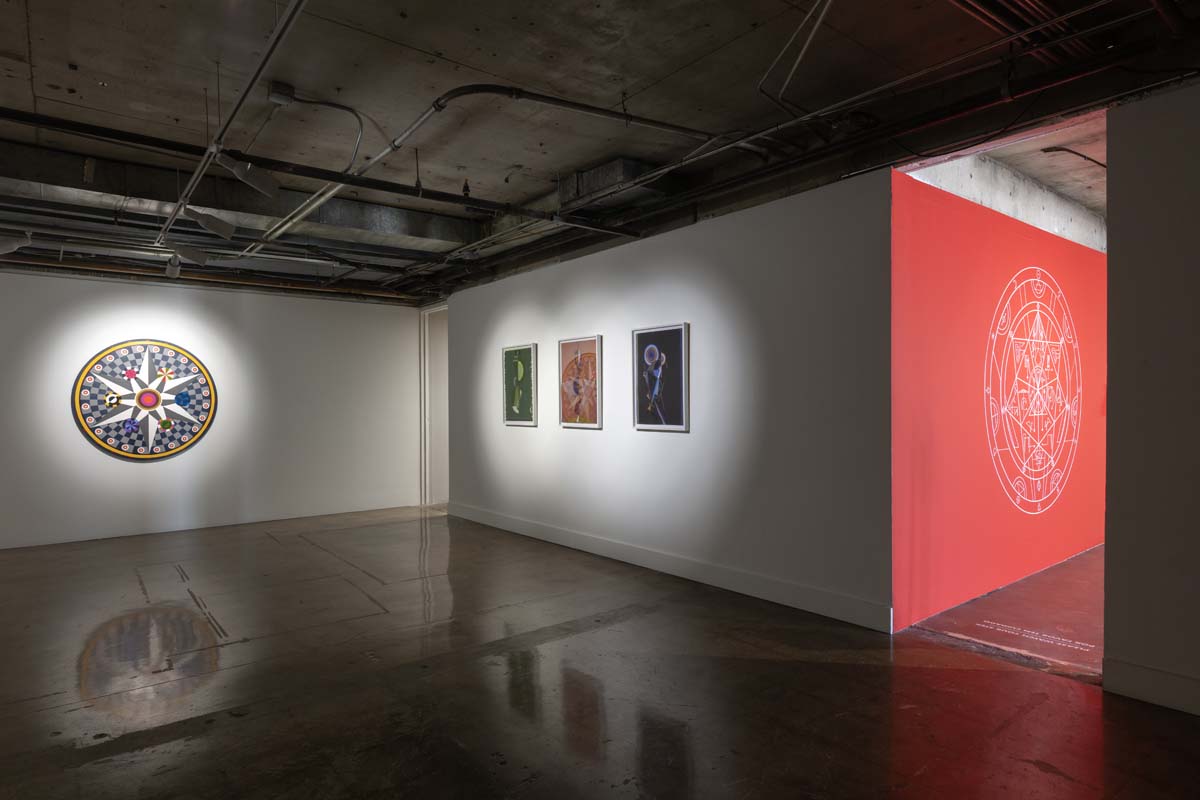
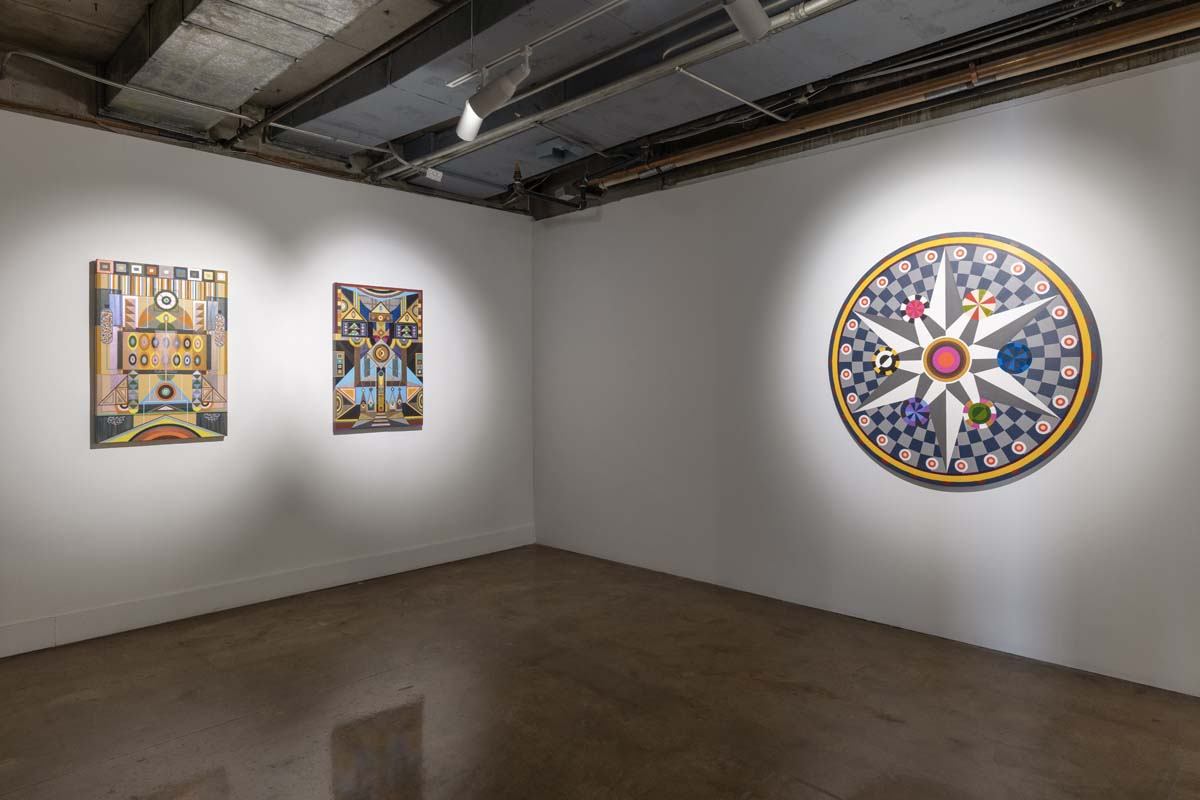
Concentric circles imbued with elemental and planetary symbols appear in a large sigil on a red wall, accompanied by an audio recording of an intersectional feminist manifesto that includes these words:
We remember those who came before us, our grandmothers stretching back through time like an unbroken thread, back to the first people who tended fire, who planted seeds, who named the stars, who resisted conquest.
Titled We Who Cast the Circle (2026), the museum-commissioned work prompts reflection on overlooked regions, voices, and practices in the art historical canon—including visionary and spiritual traditions of the Southwest.
It’s the work of Hilma’s Ghost, an art collective formed in 2020 by Dannielle Tegeder and Sharmistha Ray, two artists and witches whose collaborators include spiritual practitioners and unseen forces. Originally thinking their collaboration would end as COVID-19 isolation lifted, they’ve continued, in part, to wield resistance in the Trump era.
They draw inspiration from Hilma af Klint (1862-1944), a Swedish artist, occultist, and early abstractionist who has become a queer, feminist icon. Still, they have a broader focus: foregrounding female, queer, and trans artists whose work is often overlooked or ignored.
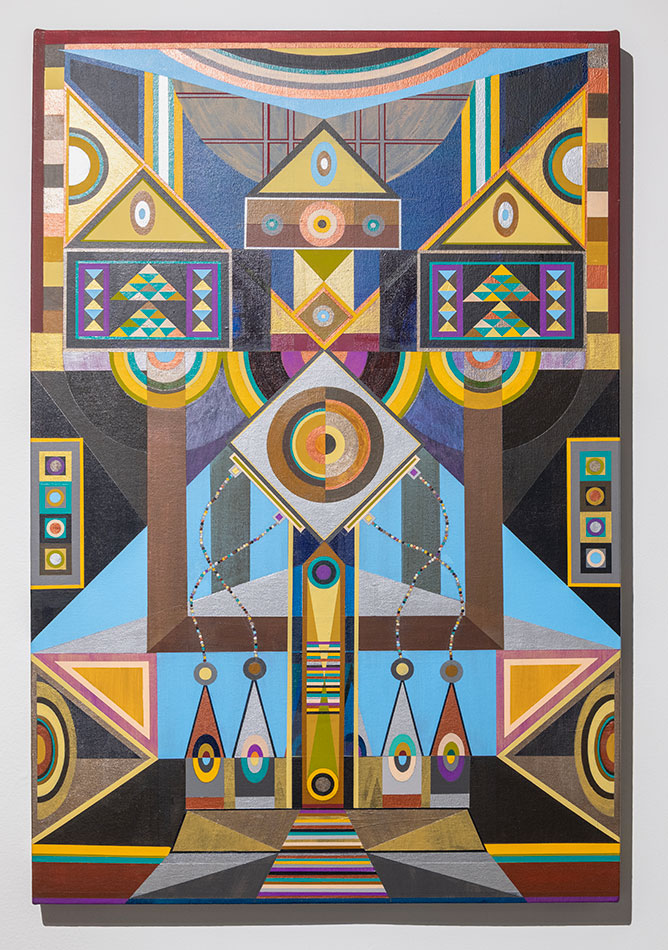
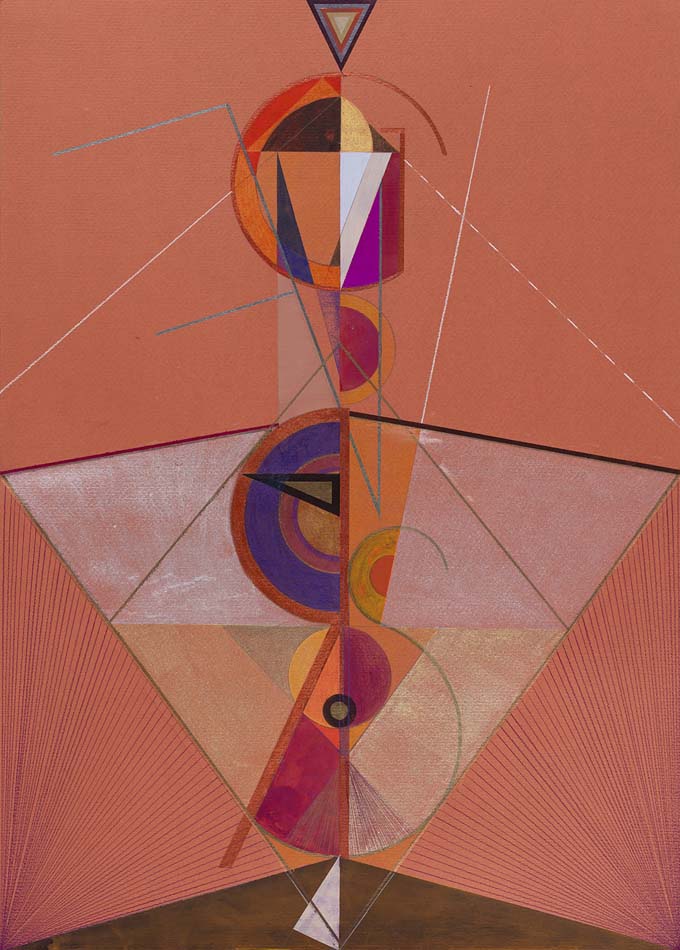
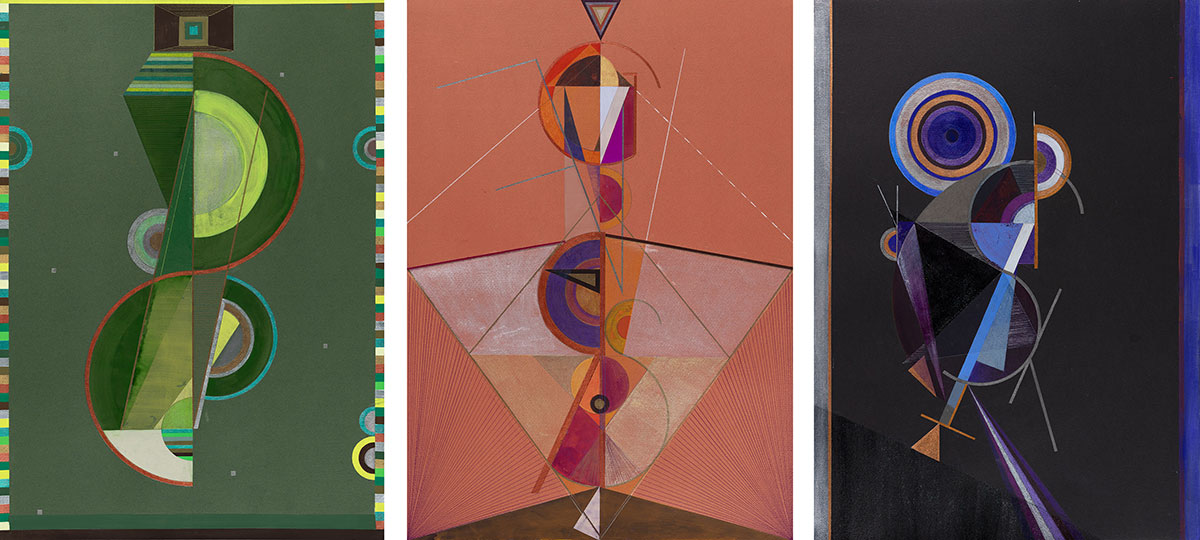
Like their namesake, the collective uses automatic writing and other mystical practices to create abstractions imbued with esoteric knowledge. Here, a small selection of hex paintings and sigil drawings brings their visual language, with its soft and hard geometrics, symbols, and elemental colors, into sharp view.
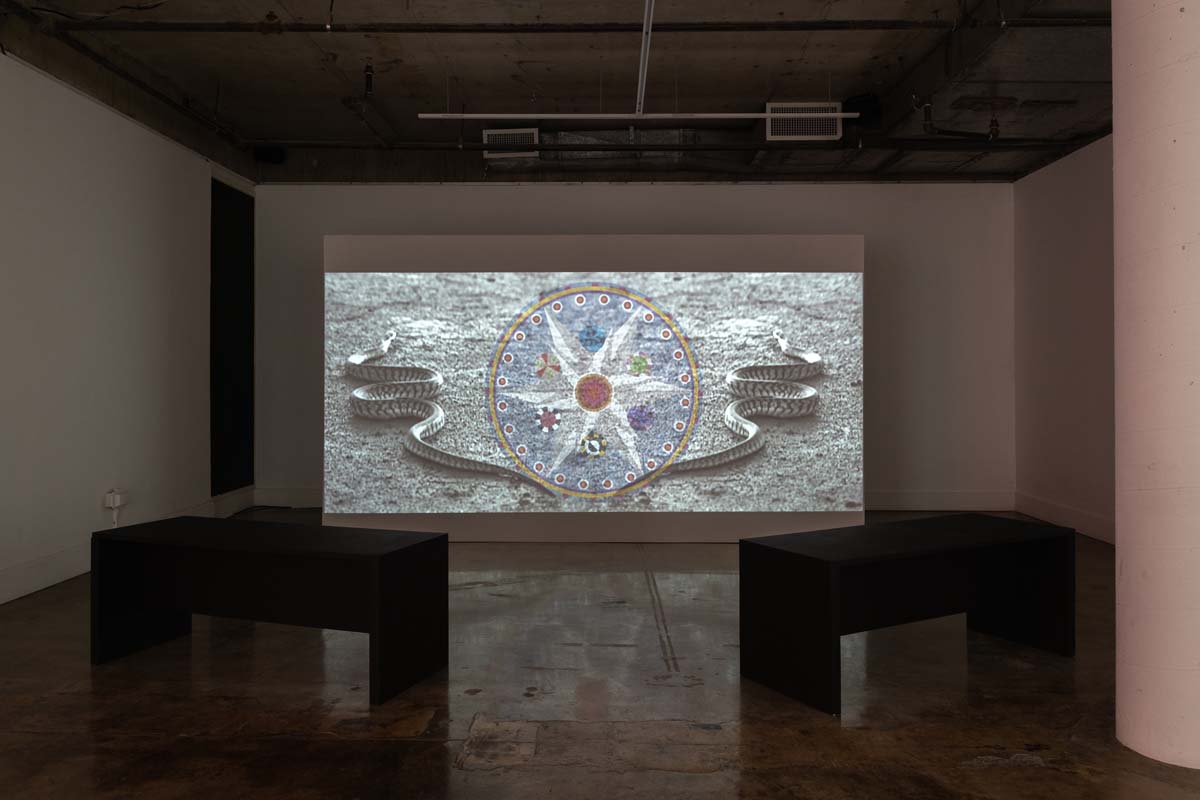
Their video Conjuring Futures: Turning the Wheel of Transformative Change (2025), with sound created by Mexican poet Lucía Hinojosa Gaxiola, layers iconography prevalent in the Southwest, from the blazing sun to snakes slithering in the dirt, with archival protest imagery and esoteric symbols.
While calling back to queer abstractionists and desert practitioners Agnes Pelton and Agnes Martin, Hilma’s Ghost challenges viewers to counter historical and contemporary erasure of Indigenous artists and artists of color as well—by inviting them to enter the collective’s ever-expanding circle of radical resistance. Protest language and visuals in both their video and newly commissioned wall work signal a significant expansion of their practice into more covert activism.
As the close of their manifesto explains: We turn backward to move forward.