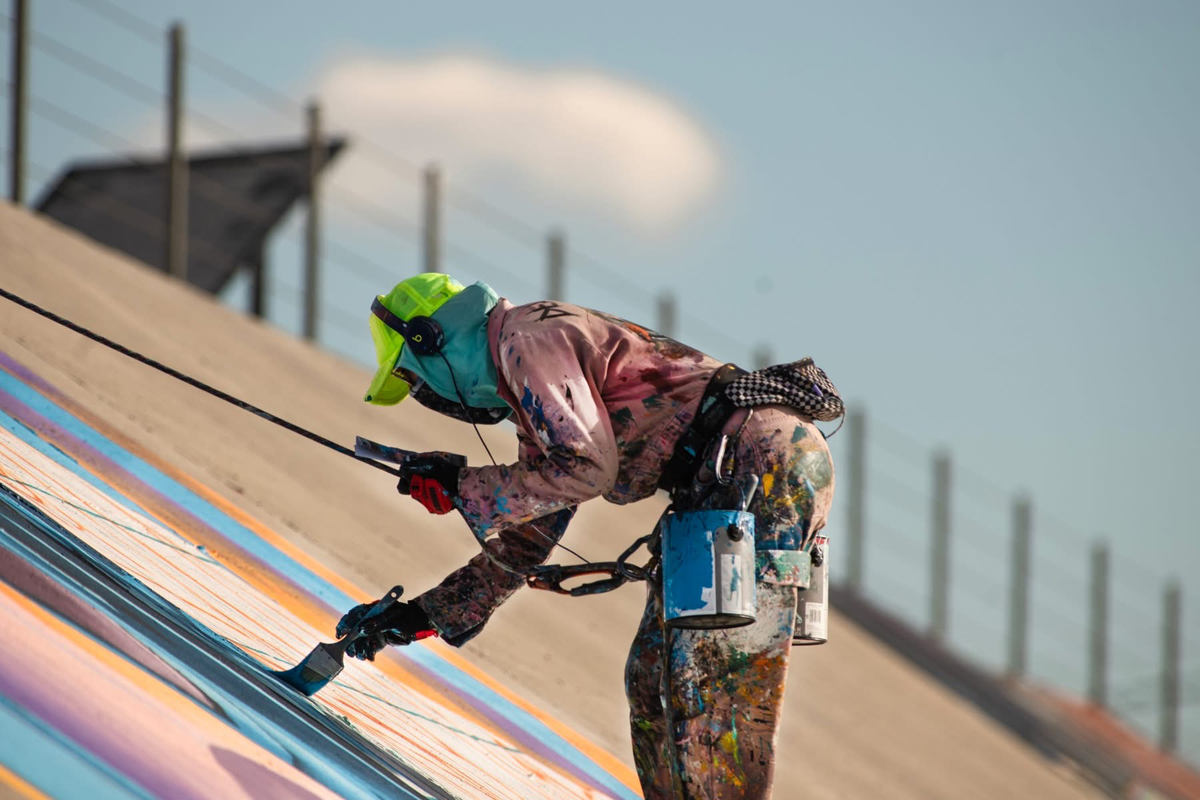
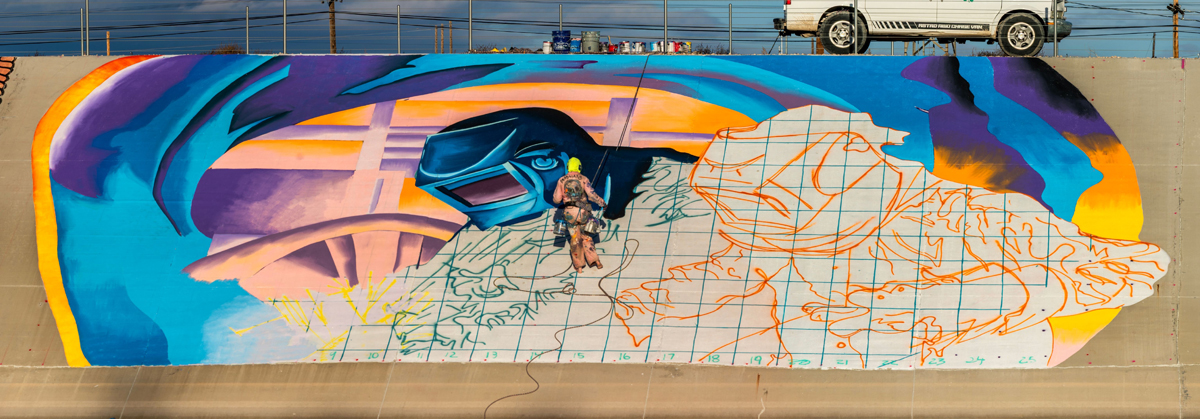
Street artists went vertical to enliven a levee in Pueblo, Colorado. As the Pueblo Levee Mural Project grew toward record-breaking scale, city officials swooped in.
PUEBLO— In 1978, an art revolution started along the Arkansas River in Pueblo, Colorado.
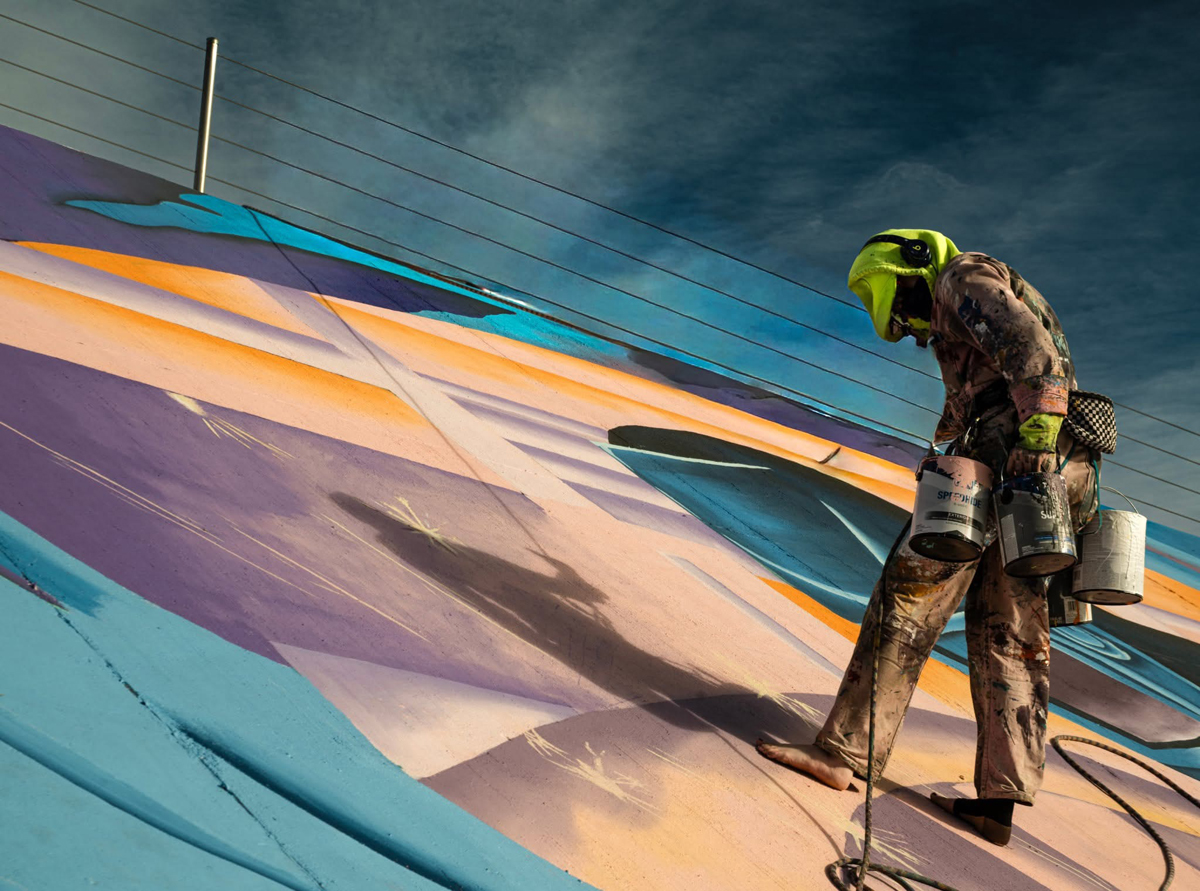
A group of local college students and artists spent their evenings planning how to rappel down a steep levee to paint murals. The group, who called themselves the Teehees, knew their plan was high-stakes. It was illegal to paint on the levee, so they schemed in a local tavern how to tether flashlights and paints to themselves while working in the middle of the night. The night ended with their arrests by local police, but the deed was done.
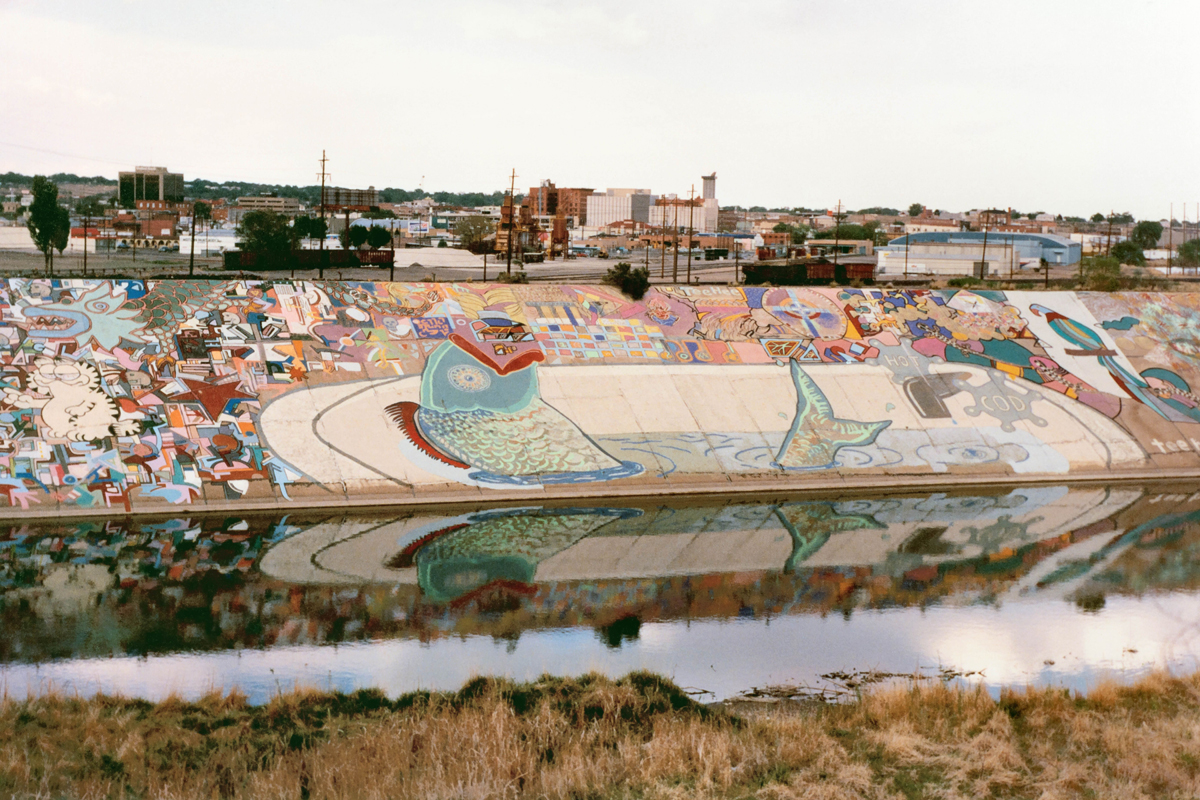
Their first piece, which came to be known as Fish in the Bathtub, sparked a long line of murals—the longest in the world. What became “The Largest Outdoor Mural Gallery in the World” in the Guinness World Book of Records from 1995 to 2016—measuring in at 178,200 square feet—has today taken on a fresh life with new artists, new walls, and a historical showcase spotlighting those early days.
In 1980, local officials severed the Teehees’s ad-hoc association with the project. Gus Sandstrom, a young lawyer campaigning for district attorney who also happened to be chairman of the conservancy district that oversaw the levee, proposed an agreement to allow the art to continue with oversight from the conservancy. It was settled and Dave Roberts, a local professor, took on directing the mural project.
From then on, murals around the Fish in the Bathtub multiplied. To some, that first mural marked the beginning of the end of wild and free expression along the Arkansas River. Even before the murals started proliferating, dozens had made their mark on the levee since the ’60s, when “the walls became billboards for anti-war groups, activists, and others,” the Rocky Mountain News wrote of the project in the ’90s. “And there were always the random scrawlings like ‘Mary loves Jose.’”
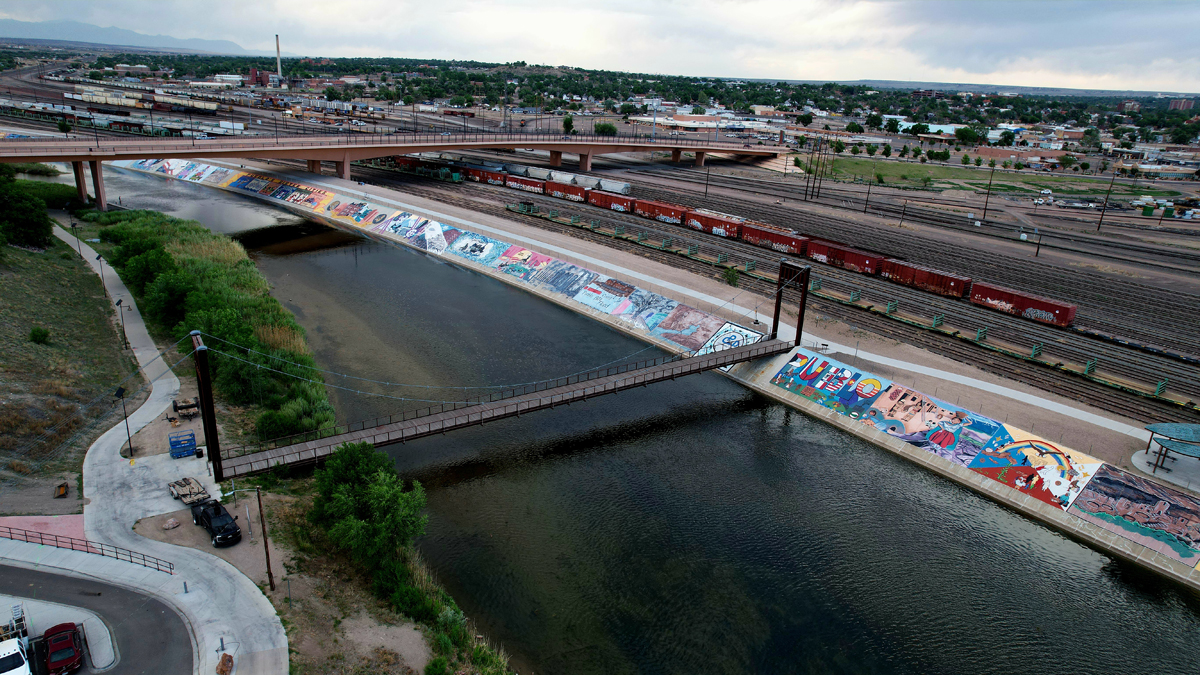
Cynthia Ramu, who acted as the coordinator for the Pueblo Levee Mural Project for over three decades, recalls hearing how some original artists of the wall wouldn’t paint there anymore with the oversight of the local governmental board. Those same rules didn’t stop interested artists from traveling to the small Southern Colorado city, some from as far as Europe, to paint on the concrete slabs that sit at a forty-five-degree angle.
The conservancy district for the levee, a board of eight members, approves each mural. Artists cannot paint logos, except those of local high schools, and the murals must be based on predetermined themes: natural beauty, histories of the community, or the heritage of any ethnic group. The guidelines “safeguard both the interests of the community, the Pueblo Conservancy District, and the artists,” the board’s website says.
“We’ve traded rebellion for storytelling,” says artist Shannon Palmer, who has been painting on the levee since 2021. She just finished her seventh piece.
Pueblo artist Tia Monson, the current levee mural art director and coordinator with the Pueblo Conservancy District, has been painting on the levee for seven years now.
“The Teehee artists created something really special, and I think everyone who paints down there today benefits from the creative foundation they built,” she says. “There’s a spirit of boldness, humor, individuality, and public accessibility that still exists on the levee because of them. While my own artistic style is different, I definitely respect the history and energy they brought to the space.”
She continues, “I see the levee as something that evolves over time, each generation of artists adds to the story while still honoring the people who helped start it. My goal is to preserve that sense of creative freedom while also helping the levee continue to grow in a thoughtful and organized way.”
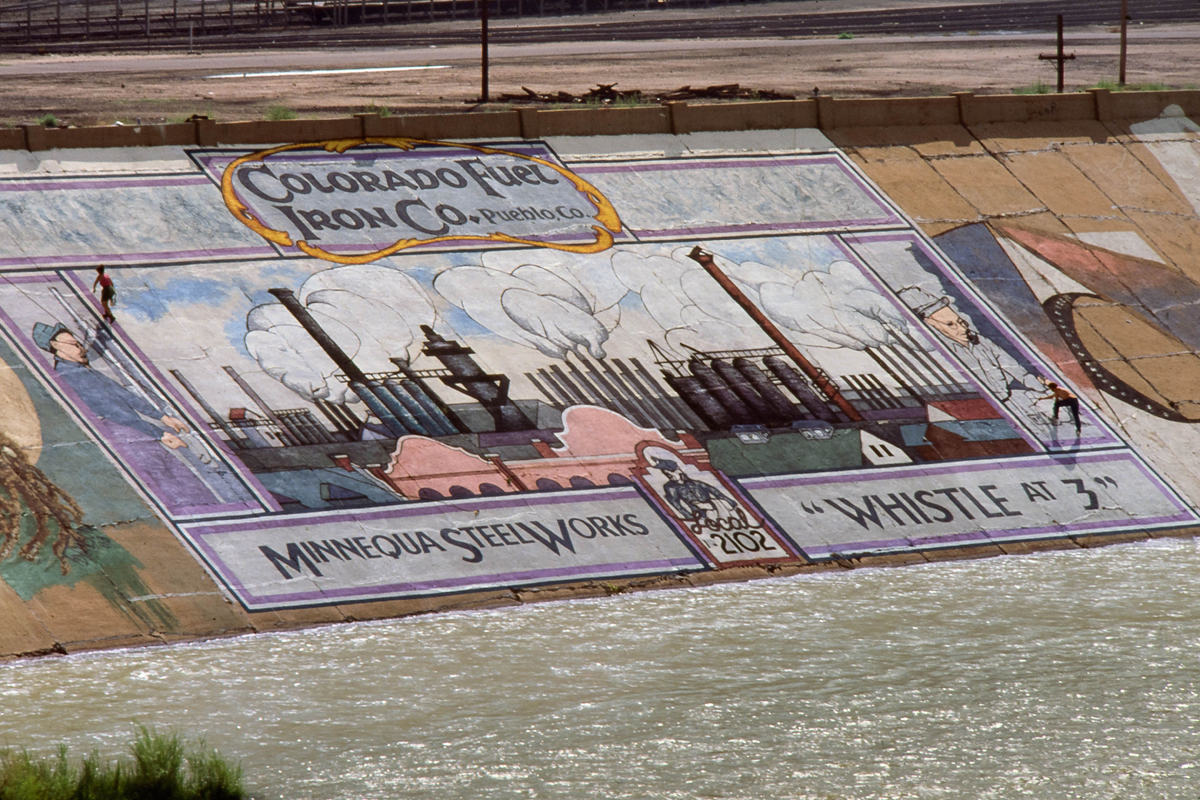
Preserving the history of the levee has become especially important to local artists since the original passage of the levee wall, which was constructed in 1921 after a devastating flood, was torn down and reconstructed with fresh yet lifeless concrete slabs in 2016.
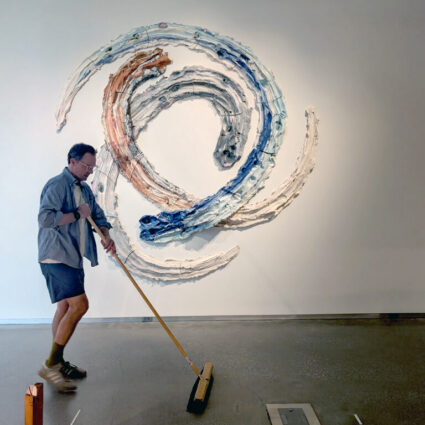
The murals that started it all—even the Fish in the Bathtub—were demolished in the construction.“It was like watching a child die,” says Ramu, who curated Concrete Creativity: Historic Murals of the Pueblo Levee at Pueblo’s Sangre de Cristo Arts Center. On view until August 15, the exhibition features images, news articles, and historical accounts of life on the levee since its early beginnings. Extant photos and memories have prompted Ramu to document them. She’s hosting a storytelling project that will eventually land in the state history museum’s archives.
There’s a focus on the future, too. Locals say they want to see the world record return to Pueblo, and they’ve got enough fresh canvas to make that possible. If Pueblo’s levee murals broke the largest outdoor mural record today, Ramu says, there’d still be at least one-and-a-half miles of concrete slab to go. The current record belongs to a massive port silo mural in Incheon, South Korea, that measures in at 254,983 square feet.
There’s even talk of returning the Fish in the Bathtub to the levee. Palmer says she plans to start on her reimagined version this summer.
“I wanted it to be a nod to that memory, because I think that was an important piece that a lot of people liked,” Palmer says. “I do run the chance of people being mad about it, but that’s the risk you take as an artist.”