Is Texas-based artist Nic Nicosia’s work utterly surreal? Deeply autobiographical? His Dallas retrospective plumbs an oeuvre brimming with play and pain.
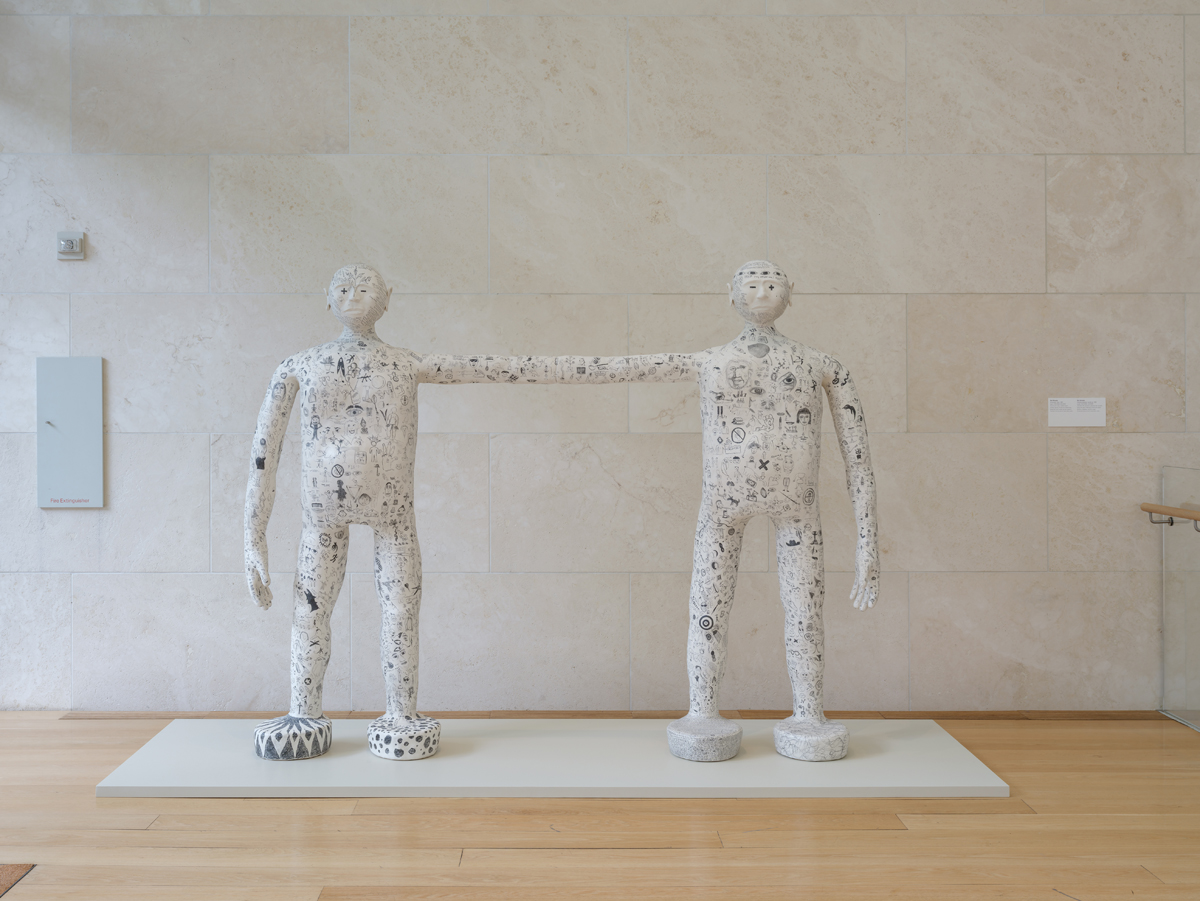
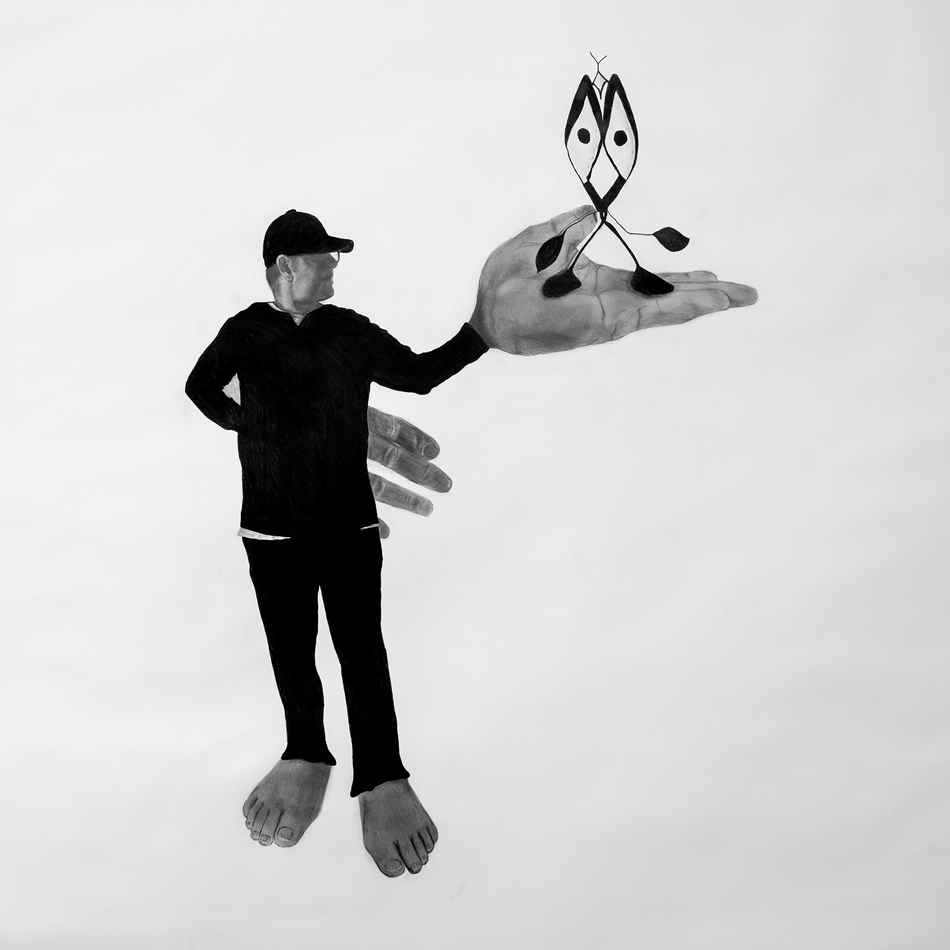
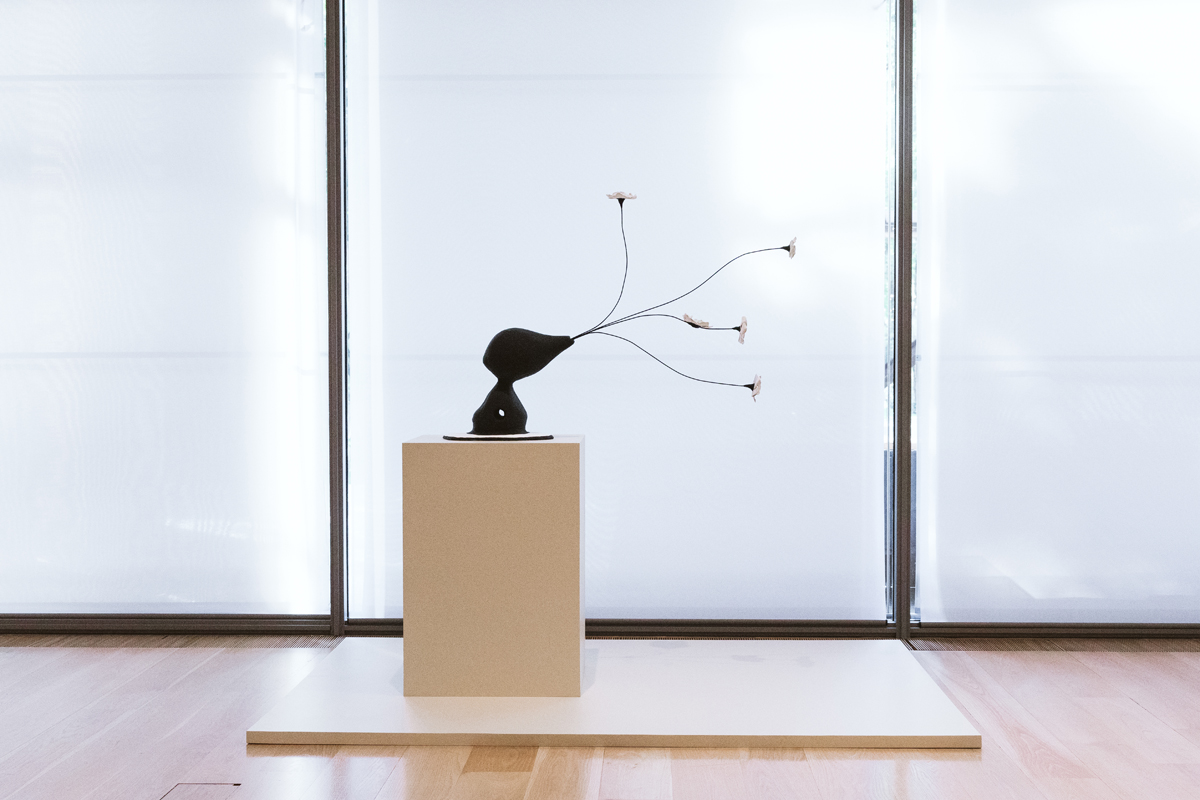
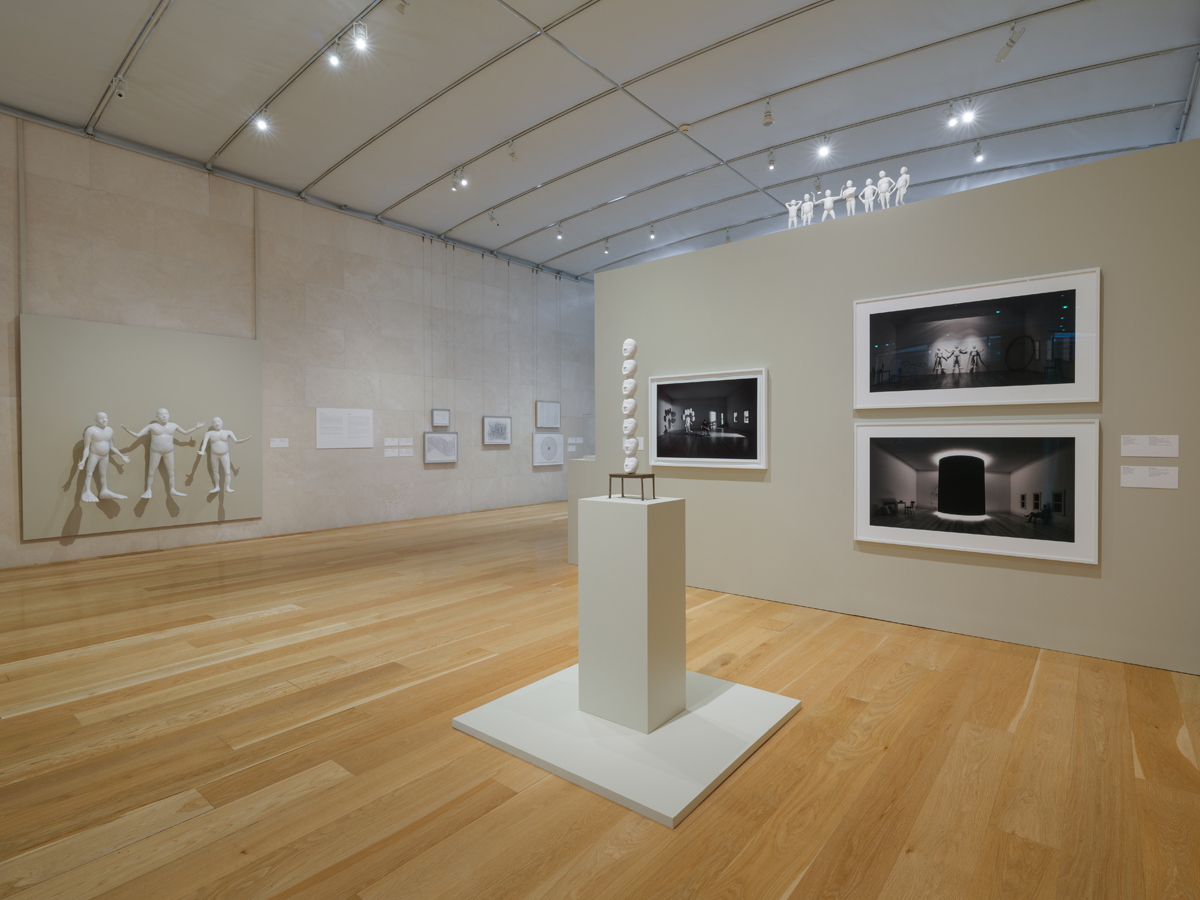
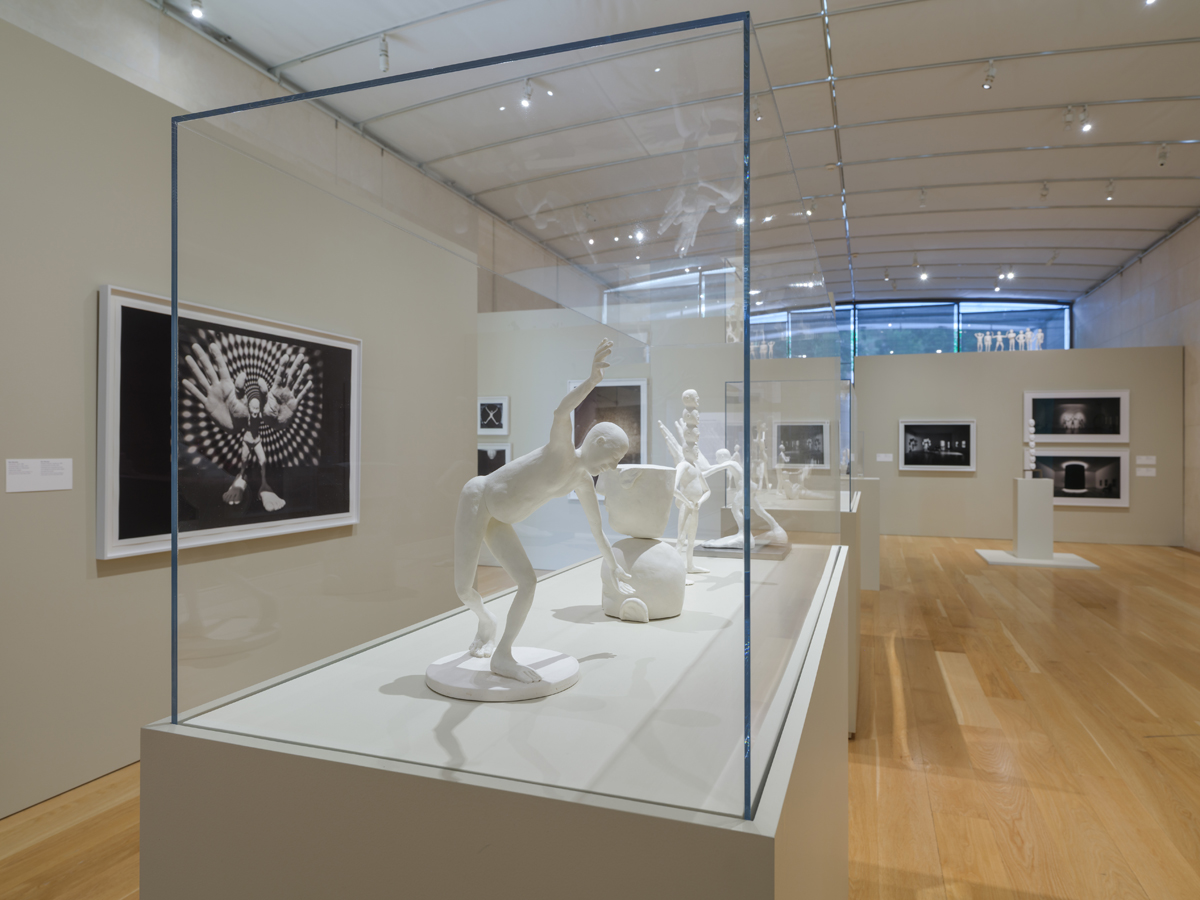
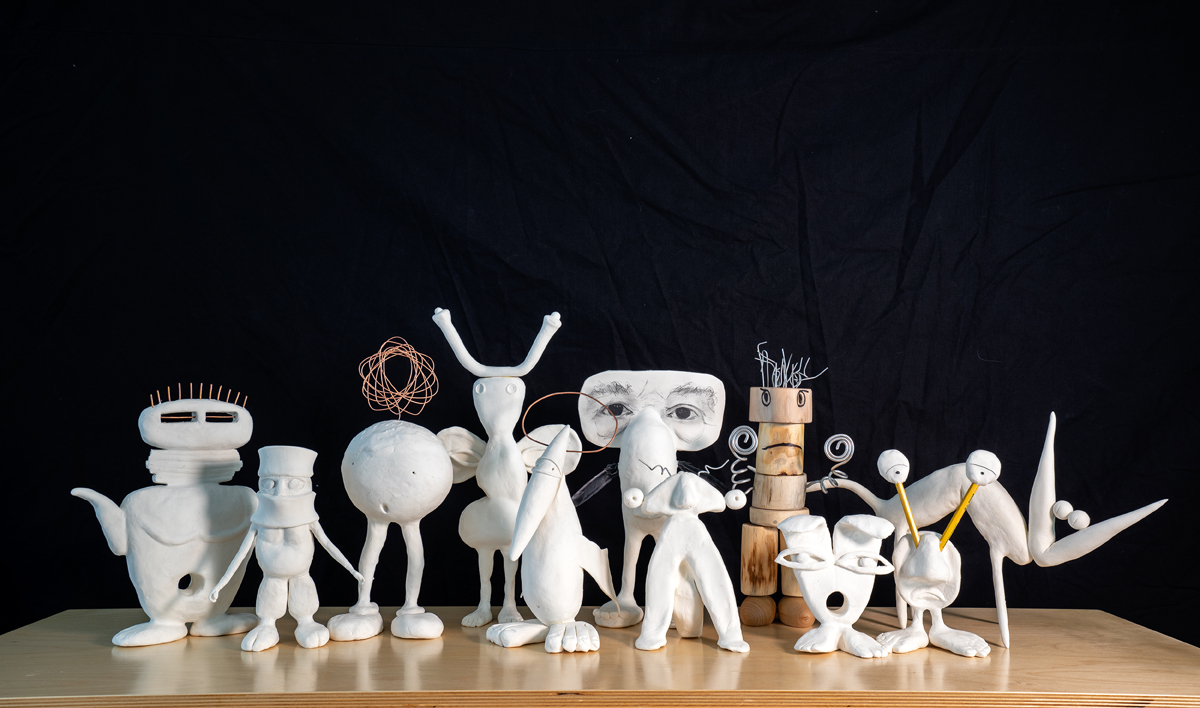
Nic Nicosia’s Dallas studio is flush with “dreamboats.” That’s his term for a series of Paperclay creatures that vary in their visages, sporting realistic human eyes or otherworldly antlers and butterfly wings. Some dreamboats are all nose; some have no nose at all. Their chalky frames are somewhat camouflaged in Nicosia’s primarily white studio, a space that belies the quirky and surreal nature of his work. While Nicosia rose to prominence through his photography practice in the 1980s, capturing warped flashes of suburban life, the second half of his career has expanded in scope, engaging sculpture and drawing more prominently, and merging these media with his photography and videography practices. This evolution is on view through August 16 in Everyday Surreal, Nicosia’s retrospective at the Nasher Sculpture Center in Dallas.
Raised in Dallas a few miles from his current studio, Nicosia frames his North Texas childhood as borderline idyllic. In those years, he played in the streets and roamed “near North Dallas” at a time when wide expanses still brushed the ankles of the urban center. “I had a really good childhood. I had nothing to complain about. I was a mischief. I mean, I didn’t get in trouble, but I did things,” says Nicosia.
I had a really good childhood. I was a mischief. I mean, I didn’t get in trouble, but I did things.
Nicosia’s childhood set the foundation for a life of highly imaginative art making—his mother was an artist who would take him to see Picasso shows and his father, a “dentist who hated being a dentist,” would use dental gold to forge rings for the family. The imagery and concerns of suburbia would later appear in his photography series such as Life as We Know It (1986) and Real Pictures (1987-89), which contend with the absurd tensions of suburban life. And while Nicosia acknowledges he had an awareness in his youth of the social challenges that can persist beneath the surface of blissful Americana, he is resolute that his greatest challenges came after adolescence, “when life takes over.”
Nicosia attended college at the University of North Texas, where he discovered a calling as a videographer. His cinematic and theatrical sensibilities seem to be a throughline between the photography of his early years and the work in his survey at the Nasher; sets, characters, and illusions work in concert, aligning external worlds and internal lives in Nicosia’s work. The mise-en-scène of his early- and mid-career photography was on display at the 1983 and 2000 Whitney Biennials among other major exhibitions, part of a body of work that placed him among the Pictures Generation with Cindy Sherman and Laurie Simmons. This era of his career culminated in the 1999 survey of his work at the Contemporary Arts Museum, Houston, Real Pictures: 1979-1999.
Around the turn of the millennium and in the decades that followed, Nicosia went through a series of upheavals. He and his wife, Becky Nicosia, moved to Santa Fe in 2004 and the focus of his practice began to shift. Nicosia started experimenting more with sculpture and drawing, both in his photography works and in their own right, mixing media and shifting between two and three dimensions. During this time, Nicosia went through six years of undiagnosed illness culminating in a stage 4 lymphoma diagnosis. His wife also began to contend with her own health struggles. Life had taken over.
The couple returned to Dallas in 2015, and Nicosia secured representation at Erin Cluley Gallery.
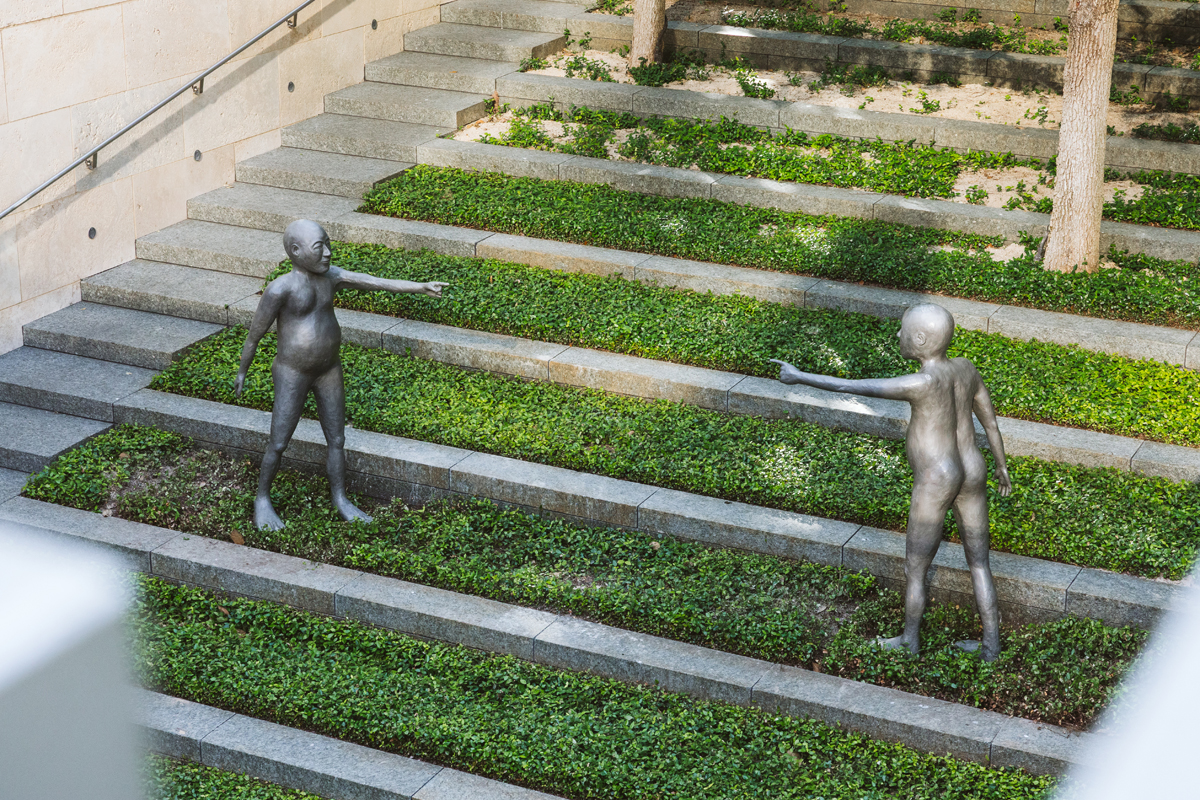
During these past twenty-five years of recalibration and exploration, Nicosia made four times as many artworks as he did in the first twenty years of his career. The themes at play in the second season of Nicosia’s career seem to grapple with bodily distortions, psychological unrest, and imaginatory escape—but Nicosia insists that any perceived connection to a specific lived experience, whether his or another’s, is not a conscious part of his art making practice. “I don’t get that involved, and I don’t think about my work like that,” says Nicosia. His dreamboats are not talismans he is using as a therapy practice; they are not questions looking for answers.
And yet he always turns to making—amid domestic mundanity and adversity alike, and more as a reflex than a balm. His works are peripheral markings of homes (11 homes, 2015), of drives (the drive from Santa Fe to Dallas 77 times, 2015), of air (24,000 breaths, 2016). “Everything in my life is in my work. I can’t ever say, ‘I’m bummed out about my life right now, I’m going to go [create a work].’ But something will come out of that, and I don’t know what that will be. It might be a human figure. It might be a little dream figure. It might be something that has nothing to do with that.”
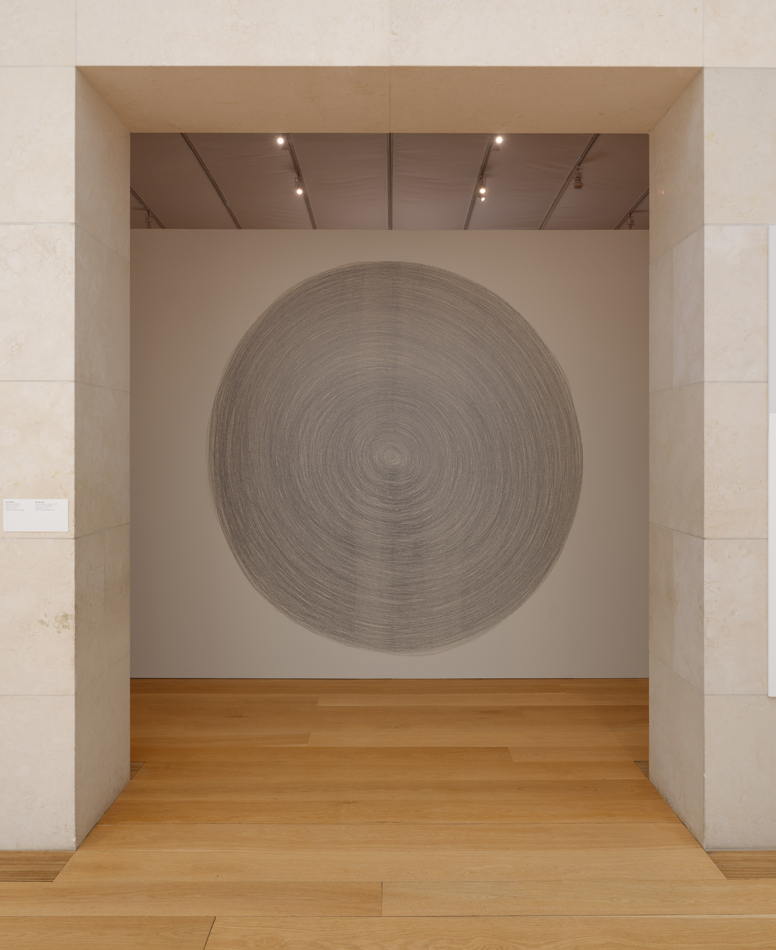
Nasher chief curator Jed Morse finds the connections between Nicosia’s life experience and artistic practice to be palpable throughout the show, most explicitly in works like 2190 #5 (2015), which documents in concentric circles the number of days between the onset of pain and his cancer diagnosis. He initially executed the site-specific wall drawing in the home of collector Marguerite Steed Hoffman and has now reproduced it on the entry wall of the Nasher’s central gallery.
I don’t think I would ever use the word ‘express’ for me. No, I just make stuff. I’m not really trying. I just want to see it.
“For him, it was just visualizing time, visualizing distance,” says Morse. “There’re just these wonderful diaristic [works]. 2190 is absolutely about trying to understand his sheer luck of not feeling right and having to spend six years for doctors to figure out that he had lymphoma.”
Nicosia rejects the framing of his practice as expression. “I don’t think I would ever use the word ‘express’ for me. No, I just make stuff. I’m not really trying. I just want to see it.” So if not expression, then revelation may be a more fitting term for the link between art making and experience in his work.
He points to in the absence of others (2010-11), his series of Paperclay sculptures that he arranged in surrealist photography sets. Originally exhibited at James Kelly Gallery in Santa Fe in 2012, the set of charged scenes of humanesque figures was paired with a violin composition he wrote, performed by Hillary Schacht. “That’s serious. It’s very serious,” he says. “It displayed my pain and my emotional state, and even the violin music is a little hard to look at. It’s a little slow, and the characters are all hairless.”
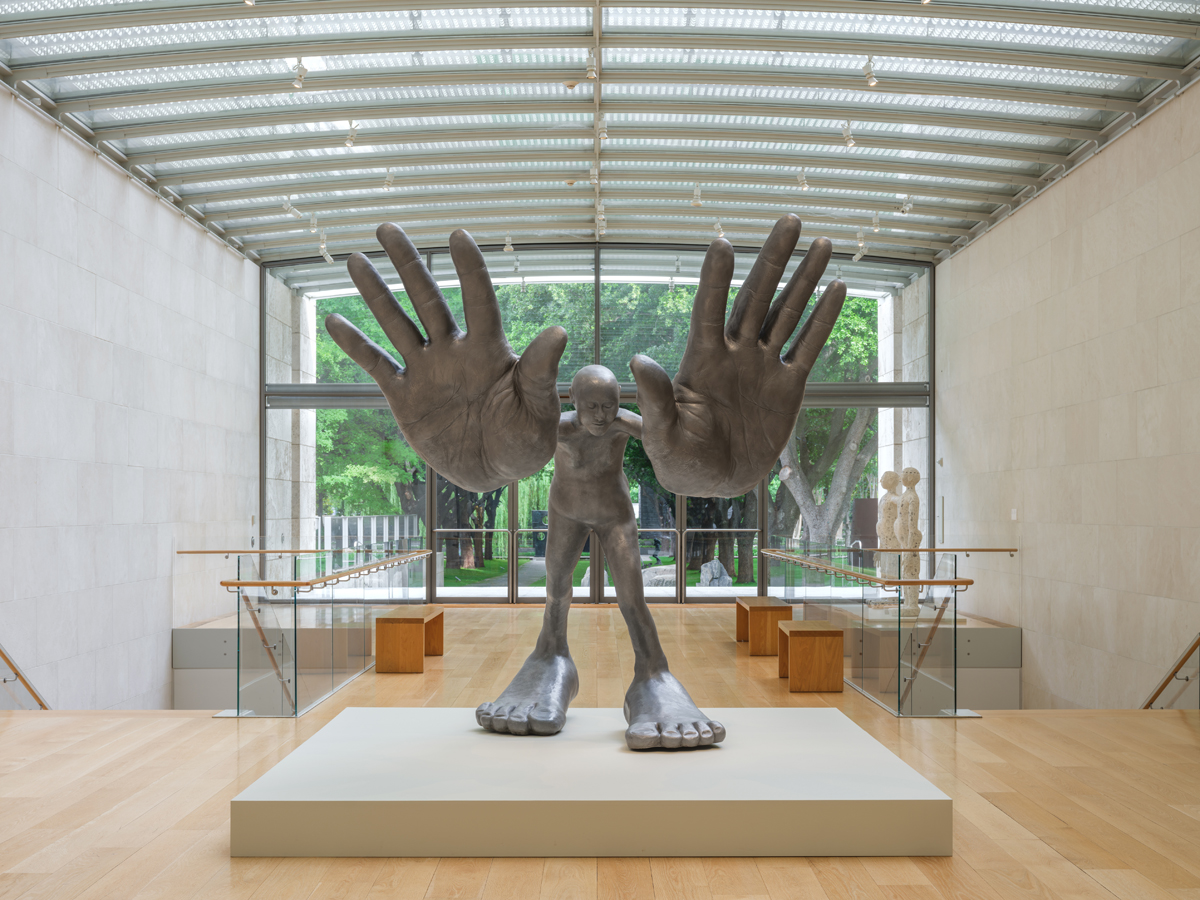
But the pain in Everyday Surreal is only one of the many murmurs reverberating in the show. Perhaps the most powerful theme that resonates throughout Nicosia’s work, both in this most recent survey as well as his greater body of work, is his humor.
“I think humor is really important,” says Nicosia. “I think some of the greatest artists have a sense of humor. Picasso had a sense of humor. Bruce Nauman has a sense of humor. Magritte had a sense of humor. You can’t force that. There has to be something that comes out of you.”
My dreams are that, and they’re crazier. As a matter of fact, I can just close my eyes, and I will see something.
In Everyday Surreal, there is dense entanglement between the conscious and unconscious, the artist and the viewer, and the worlds we project onto art. The survey feels like a spilling-out of Nicosia’s mind, as if a veil has been broken between his world and ours and the creatures and humanoids of the imagined begin to feel familiar.
“My dreams are that, and they’re crazier,” Nicosia says of his dreamboats. “As a matter of fact, I can just close my eyes, and I will see something.”
Nicosia’s dream life was integral to the curatorial structure of the show. “Nic lives in a dream world even when he’s awake,” says Morse. “I wanted the gallery space to feel like the kind of space that one might inhabit if you were in Nic’s head.”