From flipping houses to crashing cars, How To Talk Dirty and Influence People presents a forty-year survey of playful and provocative artworks by Mary Ellen Carroll.
Mary Ellen Carroll: How To Talk Dirty and Influence People
May 22–November 1, 2026
Contemporary Arts Museum Houston
Since visiting the CAMH to see Mary Ellen Carroll’s career survey, How To Talk Dirty and Influence People, I’ve been thinking about power—who has it, who doesn’t, and how it flows from point A to point B. That’s where I got the feeling that Carroll (they sometimes go by MEC) also thinks about these questions.
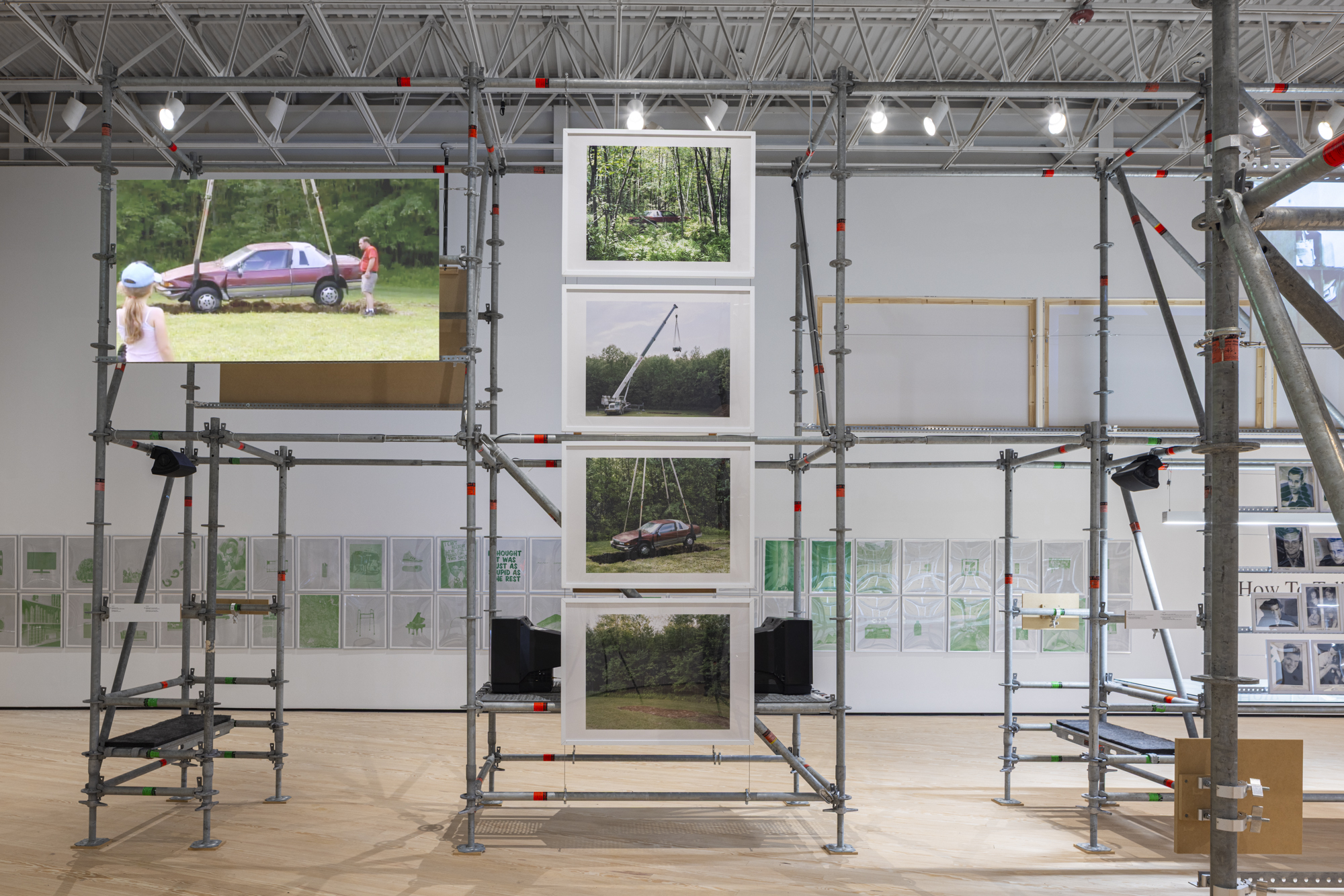
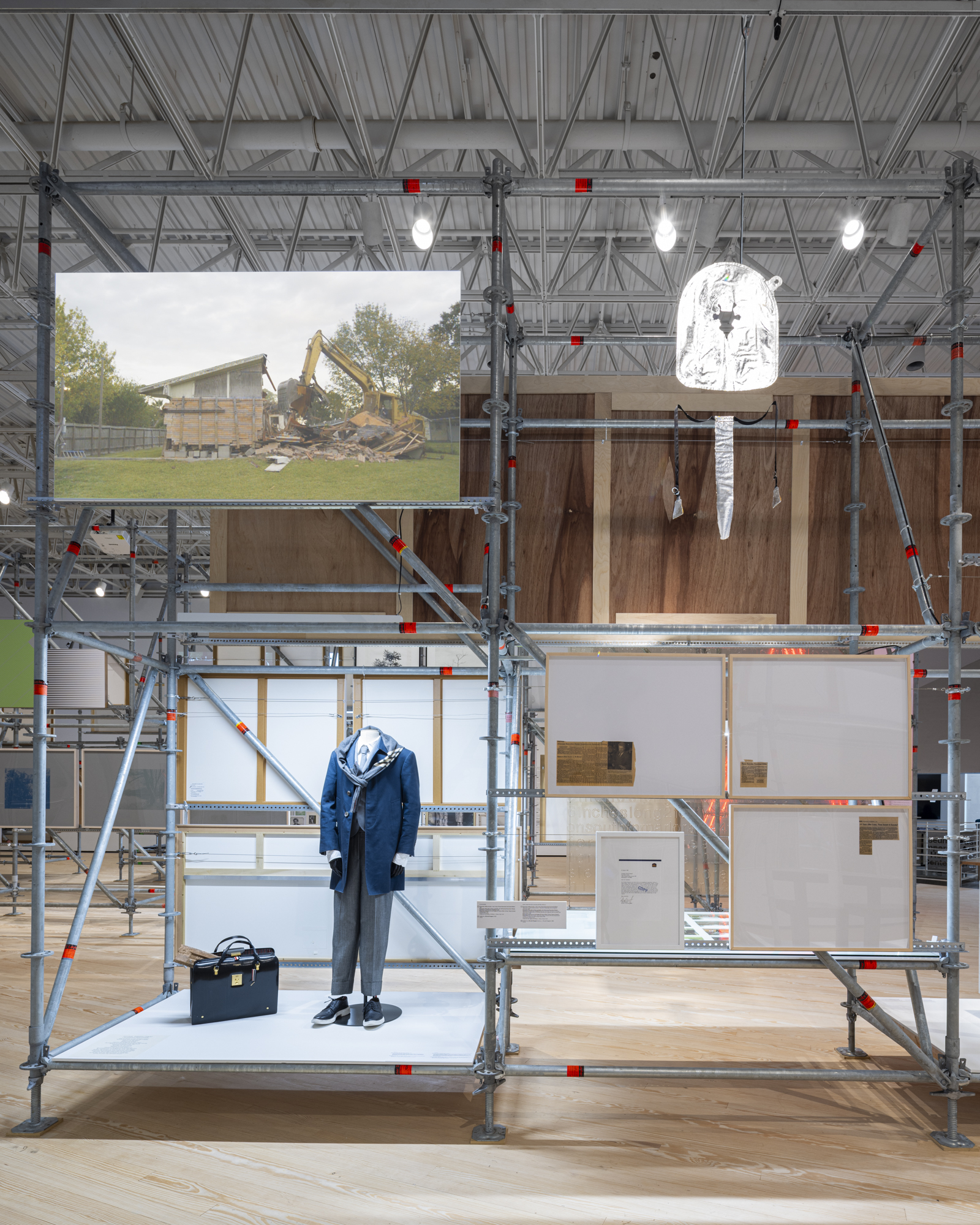
With their art, MEC mocks the legitimacy of a rationalist universe, employing carnivalesque humor and exaggerated realism to turn symbols of power into curious absurdities. MEC asks a doppelganger to identify as MEC at an art history conference and another to interact with Vienna’s confused public officials. MEC “flips” a house 180 degrees to show off Houston’s “anything goes” approach to real estate (Look ma, no zoning!). MEC plays bumper cars at a demolition derby. MEC dares Reagan to say AIDS in a sardonic letter to the President. MEC crashes a car into a museum. MEC proposes to put transmitter “rabbit ears” on a statue of Robert E. Lee to finally give it a function other than intimidation. MEC pretends to be Gilbert and George.
Like Carmen Sandiego, MEC privately investigates the world and then reports back with clues they have obtained from a life of intrigue. With MEC, there’s always a mark, a problem, a locus of power, and then a magic trick where they saw it in half. Unfortunately, as with most magic tricks, at the end of the day the status quo usually remains unchanged. Nevertheless, I enjoyed surveying these stunts which offered momentary reprieve from the dumpster fire of a future currently barreling down the pike.
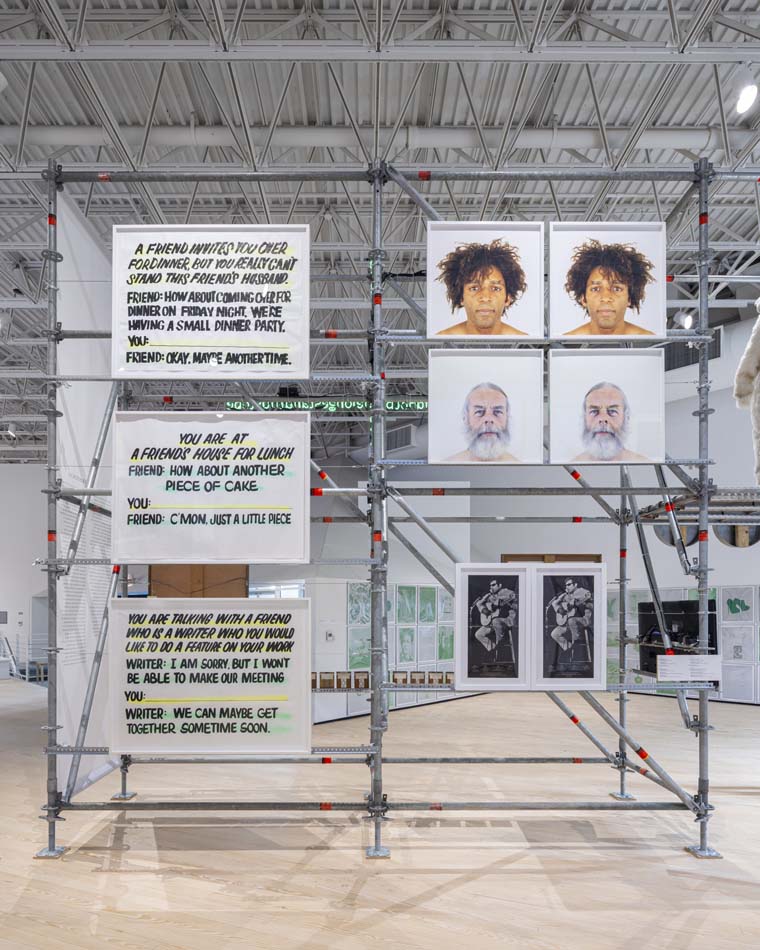
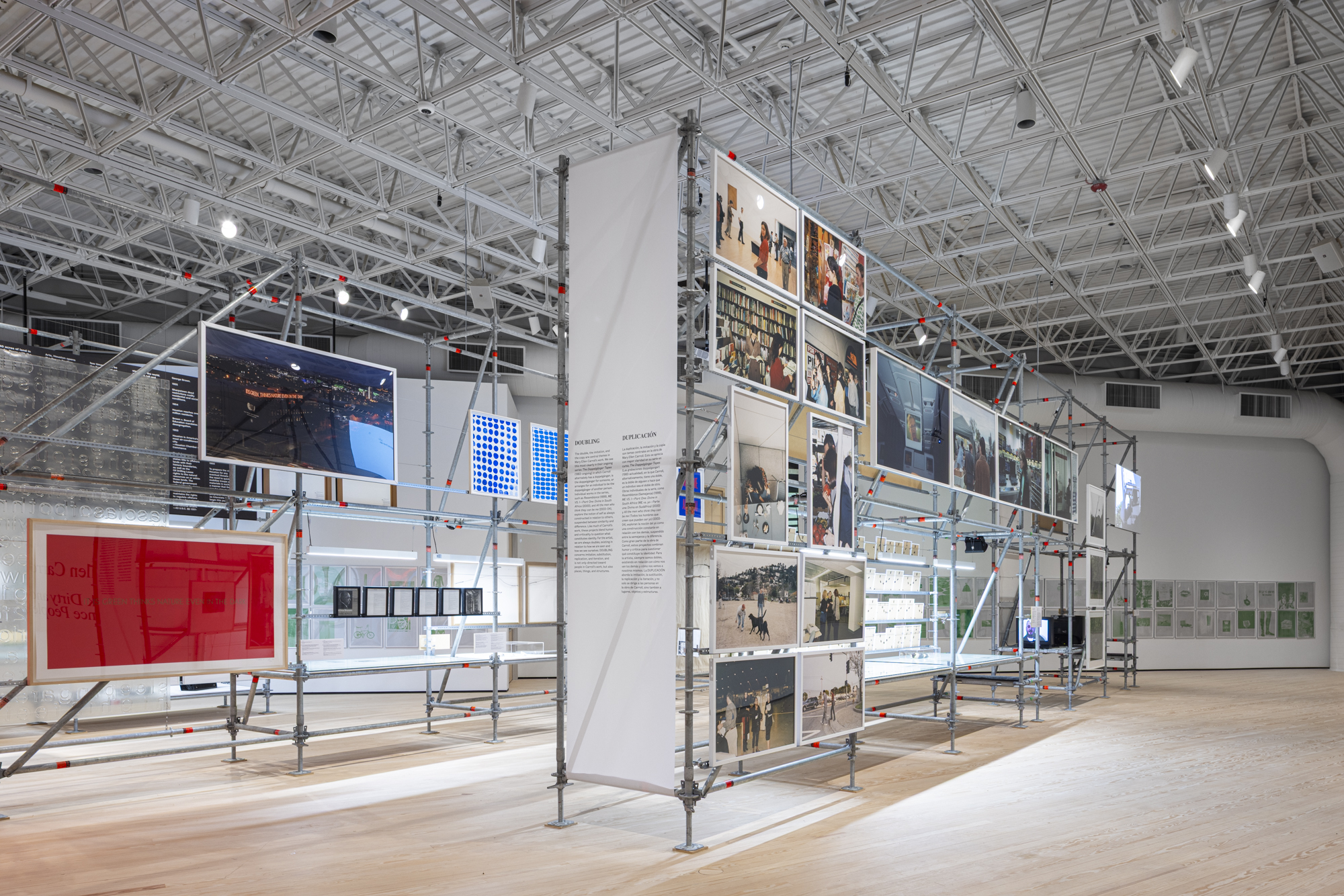
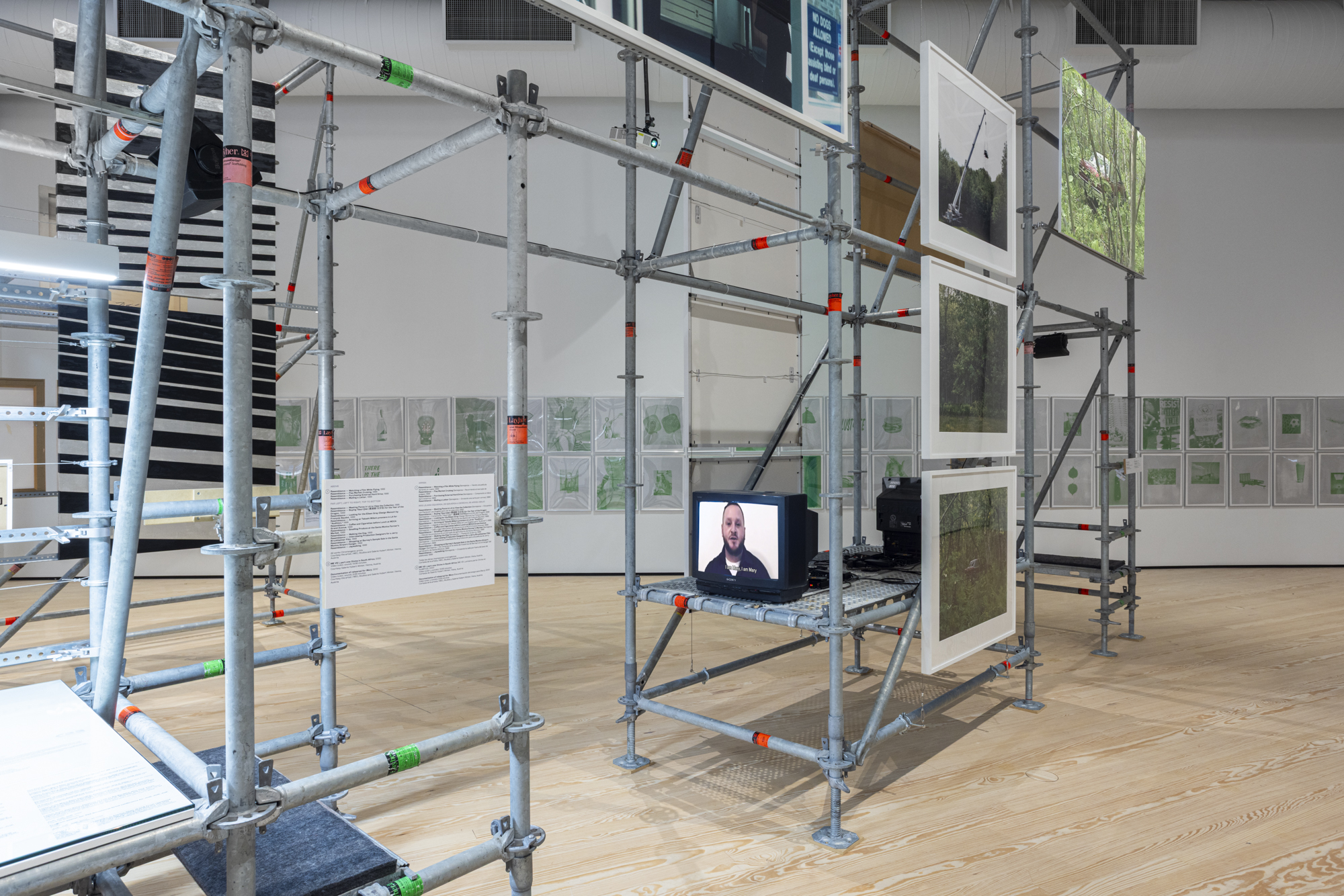
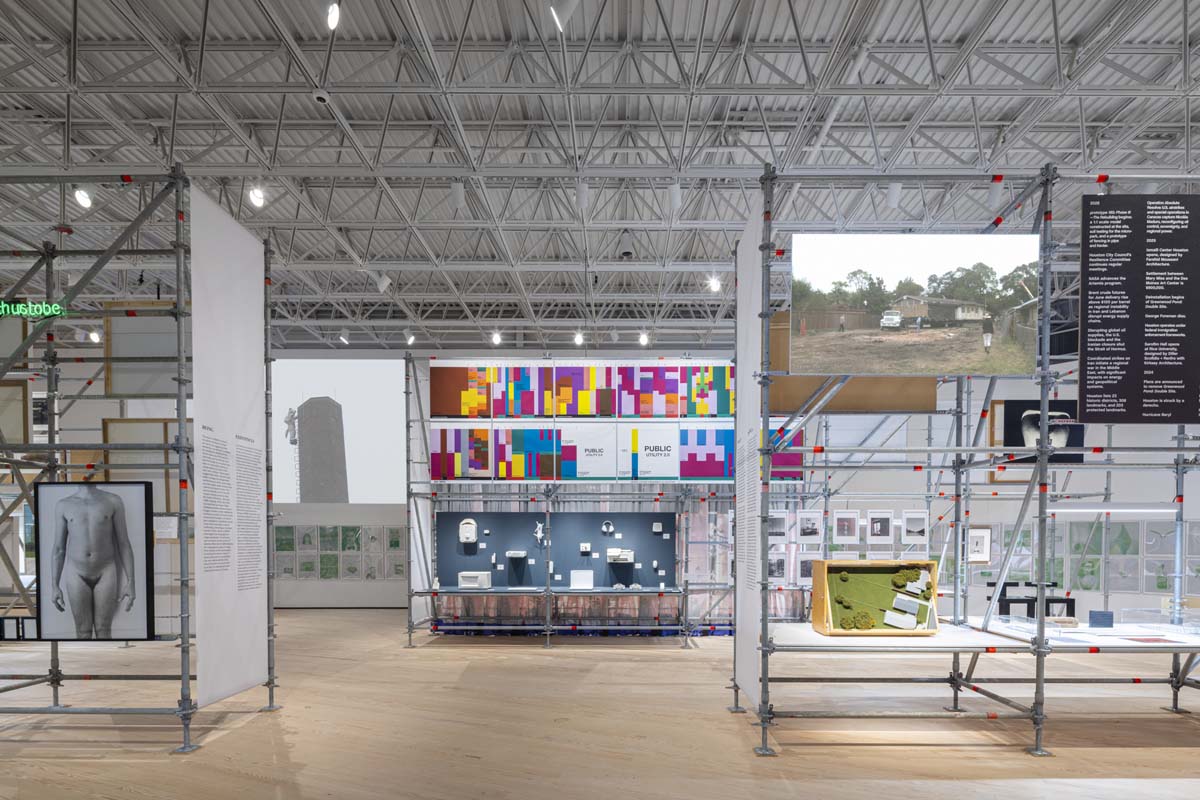
It didn’t hurt that the exhibition was organized like a Home Depot from another planet. There were a lot of glowing shiny things, and my eyes were swinging all around the room as if the exhibit was one big set of monkey bars. And it kind of was. At the opening, MEC and curator Rebecca Matalon both spoke (a little self-righteously) about the sustainability of the exhibit and how the choice to adhere artworks to metal scaffolds instead of drywall was a deliberately conservationist one. That’s all well and good but I also just liked how it made things look. The scaffolds are modular and every one of the six sections is installed differently. Light bounces off the metal, creating dynamic shadows, like László Moholy-Nagy’s Light-Space Modulator (1930) but two stories tall. My eyeballs were looking everywhere—up, down, around, and through these perforated shelving units.
With MEC, there’s always a mark, a problem, a locus of power, and then a magic trick where they saw it in half.
Whenever I see an artwork that clearly costs a lot of money to create I get suspicious. Is the artist compensating for something? Sure, some of MEC’s objects seem to have been outsourced to specialists, but a good deal of the work in the exhibition is not much more than the execution of a set of instructions. Like a Sol LeWitt wall drawing or Fluxus score, it’s primarily an idea. It’s pedestrian in that way. When Joseph Beuys introduced the concept of social sculpture, he meant that anyone can be an artist. MEC happens to be one 24/7.
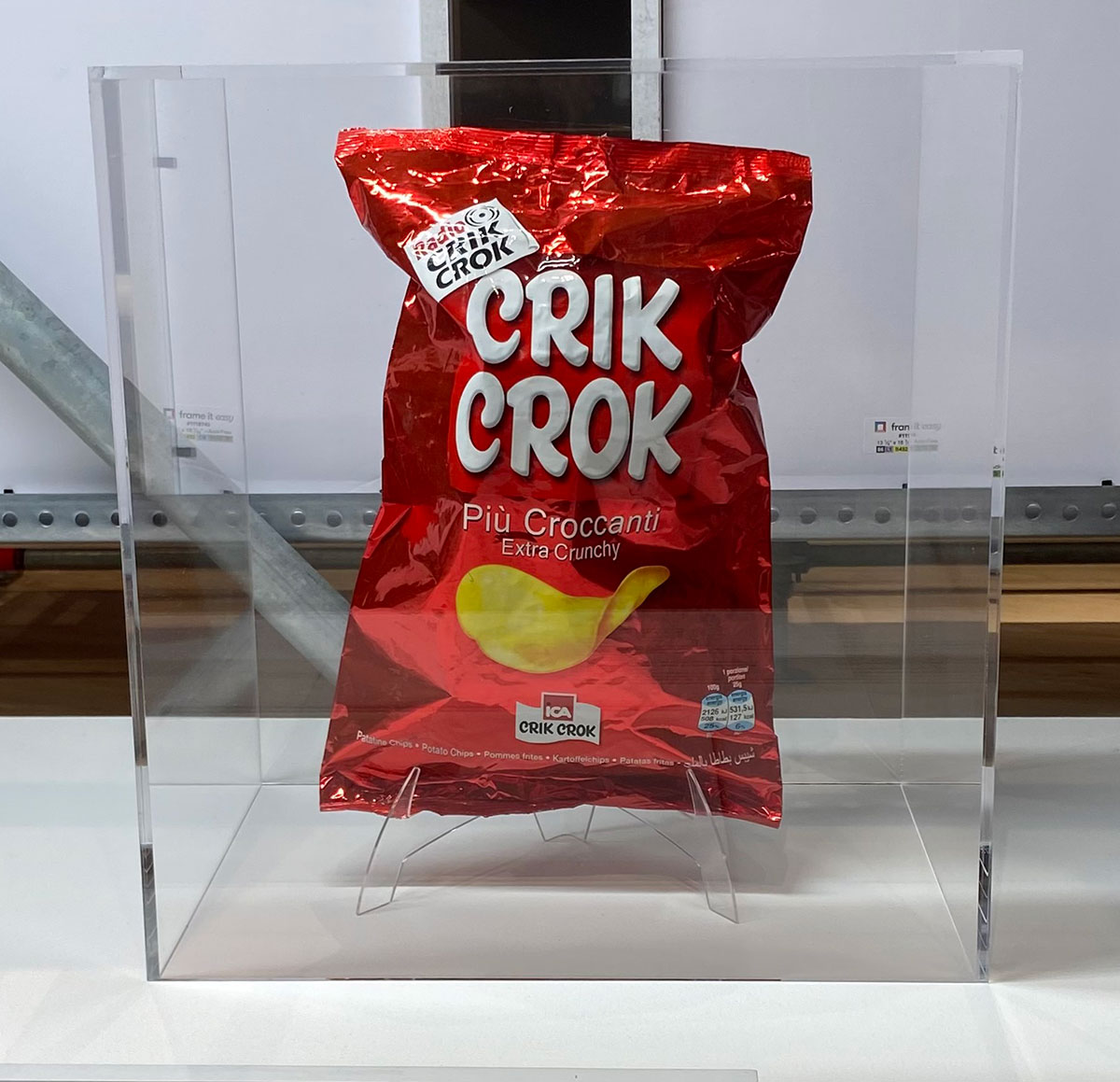
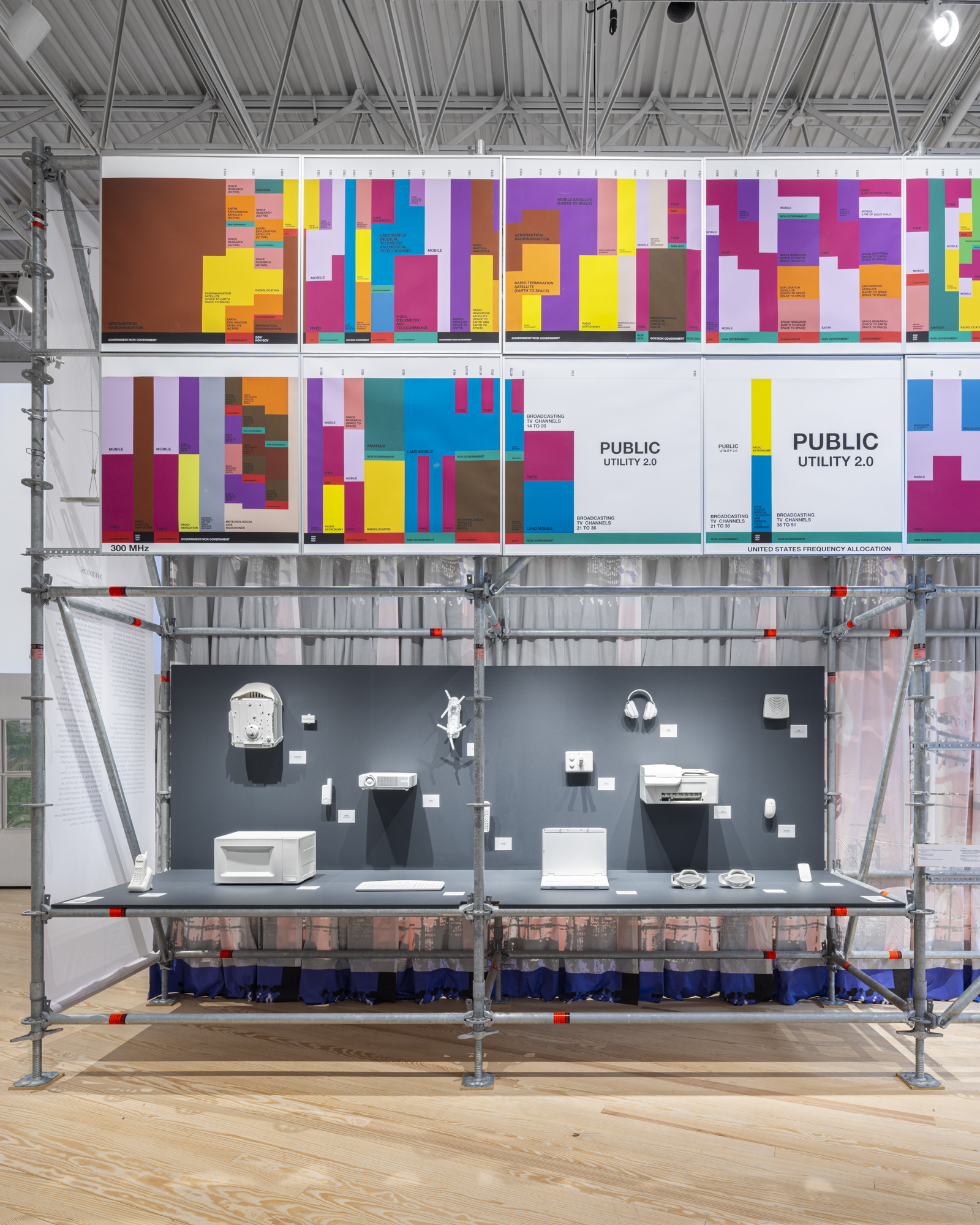
What’s unique about MEC is that they are kind of obsessed with urban planning and architecture, and people who do that kind of work are literally social sculptors: their decisions directly impact how bodies exist in space. (It was, after all, Houston’s lack of zoning that attracted MEC to the city in 2001.) There are moments in the show when MEC wrestles with the big boys of those fields—Robert Moses and Mies van der Rohe—but I like it best when MEC does their own thing. A winning example would be MEC’s Public Utility 2.0 (2008-ongoing) wherein they make use of unused radio frequencies. The air waves may be invisible, but they’re just as contested as any other kind of public space. According to the exhibition’s “Extended Object Labels,” putting “rabbit ears” on a statue of Robert E. Lee at Tivoli Circle would have extended radio signal to the 7th and 9th wards of New Orleans, reconnecting historic Black communities that were carved up when Robert Moses built I-10 between them. It didn’t happen and Lee got taken down anyway, but MEC did make a bag of potato chips a radio transmitter in Italy (the bag of chips is on view behind glass in the show).
I like the human scale at which MEC frequently works. They have a way of putting their thumb in the giant’s eye that I find inspiring because you don’t need superpowers to do it. Carl von Clausewitz once said war is politics by other means, but if you ask me, so is art.
A screening of FEDERAL – The 24-Hour Movie (2005) by Mary Ellen Carroll will take place at the River Oaks Theater in Houston, TX on August 25-26, 2026. More information here.