Mallorca-born painter Pilar Pobil’s largest artwork was her maximalist Salt Lake City home, a communal hub that still hums nearly a year after her death.
This article is part of our OBSESSION series, a continuation of the ideas explored in Southwest Contemporary Vol. 12.
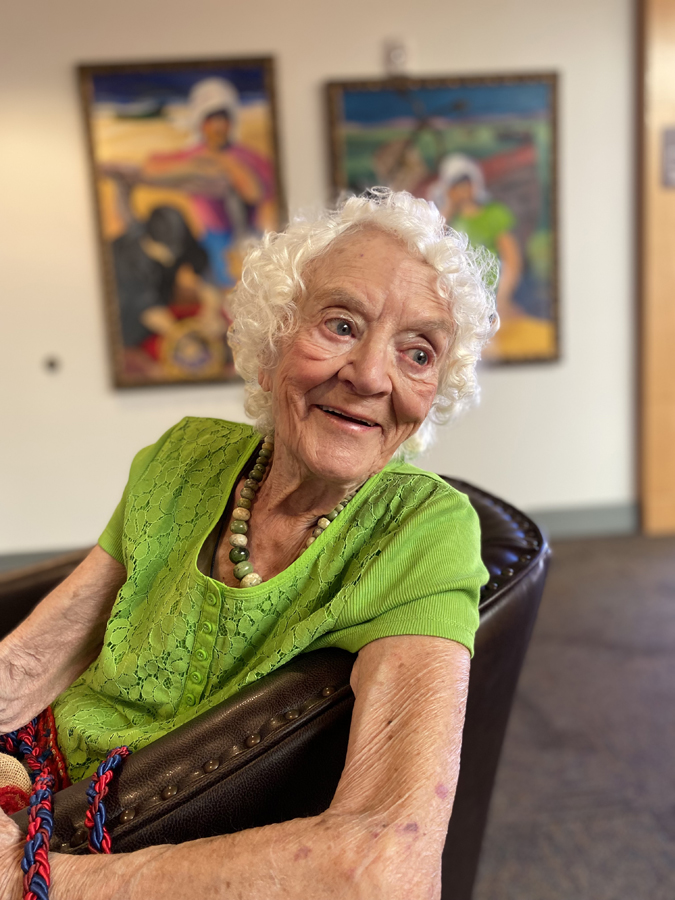
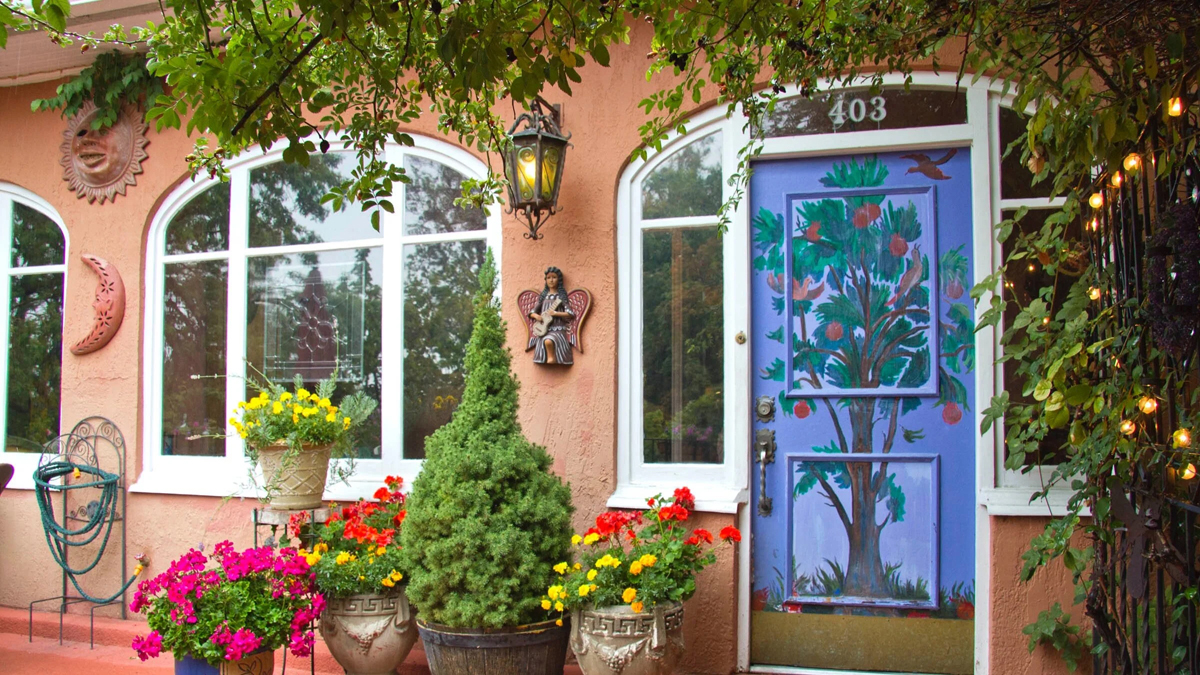
At the end of a quiet, tree-lined street in Salt Lake City’s historic Avenues neighborhood stands a tall house. Marked by a bright coral facade, it was the residence and creative haven of Pilar Pobil, a visionary artist, community builder, and activist, who died last November at the age of ninety-eight. Within Utah’s relatively tight-knit arts community, Pobil’s ferocity of spirit runs parallel to the volume of her creative contributions, which range from her prolific catalogue in numerous mediums to her work forging critical opportunities for new artists and community members. After her passing, the fruits of her labor continue to resonate.
Born in Mallorca, Spain, in 1926, Pobil’s familial history was indelibly linked to the outbreak of the Spanish Civil War a decade later. After emigrating to the United States in 1956, Pobil settled in Utah, her husband Walter Smith’s home state. Though Pobil was seemingly endowed with creative energy from birth, it wasn’t until her forties that she directed her full attention to her own artistic practice. This set off a career that many who knew her describe as rule breaking and ambitious.
“Obsession is a good word to describe Pilar. She was obsessed with her purpose and always had to be creating and doing something,” says Monica Whalen, Pobil’s close friend and the former board president of the Pilar Pobil Legacy Foundation.
Obsession is a good word to describe Pilar. She was obsessed with her purpose and always had to be creating and doing something.
As a self-taught artist, Pobil had a short stint with local art galleries before realizing that an essential component of art is sharing it with others. Influenced by the public art of her native Mallorca, Pobil believed fully in the accessibility of art, and considered art a vehicle for community building, using her home as both an actual canvas of creativity and as a communal gathering space. It’s this tenacity for collaboration that spawned her signature Art in Pilar’s Garden events that featured approximately eight annual showcases highlighting the work of new and emerging artists. Pobil’s place in Utah’s art history scholarship is likely to incorporate her individual work as much as her drive to facilitate the work of others.
“Pilar Pobil is one of the most inspiring artists in Utah’s history. She began her career later in life, but her art radiated joy, love, and community, and she uplifted everyone around her,” says Emily Larsen, executive director of the Springville Art Museum, with whom Pobil’s foundation collaborated on an annual youth scholarship.
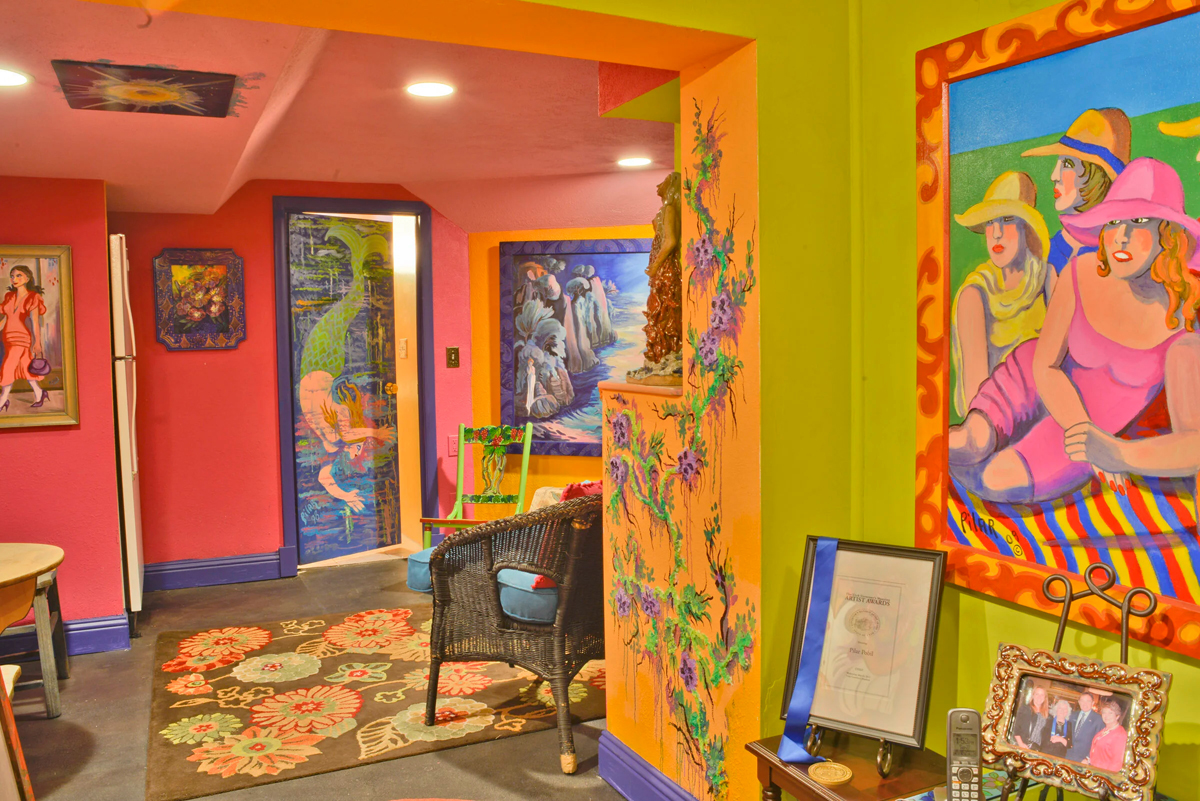
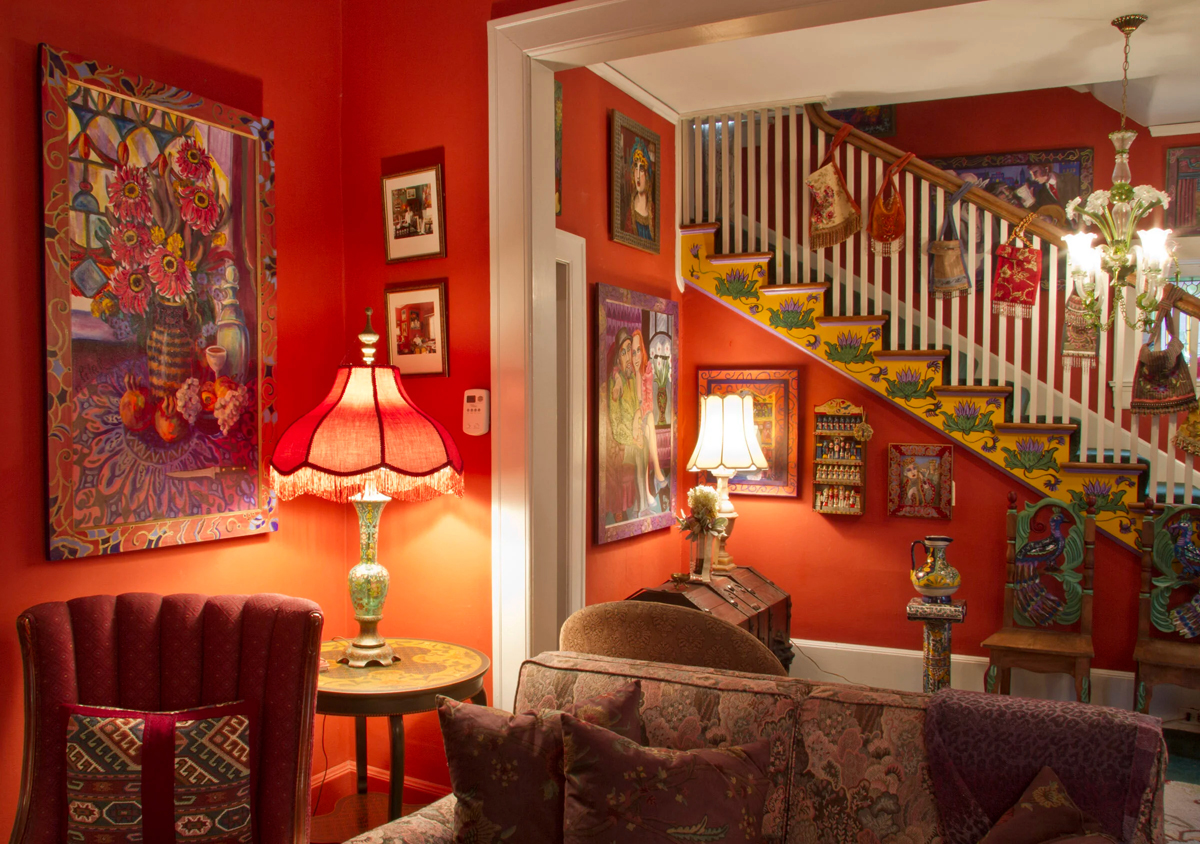
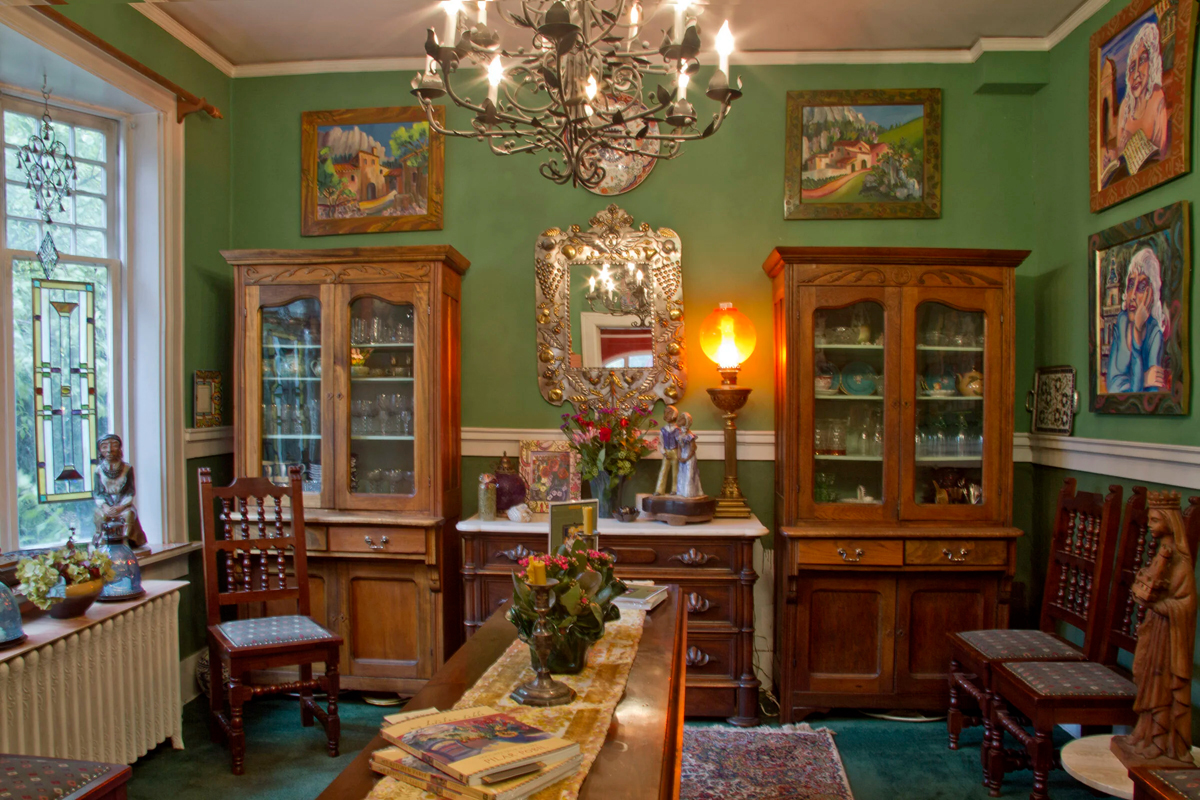
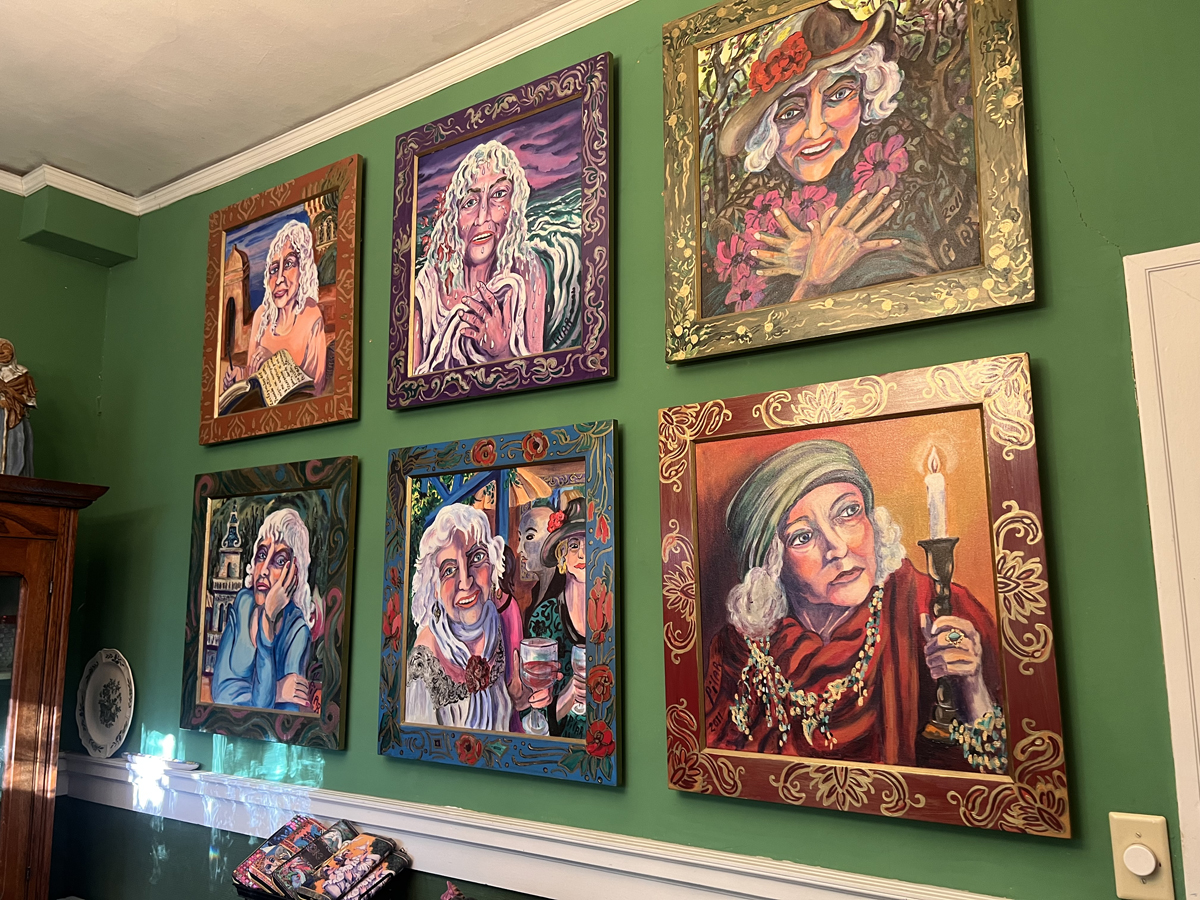
“Every inch of Pilar’s home was covered with her art because, for her, painting was a way of showing love, building community, and creating joy in the world,” Larsen adds.
Indeed, Pobil’s home, which she moved into in 1960, is a crucial part of Pobil’s legacy. The space recalls Frida Kahlo’s Casa Azul in its vibrancy and in the countless traces left by its lively inhabitant. In addition to her many paintings and sculptures, Pobil opted to paint surfaces within the home. According to Pobil’s daughter Monica Pasqual, the space wasn’t always as brimming with Pobil’s many artistic inspirations. Over the years, it transformed in her image.
“If she found something to be ugly, she would just paint over it. She couldn’t sit still, she was always working,” says Pasqual.
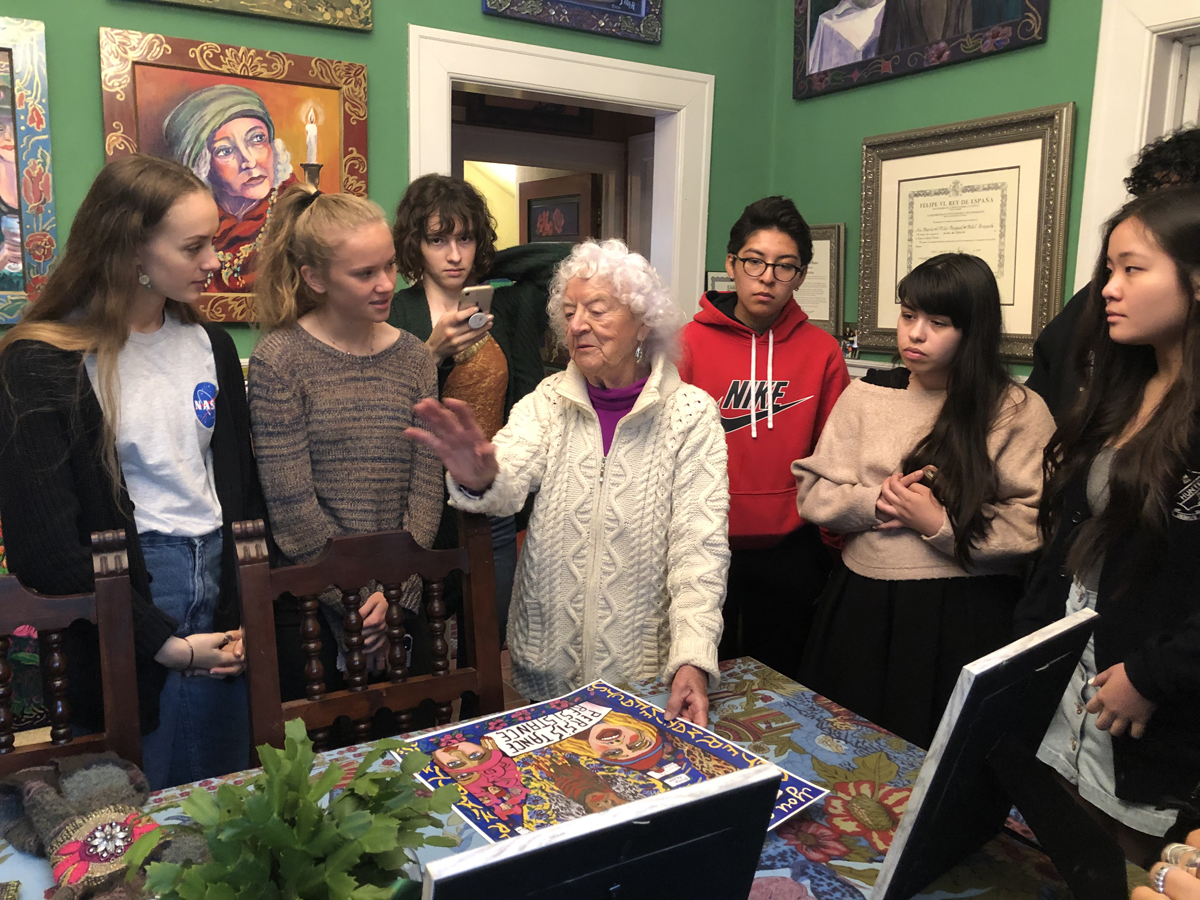
In 2015, Pobil, along with the help of her devoted friends, created the Pilar Pobil Legacy Foundation to enshrine her home as a sustained site of community exchange and inspiration. Beyond art events, Pobil hosted nonprofits committed to fostering human rights and social justice, as well as courses in collaboration with local educational institutions.
After the physical isolation imposed by the Covid-19 pandemic, the foundation shifted its focus to supporting outside institutions. Over the past five years, the foundation has collaborated with the University of Utah’s College of Humanities to create an endowed scholarship as well as donating directly to area schools and museums. The foundation’s collaboration with the Utah Cultural Celebration Center resulted in the Pilar Pobil Celebration Gallery, a free space aimed at highlighting the work of diverse artists.
Pobil’s undeniable obsession with creativity made an impact on the generation of artists that followed her.
And while Pobil’s career is a story of triumph, a long life is often one beset with struggles.
“I never once heard her doubt her work. She was proud of being a self-taught artist and had no need to question the accuracy of her work. Her work was a pure expression of who she was and it was bold in its colors and its voice,” says artist and friend Kindra Fehr.
And while Pobil’s career is a story of triumph, a long life is often one beset with struggles. In 2016, Pobil suffered a stroke that significantly impacted her ability to work. Over time, her drive continued, and she commenced painting after what, by all accounts, was a debilitating medical event.
“I think some other part of her compensated and took over at that moment. She had such a will to create,” says Pasqual.
Indeed, that insatiable drive is what those who knew and loved Pobil remember most about her. While the work of the foundation has come to an end with Pobil’s passing, her family and closest friends are devising ways to continue using her home as a community site of inspiration and remembrance. Pobil’s daughter, musician Monica Pasqual, is now overseeing Casa Pilar, a new initiative continuing her mother’s vision for the space.
At a recent open house event, Pasqual recalls with pride the diversity of individuals who sought to engage with her mother’s work. Ranging from well-established neighbors, artists, and community members to young LGBTQ people, the commonality of inspiration was that of admiration for a woman whose life embodied the art of being unapologetically oneself.

Update 11/04/2025: This article has been updated to include information about Casa Pilar, a new initiative led by Pilar Pobil’s daughter, Monica Pasqual, following the conclusion of the Pilar Pobil Legacy Foundation’s work.