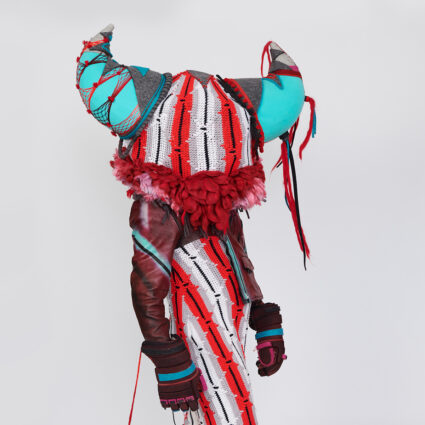
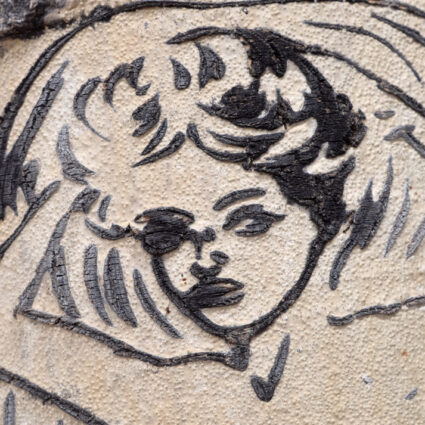
Photographer and sculptor Liz Cohen visualizes “radically transformed bodies,” revealing how labor reshapes machines and people.
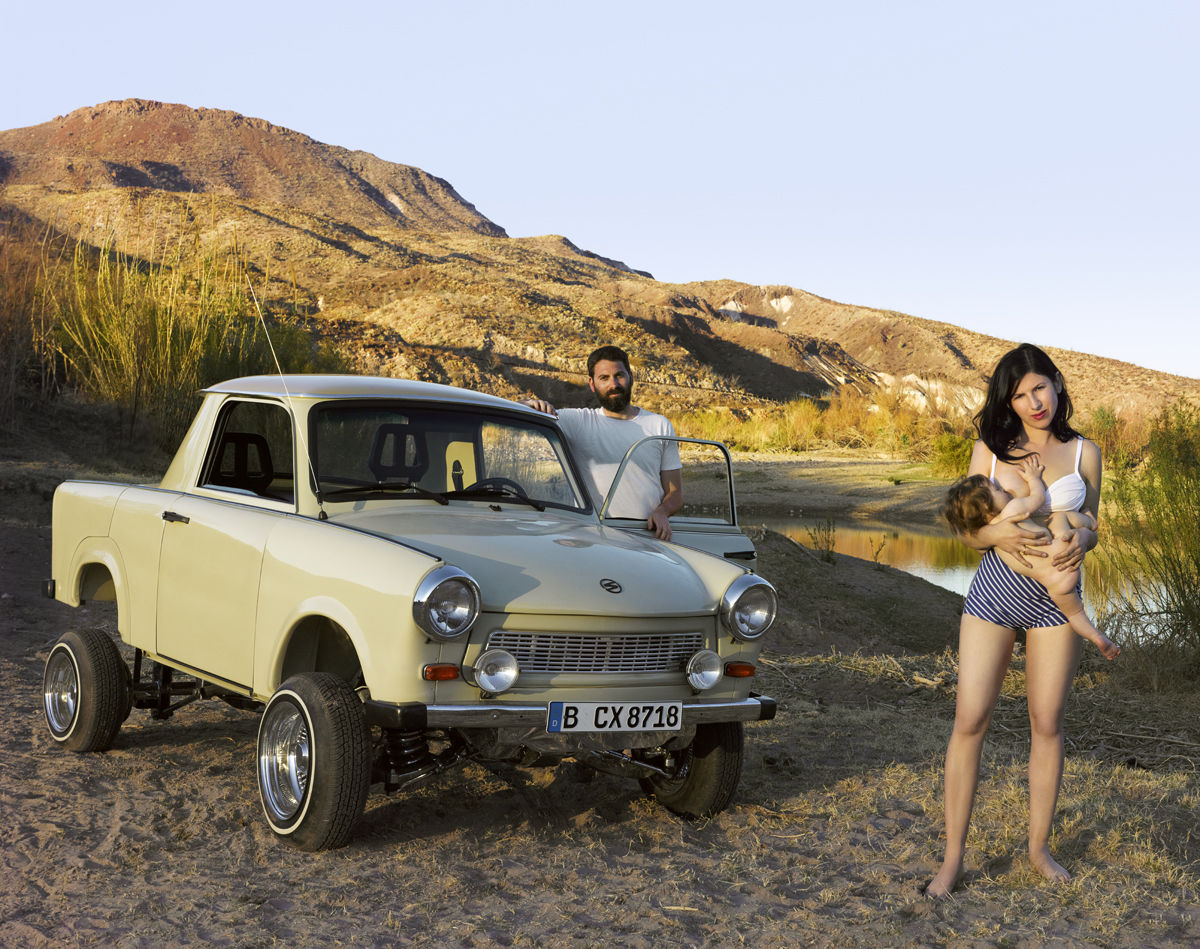
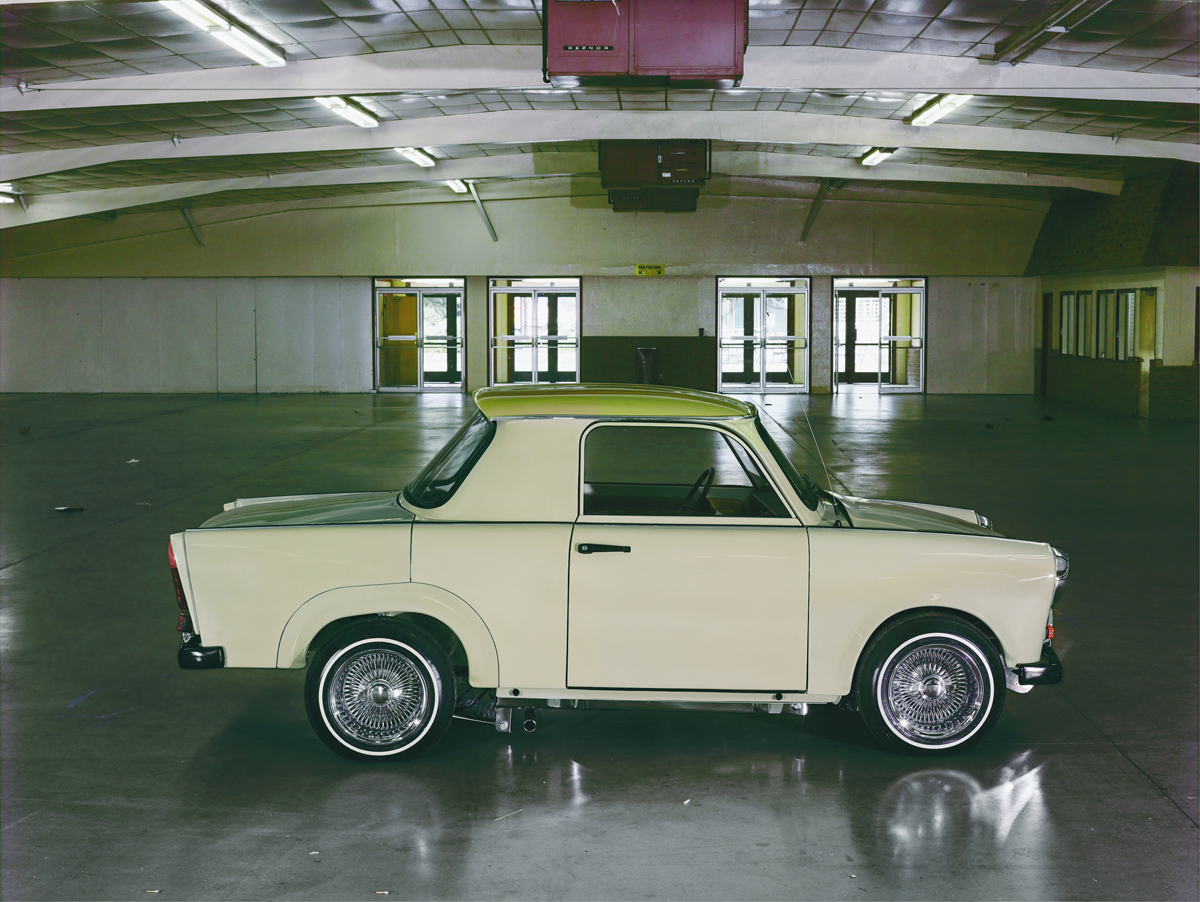
More than eight months pregnant and wearing a bright blue bikini with silver gladiator sandals, artist Liz Cohen sat inside the hybridized car she’d spent a decade transforming from a Cold War–era East German Trabant into an American El Camino, her body thrusting up and down as she activated the car’s hydraulics. During her 2012 Hydro Force performance, Cohen drew “parallels between two radically transformed bodies,” her own physical form and the car.
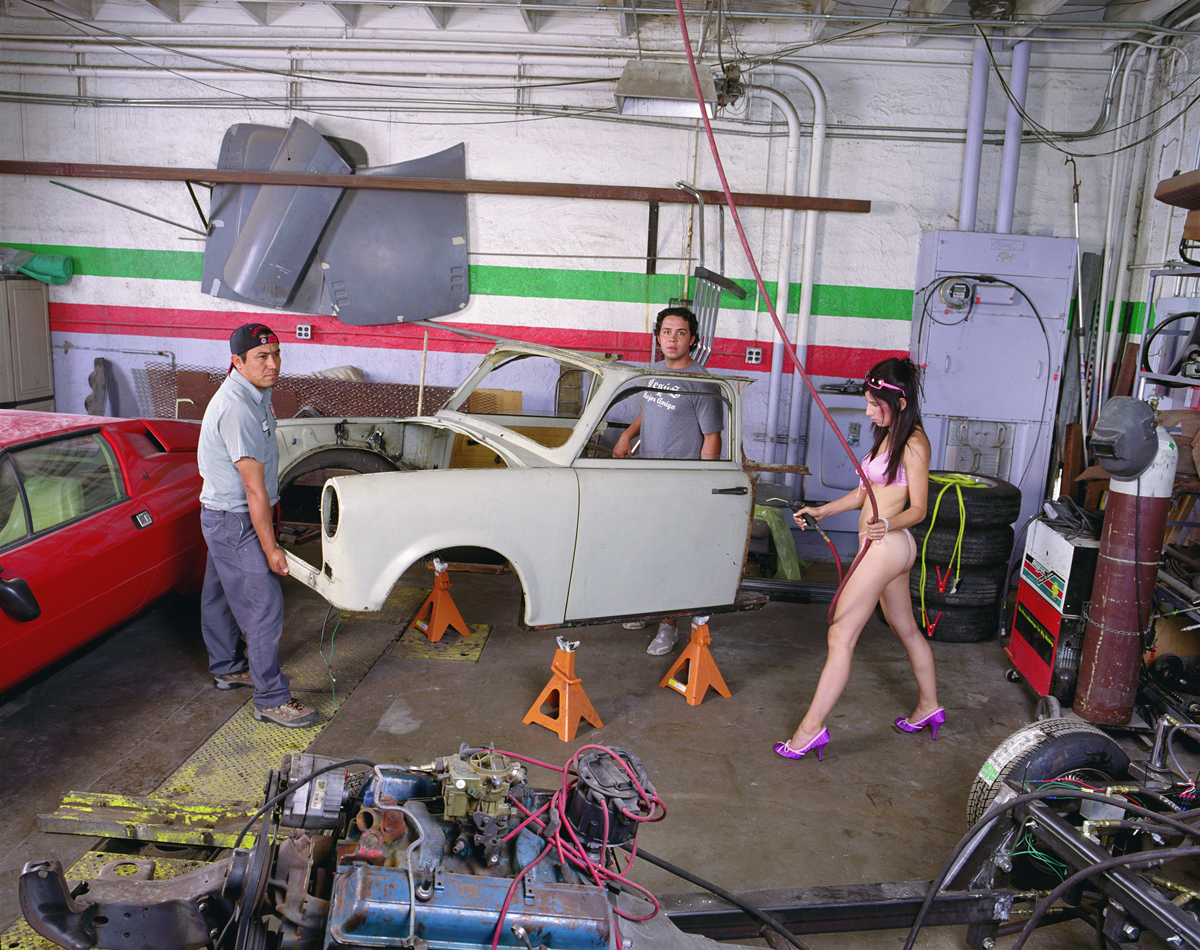
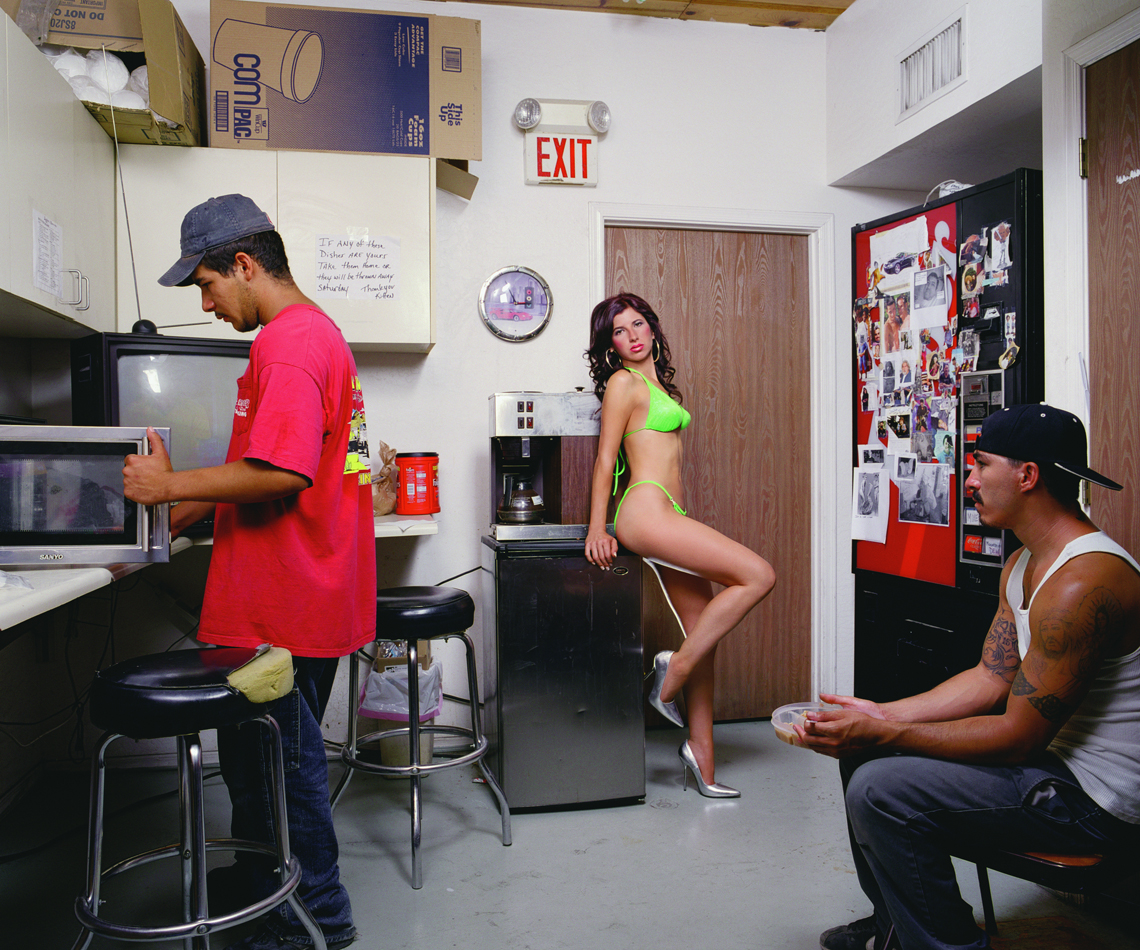
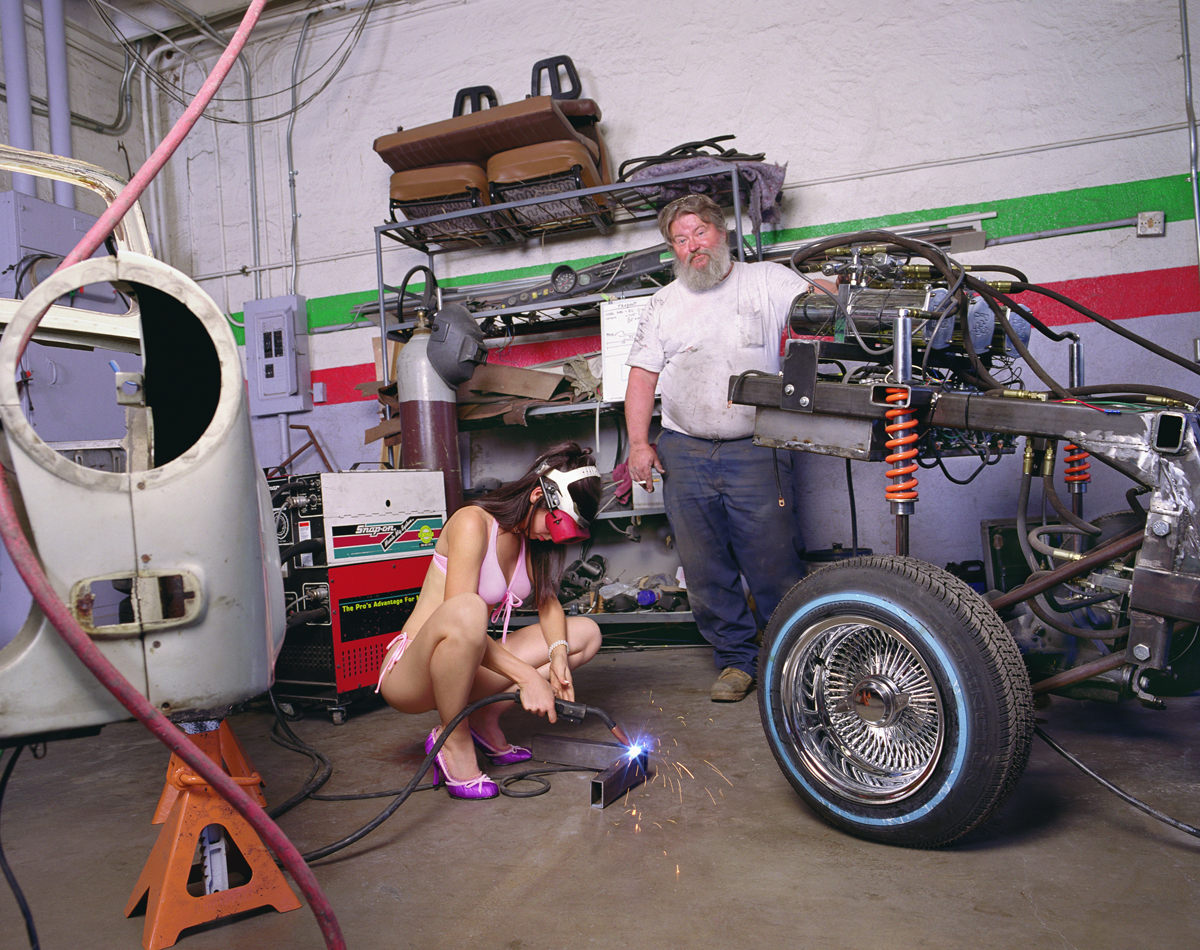
Cohen didn’t just create the Trabantimino (2002-12). She also became a bikini model and showed the vehicle at various lowrider shows.
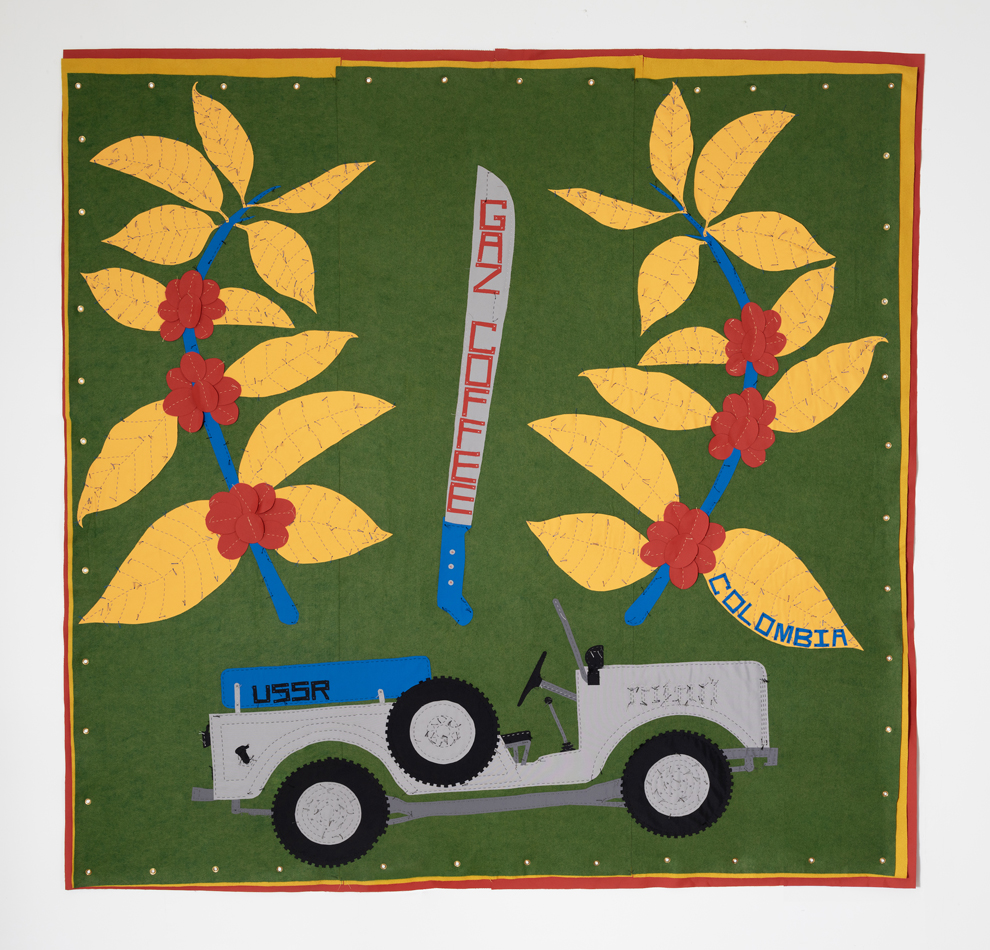
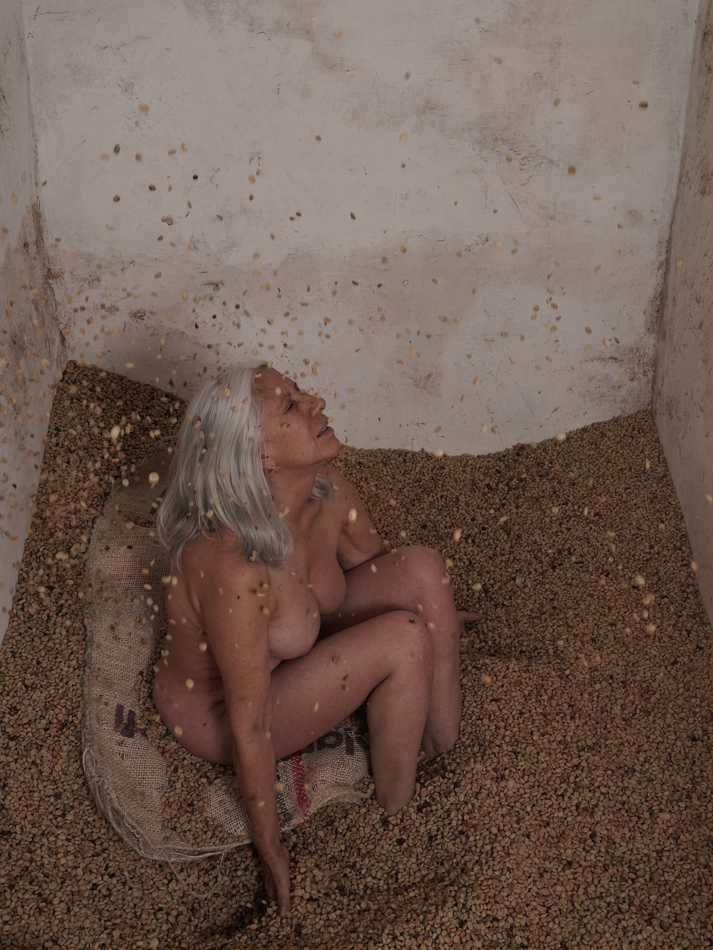
Now, the Arizona-based artist is working to transform the very car model her mother first learned to drive in Colombia, a 1969 Gaz 69A built in the Soviet Union, as part of a new project called Gaz Coffee. It’s rooted in the historical record of Russians and Colombians trading cars and coffee—and her own family’s experience.
“Cars are utilitarian objects, but they can tell any story you want,” reflects Cohen. “They’re accessible, and they make a great entry point as a first layer of my work.”
For Gaz Coffee, customizations include adding a solar-powered espresso machine, so she can serve coffee during upcoming performances examining commodification, imperialism, labor, trade, geopolitics, and ideology.
“The dream for this car is driving it along a portion of the Pan-American Highway, talking with farmers, agricultural workers, and coffee makers—especially women’s collectives,” she explains. Like Cohen’s larger body of work, the project will address intersections between personal and global histories. Her own international travel, by the way, includes time spent in Colombia, China, Germany, Panama, and Russia.
Cohen is still making modifications to the Gaz 69A inside Elwood Body Works in Scottsdale, the shop she calls “my art home in Phoenix,” where Bill Cherry has been her mentor for both car transformations. She’s already shown GAZ COFFEE build #1 at the Mattress Factory in Pittsburgh in 2022, but there’s more work to be done.
She’s creating related textile and ceramic works to examine the labor of women, who make up a majority of coffee workers in the region she’ll traverse. Typically, she fabricates these in her Sunnyslope art studio, a small space in her home, or at Arizona State University in Tempe, where she’s a professor, photography area coordinator, and BFA program director for the School of Art.
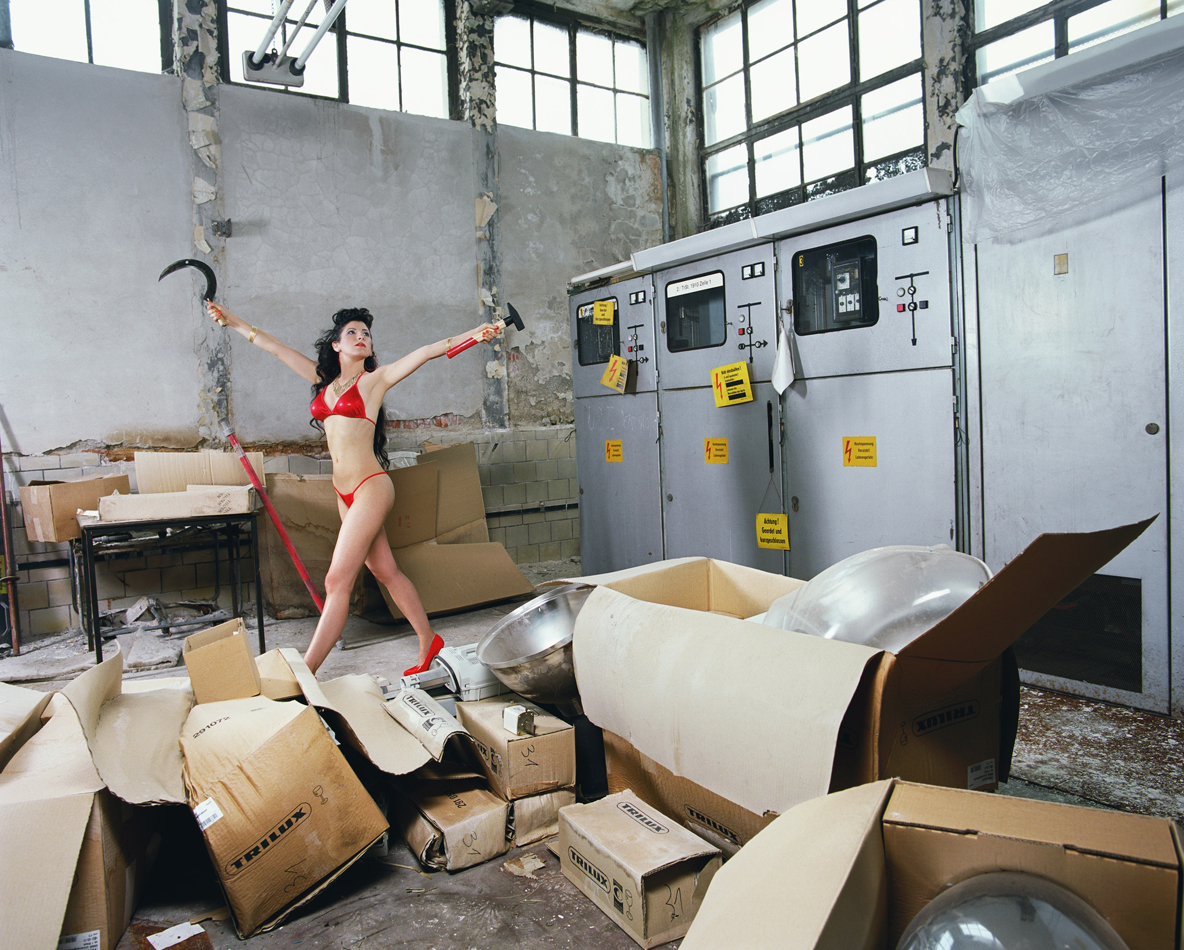
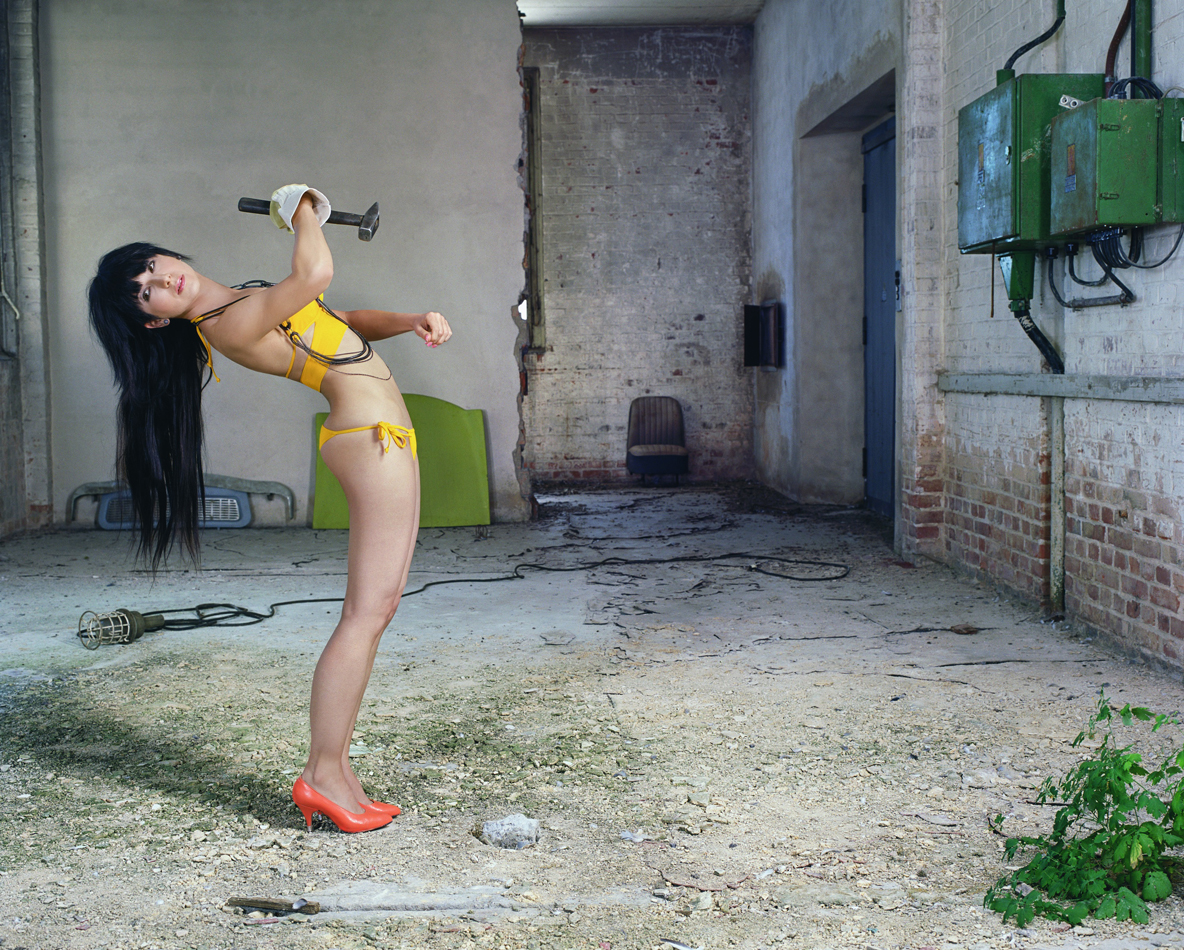
Meanwhile, Cohen is documenting the project, as she did with the Trabantimino in her Bodywork (2005), Zwickau Routine (2010), and Along the River Road (2012) series.
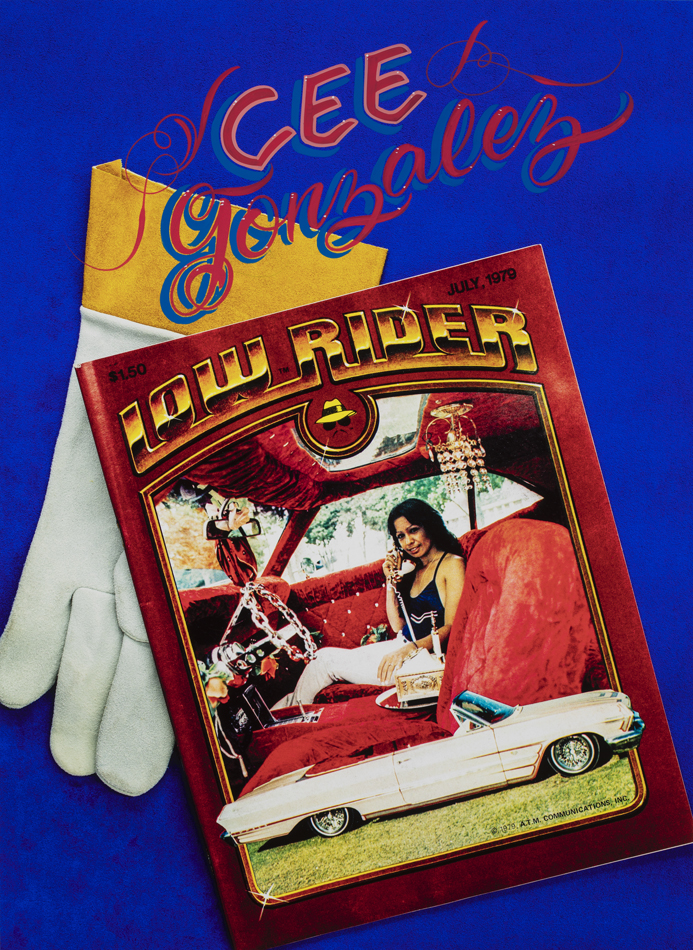
Cohen’s oeuvre also includes Body Magic (2020), which explores both the marginalization and empowerment of women in lowrider culture, among other themes. Noting the culture’s immigrant roots, Cohen says she “admires the way it playfully expresses resistance and shares generational knowledge.”
Cohen’s creative practice is particularly powerful when considered within the current geopolitical landscape, where shifts in the nation’s identity and wider world order are impacting communities and individual lives. “Our politics are so entrenched and dogmatic now,” she says. “[But] our stories are very complex and I want people to keep having conversations.”