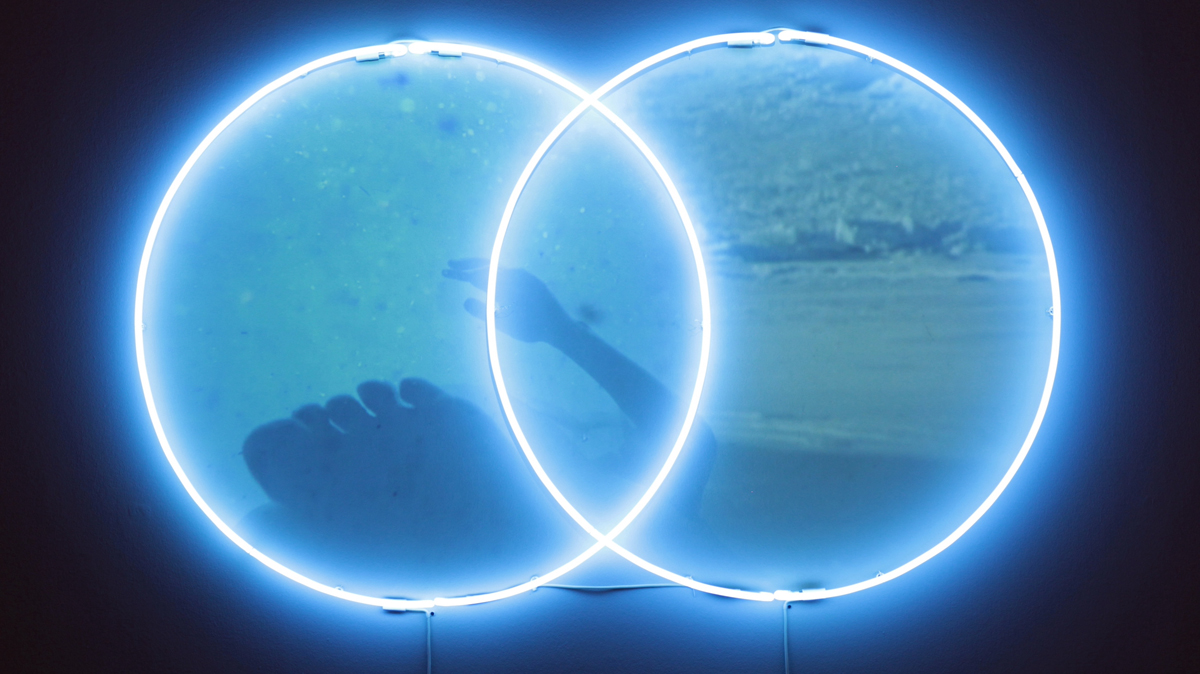
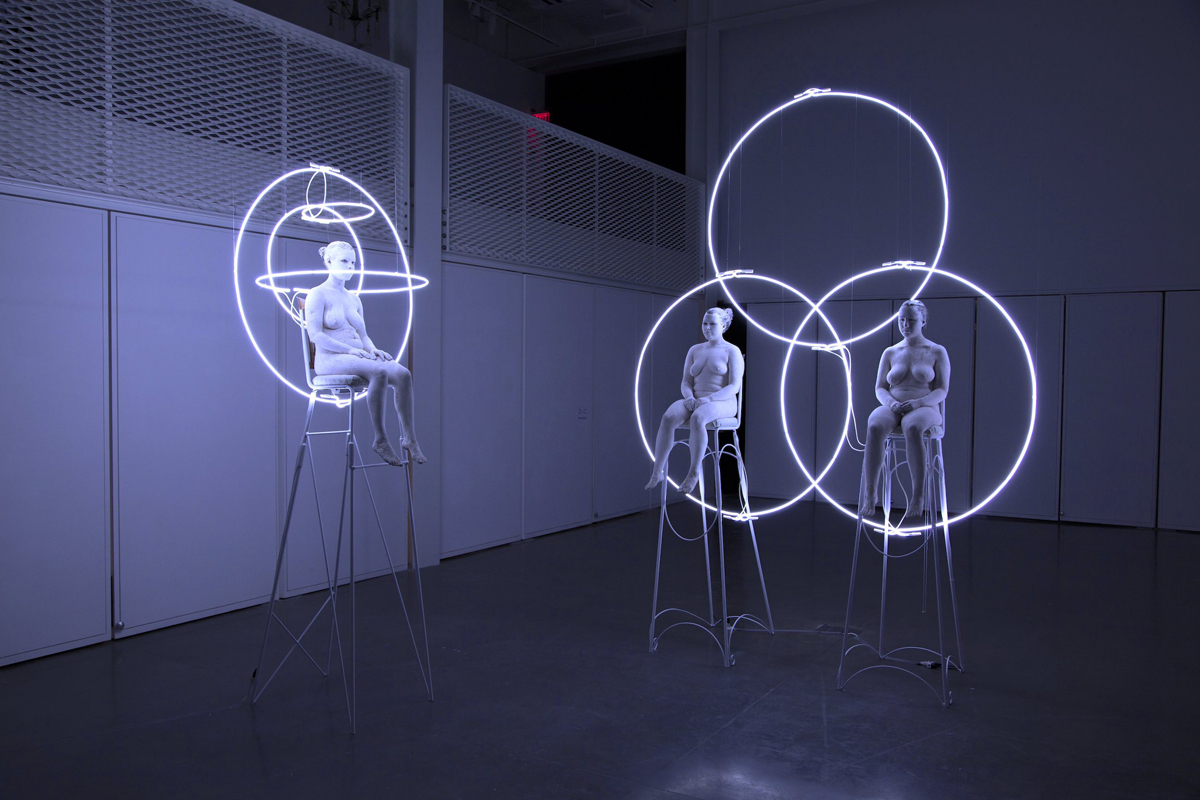
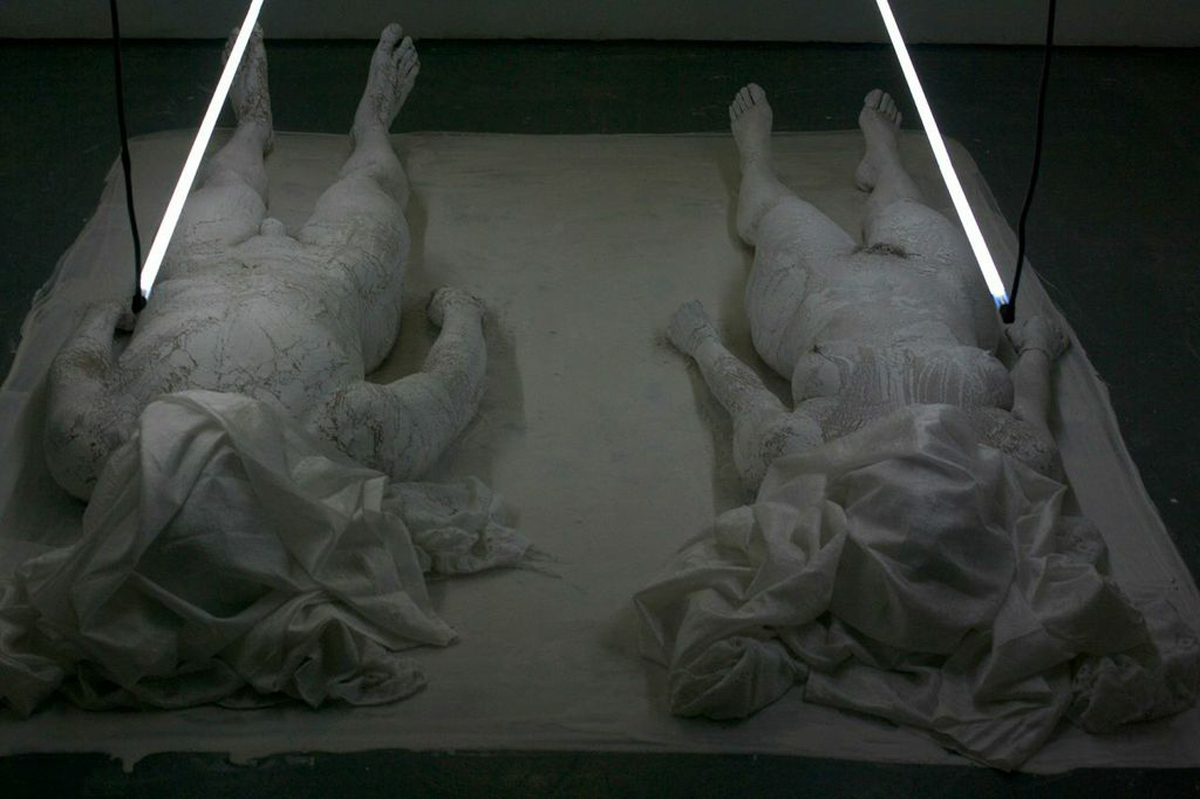
Neon nearly died at the altar of the LED revolution. Phoenix-based artist Lily Reeves is working to resurrect it, with literal witchcraft.

“I think neon is mystical. It holds a special power of attention and environment,” says Lily Reeves, a neon artist working in Phoenix, Arizona. “We’re like bugs, we’re so drawn to light, we’re drawn to neon. Of any light source, neon is closest to sunlight because it’s an electrified gas. There is this aliveness to the medium.”
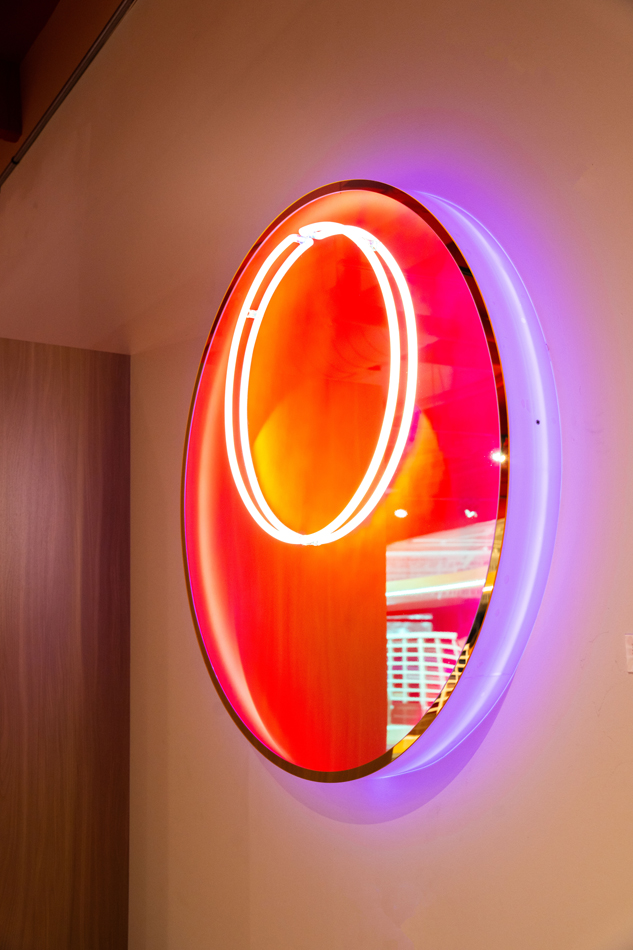
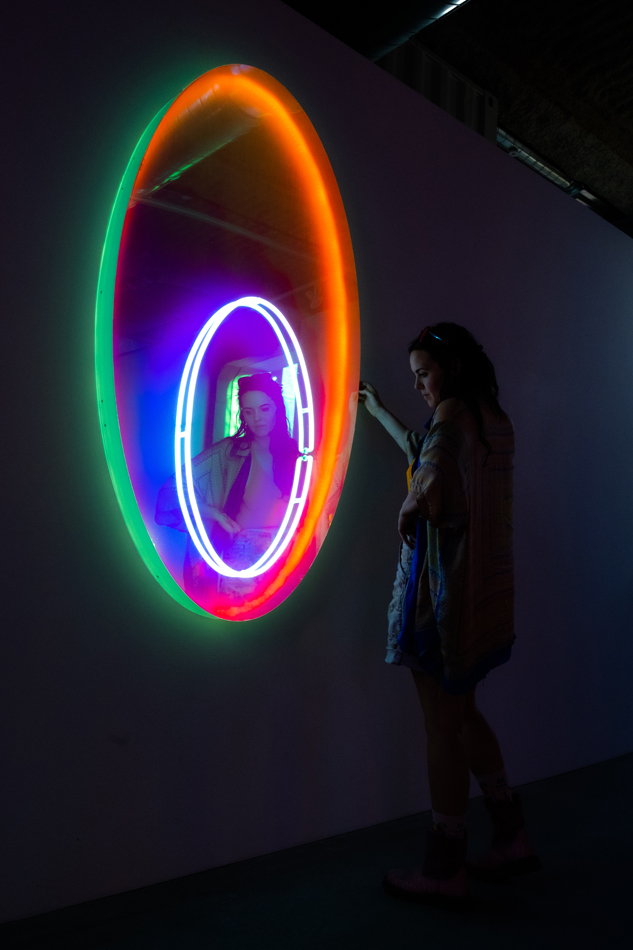
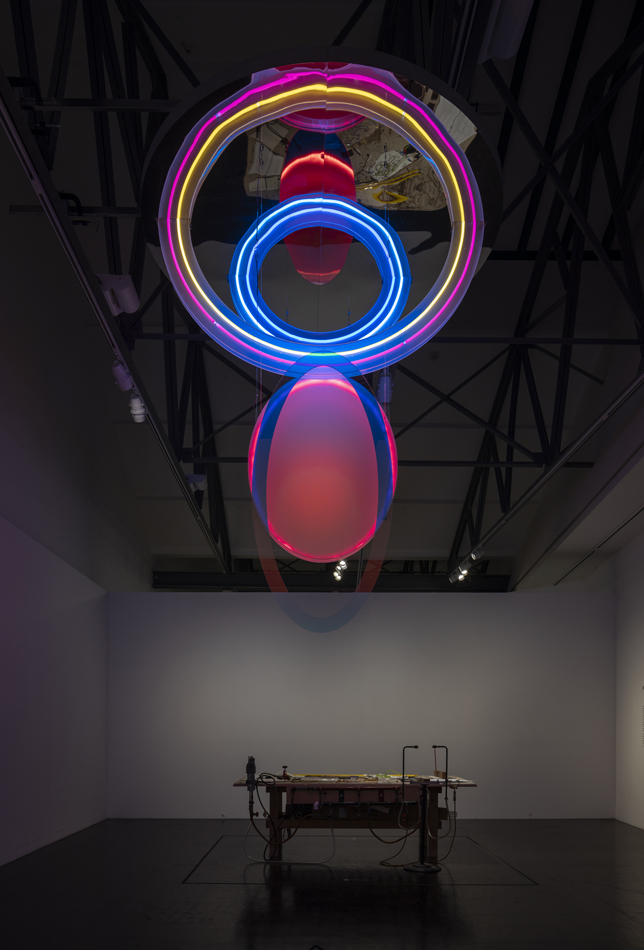
Indeed, neon lights glow brighter against the natural color palette of the desert. From advertisements on highways to bold signage, neon has a special place in the visual landscape of America. Reeves’s large-scale neon sculptures and immersive installations explore the possibilities of light, material, and landscape—elevating neon into something artistic and otherworldly.
With work currently in Phoenix Art Museum’s exhibition The Collection 1960 – Now, Reeves also has site-specific works throughout Phoenix, adding a touch of Blade Runner-esque illumination to the desert capital.
“The reason I love the Southwest so much is the light, it’s very visceral, you can see for miles and miles,” says Reeves, whose studio in Phoenix is a UL-listed, full-service fabrication and design studio. “I take pieces out into the desert and photograph them, because there’s this culmination of wonderful [light] effect[s], it’s way more magical.”
Of any light source, neon is closest to sunlight because it’s an electrified gas. There is this aliveness to the medium.
Reeves’s journey to the desert and devotion to light sculpting began during her youth in Alabama. “I had a huge interest in glass from a really young age,” shares Reeves. “I always knew I wanted to use glass as a medium. I thought I would be a glassblower.”
When Reeves moved to Upstate New York for college at Alfred University, it had one of the only collegiate-level instructional neon shops in the country. Reeves had met her medium, and was entranced. She went on to get her MFA at Arizona State University, one of the five other schools in the U.S. with a neon program. After graduating, she stuck around in Phoenix.
“Neon is a skilled trade. If you don’t work in the medium for a few months, you lose hand muscle memory,” says Reeves. “So it is a lifelong practice. I enjoy bending glass and processing neon, I get into a flow state.” The discipline, which originated in the early 1910s, has its own fierce art-and-craft political divide. “I learned neon from an artist, not a sign maker. As someone who makes art in neon, I get annoyed when people only use it to make signs.”
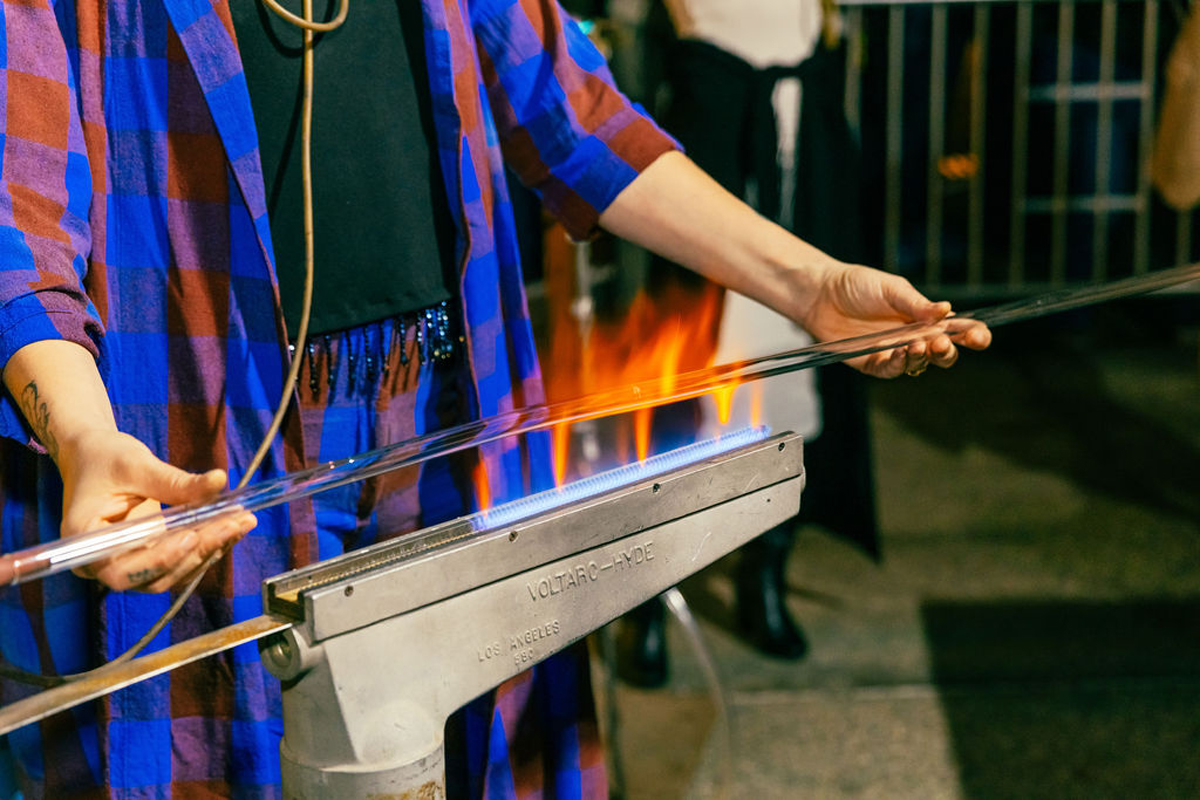
Neon making is an endangered art. Reeves explains, “In order to sell LED, the industry had to disparage neon. It doesn’t take a skilled craftsperson to make an LED, it’s cheaper to manufacture and the quality of light is different. So the neon industry tanked in the 1990s and early 2000s, most companies went out of business. Once the decline started it never stopped, we lost manufacturers and suppliers.”
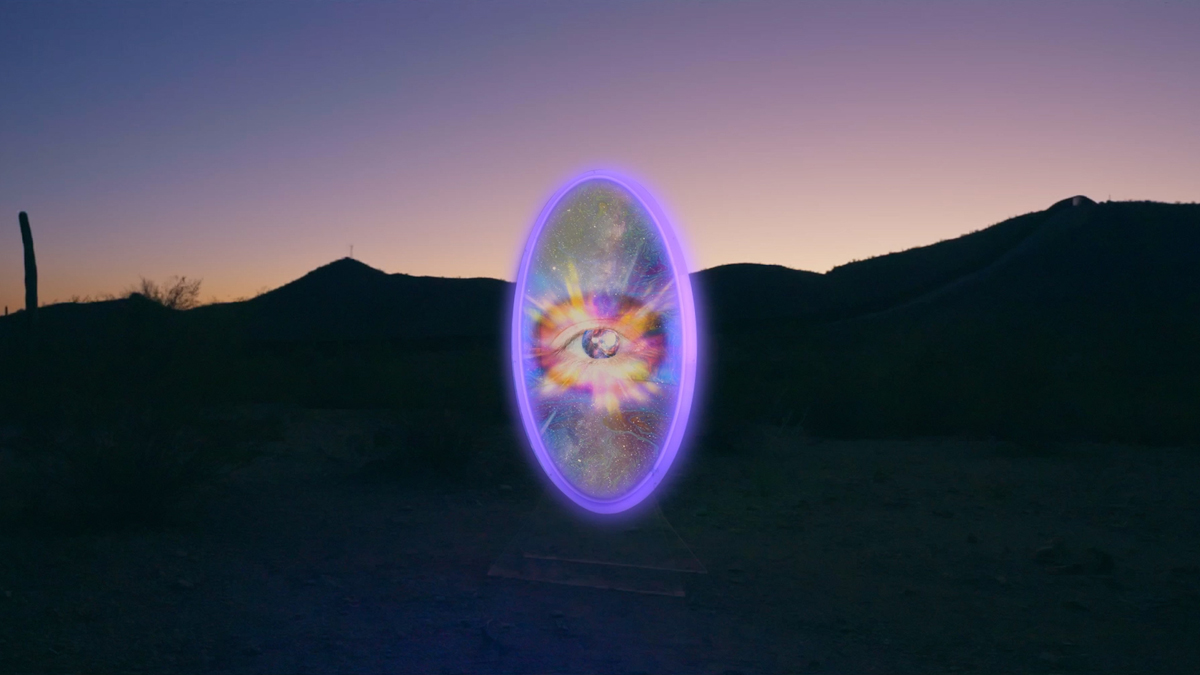
Reeves continues to push the boundaries of what neon can be. Her installation La Puerta De Entrada / Port of Entry, co-created with Phoenix-based artist Estephania Gonzáles, is a portal-like glowing light sculpture. The site-specific work appeared in the Mesa Art Center’s spring season opening as a pop-up installation in the Sonoran desert.
“With all the ICE activity in Arizona, we had to do this now,” says Reeves. “We took the portal down to the Organ Pipe National Forest, where the ecological space spans both the United States and Mexico, but it is divided by a man-made border. This green oasis is scarred by the border, and super militarized. We created a port of entry that takes that border crossing experience and frames migration as an earth rite, as something natural.”
Everything is magical, we’ve been narrowed into this very confined way to look at the world and it’s not great.
“There’s a very real magic to portals. whether or not they are physical or conceptual,” Reeves says. “I believe portals exist everywhere.” From a scientific standpoint, we still don’t fully understand the implications of all the waves we can’t see, and quantum mechanics shows that portals coincide with electromagnetic fields. Reeves aims to explore how light behaves, and what impact that has on viewers. “I believe neon creates an electromagnetic field, which humans also have electromagnetic fields in us. When I make a visual portal I believe it’s a real energetic exchange.”
Reeves is currently creating a large-scale, suspended public artwork for Phoenix’s Sky Harbor airport. “I’m interested in ways to make public spaces more inclusive and interesting to be in,” she says. “I always try to make spaces more feminine too, [as] most of our built environment is built by and for men. I want to create things people don’t see every day.”
Reeves sees neon making as an alchemical craft, a sacred and mystic process through which she transmutes the everyday into the extraordinary. She says, “I’m trying to work more witchcraft into my work. What that means is that everything is magical, we’ve been narrowed into this very confined way to look at the world and it’s not great. I think artists, gender non-conforming people, outsiders, have a way to break that open more. You don’t always have to be perceived as normal. Everyone is weird. Whimsy is so important.”