A biographical show fortifies the legacy of visionary artist Leonard Knight in Ocotillo, California. If only his rainbow-hued magnum opus were as sturdy.
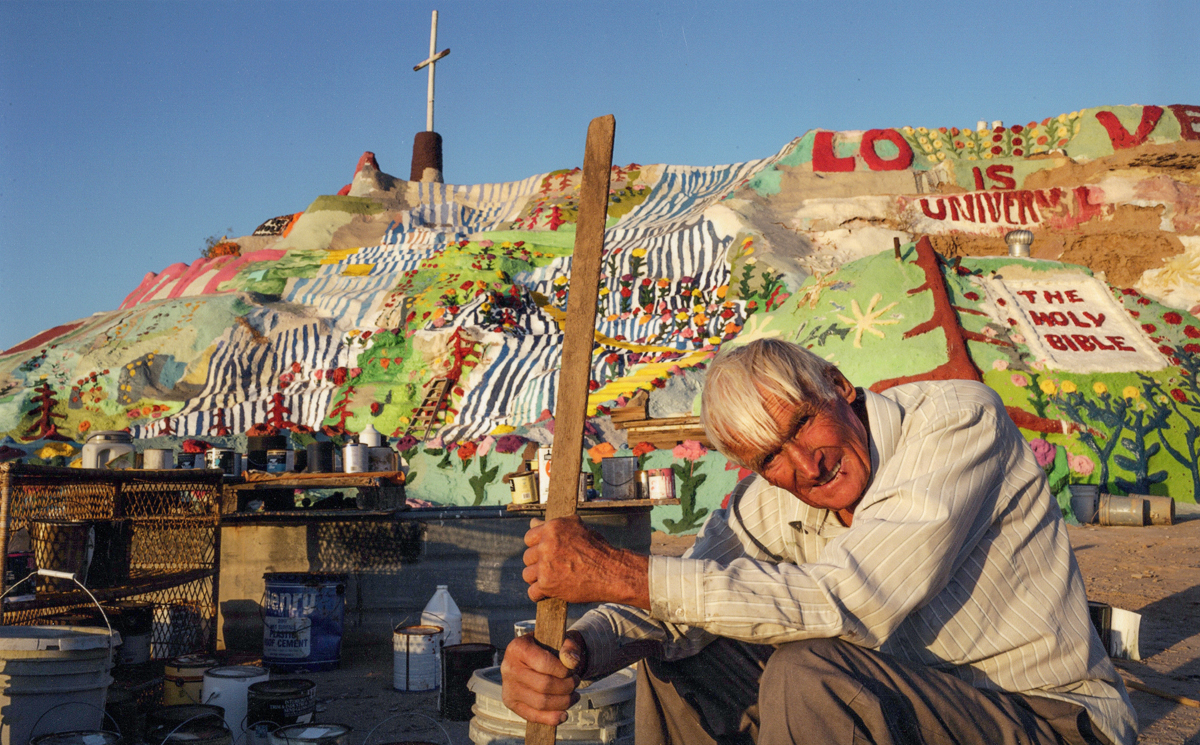
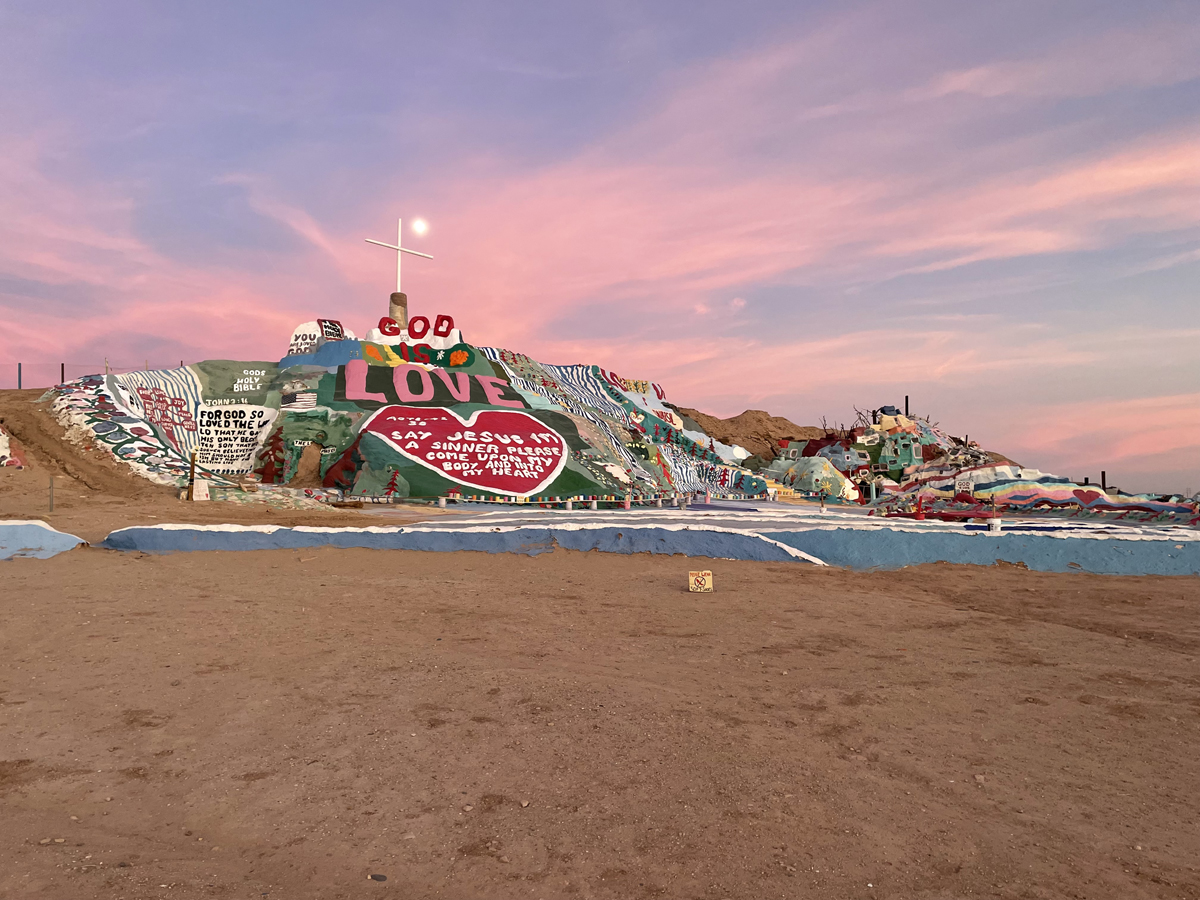
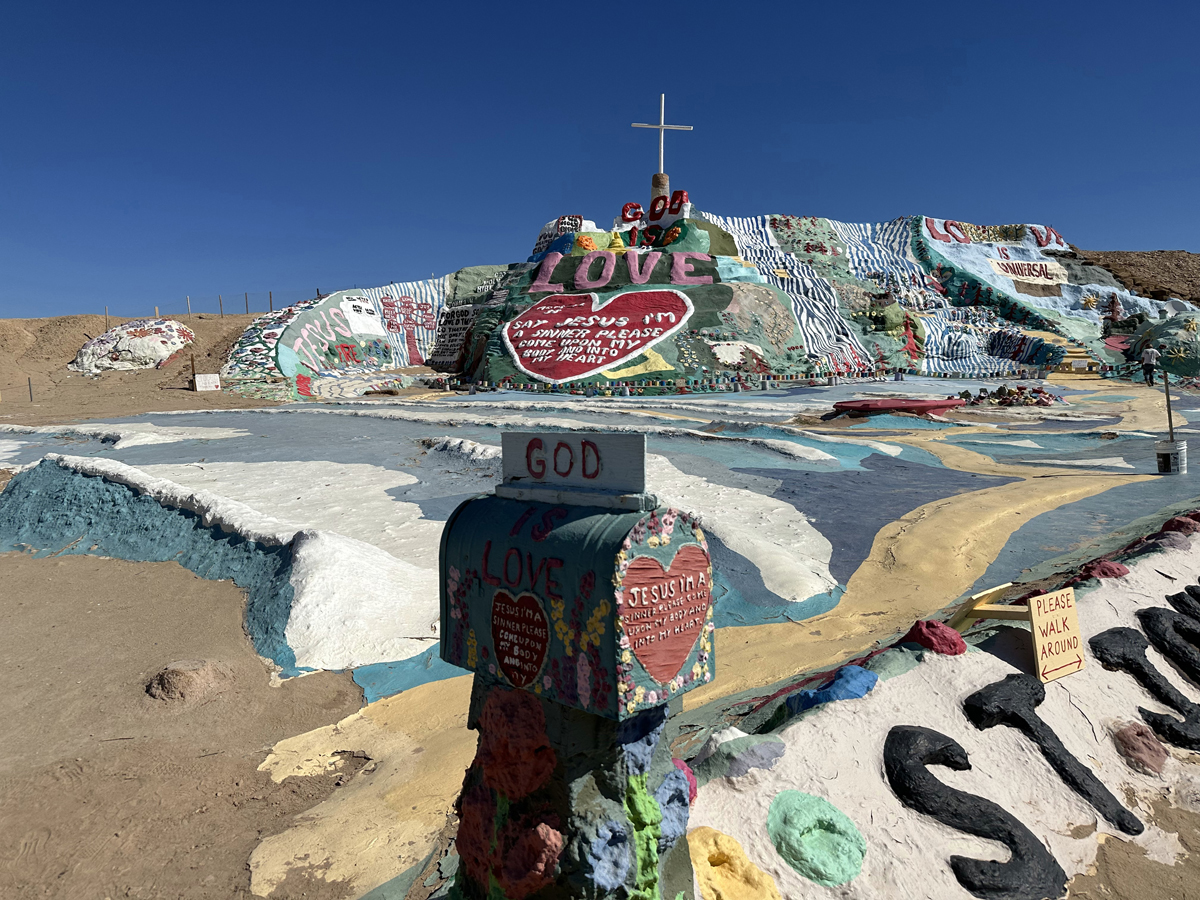
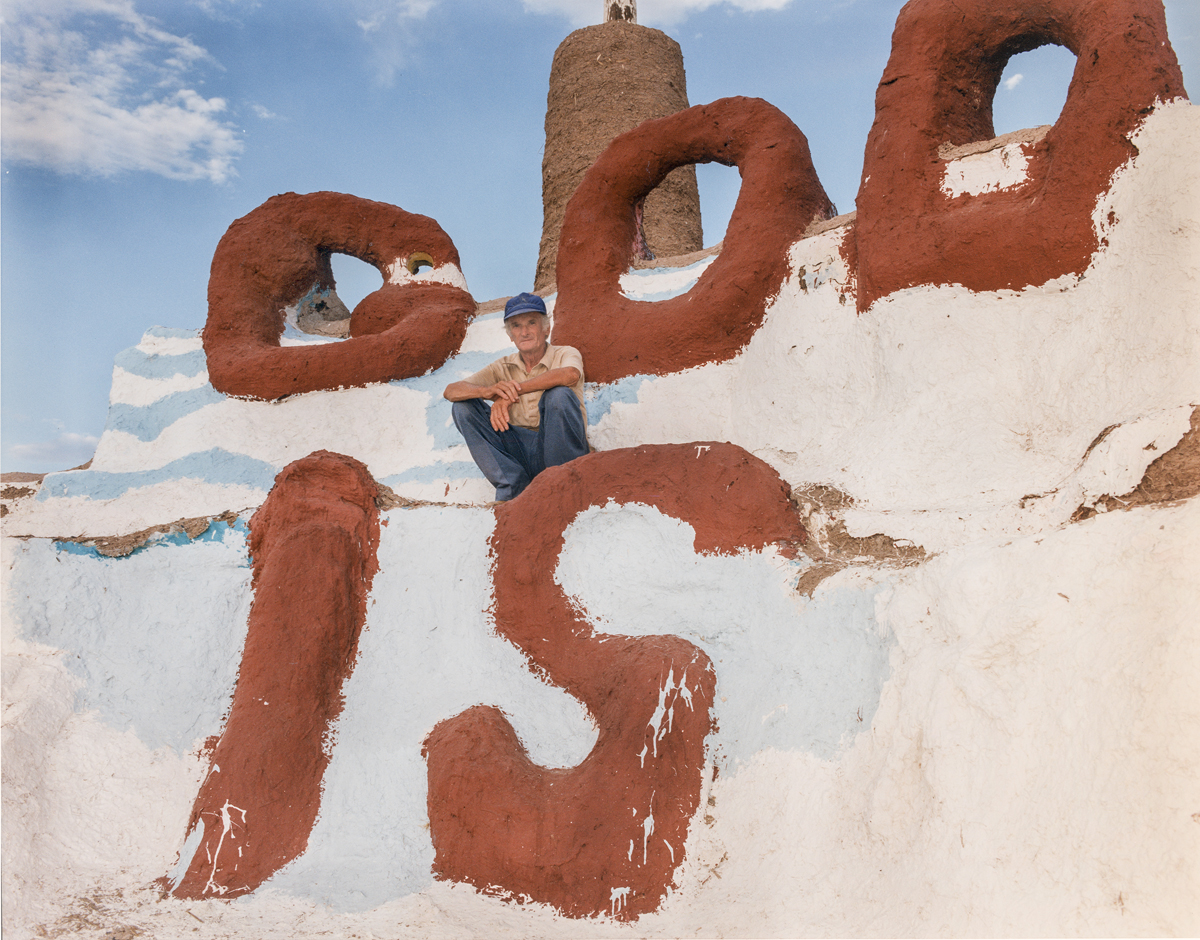
About nine miles southeast of the Salton Sea in Southern California, a technicolor play dough mountain pours from the foothills. At its peak, a white cross emerges above painted Biblical messages constellating through a topography of colorful hand-wrought foliage and graphic patterns. Since its inception more than thirty years ago, Salvation Mountain has drawn an estimated hundreds of thousands of visitors to climb “the yellow brick road” that winds through the site in Niland, California, and absorb the Christian message of visionary artist Leonard Knight.
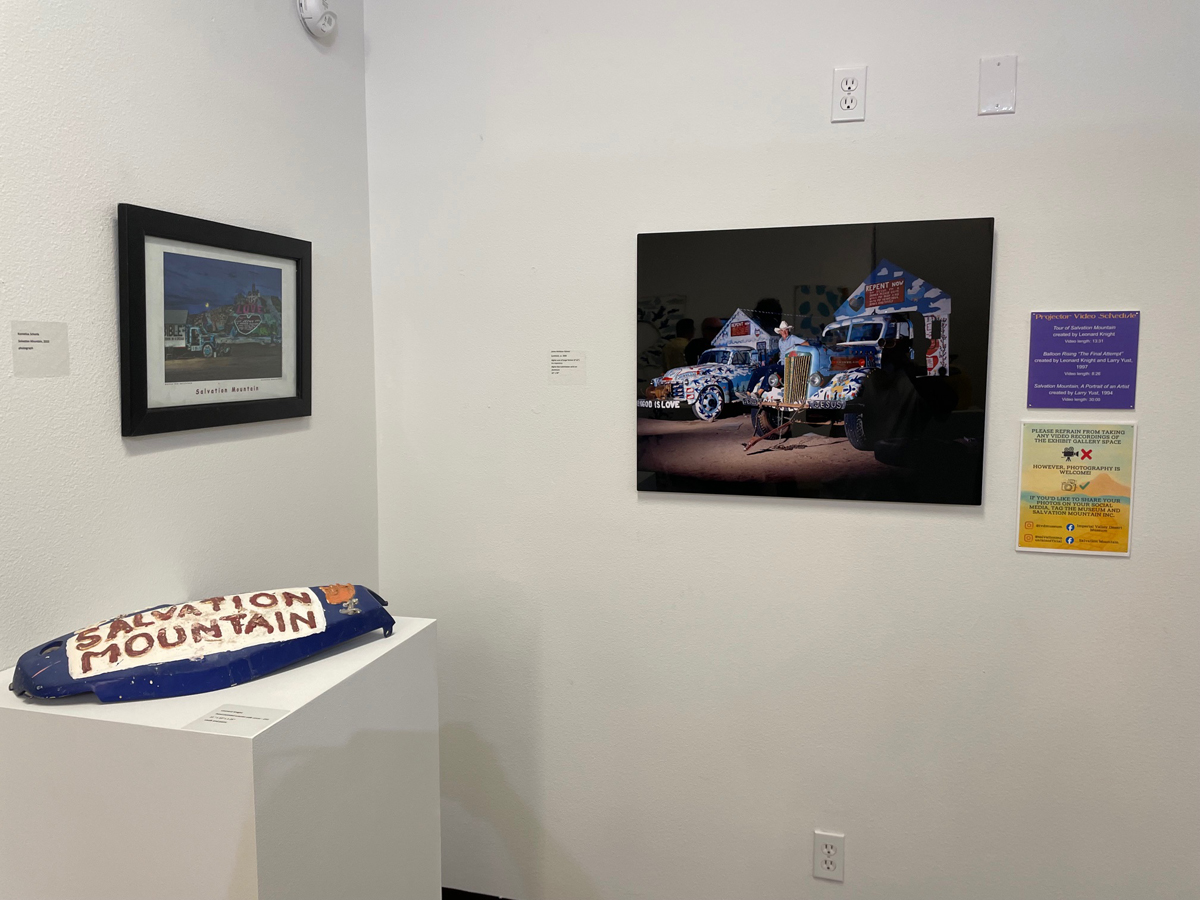
In the exhibition Follow the Yellow Brick Road: The Life & Legacy of Leonard Knight, the Imperial Valley Desert Museum in Ocotillo, California, cracks open the archives of the man behind the mountain. It’s an exuberant display of his paintings, sculptures, videos, and ephemera, beginning with Knight’s radical acceptance of Jesus in the 1960s. The show surveys decades of artwork spurred by Knight’s self-proclaimed mission to disentangle a simple message from rigid evangelical theology: “God is Love.”
The Imperial Valley Desert Museum’s exhibition honors not only the life and art of Knight (1931-2014), but also posits Salvation Mountain as an icon of the greater Imperial County community. But in examining the history of this monument at the museum and visiting the site itself, it’s clear that the long game of preserving the artist’s legacy will be an uphill battle.
Knight had never identified as a devout Christian until that moment, but found himself reciting the Sinner’s Prayer.
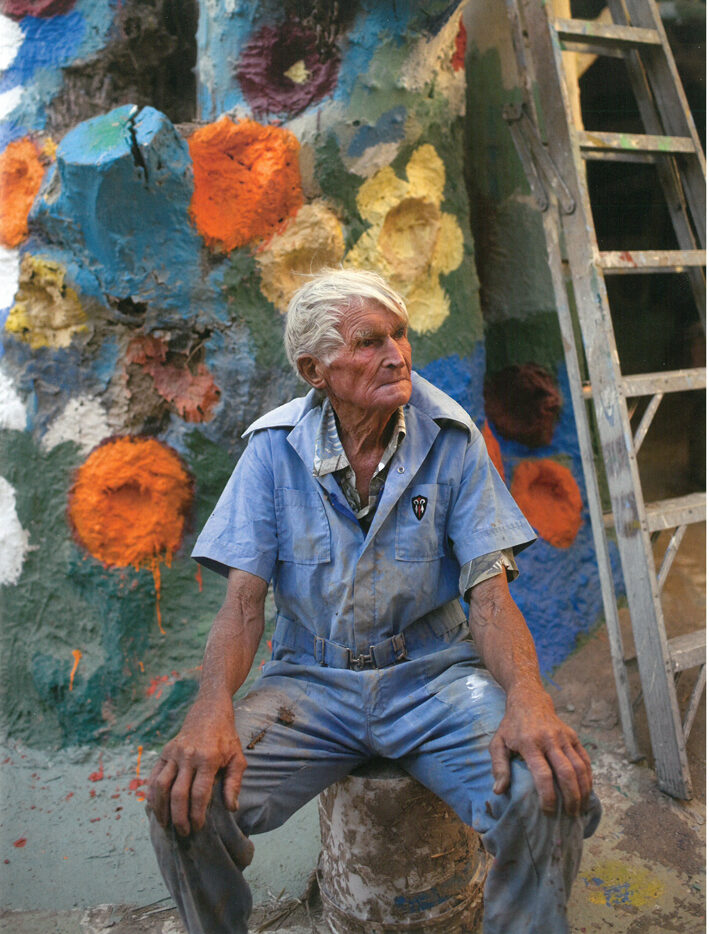
At the show’s outset, colorful didactics present a timeline of Knight’s life, from his 1930s childhood in Burlington, Vermont, through his truncated ten-day tour in Korea at the very end of the war in the 1950s. He subsequently led a nondescript life as a mechanic in Vermont until a visit with his sister in San Diego set him on an evangelical path in 1967. Knight had never identified as a devout Christian until that moment, but found himself reciting the Sinner’s Prayer after leaving his visit with his sister. He embarked on his mission right away, securing a van and feverishly decorating all available surfaces with his “God is Love” message, the Sinner’s Prayer, and references to New Testament passages.
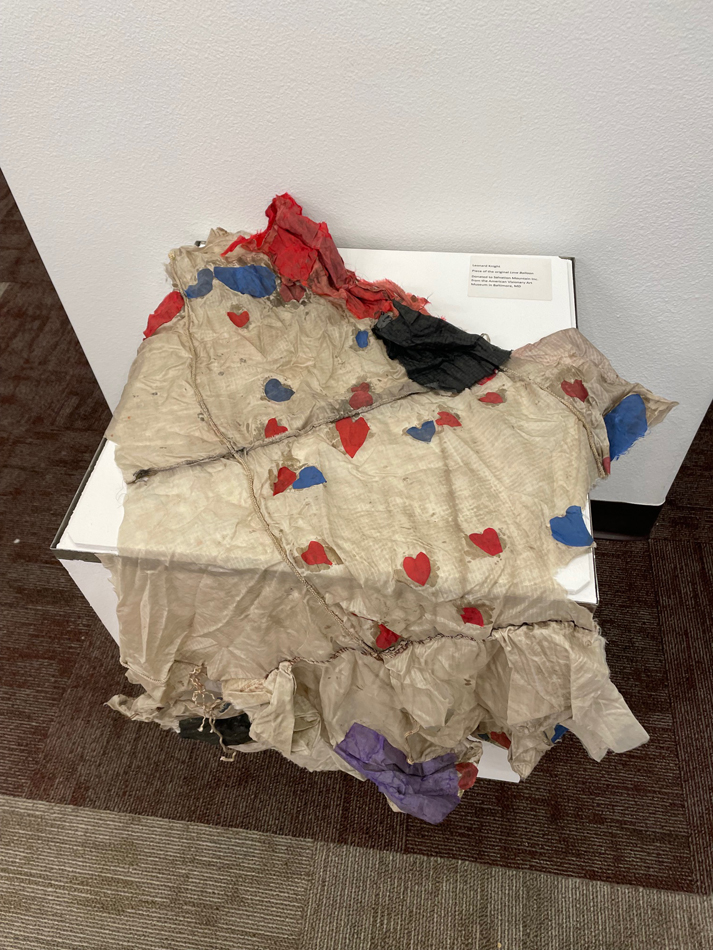
The exhibition includes a scrap of Knight’s hot air balloon, which he stitched together using discounted scraps of miscut balloon material from a South Dakota factory in the early 1980s. The balloon later granted Knight entry into the American Visionary Art Museum in Baltimore. However, it never left the ground. Despite years of sewing and numerous attempts at lift-off, Knight was stymied by the balloon’s shape and scale, along with holes caused by dry rot. Crowned with the motto “God is Love” in bubble letters, it ultimately served as the pilot project for the development of Salvation Mountain.
Seeking warmer weather and a fresh start for sharing his message, Knight eventually landed in Niland, California, in 1984. He squatted at a former Marine Corps base nicknamed Slab City, for concrete slabs that the military had left behind. His neighbors were snowbirds from colder states seeking warmth in the winter, and disenfranchised or disillusioned residents looking for freedom and a fresh start. The incidental community inspired Knight to start conceptualizing his mountain.
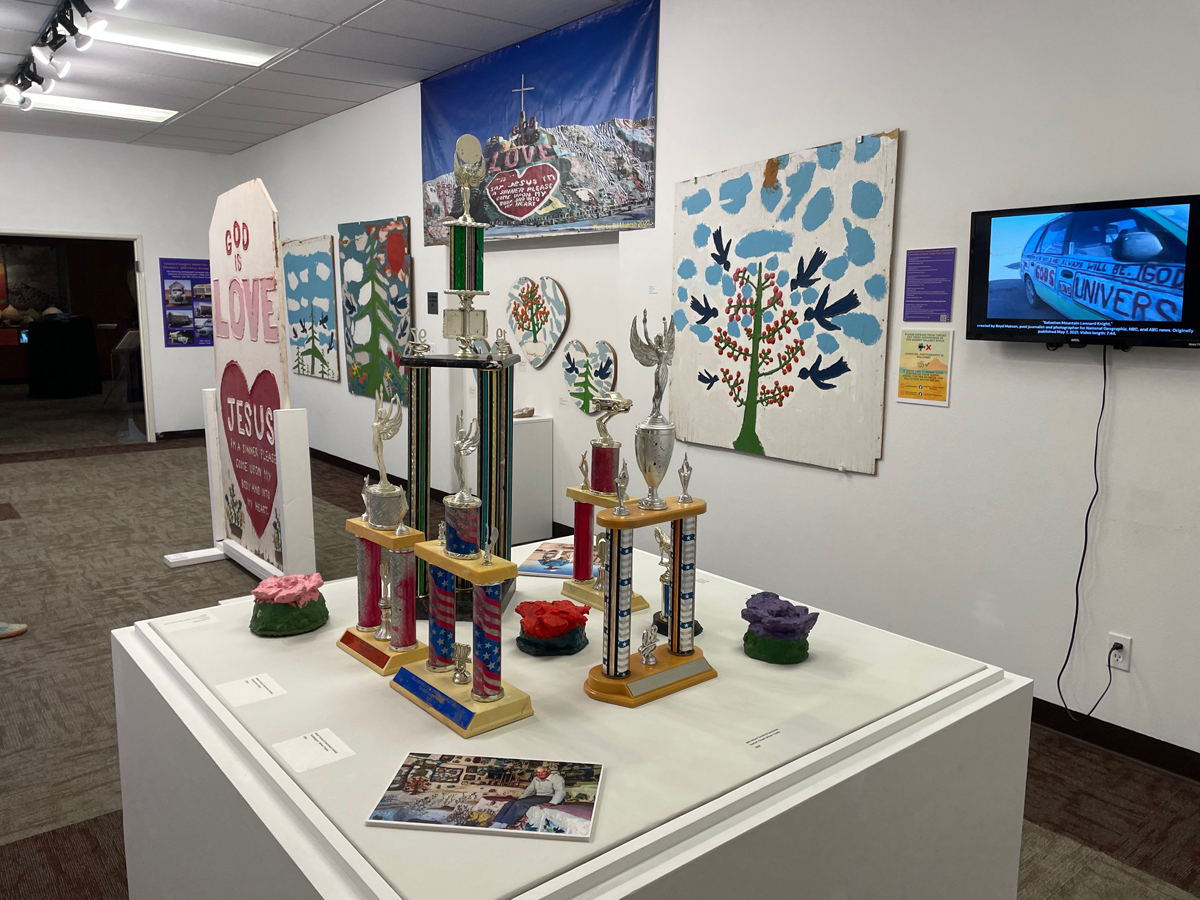
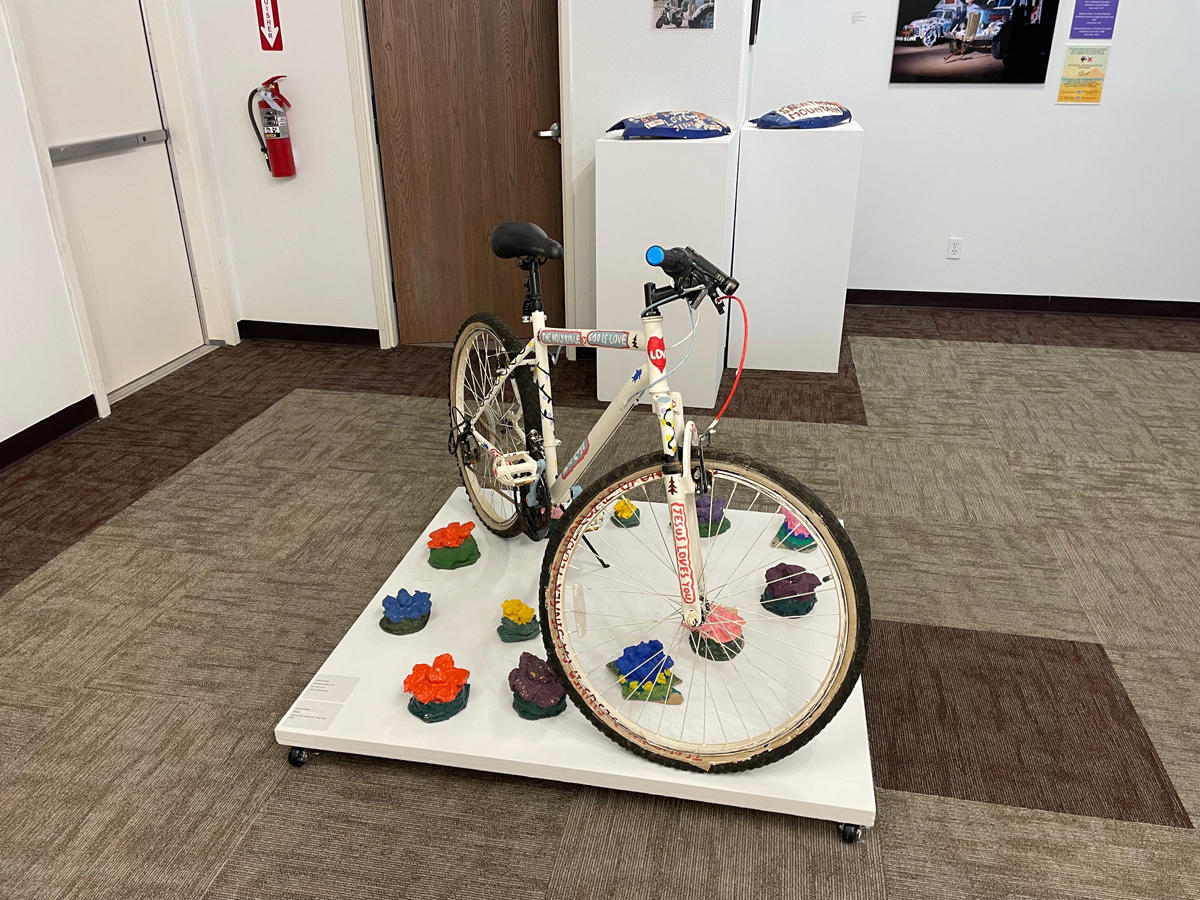
Early works in the exhibition shed light on the visual language Knight developed for his magnum opus. He produced many handheld sculptural flowers, echoing two-dimensional roses and daisies that adorn metal scraps scavenged from the nearby county dump. He used caulk to write messages and outline visual motifs, filling every surface he touched.
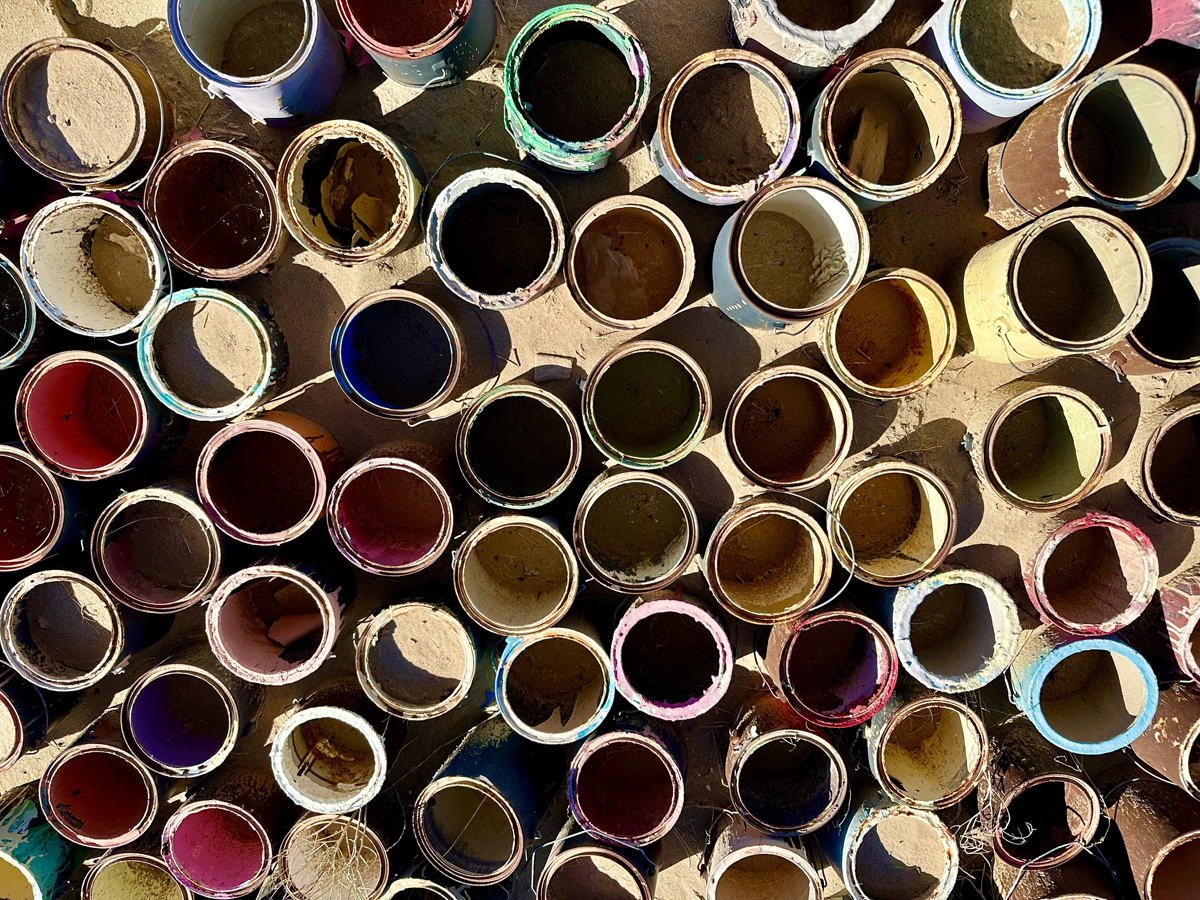
Knight built the first version of Salvation Mountain in 1986, amassing discarded refrigerators and tires and covering the heap with concrete and sand. After three years of exposure to long desert summers of 110 degrees and above, monsoon rains, and high winds that tore through the mountain valley, the structure collapsed.
He started construction on the project’s second rendition in 1990, built up from the foundation of the original mountain using donated straw from Imperial County farmers and hand-dug desert clay. This time he used architectural methods inspired by Indigenous traditions, constructing rounded forms to serve as the canvas for Biblical motifs, including a bright blue base representing the sea of Galilee and other explicit references to Christian scripture.
Knight died in 2014, leaving instructions for Salvation Mountain’s upkeep with his nephew Bob Levesque, who is now the president of the nonprofit Salvation Mountain, Inc. Levesque and his team work to maintain Knight’s original vision through constant preservation work. One caretaker, Chuck Gitano, ruminates on the painstaking process Leonard developed to create and maintain the mountain.
“Working with the adobe and straw is intensive labor, and Leonard was doing it for about thirty years before his health declined,” says Gitano. “But what keeps me going is taking care of a space that’s spreading Leonard’s message of ‘God is Love.’”
Gitano leads Salvation Mountain’s preservation team, prioritizing the safety of nearly 40,000 annual visitors—a remarkable challenge considering the harsh desert environment and their adherence to Knight’s ad-hoc techniques and unconventional materials.
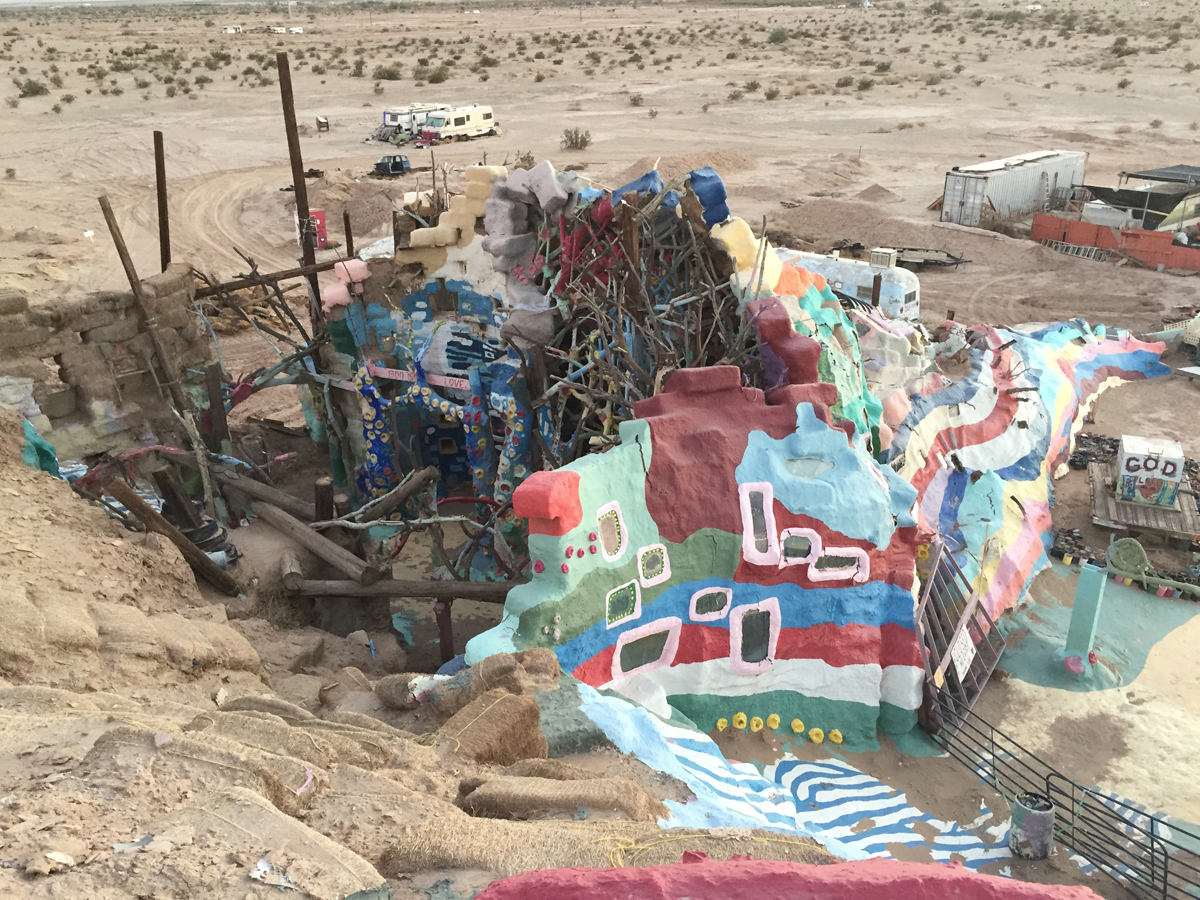
Despite the prevalent Christian subject matter, docent Gloria Brooks says Salvation Mountain captivates viewers from all walks of life. They are not only attracted to Knight’s vision of paradise in the desert but also his messages of love and peace, which not only cover the walls of the main structure, but populate old trucks, a car, a motorcycle, an old tractor, and other surfaces dotting the 100-acre site.
“We welcome visitors from all over, especially international tourists arriving by [bus],” says Brooks. “Sometimes we’ll get very emotional responses. We’ll get people crying, people that just want solitude, they don’t want to talk to anybody. The message of love touches people of all spiritual backgrounds, not just Christianity.”
Knight clashed with county officials over Salvation Mountain in the early 1990s regarding claims of the toxicity of latex paint coating the mountain, determined by city testing but disputed by an independent testing that Knight commissioned. In 2024 the Imperial County Board of Supervisors recognized Knight’s work as “a historic resource and site of historic significance.”
Despite the prevalent Christian subject matter… Salvation Mountain captivates viewers from all walks of life.
Another honor includes a recognition as “a national treasure worthy of preservation” by U.S. Senator Barbara Boxer in 2002. Even with these accolades, Levesque says the nonprofit’s board constantly fundraises—not only to preserve the site, but to officially purchase the land, which is still owned by the state of California. The official historic designations have bolstered this ongoing effort, and they hope it will protect the site from any future attempts to dismantle it.
“Right now, the priority is raising funds to protect Salvation Mountain, and to develop education programs that aligned with Leonard’s primary goal… to reach people with God’s message, and to do that through art and his own creativity,” says Levesque.
Back at the Imperial Valley Desert Museum, ephemera in the exhibition exemplifies Knight’s egalitarian ethos. In the 1990s through the early 2010s, Knight deliberately extended his practice beyond Salvation Mountain, bringing his art cars to parades in nearby Niland and Brawley. He would pass out complimentary “pencil holders” and postcards with imagery of the mountain.
“For Leonard, his main goal was to spread his message,” says Follow the Yellow Brick Road curator Ryan Pagett. “He never charged for postcards or the little sculptures he would make and give away because it was important to him for others to see ‘God is Love.’”