Jorge Ruiz intertwines Tucson and Nogales in his exhibition at Arizona’s Mini Time Machine Museum of Miniatures. His “imperfect” process is grueling.
This article is part of our OBSESSION series, a continuation of the ideas explored in Southwest Contemporary Vol. 12.
TUCSON—Growing up in Nogales on both sides of the U.S.-Mexico border, Jorge Ruiz often spotted the facades of fading histories in the region, where buildings and signs aged by the elements and time convey the community’s shifting architectural landscape.
Today, the artist creates miniatures of iconic buildings and signs in both Nogales and Tucson, the city he’s called home since 2019.
“I see these places by chance,” Ruiz says of his subject matter. “They’re places I’ve walked by numerous times, and somehow they’ve been planted in my mind, so that I really feel like I have to make a model of them.”
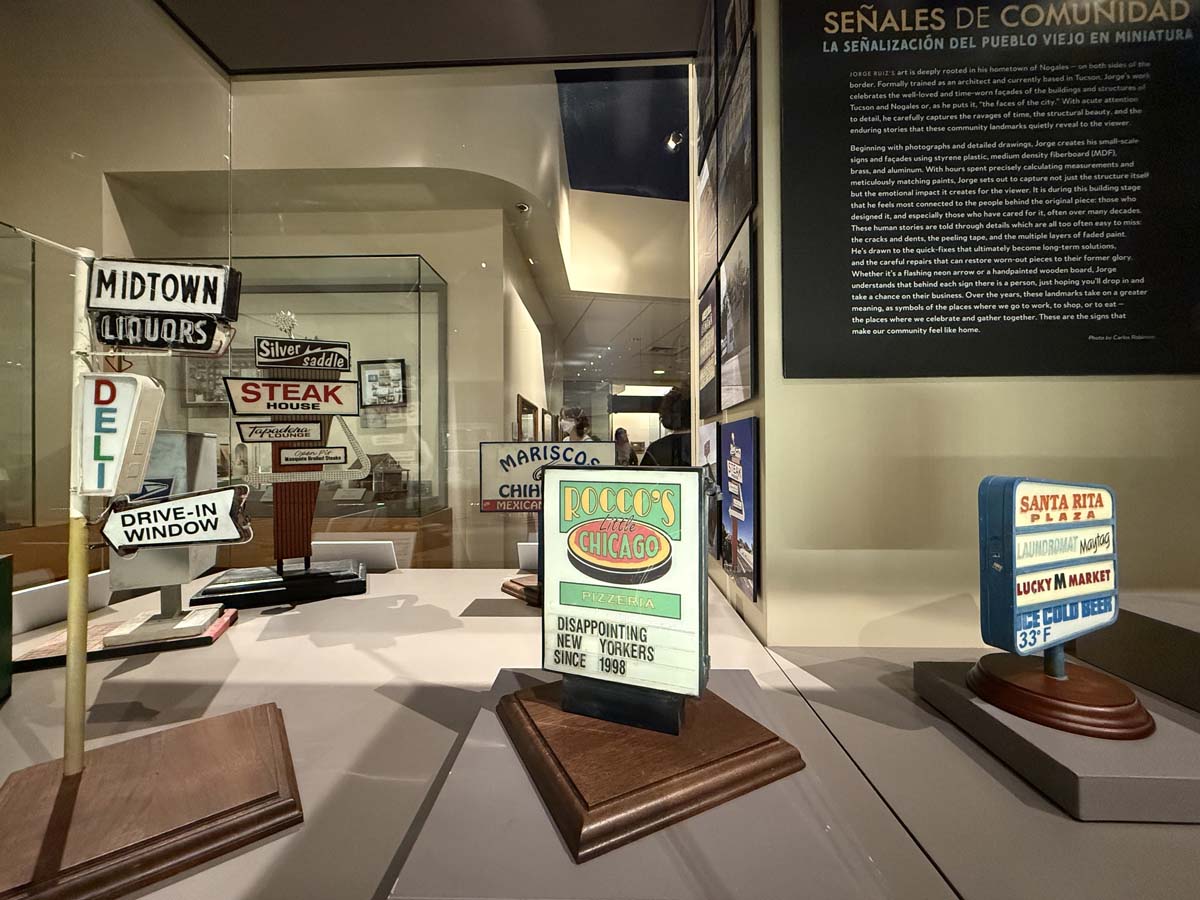
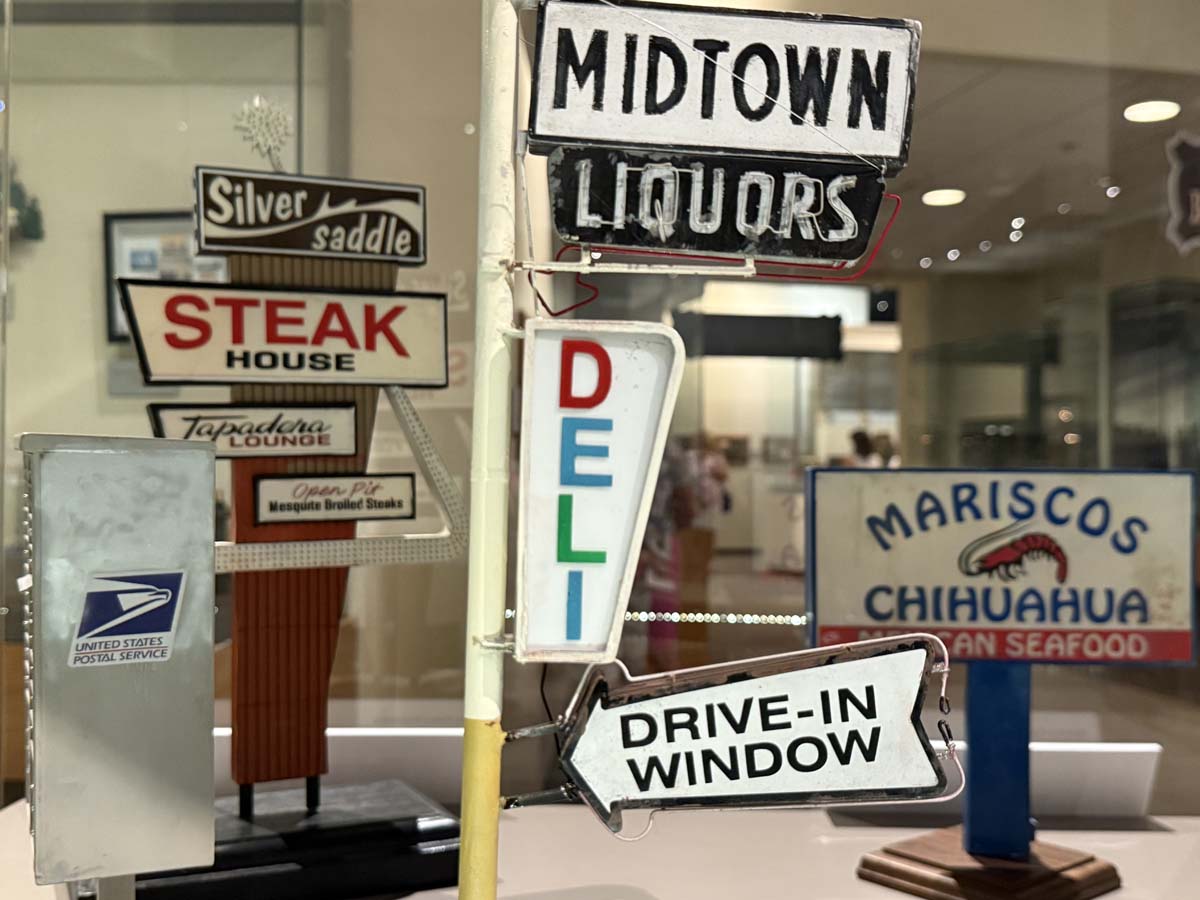
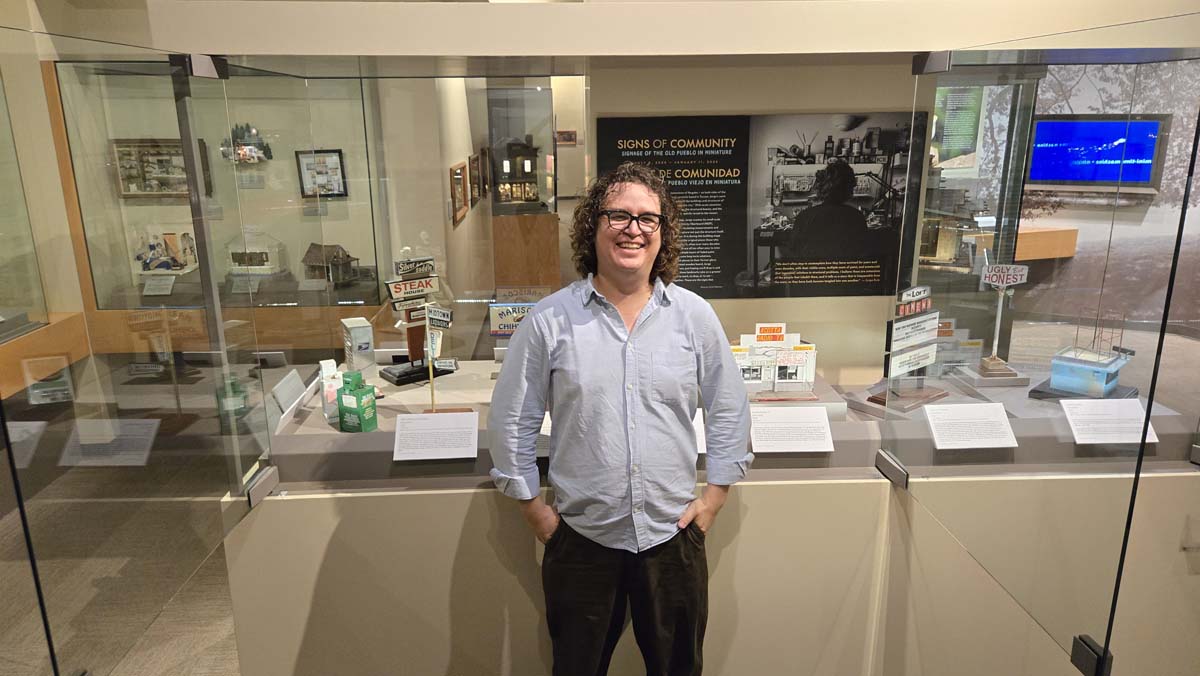
A dozen of Ruiz’s works are featured in the exhibition Signs of Community: Signage of the Old Pueblo in Miniature that continues through January 11, 2026, at the Mini Time Machine Museum of Miniatures in Tucson. Rooted in an expansive local collection, the museum was established to share the art of miniatures through “storytelling, creativity, and cultural connection.”
The show’s title includes a common nickname for Tucson—the Old Pueblo—described in museum materials as a reference to the city’s “long history with Spain and Mexico, as well as being the native homeland of multiple Indigenous tribes for over 2,000 years.”
Near the display case housing Ruiz’s models, there’s a map that visitors can use to find several of the places with facades or signs he’s meticulously replicated, which include The Loft Cinema independent movie theater and Rocco’s Little Chicago pizzeria.

Growing up, Ruiz’s family often spent time shopping or visiting various places in Tucson, so he’s got plenty of memories of the urban landscape, but also the vibe of the city where he feels like people are accepted and appreciated for doing their own thing.
“There was always something magical about Tucson as a kid,” he recalls. “Everyone is allowed to be themselves but it comes with a responsibility to let others be who they are.”
For Ruiz, that includes working a day job while also sustaining a thriving creative practice from his home studio.
Many miniaturists love to capture perfection… but conveying imperfections in miniatures is pretty difficult.
It’s not what Ruiz set out to do early on, but creating miniatures turned out to be a meaningful way of blending various skills and interests he’d developed over time.
“I was building models of planes and cars when I was about seven years old, but I wasn’t very good at it,” Ruiz recalls. Years later, he dabbled in industrial design, then ended up studying architecture in college, where he learned to build models to scale.
“I always knew I wanted to do something creative, but often people believed at the time that there was no way to make a living just being an artist,” reflects Ruiz.

Still, Ruiz found inspiration in the works of several artists, including Joshua Smith, a miniaturist based in Norwood, South Australia. “He’s the first artist making miniatures that I tried to emulate, especially his models of old, dilapidated, abandoned buildings that he made look very cool,” Ruiz explains. “Seeing his attention to detail really turned on a switch for me and made me realize that this can be art.”
A similar attention to detail drew curator Emily Wolverton of the Mini Time Machine to Ruiz’s work when he first approached her about hoping to show his work there. “Many miniaturists love to capture perfection and the beautiful side of things, but conveying imperfections in miniatures is pretty difficult,” Wolverton says.
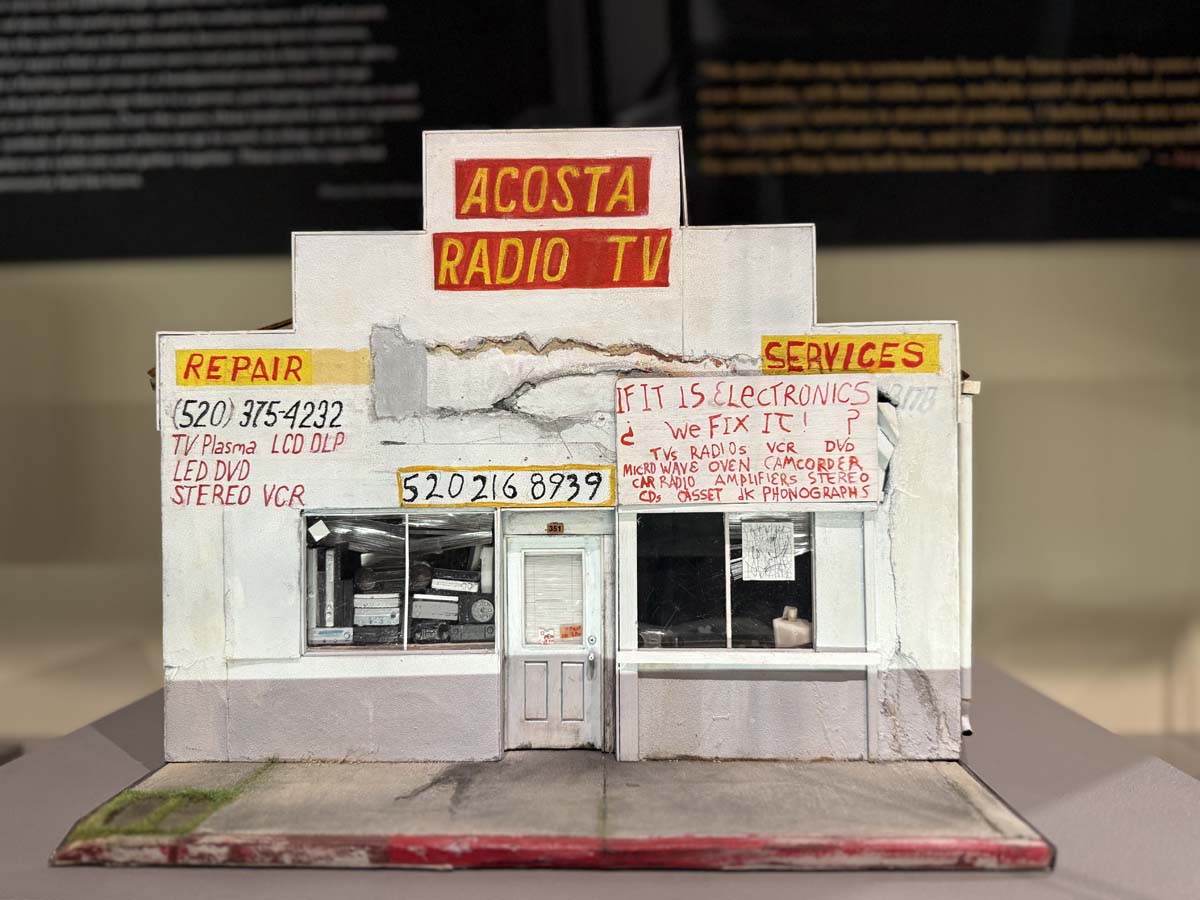
Ruiz starts by studying the physical properties of the places or objects he wants to replicate, taking photographs and drawing sketches as he imagines what they might have looked like in new condition. Typically, he makes an initial skeleton of his design, which helps him hone in on the best way to realize that particular work. Then he sets out to make a second model that often becomes the final art piece.
I go through X-Acto knives like they’re toilet paper.
The materials Ruiz uses include styrene, medium-density fiberboard (also known as MDF), thin sheets of plastic, brass, and aluminum—along with acrylic and enamel paints plus Super Glue and plastic cement. Most, he says, are sourced from a hobby store located inside a local hardware store in Tucson.
Tools of his trade include a laser cutter and three-dimensional printer, as well as an airbrush, traditional paint brushes, and utility knives. “I go through X-Acto knives like they’re toilet paper,” quips Ruiz.
To prepare for this exhibition, Ruiz worked several hours most afternoons between January and July of 2025, focusing on the ways his subjects have endured everything from graffiti writing to colors fading in the sun over time. “Making one model can take anywhere from eight to thirty hours,” he says.
The show also includes earlier works, including his first complete building exterior, a 1:24 scale miniature of La Rancherita, a shaved-ice stand in Nogales, Sonora. When they’re not on public view, by the way, Ruiz displays these art pieces on wall shelves in his home.
For every artwork, Ruiz has a story about what inspired it and the challenges of bringing it to life, which viewers can read on museum text panels that also note the scale of each piece.
When making the sign for Silver Saddle Steakhouse located off the Benson Highway in Tucson, for example, Ruiz had to fashion 600 three-dimensional bulbs to cover an arrow on the restaurant’s sign that he created at a 1:12 scale.
It starts to the change the way they see [places] they’re walking or driving past every day.
According to Wolverton, who also works in patron engagement for the museum, visitors bring their own stories to encounters with Ruiz’s miniatures. “People have connections and memories of these places, whether they used to work there or maybe had a first date there,” she says.
But there’s something else at play here that harkens back to Ruiz’s own childhood experiences seeing the fading facades that populated the places he lived and traveled. “People see his work at the museum,” reflects Wolverton, “and it starts to change the way they see the buildings and signs they’re walking or driving past every day.”