In the wake of Argentina’s last dictatorship, Ana María Hernando’s artwork only grew softer. Her practice is undergirded by “unstoppable” community.
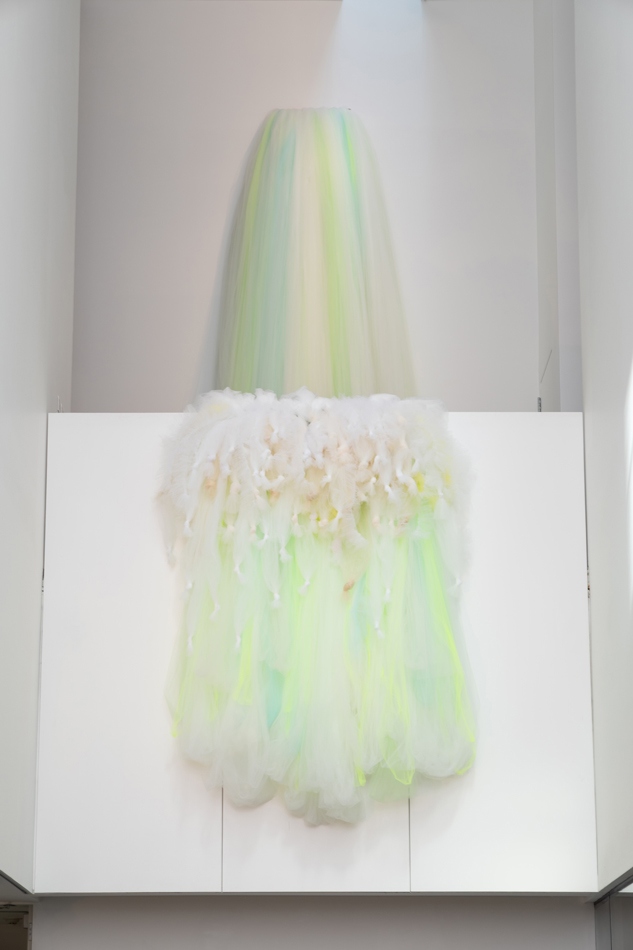
A soft stream of tulle cascades down a crisp white wall and over an interior balcony. In greenish yellow, blue, and cream hues, the fabric simulates water flowing through a gallery at the Museum of Contemporary Art Denver. The sculpture, Muchos chorritos juntos/A Multitude of Rivulets (2026), is the work of multidisciplinary artist Ana María Hernando. A chorrito is a small trickle of water coming out of a faucet. It makes a tiny impact when you’re attempting to wash something or take a drink. However, “a lot of them together, they make waterfalls and rivers and oceans, so I wanted to remind us that we’re more powerful when we come together,” says Hernando.
Hernando’s exhibition at MCA Denver, running through July 5, is titled Seguir Cantando (Keep Singing), a blatant refusal to stay silent and a means of uplifting the voices and traditional works crafted by women. Her companion solo exhibition Cantando Bajito (Singing Softly) is on display at the Colorado Springs Fine Arts Center at Colorado College through July 3. The concurrent exhibitions mark a pivotal moment for the artist, who is in her late 60s and continues to embrace community in a society bolstering divisiveness.
Based in Denver, Hernando immigrated to the U.S. from Argentina in January 1986, in the aftermath of the country’s last military dictatorship. The regime, which seized power in a violent 1976 coup, “disappeared” an estimated 10,000 to 30,000 people and carried out widespread human rights abuses during the “Dirty War.” Argentina returned to democracy with the 1983 election of President Raúl Alfonsín.
It was very chaotic, and I felt how a country could be unplugged and disappear.
Recalling the pain and suffering of that period, Hernando ruminates on the words of celebrated Argentinian poet María Elena Walsh. In Walsh’s 1972 folk ballad “Como la cigarra,” she sings, “Tantas veces me mataron/ Tantas veces me morí/ Sin embargo estoy aquí/ Resucitando,” which translates to, “ So many times they killed me/ So many times I died/ Yet here I am/ Rising again.”
“ Over time it became an anthem about perseverance and freedom of speech and to just keep going and keep singing,” Hernando explains.
Hernando is a painter, printmaker, and sculptor whose works have been exhibited primarily in Colorado, but also across the globe for the past twenty years. At the beginning of her MCA Denver exhibition, a charcoal drawing titled Caos al mediodía/Chaos at Noon (1989) from Hernando’s time as a student at the California Guild of Arts and Crafts (now California College of the Arts) hangs on the wall. Through dizzying strokes and frantic lines, she reflects on years of dictatorship, stories of torture, and failing infrastructure such as twelve-hour power outages in her home country. “It was very chaotic, and I felt how a country could be unplugged and disappear,” she says.
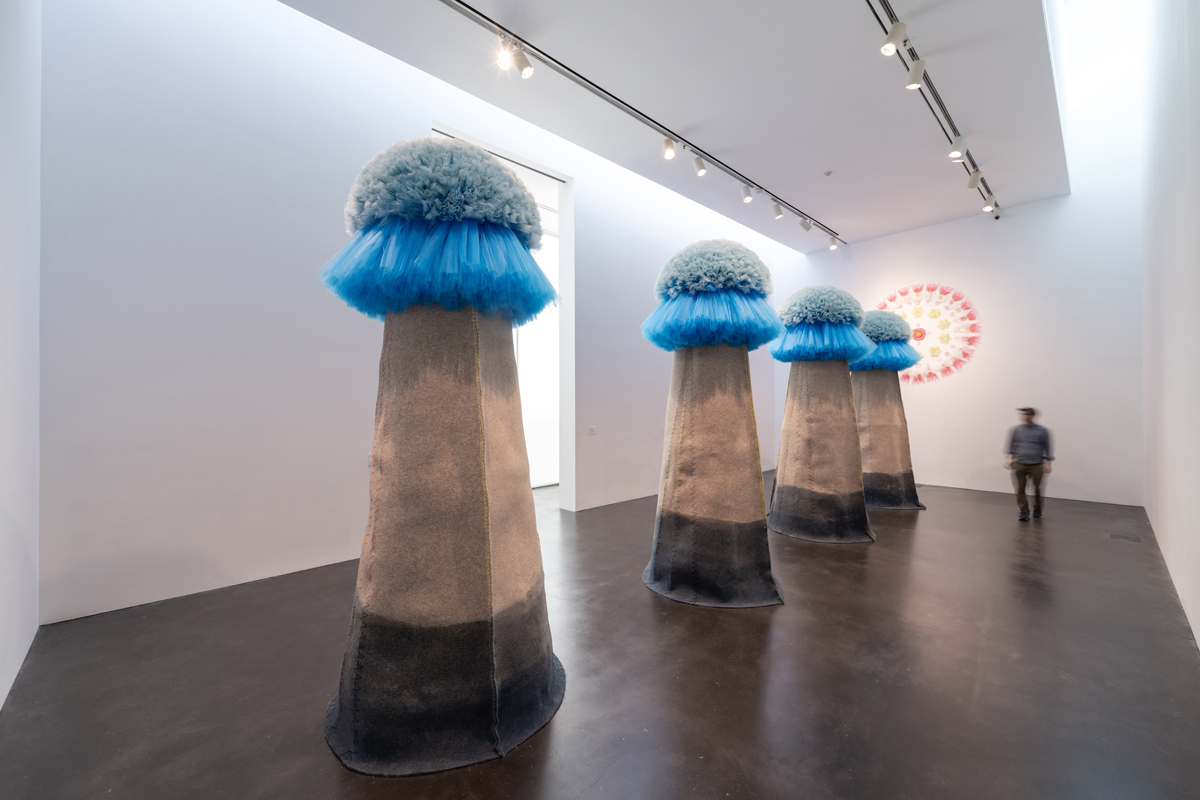
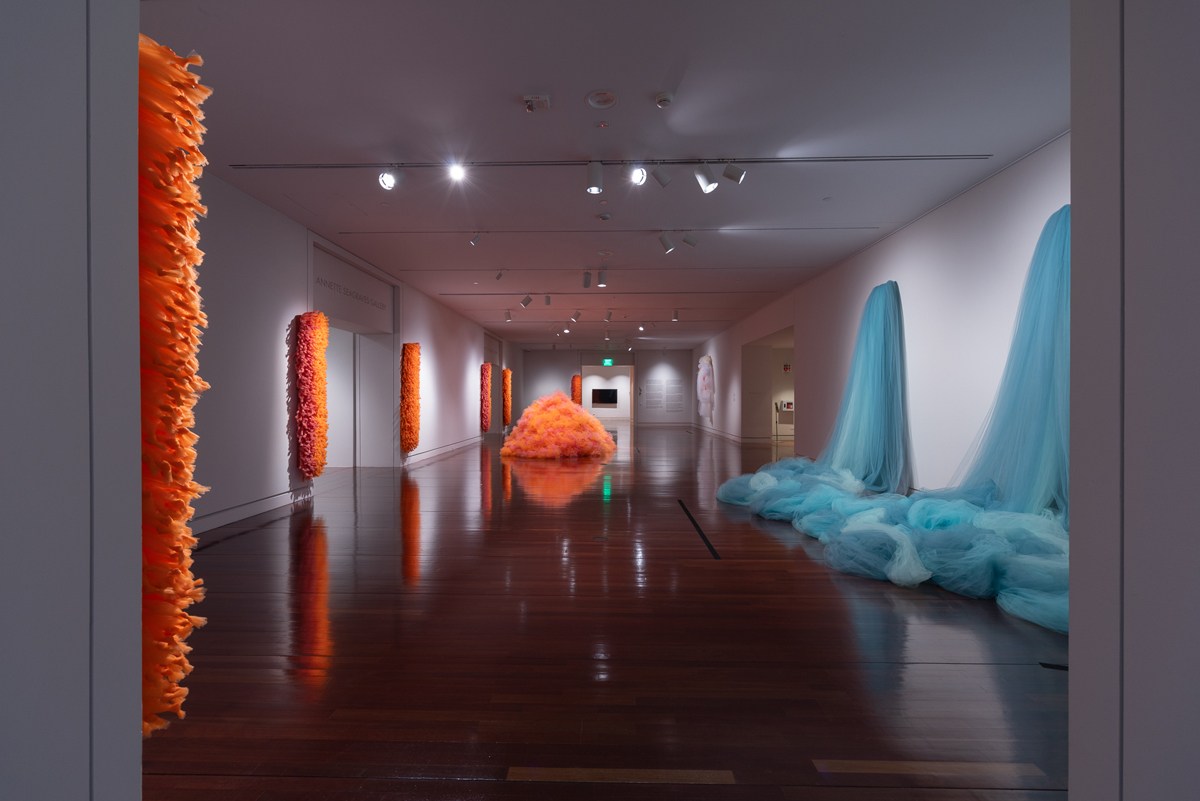
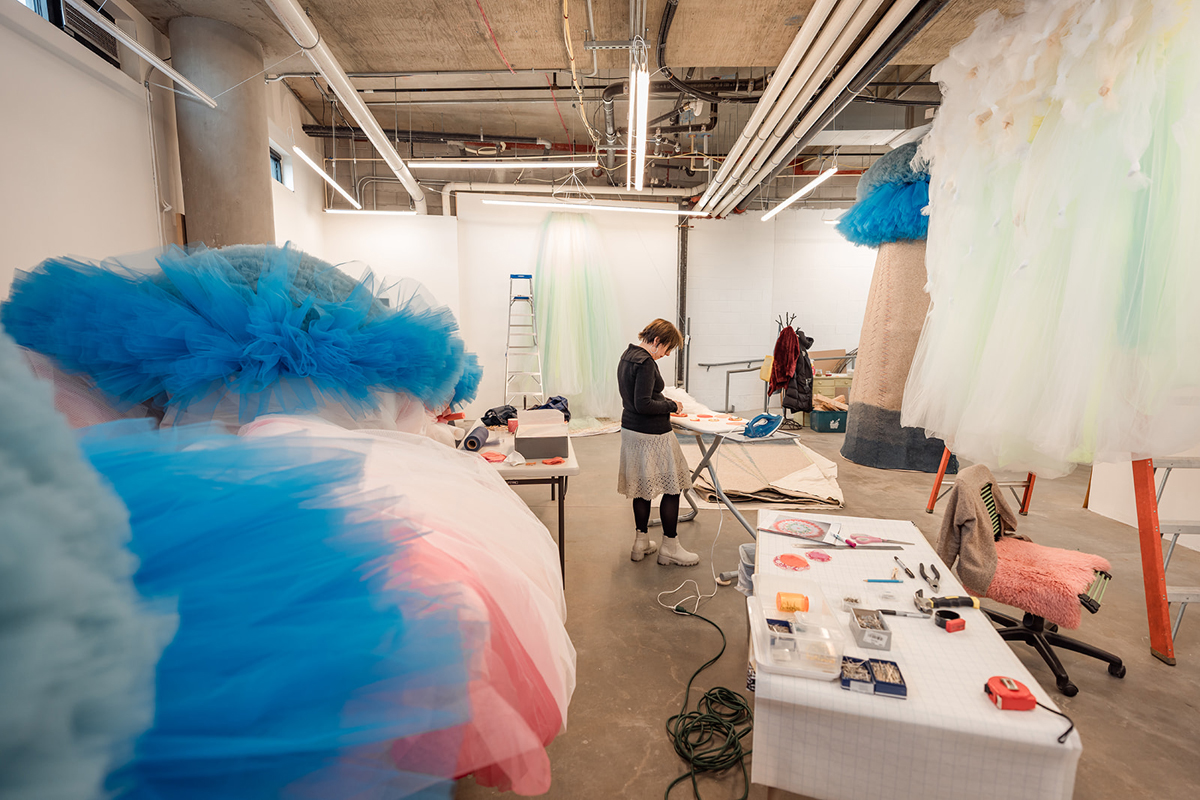
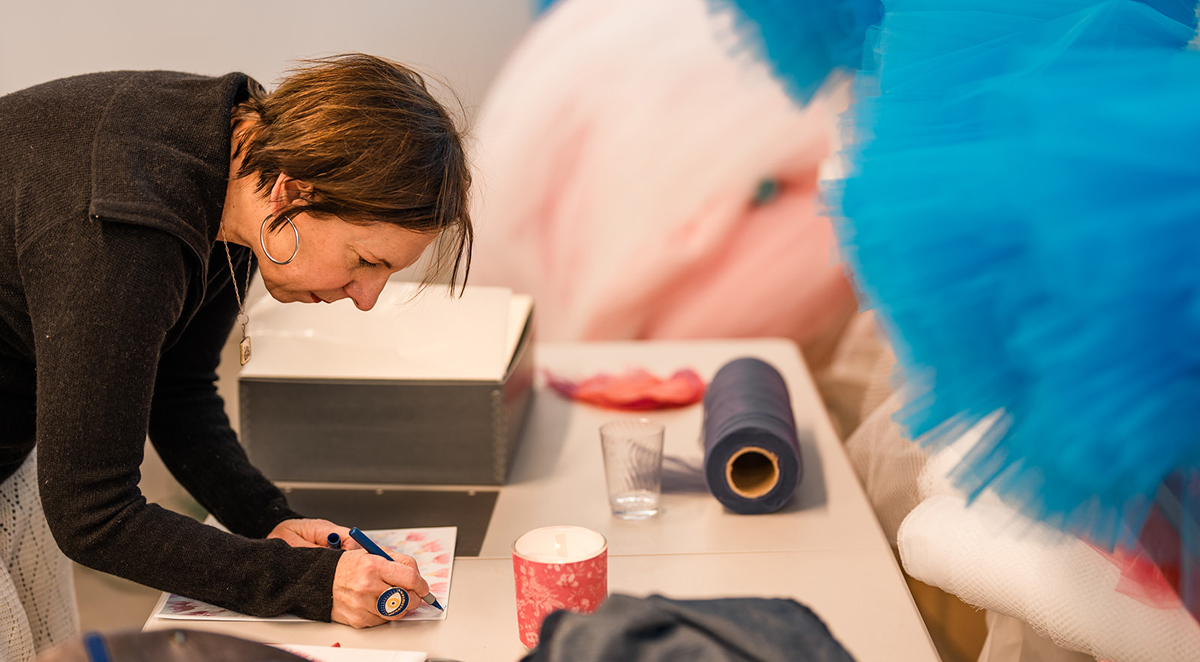
In another room, four towering wool felt sculptures are topped with blue tufts of tulle. In the series, titled Los aliados/The Allies (2026), the artist calls on the spirits we cannot see and examines how they uplift people. “ We cannot do everything by ourselves, and I wanted to bring in, with this piece, a respect to the world that it’s way beyond us as humans,” says Hernando. She worked with assistants, friends, and family to hand sew the felt. During those sessions, Hernando says memories arose of working on traditional crafts with her family growing up.
“ My grandmothers would come to our house in Buenos Aires, and my mom would be sewing, and they would be crocheting, and everyone is talking, gossiping, whatever, and as children, we would be doing homework,” she says. “I love how… [Latin American] women coming together, it’s not about one, but it’s about what’s best for all of us.” For her current Colorado exhibitions, Hernando wanted to honor those traditions as well as the detail and true craft that goes into traditionally undervalued fine art created by women. She often illuminates the “invisibility of historically women’s work” beyond art forms like embroidery and crochet, such as childcare and laundry.
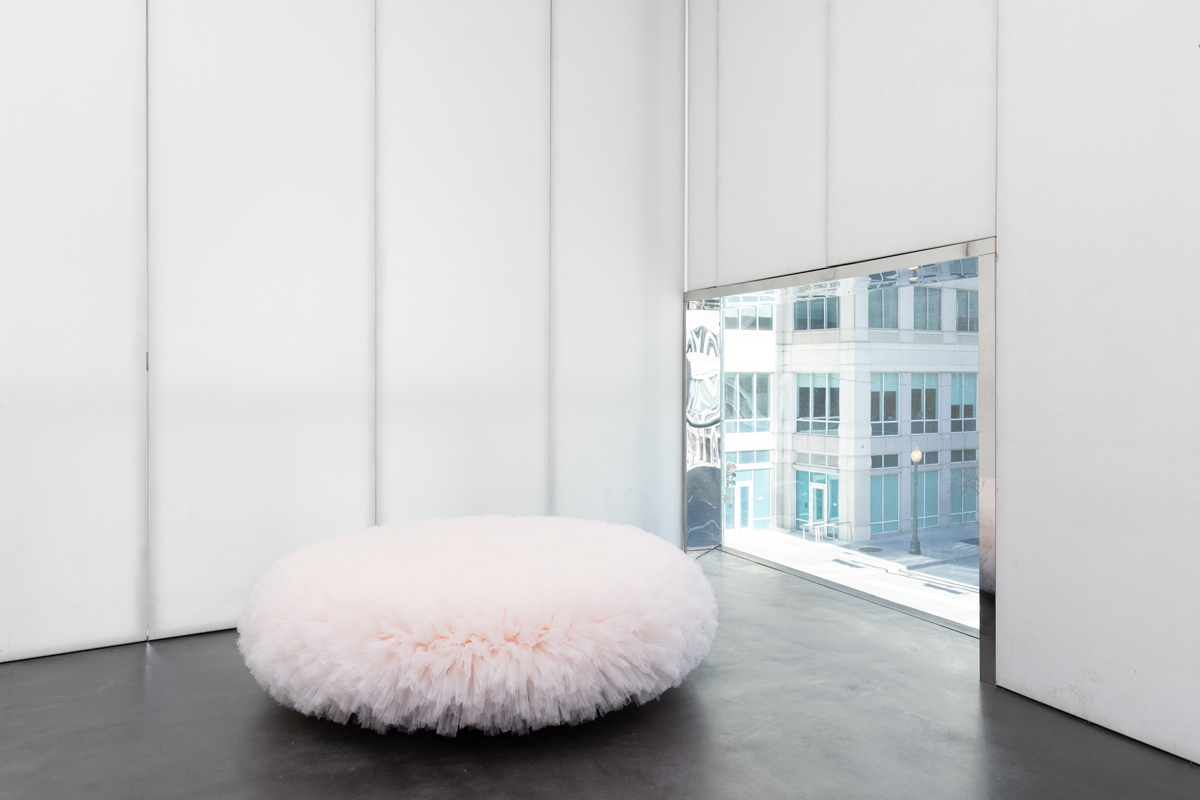
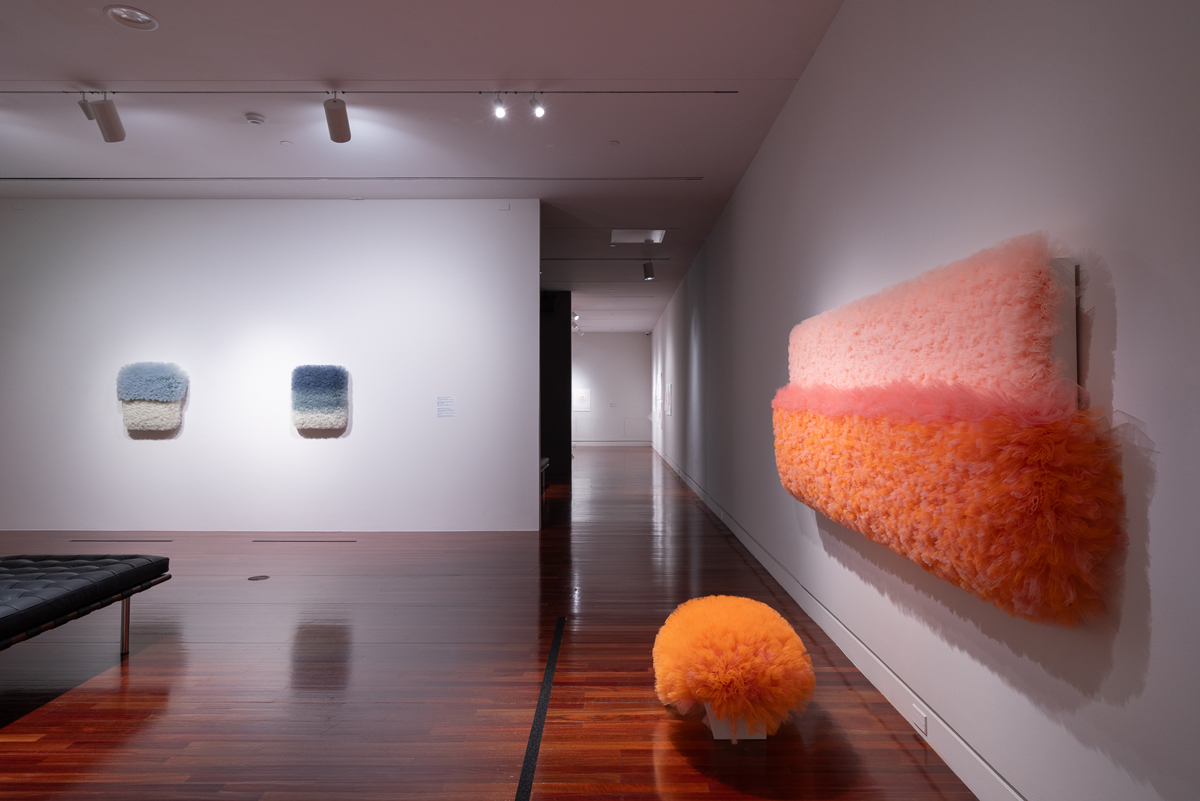
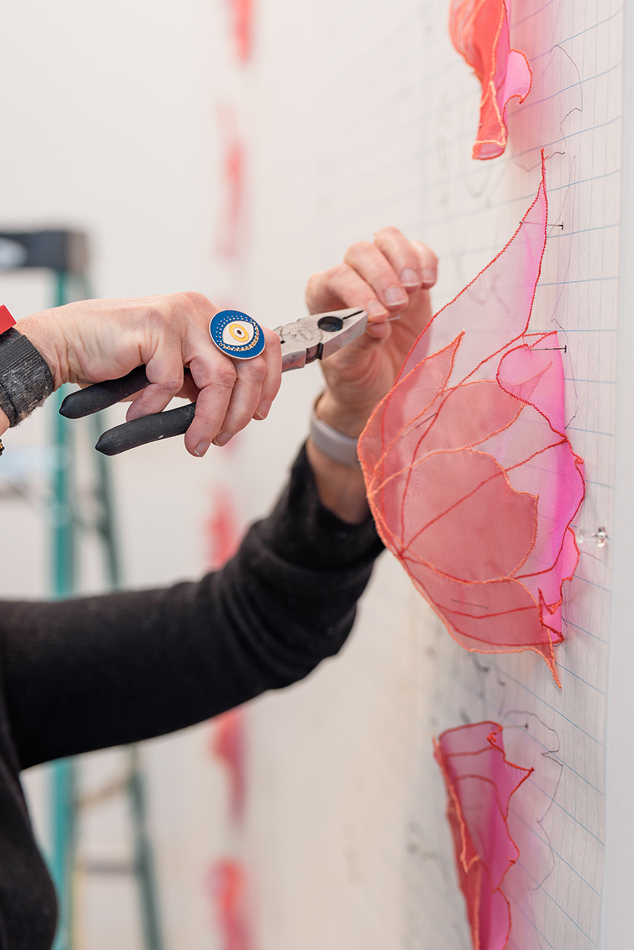
Hernando is well-known for her work with tulle, viewing it as “painting with fabric.” Tulle evokes images of ballerinas, brides, quinceañeras, and princesses—“ an archetype of the feminine that is beautifully naïve and innocent,” she says. She turns this idea on its head, challenging gender roles and affirming the unapologetic power behind femininity.
Coming together is a form of resistance. We are all imperfect, and I think it’s in the compassion of others that we can get better.
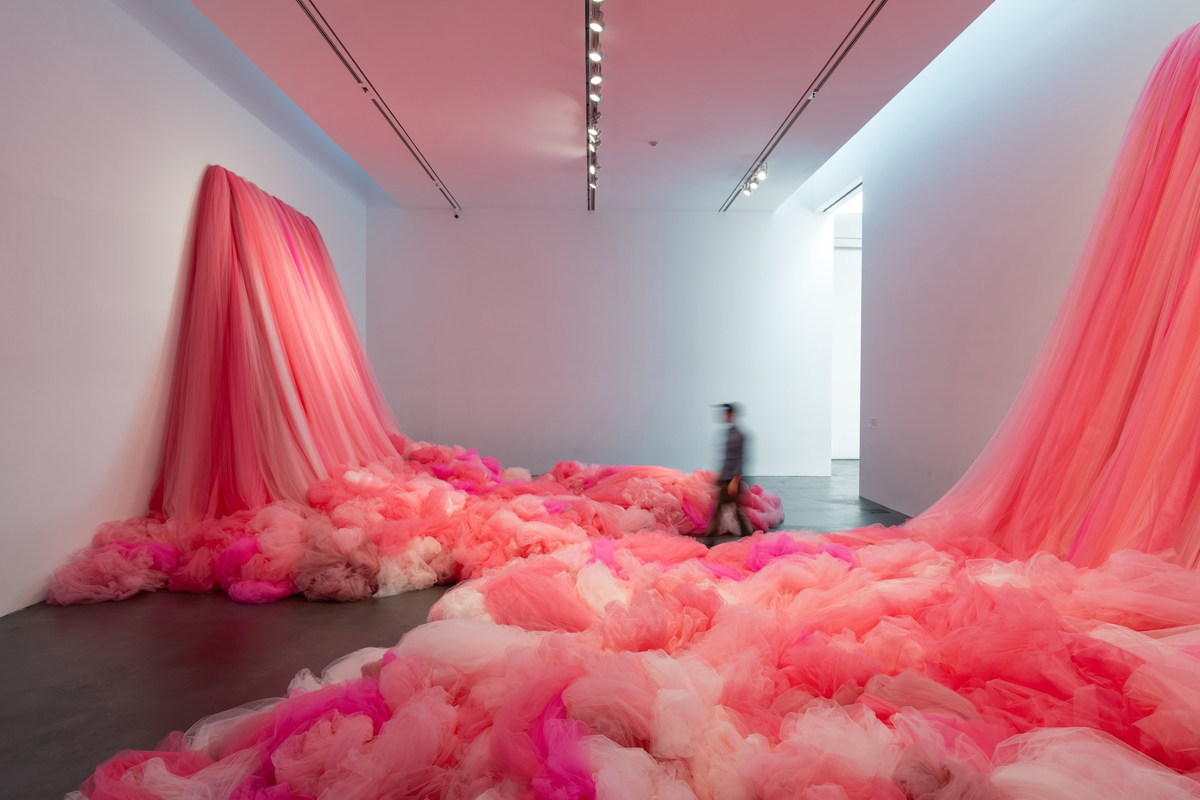
Seguimos cantando (Waterfalls) (2025-26) fills the biggest room in MCA Denver—two bright pink tulle torrents tumble across the room to meet each other. “This is a piece about the feminine and how even though there are so many attempts to quiet us, we are unstoppable,” she says. She explains that water always carves out the most efficient path and finds its way to other bodies of water—it’s an allegory for the power of women rising up together.
Hernando emphasizes the importance of collectivity amid political crises, a belief she developed in the 1980s and sees as particularly relevant today. “All these systems, they want us to feel alone and feel separate and against each other,” she says. “Coming together is a form of resistance. We are all imperfect, and I think it’s in the compassion of others that we can get better.”
While working on two solo exhibitions at once involved intricate coordination, Hernando was honored to showcase her work to a community she cherishes. “ Colorado is the place I [have] lived the longest, and I care for this community,” she says. “I feel there is kindness in people and a softness. The artist community is very collaborative, and we support each other.”
Hernando’s work carries that softness in its lightweight fabric—while simultaneously reminding viewers that there is strength in numbers.