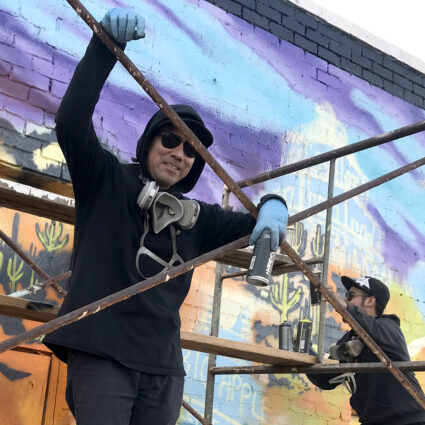
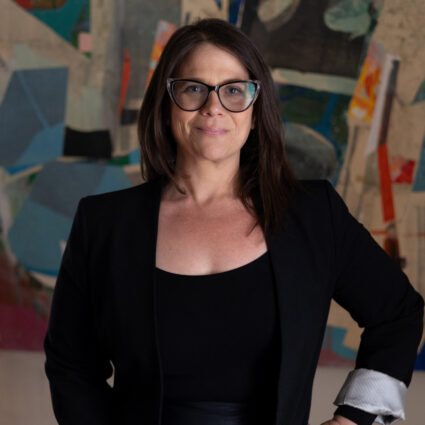
Jessica Sevilla renders poetics, satire, and political ecology into disorienting video collages that interrogate the commodification of ecosystems.
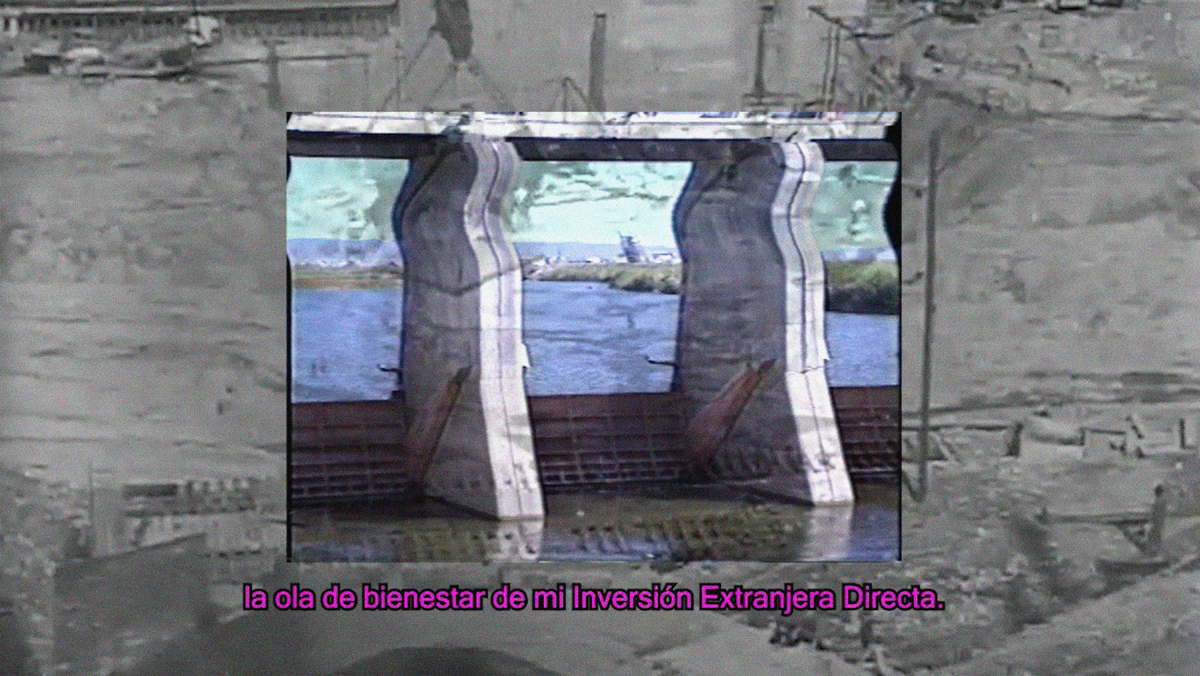
Mexicali, Baja California / jessicasevilla.com / @sevillajess
Babe, wake up—they’re bombing the Hoover Dam.
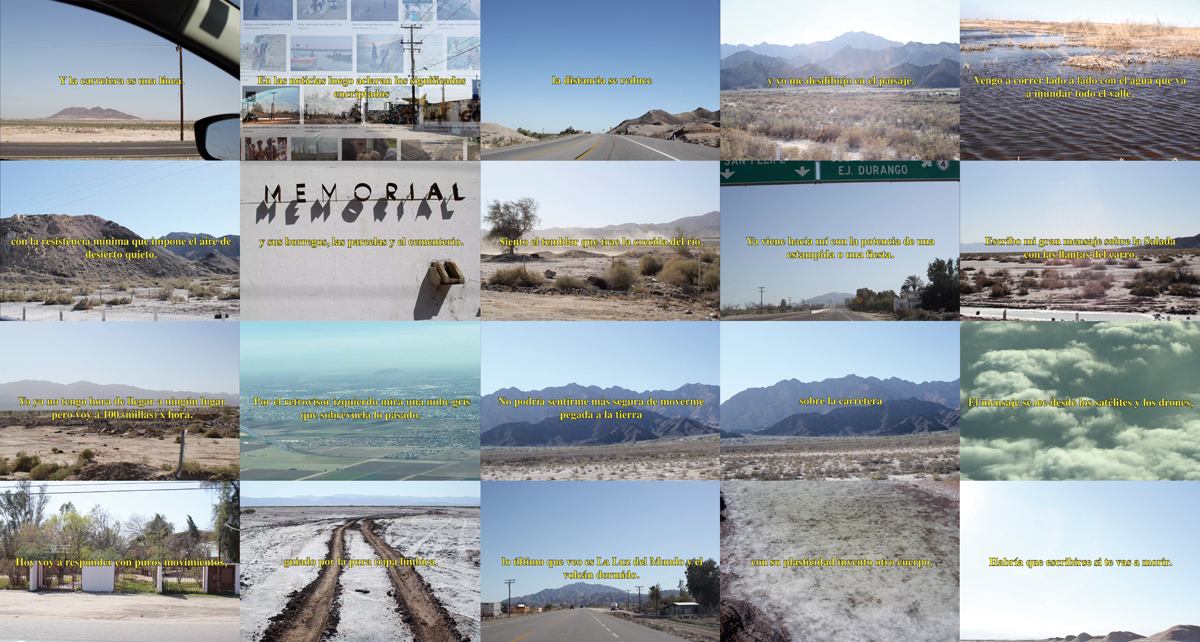
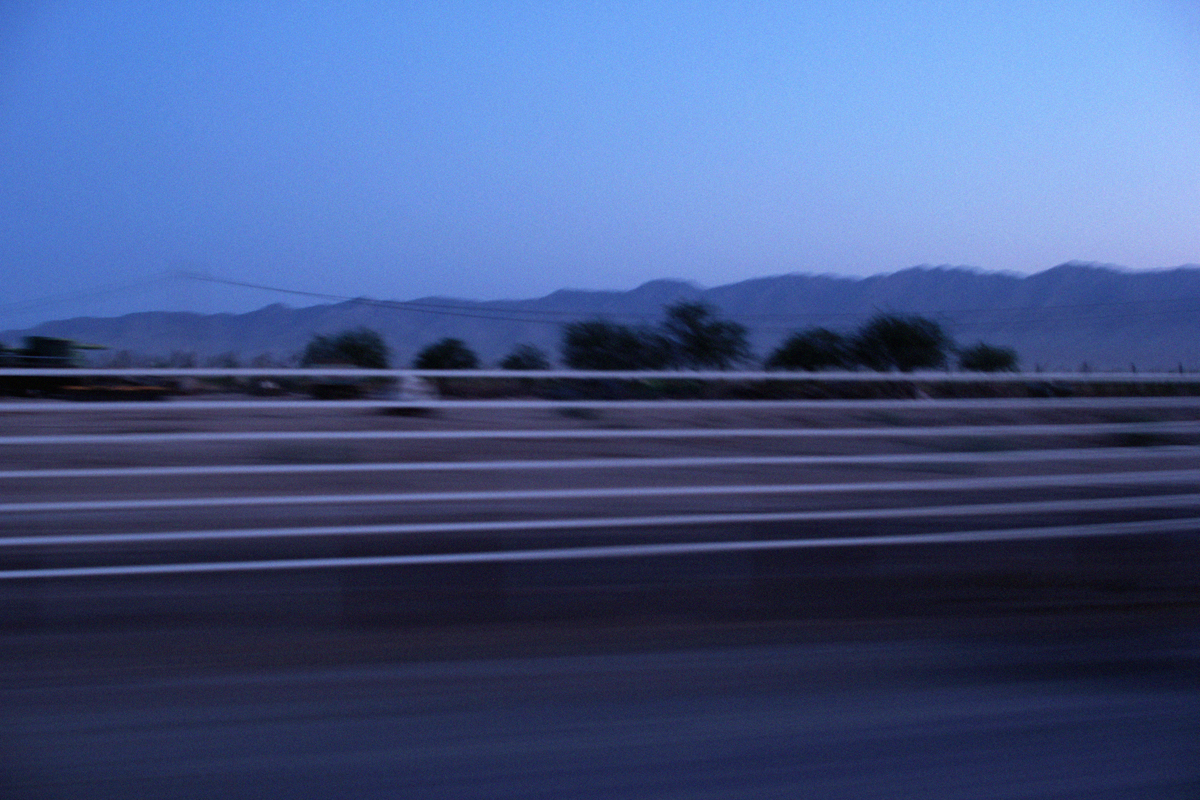
Yellow text overlays frenetic clips of engineered hydropower and vengeful floods. Concrete behemoths clotting the Colorado River collapse one by one. Fontanelle. Flaming Gorge. Glen Canyon. Morelos. In Baja California, where the river’s delta once flowed freely into the Gulf, tremulous scenes of Mexicali glitch through the window of a speeding car. The final glimpses of an arid world soon to be reclaimed by impending rapids.
This is the anarchic timeline imagined in Jessica Sevilla’s visual essay 100 por hora (2021). For the Mexicali-based artist and researcher, the road manifests along a continuum of desert refugia and internet rabbit holes in a series of videos she initially created to escape the isolation wrought by the COVID-19 lockdown. “Those routes, and the landscapes they traverse, led me to what has since become the focus of my research: the ecosystems of the Colorado River Delta,” she writes.
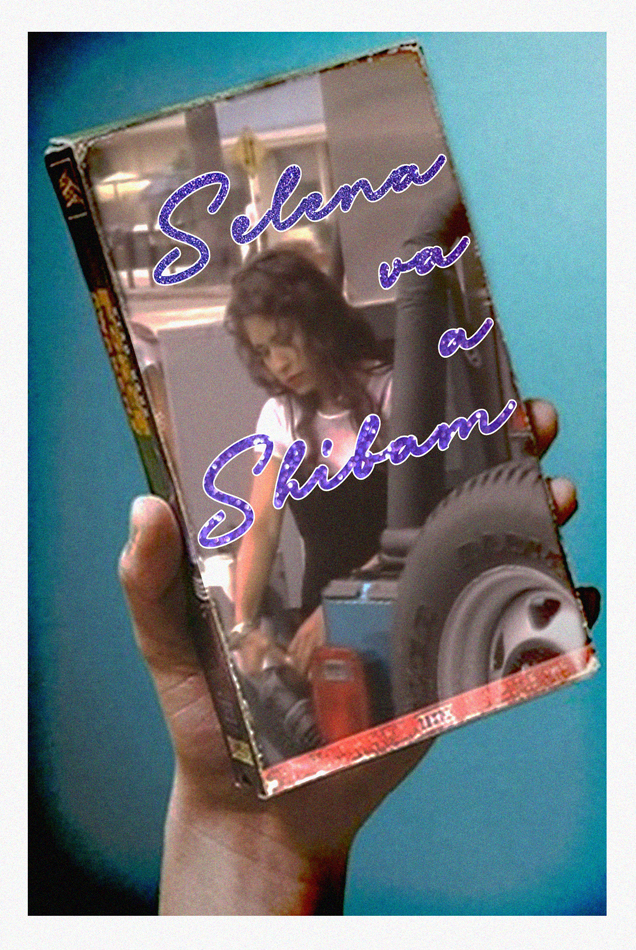
Selena va a Shibam (2020) is a digital road trip driven by stoic wanderlust, collaging screen recordings of Google Maps journeys with stream-of-consciousness YouTube clippings. From Mexicali, Selena crosses the U.S.-Mexico border and heads north to the Mesa Verde dwellings before hitchhiking overseas to Shibam, Yemen’s ancient walled city.
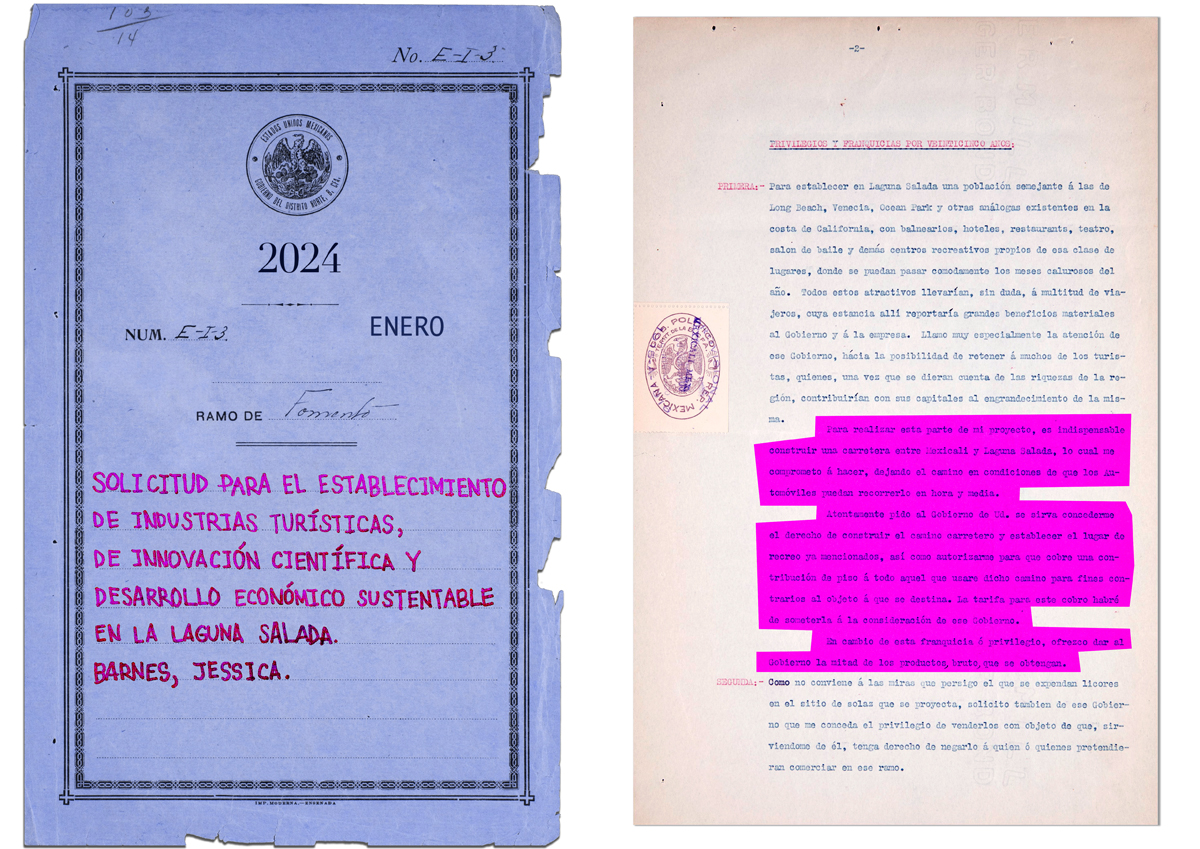
Hydrologic and asphalt tributaries are backdrops for the theater of the absurd continually unfolding over the past century of binational trade agreements and water treaties. In Application for the establishment of tourism industries, scientific innovation and sustainable economic development in Laguna Salada (2025), the satirical recontextualization of an American businessman’s 1916 dream to develop the long-evaporated salty lagoon as a resort destination echoes the enterprising naïveté of the ill-fated Salton Sea just across the border.
Sevilla’s ongoing work as a cultural organizer is now focused on the Archivo Familiar del Río Colorado, a project she co-founded and has coordinated since 2021 “that reappropriates colonial archives and collects family memories to imagine new forms of kinship with the river and its ecosystems.” Her archivist lens imbues each video with a hint of self-awareness as an abstraction of historical record, considering how future generations will interpret the short-sighted land-use decisions of the present.