In the cyclonic installation Rush, Gary Simmons critically blurs history, cinema, and Western propaganda. He also makes space for wishful grief.
Gary Simmons: Rush
November 8, 2025–May 9, 2026
Cookie Factory, Denver
“For me, it’s important that the work unfolds over time and as you sit with it, it starts to reveal other aspects of itself or issues that it’s dealing with,” Gary Simmons shared with me over a Zoom call from his home in Los Angeles, speaking of his current solo exhibition, Rush, at Denver’s Cookie Factory.
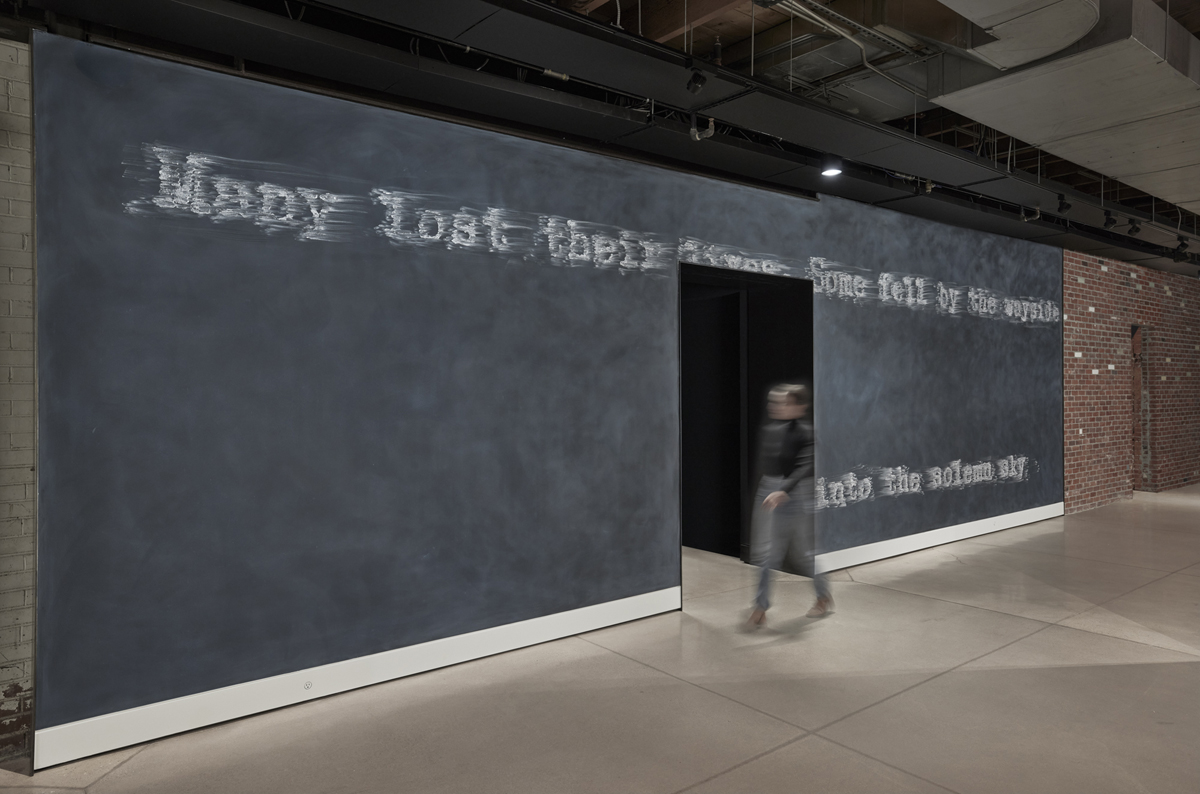
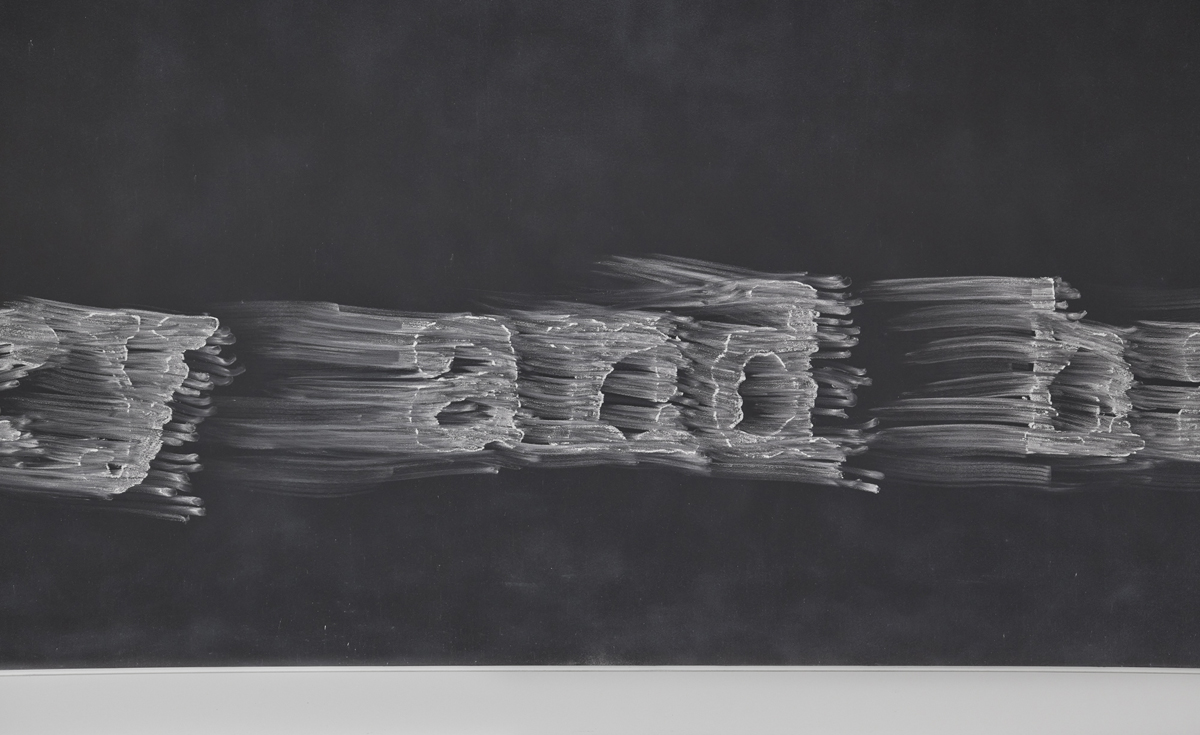
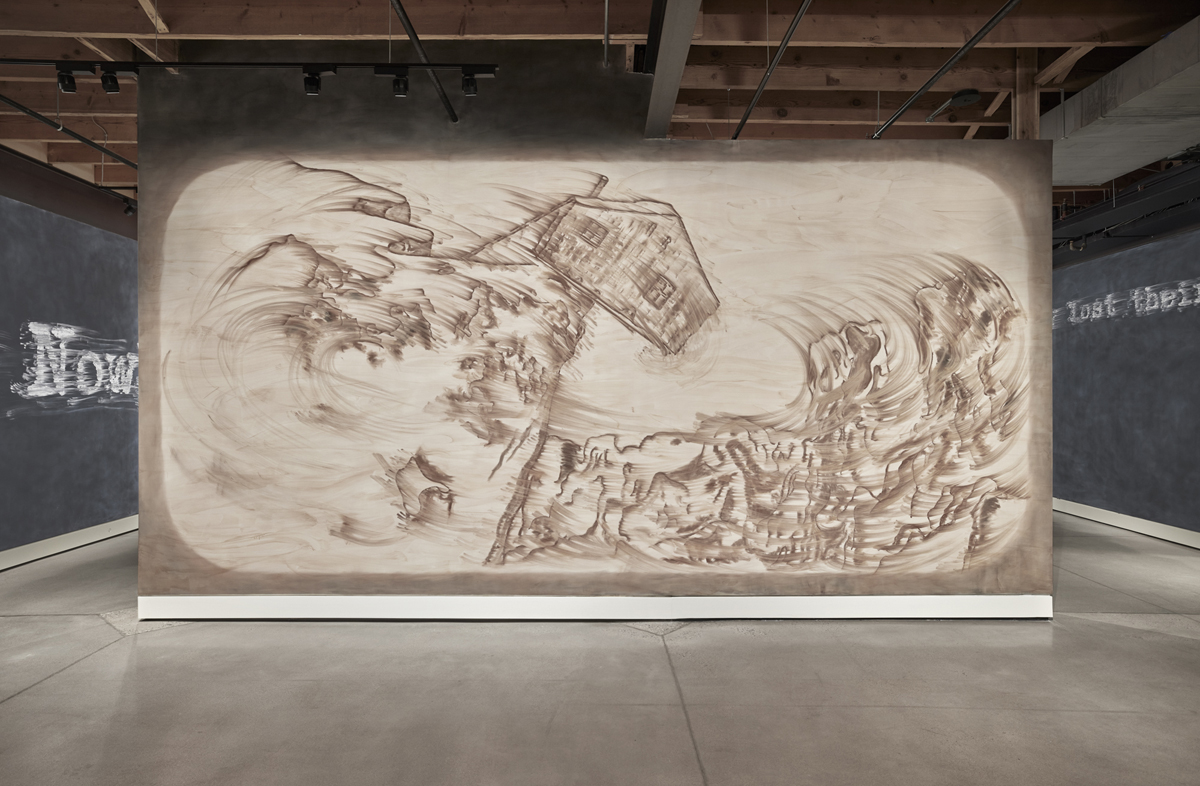
The artist, who has been working in various media for over three decades, is perhaps best known for his signature technique of mark making directly on walls and blackboards then partially erasing the image—rendering it blurred, ghostly, and existing at an intersection of presence and disappearance. In Rush, Simmons creates large-scale, site-specific wall drawings that envelop the former industrial space, using filmic references and Western iconography to address histories of violence realized through Western expansion and the dispossession of Indigenous lands in the so-called American Southwest.
Cookie Factory opened in May of 2025 in a restored 1940s fortune cookie factory in Denver’s Baker neighborhood. In the kunsthalle-style space, artists are invited to create site-specific work that responds to both Colorado’s and the West’s physical and cultural topographies. For Simmons’s exhibition, curated by Cookie Factory artistic director Jérôme Sans, the work started from contemplating movement and Colorado’s position as a gateway to the West. “I started thinking about moving from east to west and the notion of manifest destiny,” Simmons says. “The idea of a gold pot at the end of the rainbow and that dream of what America could be.”
Movement is palpable in the show and is felt across multiple registers; from the pure physicality of how Simmons creates his erasure wall drawings, to the woosh of their appearance, as though the viewer is being swept up with the words and images as they enter the space. Simmons’s habitual cinematic references and humor when tackling issues of systemic violence and racial oppression manifests through the 1925 silent comedy The Gold Rush by Charlie Chaplin; in which Chaplin’s character, the Little Tramp, embarks on an intrepid pursuit of adventure and riches during the Klondike gold rush. Using text and imagery from the Chaplin film as an armature to hang these loaded histories on, Simmons walks a tightrope between the absurdity of comedy and the brutality of existence.
“Every project I do starts in some way or is impacted by film directly,” says Simmons. “Charlie Chaplin used his craft to explore difficult issues, political and otherwise, and that sense of movement really sort of synced up with the way that my [practice] physically works, as well as psychologically works, so it was a good fit right off the bat.”
Beyond Chaplin, Simmons shares that comedians and satirists have been influential in the way he brings humor into his work to layer the narrative. “Comedians as a whole have a big impact on the way that I approach making things visually,” he says.” Really good comedians like a Richard Pryor or Maya Rudolph come at you with this way that kind of softens the blow early on with a humorous story, and then somewhere along the line they hit you with something really serious and you realize that you’re a party to something much bigger than just the initial joke. Dave Chappelle is another.”
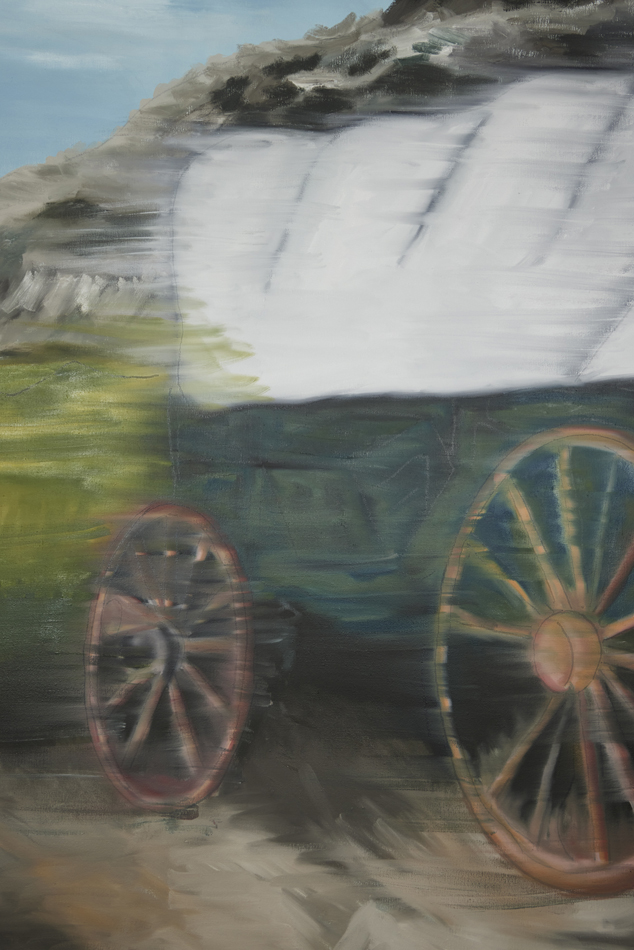
Entering Rush, the viewer walks into an antechamber to the main exhibition space and encounters Lost Frontiers (2025), a large, full-color painting of a covered wagon. It’s one of two examples of frontier semiotics in the show, the other being imagery of a cabin. They serve as signifiers of shelter but also as containers for memory and mythology in the context of settler colonial expansion towards the Pacific.
A core tenet of Simmons’s larger practice [is] the slippage between representation and abstraction, between myth and truth.
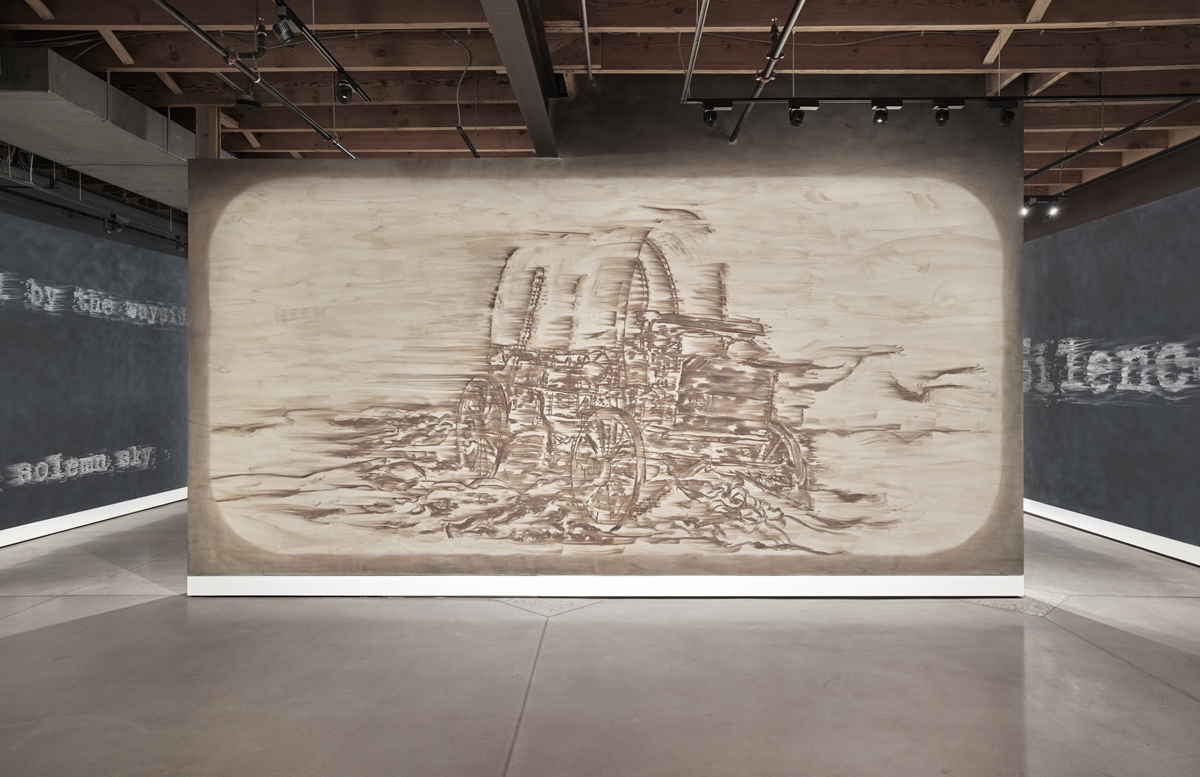
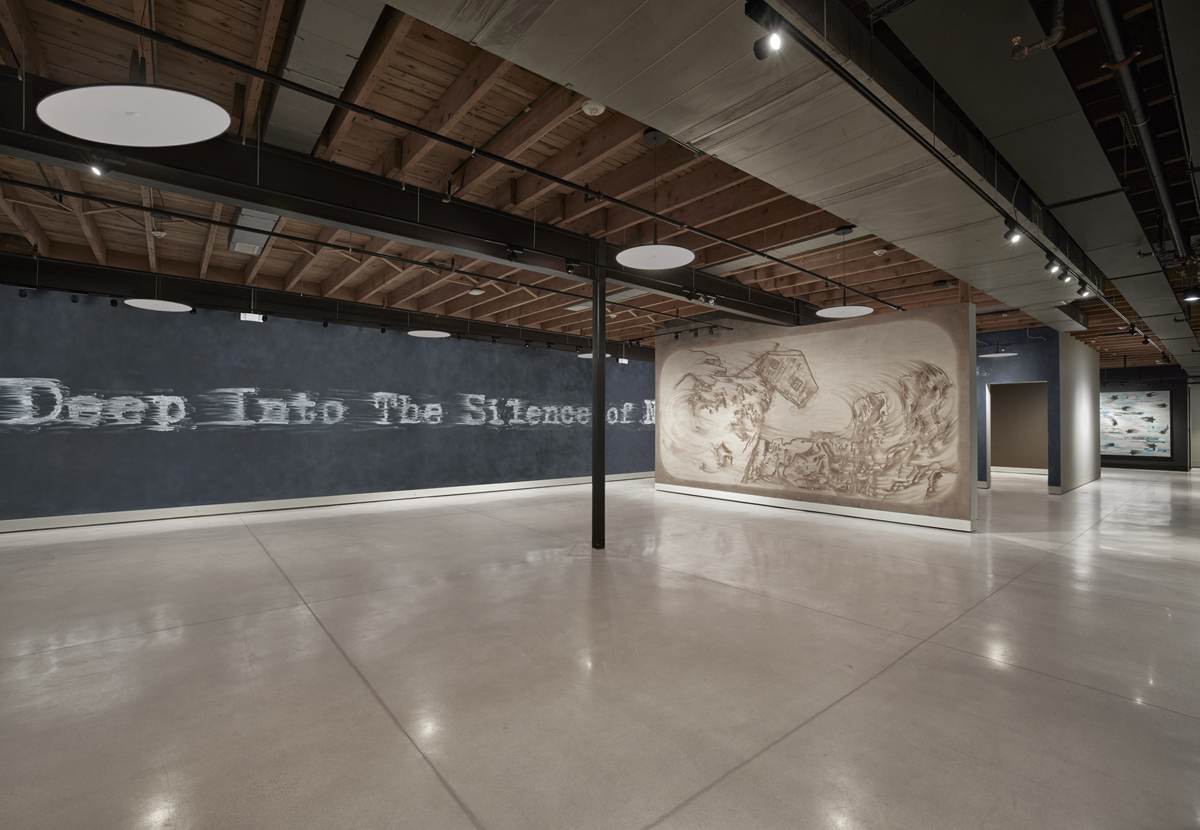
Moving into the guts of the show, the viewer encounters sepia-toned wall drawings on both sides of a wall in the center of the gallery: On the Trail (2025), again depicting the covered wagon, and Edge of Nowhere (2025), depicting a cabin teetering on the edge of a cliff with swirls of motion all around it—referencing the iconic scene of the cabin sliding off a cliff in the Chaplin comedy. These are Simmons’s first works in sepia tone, and they evoke a nostalgia and sense of documentation linked to film photography, revealing the elasticities of time and the constructions of truth in American folklore and settler colonial mythmaking.
Though the main filmic reference for Rush is the Chaplin film, the contrast between the colorful wagon and sepia toned wall drawings brings to mind the transition from black-and-white film to Technicolor in The Wizard of Oz, when Dorothy Gale swirls down from the sky and lands in Oz, exiting her house into a vibrantly saturated world. “I’ve played with The Wizard of Oz many times,” Simmons says. “In one of the first pieces I ever showed up at Metro Pictures [there] was this garden of begonias which was right out of the [film].”
The perceived binary of Dorothy Gale’s reality in Kansas and the surreality she experiences in Oz is blurry, much like Simmons’s images and the liminality between government-manufactured narratives around Western expansion.
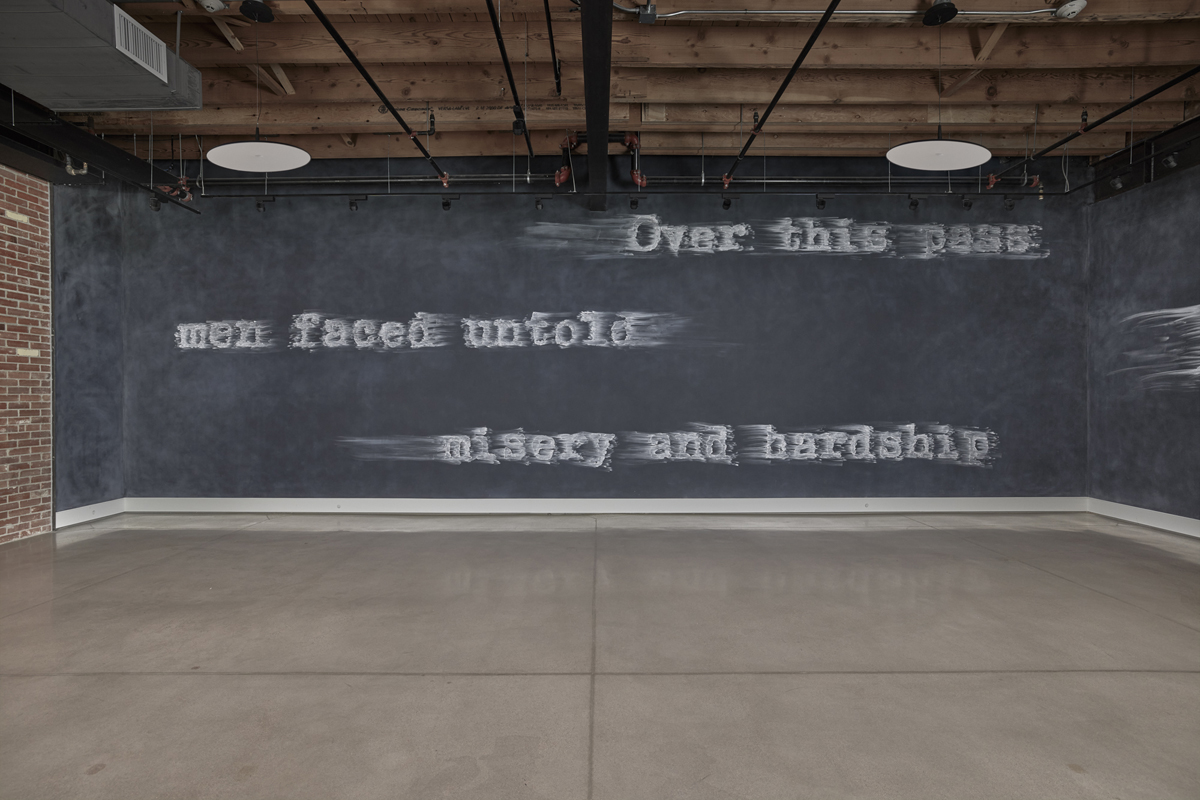
The perimeter walls of the gallery are monumental blackboards with ghostly words pushed across them in chalk, a signature move of Simmons, with text borrowed from the intertitles of The Gold Rush. The word “nowhere” appears multiple times in the show, including on the blackboard wall Deep into the silence of nowhere (2025), hitting a core tenet of Simmons’s larger practice: the slippage between representation and abstraction, between myth and truth.
“You can’t locate nowhere,” the artist remarks. “It’s not anchored and so it’s the space between places.” That space of fluidity and flux has a “sadness but also a dreamscape to it” as a place that “just almost exists.”
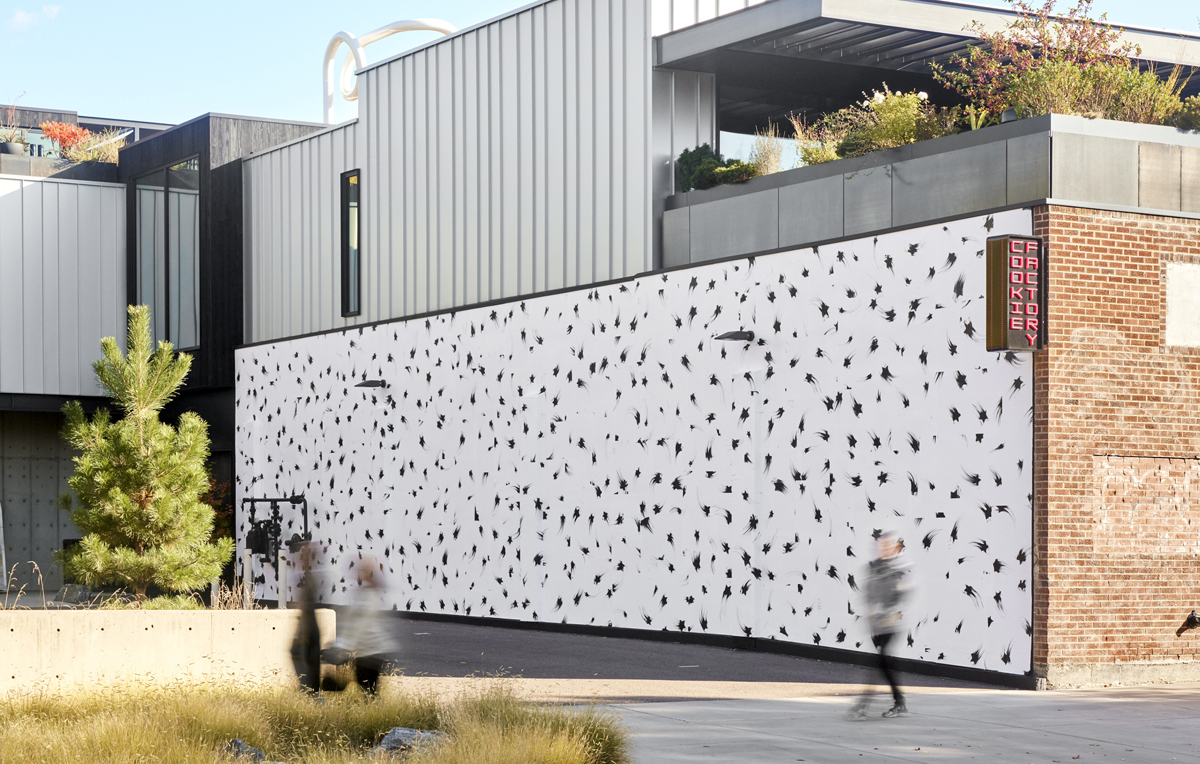
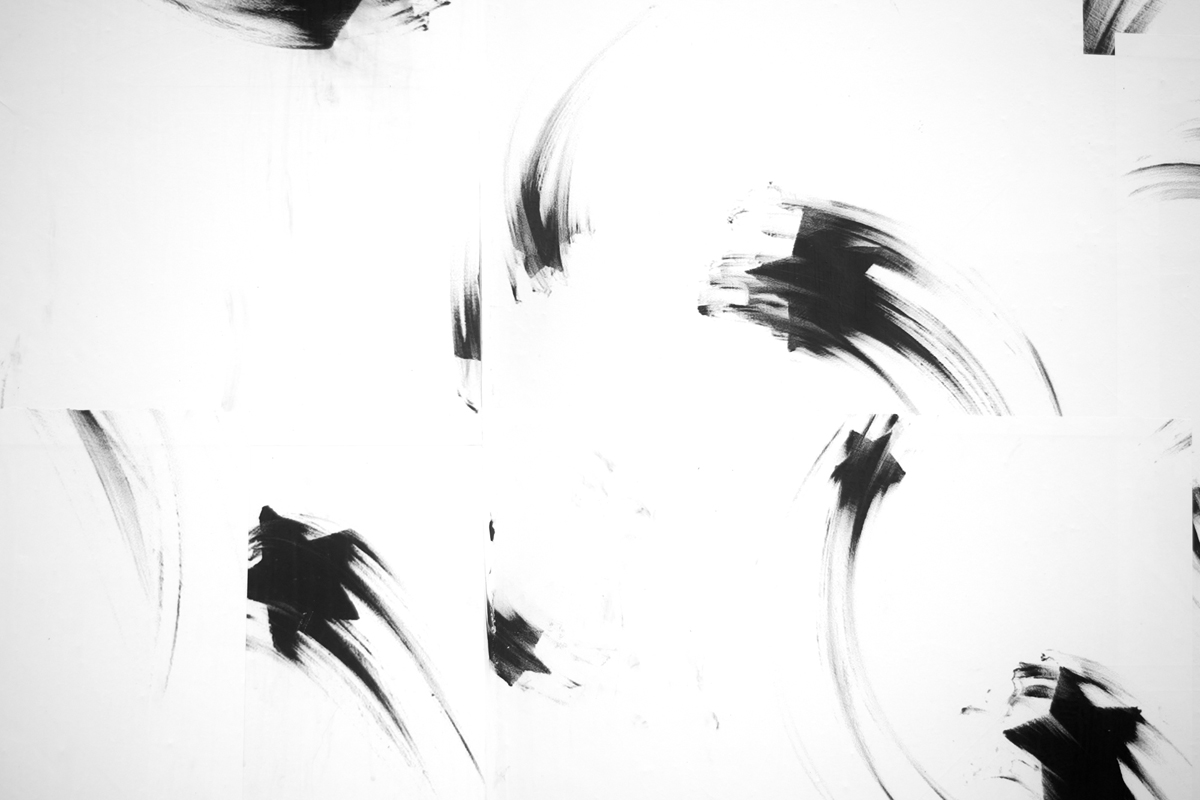
This profound ambiguity also plays into the artist’s longtime use of stars, most notably the image of the shooting star, which appears in a small painting at the beginning of the show, a wall-sized work in the main show, and a large wheatpasted mural on the exterior of the building. “I’d say stars occupy a similar space [to nowhere],” he says. “From childhood you maybe were on a beach or out in the backyard or on a date with somebody and you see a shooting star and the implication is that you wish on that shooting star and hopefully your dream comes true.”
Considering stars’ cultural significance as wish-granters or spiritual guides, set against the reality that they’re space debris streaking across the night sky, places them in a space of wishful mourning. “There’s something really beautiful about that but there’s also at the same time something really incredibly sad about shooting stars.”
The fleeting quality of the experience of the star, coupled with Simmons’s erasure of their image, creates a sense that dreams are fragile and that the narratives that guide these particular dreams exist within illusions of power. As another American satirist and comedian, the late George Carlin, said in his 2005 HBO special Life is Worth Losing, “it’s called the American Dream, ‘cause you have to be asleep to believe it.”