Young borderlands artists often face a choice: leave or turn art into a hobby. A nascent El Paso group is shooting for a “second chance.”
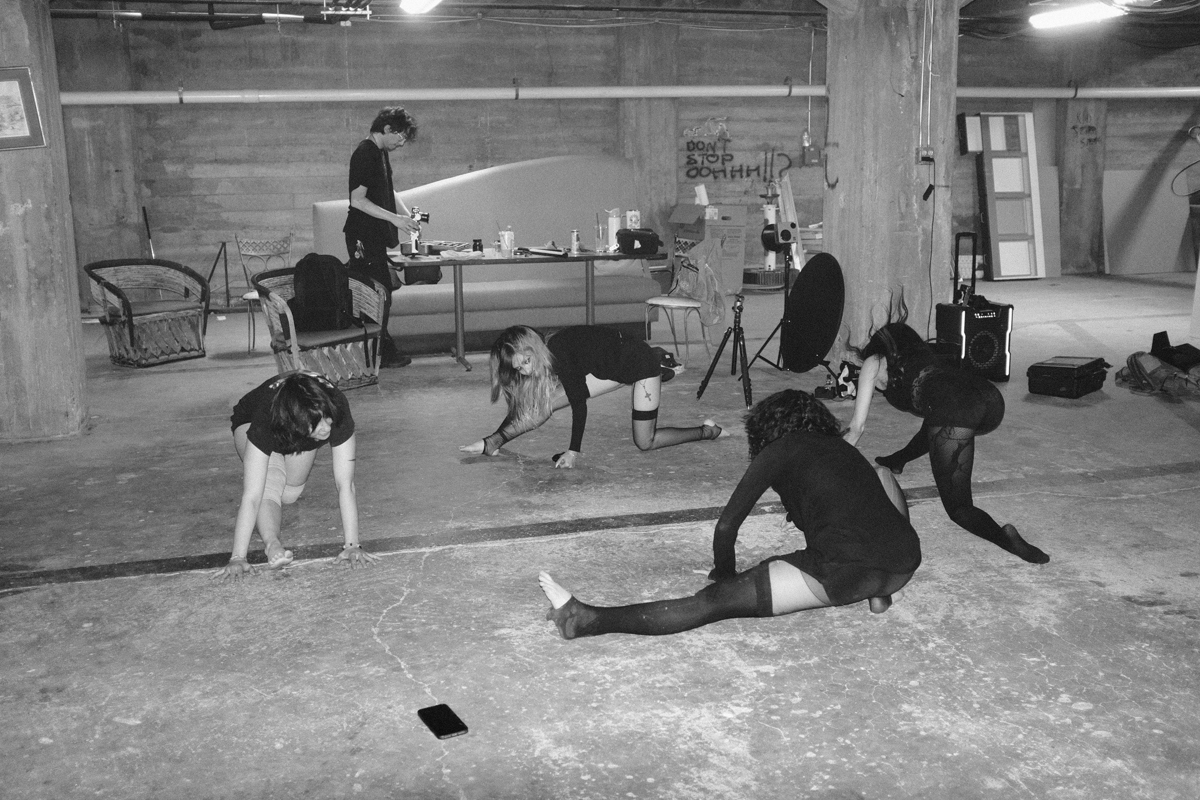
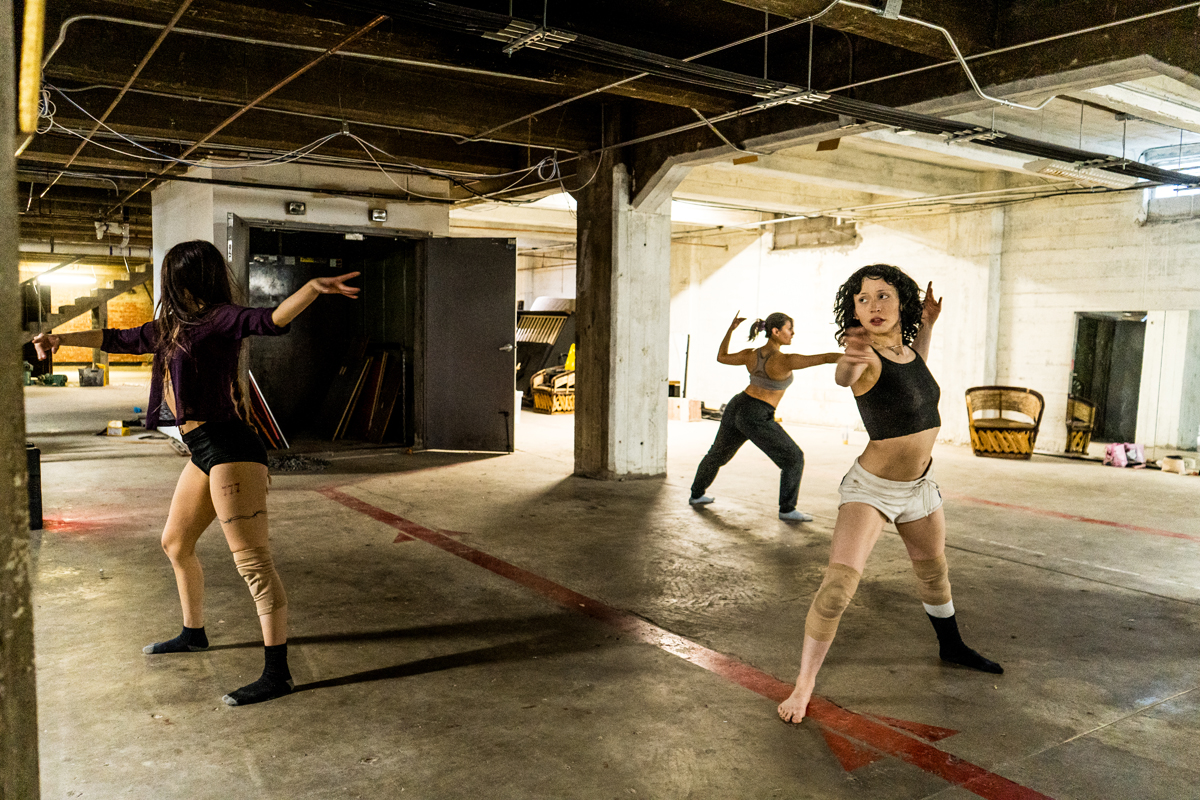
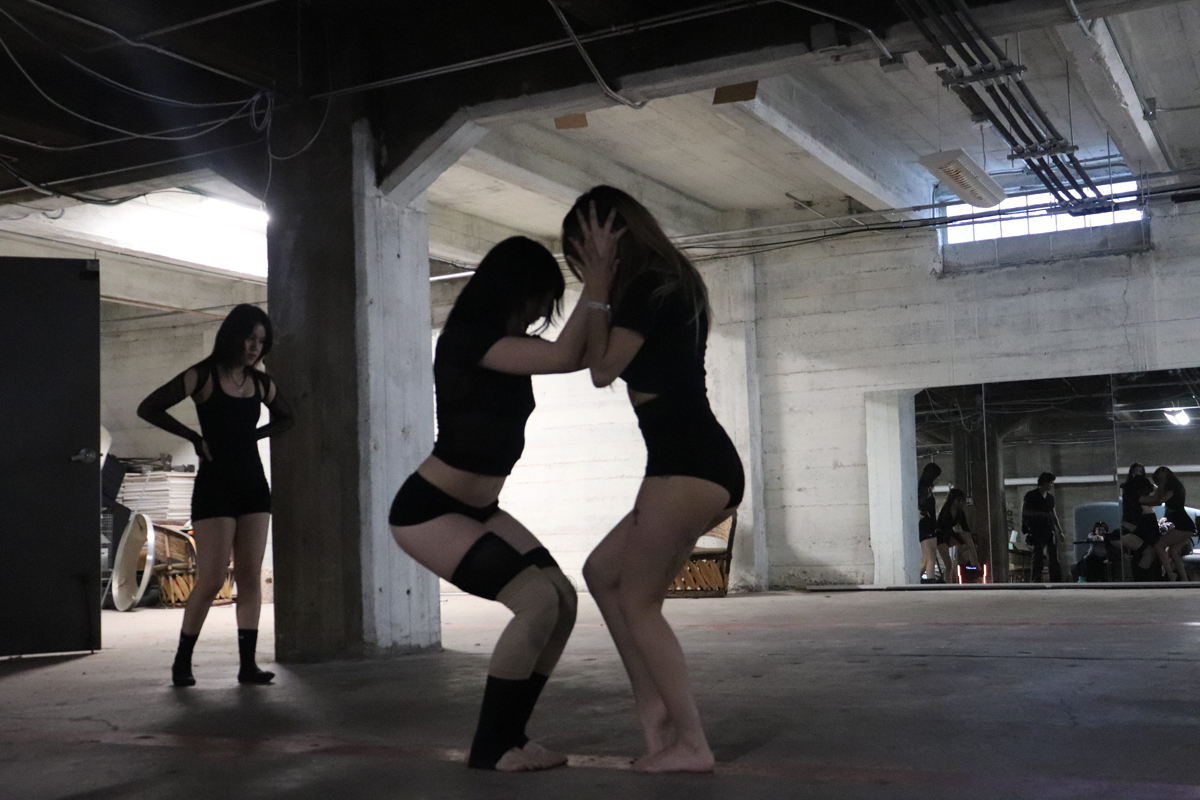
EL PASO—A dancer hurtles toward the audience before stopping herself at the last possible moment. Around her, bodies twist through tightly synchronized phrases, limbs cutting through the air with geometric precision. The brutalist track has been mixed by a black-clad DJ sitting next to me.
This spring, the multimedia collective Exit hosted a preview of its debut performance in the basement of a construction site in central El Paso. The spectacle unfolds in the round, eliminating any comfortable distance between performer and audience. On one side of the room, fashion designers prepare garments for the dancers. On the other, young artists, students, and recent graduates pack the seats. The crowd one would expect to find on a night out in El Paso’s bar district has come to see a contemporary dance performance about the labor of making art. For a city that often struggles to retain young creative talent, the scene feels furtively significant.
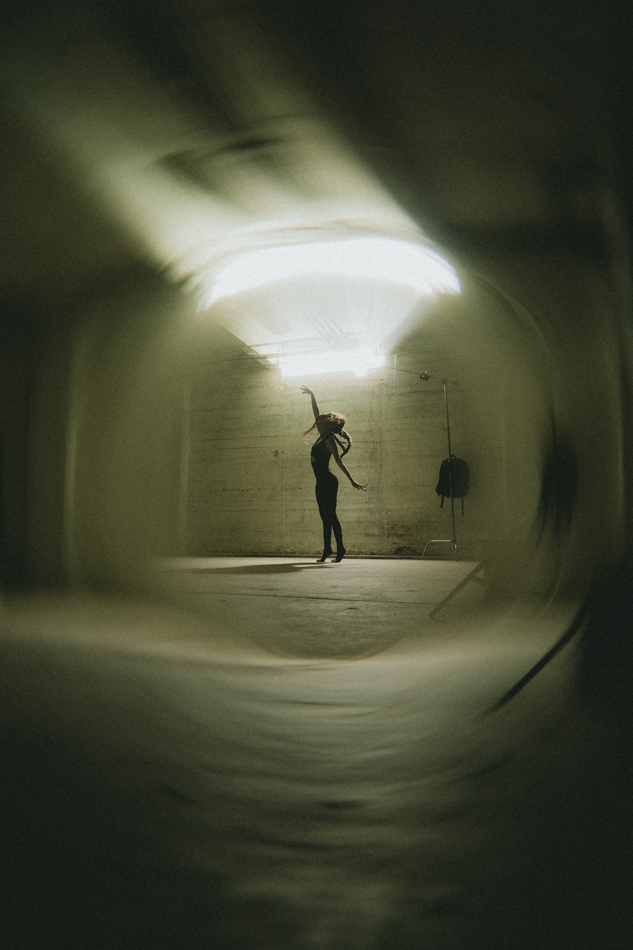
For the last two years, director Celeste Hernández has been developing Exit’s debut production, which opens with ticketed performances on June 19 and 20 at LowBrow Palace. The self-titled piece is performed in five acts, the work traces the cycles of artistic creation: calling, servitude, distraction, agony, and liberation. The concept emerged from conversations within El Paso’s DIY arts community, where Hernández noticed her peers cycling between obsession and stagnation as they waited for funding, permission, time, or motivation to finish their projects. For Hernández, dance offered the clearest way to express these rhythms, with its ability to embody both the restlessness and release of artistic production. “It’s a story that every artist knows,” Hernández says.
Rehearsals began modestly, with two dancers and a producer working out of a garage. As the project expanded, so did its ambitions. According to Hernández, Exit exerted a kind of gravitational pull, drawing creatives from her orbit into its fold. “The artists come from different disciplinary backgrounds, but the one thing they shared in common was their desire to be a part of something new.”
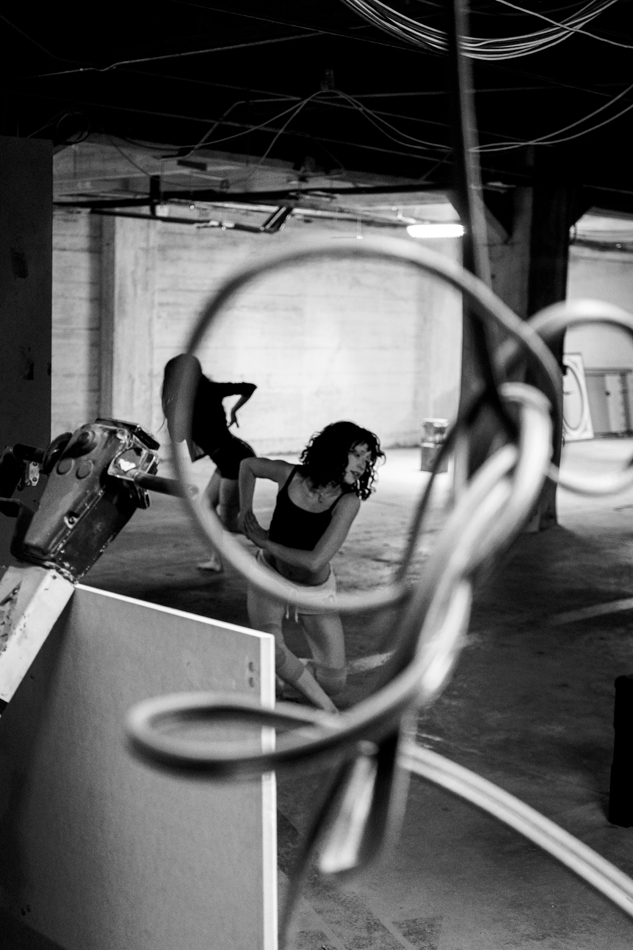
Today, Exit encompasses seven dancers, four fashion designers, three choreographers, an audio producer, a videographer, and a sculptor. With rehearsals up to six times per week, it has become a thriving ecosystem of collaboration. The resulting performance functions almost as a survey of their collective practice—a snapshot of the music, fashion, design, and dance emerging from the borderlands’ young arts scene.
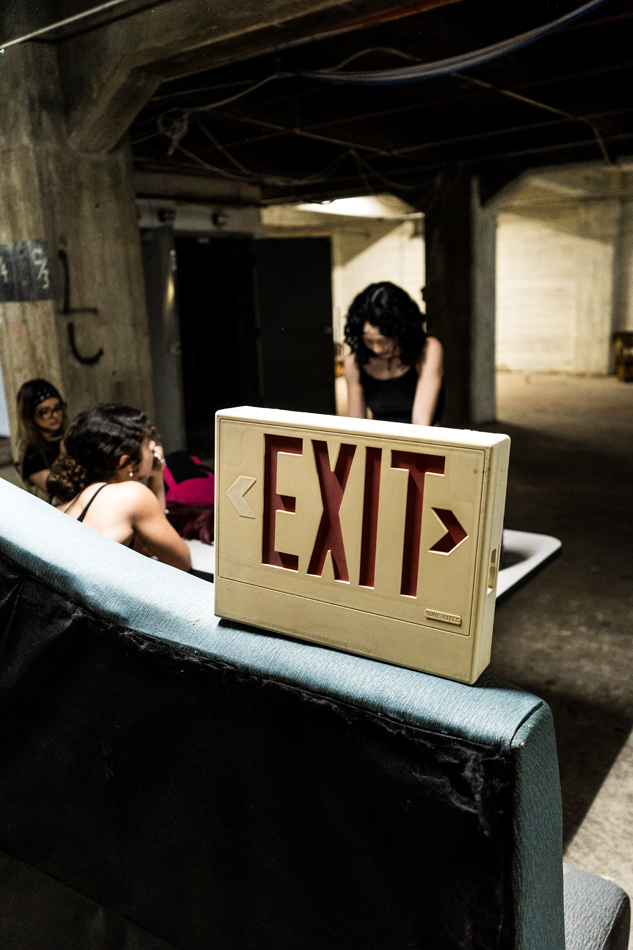
The project has also unfolded during a key moment of the dancers’ artistic lives. Like many graduates of university dance programs, choreographer Ximena Mata thought she had left dance behind, seeing as professional opportunities were scarce. For her, Exit “feels like a second chance. I would have never thought that I was going to perform ever again.”
Mata’s experience is hardly unique in the borderlands. While El Paso has no shortage of talented dancers, opportunities to pursue contemporary dance outside of school-based programs and commercial studios can be difficult to sustain. Dancer Daniela Colomo says she had “given up on my creative dreams before Exit. I was born and raised in El Paso, so it means a lot to be able to perform and be vulnerable with my community.” Dancer Britney Hernandez relates that “El Paso is such a creative, talented, and supportive community, but it can be challenging for the arts to receive the recognition and support they deserve.”
Indeed, arts educators in the region have faced mounting uncertainty, including recent cuts to elementary fine arts programs and teaching positions while economic development efforts focus on attracting employers in manufacturing and technology. Even as debate over the arrival of jobs to the region via tech firms dominates local headlines, Exit is focused on a very different kind of workforce development.
The collective is built around the simple proposition that artists deserve pathways to create meaningful work in the city they call home. For Hernández, building Exit was as much about creating a community as producing a performance. “The whole goal is to inspire artists,” Hernandez says. “The whole goal is to create jobs for artists so they don’t have to be working in places they don’t wanna be working at.” Exit’s debut confronts young creatives in the borderlands who face a familiar choice: leave or make peace with art becoming a hobby. The collective is betting that another path is possible by building the kind of arts infrastructure they wish they had inherited.
In the final days before opening, Hernández is feeling how one might expect after two years of rehearsals and months of coordination. “This has been so hard,” she says. “But Exit is worth it.” The dancers, for their part, are energized. Hernandez is “overwhelmed with excitement.” Colomo is ready to “graduate from a version of myself that felt stuck in a box here in El Paso.” Mata is already counting down the days. “I just want to start performing,” she says. “It’s such an exciting feeling. I just can’t wait.”