Tucson artists are reeling—and reminiscing—amid the displacement of a forty-six-year-old photography gallery with international clout.
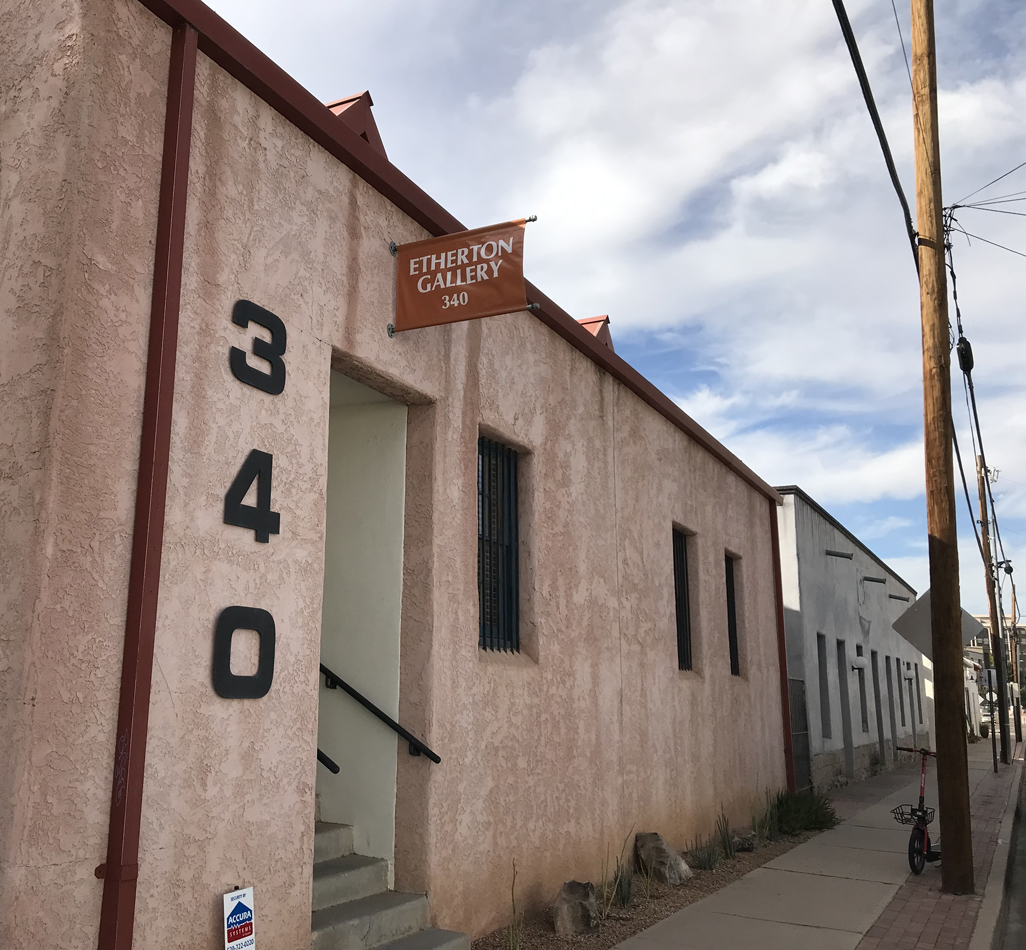
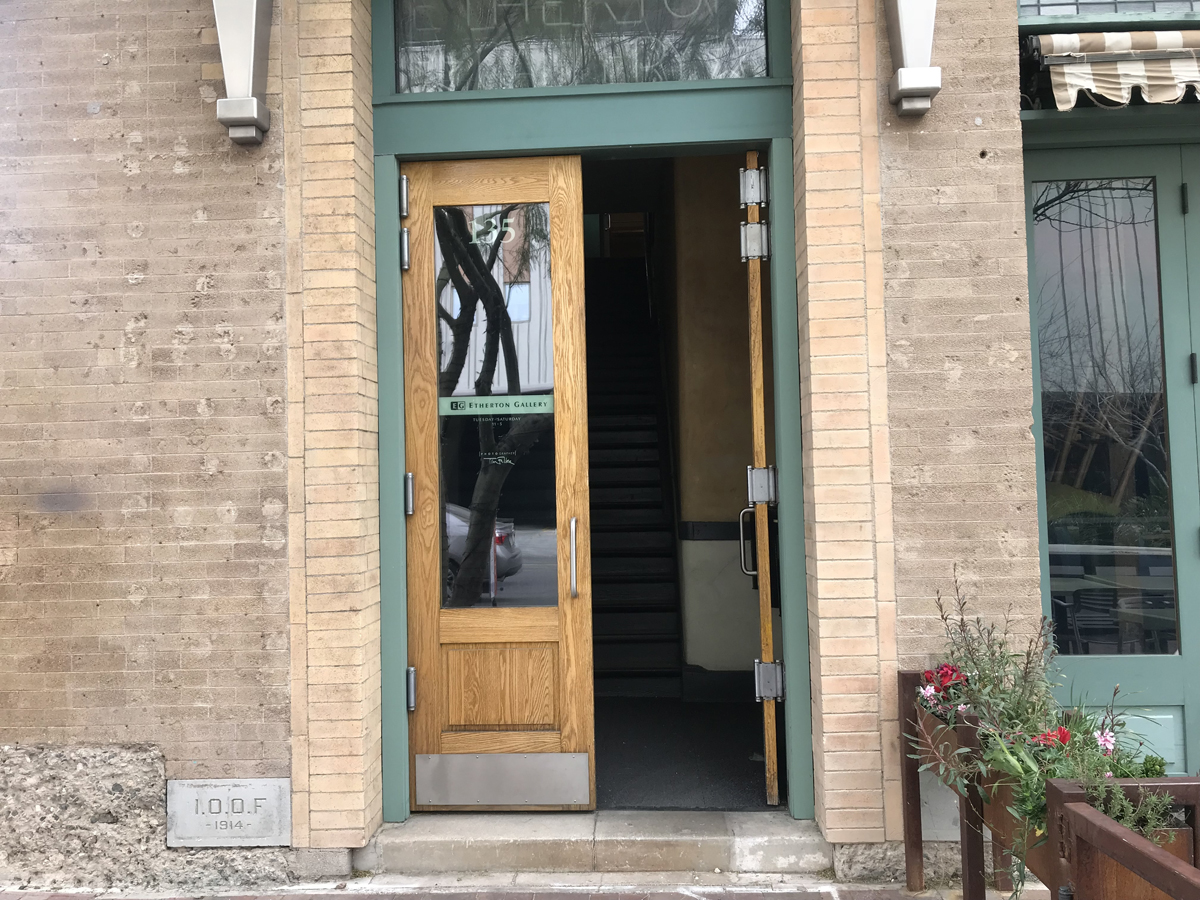
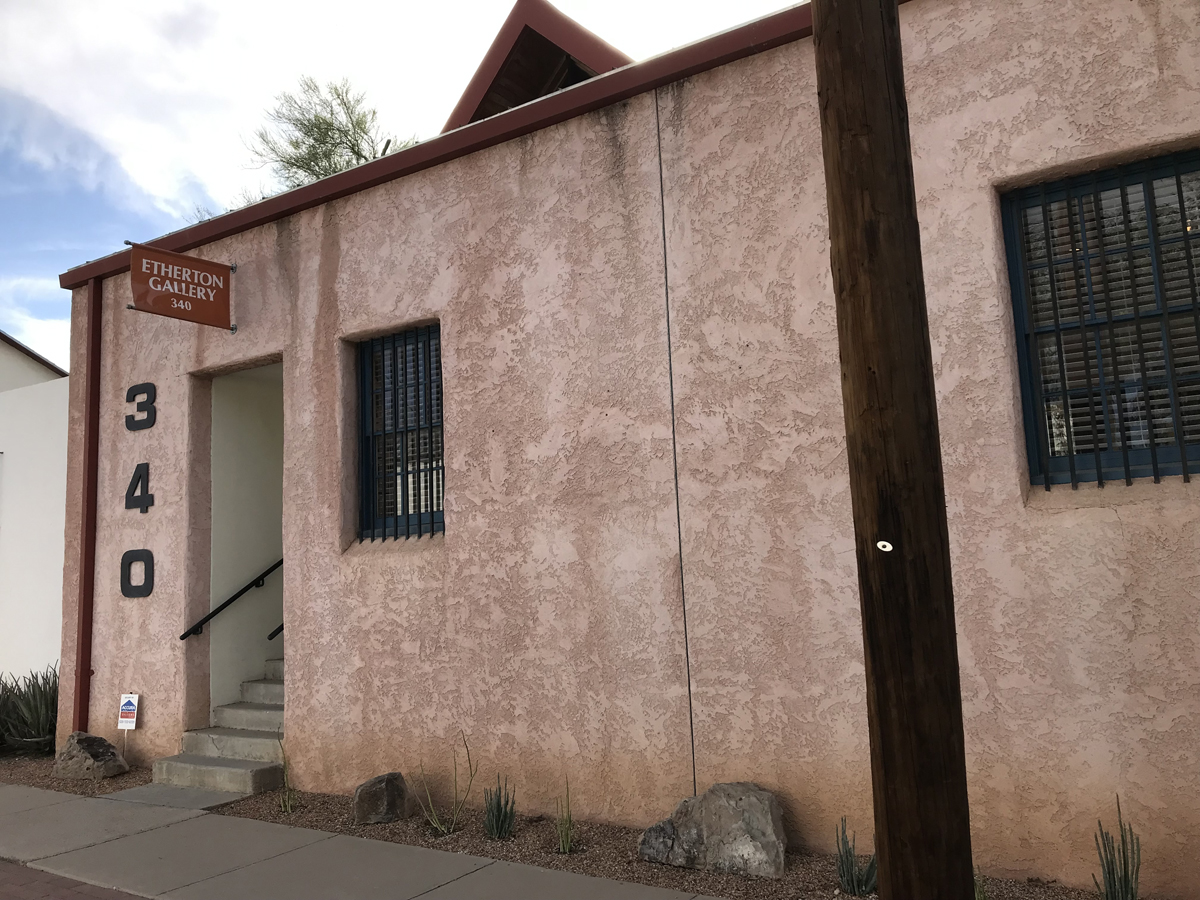
TUCSON—Strolling along a narrow street in Tucson’s Barrio Viejo, you might not realize you’re approaching the doorstep of Etherton Gallery, a renowned art space specializing in contemporary and twentieth century fine art photography by local and international artists.
Situated just up the block from the Museum of Contemporary Art Tucson, the internationally positioned gallery is a staple of the arts ecosystem in the Southwest. But by the end of this year, the gallery plans to leave its current location for an office that lacks exhibition space, according to founder Terry Etherton.
That’s because the gallery’s lease expires on December 31, 2026, a date confirmed by both Etherton and Anne Shiff, president for property owner Bacon Industries. According to Etherton, they denied his request for an extension that would have allowed him to “make the transition as smooth and professional as possible.” Shiff says Etherton “knew on December 31, 2025, that he had one more year in the space.” In any case, the last exhibition will close on November 28, giving the gallery just a month to vacate the space.
“I was really angry and hurt and in shock at first,” reflects Etherton, who says he expects to sign a lease on a smaller space just a few blocks away within a matter of weeks.
In that case, Etherton and his small staff will have just 1,200 versus 3,400 square feet. “The new space will function more as an office where we’ll be able to continue our work, but we won’t have room to do exhibitions or openings,” he explains.
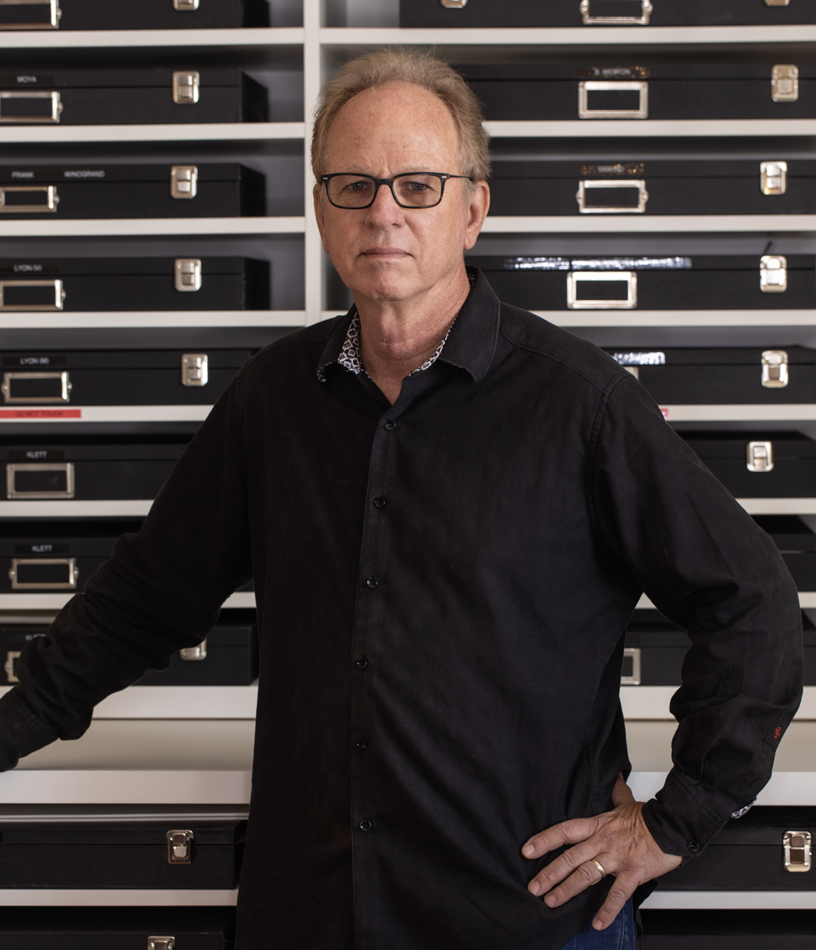
The change represents a significant loss for the Tucson arts community and the Southwest, according to Rebecca Senf, chief curator at the Center for Creative Photography at the University of Arizona in Tucson. The academic art museum and study center for the history of photography houses the Etherton Gallery archive and holds numerous works donated by the gallery through the years.
“Etherton Gallery is one of the institutions that contributed to the flourishing of photography in Tucson and Arizona,” says Senf. “It promotes an environment that’s rich and fruitful for collectors, knowledgeable audiences, and the photographers themselves.”
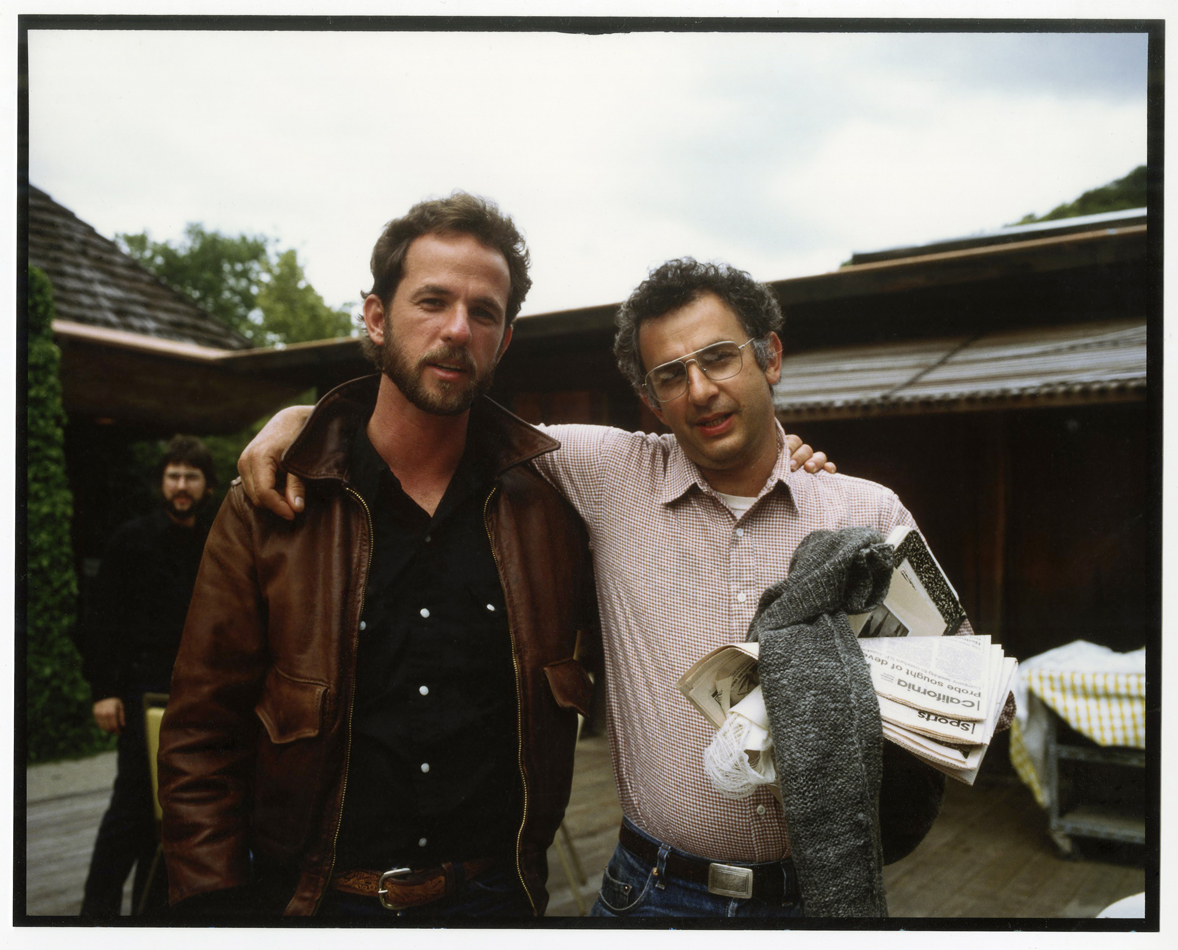
Senf praises Etherton, who was a photographer himself when he established the gallery forty-six years ago, for the “community orientation” at the heart of his work. “He really made an investment in building something that’s a resource and a space where everyone could come to experience photography together.”
Founded in Tucson in 1981, Etherton Gallery is one of only three Arizona members of AIPAD, the prestigious New York City–based Association of International Photography Art Dealers organized in 1975. “Terry became colleagues with peers across the country and together they worked as AIPAD,” explains Senf. “His participation with his peers in that organization was very influential in how we understand what photography is and shaping the market.”
The gallery has changed spaces through the years, occupying its current location for the last five. Etherton says four additional galleries opened nearby after he moved into the Barrio Viejo building, and says the synergy they’ve created as a small “arts enclave” helped to energize the area in recent years. “Having to close won’t just affect us, it will affect the whole neighborhood,” he says.
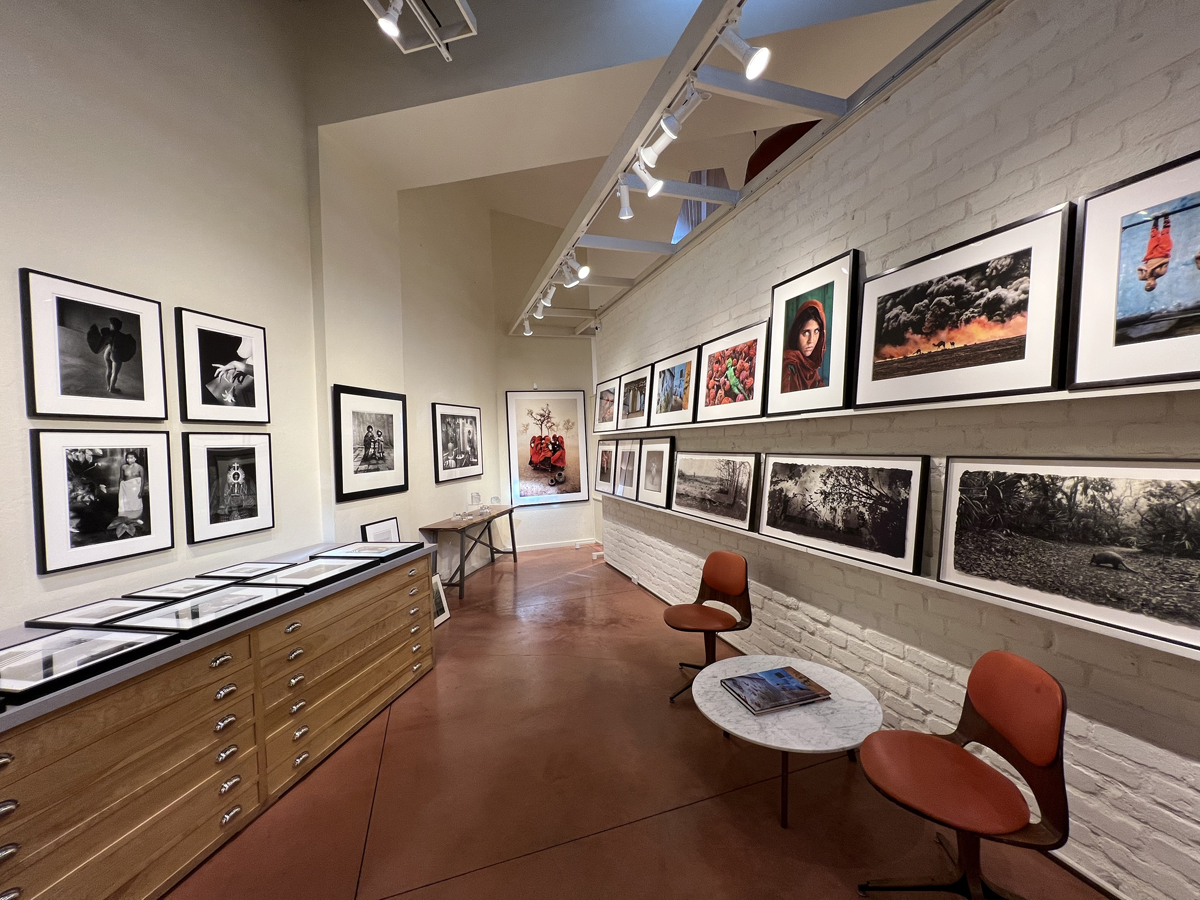
For now, you can climb just a few stairs to enter Etherton’s spacious gallery, and discover a compelling array of photographs—many exhibited on crisp white walls or shown in glass cases. You’ll spot hundreds of books filling the shelves of a narrow passageway. Winding your way to a back room, you’ll encounter large-scale pieces by Jim Waid and Turner G. Davis, renowned Arizona artists working in other media, plus more photographic images and a wall lined with flat file cabinets.
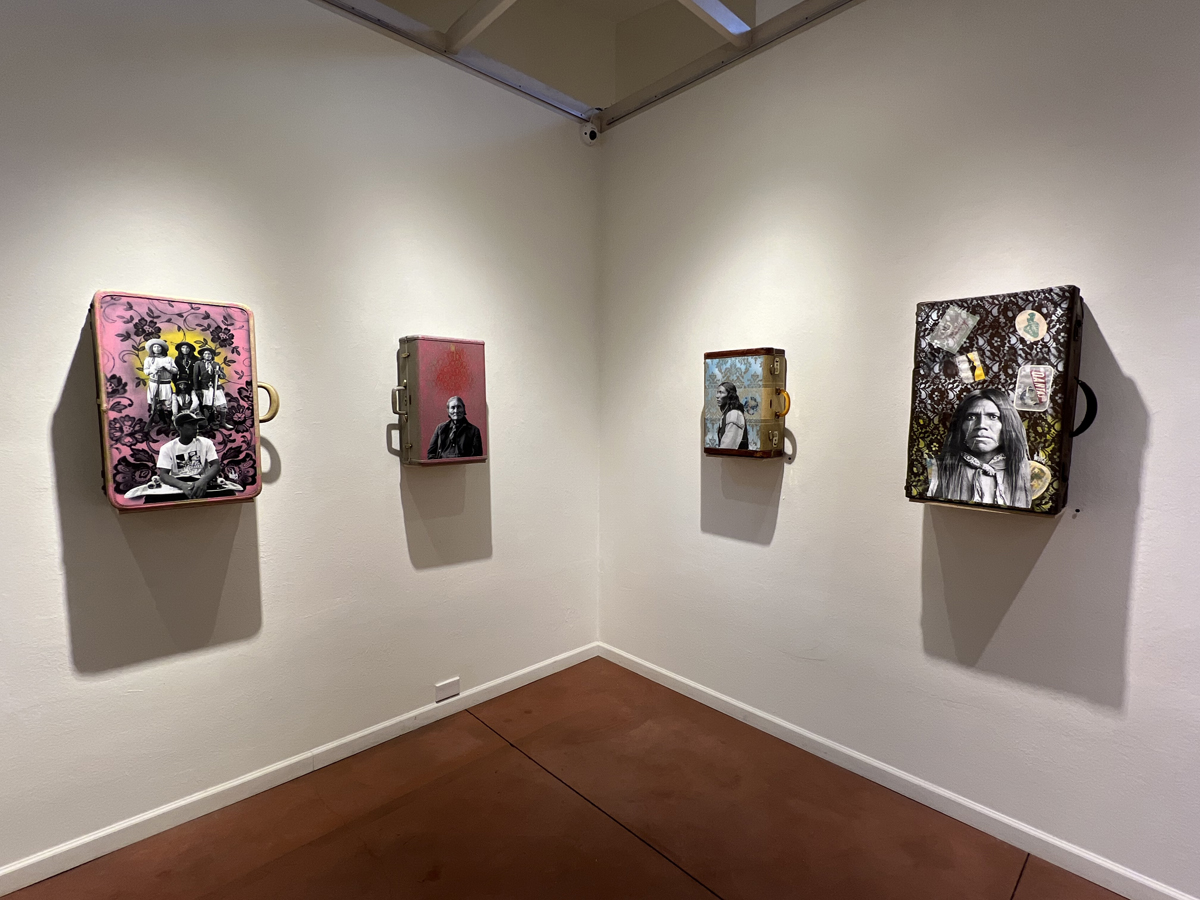
That’s where you’ll find Douglas Miles’s (San Carlos Apache, Akimel O’odham) mixed-media suitcases bearing Apache imagery and Steve McCurry’s iconic 1984 portrait Afghan Girl, which came to symbolize the plight of displaced refugees after gracing the cover of National Geographic in June 1985.
The roster of over 100 artists on the Etherton Gallery website conveys the breadth and depth of the gallery’s offerings, which include photographs by iconic artists such as Ansel Adams, Diane Arbus, Danny Lyon, and Eadweard Muybridge.
Etherton also shows works by Arizona-based photographers, from emerging to well-established, many of whom are experiencing significant public recognition in and beyond the region.
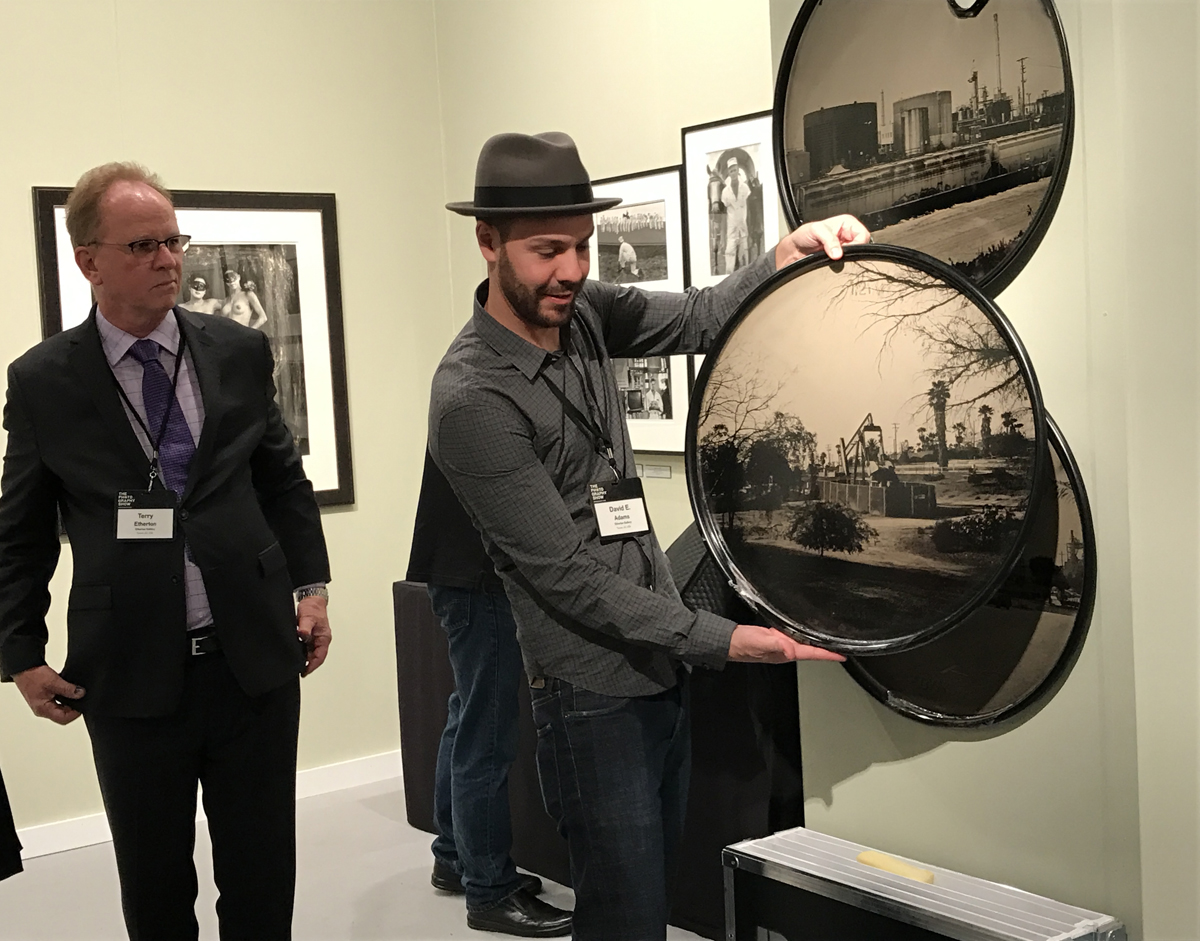
David Emmit Adams, for example, just had seven photographs acquired by the U.S. Library of Congress. Alanna Airitam will be part of a major U.S. exhibition in 2027, although details about that show and another bit of exciting news are still under wraps. Alice Leora Briggs received the 2025 Scult Family Artist Award at Phoenix Art Museum, where her solo exhibition NOW WHAT? continues through January 24, 2027.
“Terry gave me my first show in a gallery in 2003,” recalls Leora Briggs, one of many artists whose ties to Etherton go back decades. “Terry used to ride around on a motorcycle with photographs,” she says, adding to the local lore about his early days. “He’s provided so much support for Tucson artists.”
Photographer Mark Klett, emeritus professor at the Arizona State University School of Art, remembers meeting Etherton in the early ‘80s, when the gallery was located in an old frame shop. “At the time, dedicated photography galleries were proliferating, but not in the Southwest,” recalls Klett. “Photographers who were practicing in the West and the Southwest naturally gravitated towards him.”
As others reflect on the gallery’s history and impact, Etherton is preparing for one final set of exhibitions, which will include portraiture by Mexico City–based artist Lou Peralta, as well as work by Elizabeth Z. Pineda, an emerging Mexican-American artist based in Arizona whose cyanotype prints on corn husks explore immigration and cultural identity. The exhibition opens September 22, with a reception on September 26.
That means one more opening reception where artists and other community members can come together inside the current iteration of Etherton Gallery. “Terry’s openings were incredibly valuable contributions to the health and social life of the arts community in Tucson,” says Senf, who recognizes that their absence will leave a void.
“There will be a temporary loss, but one thing we know about Tucson is that we are a resilient city,” Senf adds. “People need one another and art. We all need validation and hope and optimism, and shared moments of consideration and critique. Other institutions will step up and the community will find or create the spaces it needs for that.”