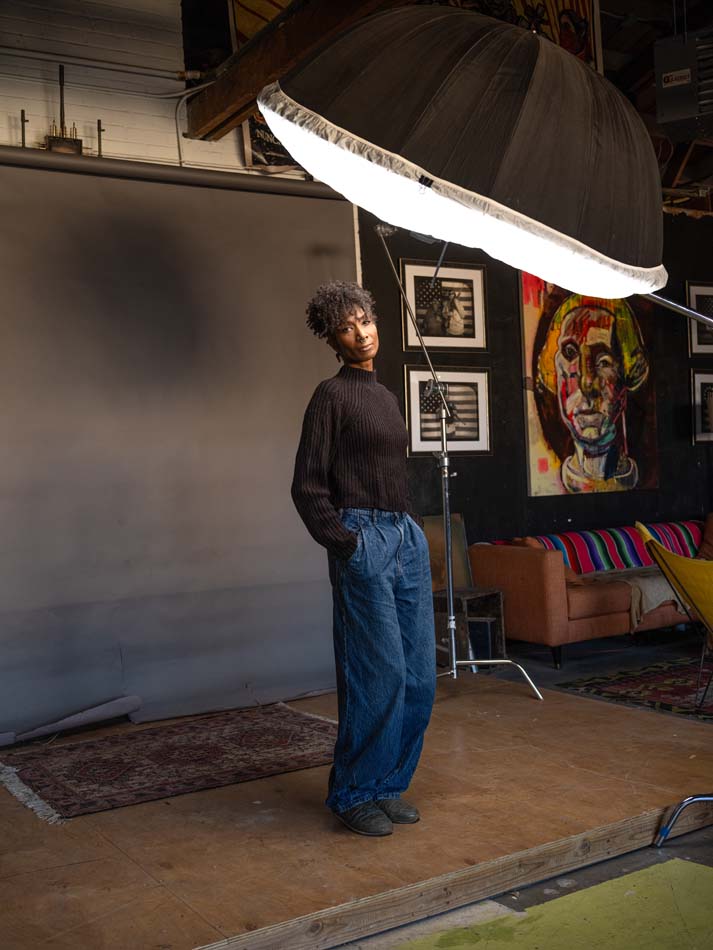
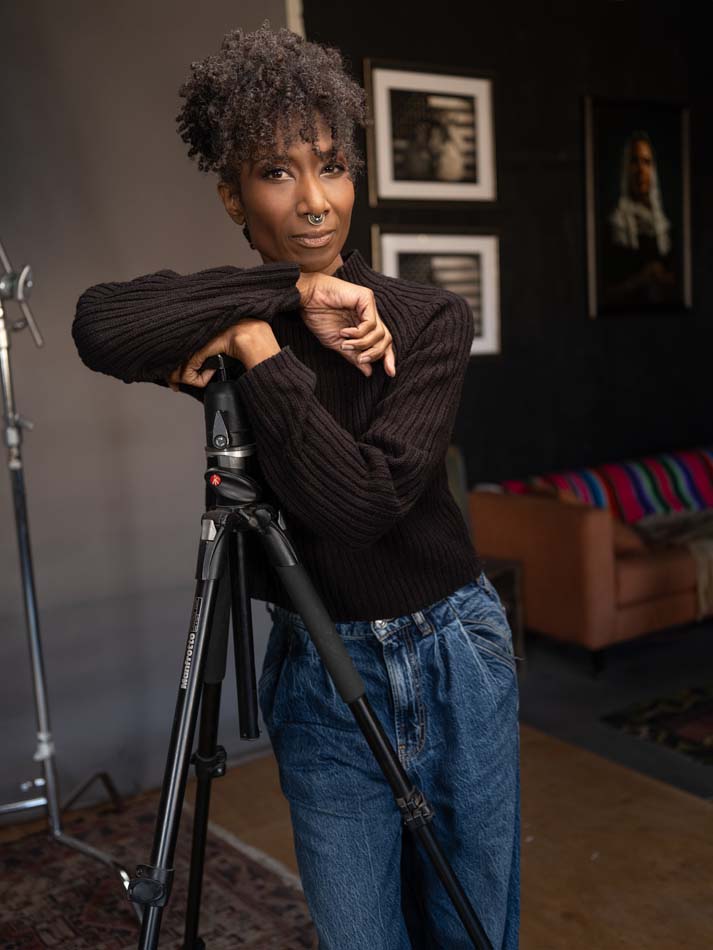
Working in her Tucson, Arizona studio, artist Alanna Airitam counters cultural erasure with a photographic series highlighting the Chosen Few, the nation’s first racially integrated outlaw motorcycle club.
In 2023, the Hells Angels in San Diego made headlines after several members were indicted for a brutal, racially motivated attack on three young Black men.
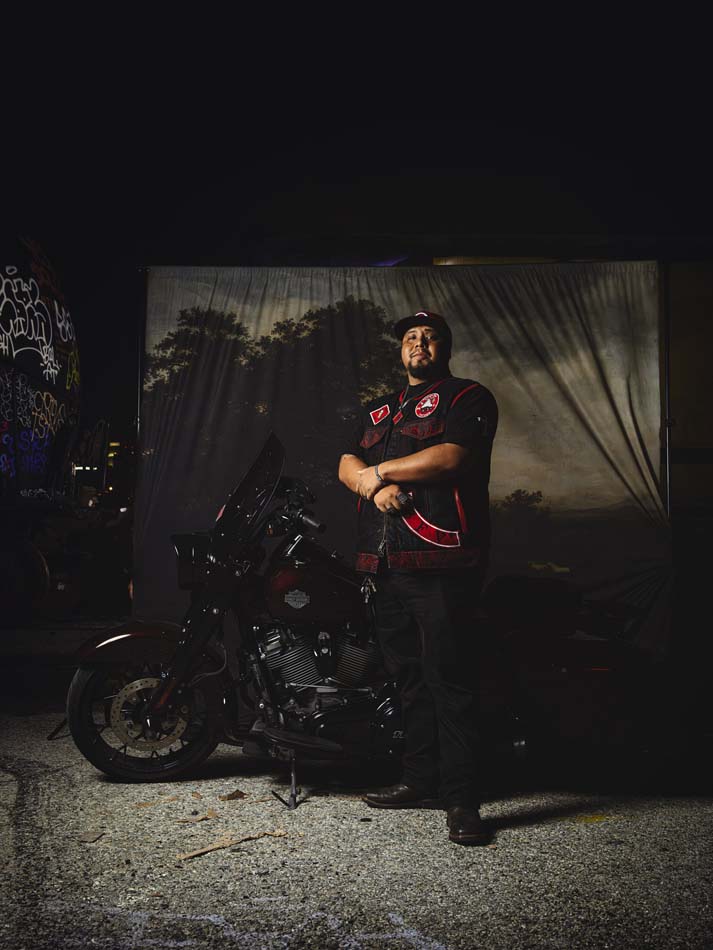
That same year, an artist who’d recently moved from San Diego to Tucson launched a portrait series that draws viewers into the elusive world of outlaw motorcycle clubs—but with a decidedly more diverse cast.
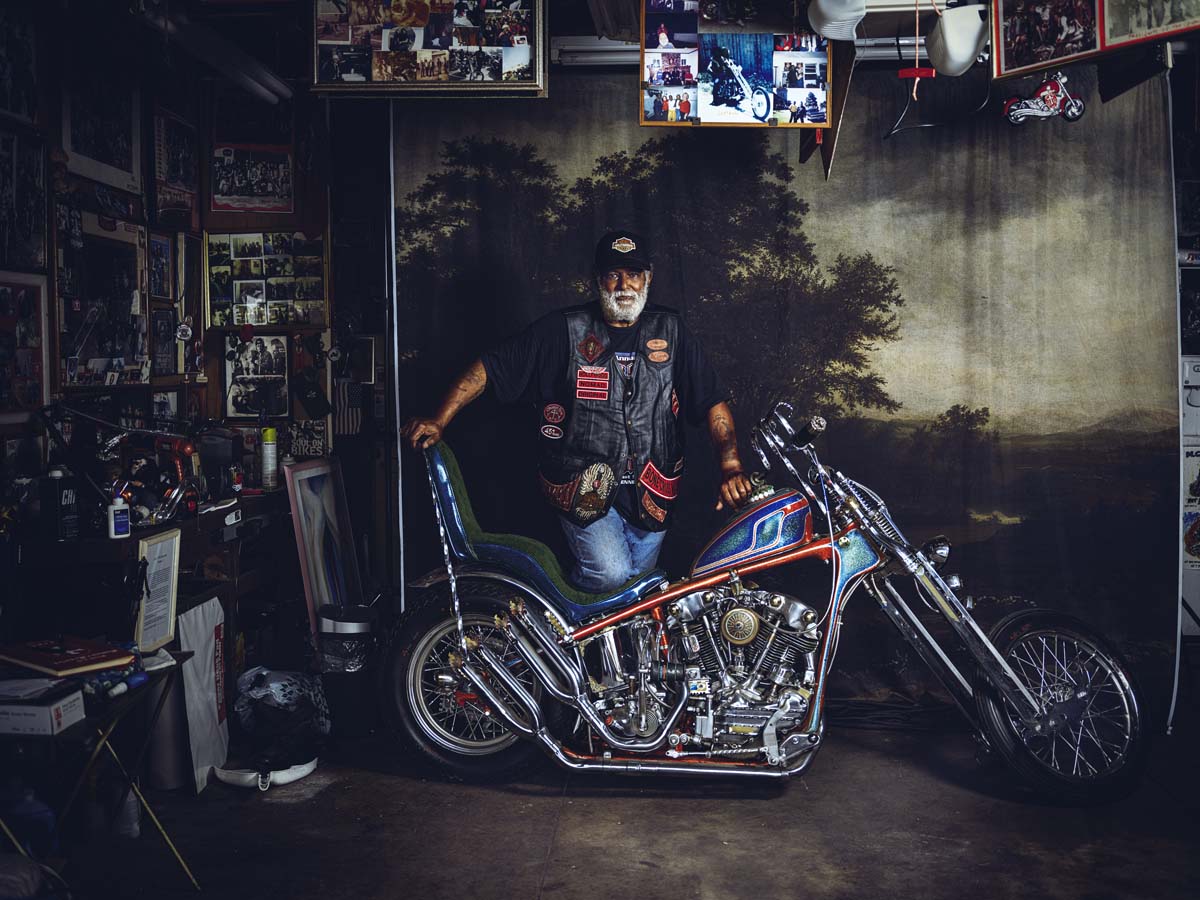
Alanna Airitam trained her eye on the Chosen Few Motorcycle Club, which is renowned for becoming the first integrated club around 1960, when its Black members opened their relatively new group to riders of other races.
So far, Airitam has photographed members in Arizona, California, and Nevada, creating the ongoing series Black Diamonds, which has been featured in several exhibitions in and beyond the Southwest.
Down the road, she plans to photograph bikers in the Atlanta-based Outcast and Oakland-based East Bay Dragons clubs, as well.
“This work was born out of a conversation I was having with Wayne,” she says, referring to her partner and fellow artist Wayne Martin Belger. “When we met he was part of a motorcycle club of all white men, and it just occurred to me that no one in the group was Black,” she recalls.
So began Airitam’s foray into the histories of Black bikers, and her efforts to bring their experiences to light.
“My practice is deeply embedded in stories of erasure and stories that go missing,” she says. “I’m trying to keep them intact for the next generation.”
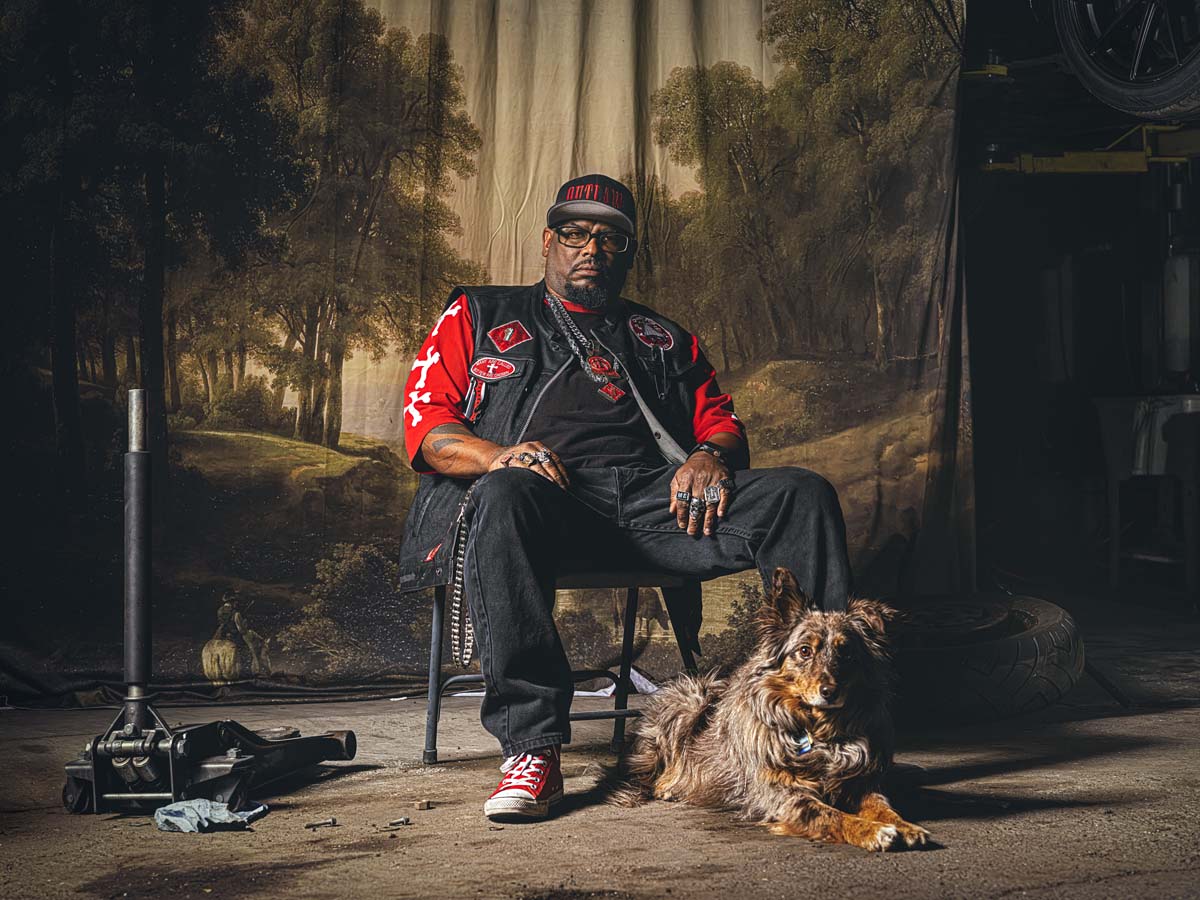
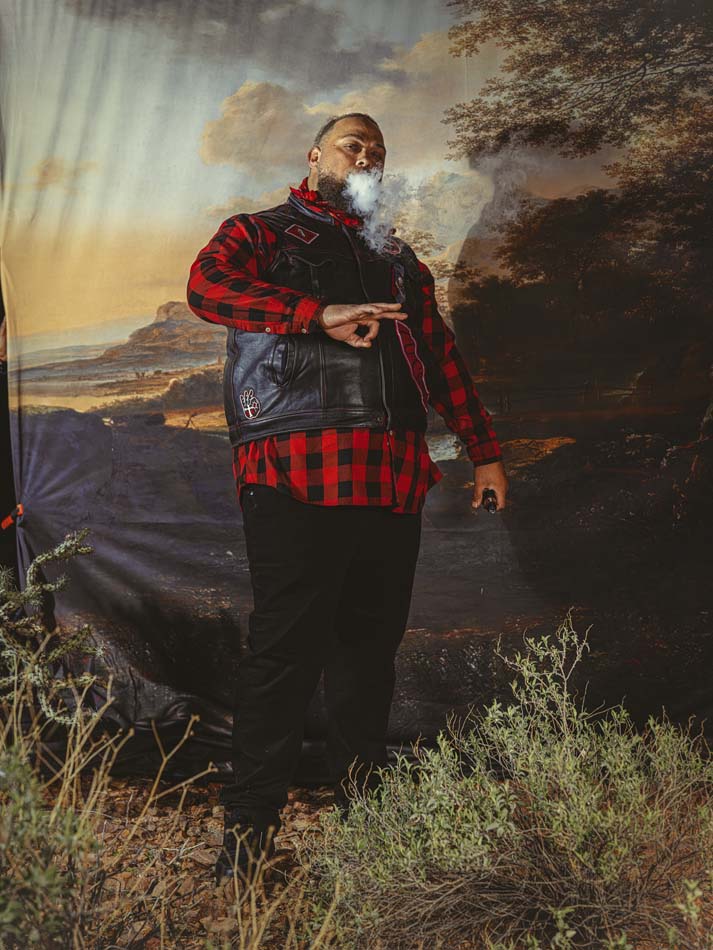
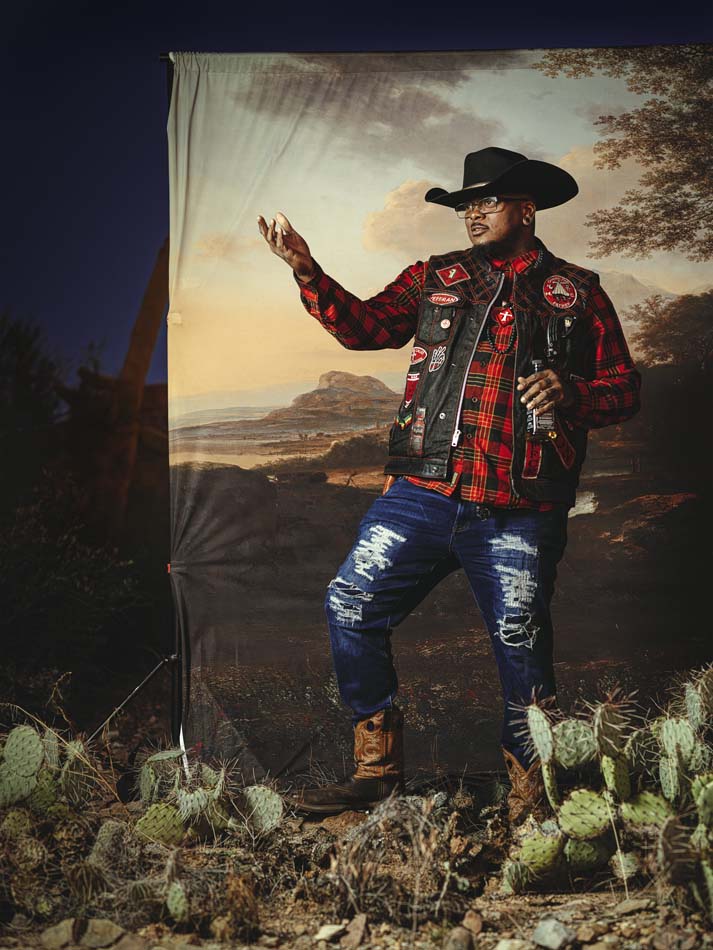
She’s photographed Chosen Few members in myriad settings, from the garages where they work on their bikes to the Sonoran Desert.
Often, they pose against backgrounds reminiscent of the Hudson River School and its vast, idyllic landscapes, wearing motorcycle vests embellished with Chosen Few regalia.
References to art history appear as a through line for Airitam, whose own memories of not seeing Black subjects on museum walls inspired her to leave a successful advertising career to become a full-time artist at forty-seven.
Her first body of work, the 2017 series The Golden Age, features portraits that speak to both 17th-century Dutch Renaissance paintings and the Harlem Renaissance.
In Black Diamonds, she’s countering a 19th-century movement dominated by white men whose paintings romanticized notions of nationalism and land appropriation.
“The backdrops feel very Manifest Destiny,” Airitam explains, “raising the question of who gets to have freedom and experience that ideal version of America.”
Often, what holds these façades in place in the photographs—clamps or people—are at least partially visible. “I’m showing that this freedom isn’t as available to them as it is to others.”
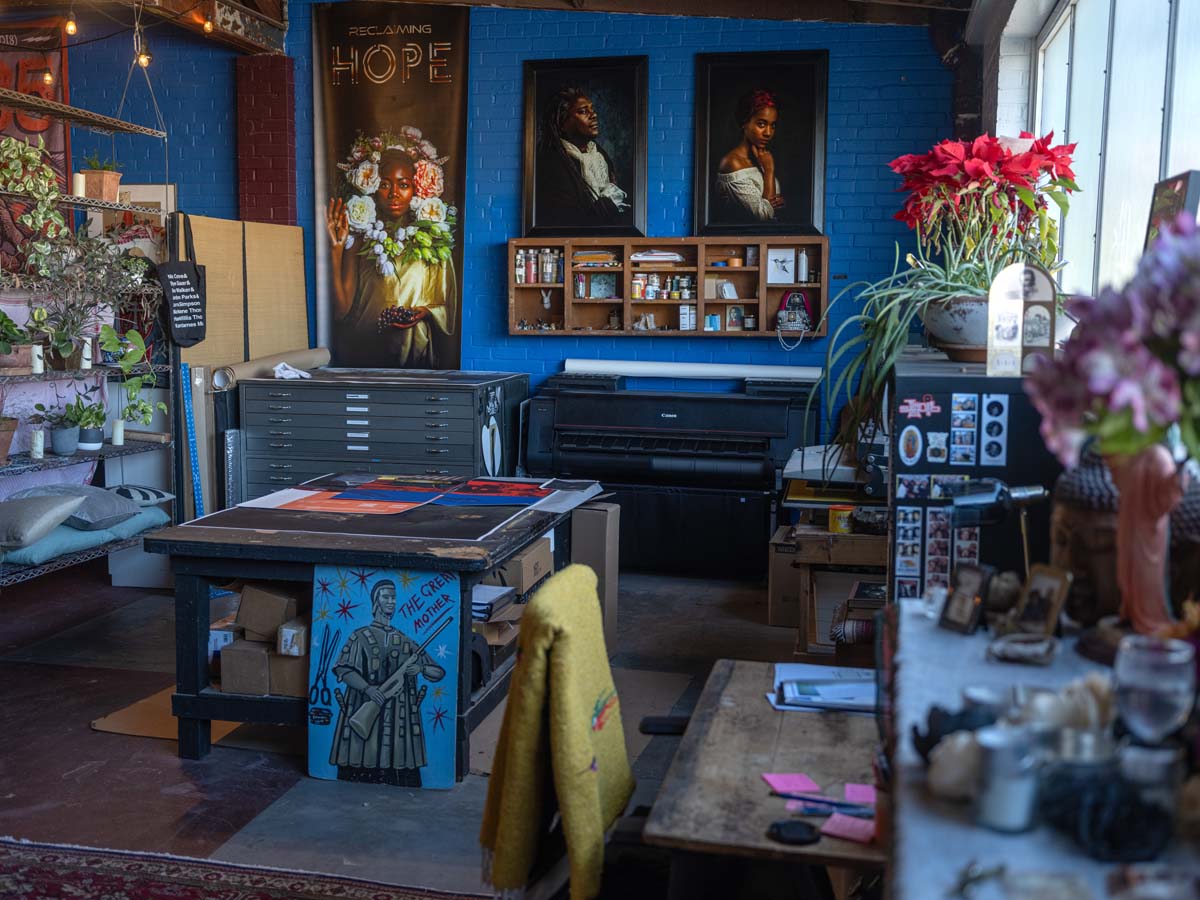
Photographs from the series hang throughout her expansive studio, which she shares with Belger, located inside a boxy purple building that served as a diaper washing factory during the 1930s and ’40s.
The artists toured me through their live-work space one cloudy afternoon in December as Oakland, a sweet-tempered Australian Shepherd mix who’s been known to quietly insert himself into Airitam’s portraits (including Biggs, Chosen Few Phoenix shot in 2024), tagged along.
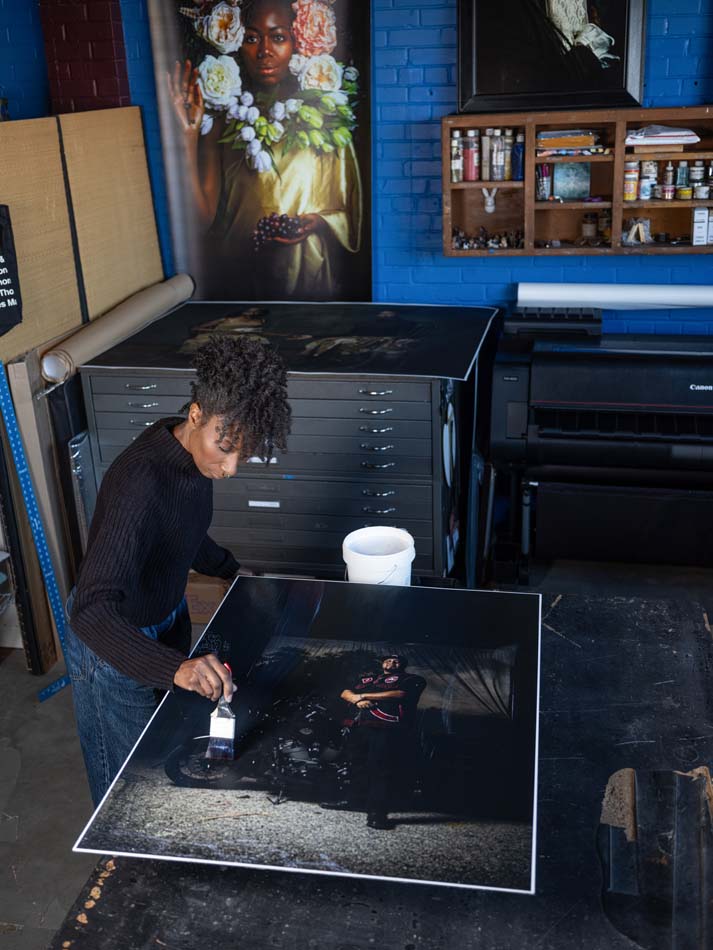
After exploring the darkroom, entered via revolving door, and the machinist workshop where the artists build the metal frames for Black Diamonds, we gathered around a large work table to discuss the series.
As Airitam laid out Chosen Few ephemera, from patches to vest remnants, she spoke of her respect for the club’s camaraderie and Civil Rights–era activism.
“Being part of that subculture as an outsider has been fascinating,” reflects Airitam. “The club operates very differently than what I expected. Obviously, there’s a lot of machismo, but they have so much loving support for each other.”
Airitam’s own circle of support includes fellow artists in the Southwest Black Arts Collective she cofounded in Tucson in 2021, which works to elevate the voices of BIPOC artists.
Inside the studio, Airitam pays homage to her ancestors with an altar set atop bookshelves, where she burns incense, places fresh flowers, displays small photographs, and keeps cherished objects including a 1987 lizard skin Rolleiflex camera.
In her mind’s eye, Airitam has assembled a council of creative people, from the musician Prince to the author bell hooks, as well as contemporaries who’ve inspired her. “They’re people who are ambitious, fearless with their creativity, and generous,” she says. “I can close my eyes and imagine them whenever I need help with something.”
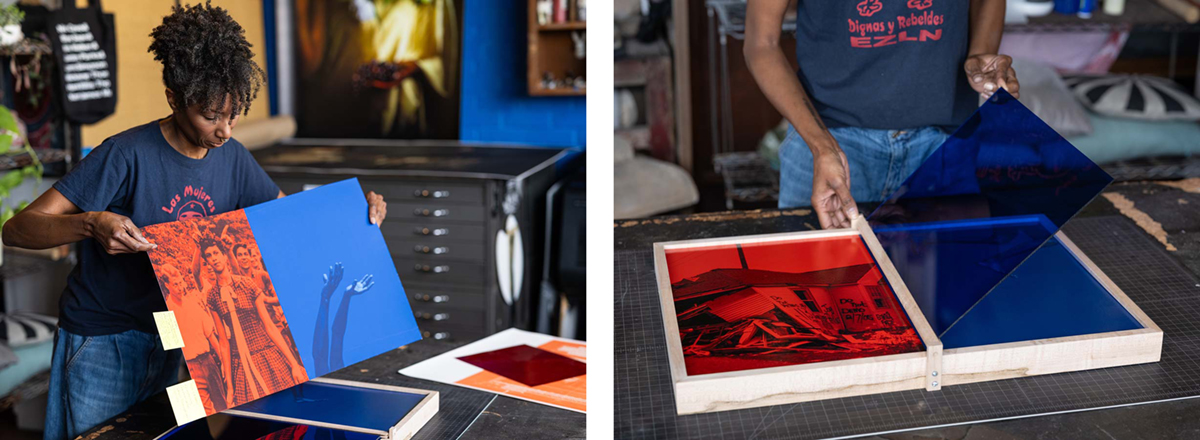
Lately she’s been working on prototypes for a new series, Color Theory, created with red and blue plexiglass panels that people flip from side to side to reveal or obscure imagery related to historical erasure or reimagined futures. The approach is designed to “create a forced empathy” and “speak to the viewer’s complicity.”
Eventually, Airitam hopes to create a large-scale version with industrial-style cranks people will use to move the panels and shift their perceptions. That’s when having a resource-laden studio filled with tools and equipment comes in handy.
Even so, Airitam dreams of finding a separate, smaller studio space. “I love having all this, but I miss part of the process of figuring things out and I wonder how having all these things at my fingertips takes away from my process.”
For The Golden Age, for example, Airitam recalls deciding to hand-paint varnish over her photographic portraits to give the appearance of 17th-century oil paintings.
“I love the brokenness of some of the stuff I had to use because it added character to my work and forced me to think outside the box,” she says. “I don’t want it to be perfect; I want it to have a veneer of struggle because that’s my life.”