Wagon tracks of the doomed Donner Party, detritus of present-day migration, football stadiums as future ruins—Sean J. Patrick Carney traces archeological strategies invoking the Southwest’s complicated past, present, and futures.
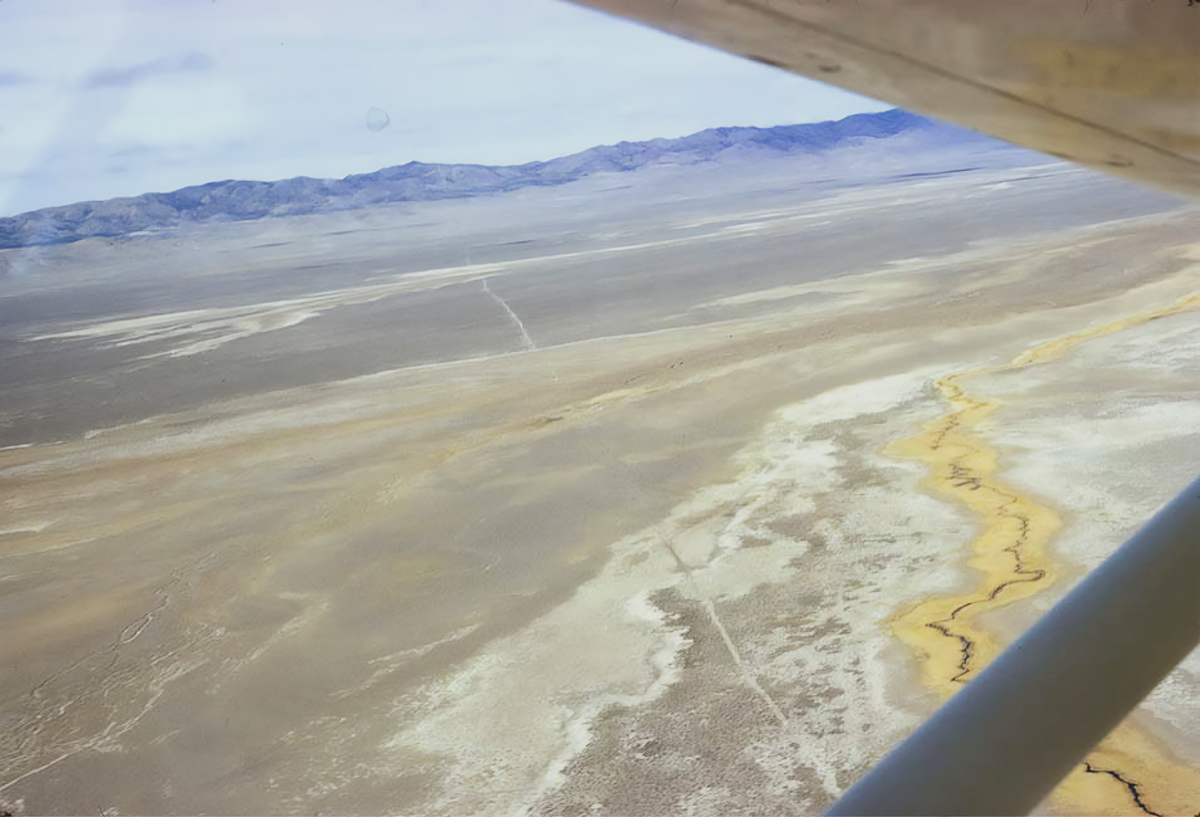
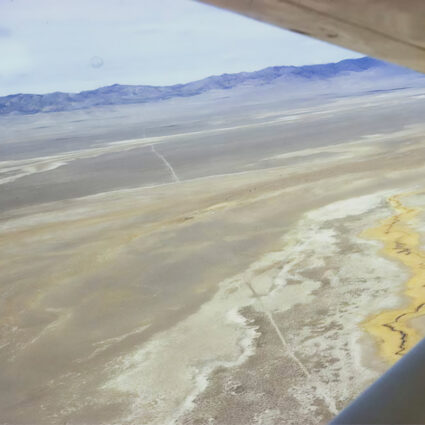
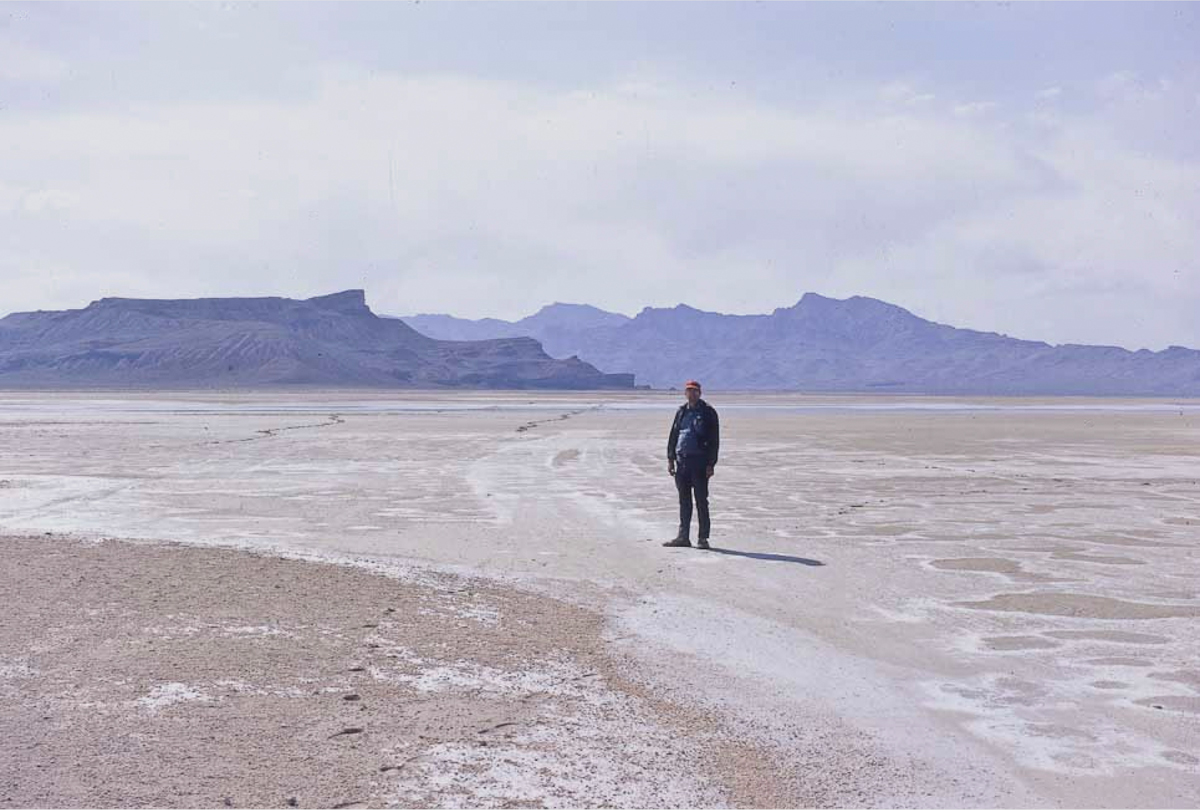
ROY D. TEA was working for the Utah Department of Transportation when he happened across the Donner Party’s wagon tracks.
In the early 1960s, Tea—a devout Mormon, engineer with geology training, and photographer—was surveying routes west of Salt Lake City for what would become Interstate 80. Northwestern Utah’s high desert is capricious terrain. Winds howl and rattle vehicles. Near the Bonneville Salt Flats, they churn the playa into erosive white-outs.
How, then, does a century-old, improvised “road” survive long enough for a state employee to recognize it?
The answer lies a few inches below the crust. Millennia ago, the basin held Lake Bonneville, whose remnants include the Great Salt Lake and a brackish water table. The ground’s firm appearance is misleading, something off-roaders learn when tires sink into saline mud. In 1846, the Donner Party encountered this deception on a devastating scale. Lured by The Emigrants’ Guide to Oregon and California, a shortcut handbook published in 1845 by Lansford Hastings, they left the established route, clawed their way over the Wasatch, then inched across the Great Salt Lake Desert as the surface buckled, bogging down wagons. To keep moving, they abandoned wheels, axles, and even oxen.
Early snowstorms in the Sierra Nevada compounded the party’s delay. Trapped at 6,000 feet elevation, nearly half died of cold and starvation. Rescue parties in spring 1847 found a grisly scene: some survivors had eaten the dead.
Michael Wallis, in The Best Land Under Heaven: The Donner Party in the Age of Manifest Destiny (2017), frames the catastrophe as a story of entitlement as much as logistics. The emigrants felt empowered by Manifest Destiny, the prosperity theology casting American expansion as divine and inevitable. One year later, Brigham Young and his believers climbed the same pass over the Wasatch. Reaching the valley, the Mormon prophet declared,“This is the place.” The Church of Jesus Christ of Latter-day Saints’s founding mythology smooths over the fact that thousands of Shoshone, Goshute, Ute, and other Indigenous people already lived in their would-be Zion.
That sense of Great Basin entitlement continued. Gold-seekers followed, then railroads and telegraph lines. For the better part of a century, the U.S. military pummeled the Great Salt Lake Desert with ordnance across the Utah Test and Training Range. More recently, rare mineral extractors have carved new grids and access roads. To certain Americans, incursion is valorized and romanticized—an identity politics of imperialism.
After the I-80 survey ended, Tea continued mapping Hastings Cutoff. Over three decades, he returned with a camera, hiking ridges, off-roading the flats, even circling the desert by plane, searching for preserved tracks, ox bones, and discarded objects. He published pamphlets, gave talks, and launched an early—and still accessible—online exhibition pairing photographs with his cartography. He passed in 2017, aged eighty-nine. Today’s accepted Hastings Cutoff route traces back to Tea’s persistent fieldwork.
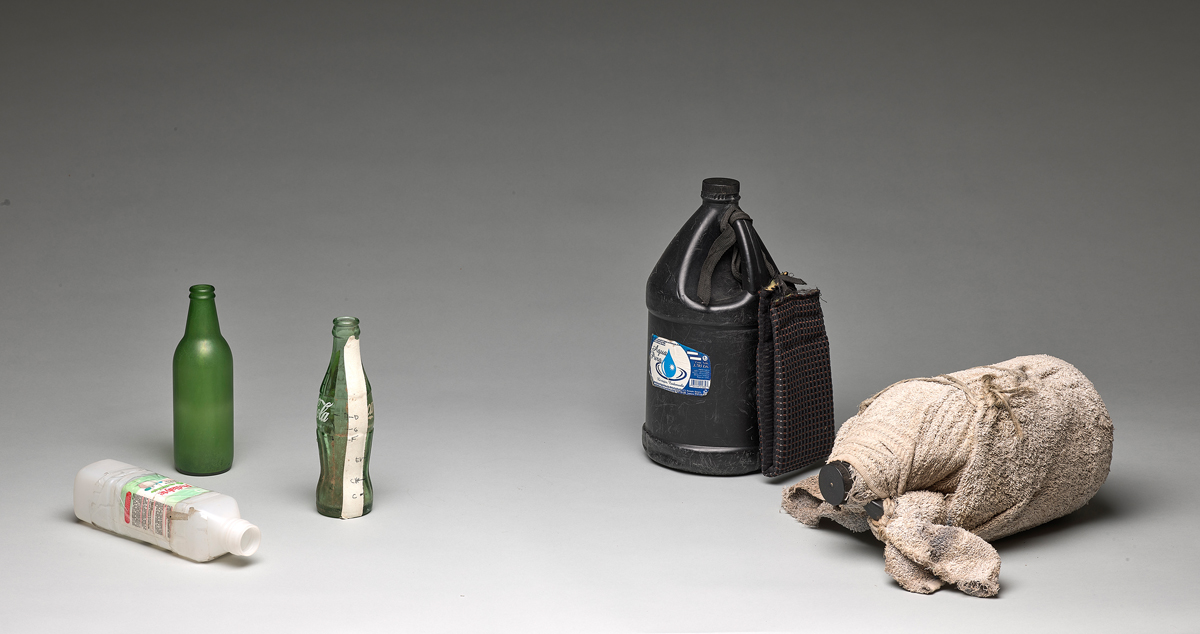
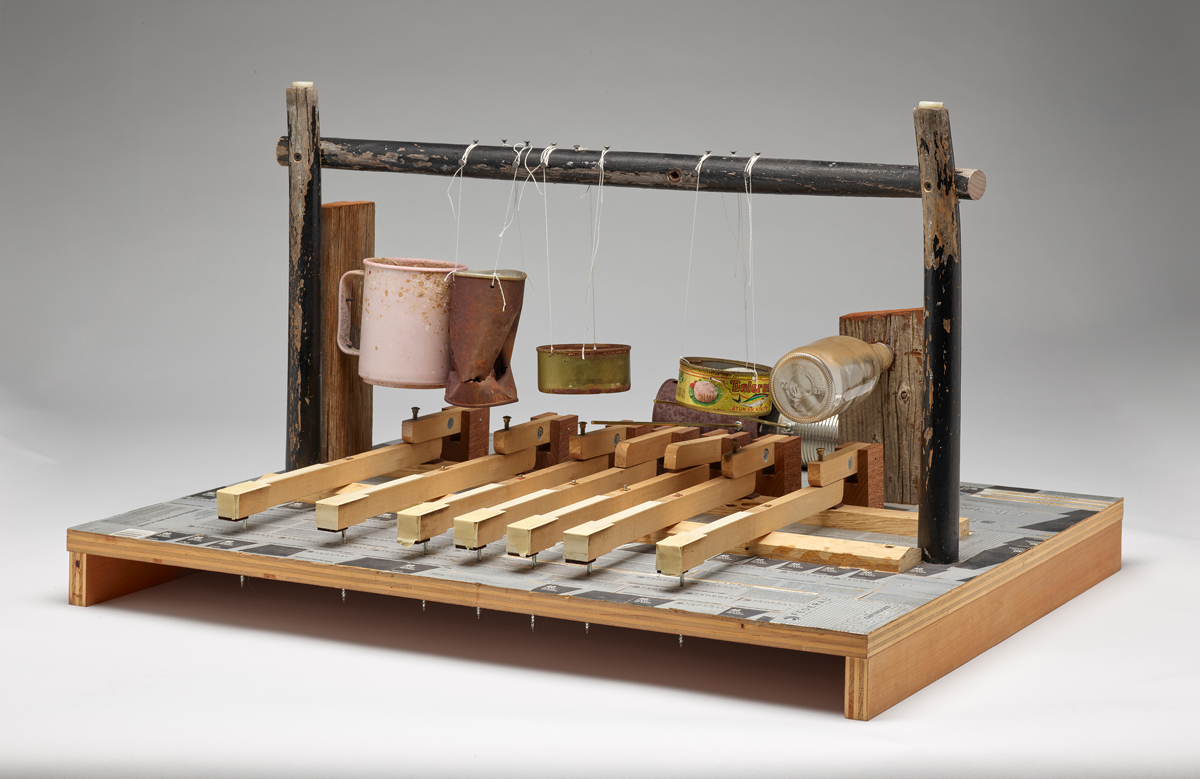
THE YEAR BEFORE TEA DIED, just an hour east of the salt flats, Mexican artist and composer Guillermo Galindo brought the detritus of contemporary overland migration to life. In 2016 at the Utah Museum of Fine Arts in Salt Lake City, Galindo performed Sonic Borders II, an hour-long sound ritual using instruments built from items discarded along trails that cross the U.S.-Mexico border.
Galindo had been sonically activating borderland debris for years. In 2011, photographer Richard Misrach saw him perform in San Francisco and approached him. Misrach had been documenting the 2,000-mile militarized border since 2004 as part of his Desert Cantos series, collecting blankets, shoes, and heat-warped water jugs shed by people crossing on foot. Soon they were collaborating on a touring gallery project, Border Cantos | Sonic Border (2016), pairing Misrach’s photographs with Galindo’s instruments and a multichannel score.
In a January video call, Galindo described a pre-Columbian understanding of sound and matter in which an instrument is inseparable from the material that forms it and the life of that material.
“Instruments are not ‘musical’ instruments. […] The object is an entity that is not meant to produce beautiful sounds, but to connect you.”
Classical instruments are engineered toward fixed pitches; Galindo’s devices amplify inherent resonances shaped by materiality, heat, and wear. A water bottle dropped in a neighborhood trash can is not the same as one abandoned in a life-or-death desert crossing. He resists the“recycled” sculpture label, insisting his instruments are functional, letting immigration’s “invisible victims” speak through what they could no longer carry.
“These objects belong to people—people that were probably incarcerated, or who maybe dead. These objects are charged.”
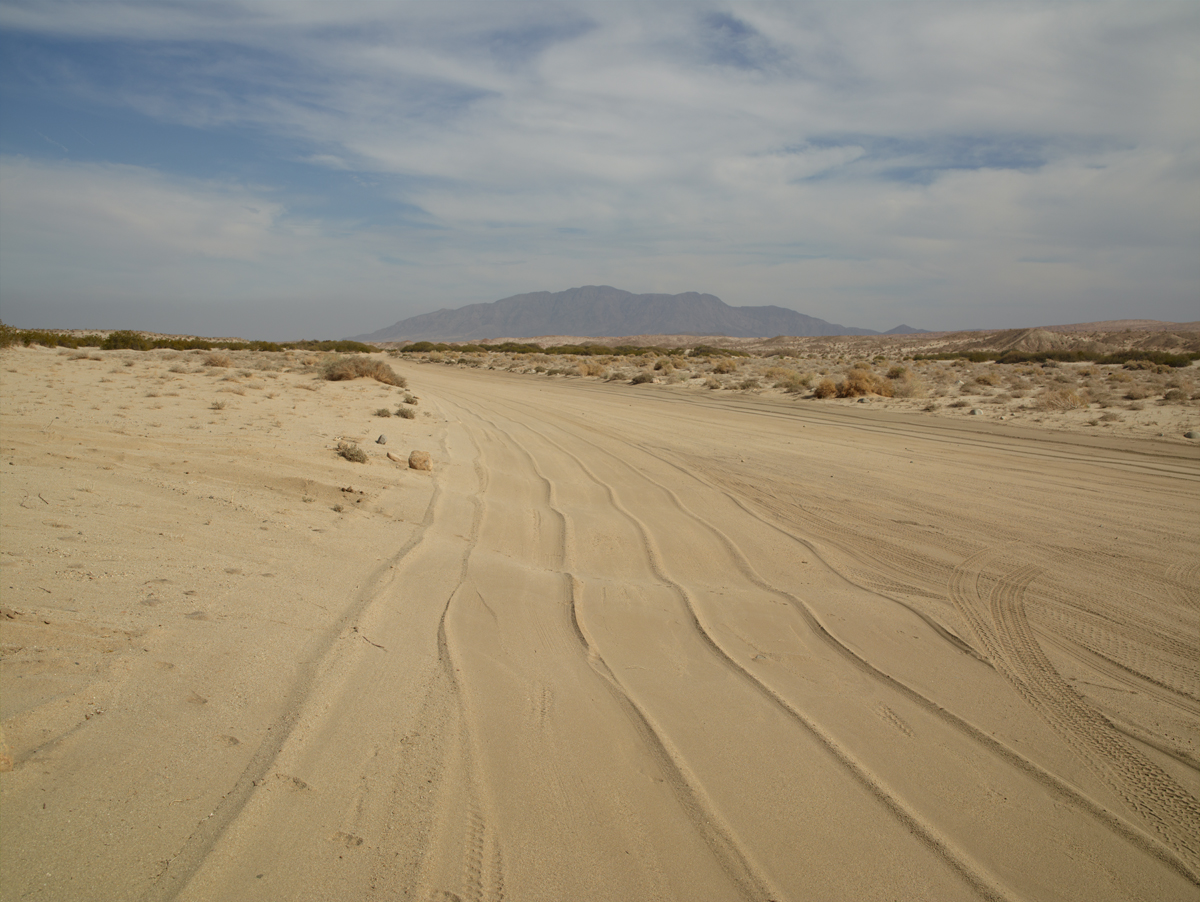
Installed, Sonic Border includes musical objects combining discarded cups, journal pages, and family photos with border-enforcement materials—“objects of aggression”—such as spent shells, fence fragments, and drag tires used to groom roads so new footprints can be tracked. In U.S. political discourse, the endurance required to cross these deserts is rarely framed as brave or industrious; it is cast as criminality by Republicans and Democrats alike. Galindo’s instruments counter that flattening, making audible the individual humanity and anonymous cruelties that define our so-called border crisis.
When Galindo first saw Misrach’s Tire drag tracks, Near Calexico, California (2014), it recalled musical staff lines in motion. He began translating photographic information—and later data sets, including Colibrí Center coordinates of recovered bodies—into spiraling scores where sound can arrive from any direction.
“The piece is based on the Tōnalpōhualli, an Aztec divination calendar that follows the cycles of Venus,” Galindo explains.“It is divided into twenty trecenas.”
Each trecena has thirteen days, creating a 260-day calendar that aligns with the Xiuhpohualli solar calendar once every fifty-two years. A person’s destiny and character are shaped by their day-sign—their tōnal. Galindo leans into the English homonym: tonal. Running 260 minutes, the work swells into ensemble density, then unwinds in mirrored reprise. Visitors drift through separated channels, mapping their own routes through an opus offering harmonic traces of individual migrants and haunting questions about their fates.
Galindo’s scores resemble cartographic drawings and he has printed them onto discarded flags used to mark humanitarian water sites. In 2018, No Más Muertes reported that, for years, U.S. Border Patrol agents destroyed water, food, and aid left for migrants. Militias have waged similarly antagonistic vandalism. The repurposed flags also echo Aztec pantli—territorial banners—a reminder that these deserts carried many sovereignties before being appropriated, renamed, and policed.
Border policy, infrastructure, and vigilantism increasingly reroute people away from ports of entry into lethal corridors. Luis Alberto Urrea’s The Devil’s Highway (2004) recounts the “Wellton 26,” Mexican men seeking work who attempted Arizona’s hellish route. Fourteen died after becoming lost in extreme heat. Such journeys were shaped in part by NAFTA, which destabilized Mexican agriculture and expanded cross-border manufacturing, pushing labor north. Another industry emerged—coyotes—charging to guide people along routes mapped to evade enforcement. In the Wellton case, the guide, twenty-year-old Jesús López-Ramos, was sentenced to sixteen years. The asymmetry with the Donner Party’s 19th-century antecedent is hard to miss: Lansford Hastings, whose bravado helped set their catastrophe in motion, was never punished. He later served the Confederacy, then absconded to Brazil and published a new guide recruiting fellow Confederado exiles.
The Wellton 26 entered the desert in May 2001—the 21st century—yet were left to navigate on foot, as if the interstate era never happened.
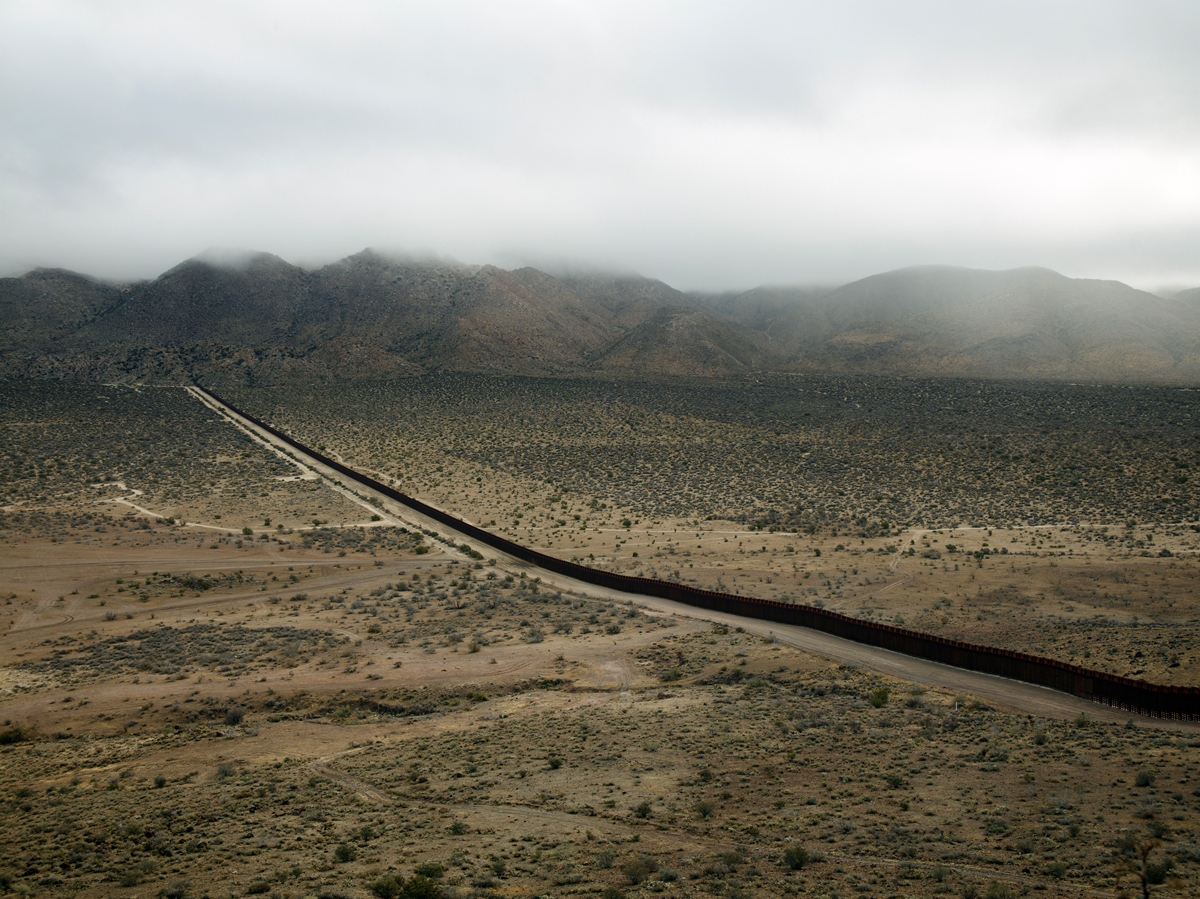
MILLENNIA FROM NOW, archeologists might unearth corroded sections of a border wall once dividing nations called the United States and Mexico. Hundreds of miles north, they might pull up slabs of Interstate 80, sealed in salt beside bomb casings, slurry-pond pumps, and rail steel. Archeology is, at its core, the study of human detritus.
In early spring 2026, Francesca Lally imagined Texas as future ruin in Half Time, her solo exhibition at the University of Texas at Austin’s Visual Arts Center. As UT’s St. Elmo Arts Residency Fellow, she had split her time between the studio and Lone Star road trips. From the Gulf Shore to Big Bend, down to the Valley and up to the Panhandle, two mega structures kept recurring: football stadiums and H-E-B grocery stores.
Could such leviathans outlast the empire that built them?
Ruins have preoccupied Lally for years. She describes her practice as “toying with experimental archeology.” During a year in Rome, she walked everywhere and obsessed over the Baths of Caracalla, one of ancient Rome’s vast third-century public bath complexes, now a weathered remnant.
“As the empire crumbled,” Lally tells me, “this public resource for health, culture, and socializing crumbled too. When you visit ruins, you can identify the priorities a society had.”
Arriving at UT last summer, Lally fixated on the 100,000-seat Darrell K Royal-Texas Memorial Stadium, a concrete colosseum dwarfing the art building across the street. The lopsidedness is fiscal, too. Last year, Longhorn football coach Steve Sarkisian earned $10.8 million, over twice what the university paid the entire staff and faculty of the Department of Art and Art History combined.
In the twenty-two-minute, two-channel video Bound (After Maria Lai) (2026), Lally, dressed in a suit, measured the stadium’s perimeter with light-blue cotton yarn. Yards of the same thread wrapped the VAC’s interior. Bound nods to Lai’s early 1980s performance reenacting a Sardinian legend about a girl escaping a rockslide by following a blue ribbon. Texas, with its fantasies about the Alamo, grit, and secession, is no stranger to mythology.
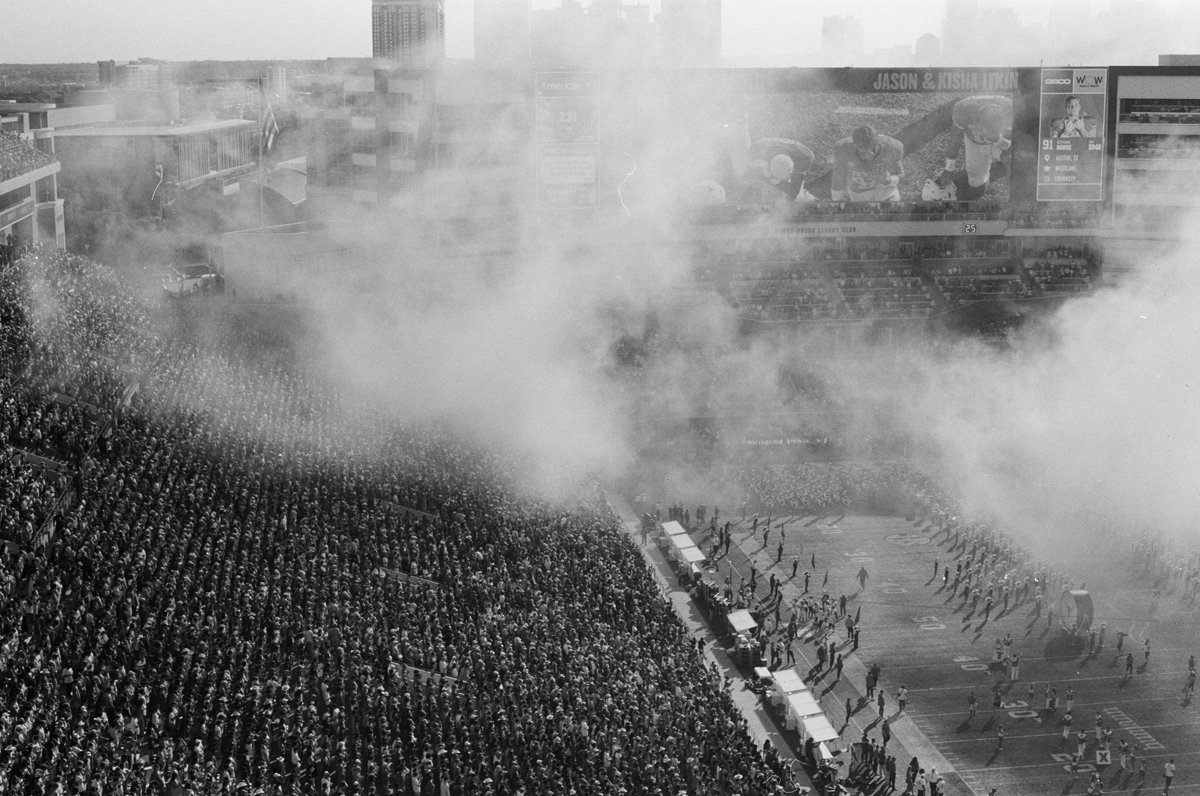
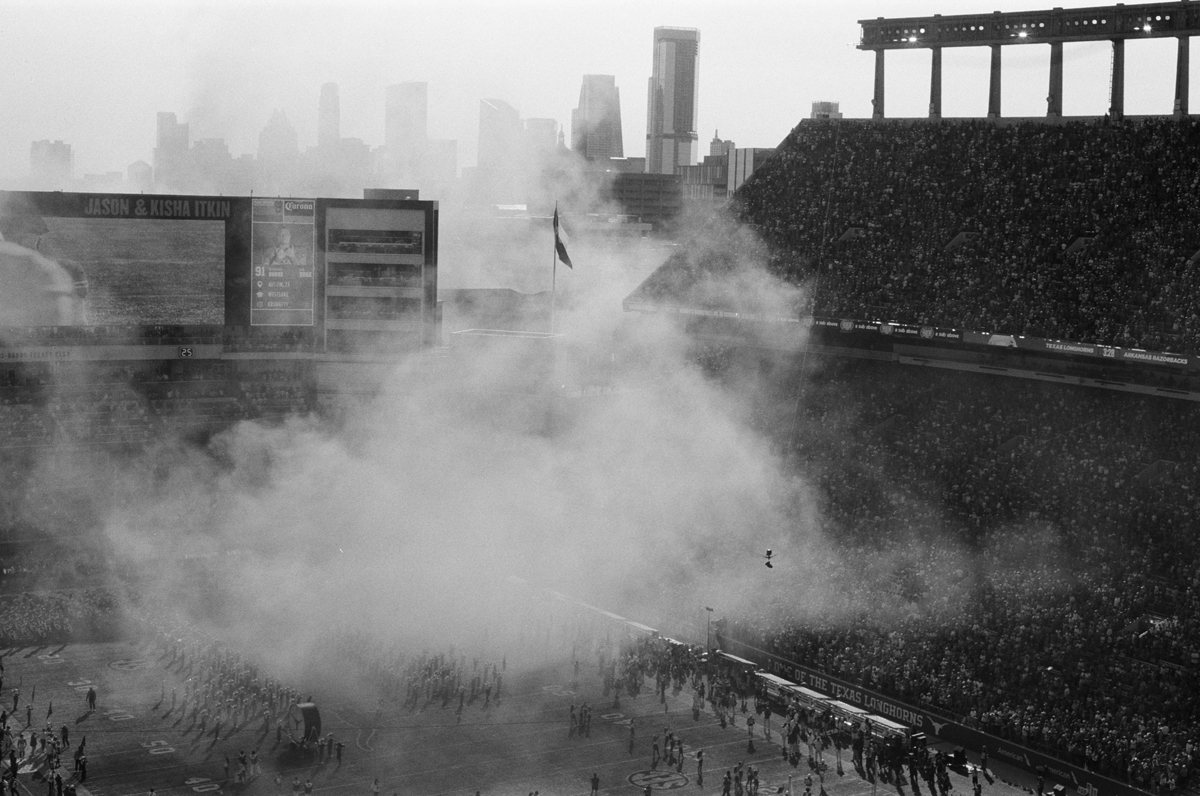
The stadium reappeared throughout Half Time: as a silhouette cut from a found photo; bathed in cannon smoke and bursting with fans, players, and the Longhorn Band in Lally’s black-and-white game-day documentation; and as a short Super-8 pregame loop. Lally also built a room-sized camera obscura that projected the stadium across the street in real time, upside-down. It was a potentially blasphemous image, tantamount to inverting the Texas flag. A second pinhole projected the road, flipped atop the stadium’s image, as if the structure were already underground, awaiting excavation.
Elsewhere, small oil-and-gouache paintings offered aerial views of regional stadiums set into grids of roads and agriculture.
Another painting, Crowd Control I (2026), reduced the scene to a spiral, evoking stadium layouts, Roman mosaics, and non-linear timelines. In a lenticular triptych, Enclosed Green Field of the Mind (2026), Lally collapsed histories, weaving wagon-train reenactments, football crowds, and ruins into flickering archives.
The smaller the Texas town, the larger football looms. As midcentury industries have thinned out—or shifted just over the border—Friday nights become a civic commons, a place to witness local wins. On the gridiron, valorized violences of conquest can be cosplayed, yard-by-yard, as young men concuss themselves to advance a line of scrimmage. And in parts of Texas, just miles from the lights, people move at night across waterless terrain, in search of opportunity and sanctuary.
A small risograph pamphlet, Field Notes: Expedition at Austin, Vol. 1, expands Half Time by millennia. Dated January 23, 4126—two thousand years after opening night—it is credited to Lally’s alter ego, Dr. Frank Stone.
“Archeologists are often studying the development of a civilization,” Lally says, walking me through the VAC before the opening. “Dr. Stone is studying the fall.”
Field Notes offers a 42nd-century archeological interpretation of Texas history, through the excavation of “Texas Memorial Stadium,” and the mapping of an additional “250 large arenas, as well as traces of more than 1,500 smaller stadiums and fields.” Football, Stone suggests, was entertainment, cultural fulfillment, and military preparation. Plastic grocery bags become evidence of “Heb,” a supermarket-turned-common-wealth that rose after the New Tejas Republic fell, which had itself emerged following the earlier collapse of the American Empire.
Texans will get the joke. In a state with a proudly libertarian self-image, where disasters knock out the power grid and overwhelm government emergency systems, H-E-B fills the gap. After Hurricane Harvey, the chain mobilized relief. During the 2021 freeze, it provided food, water, and heat. In the wake of the Uvalde shootings, Hill Country Floods, and 2025 federal shutdown, the company and its founding family stepped in with major relief donations.
With close to 400 stores in Texas—and dozens more in Mexico—H-E-B is the state’s largest private employer and an institution unto itself. The company’s economic foot-print is almost impossible to comprehend because it expands far beyond retail. H-E-B is also trucking, real estate, packaging, production, and environmental management. It is an integral subsidizer of the very agricultural industries that have, for decades, incentivized workers to cross the border.
The scale of abundance that H-E-B enables would have been unimaginable to 19th-century overland travelers.
As Half Time opened, all 254 Texas counties were under an emergency winter weather warning. At the reception, viewers discussed the odds of losing power and pipes freezing overnight—a jolt for Austinites accustomed to the reliability of H-E-B. Under the bridges of Interstate 35, some cinched tents and layered up. In the Chihuahuan desert to the south, people abandoned what they could not carry, clung to one another, and braced for the storm.