Through a tethered balloon camera, Anika Todd surveys Nevada’s intertwined histories of speed, surveillance, and war.
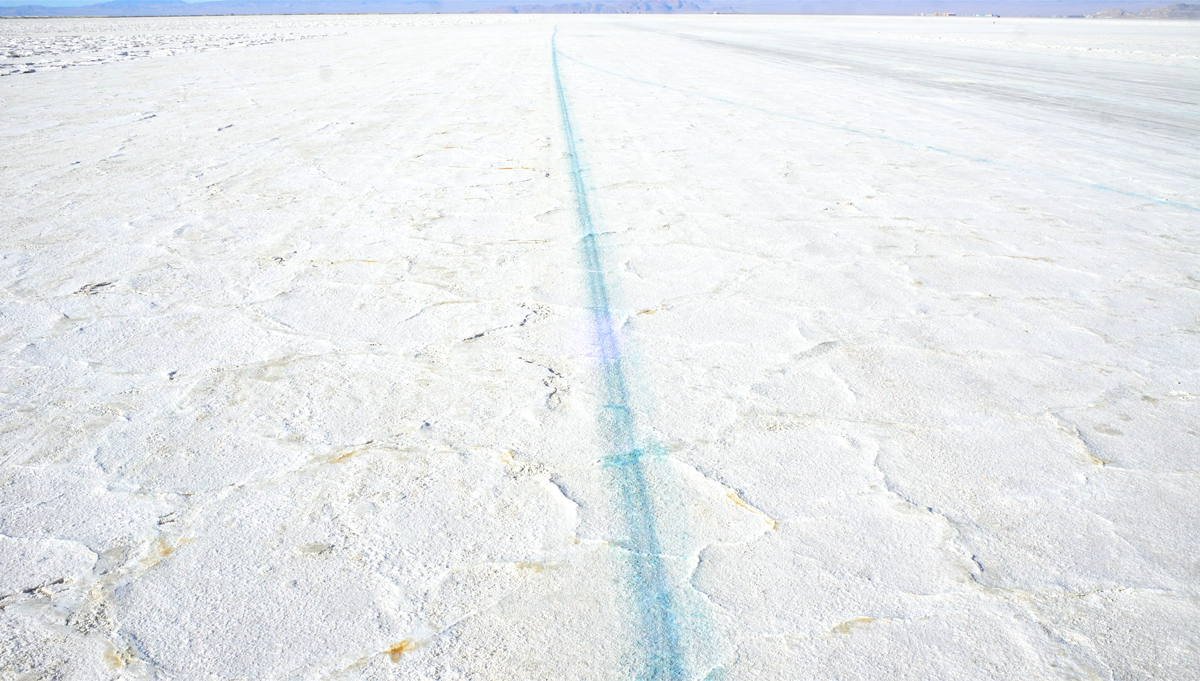
I’ve been thinking about the Bonneville Flats—and speed. Out here, the racetrack is a single blue line cutting through the white expanse. In 1964, Craig Breedlove traveled it at over 500 miles per hour, breaking the world record. His car, the Spirit of America, drew from aircraft technology, using thrust and lift to control friction and hover between earth and sky. But at that speed, the brakes couldn’t catch. Unable to stop, the car hit a rise, went airborne, and slammed into the saltbrine. When he crawled out—alive, drenched, grinning—he shouted, “What was my time?”
During the atomic project of the ’40s, this white expanse provided the backdrop for a different kind of hubris: the development of a top-secret viewing device that bombardiers were sworn to defend with their lives. The Norden bombsight was a mechanism meant to steady the sight of the ground below, converting a moving landscape into a controlled view. It anticipated error in every environmental variable: wind, gravity, the curvature of the earth. But even so, the bombs landed hundreds of feet off their mark. The error lived in the final seconds, in the bombardier’s body—the small lean into the viewer, the subtle shift as the man took a breath. At high velocity, human presence was amplified into dramatic error, compounding as the bomb hurtled to the ground.
True precision would require a kind of self-erasure—pulse slowed, breath subdued—until the bombardier moved as an extension of the device itself.
It’s a seductive fantasy: that a precisely designed mechanism could erase the human body and achieve control—of speed, of accuracy, of a comprehensive, all-knowing view from above.
I am reminded of Yves Klein’s Leap into the Void (1960)—that staged moment outside a Paris home where his fall was transformed into flight. The image was a trick, made by combining multiple exposures to hold Klein in the air, arms outstretched, the street steady beneath him. With his camera, Klein offered the same promise as the bombsight—that with the right frame, he could render the world orderly, weightless, perfected.
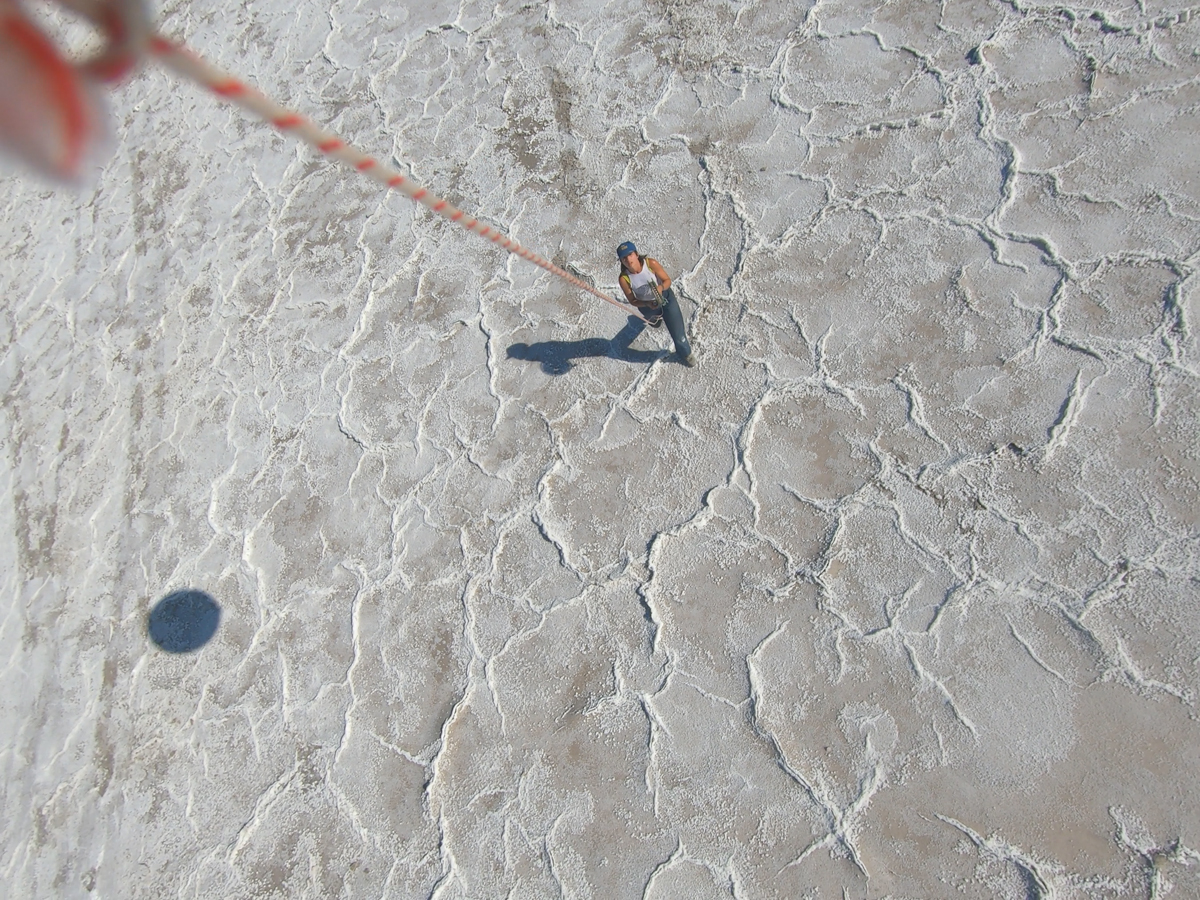
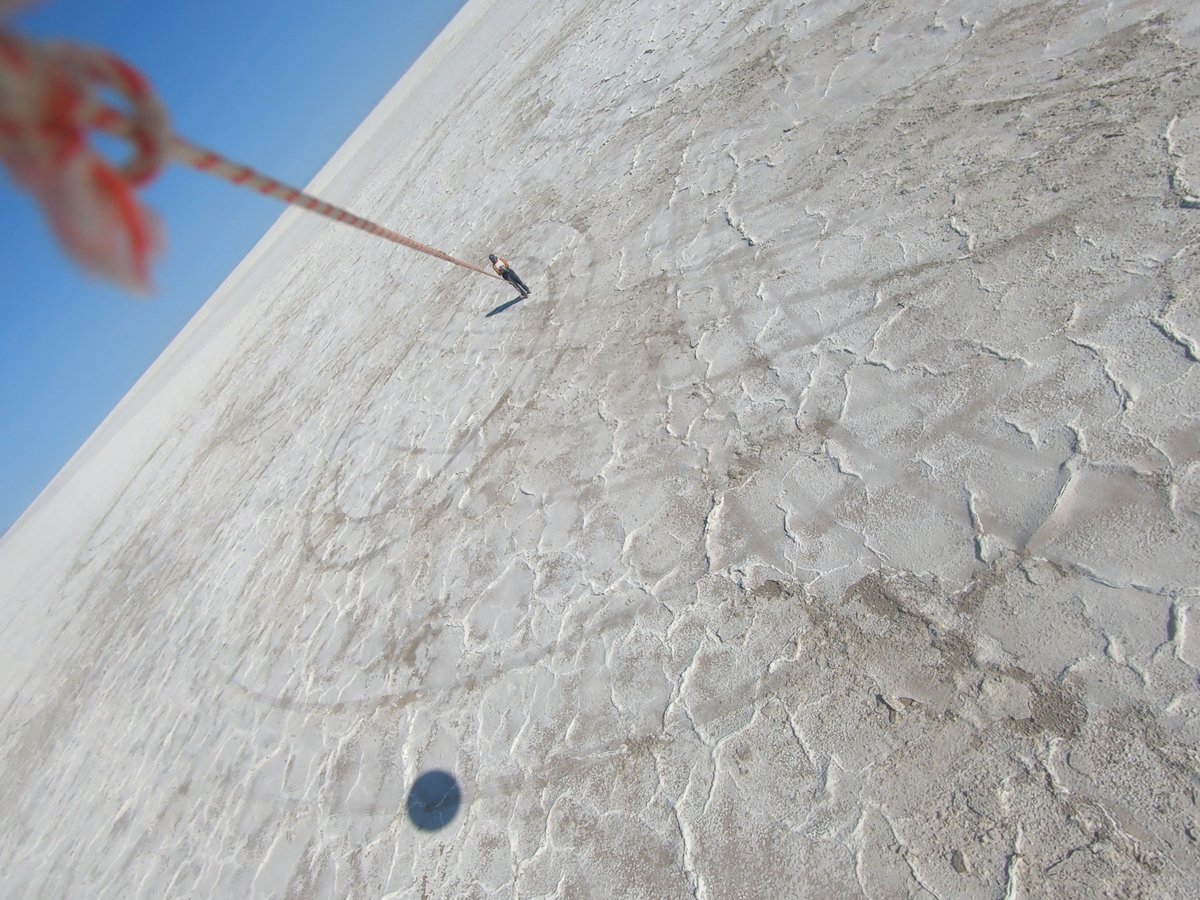
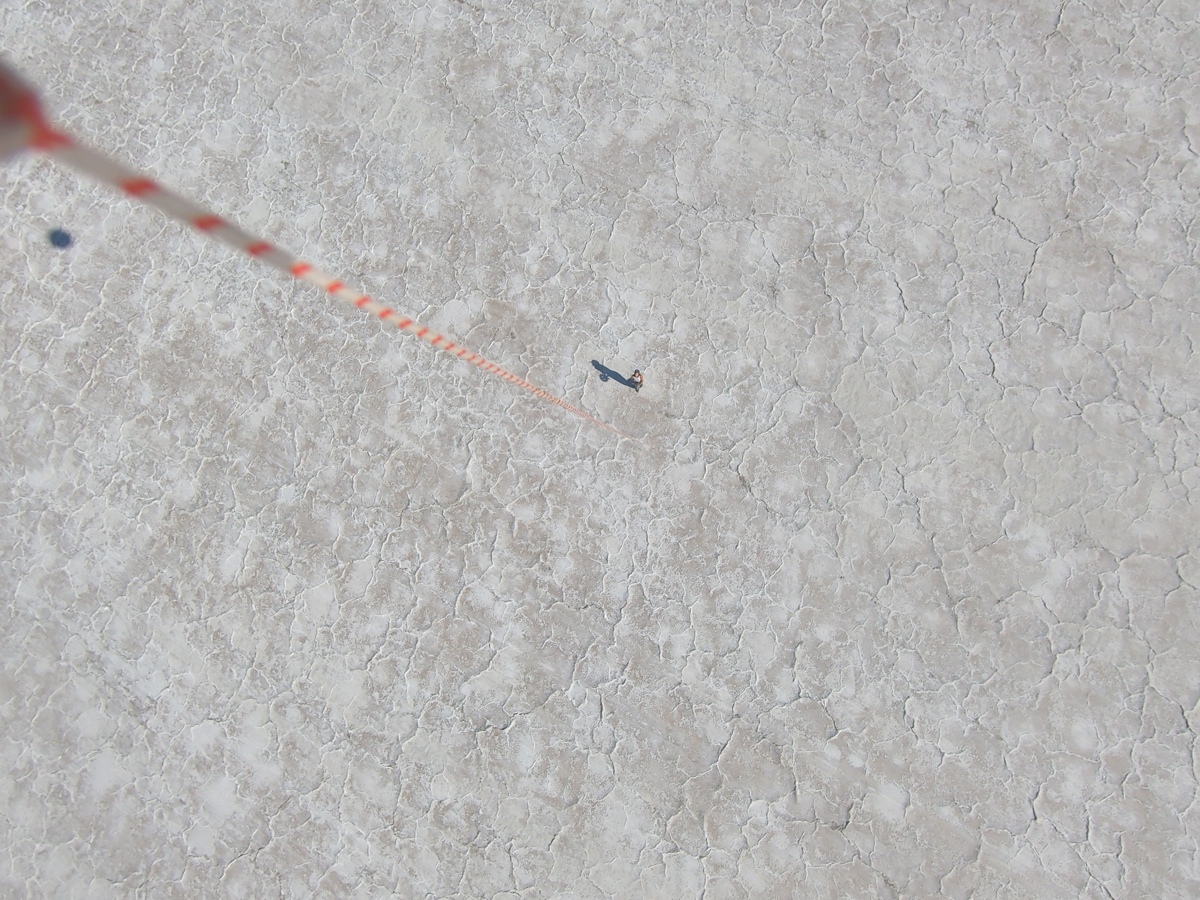
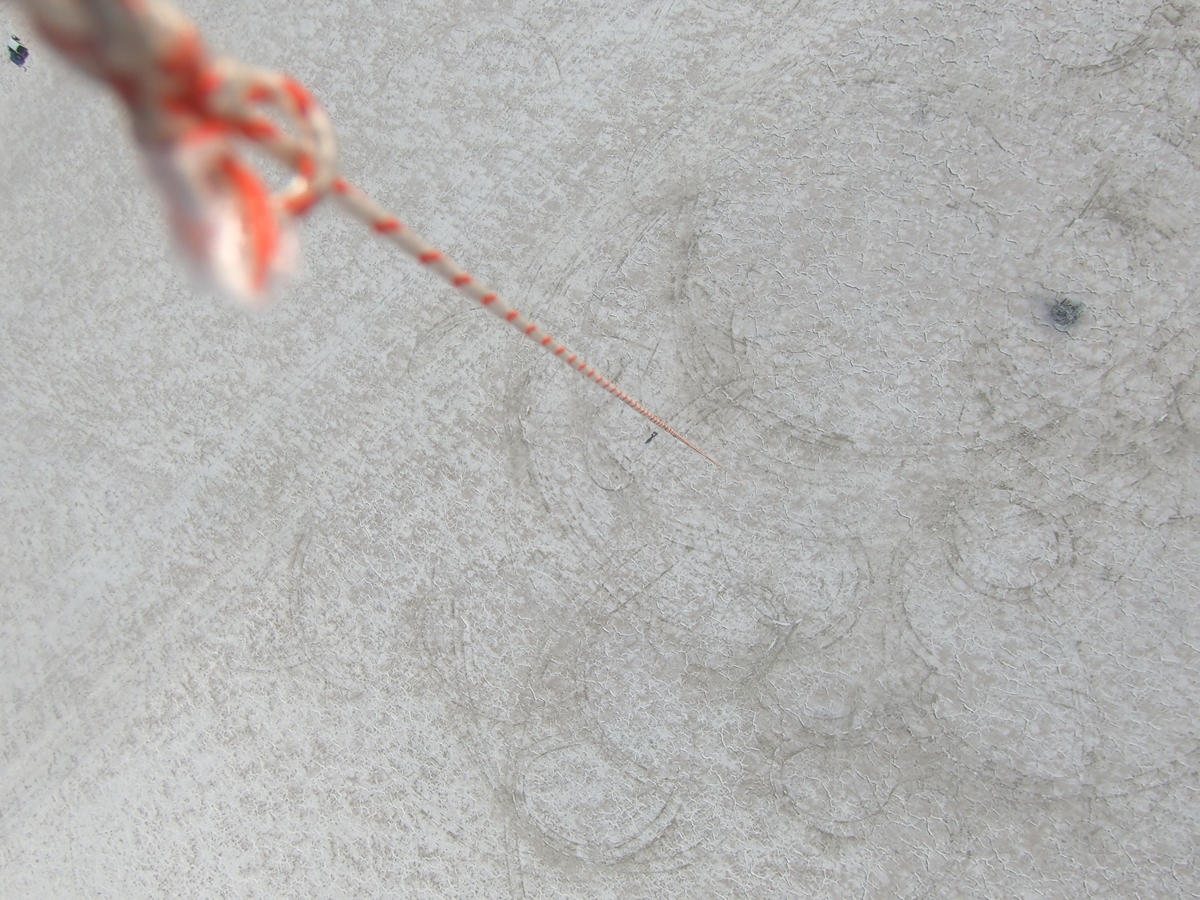
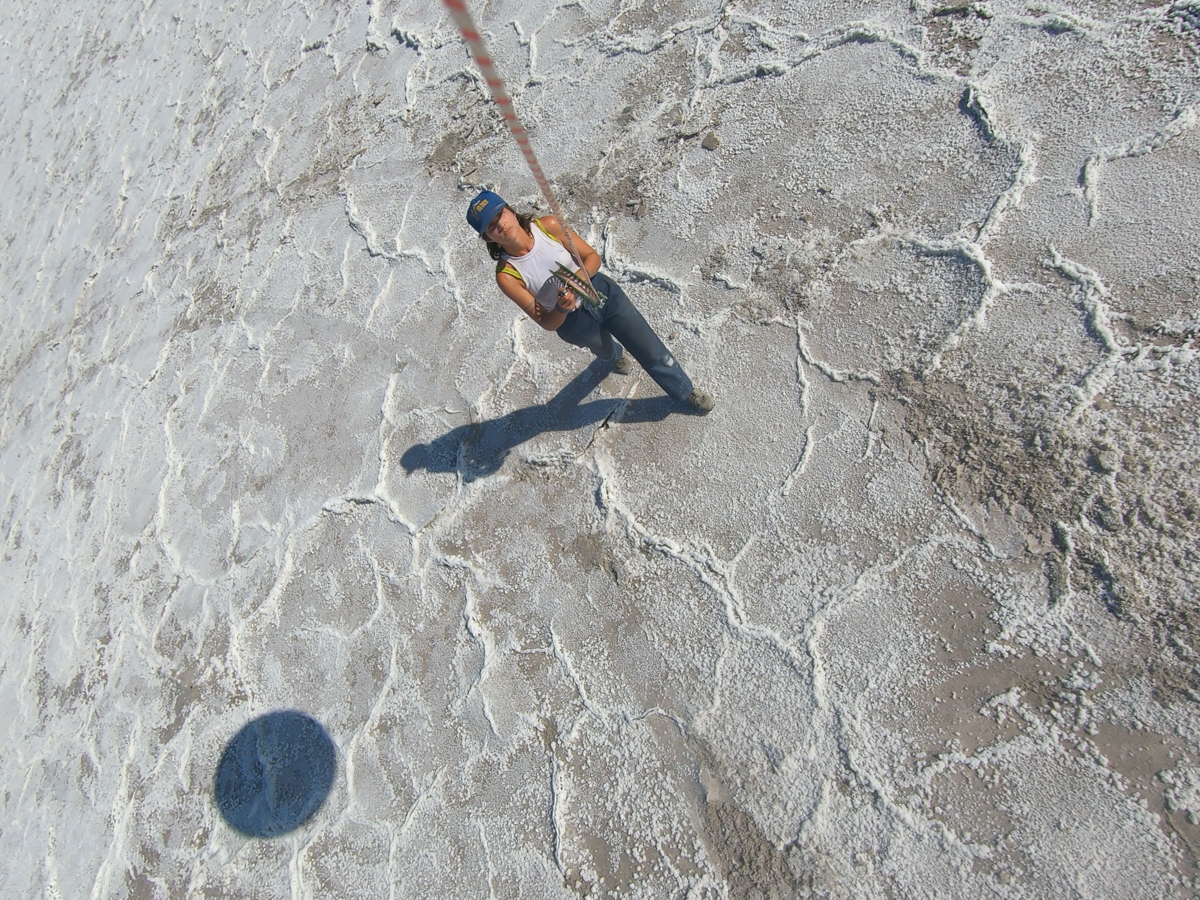
What do we lose when we reach for control, for perfection? I look for answers on the Bonneville Salt Flats by investigating another type of seeing, harnessing another type of mechanism. Using kite string and a large helium balloon, I launch a surveillance camera into the airspace above the flats. With no rudder or control system, it is guided only by the wind and my hand. The image it records is unstable, continually disorienting and reorienting the landscape. Two lines emerge: the tether and the drifting path. Unlike the racetrack or the target, they are not fixed but slowly shifting. Unlike a drone, the device is tethered, traveling from my hands to the sky and back again, binding these two spaces through time.
In the Wendover Air Force Museum nearby, archival photographs show bombardiers standing beside their aircrafts, wild smiles on their faces. I read in those smiles something beyond the pursuit of control: a hunger for escape, not in a nationalistic sense, but a personal one—a desire to shed an earthbound weight. I feel an odd sort of camaraderie with them, and seeing myself in them is unsettling. I know their work supported violence and destruction. But they also must have loved the sky, the acceleration, the act of living together at the edge of things. I wonder how their frame—held within this white landscape—blocked out the repercussions of their mission.
Every August, it’s race day again on the Bonneville Flats. Cars gather here to rehearse an American optimism on the empty expanse: the blue line is redrawn, and the landscape is once again offered as possibility. But the atomic project still reverberates, its violence hidden in the salt. And what appears empty continues to hold what we want kept out of sight. Just south of the old base, a vast warehouse filled with military drones disappears in the expanse. What will they teach us about the ways we are shaped by how we see?