Artwork by Maya Lin and Ernesto Neto soft launch Into the Time Horizon at the Nevada Museum of Art, examining local and global environmental concerns.
Into the Time Horizon
November 15, 2025–January 3, 2027
Nevada Museum of Art, Reno
Similar to the hyperobject of climate change, Into the Time Horizon at the Nevada Museum of Art has a massive scope, with implications that are difficult to grasp because we cannot see its entirety. The project’s seven thematic sections and three large-scale installations are being installed in stages, culminating at the end of March 2026, with work from nearly 200 artists addressing environmentalism, ecofeminism, and visions of a sustainable future. Eventually the exhibition will occupy every gallery in the museum, but for now its future feels murky, as only two pieces are on view and the ambitions in the description, to “promote forward-thinking models rooted in collectivity, engagement, and collaboration,” are lofty and ambiguous.
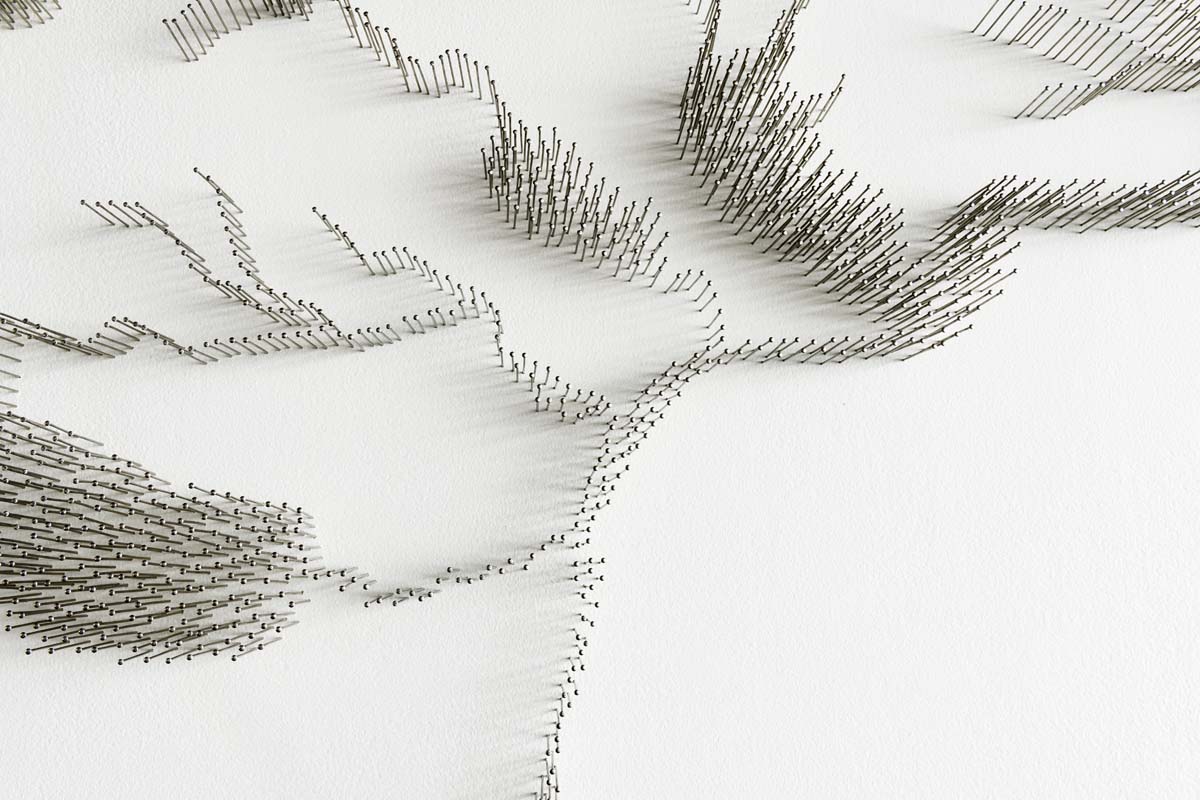
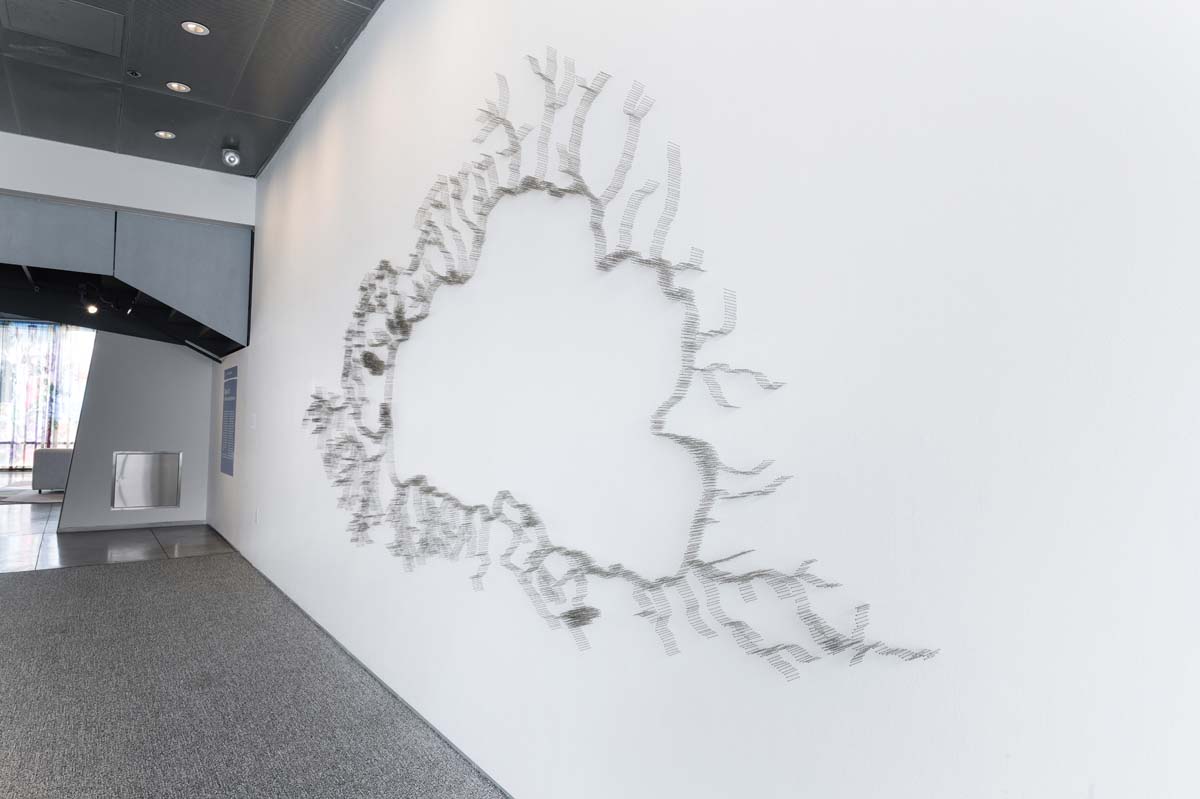
Maya Lin’s Pin River – Tahoe Watershed (2014) uses thousands of straight silver pins to represent the watershed that is the lifeblood of Northern Nevada. Despite the resolute stillness of the pins, their accumulation evokes fluidity. Set against the white wall, the austere silver pins create visual starkness that blankets the space in a hush that almost becomes loud, much like the quiet power of a flowing river. By affixing Lake Tahoe and its tributaries with pins, Lin demonstrates both the intricacies and the magnitude of the water system sustaining us.
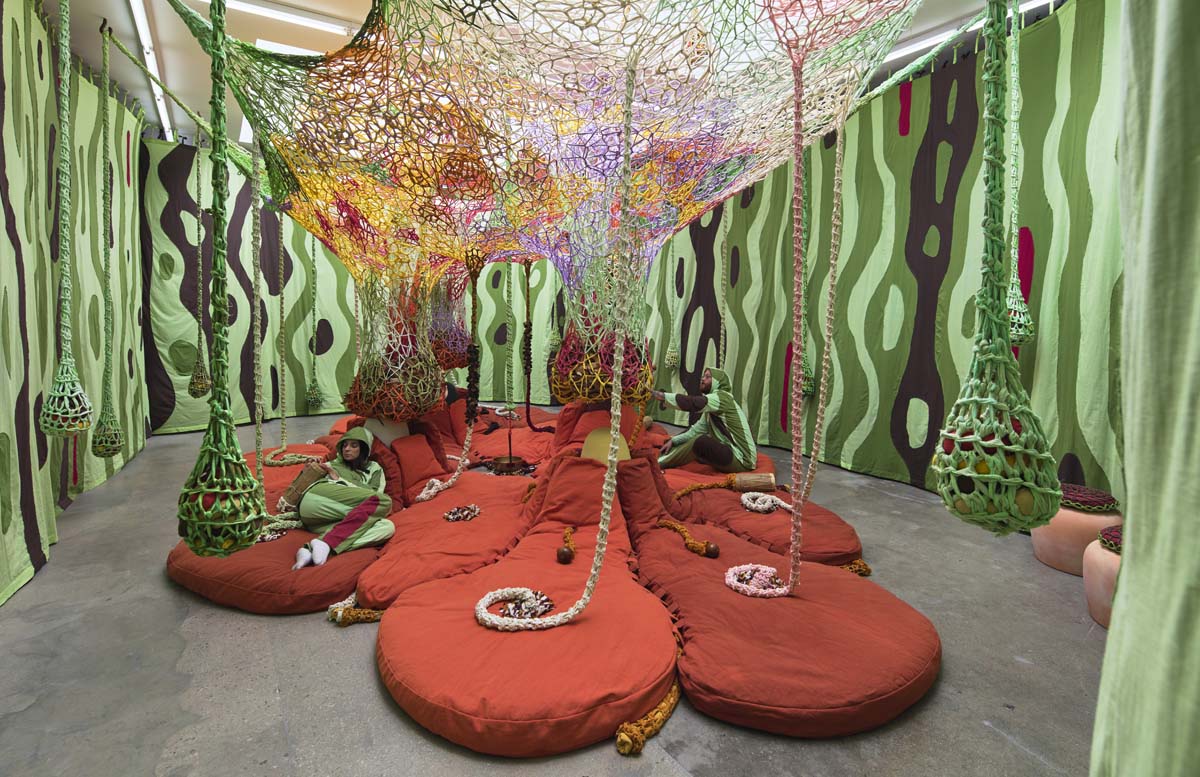
What if you could enter one of Lin’s pinpoints at the cellular level? It might resemble Ernesto Neto’s Children of the Earth (2019), a cocoon-like, immersive installation-as-organism inspired by the Amazon rainforest. Visitors can don robes to blend into the green curtains and amorphous shapes constructed from materials like cotton, crystal, red jasper, and honey calcite. They can sit on orange cushions and play instruments, but are asked not to swing from the hanging ropes and globules of netting. Resisting the impulse to swing is disappointing, but perhaps that restraint encourages a deeper awareness of the fragility of the environment.
Lin’s rendering of the regional watershed and Neto’s tribute to the distant rainforests offer local and global entry points that hint at the possibilities of Into the Time Horizon. We’ll have to wait to see how it unfolds.