Colorado Currents at the MCA Denver holds a prism up to the state on its 150th anniversary, refracting a spectrum of diverse cultural, ecological, and political identities.
Colorado Currents
July 24–November 15, 2026
Museum of Contemporary Art Denver
“The map is not the territory.” Philosopher Alfred Korzybski’s 1931 statement provides an apt subtext for Colorado Currents, an ambitious survey at the MCA Denver commemorating the state’s 150th anniversary. Featuring twenty-eight contemporary artists, all with ties to Colorado, the show offers a textured, porous atlas of perspectives as varied as the state’s topography.
Colorado’s terrain comprises eight distinct ecosystems: extending from the arid alpine desert of the south to the prairie grasslands of the east, and up into the Rockies’ snow-capped peaks. Mapping Colorado, with its vast geographic diversity and deeply rooted cultural complexities, has always been a fraught proposition.
MCA curators Miranda Lash and Leilani Lynch spent eighteen months organizing Colorado Currents, with additional support from Jane Sook Burke, chief curator of Denver’s emerging artist incubator RedLine; Katja Rivera, curator of contemporary art at the Fine Arts Center at Colorado College; and Ilan Gutin, a curator and gallery manager at Rocky Mountain College of Art + Design in Denver. By engaging additional curators and introducing new voices, the show creates a rich strata of layered histories, materials, and meaning that veer from the profound to the playful.
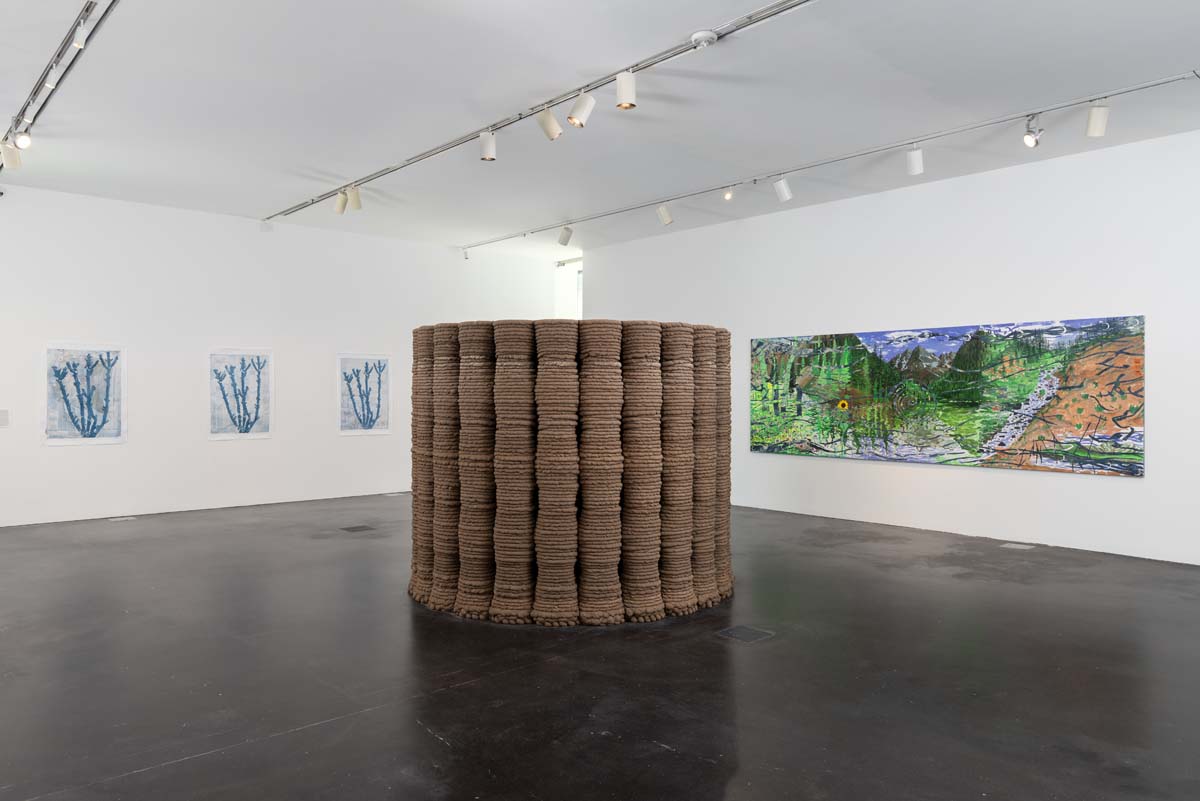
Indigenous legacies and techniques dominate the first floor, arranged around Ronald Rael’s 3D-printed adobe sculpture, a synthesis of ancient knowledge and emerging technologies that serves as a physical and conceptual anchor for the exhibition. Counterbalancing Rael’s weighty, earthen structure is a series of delicate ledger drawings by George Curtis Levi and his daughter, Halcyon Levi. Both artists are members of the Southern Cheyenne Tribe of Oklahoma, and direct descendants of victims of the Sand Creek Massacre of 1864, when U.S. troops slaughtered some 230 peaceful Cheyenne and Arapaho people, mostly women, children, and elders, in southeastern Colorado. Working on antique ledger paper, a medium adopted by Indigenous peoples during early trade relations with the region’s settlers, the artists’ stylized figures, wildlife, and iconography double as symbols of resistance: a means of overwriting the taxonomies that commodified native land, bodies, and resources for colonial exploitation.
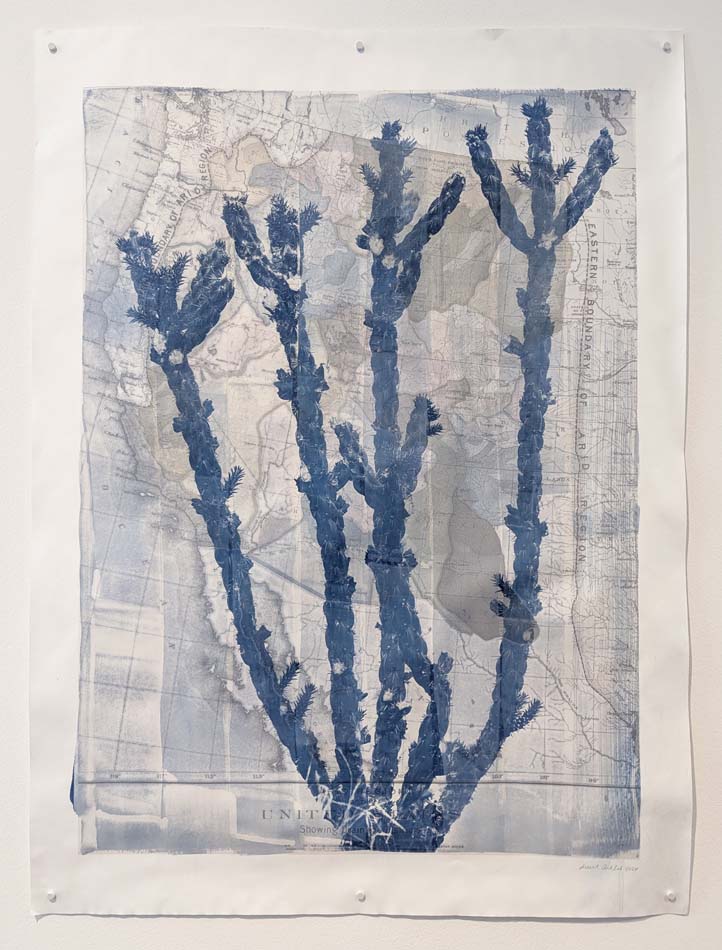
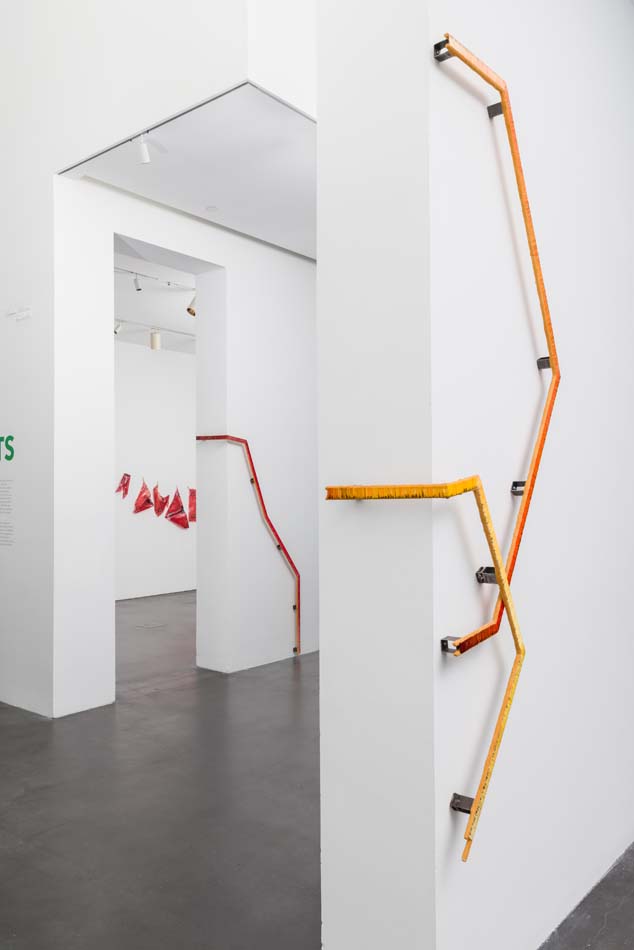
Echoing those Indigenous references, Desert ArtLAB’s cyanotypes overlay historical maps of Colorado, pre-statehood, with native plants. Esteban Cabeza de Baca’s massive landscape painting incorporates soil from the High Rockies and natural pigments like indigo, while Chelsea Kaiah’s (White River Ute and White Mountain Apache/Irish settler) industrial porcupine quill installation acts as a wayward border, wrapping around the walls of the main floor’s exhibition spaces.
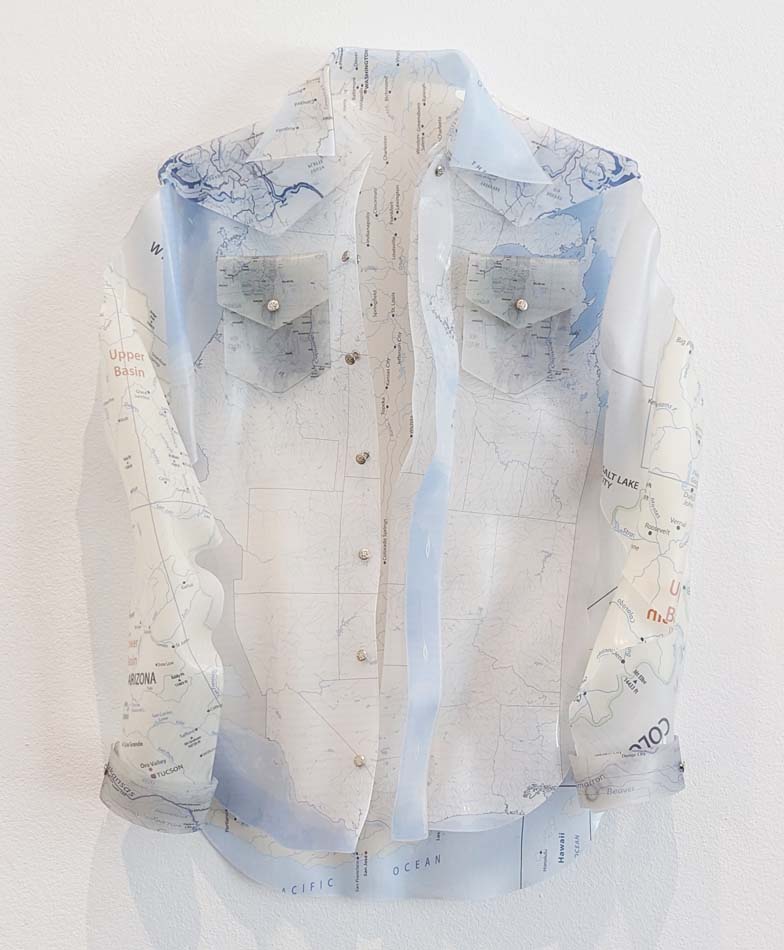
Maps and borders are recurring motifs across the exhibition, fortifying the connections between Colorado’s politicized landscape and its residents’ cultural identities and personal lineages. Floyd D. Tunson grew up in Denver’s Five Points neighborhood, once known as the “Harlem of the West,” during the Civil Rights Movement. His abstracted depictions of geologic textures, chaotic and unruly, are contained within tidy painted perimeters, a proxy for Denver’s history of racist redlining practices. Maeve Eichelberger transformed a plexiglass map of Colorado’s rivers and waterways, arguably the state’s most endangered natural resource, into a rancher’s humble workshirt, whereas Margaret Kasahara’s materials include a burnt map referencing the 2012 Waldo Canyon Fire, which displaced the artist from her home. Kasahara’s quiet ruminations on grief employ fallen twigs and other natural ephemera to mourn accumulated personal and ecological losses, but her works feel peaceful, resilient, and born from care.
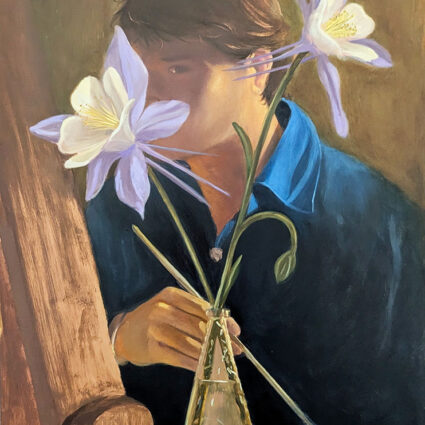
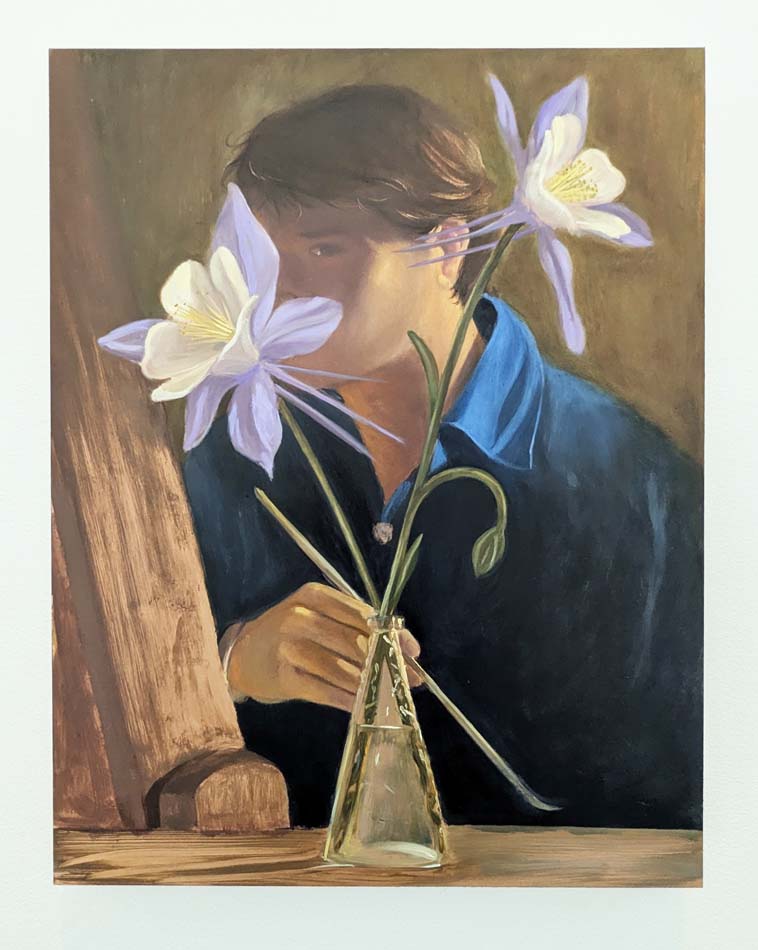
Similarly, Caleb Hahne Quintana’s exquisite paintings balance mortality and beauty. While growing up in Denver, Hahne Quintana would accompany his father to his jobsites as a muralist. In 1999, he and his sister were supposed to join their father at Columbine High School, the same day two students murdered eleven of their classmates and one teacher, the event horizon for American education in the age of automatic weapons and mass shootings. Fortunately for Hahne Quintana’s family, his father’s visit was postponed. In his somber self-portrait, the artist poetically frames himself half-hidden behind two columbine blooms, Colorado’s state flower.
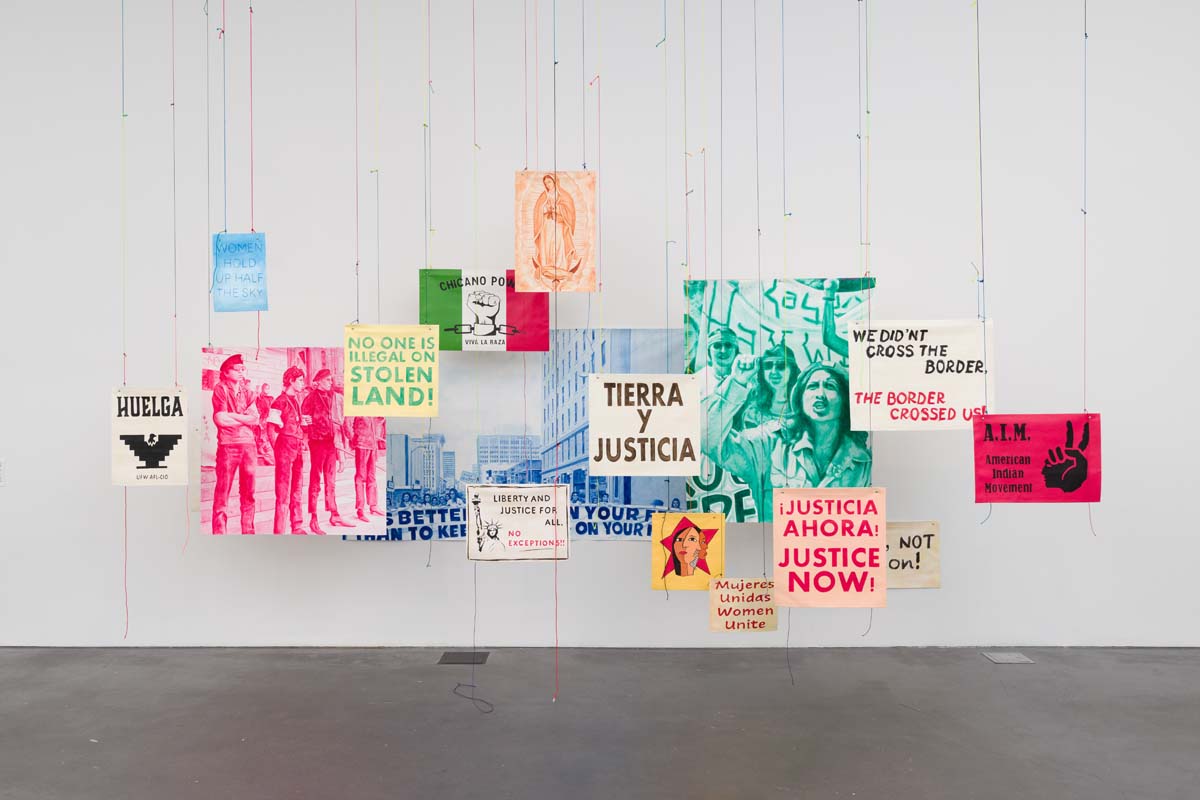
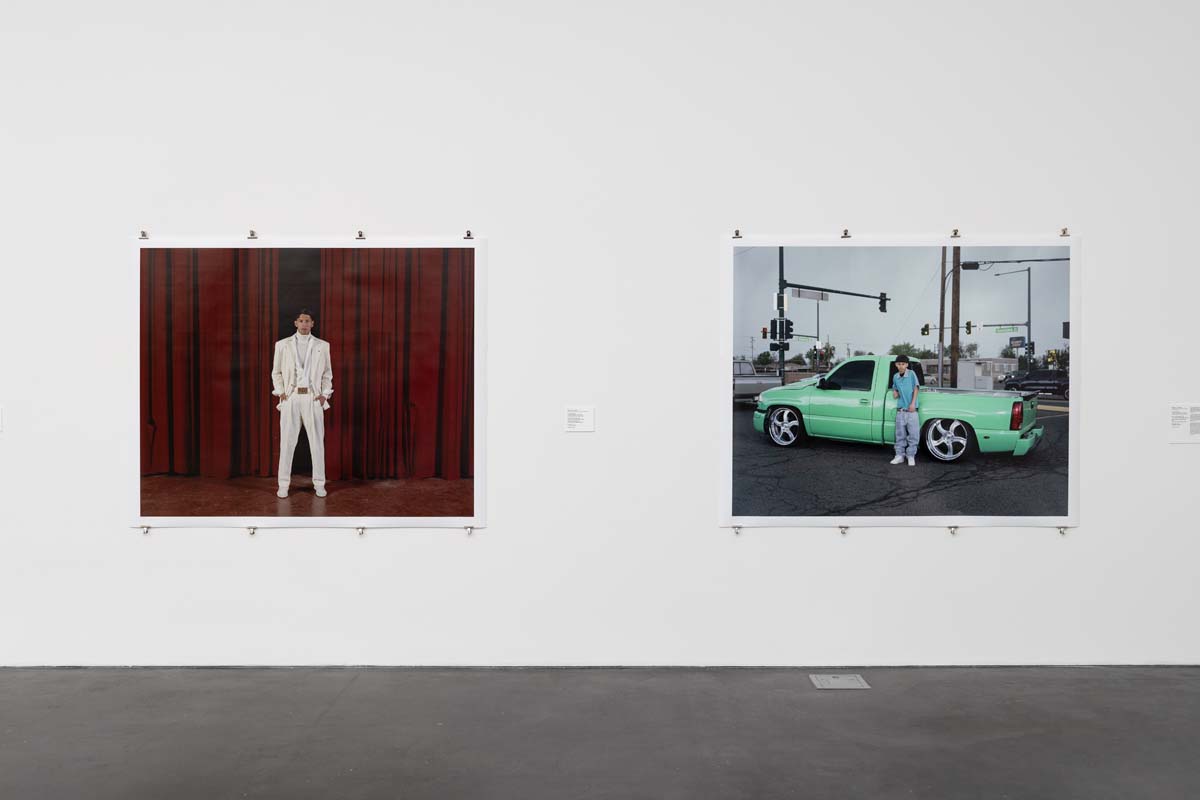
Hahne Quintana’s ancestors settled in historic San Luis, the oldest town in Colorado (established fifteen years before Colorado became a state), which was part of Mexico until 1848. His painting Eclipse Over San Luis (2026) invokes the Hudson River School’s epic landscapes with its romantic, near-mystical depiction of the natural world. To this day, there’s a saying amongst San Luis’s multigenerational Hispano locals, “We didn’t cross the border; the border crossed us.” This proclamation also appears in Carlos Frésquez’s installation of protest posters inspired by the Chicano civil rights movement of the 1960s, which he recalls witnessing firsthand in his youth. Juxtaposed with potent photographs of stoic Denver teens directed by stylist Marcus Correa (in collaboration with photographer Felipe Romero Beltrán), as well as David Ocelotl Garcia’s monumental illustrations, the ensuing dialogue interrelates themes of religious iconography, class struggle, social justice, and collective memory.
Colorado Currents lays vital groundwork for a more nuanced understanding of the state that feels inviting, accessible, even hopeful.
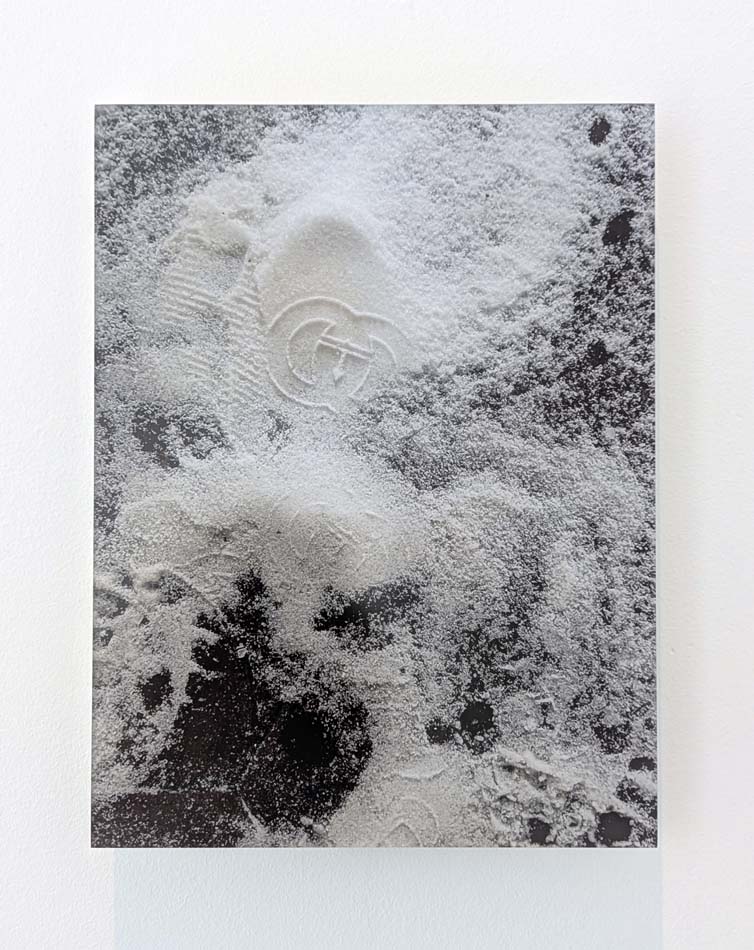
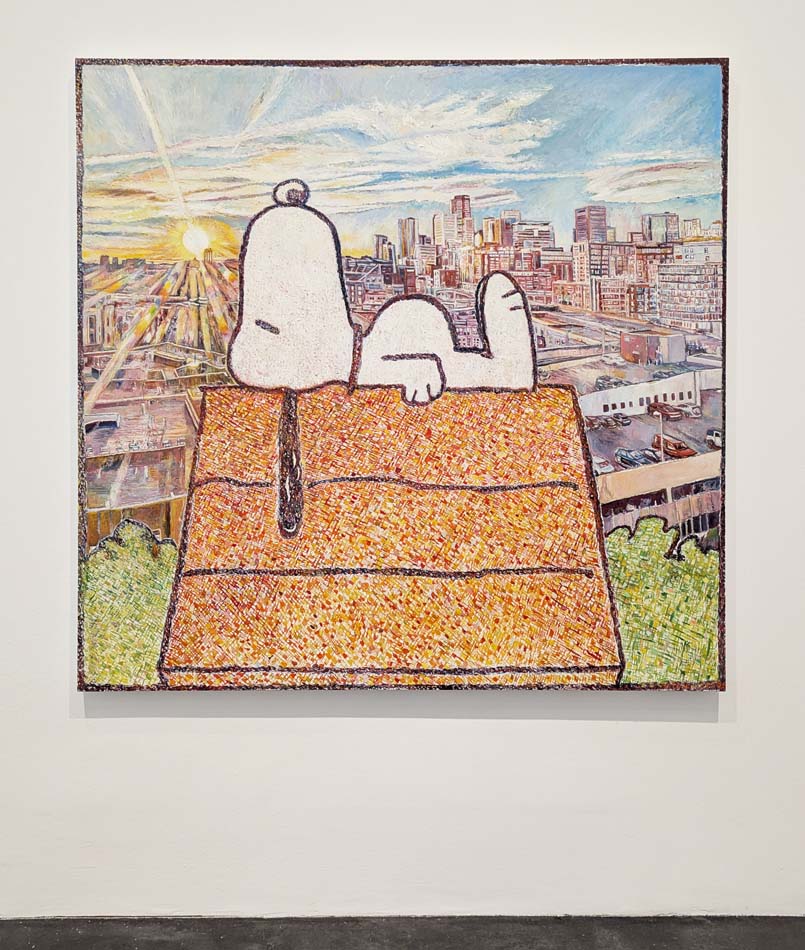
These are heavy topics, sure, but the show also offers up a healthy dose of pop existentialism, most prevalent in Keith Mayerson’s color-drenched paintings of Snoopy and his family’s ski trips, as well as Kristopher Wright’s super-flat compositions of rural idyll, and in Devon Dikeou’s conceptual works that poke fun at Aspen’s luxury elitism. (Dikeou sadly passed away earlier this month, a poignant loss for Denver’s art community.) Finally, the museum’s lower level approaches Colorado’s environmental profile through Evan Forrest Mann’s painterly surrealism, and some welcome comic relief in the form of Ben Kinsley’s mockumentary of cheeky fungi.
“The map is not the territory” is certainly true, but Colorado Currents further asserts that the territory, with all its weaponized implications, is also definitely not the terrain. Not even close. What’s lost in the mapping of such contested spaces is the humanity whose traces remain forever embedded in the land. To the MCA curators’ credit, in retelling—and reframing—these stories, Colorado Currents gives its overlapping narratives enough breathing room to assert themselves, while still conveying their interdependence.
Colorado is a state defined by drama, with a history of conquest and terror campaigns, massacres, forced displacement, and inequitable resource extraction. Ecologically, Colorado is currently contending with severe drought and a devastating wildfire season that’s now two months longer than it was fifty years ago. But it’s also a place of immense cultural pride and breathtaking beauty, where nature’s full glory is on constant display. There is much to mourn; however, Colorado Currents lays vital groundwork for a more nuanced understanding of the state that feels inviting, accessible, even hopeful, and, most significantly, extends far beyond the myopic, outdated myths beholden to the concept of the “American West.”