Video artist Lauren(ce) Myers Reese connects transness to the land and the queer collective through concertedly cryptic visual language.
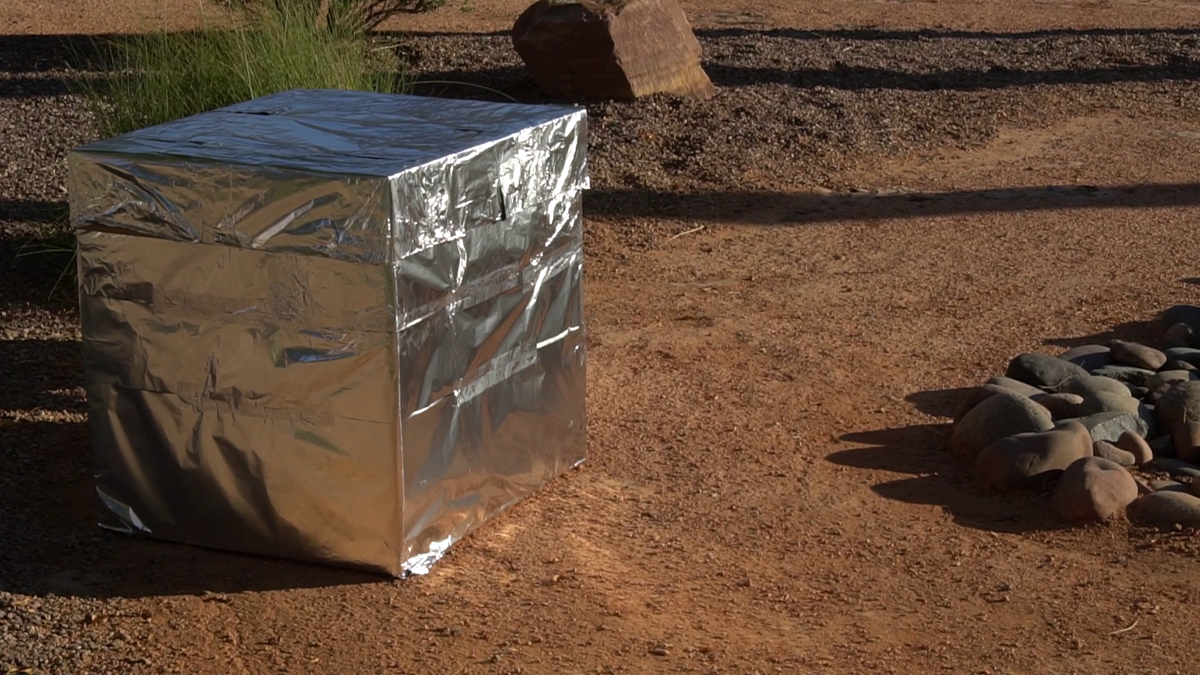
Paradise, Nevada / lmyersreese.com / @lmyersreese
Often in the art and literary worlds there is an appetite for trans trauma and pain that reduces transness to tragedy. In video assemblages that mix eerie shots of the desert and water with queer-coded symbolism, interdisciplinary Nevada-based artist Lauren(ce) Myers Reese (she/he/they; née Laura) represents the queer and trans experience through connection to landscape, history, and queer collective memory.
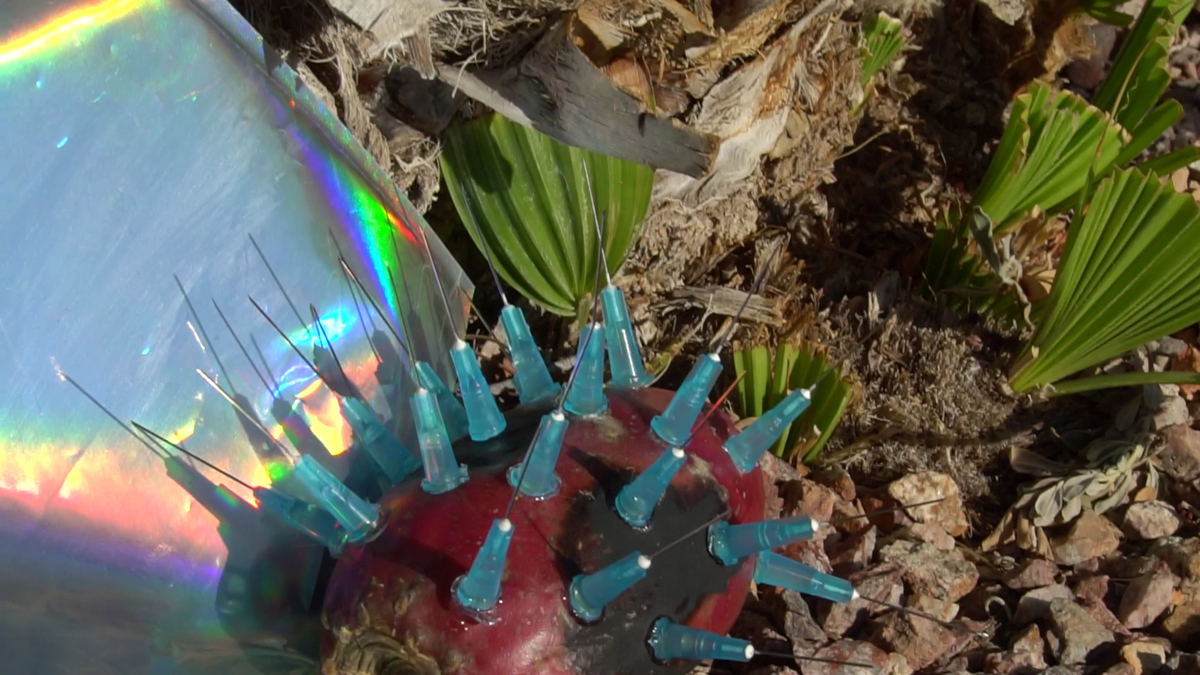
To the lay cisgender or heterosexual viewer, the transness in Reese’s videos might be missed. In Window & Mirror (El espejo y la ventana) (2020) the Nevada landscape and watery reflections flash by, interrupted by shots of a prickly pear fruit pierced with testosterone needles. The needles are part of a queer semiotics that fall in the IYKYK category. A cisgender person might recognize these as needles but not know their purpose: hormone replacement therapy.
“Sometimes I hope to confound straight audiences while delighting queer ones,” Reese writes in an email.
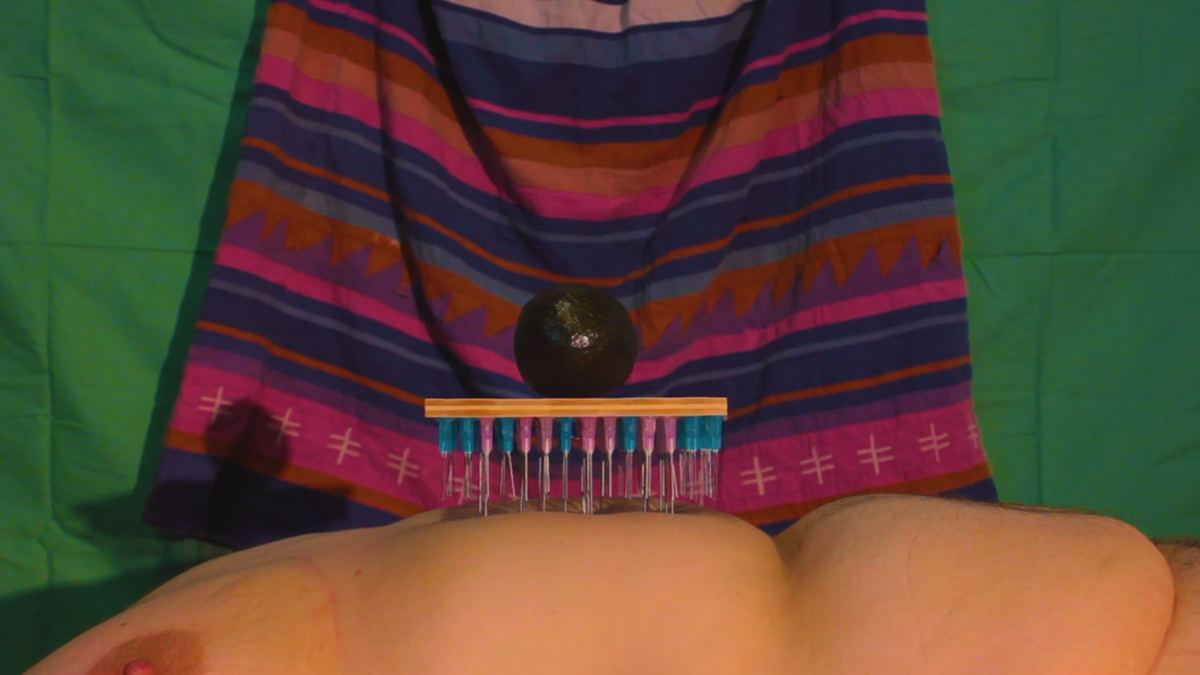
In Reese’s Little Yoke of Heaven, a fat, trans person visible from the chest to the waist lays on a table, cutting to shots of mangoes, avocados, prickly pear fruit, and a syringe holder of testosterone needles placed on their stomach in different configurations. In some shots, the subject appears to bear top surgery scars and in others, their body appears to be pre-surgery, details that could be missed by viewers. The piece makes the point that even without medical transition, a trans body is still trans.
Reese writes, “In becoming the desert, the trans body is the landscape, the earth from which we are made.” This counteracts dominant societal narratives that transness is unnatural.
There is clumsiness to the video, in the visible fold creases in the green backdrop and the way the fruits sometimes tumble from the body. These imperfections seem intentional and reflect the messiness of queer experience. Reese constructs a “heaven,” as the title suggests, at the center of which is a body that eschews normative standards of beauty and gender.