How do you visualize time itself in an art exhibition? At Nevada’s Lilley Museum, curator Stephanie Gibson gathers art that was made to fall apart.
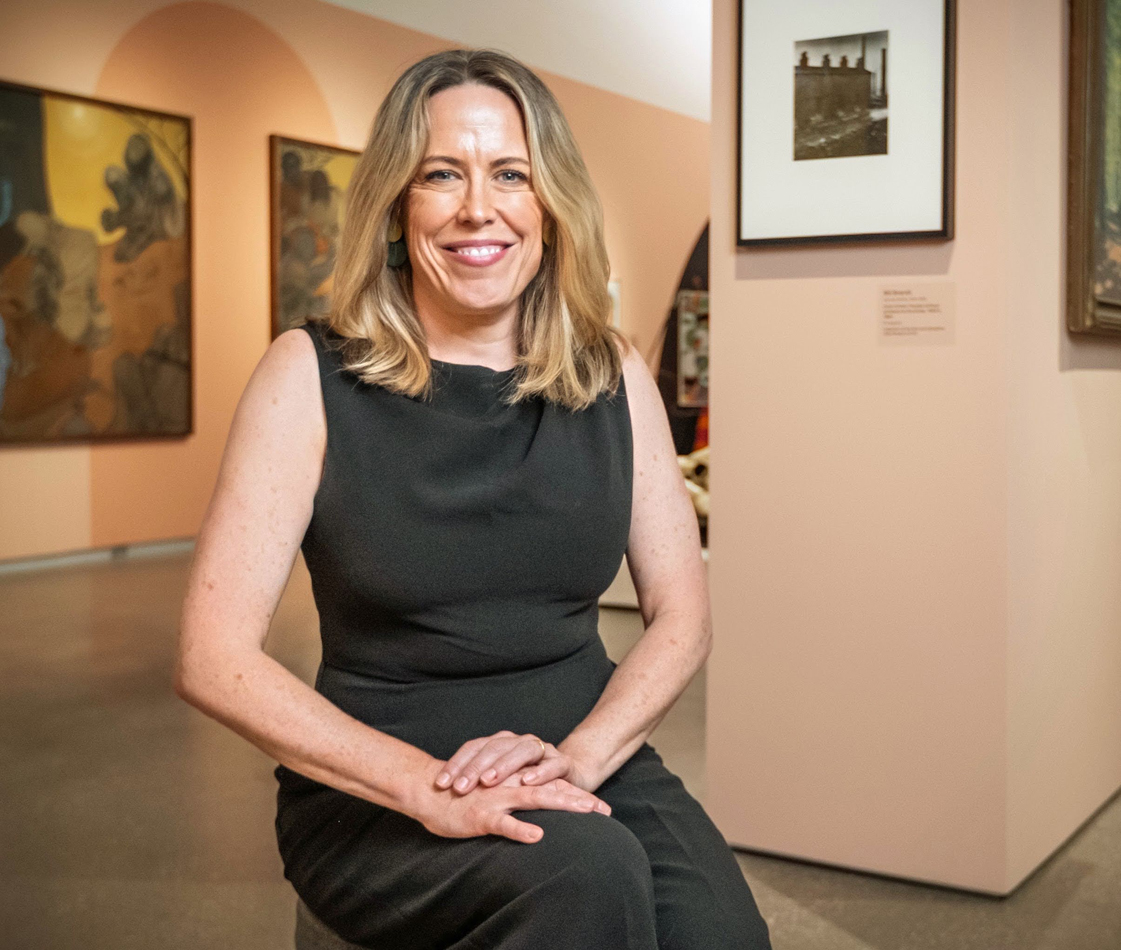
The impetus for the latest exhibition at the John and Geraldine Lilley Museum of Art at the University of Nevada, Reno, Earth’s Winding-Sheet, can be traced to a studio visit museum director and curator Stephanie Gibson had with sculptor Thomas J. Price a few years ago.
“He was making these mud paintings on the wall and literally scratching his hands across the wall. He said he felt this impulsion to work with his hands and really connect with the material and put his hands in soil again,” Gibson says.
That impulse to work with your hands and deeply connect to raw materials like mud, soil, and dust embedded in Gibson’s mind after that visit. She began to consider other artists who are working with elemental materials in their practice, such as Sindhu Thirumalaisamy, Brie Ruais, and Sining Zhu.
Don’t think of it as dust. Think of it as maybe the soil of some great past civilization.
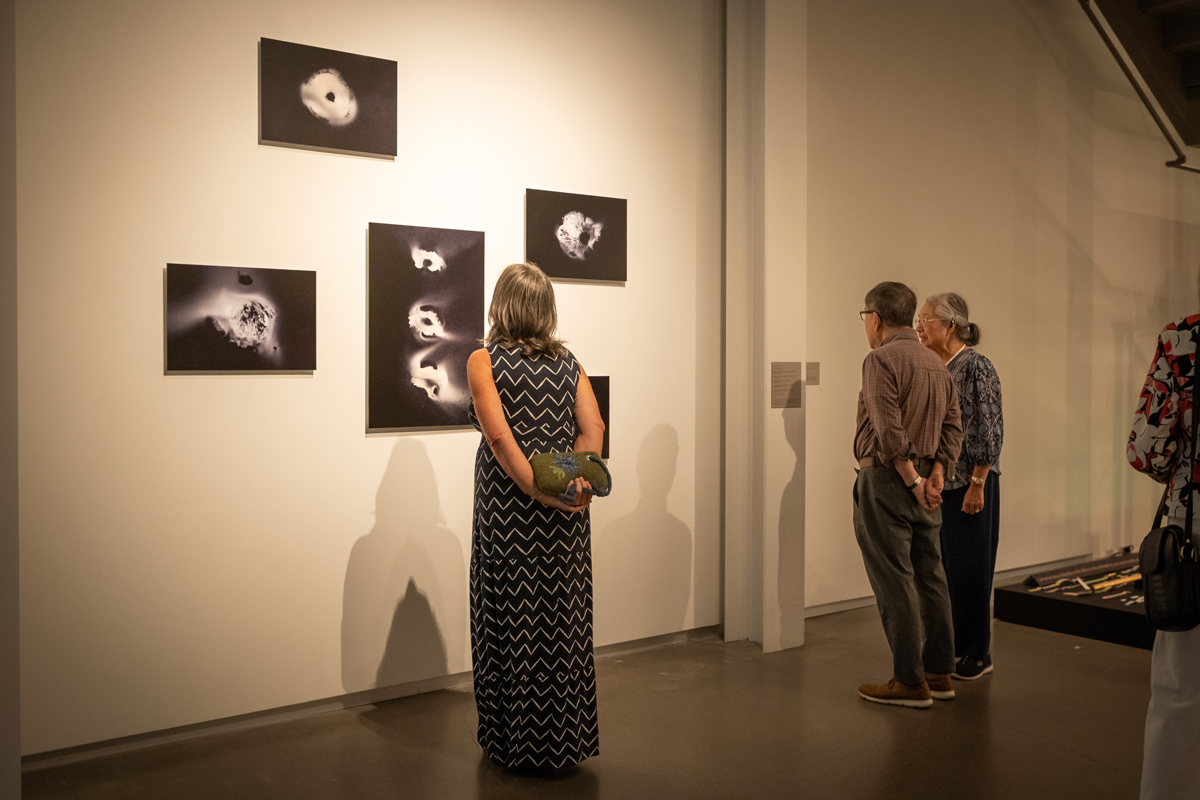
In Earth’s Winding-Sheet, dust is the vehicle through which artists look at the ways that we are touched and shaped by time, materials, and each other. Dust fields become sites of intimacy and contact, where the past, present, and future can be held at the same time.
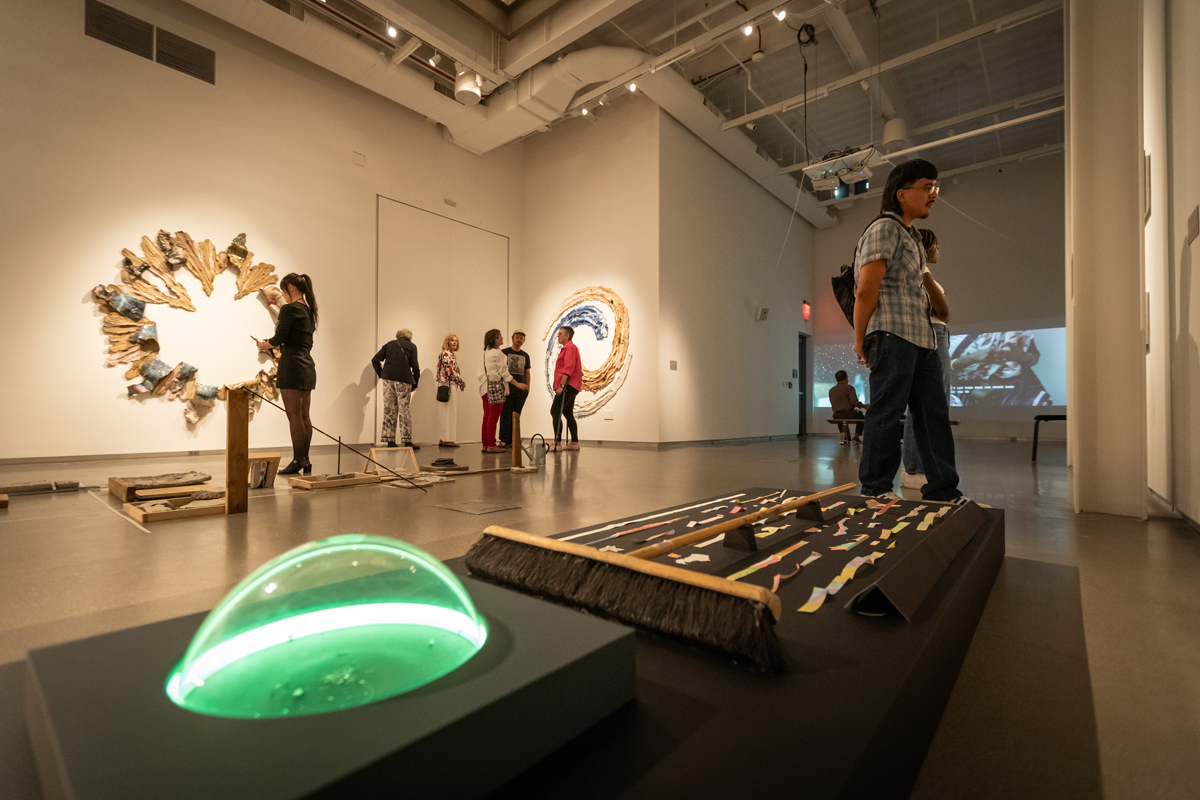
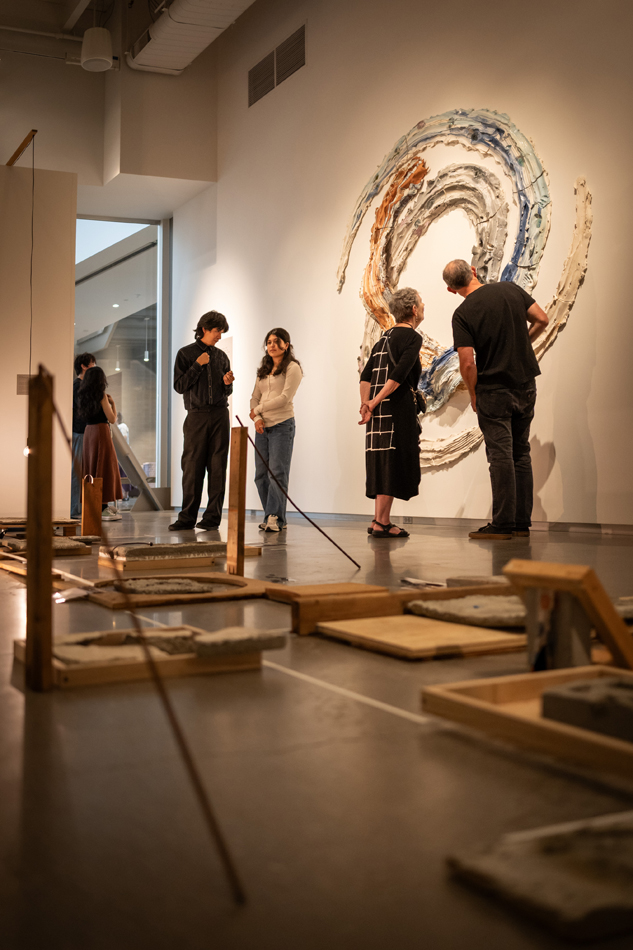
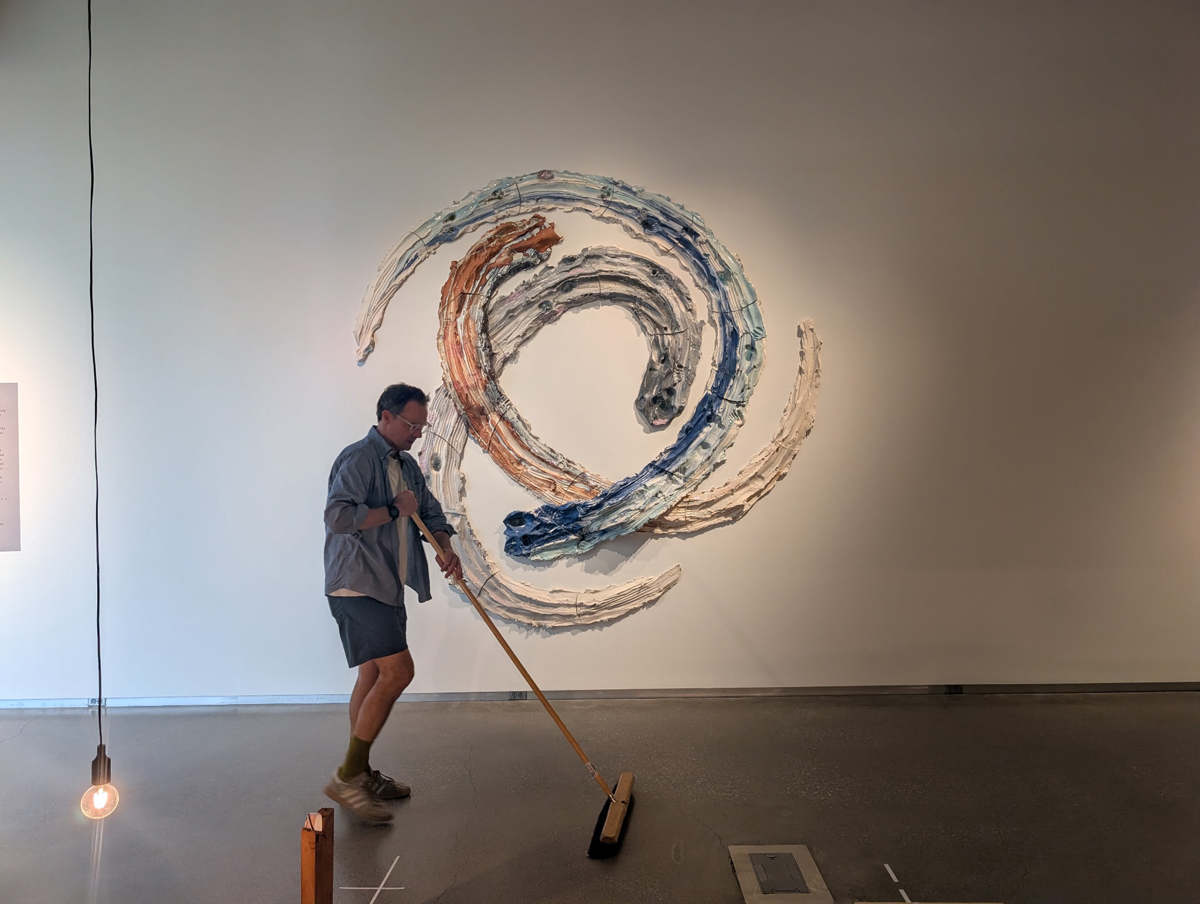
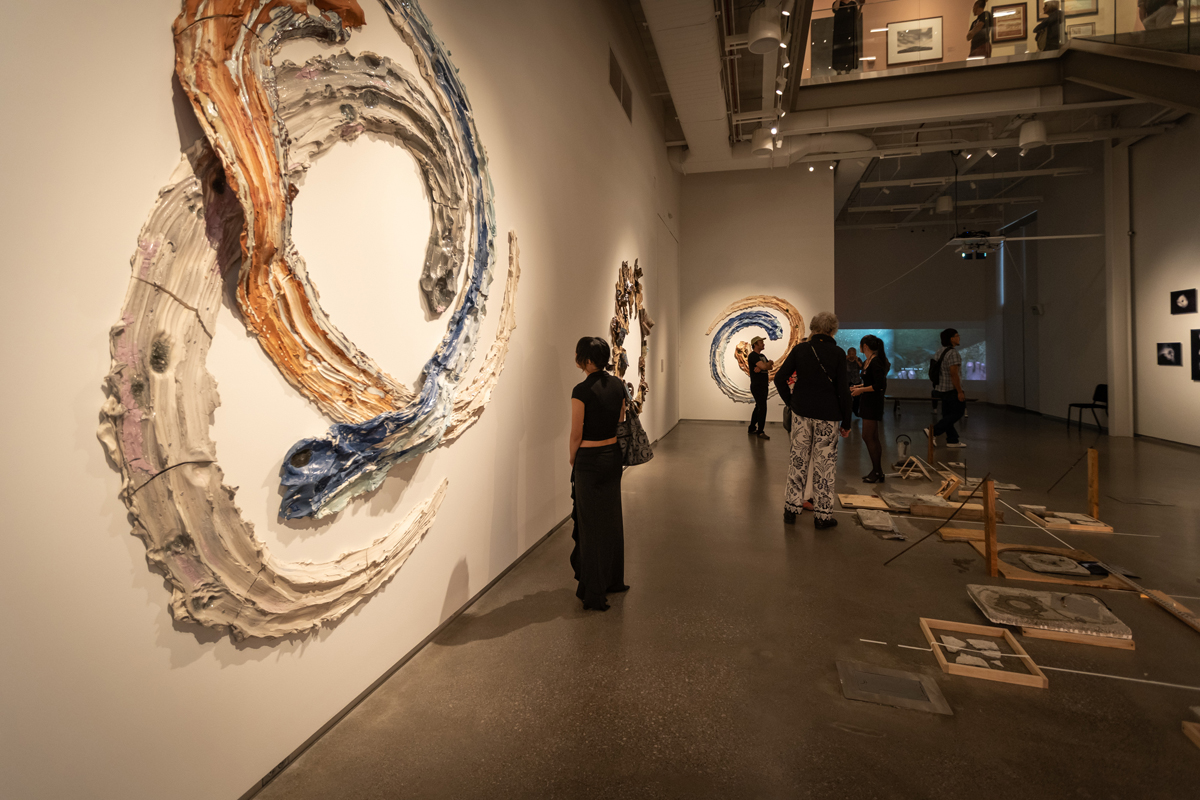
Ruais engages with her clay wall sculptures in a similar way to Price, through embodied connection to natural materials, beginning with a slab of clay the same weight as her body. She uses her body as a tool to create large-scale, looping ceramic wall sculptures: Two Cycling on an Axis (2023), Three Orbiting Bodies (2023), and Digging In (2023). She creates these pieces through an intuitive and almost ritualistic performance in which she pushes, pulls, manipulates, slides, and scrapes the clay, leaving behind clear markings from her body’s engagement with the material like footprints, making these works feel embodied despite being abstract.
In the exhibition, the seemingly mundane substance of dust is elevated to an almost magical level that connects us to the living, the dead, and the future. As Charlie Brown said in defense of Pig Pen’s dust cloud in A Charlie Brown Christmas, “Don’t think of it as dust. Think of it as maybe the soil of some great past civilization. Maybe the soil of ancient Babylon. It staggers the imagination.”
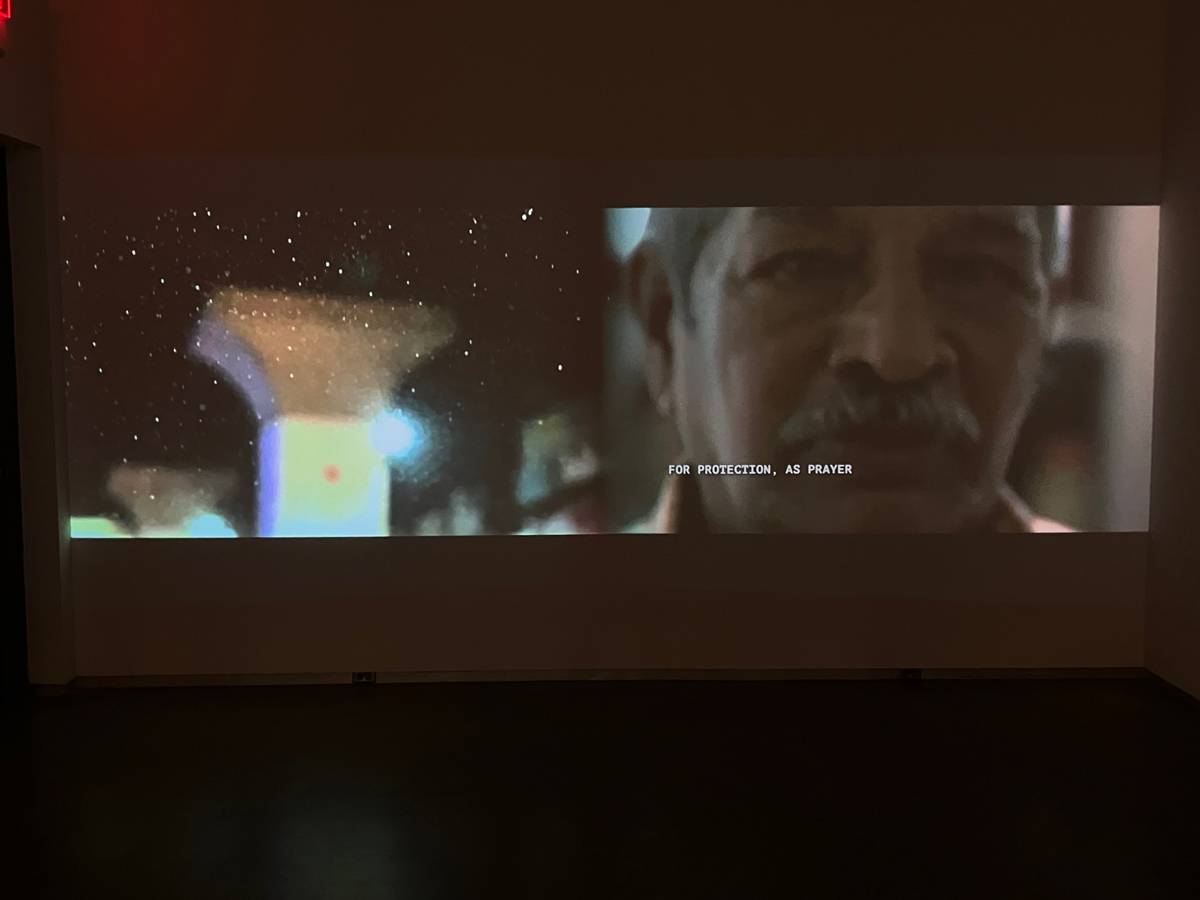
Thirumalaisamy works with materials like concrete and dust to examine remembrance, grief, and longing, as in her two-channel video work dust-time (2025). At left, the artist drives down an abandoned freeway in Tamil Nadu, India, as dust accumulates on and obscures the camera lens, creating an otherworldly effect. At right, Thirumalaisamy’s grandmother’s ashes are scattered in waterways as we hear chanting from her funeral, which the artist was not able to attend. By pairing the imagery of crumbling infrastructure and the missed funeral, the artist juxtaposes imagery evoking grief and obscurity, connection and loss.
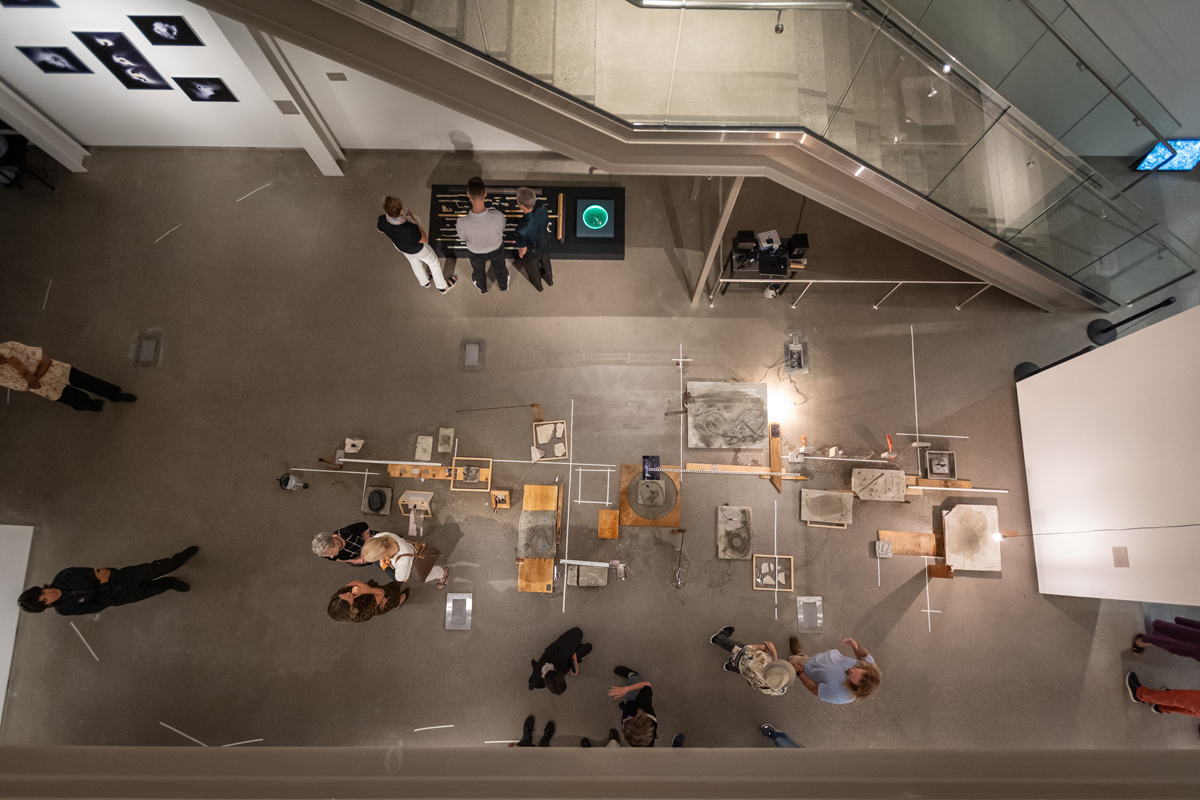
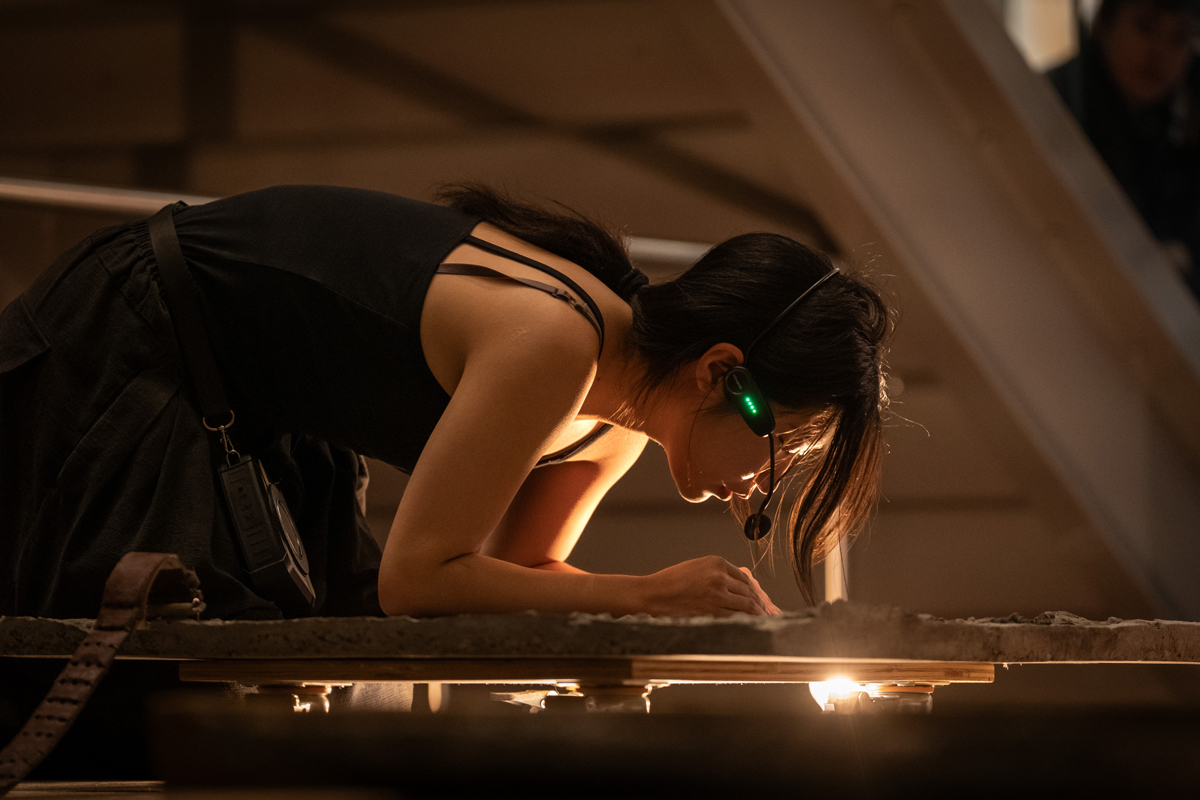
Los Angeles–based installation and performance artist Sining Zhu considers dust and other cast-off materials like concrete and wood in her installation piece Still a long dream (2025), which resembles a construction or archaeological dig site. The project began when she started collecting discarded things at Dynasty Center in L.A.’s Chinatown—one of the last traditional Asian shopping centers in the area—such as photographs and wrappers and flowers and articles of clothing, speaking to gentrification and collective cultural memory.
Zhu sees this work as creating a kind of living memory, or, “a landscape that is suspended between what [Dynasty Center] once was and what it is now in its gentrified state.”
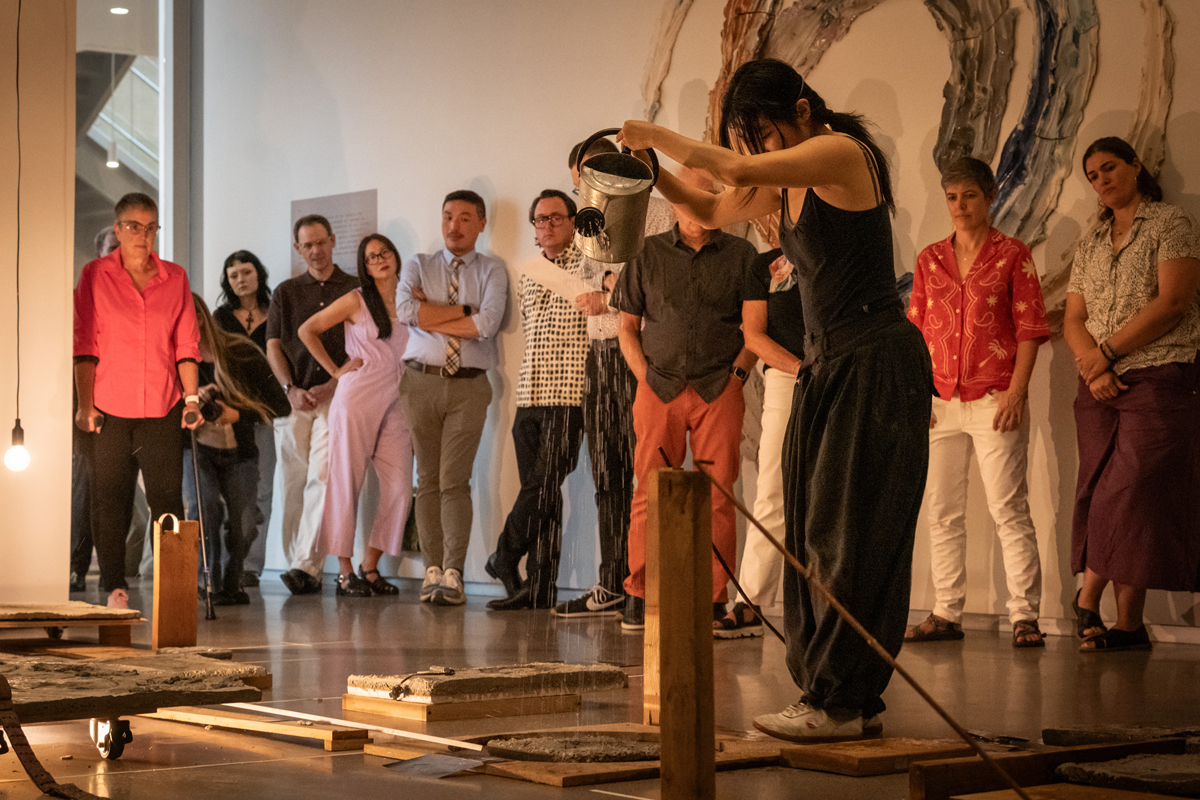
At the opening reception for Earth’s Winding-Sheet Zhu used her body as an instrument to activate Still a long dream, interacting with the liminal landscape. She performed activities that are everyday but strange such as watering concrete.
“Whether I’m moving, working, running, pouring water, or interacting with the audience, I’m using my body to activate this place and using these activations as a way to rethink this place and connect to a collective memory so that instead of a forbidden place it becomes every place in a way,” Zhu says.
Poet and artist Jared Stanley turned his attention toward the dust in the museum itself. Early in the curatorial process, Gibson (who I worked for as an intern and program assistant at Nevada Humanities when she was the assistant director) asked Stanley if he would write a poem for the exhibition to be displayed on the wall.
“I knew dust would turn him on,” Gibson says with a laugh. The two have worked together before: Gibson curated the Lilley’s inaugural exhibition in 2019, which featured artwork by Stanley and collaborator Sameer Farooq. Titled TERMA, IMAGES FROM THE EAR OR GROIN OR SOMEWHERE, the show revealed inner workings of the museum’s display and collecting practices.
Dust certainly did turn Stanley on—so much so that instead of just contributing a poem to the exhibition, he devised a strange installation piece titled, A Poem in Five Verses (2026).
Dust for me is not dead. It’s constantly in flux, in movement.
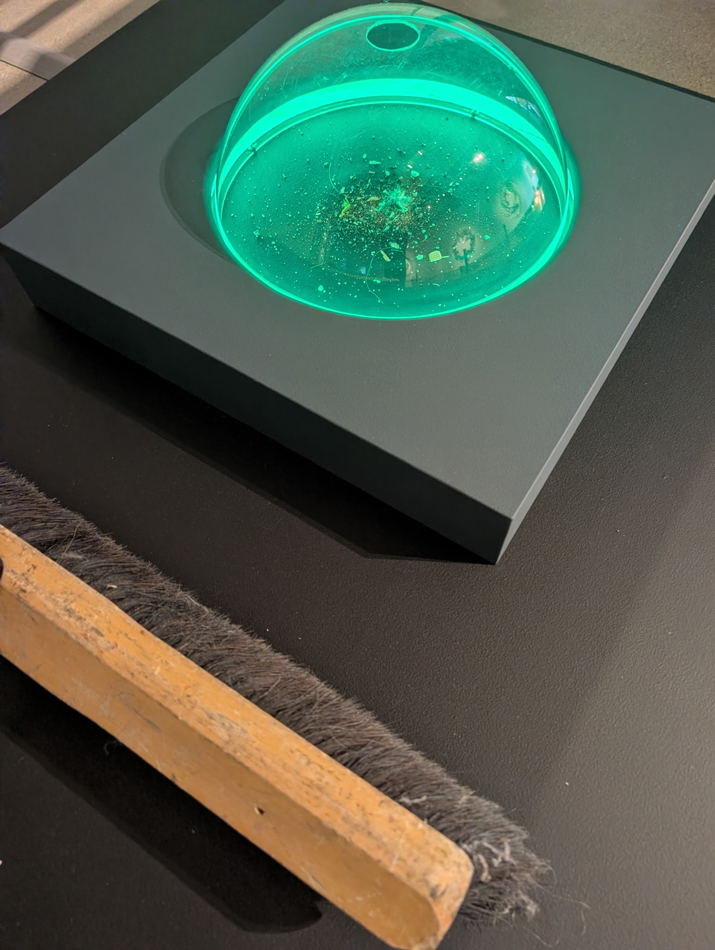
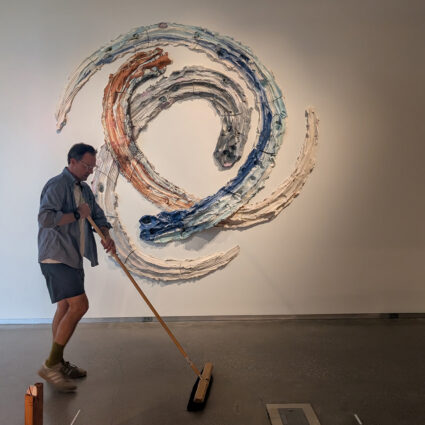
Stanley constructed a visual poem in five verses” consisting of: an evocative line of poetry, a broom, pieces of maps, a ledger, and a glowing green dome. The dome is inspired by museum donation boxes, and every other day museum staff deposit sweepings from the floor into it as a “dust bin.” The workers write their name on the ledger and become part of the ongoing piece, marking their name and the date on the ledger. As the exhibition goes on more dust will accumulate.
“It’s a sculptural poem about time, with these different demonstrations of how time works and… is contained,” Stanley says. “I think of it as a clock.”
A Poem in Five Verses creates a reciprocal loop that marks time within the space of the exhibition through dust, deposited by visitors and other pieces in the exhibition—most notably Zhu’s, who acknowledged that her work is gradually disappearing because it is made of concrete. Even as her work degrades, Zhu points out, it takes on a new life. “Dust for me is not dead. It’s constantly in flux, in movement,” she says.
The artists in Earth’s Winding-Sheet use dust and detritus to measure time, examine personal and collective grief, and connect to the human urge to slow down and interact with the material world around us. If pop culture has encouraged us to “touch grass” as of late, Gibson and these artists have much to teach us about the value of stirring the dust.