Into the Time Horizon, the largest exhibition ever mounted at the Nevada Museum of Art, addresses the accelerating climate crisis and ways we might combat it.
Into the Time Horizon
November 15, 2025–January 3, 2027
Nevada Museum of Art, Reno
When I wrote my first review of Into the Time Horizon upon its opening at the Nevada Museum of Art in November 2025, only two pieces were on view: Maya Lin’s Pin River – Tahoe Watershed (2014) and Ernesto Neto’s Children of the Earth (2019). Given the massive scope of the exhibition, which tackles the hyperobject of climate change and seeks to “catalyze and amplify protection for the Earth and build an awareness around environmental concerns,” and promote “forward-thinking models rooted in collectivity,” it was difficult to imagine what the exhibition would look like and if it could fulfill those ambitions at the outset.
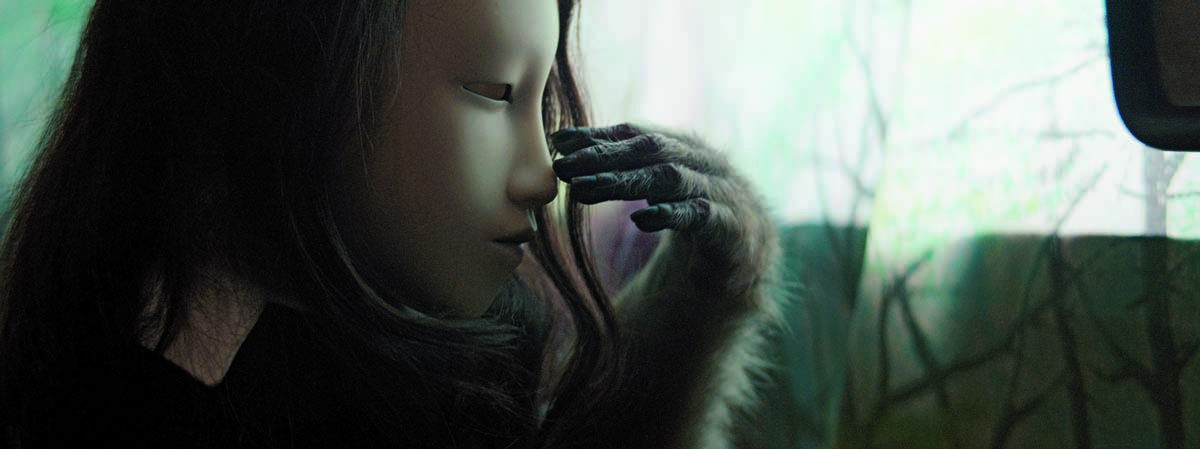
A bit like climate change itself, Into the Time Horizon unfolded slowly in fragments, then all at once—it now occupies every gallery, making it the largest exhibition in the museum’s history. The exhibition’s title comes from Kim Stanley Robinson’s 2020 novel The Ministry for the Future, the time horizon for the environment being the short window we have to act to prevent catastrophic impacts of climate change. With seven thematic sections and three large-scale installations—Lin and Neto’s works and Pierre Huyghe’s posthuman video The Human Mask (2014)—the exhibition considers humans’ connection to and position between the environment and time, the violence that the patriarchal structures of capitalism has incurred on the natural world, and how we might move forward together.
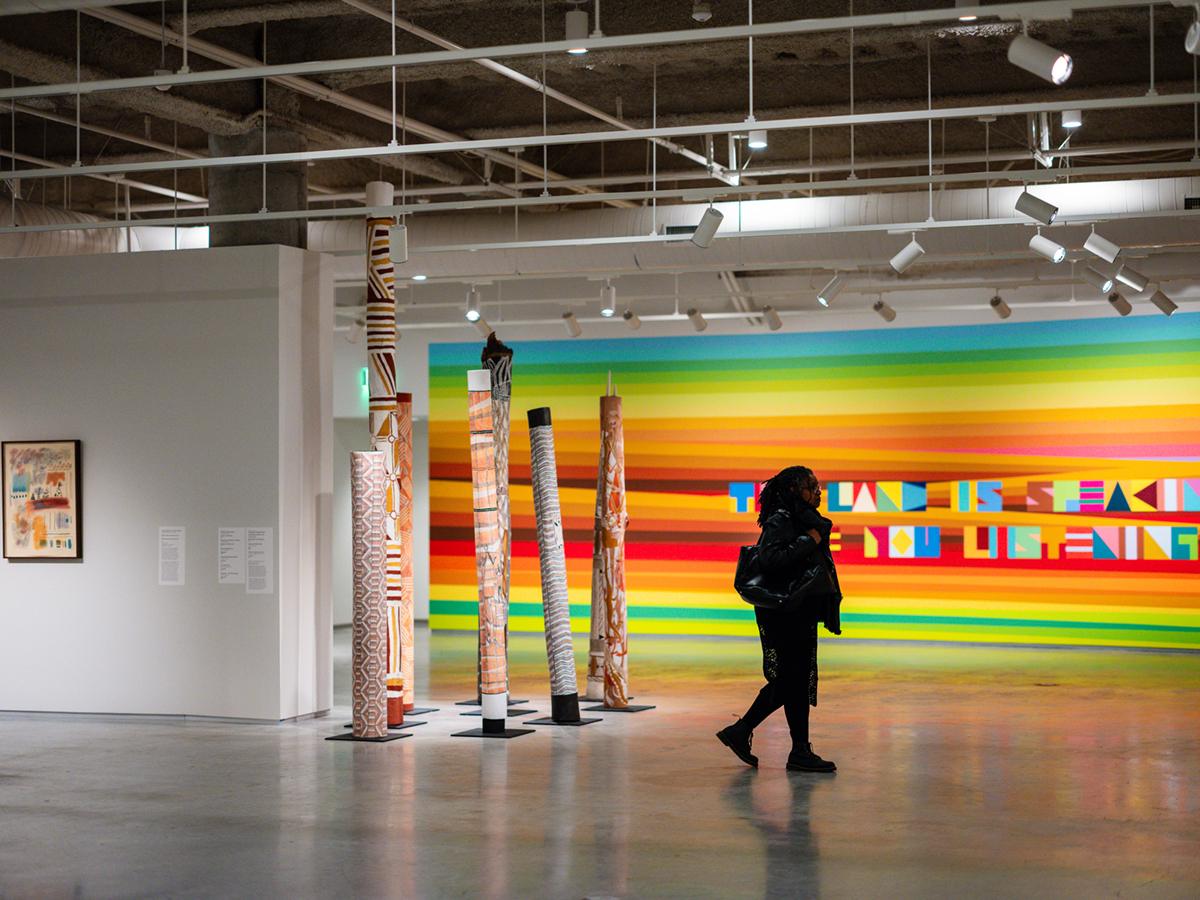
Jeffrey Gibson’s (Mississippi Choctaw/Cherokee) mural, The Land is Speaking, Are You Listening (2022), sets the intention for the first section, Listening to the Land, and the exhibition as a whole, with striations of vibrant colors forming bold horizon lines and the titular text spelled out in camouflaged geometric letters. The section has the work of over fifty Indigenous artists from Australia, the United States, and Canada and is about slowing down, paying attention, returning to, caring for, and respecting the land.
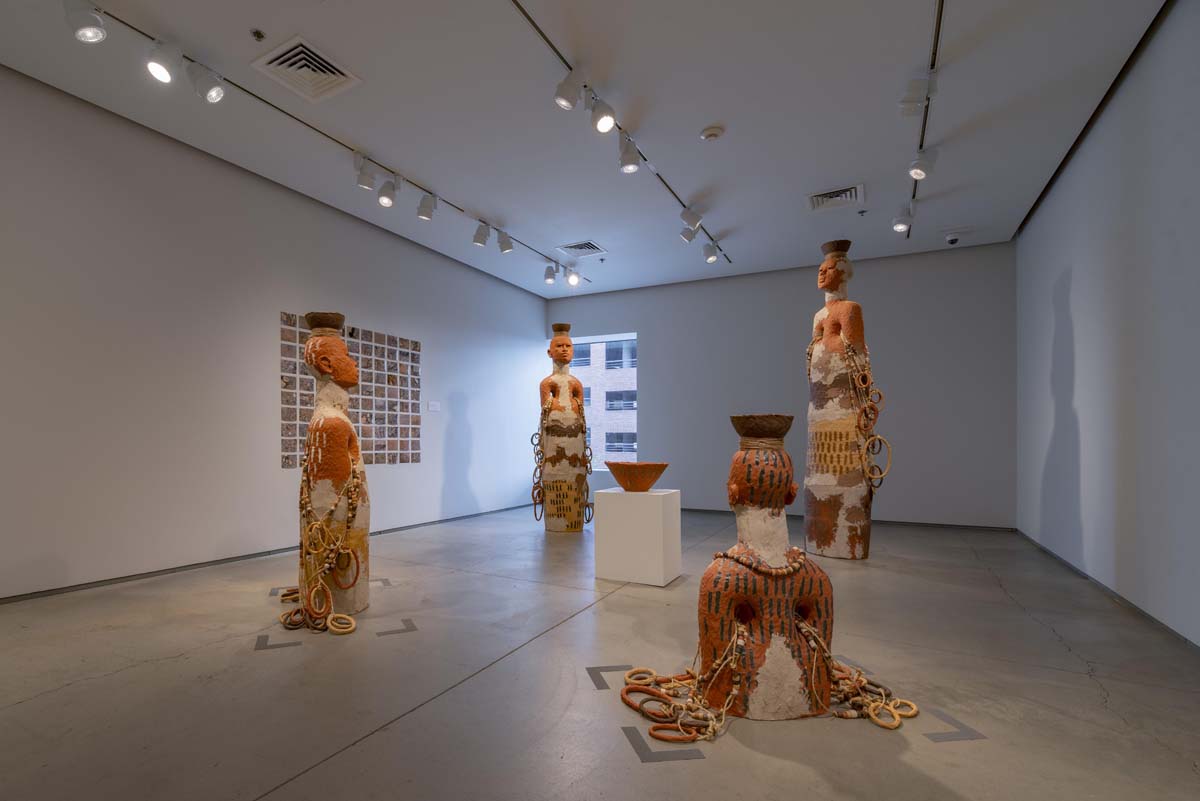
Listening can mean many things, whether it be through touch, sight, sound, or memory. Rising up out of the floor, Rose B. Simpson’s (Santa Clara Pueblo) large ceramic figures, The Four (2021), serve as a reminder that we come from the earth. Memories carried in objects and touch inspired Eric-Paul Riege’s (Diné) jaatłoh4Ye’iitsoh [21-22] (2025), gigantic black and white earrings for the big god, Ye’iitsoh, from Diné creation stories which can be gently interacted with. Walking through the installation, gently touching the earrings there is a distinct sense of connection to something larger.
Catcher (2022) by Brad Kahlhamer is an intricate dreamcatcher made of wire and mixed media with “pay me so I can pay them” repeating around the edge of the circle, catching the sisyphean nightmare loop of the capitalist system. Whereas Teresa Baker’s (Mandan/Hidatsa) abstract mixed-media landscapes, Fishhook of Tomorrow’s Tug (2023) and Missouri River (2022), recall Ellsworth Kelly’s abstract paintings, her usage of natural materials like yarn, beads, and sinew touch the deep past and the deep future layered atop a wholly unnatural material: Astroturf, which will exist long after we are gone.
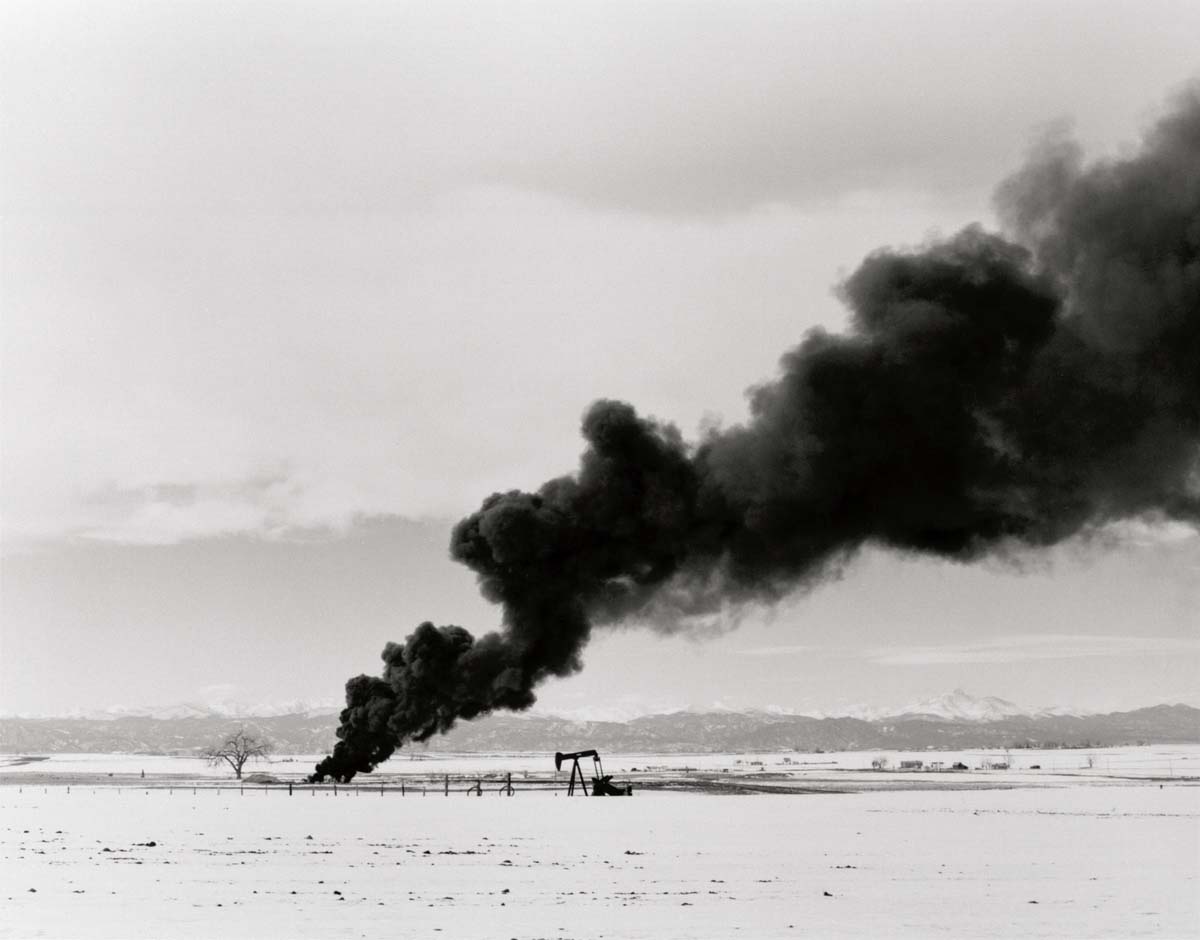
Altered Lands and the Anthropocene is the most doom and gloom section with images of discarded tires, clear-cut forests, copper mines, gravel pits, fires, nuclear test sites, oil spills, and a lithium mine in Chile. These images of the Anthropocene—grotesque, unnatural, unreal, and yet somehow disturbingly alluring in their toxicity—are stark visual representations of humans’ most extractive and devastating impacts on the land. Fittingly, this portion is soundtracked by Yoko Ono’s haunting Hiroshima Sky is Always Blue (1995), recorded with Paul McCartney to commemorate the 50th anniversary of the Hiroshima bombing. Ono’s eerie yowls and groans encapsulate the intense feelings of grief.
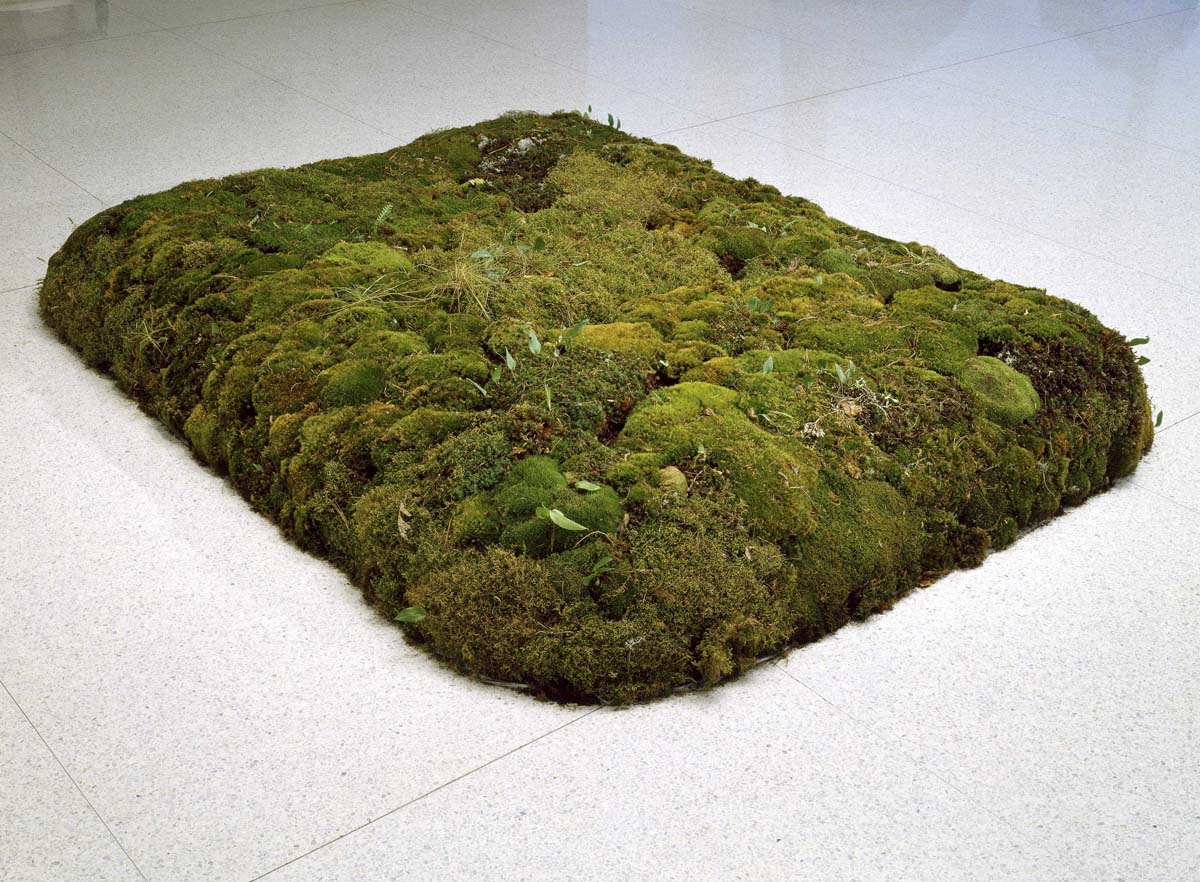
Amidst devastating images of unfathomable degradation, Meg Webster’s Moss Bed, Queen (1986/2005), which is exactly what it sounds like, a queen-sized bed made of moss in the middle of the gallery, is a welcome balm, offering a glimpse of hope that nature can still persist. Webster’s piece leads viewers into This Vital Earth, a section which attempts to dissolve the socially constructed boundaries between nature and humankind and recenters biodiversity and interconnection. Ecofeminism is a tacit theme of the show, and while it does not have a dedicated section, it is embedded throughout, with over fifty percent of artists identifying as female, and it is more overt in this section. Artworks like Ana Mendieta’s Burial Pyramid (1974), a photograph of her body integrated into the landscape, forge new emotional passageways through which people can view nature, placing themselves within it, rather than alien from it.
A bit like climate change itself, Into the Time Horizon unfolded slowly in fragments, then all at once.
The exhibition resists Doomer climate grief and paralysis by presenting alternatives to the current system of extraction and waste in the Circularity section, referencing the circular economy in which everything is reused, recycled, and repurposed rather than disposed of. The artworks in this section are created from repurposed Nike Air Jordans, FEMA tarps, Amazon shipping envelopes, and discarded aluminum, and demonstrate the potentialities of artmaking from discarded materials.
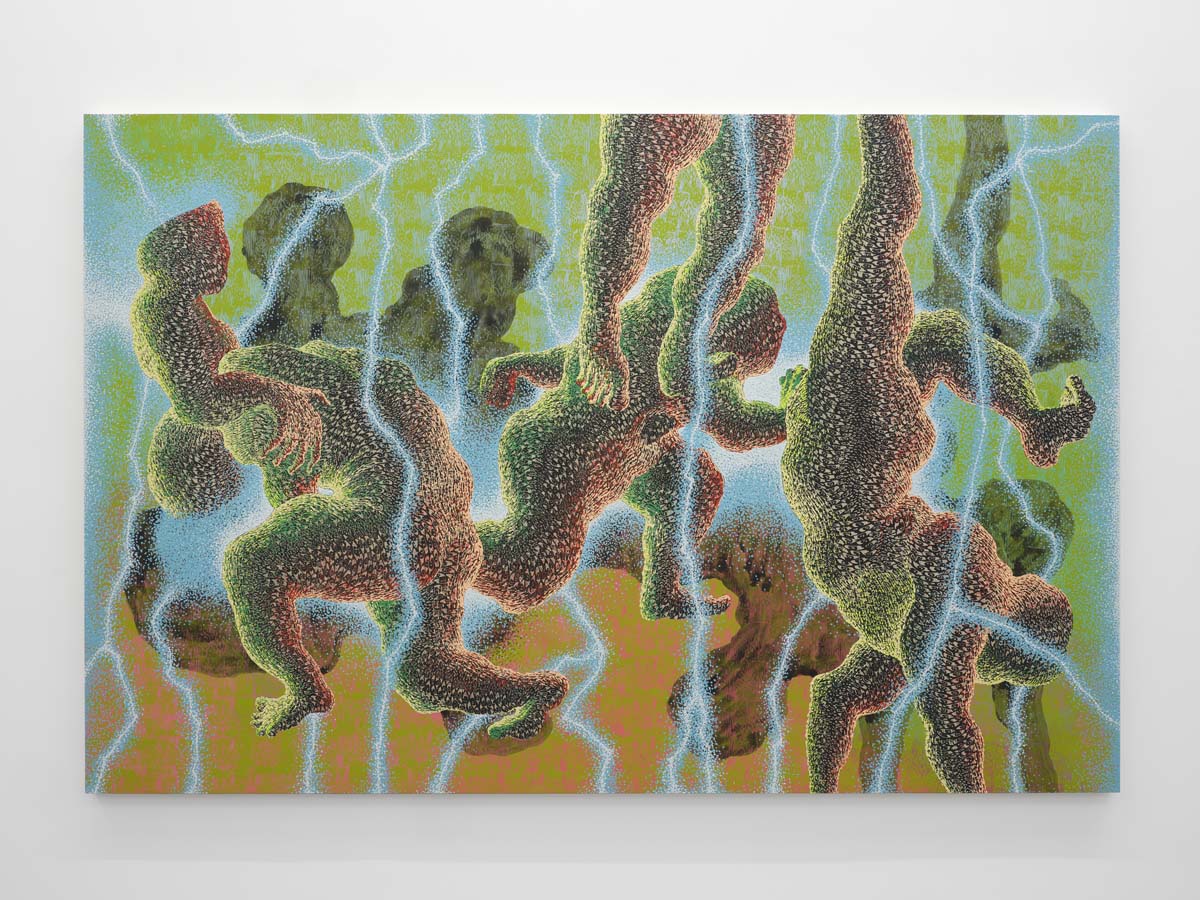
Strange Weather is embodied by works like Didier William’s Siklon 2 (2021), muscular lightning beings crackling in bright acrylic, and Katie Grinnan’s Earthquake Performance (2018), made from Death Valley earth representing the bodily movement of an earthquake. Strange Weather’s striking color palette of fiery reds and oranges contrasting with stark whites and blues of melting glaciers is bright with warning—the weather is angry.
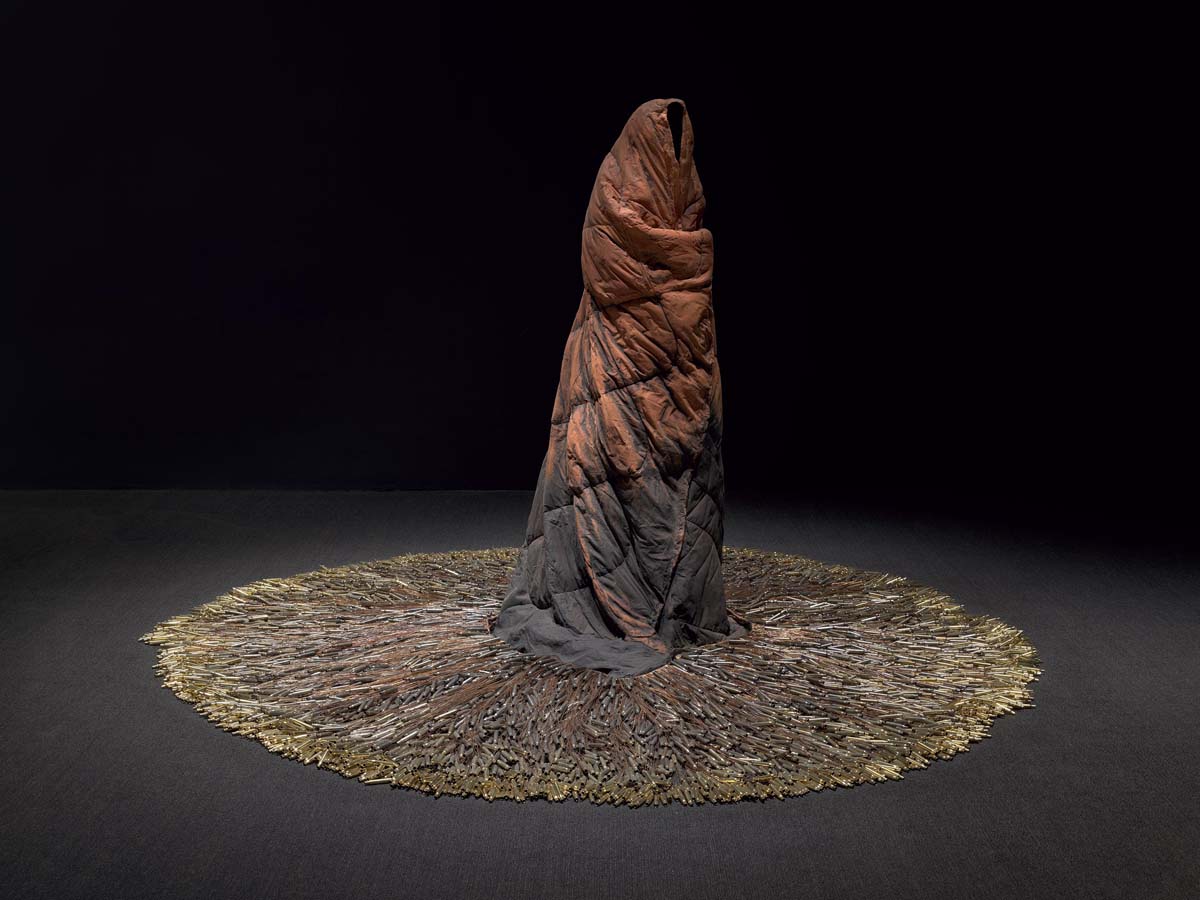
Perhaps the final warning comes from the final section Sixth Extinction: Rebecca Belmore’s (Lac Seul First Nation) ishkode (fire) (2021), a ghostly figure shrouded in a derelict blanket standing in the center of a large array of gold bullets—a ghost, a refugee, an oracle from the not-too-distant future warning of the dangers that lie ahead should we continue down the same path.
Beyond the curatorial effort and their ongoing Art + Environment Summits, the Nevada Museum of Art has been taking tangible actions to address climate change such as adopting a sustainability program, establishing a Green Team, raising money for solar panels, and planting fruit-bearing trees to mitigate carbon emissions. Curator Apsara DiQuinzio also asked select writers, artists, architects, and designers for ten of their ideas to solve the climate crisis in the pamphlet, “Proposals for the Future,” included with the exhibition’s accompanying book, made with bio-degradable and recycled papers materials. I’ll leave you with Simpson’s tenth idea:
“Believe. This is the one I forget the most—to believe in the possibility of change… I believe in our capacity to change, to be reborn into a new world, to step into another option.”