In cyanotypes and soft sculptures, genderfluid artist maps queer elements of Phoenix—from dilapidated signs to their own body.
“The first time I was in front of the camera, I started to feel like I could say things with my body language that I couldn’t speak or have words for,” says Summer Raine Young. “It was really big to be able to talk about my gender that way; the happiness, the frustration, all the feelings that encompass learning your identity.”
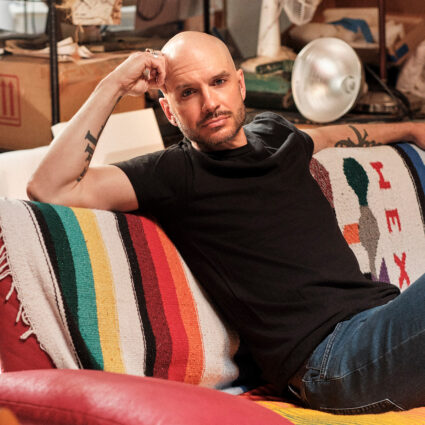
Young is a Phoenix-based, genderfluid photographer and multimedia artist who explores their body and memory through photos both familiar and surreal. Their studio is in South Mountain, but their practice extends to explore the messy beauty of genderqueer life in a desert city. Recurring subjects include empty and dilapidated signage around Phoenix, their nude body posed awkwardly in homey settings, and stark portraits of sapphic lovers and family. Often cast in the dreamy blue of the cyanotype, Young’s imagery has the feel of a diary entry.
I would walk out my door and get screamed profanities at, and just go back inside. I didn’t even know how to exist.
“I’m inspired by what I’m going through in the moment. I like to take little things from my personal life, and blow them up big,” Young says.
Young was born and raised in Baltimore, where they earned their Bachelor of Arts in Photography from the Maryland Institute College of Art in 2019.
“Home and the meaning of home has shifted so much throughout my life,” Young says. “I lived in an outskirt of Baltimore that was very conservative. Around 2020, I was scared to go outside, there were Trump signs on every yard around me. I would walk out my door and get screamed profanities at, and just go back inside. I didn’t even know how to exist. I would literally just be wearing jeans and a hoodie and I couldn’t even take a walk. Things like showing my body hair in public became a huge thing, people would point at me.”
After moving to Phoenix four-and-a-half years ago, Young was able to fully explore their art and identity as a queer person. They say, “It feels so natural to me, I don’t even think about it. But then when you are in public, there is a trigger that turns on where you are so hyperaware. I feel so much more relaxed in Phoenix, and I have spaces where I can just be and exist.”
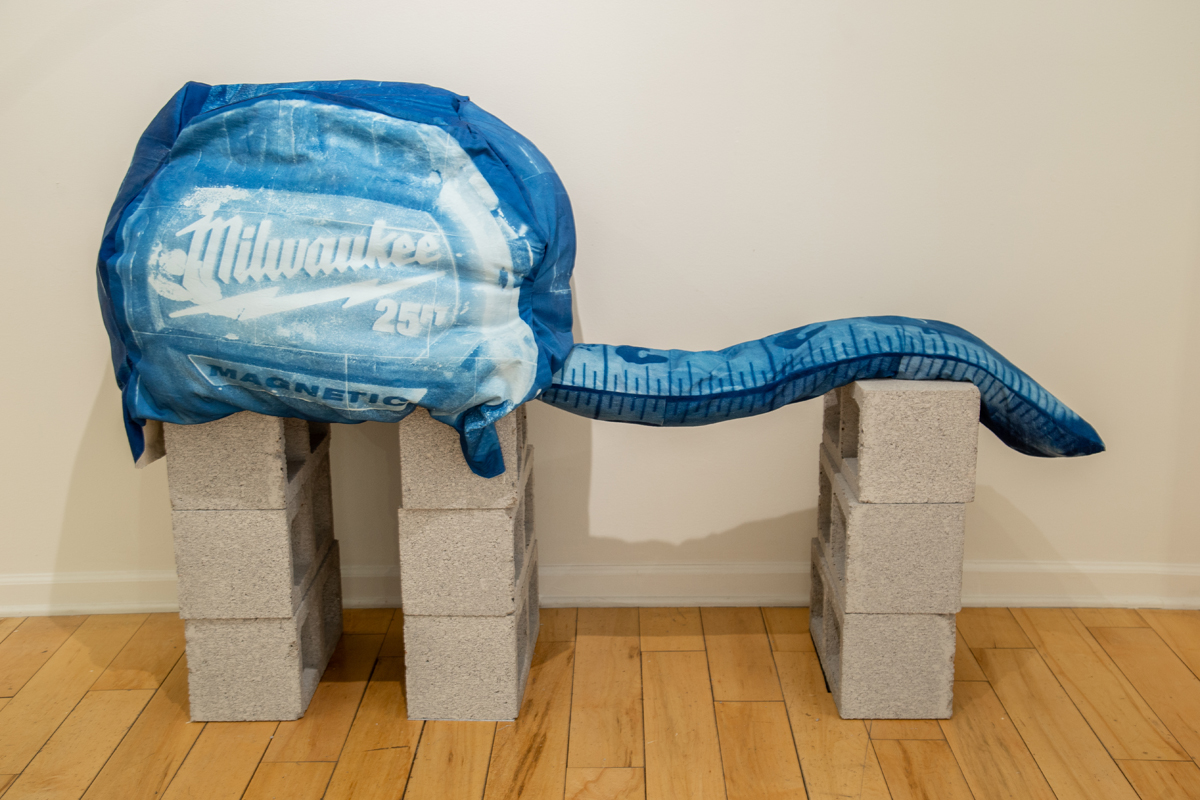
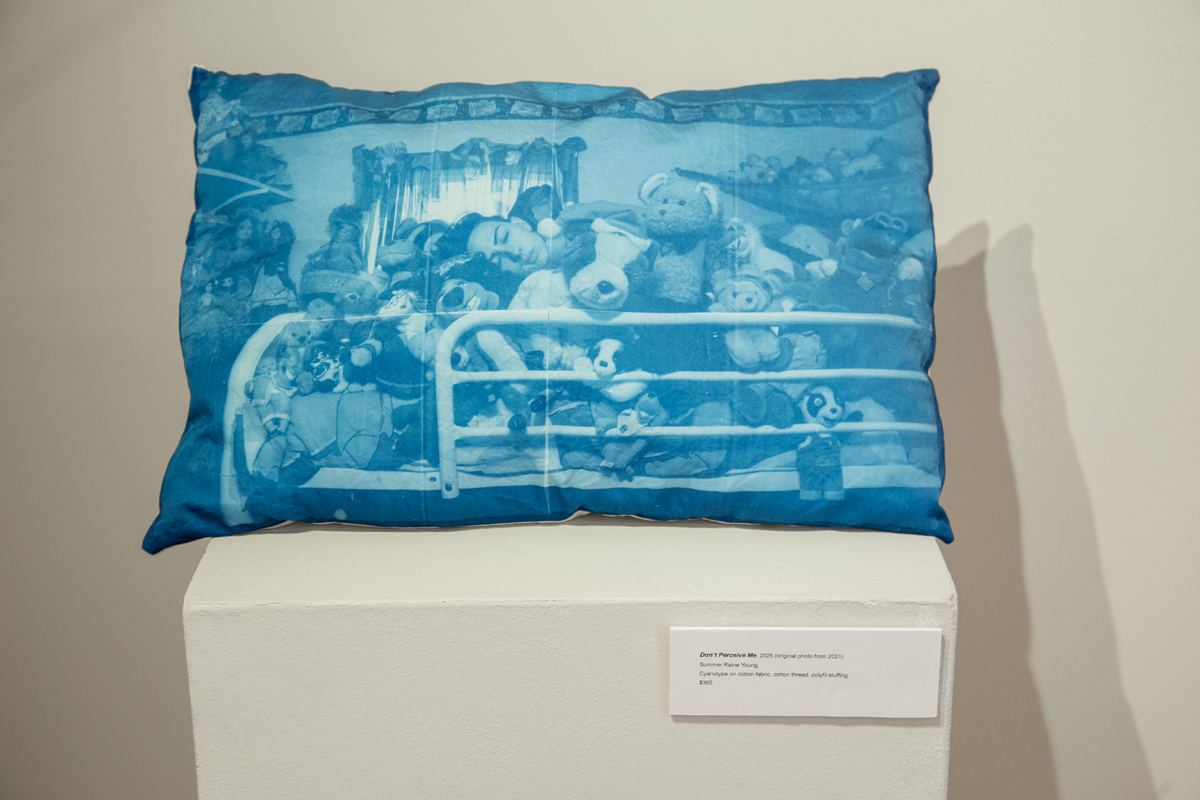
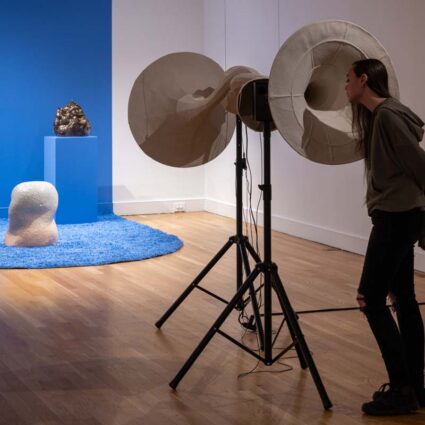
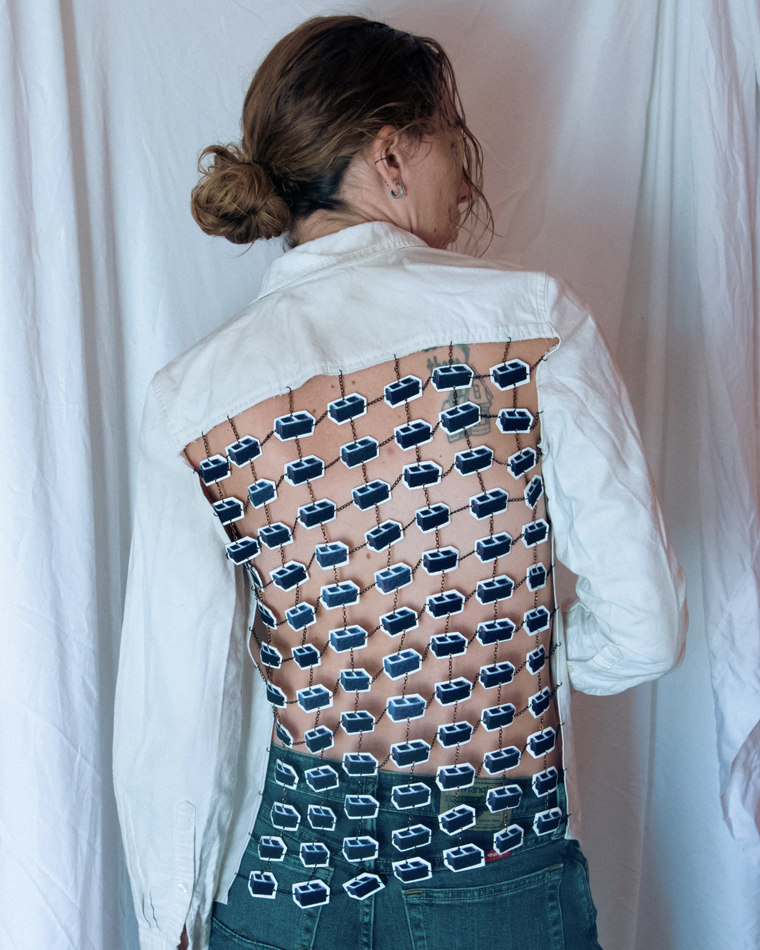
Young is currently an artist member of Eye Lounge gallery in downtown Phoenix, where they recently debuted the third and final exhibition in their residency, Punch List. The show featured photographs, hand-crafted textile pieces from clothing, and giant sculptural fabric pieces aesthetically unified by Young’s signature range of cerulean tones from their cyanotype dyeing processes.
I started doing cyanotypes on clothing I felt close to, that didn’t have a specific gender to it.
Young’s landing in the city was marked by sofa surfing and tumble-down monuments. They recall, “When I first moved to Phoenix, I was living on my brother’s couch and I drove around following empty signs. That was my way of learning the city. I was so intrigued by these giant forms which were constructed with the purpose of telling us something, and now there’s nothing. Some of the signs were so intricate, they have character.”
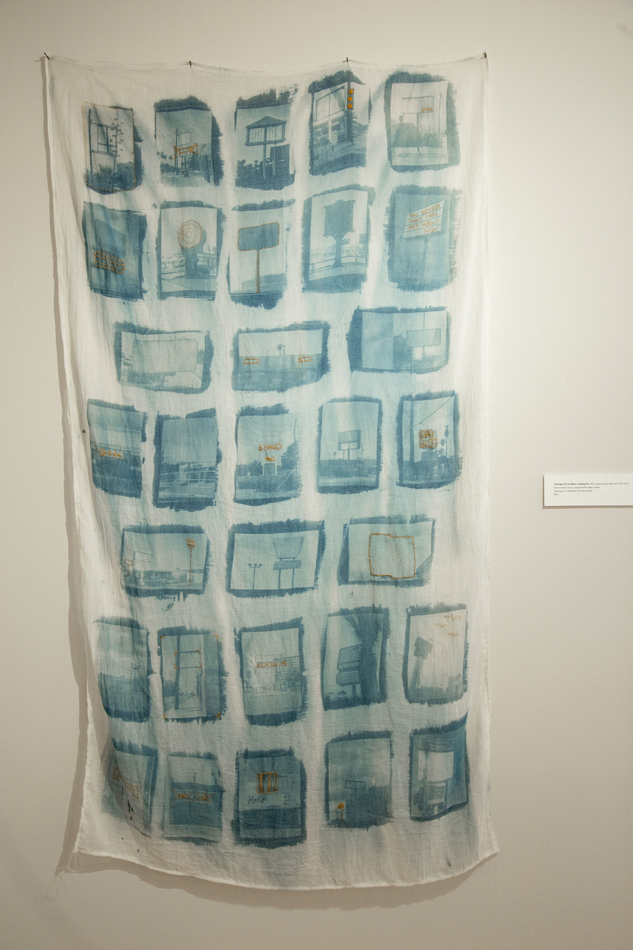
From photographs of these battered signs, Young made a tapestry piece coated with different layers of cyanotype, giving the signage an alluring, ghostly glow. Some signs are left blank, while others are filled in with finely detailed embroidered text by Young. One reads, “You better not make art about this,” a quote that came from a complicated ex-lover, but may resonate with any creative person who has tried to make art out of painful personal experience.
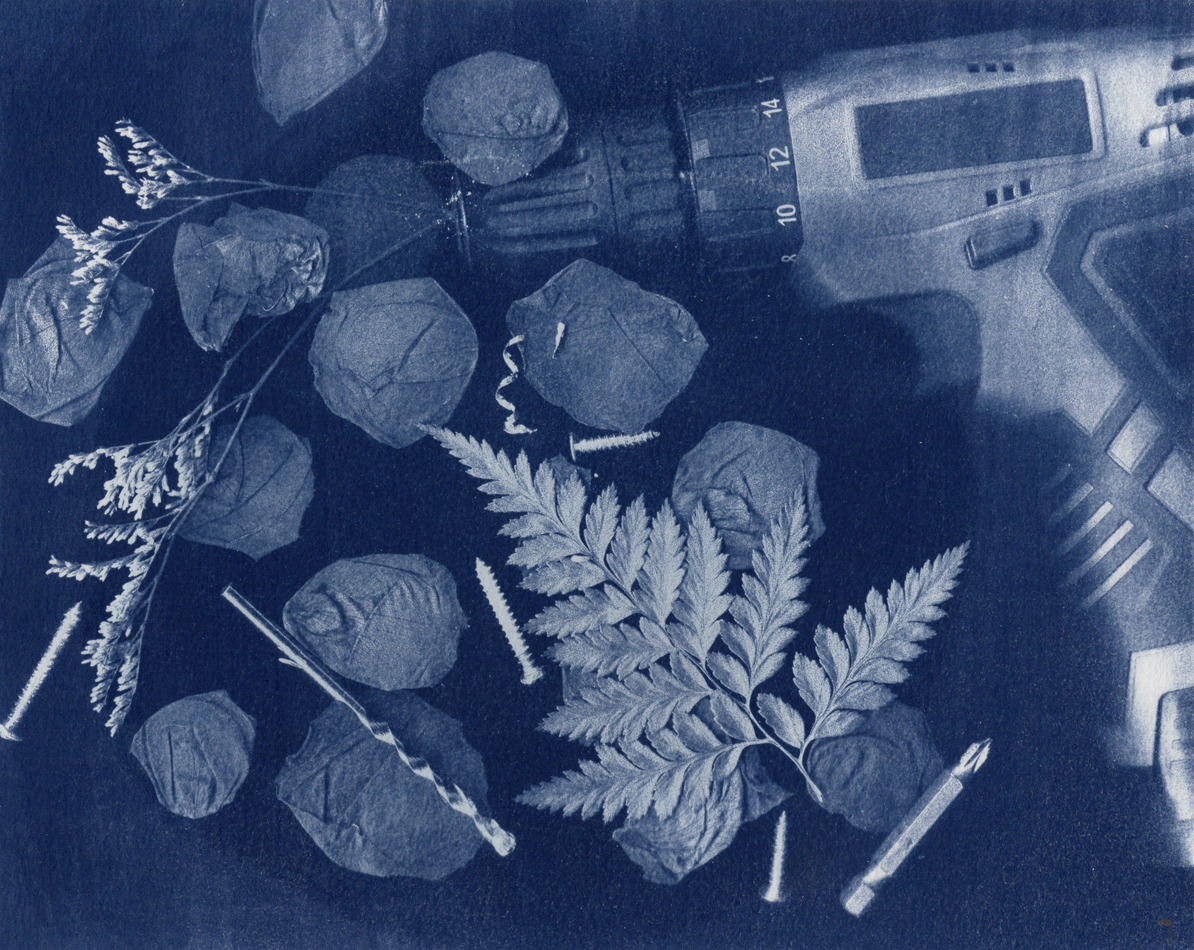
Young has also been weaving together photography and fabric to create pieces of non-binary armor. They explain, “I started doing cyanotypes on clothing I felt close to, that didn’t have a specific gender to it. It shifted from experimenting with making clothes, into art objects. Then that evolved into shapes, which I would print giant photos on, like… creating a massive carabiner, which was out of a scan of my own keychain. My full-time job is as an art handler at the Phoenix Art Museum, so every day I’m working with tools. I wanted to embrace that.”

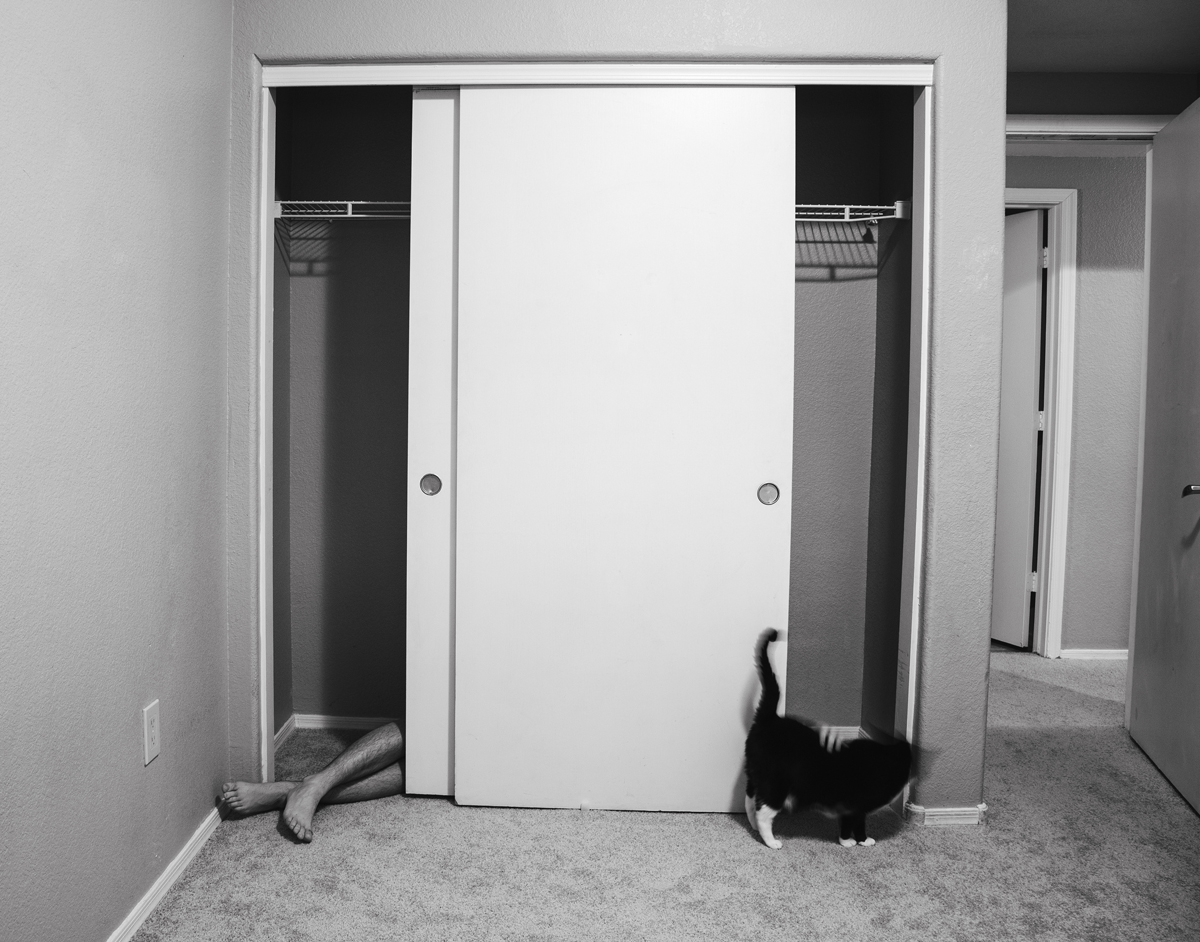
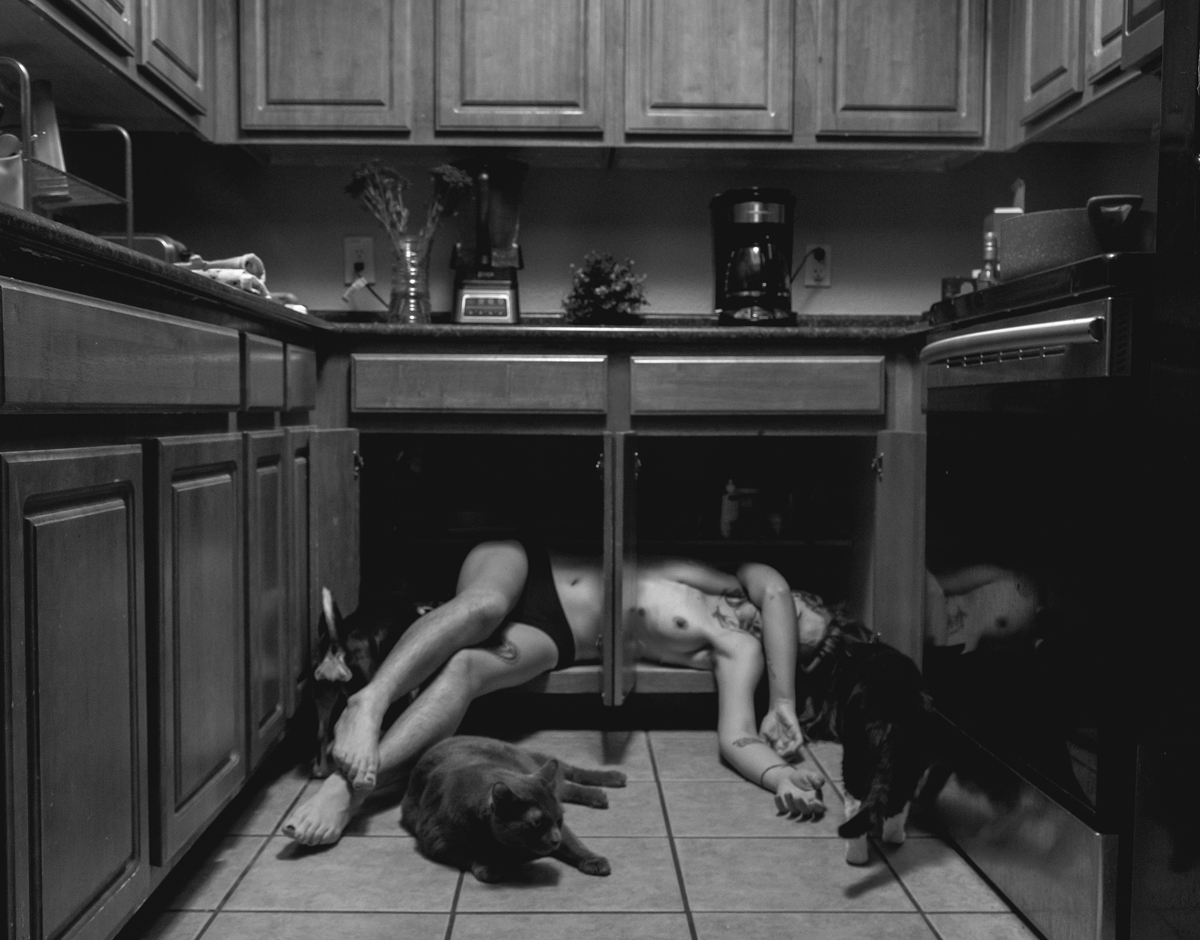
In their self-portraits, Young often poses in contorted shapes, presenting as creature, vessel, and disembodied being. They say, “Growing up Catholic, and later leaving the church, I do think some of that is intertwined in terms of what you put your body through, what feels like a ritual, and the way I would do self-portraiture with this almost obsessive way of contorting my body into uncomfortable spots. A lot of what influenced that was feeling like I could take up space, and pose all over the house in weird spots, taking up space I didn’t feel like I deserved for a really long time.”
Young’s work is ultimately a celebration and reclamation of identity, a loving ode to acceptance of self.
A lot of what influenced [me] was feeling like I could take up space… I didn’t feel like I deserved for a really long time.
Striking out from their studio, Young follows the desert sun year-round to develop their cyanotype prints. They often work in a field near their apartment complex, the range of Phoenix’s South Mountains changing hues with the seasons.
It’s not always a graceful process. Young says, “I only have an eight-and-a-half by eleven printer, so when I do something big, I have to puzzle piece the pieces out, cut them up, tape them together and try to make do with what I have. It’s necessary but also a huge part of the process for me. I love embracing how when you can see gaps, or when you see where the negatives separated, you’re documenting part of the process.”
“I could keep trying and trying to get it perfect, but I don’t think that’s who I am.”