Safwat Saleem uses satire to share his experiences as an immigrant father living with cultural assimilation and loss in the 2024 Arizona Artist Awards exhibition at Phoenix Art Museum.
Safwat Saleem: The Unrequited Love Institute
July 23, 2025–January 25, 2026
Phoenix Art Museum
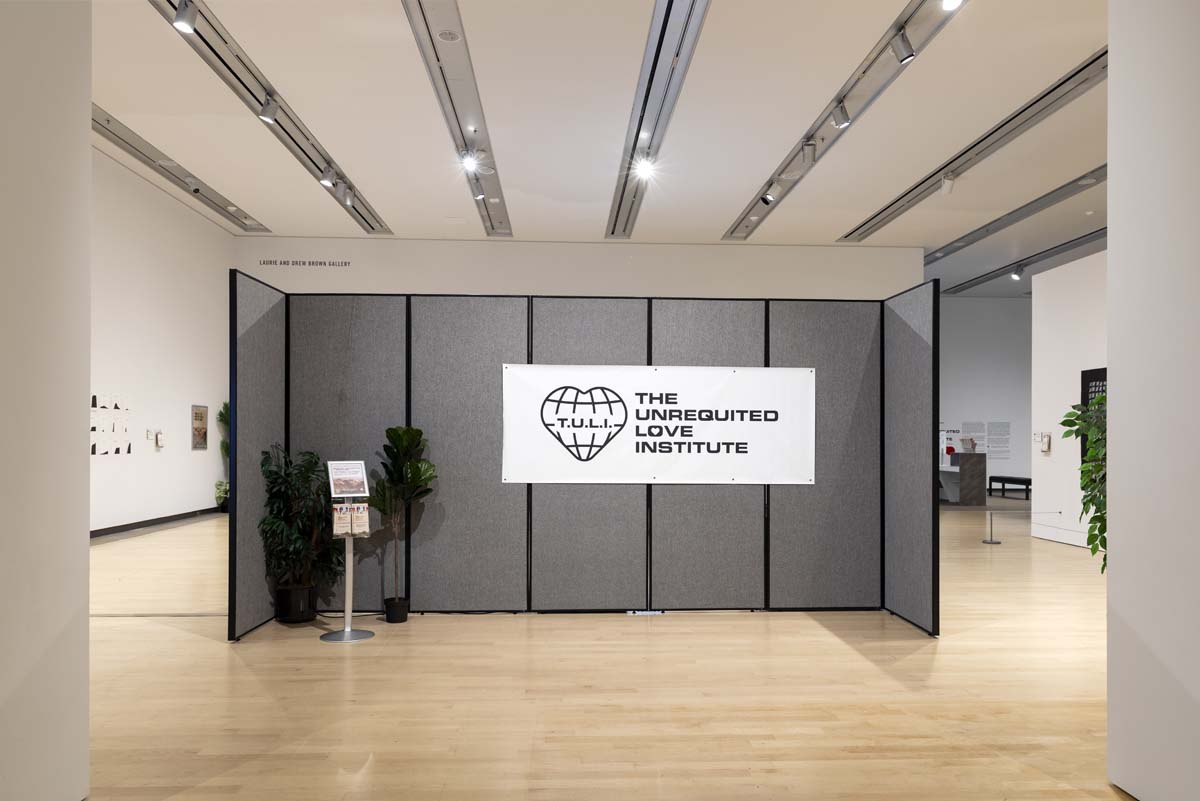
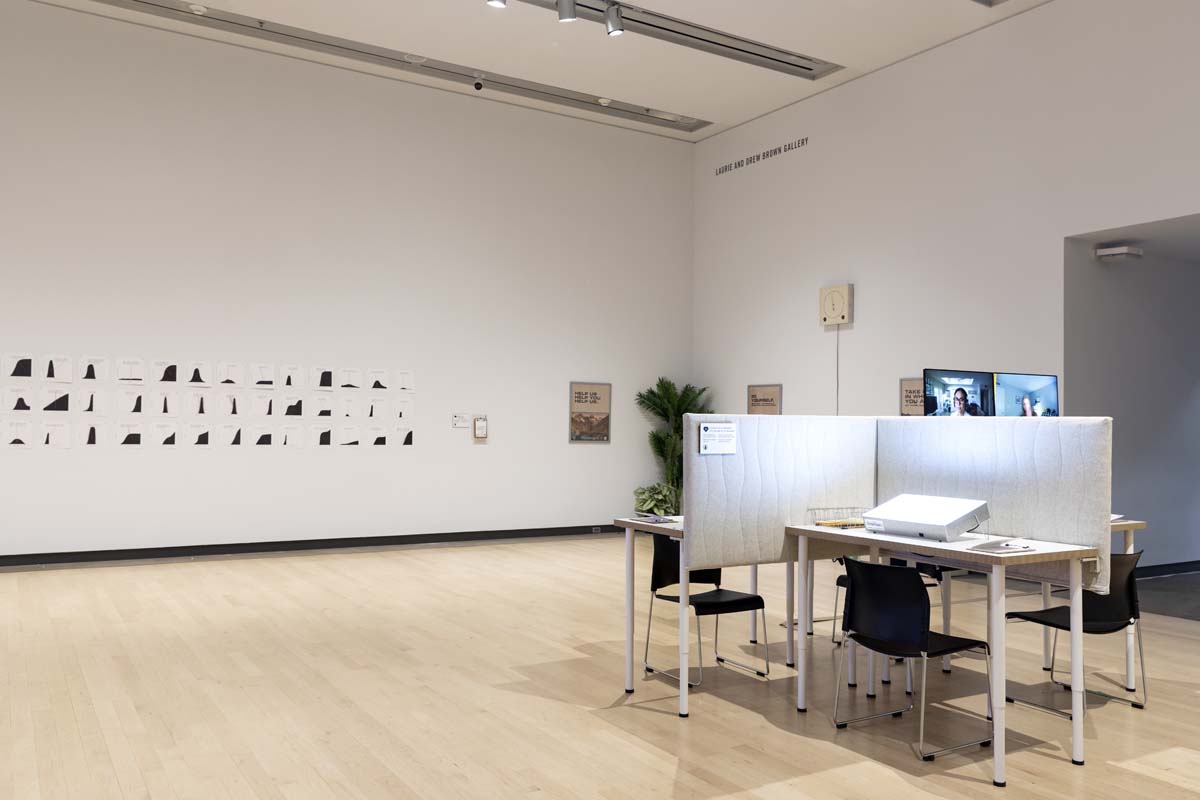
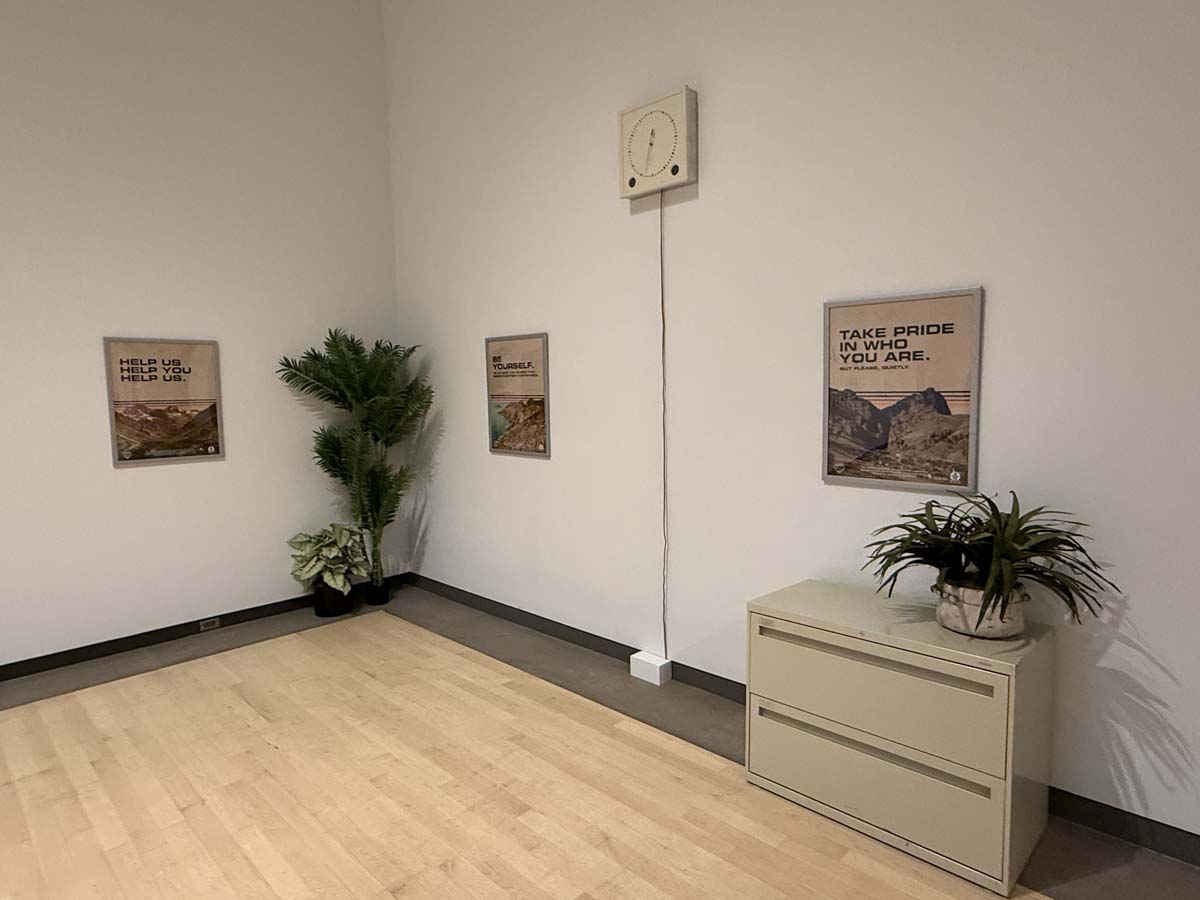
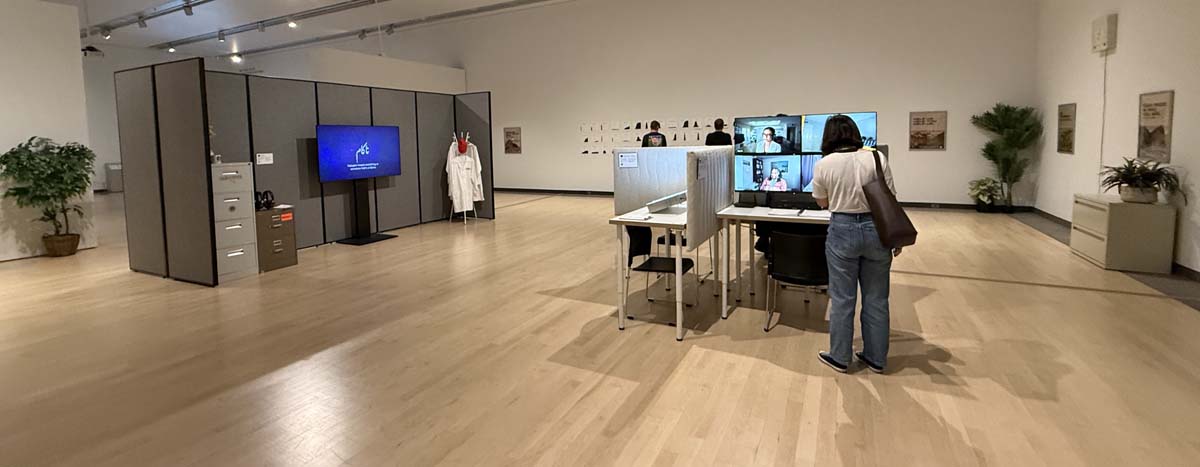
Imagine stepping off an elevator and finding yourself at the reception desk for an office awash in bland bureaucracy. Beige filing cabinets, fake plants, motivational posters, a bulletin board layered in data detritus. It could be any monotone workspace in America, where the erasure of differences leads to a haunting homogeneity.
Instead, it’s the satirical setting for artist Safwat Saleem’s exploration of immigrant experiences with cultural assimilation and loss—including his own.
Using the tools and methodologies of mainstream culture, from data collection to testimonials, Saleem offers an insightful critique of that very culture, using humor as an antidote to alienation and anxiety, but also as a form of resistance.
As a multidisciplinary artist, Saleem draws from his graphic design background to create a cleverly packaged entity called The Unrequited Love Institute (T.U.L.I.), which seeks to “refine” immigrants. Essentially, T.U.L.I. teaches immigrants to deny or erase their own histories, identities, and dreams to “fit in” and conform to societal expectations.
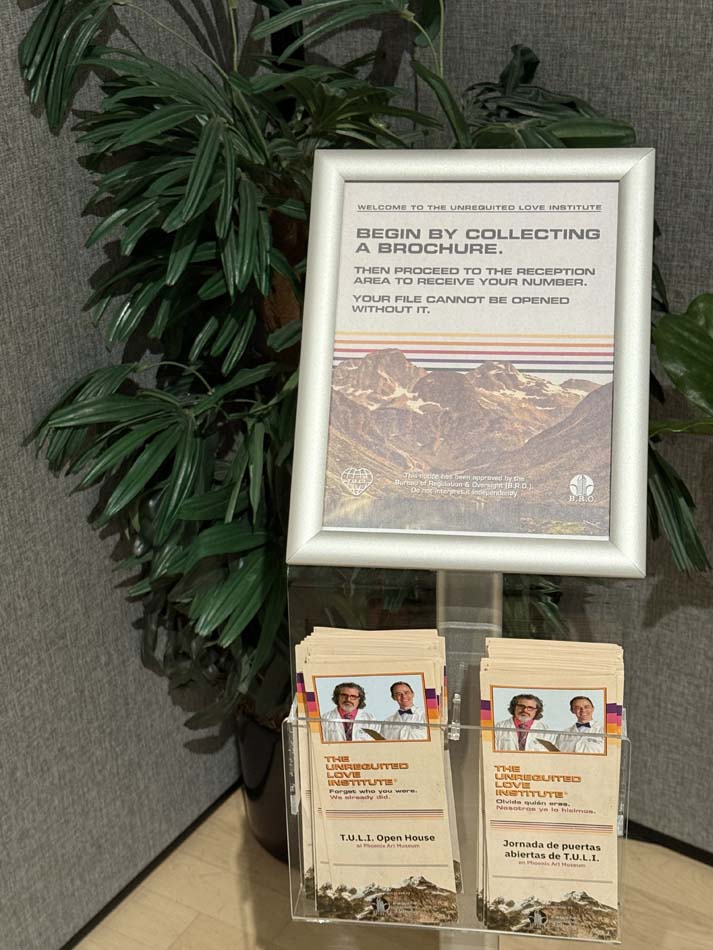
Within this framework, the artist presents branded elements, including a brochure that expands on the institute’s mission, values, and goals using the language of propaganda. But he also positions numerous artworks as artifacts, suggesting that they speak to a before-time when immigrants were free to share their stories.
Saleem created T.U.L.I. as a single site-specific immersive installation for this exhibition, incorporating several pieces from his existing body of work among these artifacts, in addition to creating new works. The solo exhibition was granted as part of the Scult Family Artist Award at Phoenix Art Museum, which recognizes a mid-career Arizona artist each year. Saleem received the award in 2024.
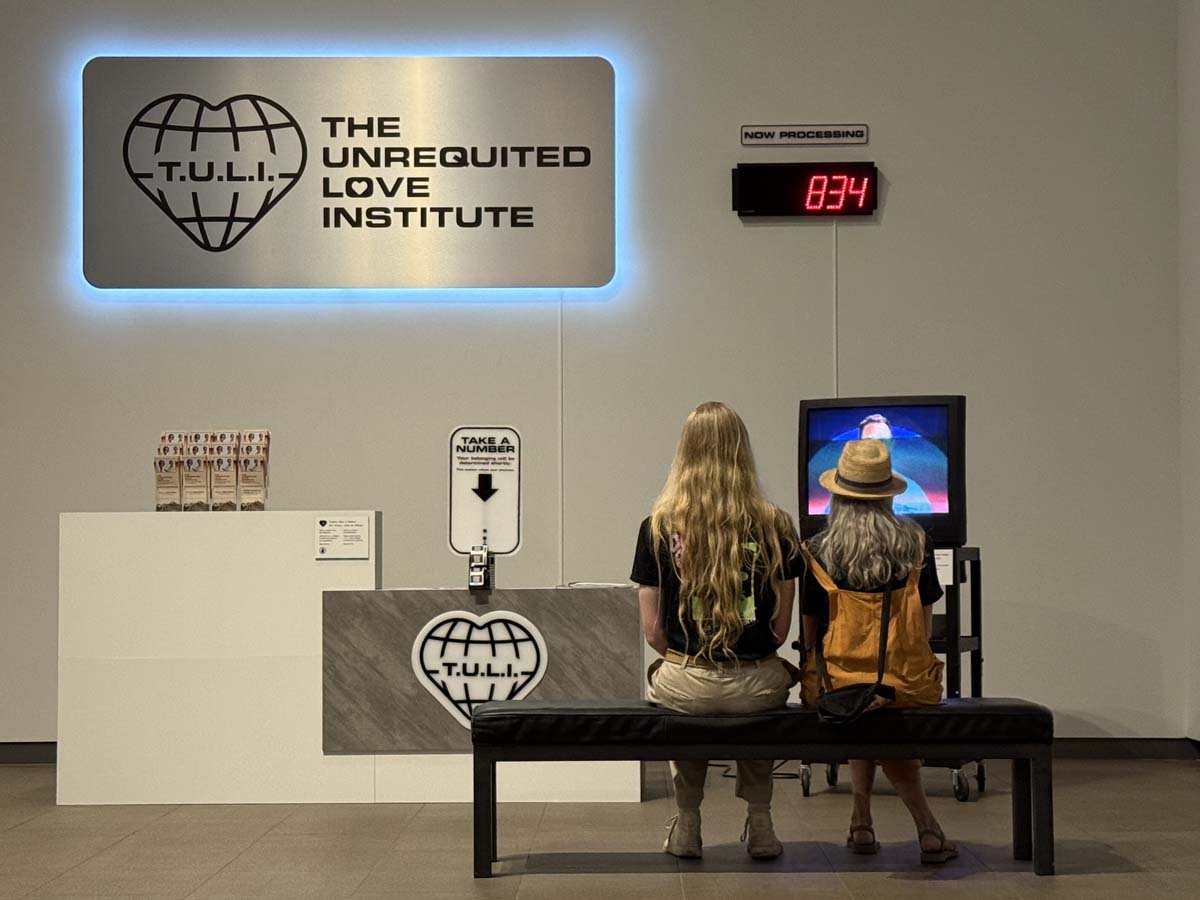
Entering the exhibition space, viewers find an unmanned reception desk complete with “take-a-number” system and orientation film that opens with two men donning white lab coats. “Forget who you were,” they say. “We already did.”
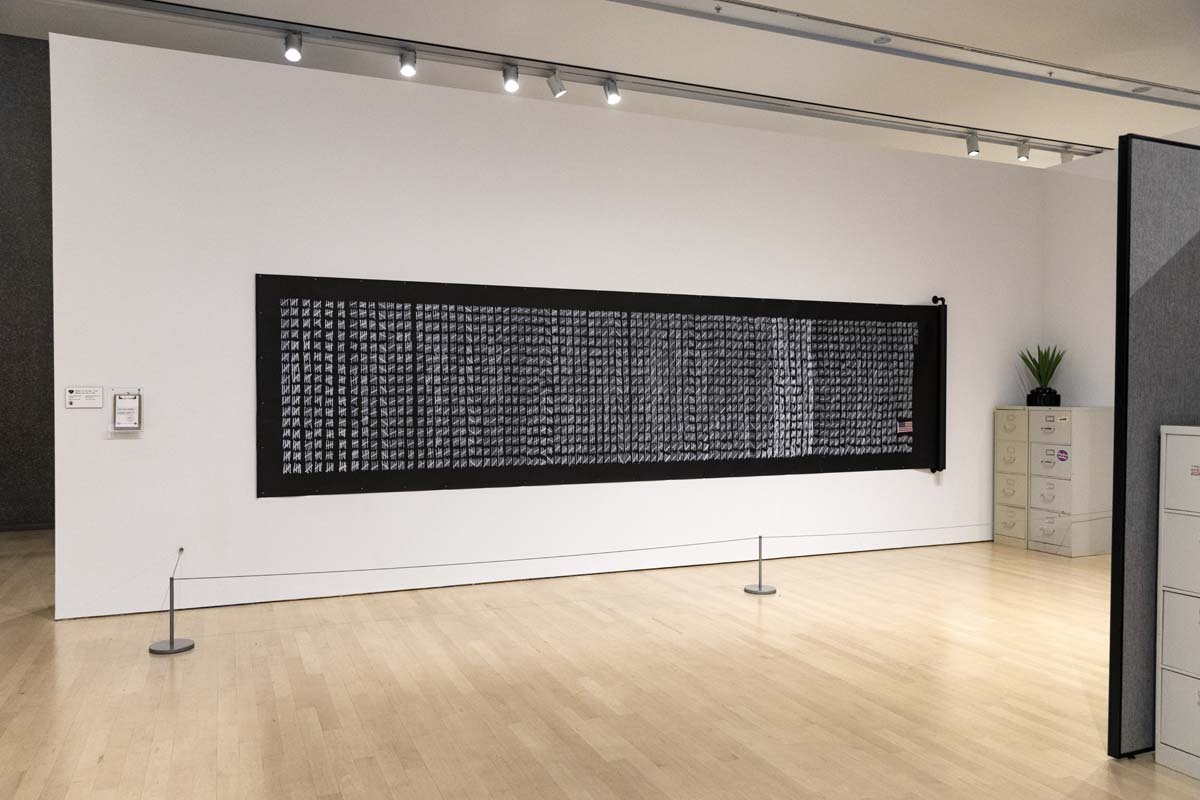
Saleem’s work is rooted in his lived experience as a Pakistani American immigrant who spent nineteen years in the U.S. immigration system. For Number of the day: 7,103 (2025), he made one mark for each of those days, adding a small polyester American flag he received during his naturalization ceremony.
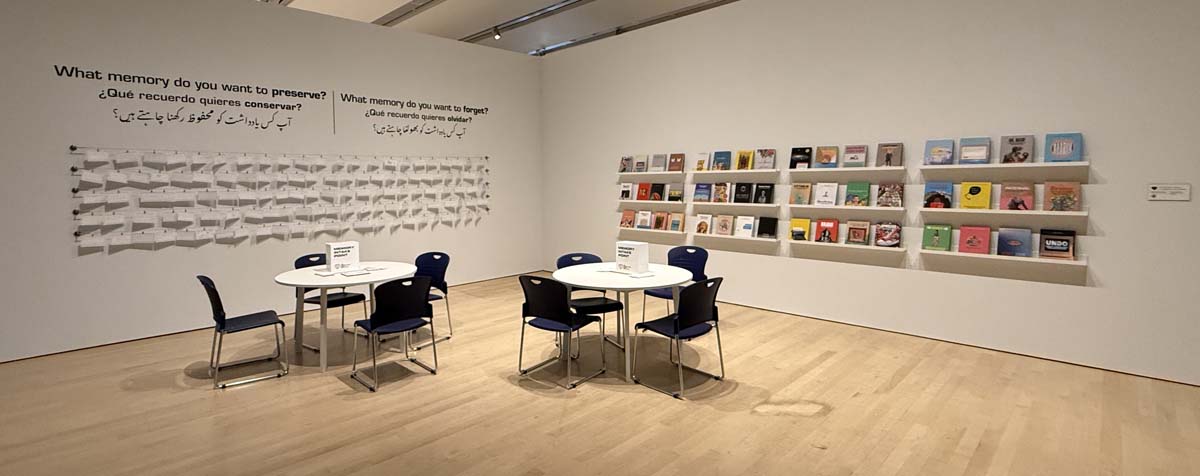
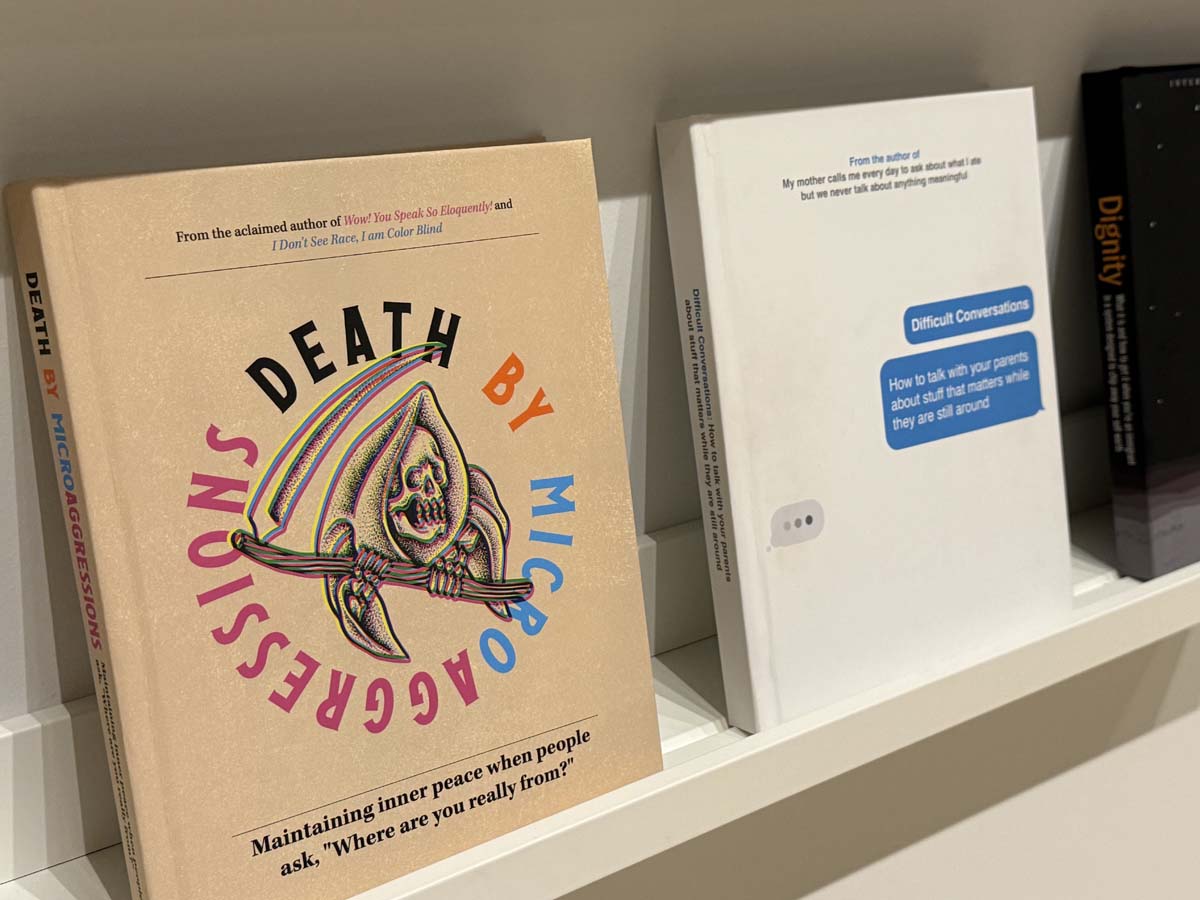
Floating shelves along a gallery wall hold The Self-Help Library (2021-2024), a series of fifty hardbound books Saleem wished had existed during his immigrant journey, their titles including Death by Microaggressions and Fitting In: How To Deal With Being The Only Person of Color In Any Situation.
By using common objects such as books and recipe cards, Saleem creates a sense of relatability and foregrounds the concept of shared humanity.
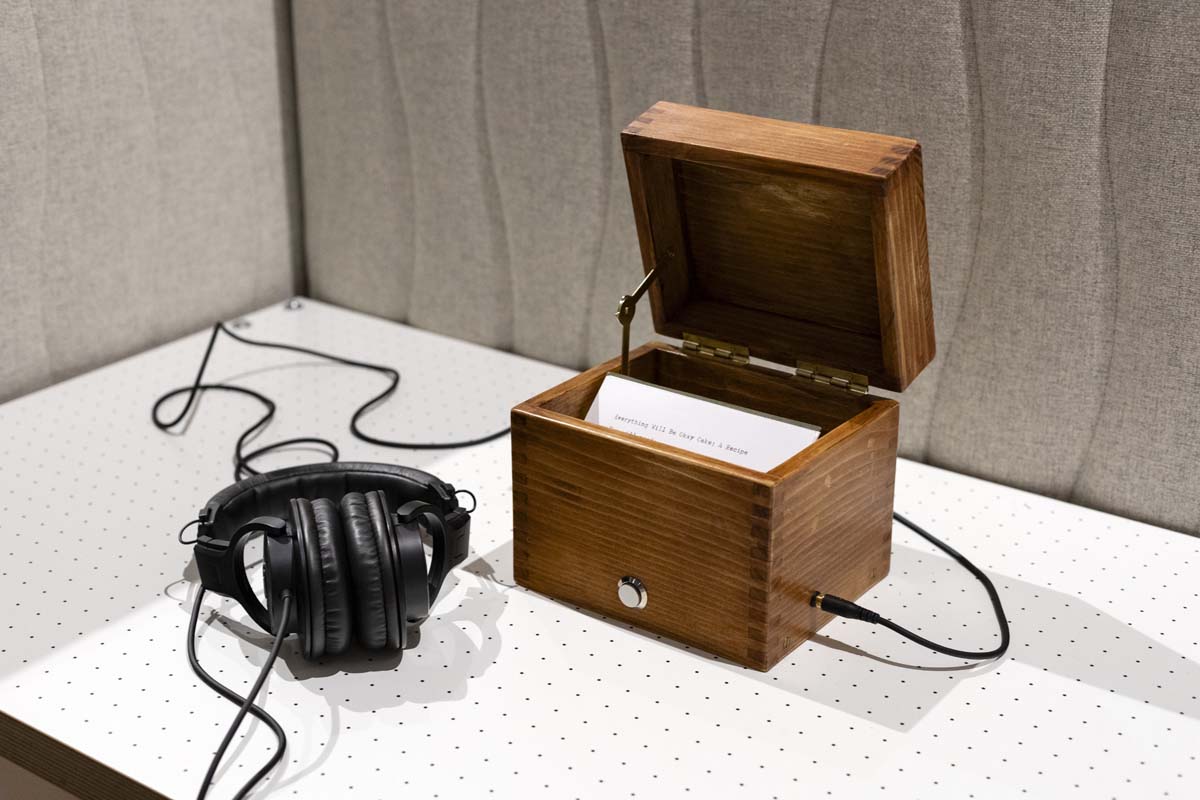
Several works center on the artist’s relationships to his daughter and his mother, for whom language and food are important sources of cultural identity, memory, and connection. They’re particularly affecting now, as Americans are witnessing ICE officials ripping families apart in school, faith community, and other settings. In the video 22 Words (2023), we hear Saleem and his daughter during a lesson on Urdu words that include mootaasib (bigoted), jumhooriyut (democracy), jehaalut (ignorance), and mohaajir (immigrant). (Urdu, which Saleem speaks to his daughter at home, is the national language of Pakistan.) For Comfort Food (2022), he’s filled a wooden recipe box with cards bearing typewritten imaginary recipes such as “How to Sleep When the World is Falling Apart Chai” paired with an audio story about how baking with his daughter helped him make art again during a time when he wasn’t sure he ever would.
By using common objects such as books and recipe cards, Saleem creates a sense of relatability and foregrounds the concept of shared humanity, countering the “otherness” at the heart of so much modern-day xenophobia. Here, he fosters genuine empathy.
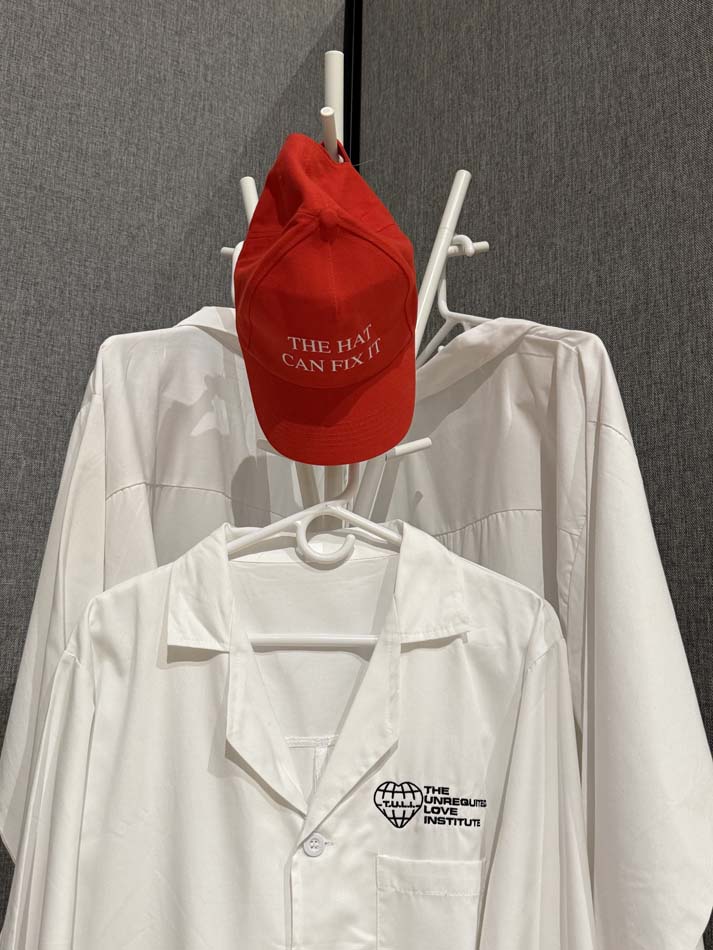
Some objects, including a red baseball cap emblazoned with “THE HAT CAN FIX IT” call to mind a very specific contemporary political movement aligned with anti-immigrant ideologies and policies. At times, Saleem veers into a sardonic tone, as with a B.R.O. (Bureau of Regulation and Oversight) sticker that features a phallic logo and nametags for the fictional trio of Dr. Steven Miller, Dr. Tom K. Wytemann, and Dr. Beverly Crosswhite.
The exhibition is strongest where Saleem couples autobiographical reflections with historical perspectives, eloquently addressing the ways immigrant experiences are shaped by personal, intergenerational histories and their wider social and cultural context. In How to have your cake and eat it too, a 2022 video made in the style of an instructional video, the artist bakes a cake with his daughter, infusing this Western dessert with Pakistani flavors such as cardamom and saffron as he delivers a narrative on colonization. For the 2022 audio installation Oral History (of us), previously shown in the 2023 Arizona Biennial, Saleem reads a letter addressed to his daughter, which contains several centuries of family history. Visitors insert a cassette into a tape player, then discard the tape in a trash can after listening to it, calling to mind the ways immigrants are so often dismissed or devalued.
Throughout the exhibition, Saleem draws on stereotypes of the dominant culture—including its self-help mentality, reliance (until recently) on experts and institutional knowledge, and the embrace of branding and influencer culture—to confront stereotypes against immigrants and other marginalized communities.
The artist has thoughtfully manifested a compelling, cohesive set piece that prompts viewers to question historical narratives and contemporary ideologies, while also thinking deeply about their own relationships to the U.S. and their shared humanity with others.
Most importantly, perhaps, by showing these works in the Southwest, where immigration-related narratives typically focus on the U.S.-Mexico border, Saleem is making a significant contribution by widening the scope of those conversations.