In response to Joshua Ware’s critical reflection on her Denver public artworks, Paula Castillo warns against flattening lived inheritance into a “surface mixture.”
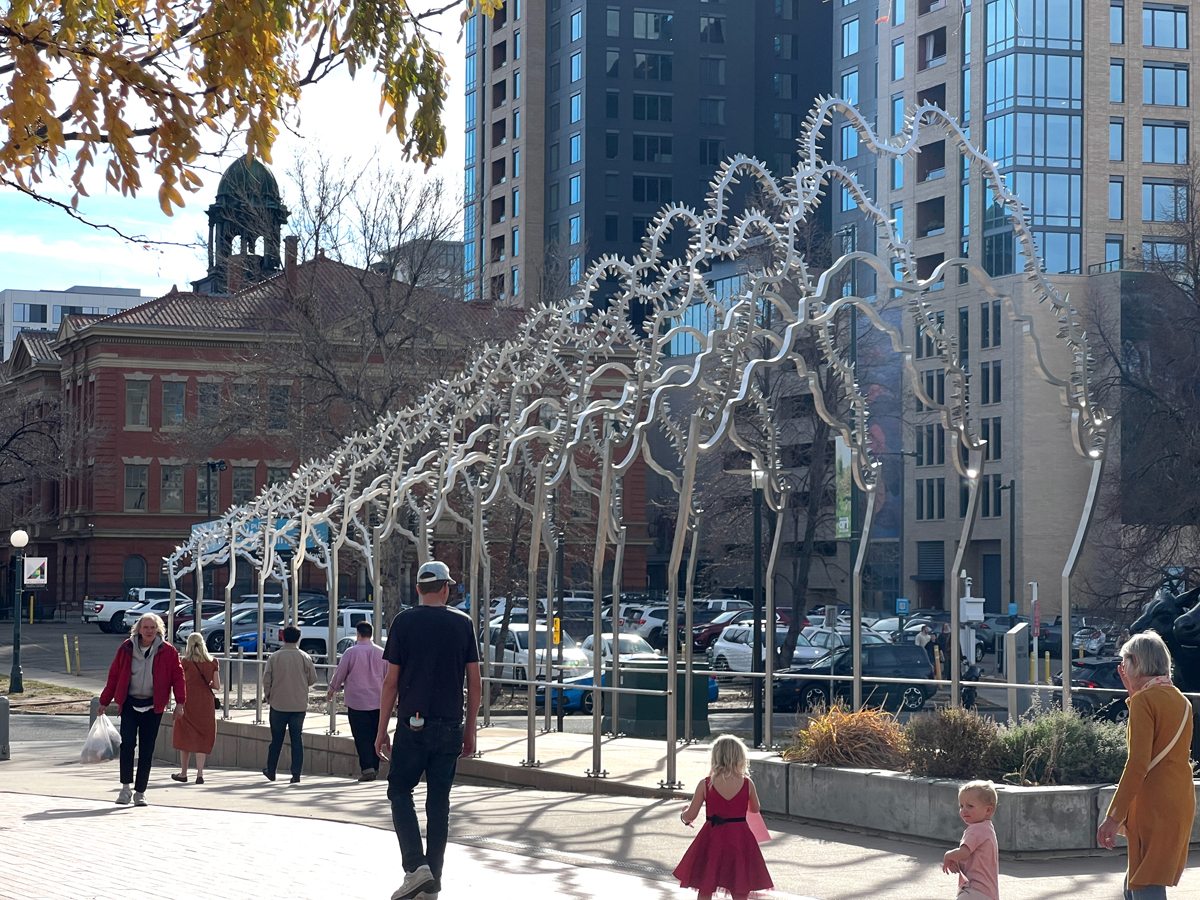
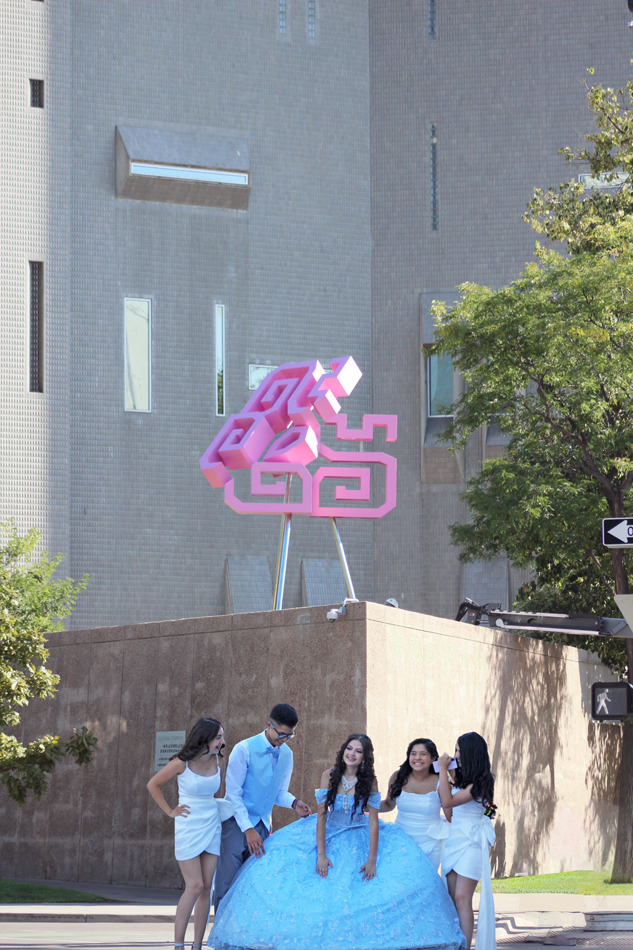
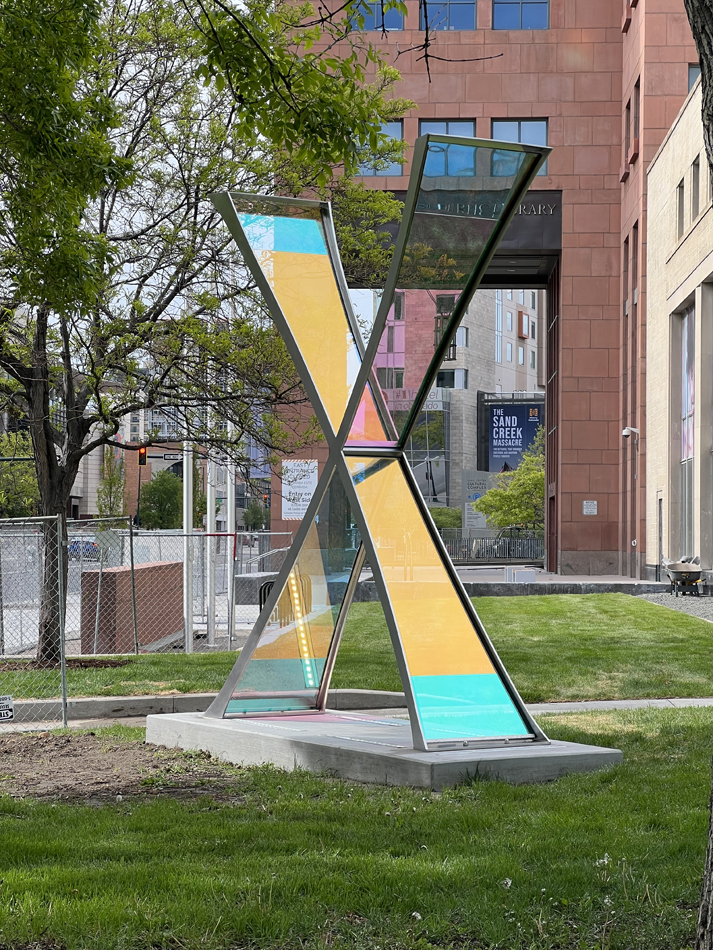
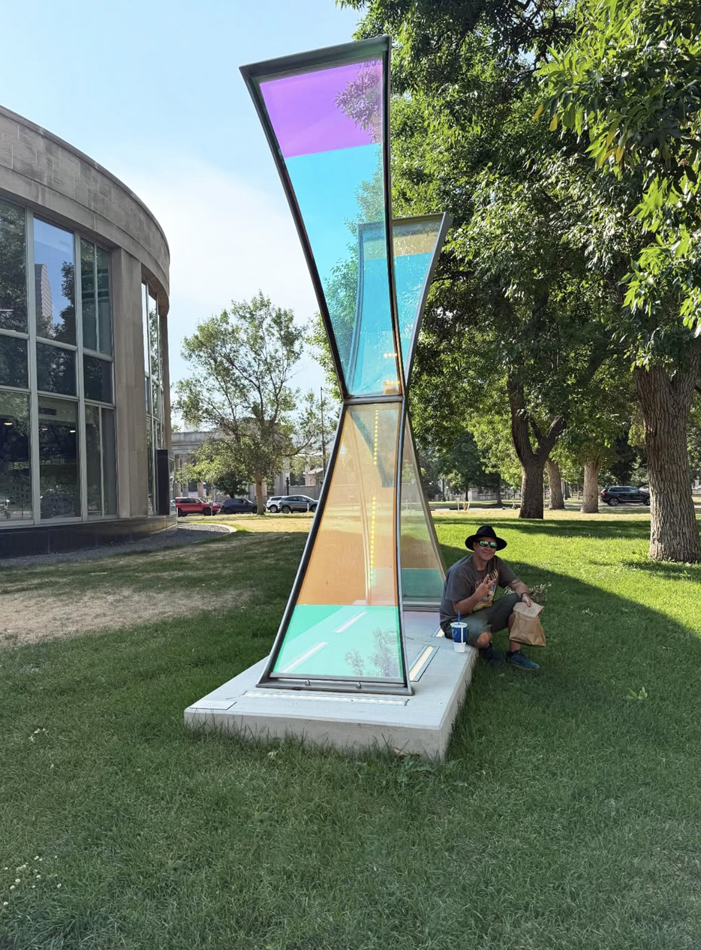
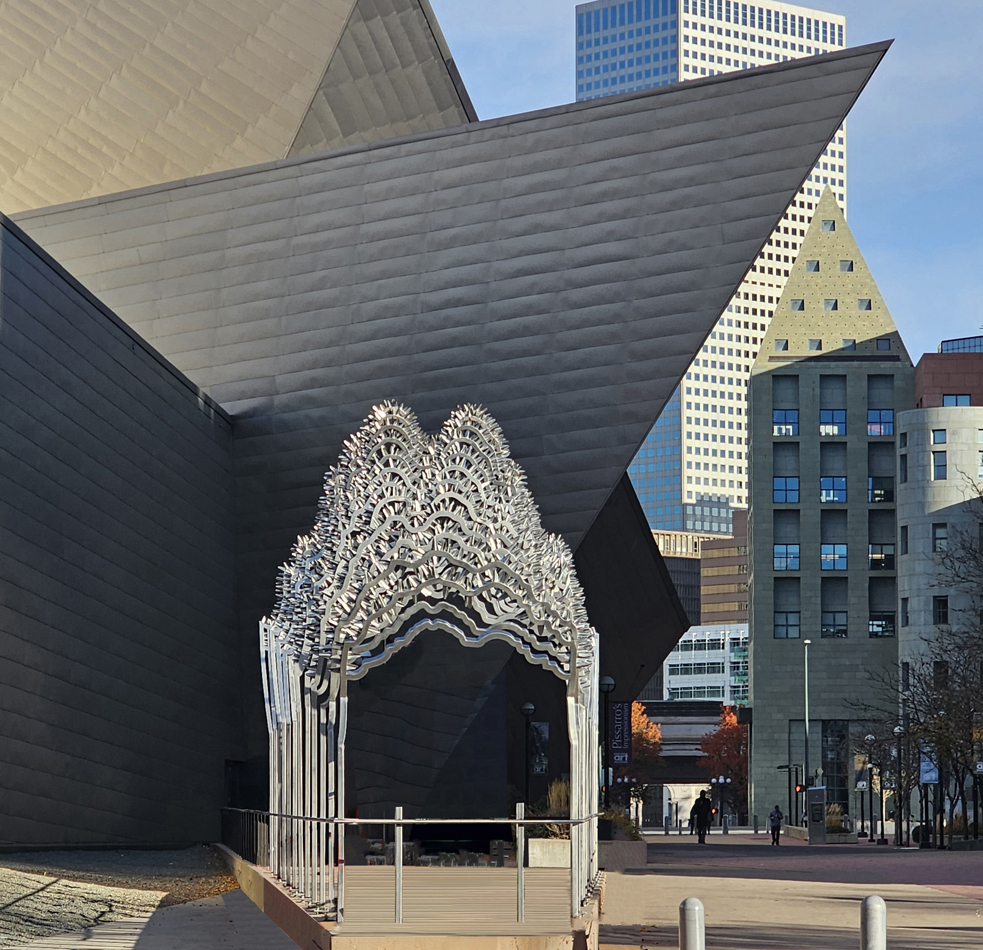
In 2023, the City of Denver selected New Mexico–based artist Paula Castillo to create three sculptures for the Denver Art Museum and Denver Central Library campus. Trestle, Equis, and Glyph were unveiled in October 2025. Joshua Ware’s recent essay, “Unpacking the Uneasy Cultural Hybridity of Paula Castillo’s Denver Monoliths,” considered two works in the trilogy through questions of cross-cultural resonance and hybridity. After an earlier Southwest Contemporary social post used the word “mash-up” to describe the project (our wording, not Ware’s), Castillo reached out with concerns about how mestizaje is sometimes framed in secondary discourse. Castillo’s response below expands on the project’s aims and the historical weight she locates in mestizaje, the process and legacy of racial and cultural mixing shaped by Spanish colonization, Indigenous presence, and the formation of mestizo identity in the Americas.
Dear Editors,
Thank you for the opportunity to extend the conversation around the recent coverage of my public art project on the Denver Art Museum and Denver Central Library campus. I’m grateful for Joshua Ware’s thoughtful essay and for the care taken in engaging the work critically.
I wish to clarify one concern about how mestizaje is sometimes framed in secondary discourse and promotional contexts, where it is described through the language of hybridity or stylistic blending. While that vocabulary can be useful in certain contexts, here it risks reducing a lived historical condition to a formal aesthetic strategy.
For me, and for the communities the work addresses, mestizaje is not an aesthetic device. It is a lived historical condition shaped by lineage, labor, and survival, sustained through psychic, cultural, and political pressure. It names a condition of in-betweenness in which identities are carried through tension rather than resolved into simplicity.
The trilogy was conceived not as a formal exercise in hybridity, but as a civic acknowledgment of that lived inheritance. Denver’s ground has long been shaped by Indigenous presence, hemispheric migration, and the labor of Mexican and mestizo communities whose contributions have rarely been monumentalized within the city’s cultural core. The works seek to inscribe that authorship visibly into public space.
In the original call for qualifications, Denver Public Art and Denver Art Museum asked finalists to expand the city’s public narrative by telling a story not yet fully articulated in civic space. My proposal responded directly to that charge. It was conceived as an affirming gesture of authorship and belonging for Chicano, mestizo, Mexicano, Mexican American, Indo-Hispanic, and broader Southwest Latino communities whose labor, culture, and sustained presence have been foundational to Denver’s history and growth, yet have rarely shared monumental space in a civic core long shaped by neoclassical and Beaux-Arts traditions.
Language shapes whether mestizaje is understood as surface mixture or as foundational authorship within American civic life.
These architectural languages were strategically deployed to manufacture civic legitimacy on newly claimed terrain. In the American West, classical forms functioned as aesthetic claims to European continuity, consolidating authority while displacing and marginalizing Indigenous sovereignties and mestizo lineages already present on the land.
The trilogy sits directly across from Civic Center Park, one of Denver’s clearest expressions of that classical civic language. By placing these works in direct spatial dialogue with that framework, the project expands Denver’s civic history, introducing a hemispheric narrative of encounter, labor, and cultural authorship that has long shaped the region but has seldom been centered in monumental form.
In my engagement with students across Denver, particularly in a district where more than fifty-five percent identify as Latino or Hispanic, I repeatedly encountered a desire for public affirmation. Many expressed that their families’ histories of labor and cultural contribution felt peripheral to official civic narratives. These works emerged from that listening.
In the current national climate around immigration enforcement and rhetoric that casts Latino and Hispanic communities as provisional or recent, the distinction between aesthetic hybridity and lived lineage carries real weight. Language shapes whether mestizaje is understood as surface mixture or as foundational authorship within American civic life.
I also want to note that Trestle, one of the three works, was not addressed in the essay. This piece is grounded in the history of Mexican railroad labor in Denver and was conceived as a civic acknowledgment of that foundational contribution. That history is central to how the trilogy operates as a whole.
My hope is that this clarification situates mestizaje here not as stylistic collage, but as lived authorship embedded in Denver’s past and present.
With appreciation for the dialogue,
Paula Castillo
Córdova, New Mexico
Editor’s note: We’ve added a sentence to the editor’s introduction to clarify that earlier Southwest Contemporary social copy used the word “mash-up” (language not used in Joshua Ware’s essay), and to better explain how this exchange began.