Southwest Contemporary reflects on 2025: 181 articles, 125+ artists featured, and 330,000 readers reached. As AI threatens journalism and the arts, discover why reader support matters more than ever for independent arts media.
Dear friends,
It’s our final article of the year, and it’s always gratifying to look back on all that we accomplished. By the numbers, we:
- Published 3 print magazines.
- Published 181 articles by 64 writers across 2 countries and 12 states.
- Featured 125+ artists from across the Southwest region.
- Featured 48+ regional galleries, institutions, and art centers.
- Reached 330,000 readers, coast-to-coast and beyond.
- Added 30,000 new readers to our audience.
- Held our first benefit party and art auction, raising more than 2x our goal.
- Grew our membership program by 45%.
But of course, the numbers only tell part of the story. Metrics do not reflect the stories we hear from readers, or the meaningful conversations we’ve had with writers, readers, and arts workers. Numbers fail to capture the hundreds of hours our team has spent crafting original stories, reporting, and criticism in service of the arts community across our region.
And, despite our successes this year, we are clear-eyed about the work that lies ahead. Our work falls at the intersection of art and journalism—two industries that are being squeezed in all directions by loss of funding, rising costs, an increasingly algorithmic internet, and AI siphoning original work.
On Giving Tuesday, we shared our convictions about SWC’s role in a rapidly shifting media environment. We know that despite very real threats to our financial sustainability, AI cannot replicate what we do. “As a living, breathing intelligence network of over one hundred regional arts writers… we’re humans in the world—observing, reporting, critiquing, connecting—and [AI models] are our hollow mimics, chewing on the past as we push forward,” editorial director Jordan Eddy wrote.
As large language models steal the content we pay writers to produce (I recently found our reporting scraped by Grokipedia, Elon Musk’s AI-generated online encyclopedia), it becomes harder and harder for readers to find us. And if our traffic drops, so does our income.
While we are committed to keeping our content available for free, that means we need readers to support us more than ever. This year, 78.6% of our revenue came from advertising. 13.3% came from events, grants, and miscellaneous projects. And 8.1% came from reader memberships. We need to continue growing all slices of the revenue pie, but reader memberships are the most impactful when it comes to our editorial independence, revenue predictability, and long-term sustainability.
We hope that some of you will read and value our work enough to pay for it. And that, through a more balanced mix of reader support, advertising, grants, and other miscellaneous projects, we can survive.
I’m afraid that our relationships with the internet will become more complicated and troubled in the coming year. But we, as readers, still have some small degree of agency when it comes to what we choose to click on, consume, and engage with.
As part of our membership drive, arts editor Natalie Hegert wrote about our convictions from this very angle of social responsibility. When the world seems dark and degenerate, “How could art possibly make any difference?” It’s a question we’ve all asked ourselves.
“It’s easy to fall into the trap of feeling useless, until, that is, you think about the power of art to change minds. To communicate and question. To document, advocate, countermap, and resist. Art pushes the needle. It lifts the veil. The world is on fire, yes, but artists are oracles.
“When we report on stories of censorship or removal, or on art that shifts narratives or exposes corruption, or on art organizations that offer solutions, I know that what we’re doing is vital, not futile.”
Without further ado, here are the top ten articles that made an impact on you, our readers, over the last year. Consider this your opportunity to catch up on the most important stories of 2025. Because there is so much more to come!
10. Beautiful Corners: A Road Trip to Witness Larry Bell’s First Cube, and His Last
by Jon Revett, January 30, 2025
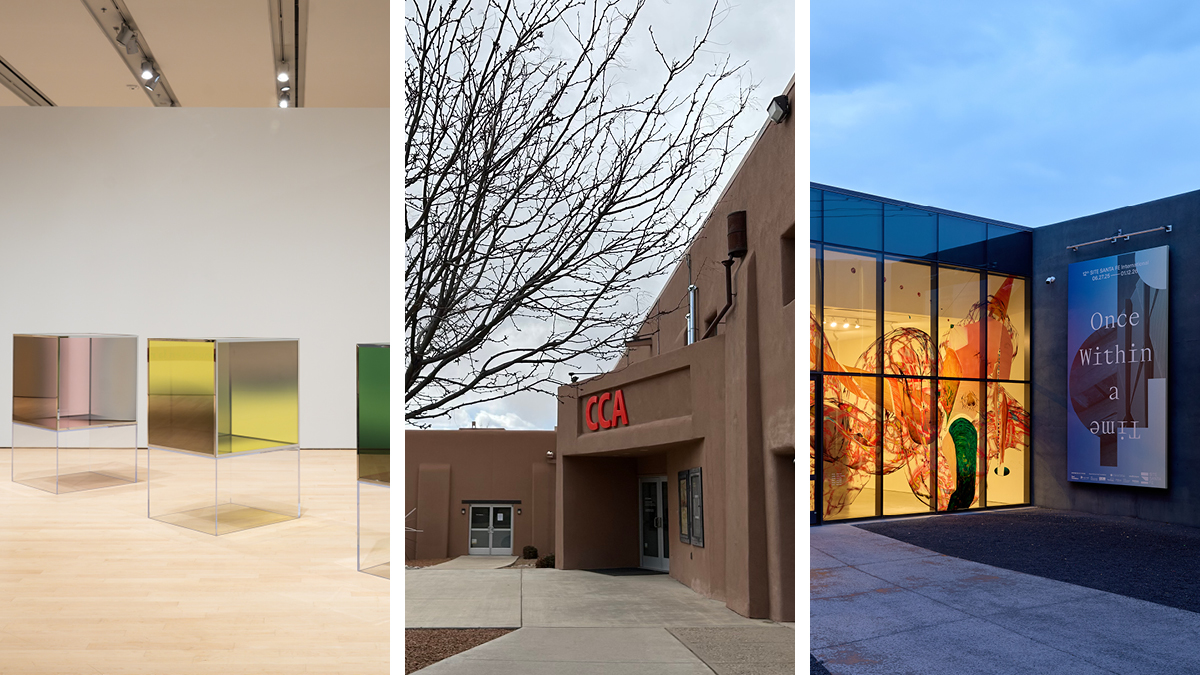
Artist Jon Revett makes a pilgrimage to see his mentor Larry Bell’s career retrospective in Phoenix, and view what the Light and Space master calls his last cube in Taos.
9. Ex-Employees Shed Light on CCA Santa Fe’s Bitter Unionization Battle
by Erin Averill, March 20, 2025
Center for Contemporary Arts Santa Fe started the year with a labor organizing win for staff, but not without union-busting allegations and three staff departures.
8. Bless Me, Cecilia: What Happens When a Star Curator Arrives in Santa Fe?
by Natalie Hegert, November 20, 2025
Cecilia Alemani rolled out an exhibition like no other in Santa Fe. Part funhouse, part uncanny factory, part archive—its visionary weirdness will hit everyone a bit different.
7. All Vibes Must Die: Industry and Virality in the Lisa Frank Warehouse
by Natalie Hegert, vol. 12, Fall 2025
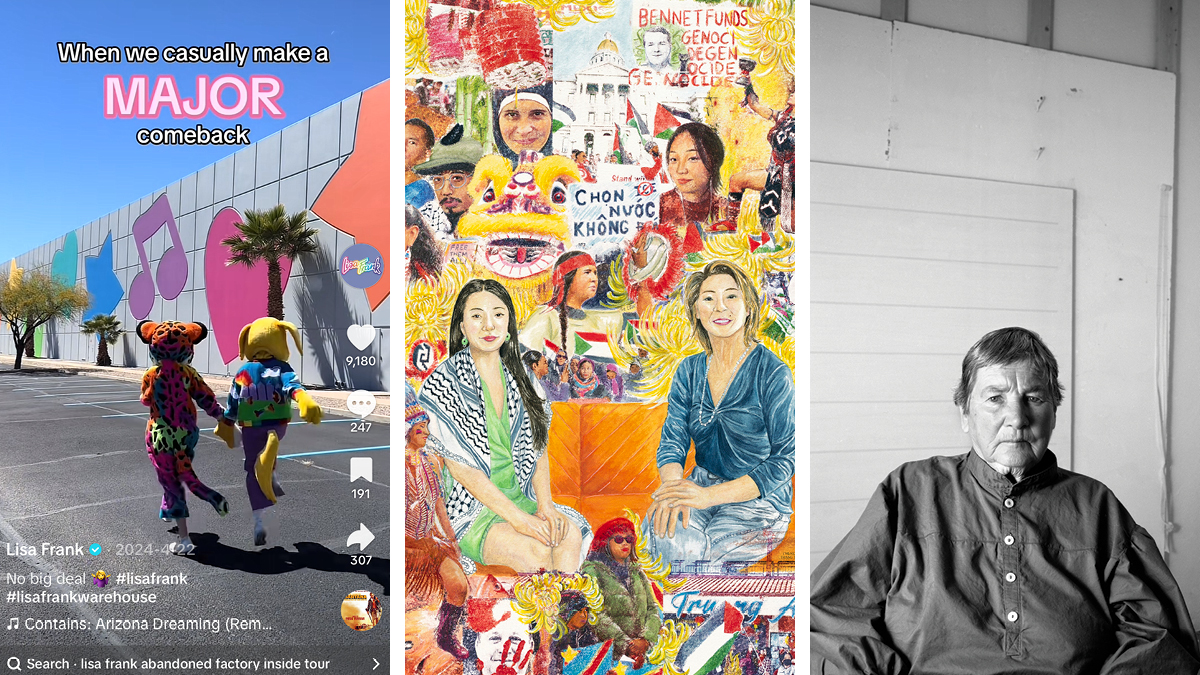
The Lisa Frank warehouse, headquartered in Tucson, Arizona, offers up a rainbow-bedazzled mirror to the emptiness of the American dream.
6. Plot Thickens in Colorado Censorship Row as Artist—and Her Subjects—Speak Out
by Lynn Trimble, November 11, 2025
A Denver museum’s alleged act of censorship is stirring national debate, as stakeholders clash over who gets to tell the story—and who gets heard.

5. Queen Agnes
by Jordan Eddy, vol. 12, Fall 2025
Abstract painter Agnes Martin sought isolation in New Mexico to stoke her obsessive practice. She found vibrant community.
4. Are an Arizona Museum’s Changes to Transfeminisms Exhibition “Violent” or Pragmatic?
by Lynn Trimble, March 13, 2025
The Scottsdale Museum of Contemporary Art made last-minute revisions to a traveling show of women, queer, and trans artists. Museum leadership and a co-curator differ on what happened.
3. Empires of Dirt: Michael Heizer’s City
by Karla Lagunas, vol. 12, Fall 2025
Michael Heizer’s City prompts consideration of obsession, scale, and legacy through the lens of land, labor, and the weight of inherited ambition.
2. Don’t Call it “O’Keeffe Country”: Two Pueblo Artists Take Back New Mexico’s Map
by Kimberly Suina Melwani, September 30, 2025
From a courtroom to the Georgia O’Keeffe Museum, Native artists Mateo Romero and Jason Garcia are correcting the records.
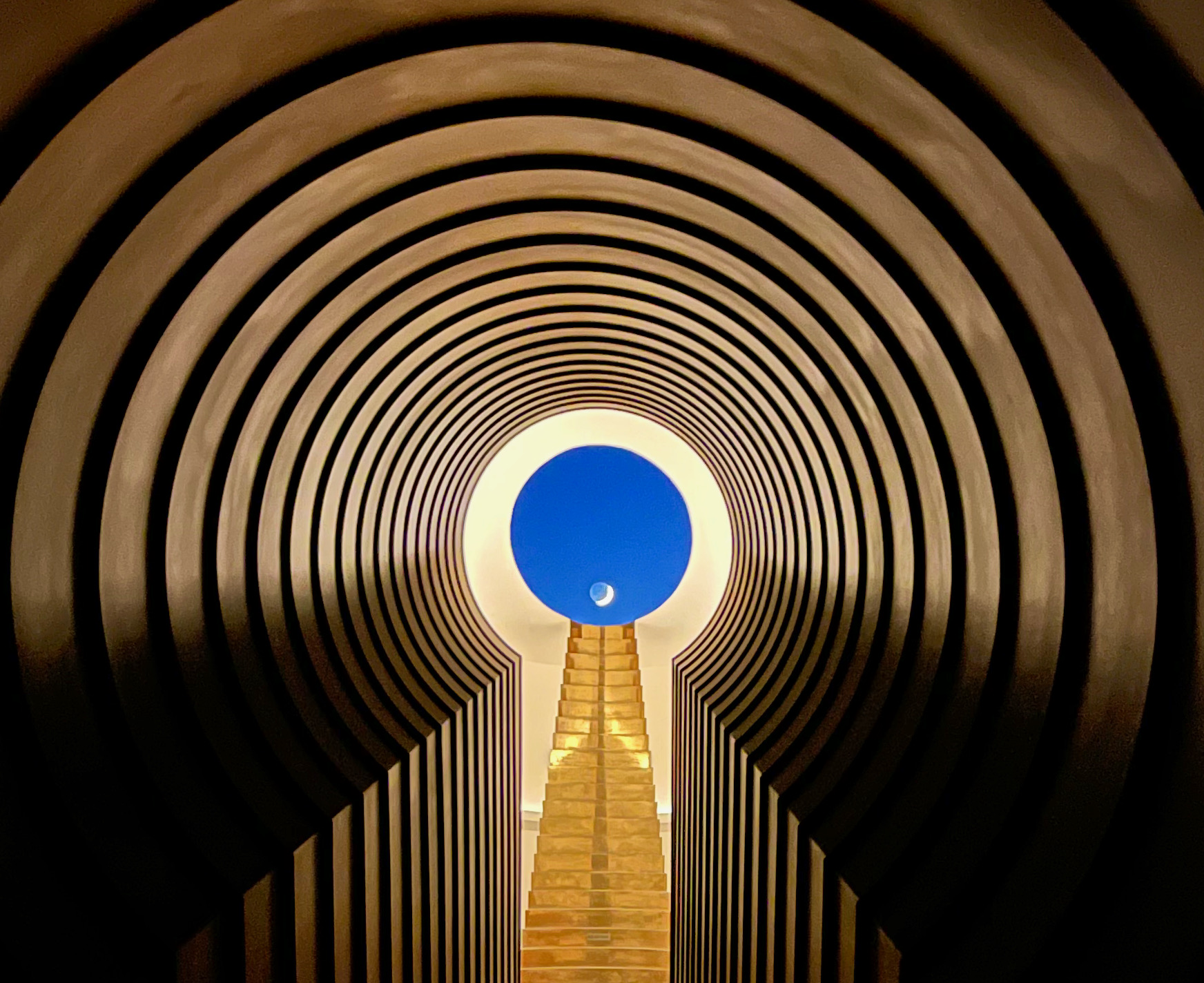
1. Peek Inside Mysterious Southwest Land Artworks You May Never Visit
by Lynn Trimble, August 14, 2025
From James Turrell’s Roden Crater in Arizona to Charles Ross’s Star Axis in New Mexico and Robert Smithson’s Amarillo Ramp in Texas, some Southwest land art is stubbornly elusive.