In their first-ever joint show in Scottsdale, Beth Ames Swartz and her daughter Julianne Swartz draw from shared esoteric knowledge to astonishingly varied ends.
The only constant is change, according to an ancient Greek philosopher whose prescient observation reverberates through the 21st century—a time marked by massive transformations of interior and exterior worlds.
Identity. Intelligence. The environment. The world order. They’re all undergoing ruptures wrought by technology and other forces Heraclitus couldn’t have foreseen but contemporary artists have seized on.
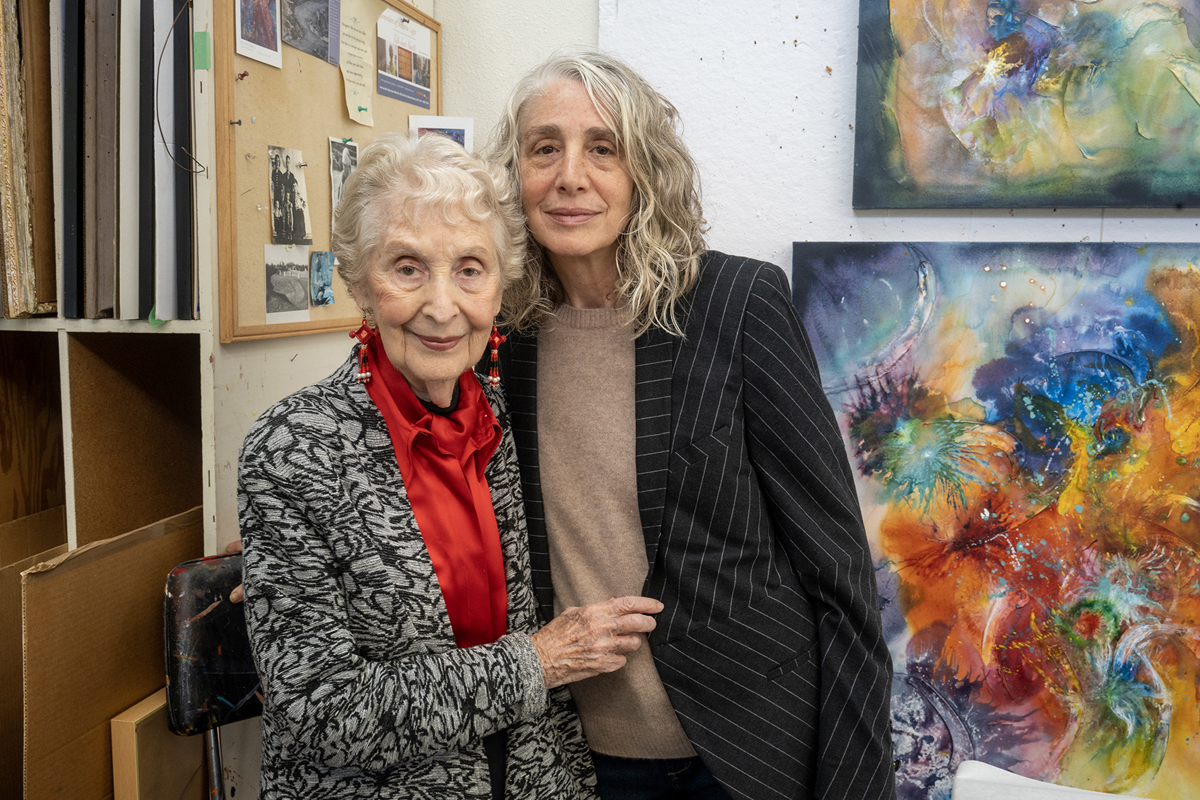
Transformation is central to the work of Beth Ames Swartz and Julianne Swartz, a mother and daughter whose individual creative practices examine its physical, emotional, spiritual, environmental, and societal manifestations. The pair, now ninety and fifty-eight, are showing work in their first-ever joint exhibition Tender Alchemy at Scottsdale Museum of Contemporary Art, where the invisible forces they seek to understand and transmit spill forth.
Each brings these energies to light in distinctive bodies of work with vastly divergent processes and materials—with conceptual underpinnings that sometimes converge. I strolled through the exhibition with these artists as final installation was underway, and they illuminated the ways their creative journeys intersect and veer into distinct pathways.
“We’re so different, but we’re also similar because we’re both exploring spiritual and emotional questions and we’ve both dealt with the esoteric,” reflects Beth. “We’re trying to figure out how the world works and our place in it.”
Whereas Beth often pulls from religious systems such as the Kabbalah rooted in Jewish mysticism or the chakras found in Hindu and Buddhist traditions, Julianne draws most heavily on her own personal experiences. “My mom explores existing religious systems as research for her work and my work is informed by personal spiritual experience,” Julianne explains.
Beth was born in New York City in 1936, amid the run-up to World War II. Julianne was born in Phoenix in 1967, during an era marked by resistance to racial injustice, the counterculture movement, and anti-Vietnam protests. Today, Beth is based in Arizona and Julianne in New York, so they’re working from different generational and geographic spaces.
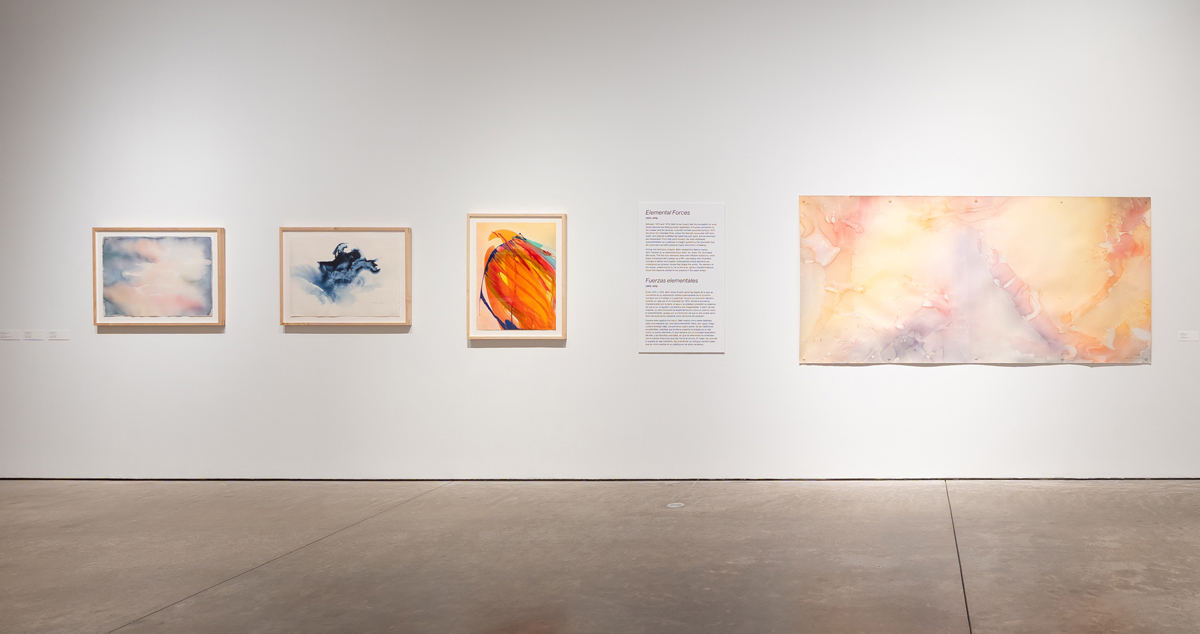
Beth’s creative practice spanning over six decades is rooted in the Jewish concept of tikkun olam, which means “repairing the world.” Common threads in her work include the healing power of earth, water, air, and fire—all elements she has used in her artworks—and a cycle that includes birth, life, aging, death, and renewal.
Julianne recalls that her mom was ‘always seeking, always trying to heal and to evolve.’
By contrast, Julianne explains that her work “comes from direct experience; I’m basing it on my own experience of transformation. I find it in certain [phenomena] such as sound and light, but my experience also includes being in a middle-aged body as I feel it morph and change.”
Julianne describes growing up with “a high level of spiritual integration” in a home where words like “chakra” and “meditation” were common. “I remember having psychic surgery as a teen and different types of healers coming to our home; I guess you could call it New Age.”
Looking back, Julianne recalls that her mom was “always seeking, always trying to heal and to evolve.” Beth acknowledges that her own early life was challenging, and often shares the story of finishing a particular painting anchored by a large heart just before her mother died. “My childhood was very traumatizing,” says Beth. “I bonded with the earth.”
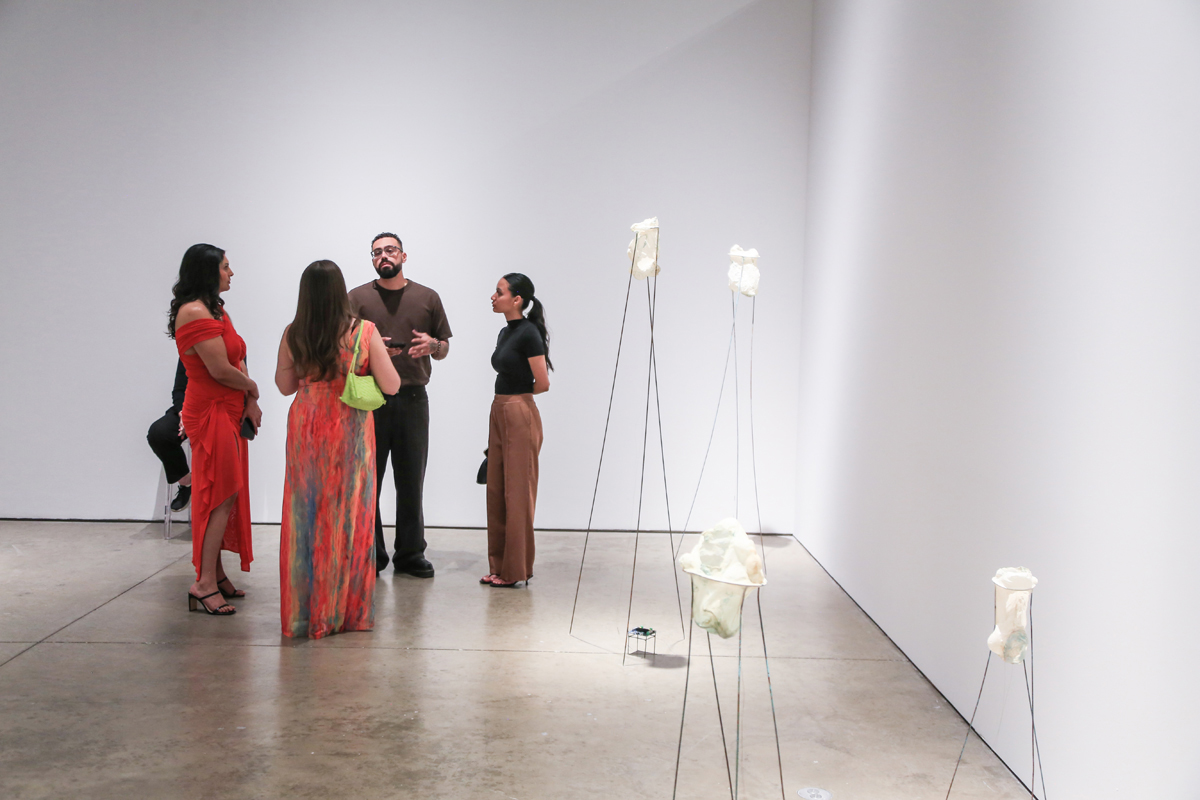
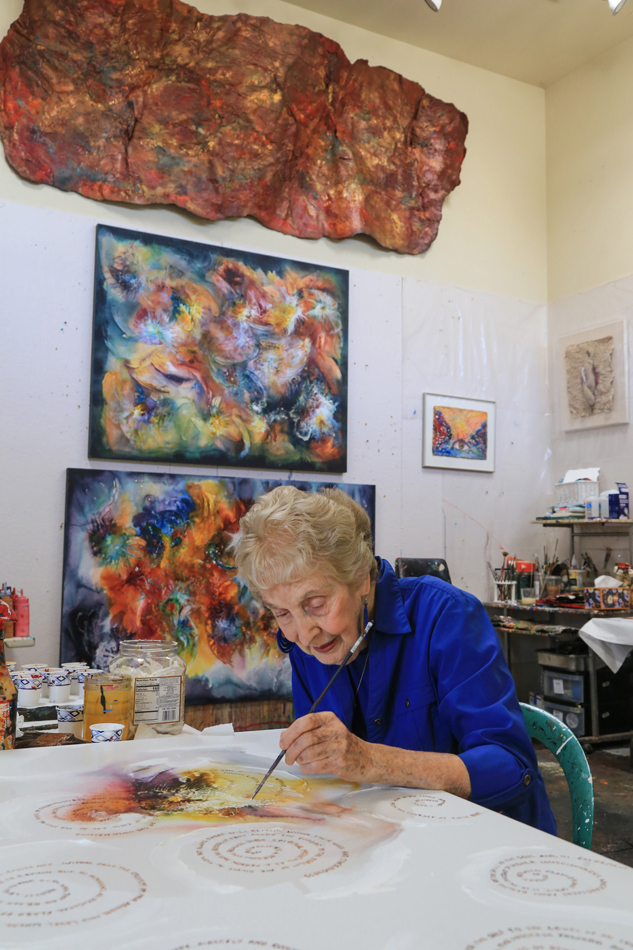
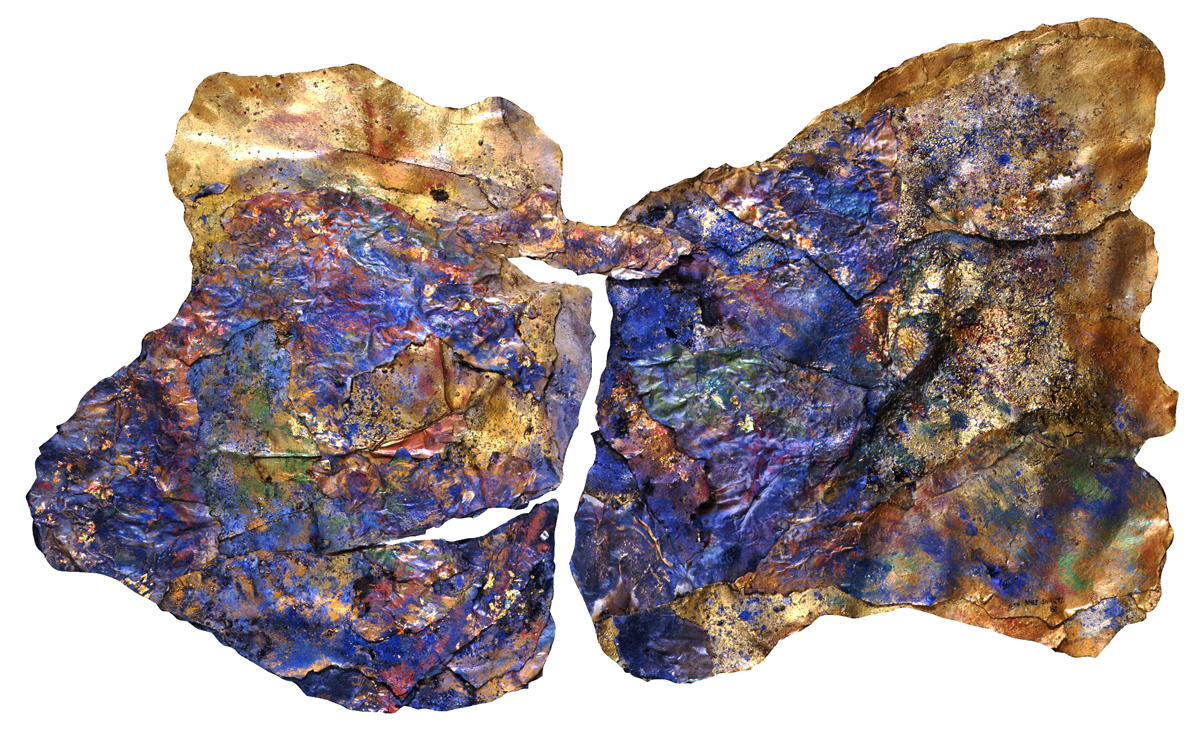
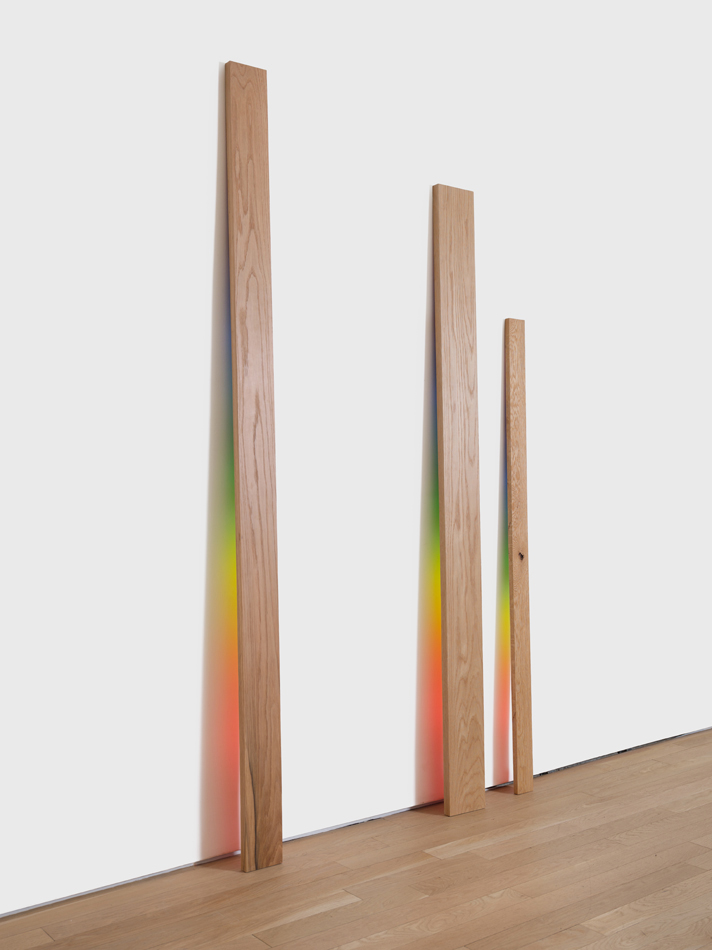
Both artists employ a shifting mix of unconventional materials. Beth primarily creates acrylic paintings and mixed-media works with an evolving palette that includes bone, amethyst, glitter, smoke, and more. For Julianne, a multidisciplinary artist who works primarily in sculpture and sound, myriad materials have included copper wire, magnets, rust, subwoofers, electronics, and sonified brain waves—including recordings of her own brain during meditation.
“We both use color and light, and different types of abstraction,” says Julianne. “I see magic in the everyday. I want my work to involve wonder, newness or novelty, and a sense of disorientation.” Julianne thinks of her studio as a lab, where she uses experimentation to “figure out how to do the most with the least”—something she calls “essentializing.”
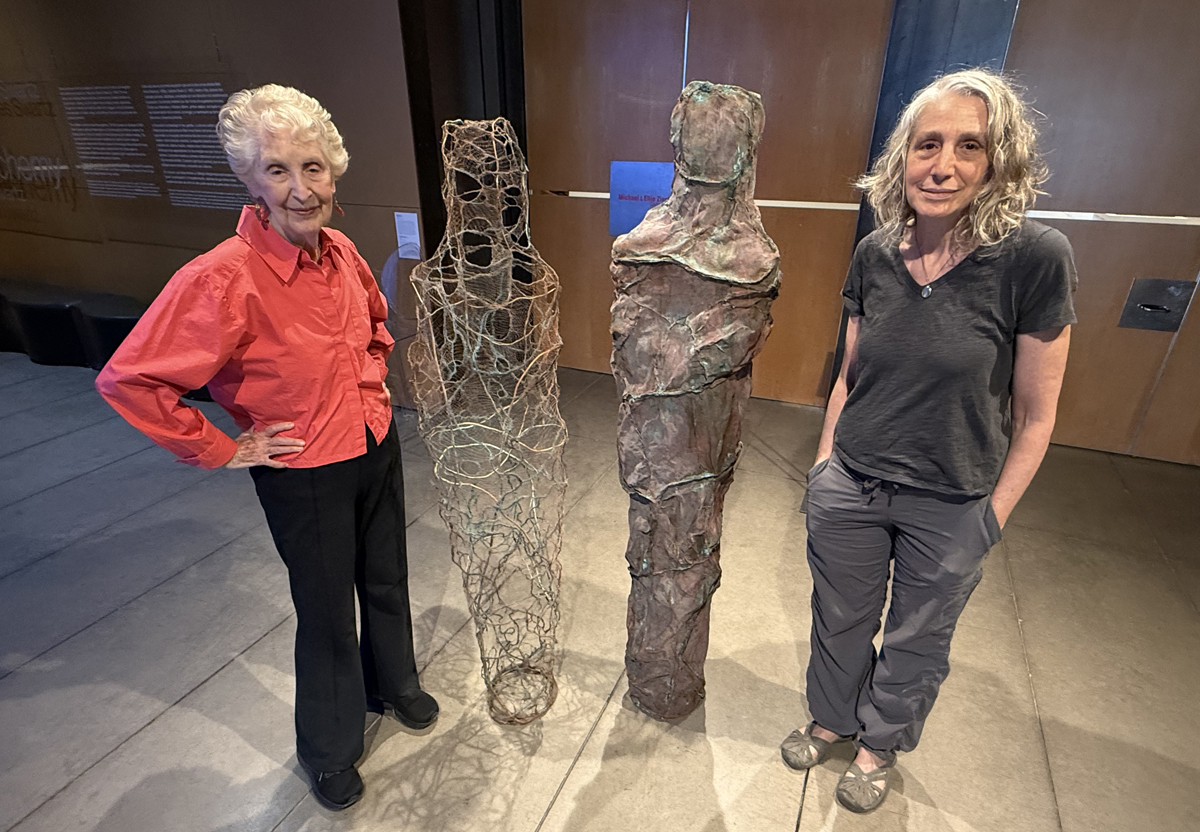
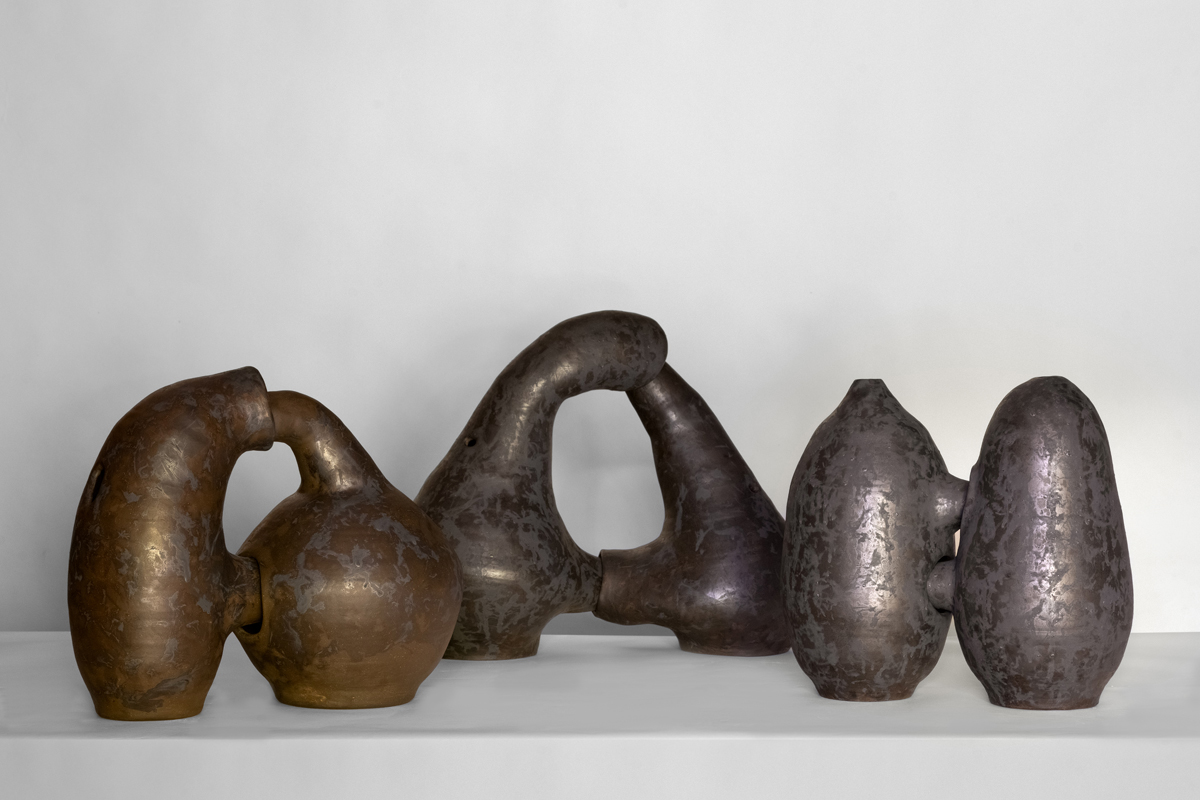
Although Julianne rarely does figurative work, she created forms of herself and her mother last year for their exhibition Tender Alchemy, which opened in March 2026. Titled Carrier BAS and Carrier JS, referencing the idea of the body temporarily housing the soul, these sculptures also point to a rare overlap in artistic processes.
Beth has often worked outside, using materials such as water and dirt to transform her paintings, inspired in part by time spent in Israel or rafting down the Colorado River. Julianne’s figurative forms made with copper were also transformed outdoors, after she doused them with salt, food, and urine and left them to oxidize in the elements.
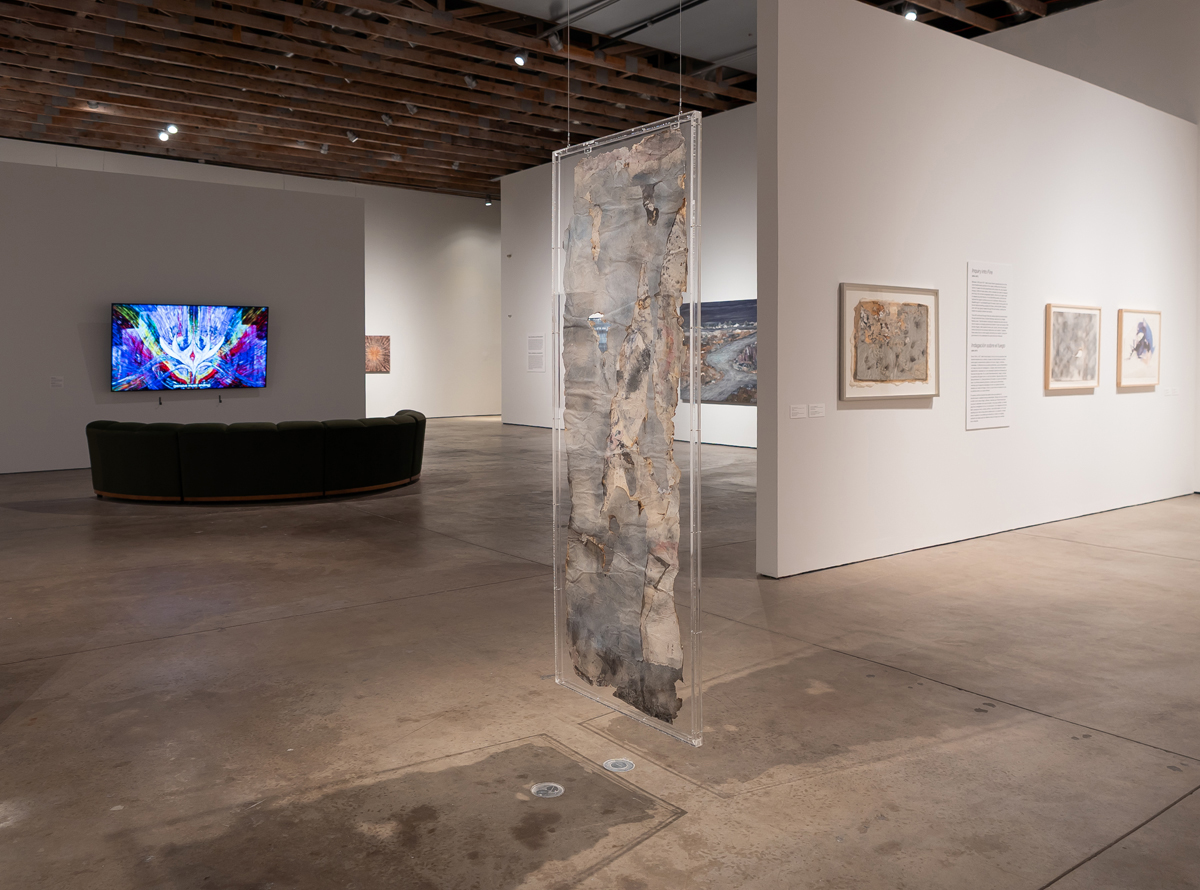
Elsewhere in the exhibition, there are new bodies of work from Beth and Julianne, artworks and videos that span Beth’s career, and their first collaboration. A darkened gallery pairs Beth’s Quantum Light paintings with Julianne’s Gateway soundscape. Created this year in response to her mother’s vibrant abstractions, Julianne’s Gateway comprises a four-channel audio score of high-pitched tuning forks, chimes, bells, human vocalizations, flowing water, and sonified pulses delivered through an audio player and directional speakers. The collaboration is grounded by their shared interest in physics, particularly the idea that a particle can also be a wave.
“I think conceptually in many ways we have this connection,” Beth says of their ongoing creative journey. “We’re very devoted to each other and to exploration.”
Editor’s note 05/22/2026: This story has been updated to clarify Julianne’s comments about how religion and spirituality inform her and her mother’s respective practices.